
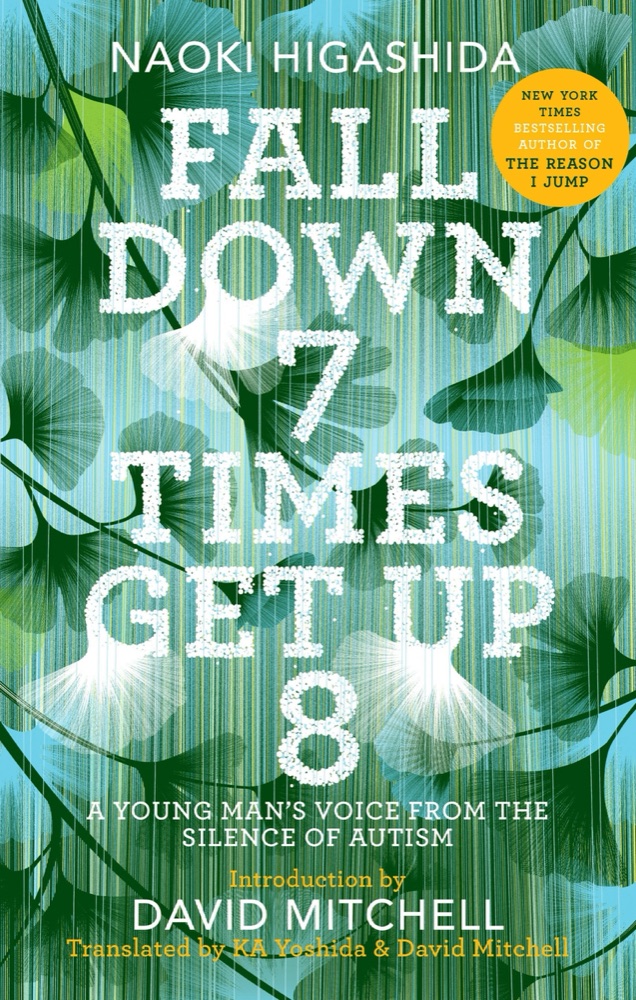
 Fall Down 7 Times Get Up 8: A Young Man's Voice from the Silence of Autism
Quotes from the Book
Everybody has a heart that can be touched by something.
When you see an object, it seems that you see it as an entire thing first, and only afterwards do its details follow on. But for people with autism, the details jump straight out at us first of all, and then only gradually, detail by detail, does the whole image float up into focus.
On our own we simply don't know how to get things done the same way you do things. But, like everyone else, we want to do the best we possibly can. When we sense you've given up on us, it makes us feel miserable. So please keep helping us, through to the end.
Criticizing people, winding them up, making idiots of them or fooling them doesn't make people with autism laugh. What makes us smile from the inside is seeing something beautiful, or a memory makes us laugh. This generally happens when there's nobody watching us. And at night, on our own, we might burst out laughing underneath the duvet, or roar with later in an empty room ... When we don't need to think about other people or anything else, that's when we wear our aural expressions.
True compassion is about not bruising the other person’s self-respect.
To give the short version, I've learnt that every human being, with or without disabilities, needs to strive to do their best, and by striving for happiness you will arrive at happiness. For us, you see, having autism is normal -- so we can't know for sure what your 'normal' is even like. But so long as we can learn to love ourselves, I'm not sure how much it matters whether we're normal or austitic.
We get swallowed up by the illusion that unless we can find a place to belong, we are going to be all alone in the world.
But I ask you, those of you who are with us all day, not to stress yourselves out because of us. When you do this, it feels as if you're denying any value at all that our lives may have--and that saps the spirit we need to soldier on. The hardest ordeal for us is the idea that we are causing grief for other people. We can put up with our own hardships okay, but the thought that our lives are the source of other people's unhappiness, that's plain unbearable.
Q25 What's the reason you jump? When I'm jumping it's as if my feelings are going upward to the sky. Really, my urge to be swallowed up by the sky is enough to make my heart quiver. When I'm jumping, I can feel my body parts really well, too--my bounding legs and my clapping hands--and that makes me feel so, so good.
I think that people with autism are born outside the regime of civilization. Sure, this is just my own made-up theory, but I think that, as a result of all the killings in the world and the selfish planet-wrecking that humanity has committed, a deep sense of crisis exists. Autism has somehow arisen out of this. Although people with autism look like other people physically, we are in fact very different in many ways. We are more like travelers from the distant, distant past. And if, by our being here, we could help the people of the world remember what truly matters for the Earth, that would give us a quiet pleasure.
So how do people with autism see the world, exactly? We, only we, can ever know the answer to that one! Sometimes I actually pity you for not being able to see the beauty of the world in the same way we do. Really, our vision of the world can be incredible, just incredible ... When you see an object, it seems that you see it as an entire thing first, and only afterwards do its details follow on.... But for people with autism, the details jump straight out at us first of all, and then only gradually, detail by detail, does the whole image sort of float up into focus. Every single thing has its own unique beauty. People with autism get to cherish this beauty, as if it's a kind of blessing given to us.
...the reason is that when we look at nature, we receive a sort of permission to be alive in this world...
Normal people think we're highly dependent and can't live without ongoing support, but in fact there are times when we're stoic heroes.
Can you imagine how your life would be if you couldn't talk?
[When explaining over reactions to small mistakes] I get swallowed up in the moment, and I can't tell the right response from the wrong response. All I know is that I have to get out of the situation as soon as I can, so I don't drown. To get away, I'll do anything. Crying, screaming and throwing things, hitting out even... Finally, finally, I'll calm down and come back to myself. Then I see no sign of the tsunami attack--only the wreckage I've made. And when I see that, I hate myself. I just hate myself.
This said, we couldn’t get by without light. Light wipes away our tears, and when we’re bathed in light, we’re happy. Perhaps we just love how its particles pour down on us. Light particles somehow console us. I admit this is something I can’t quite explain using logic.
We do take pleasure in one thing that you probably won't be able to guess. Namely, making friends with nature. ... nature is always there at hand to wrap us up, gently: glowing, swaying, bubbling, rustling. Just by looking at nature, I feel as if I'm being swallowed up into it, and in that moment I get the sensation that my body's now a speck, a speck from long before I was born, a speck that is melting into nature herself. This sensation is so amazing that I forget that I'm a human being, and one with special needs to boot. Nature calms me down when I'm furious, and laughs with me when I'm happy. You might think that it's not possible that nature could be a friend, not really. But human beings are part of the animal kingdom too, and perhaps us people with autism still have some left-over awareness of this, buried somewhere deep down. I'll always cherish that part of me that thinks of nature as a friend.
True compassion is about not bruising the other person's self-respect.
But our uneasy, unsettled feeling doesn't go away. I don't think we'll ever be able to reach our Shangri-La, however, I know it exists only in the depths of the forest or at the bottom of the deep blue sea.
What kept me hammering away at it was the thought that to live my life as a human being, nothing is more important than being able to express myself.
The greenness of nature is the lives of plants and trees. Green is life. And that’s the reason we love to go out for walks.
What makes us smile from the inside is seeing something beautiful, or a memory that makes us laugh. This generally happens when there’s nobody watching us. And at night, on our own, we might burst out laughing underneath the duvet, or roar with laughter in an empty room … when we don’t need to think about other people or anything else, that’s when we wear our natural expressions.
True compassion is about not bruising the other person’s self-respect. That’s what I think, anyway.
Naoki is anticipating his audience’s emotions and manipulating them. That is empathy. The conclusion is that both emotional poverty and an aversion to company are not symptoms of autism but consequences of autism, its
... for me the number one reason is that us people with autism love the greenness of nature. ... Our fondness for nature is, I think, a little bit different to everyone else's. I'm guessing that what touches you in nature is the beauty of the trees and the flowers and things. But to us people with special needs, nature is as important as our own lives. The reason is that when we look at nature, we receive a sort of permission to be alive in this world, and our entire bodies get recharged. However often, we're ignored and pushed away by other people, nature will always give us a good big hug, here inside our hearts. The greenness of nature is the lives of plants and trees. Green is life. And that's the reason we love to go for walks.
All human beings have their hardships to bear, so never swerve away from the path you're on.
But when I’m jumping, it’s as if my feelings are going upward to the sky. Really, my urge to be swallowed up by the sky is enough to make my heart quiver. When I’m jumping, I can feel my body parts really well, too—my bounding legs and my clapping hands—and that makes me feel so, so good.
The conclusion is that both emotional poverty and an aversion to company are not symptoms of autism but consequences of autism, its harsh lockdown on self-expression and society's near-pristine ignorance about what's happening inside autistic heads.
Whenever I overhear someone remark how much I prefer being on my own, it makes me feel desperately lonely. It’s as if they’re deliberately giving me the cold-shoulder treatment.
I’ve learned that every human being, with or without disabilities, needs to strive to do their best, and by striving for happiness you will arrive at happiness. For us, you see, having autism is normal—so we can’t know for sure what your “normal” is even like.
3
During the 24/7 grind of being a carer, it's all to easy to forget the fact that the person you're doing so much for is, and is obliged to be, more resourceful than you in many respects.
2
Watch on YouTube
About Naoki Higashida
We have collected 61 quotes from 2 books by Naoki Higashida on BookQuoters.
More about the author →More by Naoki Higashida
Fall Down 7 Times Get Up 8: A Young Man's Voice from the Silence of Autism
Book details
- First published
- 2005
- Author
- Naoki Higashida
- Genre
- Nonfiction
- Goodreads rating
- 3.88 (64k ratings)
Keep reading
Fall Down 7 Times Get Up 8: A Young Man's Voice from the Silence of Autism
 What I Mean When I Say I'm Autistic: Unpuzzling a Life on the Autism Spectrum
 A Room Called Earth
 Different, Not Less: A Neurodivergent's Guide to Embracing Your True Self and Finding Your Happily Ever After
 The World According to Mister Rogers: Important Things to Remember
 A Kind of Spark
 Notes on a Nervous Planet
 Mending the Mind
 Reasons to Stay Alive
 We Can Do Hard Things: Answers to Life's 20 Questions
 What If This Were Enough?: Essays
 Into the Magic Shop: A Neurosurgeon's Quest to Discover the Mysteries of the Brain and the Secrets of the Heart
![It's Not OK to Feel Blue [and other lies]](/i/book/g/ed/its-not-ok-to-feel-blue-and-other-lies.jpg) It's Not OK to Feel Blue [and other lies]
It's Not OK to Feel Blue [and other lies]
 The School of Life: An Emotional Education
 The Things You Can See Only When You Slow Down: How to Be Calm in a Busy World
 In The Blood
 Anthropology of an American Girl
 The Electricity of Every Living Thing
 Almost Everything: Notes on Hope
 All Is Not Forgotten
 Every Exquisite Thing
![[Don't] Call Me Crazy](/i/book/g/b2/dont-call-me-crazy.jpg) [Don't] Call Me Crazy
[Don't] Call Me Crazy
 Have You Seen Luis Velez?
 Stitches: A Handbook on Meaning, Hope, and Repair
 Letter to My Daughter
 Awaken
 Everyone's a Aliebn When Ur a Aliebn Too
 Maybe You Should Talk to Someone: A Therapist, Her Therapist, and Our Lives Revealed
 I Really Didn't Think This Through: Tales from My So-Called Adult Life
 Buffering: Unshared Tales of a Life Fully Loaded
 Unmasking Autism: Discovering the New Faces of Neurodiversity
 Thinking In Pictures: and Other Reports from My Life with Autism
 Far from the Tree: Parents, Children, and the Search for Identity
 Atlas of the Heart: Mapping Meaningful Connection and the Language of Human Experience
 The House in the Cerulean Sea
 Keep Holding On
 Words on Bathroom Walls
 First, We Make the Beast Beautiful: A New Story About Anxiety
 Marcelo in the Real World
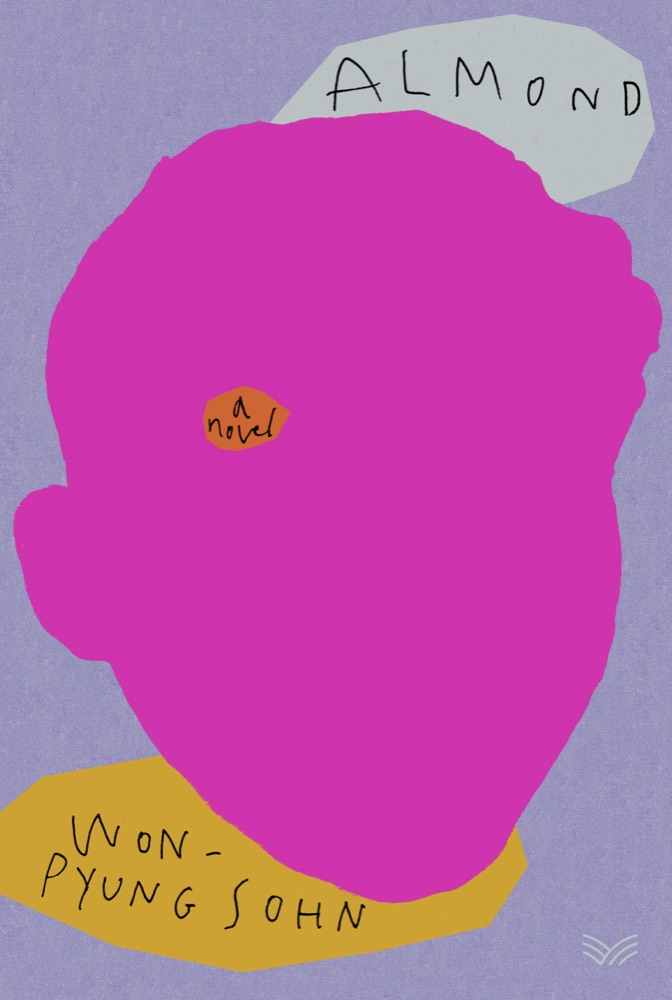 Almond
 The Color of Everything: A Journey to Quiet the Chaos Within
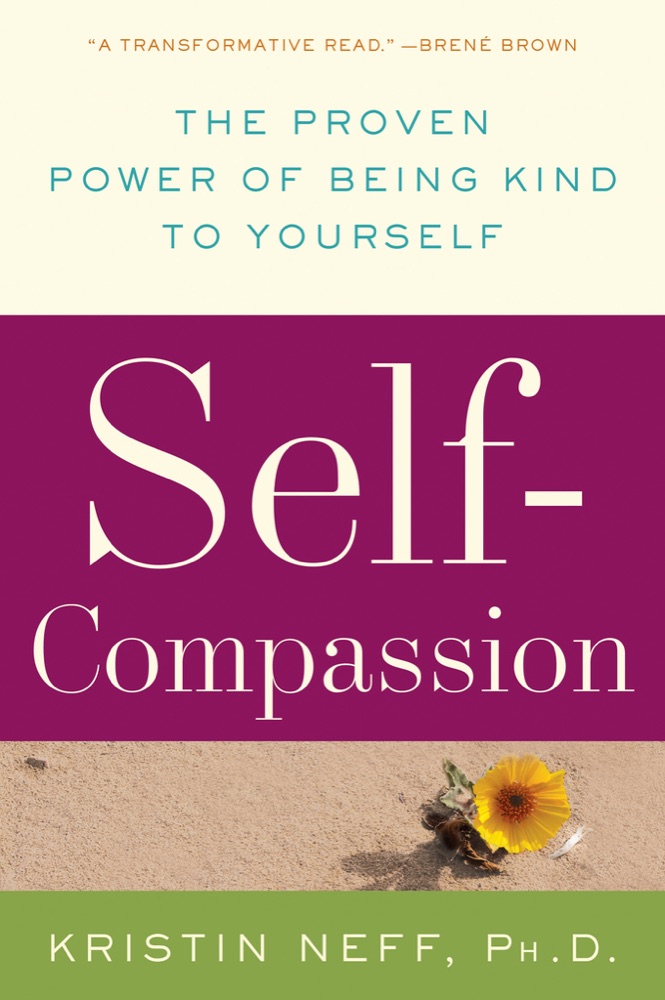 Self-Compassion: The Proven Power of Being Kind to Yourself
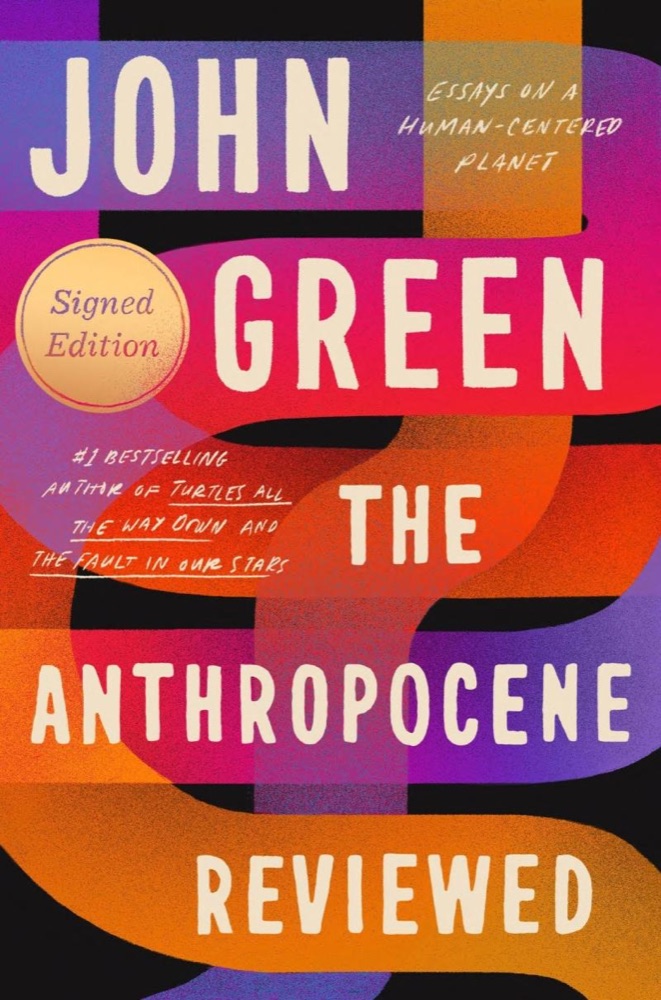 The Anthropocene Reviewed: Essays on a Human-Centered Planet
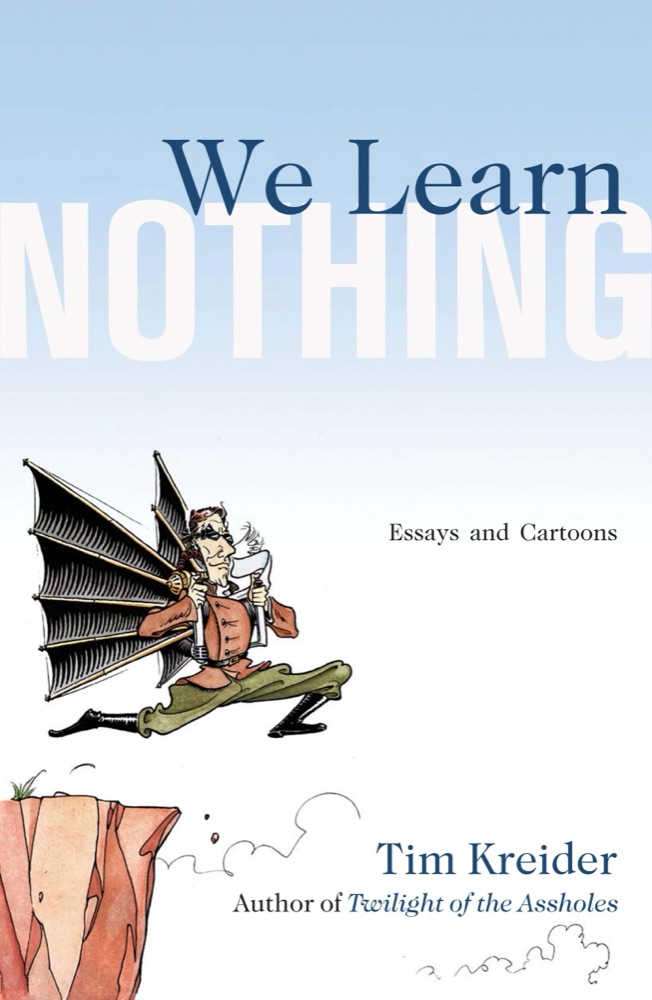 We Learn Nothing
 Why Be Happy When You Could Be Normal?
 Love Anthony
 Ten Steps to Nanette
 101 Essays That Will Change The Way You Think
 When Things Fall Apart: Heart Advice for Difficult Times
 Furiously Happy: A Funny Book About Horrible Things
 Life Will Be the Death of Me: . . . and you too!
 The Wind-Up Bird Chronicle
 On Connection
 Carry On, Warrior: Thoughts on Life Unarmed
 Attempting Normal
 Mockingbird
 A Work in Progress
 Flowers for Algernon
 The Laws of Human Nature
 Over the Top: A Raw Journey to Self-Love