
 United: Thoughts on Finding Common Ground and Advancing the Common Good
Quotes from the Book
Challenging injustice means standing up for the weak, the vulnerable, the abused, and the forgotten—be it in health, employment, education, or the environment. It means being vigilant on behalf of people who are treated as pariahs and scapegoats, populations that are dehumanized, displaced, and treated as disposable. It means fighting oppression at every opportunity—no matter the place or country.
9
The world shouldn't be comprised of people in boxes. Minding their own business. It should be full of people raising their voices, using their power and presence, standing up for what's right. Minding one another's business. That's the world I live in. And that's the world I want to live in.
8
It was about people and community. That’s what science is supposed to be about—not an academic exercise for the ivory tower, or racking up publications, grants, and offers of tenure. It’s about using the tools and technology available to make lives better, no matter what articles of faith obstruct the path.
6
Rather than standing on the sidelines, Snow got passionately involved. His work wasn’t about abstract scientific discovery alone. It was about people and community. That’s what science is supposed to be about—not an academic exercise for the ivory tower, or racking up publications, grants, and offers of tenure. It’s about using the tools and technology available to make lives better, no matter what articles of faith obstruct the path.
3
Physicians need to be trained to see symptoms of the larger structural problems that will bedevil a child’s health and well-being more than a simple cold ever could. But these problems are harder for even a well-trained physician to identify. A child doesn’t come to my exam room for “food insecurity.” Their moms don’t call the clinic for an appointment because “we can’t make ends meet” or “there aren’t any safe places to play outside.” They make appointments because of nosebleeds and ear infections, like other moms, or for well-baby checkups. And when we see them, if we don’t ask about the situation at home or learn to notice the clues on our own, we’ll never find out what these larger problems are. When we know about the child’s environment, we can treat these kids in the best, most holistic way, which will leave them with much more than just a prescription for amoxicillin.
3
In the little world in which children have their existence,” he wrote in Great Expectations (1861), “there is nothing so finely perceived and so finely felt, as injustice. It may be only small injustice that the child can be exposed to; but the child is small, and its world is small.
2
The average annual Flint residential water bill in 2015 was $864—about $300 more than in any other city in Michigan. In fact, it was the highest in the nation.
2
If we stop believing that government can protect our public welfare and keep all children safe, not just the privileged ones, what do we have left? Who are we as a people, a society, a country, and a civilization?
1
The law knows no finer hour than when it cuts through formal concepts and transitory emotions to protect unpopular citizens against discrimination and persecution.” On behalf of another group of “unpopular citizens,” he referred to the internment of Japanese Americans during World War II as the “legalization of racism” in his dissenting opinion in Korematsu v. United States. The first justice to ever use the word racism in a Supreme Court opinion, he went on to employ it seven more times before it disappeared from court opinions for two decades.
Before Flint, my career was a total mystery to me," Elin confessed at lunch. "None of it made sense. So many times I have looked back at my choices and career moves and wondered, What was I thinking? But now I see that each move was a piece in the puzzle, so that I could be standing right there in your kitchen at exactly the right time. It all makes sense to me now. There was a point to all those twists and turns.
If I had to locate an exact cause of the crisis, above all others, it would be the ideology of extreme austerity and “all government is bad government.” The state of Michigan didn’t need less government; it needed more and better government, responsible and effective government. And people who are not being poisoned by the tap water.
The power of money can’t be underestimated, ever. As Karl Marx said, “It transforms fidelity into infidelity, love into hate, hate into love, virtue into vice, vice into virtue, servant into master, master into servant, idiocy into intelligence, and intelligence into idiocy.
Watch on YouTube
About Mona Hanna-Attisha
We have collected 12 quotes from 1 book by Mona Hanna-Attisha on BookQuoters.
More about the author →About the book
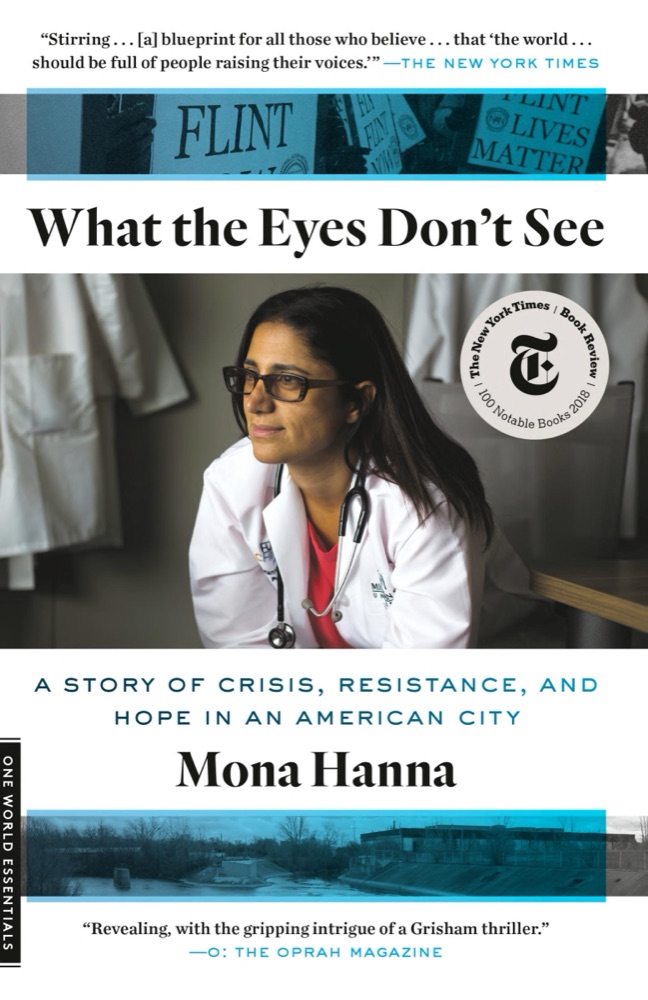
Here is the inspiring story of how Dr. Mona Hanna-Attisha, alongside a team of researchers, parents, friends, and community leaders, discovered that the children of Flint, Michigan, were being exposed to lead in their tap water--and then battled her own government and a brutal backlash to expose that truth to the world. At the center of the story is Dr. Mona herself--an immigrant, doctor, scientist, and mother whose family's activist roots inspired her pursuit of justice.
What the Eyes Don't See is a riveting account of a shameful disaster that became a tale of hope, the story of a city on the ropes that came together to fight for justice, self-determination, and the right to build a better world for their--and all of our--children.
Book details
- First published
- 2018
- Author
- Mona Hanna-Attisha
- Genre
- Nonfiction
- Goodreads rating
- 4.33 (9k ratings)
The buzz
- The New York TimesReview in The New York Timesprofessional review (via Book Marks)
- The Washington PostReview in The Washington Postprofessional review (via Book Marks)
- The Wall Street JournalReview in The Wall Street Journalprofessional review (via Book Marks)
- Kirkus ReviewsReview in Kirkus Reviewsprofessional review (via Book Marks)
- Publishers WeeklyReview in Publishers Weeklyprofessional review (via Book Marks)
- BookreporterReview in Bookreporterprofessional review (via Book Marks)
Keep reading
United: Thoughts on Finding Common Ground and Advancing the Common Good
 The Truths We Hold: An American Journey
 The View From Flyover Country: Essays by Sarah Kendzior
 The Ministry for the Future
 On the Other Side of Freedom: The Case for Hope
 The Small and the Mighty: Twelve Unsung Americans Who Changed the Course of History, from the Founding to the Civil Rights Movement
 Across That Bridge: A Vision for Change and the Future of America
 When They Call You a Terrorist: A Black Lives Matter Memoir
 Persist
 Revenge of the Tipping Point
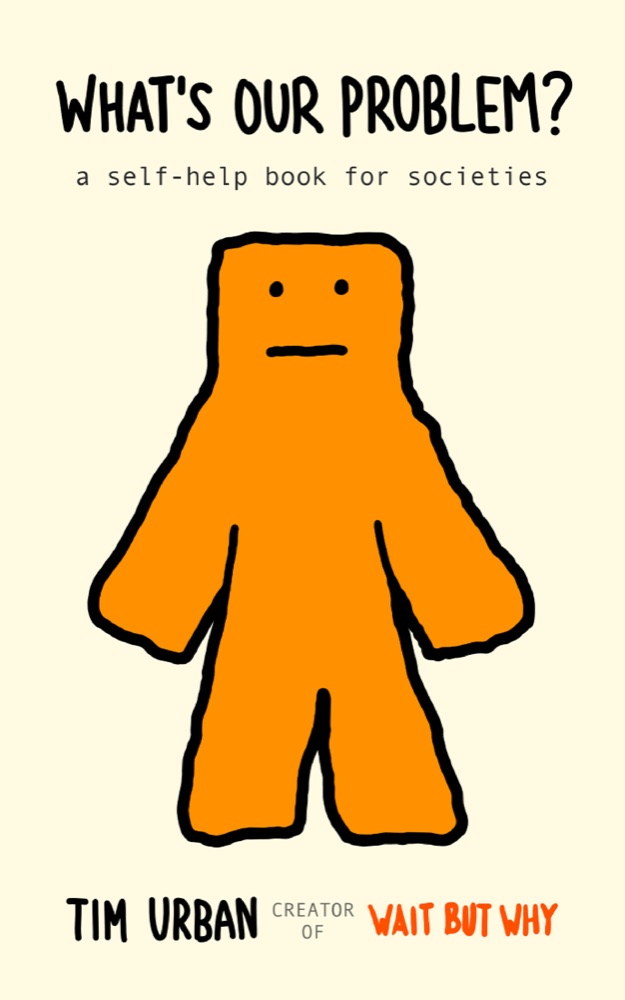 What's Our Problem?: A Self-Help Book for Societies
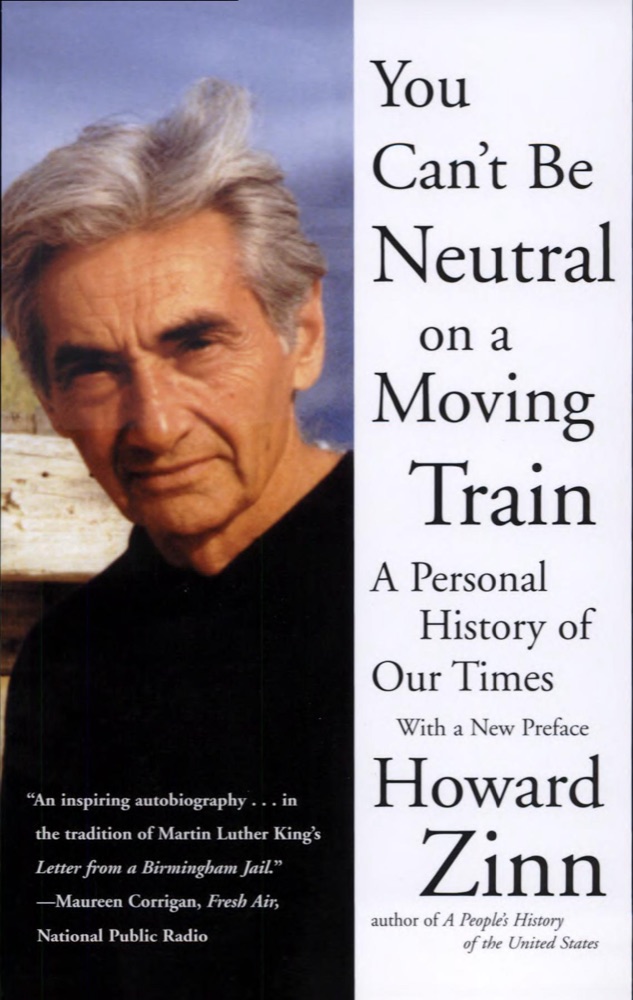 You Can't Be Neutral on a Moving Train: A Personal History of Our Times
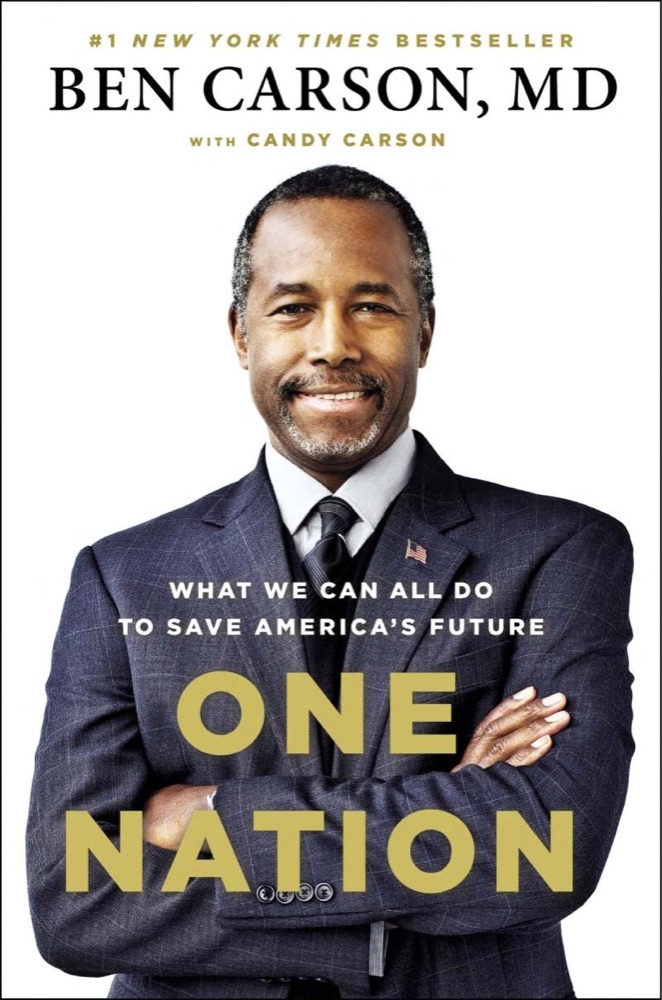 One Nation: What We Can All Do to Save America's Future
 Green Mars
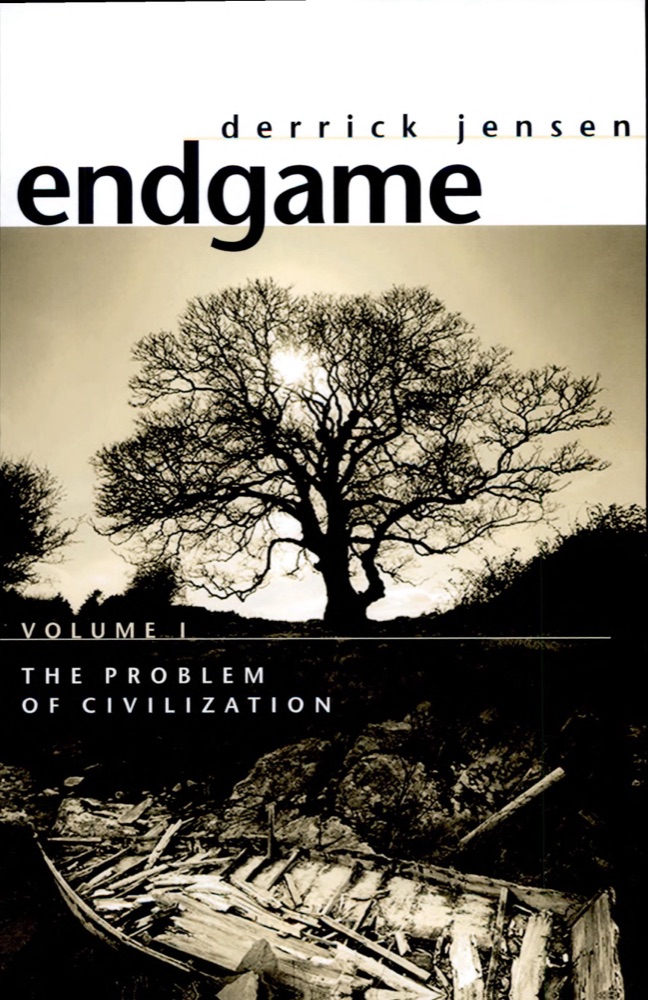 Endgame, Vol. 1: The Problem of Civilization
 Only Human
 Walden Two
 A Knock at Midnight: A Story of Hope, Justice, and Freedom
 Opinions: A Decade of Arguments, Criticism, and Minding Other People’s Business
 The World Is Flat: A Brief History of the Twenty-first Century
 Enlightenment Now: The Case for Reason, Science, Humanism, and Progress
 Shortest Way Home: One Mayor's Challenge and a Model for America's Future
 Humankind: A Hopeful History
 Doing Justice: A Prosecutor's Thoughts on Crime, Punishment, and the Rule of Law
 The Autobiography of Eleanor Roosevelt
 On Fire: The Case for the Green New Deal
 Promises to Keep: On Life and Politics
 No One Is Too Small to Make a Difference
 Genome
 Born a Crime: Stories From a South African Childhood
 The Wizard and the Prophet: Two Remarkable Scientists and Their Dueling Visions to Shape Tomorrow's World
 The Audacity of Hope: Thoughts on Reclaiming the American Dream
 New York 2140
 A People's History of the United States
 The Bassoon King: My Life in Art, Faith, and Idiocy
 Utopia for Realists: How We Can Build the Ideal World
 The Vanishing American Adult: Our Coming-of-Age Crisis—and How to Rebuild a Culture of Self-Reliance
 A Fighting Chance
 What Unites Us: Reflections on Patriotism
 Coming Apart: The State of White America, 1960-2010
 The Madness of Crowds: Gender, Race and Identity
 The Source of Self-Regard: Selected Essays, Speeches, and Meditations
 Sex, Economy, Freedom, and Community: Eight Essays
 Burning Questions: Essays and Occasional Pieces, 2004 to 2021
 The Blue Sweater: Bridging the Gap Between Rich and Poor in an Interconnected World
 The Evolution of Everything: How New Ideas Emerge
 Civilized to Death: What Was Lost on the Way to Modernity
 A Promised Land
 The Life You Can Save: How to Do Your Part to End World Poverty
 Revolution
 Upheaval: Turning Points for Nations in Crisis
 Blackfish City
 Gnomon
 Creation Lake
 Here Comes Trouble
 Where Do We Go from Here: Chaos or Community?
 Beyond Civilization: Humanity's Next Great Adventure
 Banker to the Poor: Micro-Lending and the Battle Against World Poverty
 The Art of the Commonplace: The Agrarian Essays
 The Spirit Level: Why More Equal Societies Almost Always Do Better