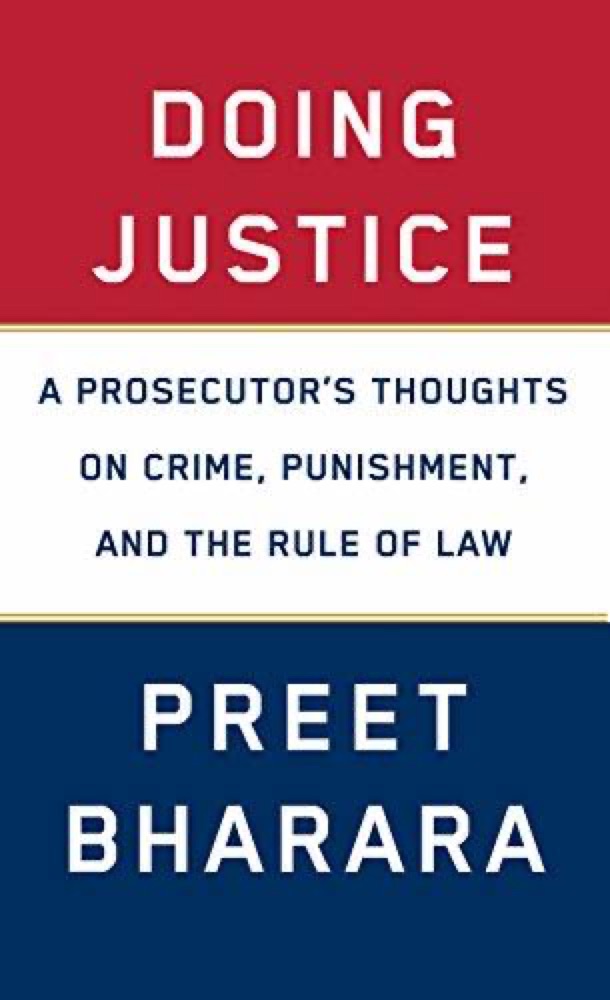
 Justice: What's the Right Thing to Do?
Quotes from the Book
Self-doubt in moderation is animating and motivating, not paralyzing. Leaders who have purged themselves of all self-doubt will not be leaders for long and, in my view, are dangerous while in command. I learned, over time, that self-doubt is my friend, and arrogance my enemy.
9
After all, every human being’s life in this world is inevitably mixed with every other life and, no matter what laws we pass, no matter what precautions we take, unless the people we meet are kindly and decent and human and liberty-loving, then there is no liberty. Freedom comes from human beings, rather than from laws and institutions.
9
As the Roman senator Tacitus said, “Truth is confirmed by inspection and delay; falsehood by haste and uncertainty.
7
Certain norms do matter. Our adversaries are not our enemies; the law is not a political weapon; objective truths do exist; fair process is essential in civilized society.
5
There was only one admonition and it was constant: Do the right thing, in the right way, for the right reasons. And do only that.
4
Freedom comes from human beings, rather than from laws and institutions.
4
Go out there and try to be good. If you go out there and try to be good, you've got a chance to be great.
3
The law is an amazing tool, but it has limits. Good people, on the other hand, don't have limits. The law is not in the business of forgiveness or redemption. The law cannot compel us to love each other or respect each other. It cannot cancel hate or conquer evil; teach grace or extinguish passions. The law cannot achieve these things, not by itself. It takes people -- brave and strong and extraordinary people.
3
One's understanding of the truth—whether that's the correctness of a fact or the guilt of a person—should never be unalterable. Think of a strongly held, defensible point of view as a block of ice, fixed and solid. When such views are well-founded, holding fast to them is commendable. But if new facts come to light—or new revelations materialize—then that block of ice should crack, melt, and even evaporate.
3
way: “I earned a degree in psychology in college before I earned my law degree. And I have found that in this job, which is all about motivating people to act better and modifying ordinary people’s behavior, I find myself relying much more on my psychology degree than on my law degree.
2
I think too many people take advantage of their right to cloister, to live in their little echo chambers, to settle into small societies of like-minded souls, never taking the time to test and strengthen the rightness of their beliefs through searching inquiry, vigorous debate, and open dialogue. There is no such luxury at a criminal trial. There you cannot hide in your self-absorbed bunker, especially if you are the prosecutor. People are paid and obliged by oath and blessed by the Constitution. To do what? To attack every single allegation and argument you have made. And to do it with great zeal. So in that world you have to engage with your critics. And you must engage using facts, truth, and logic. You cannot just say, “I believe this” or “These are my alternative facts.” Honest engagement is the essence of the job. And it is the most exhilarating thing in the world. We malign lawyers as litigious and combative, often deservedly so, but I vastly prefer the spirit of respectful engagement and combat to what we have now in so many parts of society—siloed self-congratulation, self-affirmation, without risk of challenge or dissent or real and respectful debate.
2
You can’t ever really know someone else’s mind or someone else’s heart, what someone else is capable of.
2
Much of what passes for argument in the public square these days would be laughed out of court.
2
I beseech ye in the bowels of Christ, think that ye may be mistaken.
1
Here’s what I think: if you are listening hard and if your dumb questions address the heart of the matter, it’s okay. They may betray ignorance, but also likely show the right focus. If you have a penchant for asking foundational questions that people think you should already know the answers to, so what? You are on the right track. Ignorance is quickly remedied. A tendency toward the tangential, the irrelevant, the collateral, is not so easily fixed. It is okay not to know things, so long as you want to know things, care to know things, and when those are the things you actually need to know. Curiosity and query are among the most important pillars of sound leadership.
1
people will regard a result as just if they regard the process leading to it as fair and if they believe the people responsible for it are fair-minded. It is often said that justice not only must be done but also must be seen to be done.
1
In the case of the People v. Henry Sweet, Darrow delivered one of the most beautiful summations ever spoken. He talked of course about the facts of the case and argued the law of self-defense. But he also talked about justice generally and spoke eloquently about the plight of black people, only recently officially liberated from slavery. He said of the African American, “The law has made him equal, but man has not. And, after all, the last analysis is, what has man done? And not what has the law done.” Ninety years later, that question remains relevant. Darrow also said this: After all, every human being’s life in this world is inevitably mixed with every other life and, no matter what laws we pass, no matter what precautions we take, unless the people we meet are kindly and decent and human and liberty-loving, then there is no liberty. Freedom comes from human beings, rather than from laws and institutions
1
Darrow also said this: After all, every human being’s life in this world is inevitably mixed with every other life and, no matter what laws we pass, no matter what precautions we take, unless the people we meet are kindly and decent and human and liberty-loving, then there is no liberty. Freedom comes from human beings, rather than from laws and institutions.
1
better to keep quiet and have people think you a fool than to open your mouth and remove all doubt.
Imagine if we had our entire criminal code and regulatory structure, but no Constitution. Every institution, whether it’s a country or a company, needs a charter of first principles that are everlasting—not just a hodgepodge and mishmash of bureaucratic rules and requirements that can be ignored with little or no consequence. Getting people to listen and report and sound alarms and seek advice requires more than email reminders; it entails understanding what motivates real people in real life, people with vulnerabilities and fears and biases and every other ordinary human failing and foible that can prevent us from doing the right thing.
Getting people to listen and report and sound alarms and seek advice requires more than email reminders; it entails understanding what motivates real people in real life, people with vulnerabilities and fears and biases and every other ordinary human failing and foible that can prevent us from doing the right thing.
Insisting that the evidence be relevant and that certain arguments are off-limits is vital to producing a just result. We blind you to irrelevancy to train your eyes on the truth.
Asking questions as a junior person leads to deeper understanding. Asking questions as a leader does the same, plus it creates, one hopes, a climate of curiosity and self-reflection, for individuals and for the institution as a whole. And it fosters a culture of thoughtfulness, curiosity, critical thinking, understanding, and challenge, rather than rote acceptance of the status quo. Because that acceptance is how the mighty fall.
The fully evil man is rare. More often you find complex creatures capable of great kindness and charity, on the one hand, but also serious fraud and malice, on the other.
man who had given so much and helped so many. The fully evil man is rare. More often you find complex creatures capable of great kindness and charity, on the one hand, but also serious fraud and malice, on the other.
In the FBI print lab, and elsewhere, there was a culture of hesitation to challenge both superiors and first conclusions. But perhaps most important, for our purposes, the IG report found that Mayfield’s background influenced examiners’ “failure to sufficiently reconsider” their initial identification. That is worth repeating. An innocent man was accused and forever injured because of a failure to sufficiently reconsider. It was not the first error that wrought the injustice. First errors seldom do. It wasn’t the second or third error either. Rather, it was the continuing and lazy persistence in the first blunder—the mismatch of similar fingerprints by mistake but not with malice—followed by discoveries concerning Mayfield’s wife, work, and religion quickly accepted as corroboration instead of coincidence that greased a slow-motion miscarriage of justice through a fog of latent bias and stereotype.
as the Mayfield case teaches, reconsideration is difficult, while confirmation is easy. It is much more difficult to keep your mind open when someone else in the chain of command has put forth a credible conclusion, or when you have already decided a thing. Changing your mind is hard, especially if it means going against an expert or a higher-up.
One of the most difficult—but most crucial—things to achieve, in the early stages of pursuing justice, is objectivity. Or as close as we can get to objectivity, which is probably simply separating facts from ego or some other bias.
Like anything else in the delivery of justice, at the investigative or any other phase, the approach requires balance. There is no science, no mathematical formula, no precise scale on which you can balance these things, but they must be balanced nonetheless.
The key is to make sure that prudent hesitation does not turn into paralysis and that responsible aggressiveness does not turn into recklessness.
Watch on YouTube
About Preet Bharara
About the book
By the one-time federal prosecutor for the Southern District of New York, an important overview of the way our justice system works, and why the rule of law is essential to our society. Using case histories, personal experiences and his own inviting writing and teaching style, Preet Bharara shows the thought process we need to best achieve truth and justice in our daily lives and within our society.
Preet Bharara has spent much of his life examining our legal system, pushing to make it better, and prosecuting those looking to subvert it. Bharara believes in our system and knows it must be protected, but to do so, we must also acknowledge and allow for flaws in the system and in human nature. The book is divided into four Inquiry, Accusation, Judgment and Punishment. He shows why each step of this process is crucial to the legal system, but he also shows how we all need to think about ea
Book details
- First published
- 2019
- Author
- Preet Bharara
- Genre
- Nonfiction
- Goodreads rating
- 4.27 (6k ratings)
The buzz
- The New York TimesReview in The New York Timesprofessional review (via Book Marks)
- The Washington PostReview in The Washington Postprofessional review (via Book Marks)
- The GuardianReview in The Guardianprofessional review (via Book Marks)
- Kirkus ReviewsReview in Kirkus Reviewsprofessional review (via Book Marks)
- Publishers WeeklyReview in Publishers Weeklyprofessional review (via Book Marks)
- LA Review of BooksReview in LA Review of Booksprofessional review (via Book Marks)
Keep reading
Justice: What's the Right Thing to Do?
 A Higher Loyalty: Truth, Lies, and Leadership
 Ancillary Justice
 Rules for Radicals: A Pragmatic Primer for Realistic Radicals
 The Truths We Hold: An American Journey
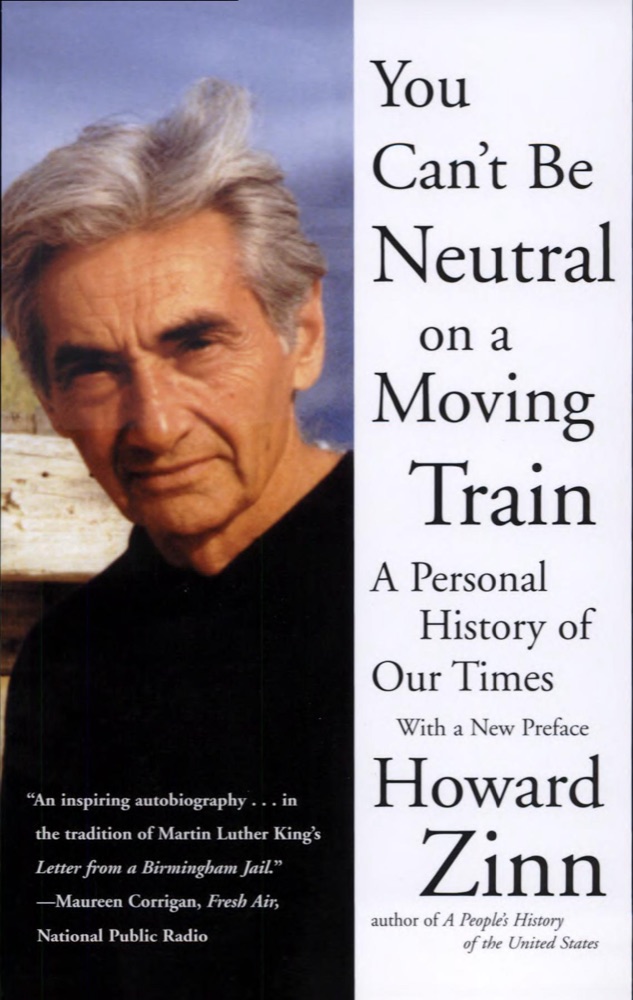 You Can't Be Neutral on a Moving Train: A Personal History of Our Times
 Anarchy, State, and Utopia
 Letter from the Birmingham Jail
 United: Thoughts on Finding Common Ground and Advancing the Common Good
 On Liberty
 Independent Study
 On the Republic / On the Laws
 The Small and the Mighty: Twelve Unsung Americans Who Changed the Course of History, from the Founding to the Civil Rights Movement
 The Chomsky-Foucault Debate: On Human Nature
 Children of Dune
 The Autobiography of Eleanor Roosevelt
 Civil Disobedience
 Persist
 The Story of My Experiments With Truth
 Walden Two
 One Nation: What We Can All Do to Save America's Future
 Rationality: From AI to Zombies
 Civil Disobedience and Other Essays
 Tactics: A Game Plan for Discussing Your Christian Convictions
 God Emperor of Dune
 A People's History of the United States
 My Own Words
 Skin in the Game: The Hidden Asymmetries in Daily Life
 Promises to Keep: On Life and Politics
 Across That Bridge: A Vision for Change and the Future of America
 A Naked Singularity
 The Art of Thinking Clearly
 Letters and Papers from Prison
 Mistakes Were Made (But Not by Me): Why We Justify Foolish Beliefs, Bad Decisions, and Hurtful Acts
 Gnomon
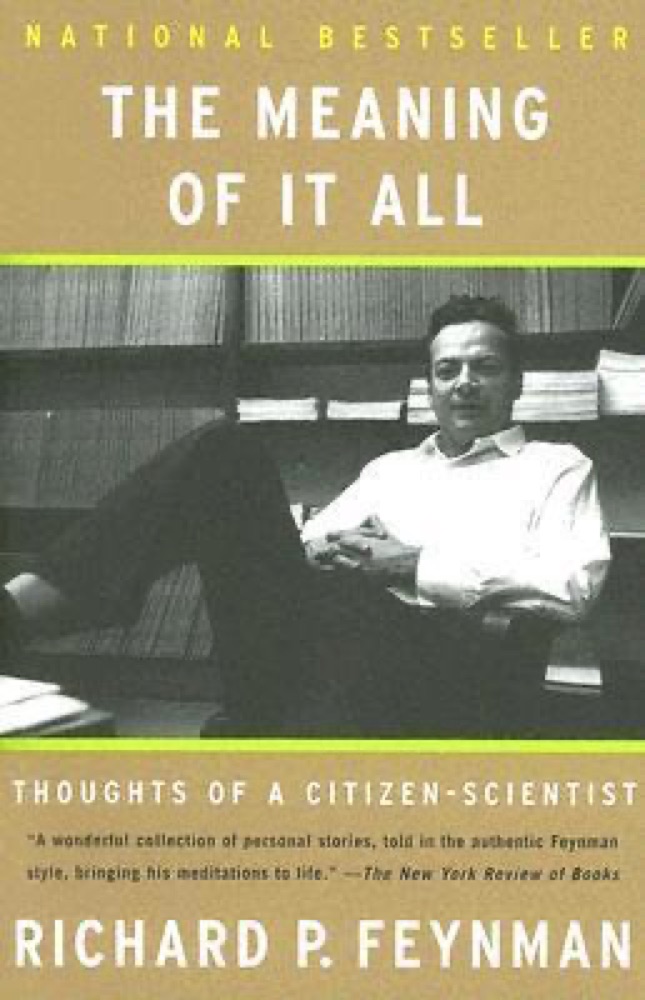 The Meaning of It All: Thoughts of a Citizen-Scientist
 Letters to a Young Contrarian
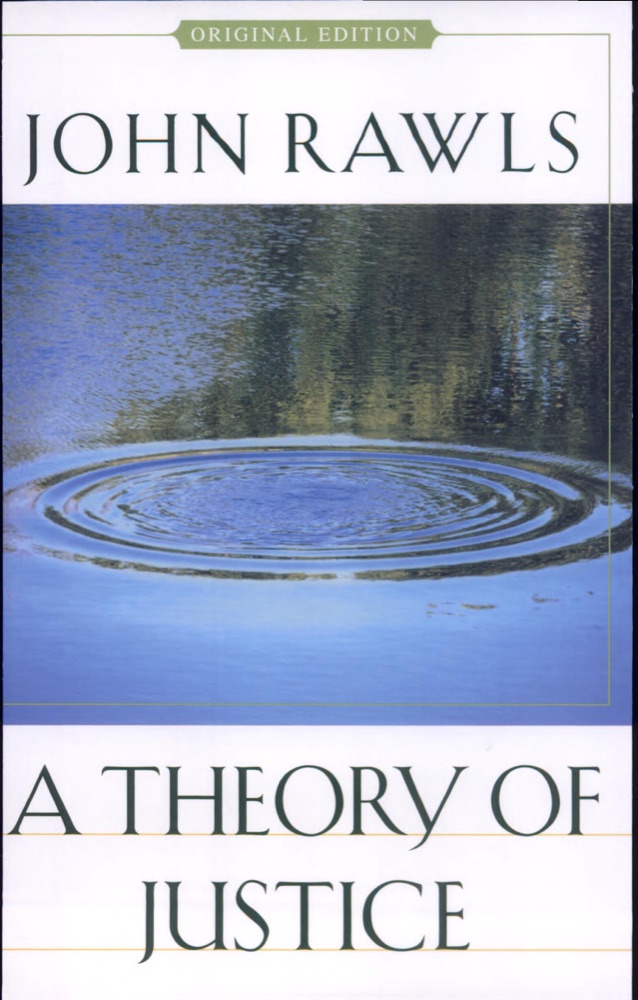 A Theory of Justice
 21 Lessons for the 21st Century
 Scion of Ikshvaku
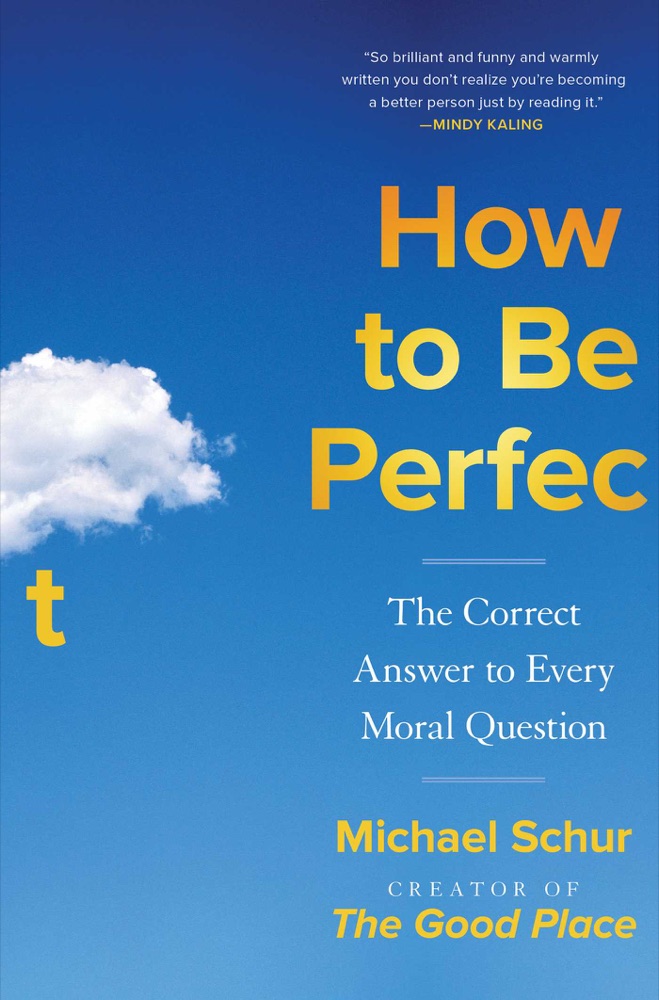 How to Be Perfect: The Correct Answer to Every Moral Question
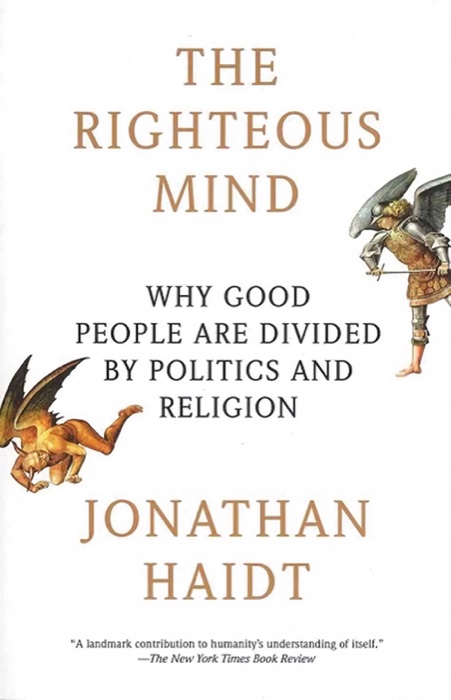 The Righteous Mind: Why Good People Are Divided by Politics and Religion
 On Tyranny: Twenty Lessons from the Twentieth Century
 In the Light of What We Know
 On the Other Side of Freedom: The Case for Hope
 Behold a Pale Horse
 Friday
 Rights of Man
 Naked Empire
 Democracy in America
 Empire
 Glenn Beck's Common Sense: The Case Against an Out-of-Control Government, Inspired by Thomas Paine
 Understanding Power: The Indispensable Chomsky
 Shortest Way Home: One Mayor's Challenge and a Model for America's Future
 Assata: An Autobiography
 Gorgias
 Think Like a Freak
 Endgame, Vol. 1: The Problem of Civilization
 Humankind: A Hopeful History
 Discourses and Selected Writings