
 Animal Liberation
Quotes from the Book
Hebrew word for "charity" tzedakah, simply means "justice" and as this suggests, for Jews, giving to the poor is no optional extra but an essential part of living a just life.
80
Extreme poverty is not only a condition of unsatisfied material needs. It is often accompanied by a degrading state of powerlessness.
34
Putting yourself in the place of others...is what thinking ethically is all about.
11
Evolution has no moral direction. An evolutionary understanding of human nature can explain the differing intuitions we have when we are faced with an individual rather than with a mass of people, or with people close to us rather than with those far away, but it does not justify those feelings.
7
In the past 20 years alone, it adds up to more death than were caused by all the civil and international wars adn government repression of the entire twentieth century, the century of Hitler and Stalin. How much would we give to prevent those horrors? Yet how little are we doing to prevent today's even larger toll and all the misery that it involves? I believe that if you read this book to the end, and look honestly and carefully at our situation, assessing both the facts and the ethical arguments, you will agree that we must act.
7
...moral relativism, a position many find attractive only until they are faced with someone who is doing something really, really wrong.
6
If it is so easy to help people in real need through no fault of their own, and yet we fail to do so, aren’t we doing something wrong? At a minimum, I hope this book will persuade you that there is something deeply askew with our widely accepted views about what it is to live a good life.
6
The world would be a much simpler place if one could bring about social change merely by making a logically consistent moral argument.
5
A majority of people in these surveys also said that America gives too much aid--but when they were asked how much America should give, the median answers ranged from 5 percent to 10 percent of government spending. In other words, people wanted foreign aid 'cut' to an amount five to ten times greater than the United States actually gives!
4
Thomas Aquinas, the great medieval scholar whose ideas became the semi-official philosophy of the Roman Catholic church, wrote that whatever we have in “superabundance”—that is, above and beyond what will reasonably satisfy our own needs and those of our family, for the present and the foreseeable future—“is owed, of natural right, to the poor for their sustenance.
4
If you are paying for something to drink when safe drinking water comes out of the tap, you have money to spend on things you don’t really need. Around the world, a billion people struggle to live each day on less than you paid for that drink.
3
Christian magazine Sojourners, likes to point out that the Bible contains more than three thousand references to alleviating poverty—enough reason, he thinks, for making this a central moral issue for Christians.
2
There is a new wave of interest in exploring how to frame choices so that people make better decisions. Richard Thaler and Cass Sunstein, professors of economics and law, respectively, teamed up to write Nudge: Improving Decisions About Health, Wealth, and Happiness, which advocates using defaults to nudge us to make better choices.9 Even when we are choosing in our own interests, we often choose unwisely. When employees have the option of participating in a retirement-savings scheme, many do not, despite the financial advantages of doing so. If their employer instead automatically enrolls them, giving them the choice of opting out, participation jumps dramatically
2
Asking people to give more than almost anyone else gives risks turning them off. It might cause some to question the point of striving to live an ethical life at all. Daunted by what it takes to do the right thing, they may ask themselves why they are bothering to try. To avoid that danger, we should advocate a level of giving that will lead to the greatest possible positive response.
1
have demonstrated that giving money to poor families: Does not reduce the amount that adults work, but does reduce child labor; Raises school attendance; Increases economic autonomy; Increases women’s decision-making power; Leads to greater diversity in diet. Stimulates more use of health services.
1
Charity begins at home, the saying goes, and for many people, charity also stops at home, or not very far from it.
1
I guess basically one wants to feel that one’s life has amounted to more than just consuming products and generating garbage. I think that one likes to look back and say that one’s done the best one can to make this a better place for others. You can look at it from this point of view: What greater motivation can there be than doing whatever one possibly can to reduce pain and suffering?
1
In the Talmud (a record of discussions of Jewish law and ethics by ancient rabbis) it is said that charity is equal in importance to all the other commandments combined, and that Jews should give at least 10 percent of their income as tzedakah.
1
I’m hoping that you will look at the larger picture and think about what it takes to live ethically in a world in which 18 million people are dying unnecessarily each year. That’s a higher annual death rate than in World War II. In the past twenty years alone, it adds up to more deaths than were caused by all the civil and international wars and government repression of the entire twentieth century, the century of Hitler and Stalin. How much would we give to prevent those horrors? Yet how little are we doing to prevent today’s even larger toll, and all the misery that it involves?
1
Is the fact that other people are not doing their fair share a sufficient reason for allowing a child to die when you could easily rescue that child? I think the answer is clear: No. The others have, by refusing to help with the rescue, made themselves irrelevant. They might as well be so many rocks. According to the fair-share view, in fact, it would be better for the children if they were rocks, because then you would be obliged to wade back into the pond to save another child.
1
In the United States, 97 percent of those classified by the Census Bureau as poor own a color TV.
1
Do we think that our interests are best fulfilled by conspicuously consuming as many expensive items as possible, so that everyone knows we are rich? Or do we include among our interests the satisfactions that come from helping others?
When walking in London, Thomas Hobbes, the 17th-century philosopher who famously held that all our actions are self-interested, gave a coin to a beggar. His companion, eager to catch the great man out, told Hobbes that he had just refuted his own theory. Not so, Hobbes responded: he gave the money because it pleased him to see the poor man happy. Hobbes thus avoided the refutation of his theory by widening the notion of self-interest so that it is compatible with a great deal of generosity and compassion.
Patterns of behavior that helped our ancestors survive and reproduce may, in today's very different circumstances, be of no benefit to us or to our descendants. Even if some evolved intuition or way of acting were still conducive to our survival and reproduction, however, that would not, as Darwin himself recognized, make it right. Evolution has no moral direction.
The "drops in the ocean" response to the argument for giving aid overlooks the fact that my aid will help specific individuals, families, or even villages, and the good that I do for them is not lessened by the fact that there are many more needy people I cannot help.
Our parochial feelings are a restriction on our willingness to act on our capacity, both financial and technological, to give to those beyond the borders of our nation and thereby to do much more good than we can do if our philanthropy stops at those borders.
The fact that we tend to favor our families, communities, and countries may explain our failure to save the lives of the poor beyond those boundaries, but it does not justify that failure from an ethical perspective, no matter how many generations of our ancestors have seen nothing wrong with it.
Just as capital grows when invested, so the costs of fixing social problems are likely to grow.
Watch on YouTube
About Peter Singer
We have collected 103 quotes from 4 books by Peter Singer on BookQuoters.
More about the author →More by Peter Singer

About the book
It is 2021 and the world has experienced unimaginable suffering, death and despair. The pandemic has had a devastating effect on global extreme poverty and harrowing scenes from around the world continue to leave us shocked. As the pandemic rages on, it’s natural to ask: how can I help? Peter Singer – often considered to be the world’s most influential living philosopher– answers this question in The 10th Anniversary Edition of his seminal book, The Life You Can Save. This book will inspire and empower readers to ACT NOW and SAVE LIVES. Moreover, the ebook and the audiobook (narrated by mission–aligned celebrities including Stephen Fry, Kristen Bell, Paul Simon and Michael Schur!) is available to all readers for FREE on The Life You Can Save website.
In The Life You Can Save, Peter Singer compellingly lays out the case for why and how we can take action to provide immense benefit to
Book details
- First published
- 2009
- Author
- Peter Singer
- Genre
- Philosophy
- Goodreads rating
- 4.15 (7k ratings)
Keep reading
 Practical Ethics
 Doing Good Better: How Effective Altruism Can Help You Make a Difference
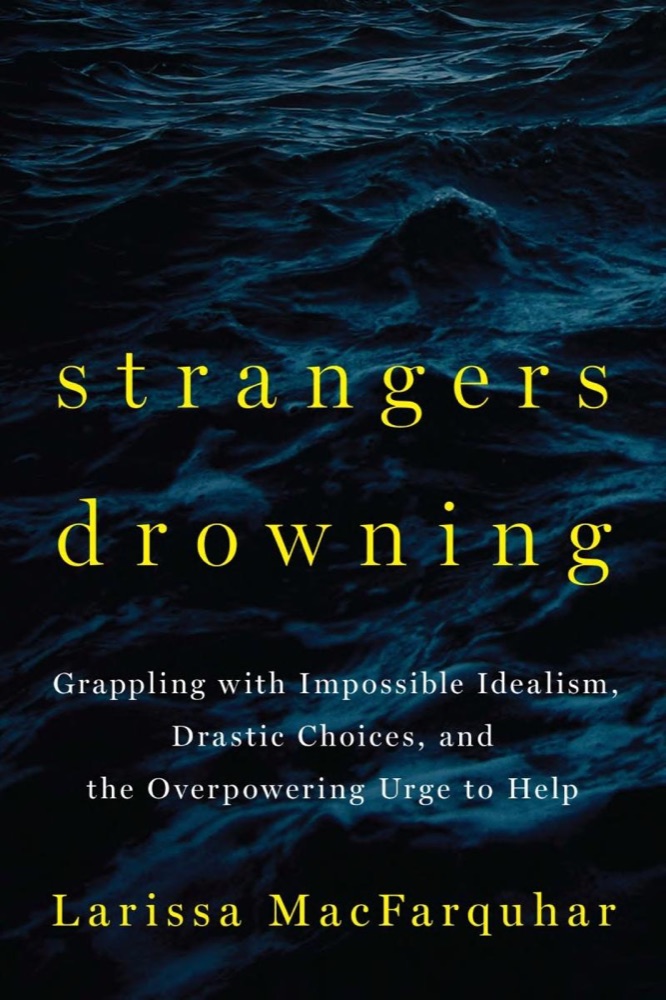 Strangers Drowning: Grappling with Impossible Idealism, Drastic Choices, and the Overpowering Urge to Help
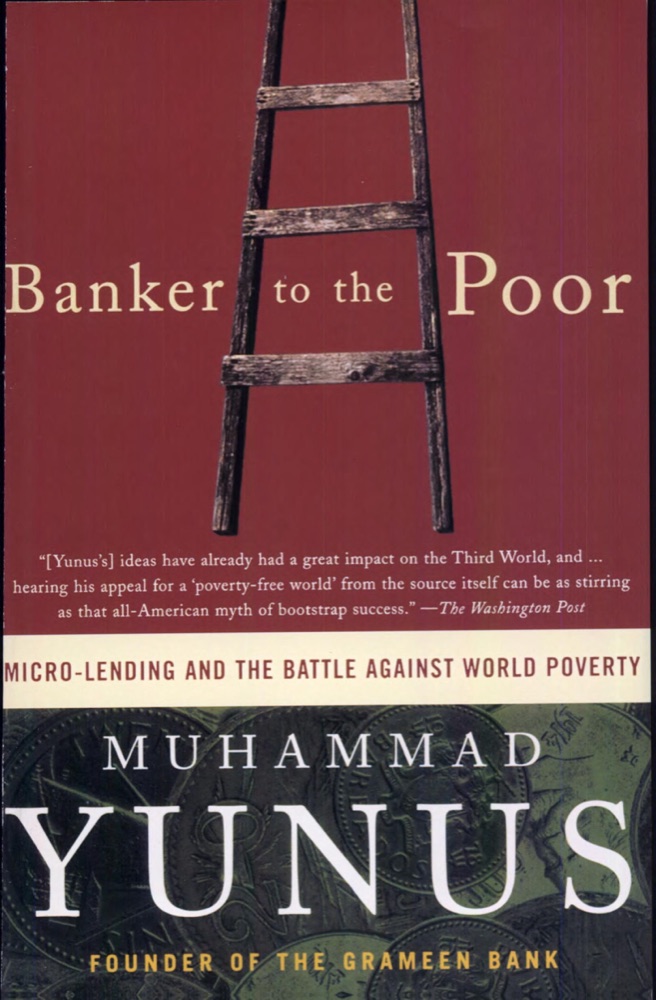 Banker to the Poor: Micro-Lending and the Battle Against World Poverty
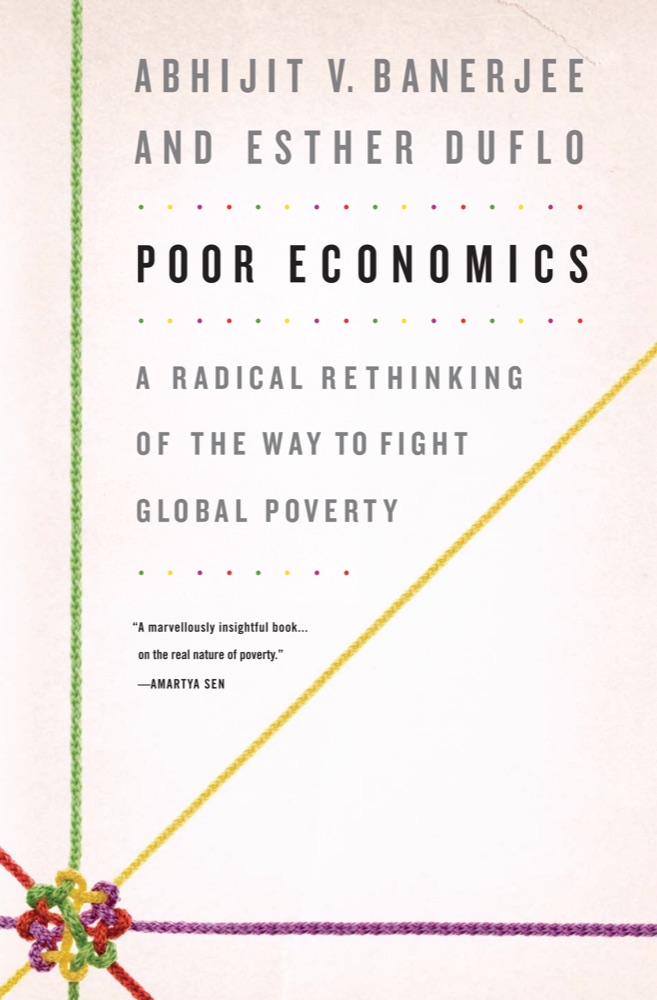 Poor Economics: A Radical Rethinking of the Way to Fight Global Poverty
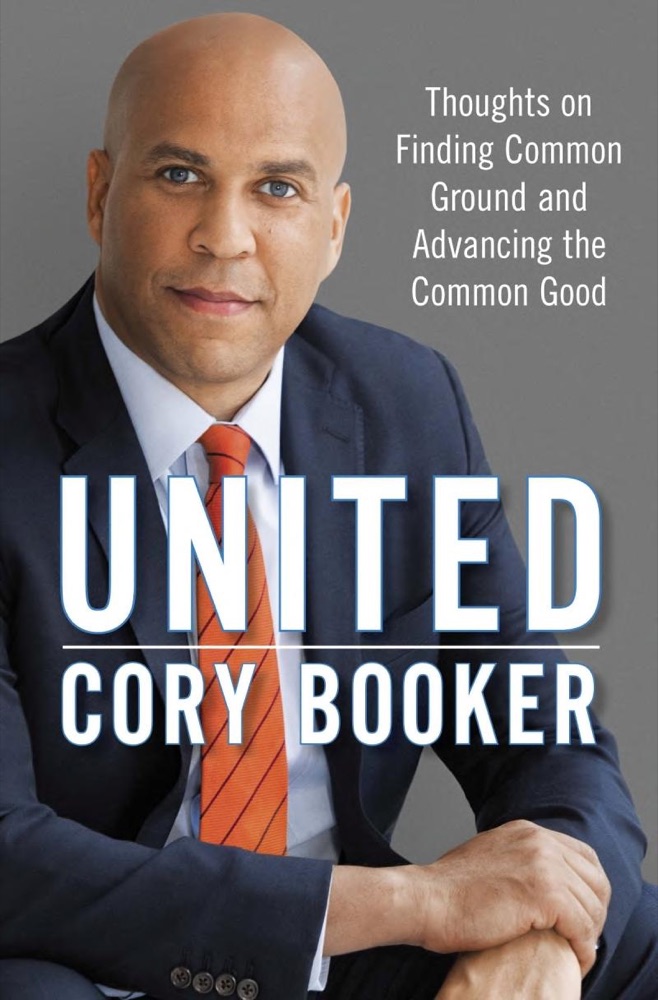 United: Thoughts on Finding Common Ground and Advancing the Common Good
 Justice: What's the Right Thing to Do?
 Beyond Religion: Ethics for a Whole World
 Poverty, by America
 Utopia for Realists: How We Can Build the Ideal World
 Sacred Economics: Money, Gift, and Society in the Age of Transition
 The Blue Sweater: Bridging the Gap Between Rich and Poor in an Interconnected World
 Ethics for the New Millennium
 Enlightenment Now: The Case for Reason, Science, Humanism, and Progress
 Let Us Dream: The Path to a Better Future
 Humankind: A Hopeful History
 Freedom
 The Spirit Level: Why More Equal Societies Almost Always Do Better
 Give People Money: The Simple Idea to Solve Inequality and Revolutionise Our Lives
 When Helping Hurts: How to Alleviate Poverty without Hurting the Poor...and Yourself
 How Adam Smith Can Change Your Life: An Unexpected Guide to Human Nature and Happiness
 Mutual Aid: Building Solidarity in This Crisis
 How to Be Perfect: The Correct Answer to Every Moral Question
 The Soul of Man Under Socialism
 Secrets of Jewish Wealth Revealed!
 Talking to My Daughter About the Economy: or, How Capitalism Works—and How It Fails
 In Praise of Idleness and Other Essays
 Walden Two
 The Autobiography of Eleanor Roosevelt
 The World-Ending Fire: The Essential Wendell Berry
 Endgame, Vol. 1: The Problem of Civilization
 Life at the Bottom: The Worldview That Makes the Underclass
 Debt: The First 5,000 Years
 The Ultimate Gift
 Coming Apart: The State of White America, 1960-2010
 Nickel and Dimed: On (Not) Getting by in America
 Tribe: On Homecoming and Belonging
 How Do You Live?
 The Moral Landscape: How Science Can Determine Human Values
 This Is What Inequality Looks Like
 Sex, Economy, Freedom, and Community: Eight Essays
 The Man Who Quit Money
 Naked Economics: Undressing the Dismal Science
 The Story of More: How We Got to Climate Change and Where to Go from Here
 The Vanishing American Adult: Our Coming-of-Age Crisis—and How to Rebuild a Culture of Self-Reliance
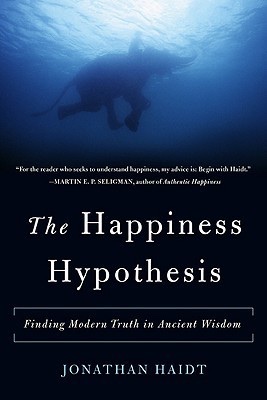 The Happiness Hypothesis: Finding Modern Truth in Ancient Wisdom
 The Way of All Flesh
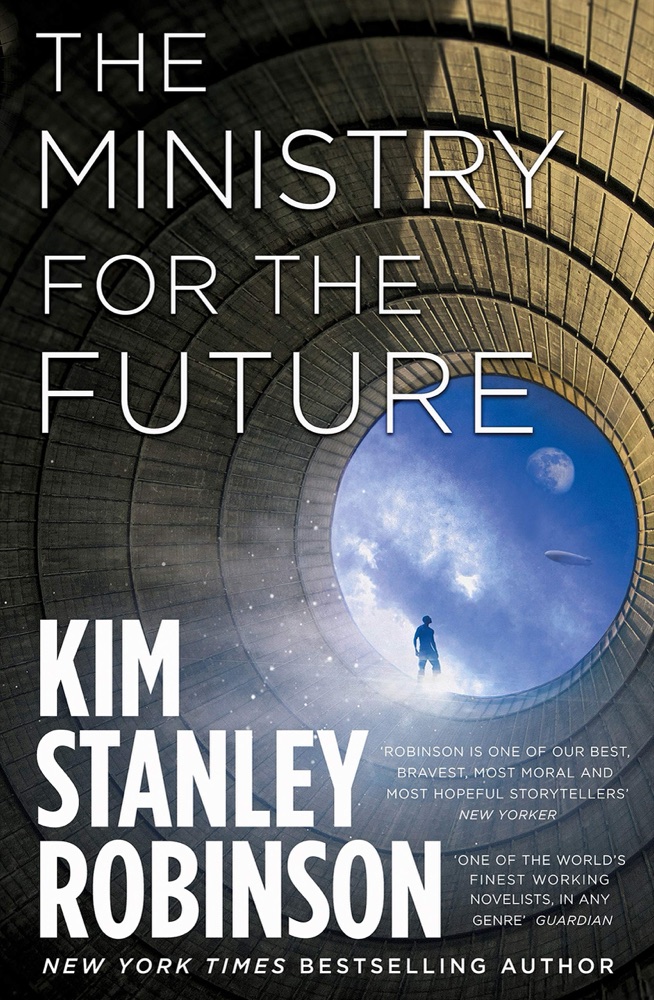 The Ministry for the Future
 Ajaya: Roll of the Dice
 Human Action: A Treatise on Economics
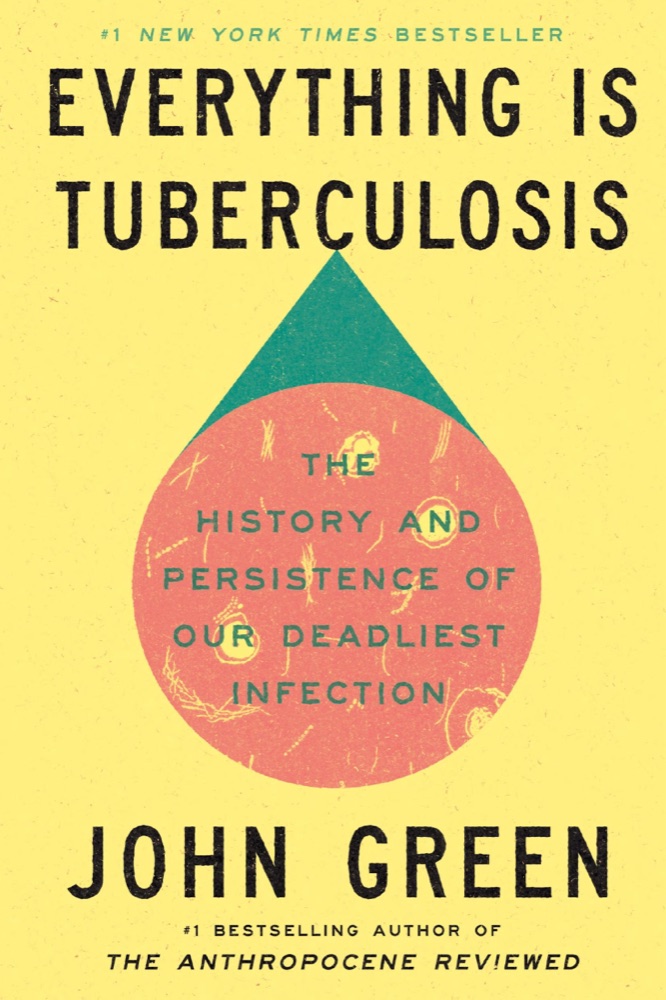 Everything Is Tuberculosis: The History and Persistence of Our Deadliest Infection
 Money, Possessions, and Eternity: A Comprehensive Guide to What the Bible Says about Financial Stewardship, Generosity, Materialism, Retirement, Financial Planning, Gambling, Debt, and More
 Pathologies of Power: Health, Human Rights, and the New War on the Poor
 No Impact Man
 SuperFreakonomics: Global Cooling, Patriotic Prostitutes And Why Suicide Bombers Should Buy Life Insurance
 The View From Flyover Country: Essays by Sarah Kendzior
 Twelve Steps to a Compassionate Life
 Standing for Something: 10 Neglected Virtues That Will Heal Our Hearts and Homes
 Walkaway