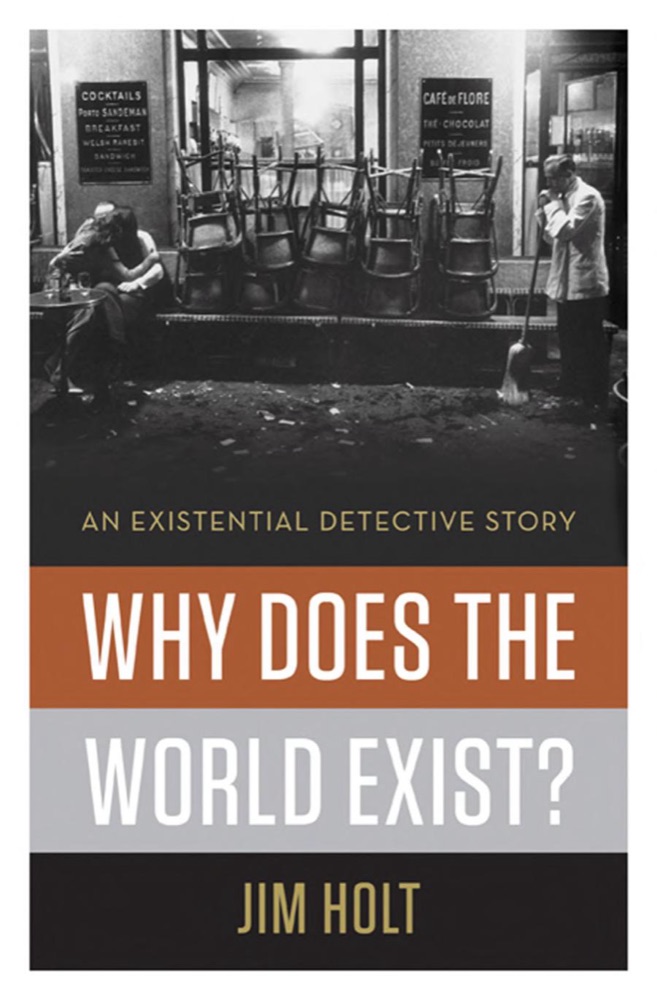
 Why Does the World Exist?: An Existential Detective Story
Quotes from the Book
Science spotlights three dimensions of nature that point to God. The first is the fact that nature obeys laws. The second is the dimension of life, of intelligently organized and purpose-driven beings, which arose from matter. The third is the very existence of nature. But it is not science alone that guided me. I have also been helped by a renewed study of the classical philosophical arguments.
24
If you had an equation detailing the probability of something emerging from a vacuum, you would still have to ask why that equation applies. Hawking had, in fact, noted the need for a creative factor to breathe fire into the equations.
12
we have all the evidence we need in our immediate experience and that only a deliberate refusal to “look” is responsible for atheism of any variety.
5
Gerald Schroeder points out that the existence of conditions favorable to life still does not explain how life itself originated. Life was able to survive only because of favorable conditions on our planet. But there is no law of nature that instructs matter to produce end-directed, self-replicating entities.
4
Prior to Flew, major apologies for atheism were those of Enlightenment thinkers (David Hume, Arthur Schopenhauer, Ludwig Feuerbach, and Friedrich Nietzsche). Major philosophers of Flew’s generation who were atheists: W. V. O. Quine and Gilbert Ryle. But none took the step of developing book-length arguments to support their personal beliefs. In later years, atheist philosophers who critically examined and rejected the traditional arguments for God’s existence: Paul Edwards, Wallace Matson, Kai Nielsen, Paul Kurtz, J. L. Mackie, Richard Gale, Michael Martin. But their works did not change the agenda and framework of discussion the way Flew’s innovative publications did.
1
Indeed, of all the truths available to us, the self is at the same time the most obvious and unassailable and the most lethal for all forms of physicalism. To begin with, it must be said that a denial of the self cannot even be claimed without contradiction. To the question, “How do I know I exist?” a professor famously replied, “And who’s asking?” The self is what we are and not what we have. It is the “I” from which arises our first-person perspective. We cannot analyze the self, because it is not a mental state that can be observed or described.
The problem of how meaningful or semantic information can emerge spontaneously from a collection of mindless molecules subject to blind and purposeless forces presents a deep conceptual challenge.
Every one who is seriously engaged in the pursuit of science becomes convinced that the laws of nature manifest the existence of a spirit vastly superior to that of men, and one in the face of which we with our modest powers must feel humble.
The important point is not merely that there are regularities in nature, but that these regularities are mathematically precise, universal, and “tied together.” Einstein spoke of them as “reason incarnate.” The question we should ask is how nature came packaged in this fashion. This is certainly the question that scientists from Newton to Einstein to Heisenberg have asked—and answered. Their answer was the Mind of God.
Three domains of scientific inquiry have been especially important for me, and I will consider them as we proceed in the light of today’s evidence. The first is the question that puzzled and continues to puzzle most reflective scientists: How did the laws of nature come to be? The second is evident to all: How did life as a phenomenon originate from nonlife? And the third is the problem that philosophers handed over to cosmologists: How did the universe, by which we mean all that is physical, come into existence?
I now believe that the universe was brought into existence by an infinite Intelligence. I believe that this universe’s intricate laws manifest what scientists have called the Mind of God. I believe that life and reproduction originate in a divine Source.
C. S. Lewis’s Socratic Club was open for business during the heyday of the new philosophy, and the Socratic principle I saw exemplified there—of following the evidence wherever it may lead—increasingly became a guiding principle in the development, refinement, and sometimes reversal of my own philosophical views.
If they want to discourage belief in God, the popularizers must furnish arguments in support of their own atheistic views. Today’s atheist evangelists hardly even try to argue their case in this regard. Instead, they train their guns on well-known abuses in the history of the major world religions. But the excesses and atrocities of organized religion have no bearing whatsoever on the existence of God, just as the threat of nuclear proliferation has no bearing on the question of whether E = mc2.
Tait, writes that Russell was not open to any serious discussion of God’s existence: “I could not even talk to him about religion.” Russell was apparently turned off by the kind of religious believers he had encountered. “I would have liked to convince my father that I had found what he had been looking for, the ineffable something he had longed for all his life. I would have liked to persuade him that the search for God does not have to be vain. But it was hopeless. He had known too many blind Christians, bleak moralists who sucked the joy from life and persecuted their opponents; he would never have been able to see the truth they were hiding.” Tait, nevertheless, believes that Russell’s “whole life was a search for God…. Somewhere at the back of my father’s mind, at the bottom of his heart, in the depths of his soul, there was an empty space that had once been filled by God, and he never found anything else to put in it.” He had the “ghostlike feeling of not belonging, of having no home in this world.”11 In a poignant passage, Russell once said: “Nothing can penetrate the loneliness of the human heart except the highest intensity of the sort of love the religious teachers have preached.
Dawkins himself has elsewhere confessed that his atheistic view of the universe is based on faith. When asked by the Edge Foundation, “What do you believe is true even though you cannot prove it?” Dawkins replied: “I believe that all life, all intelligence, all creativity and all ‘design’ anywhere in the universe, is the direct or indirect product of Darwinian natural selection. It follows that design comes late in the universe, after a period of Darwinian evolution. Design cannot precede evolution and therefore cannot underlie the universe.”8 At bottom, then, Dawkins’s rejection of an ultimate Intelligence is a matter of belief without proof. And like many whose beliefs are based on blind faith, he cannot tolerate dissent or defection.
the exponents of a look-back-in-anger, take-no-prisoners type of atheism were out in force. What was significant about these books was not their level of argument—which was modest, to put it mildly—but the level of visibility they received both as best sellers and as a “new” story discovered by the media. The “story” was helped even further by the fact that the authors were as voluble and colorful as their books were fiery.
Virtually no major scientist today claims that the fine tuning was purely a result of chance factors at work in a single universe.
concluded from its surveys that in essence what you believe by the time you are thirteen is what you will die believing.
Watch on YouTube
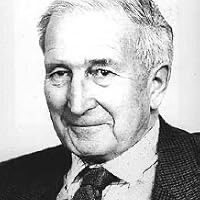
About Antony Flew
We have collected 18 quotes from 1 book by Antony Flew on BookQuoters.
More about the author →About the book
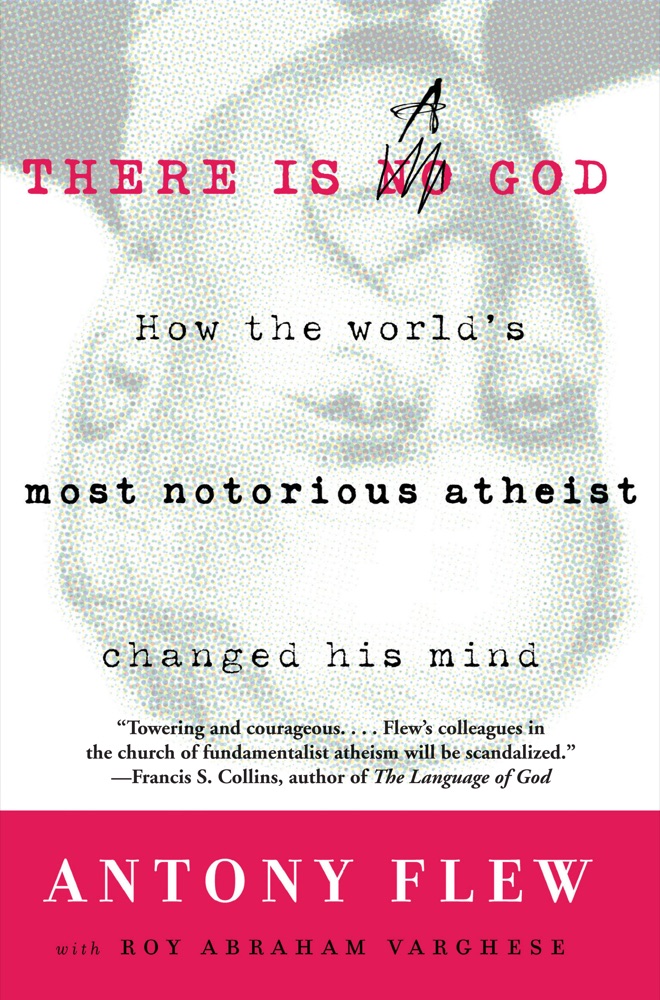
In one of the biggest religion news stories of the new millennium, the Associated Press announced that Professor Antony Flew, the world's leading atheist, now believes in God. Flew is a pioneer for modern atheism. His famous paper, Theology and Falsification, was first presented at a meeting of the Oxford Socratic Club chaired by C. S. Lewis and went on to become the most widely reprinted philosophical publication of the last five decades. Flew earned his fame by arguing that one should presuppose atheism until evidence of a God surfaces. He now believes that such evidence exists, and There Is a God chronicles his journey from staunch atheism to believer. For the first time, this book will present a detailed and fascinating account of Flew's riveting decision to revoke his previous beliefs and argue for the existence of God. Ever since Flew's announcement, there has been great debate amo
Book details
- First published
- 2007
- Author
- Antony Flew
- Genre
- Philosophy
- Goodreads rating
- 3.68 (3k ratings)
Keep reading
Why Does the World Exist?: An Existential Detective Story
 The Case for a Creator: A Journalist Investigates Scientific Evidence That Points Toward God
 The Language of God: A Scientist Presents Evidence for Belief
 The Varieties of Scientific Experience: A Personal View of the Search for God
 The Portable Atheist: Essential Readings for the Nonbeliever
 Reasonable Faith
 Miracles: What They Are, Why They Happen, and How They Can Change Your Life
 Dialogues Concerning Natural Religion
 A Universe from Nothing: Why There Is Something Rather Than Nothing
 The Accidental Universe: The World You Thought You Knew
 The Big Picture: On the Origins of Life, Meaning, and the Universe Itself
 Outgrowing God: A Beginner’s Guide to Atheism
 The Grand Design
 What's So Great About Christianity
 Consilience: The Unity of Knowledge
 The God Delusion
 The Perennial Philosophy
 Darwin's Dangerous Idea: Evolution and the Meanings of Life
 The Meaning of It All: Thoughts of a Citizen-Scientist
 The Mind of the Maker: Dorothy L. Sayers' Witty Classic on the Trinity, Christianity, and Human Creativity
 Breaking the Spell: Religion as a Natural Phenomenon
 Existential Physics: A Scientist's Guide to Life's Biggest Questions
 A Devil's Chaplain: Reflections on Hope, Lies, Science, and Love
 Astrophysics for People in a Hurry
 The Problems of Philosophy
 Why People Believe Weird Things: Pseudoscience, Superstition, and Other Confusions of Our Time
 Parallel Worlds: A Journey Through Creation, Higher Dimensions, and the Future of the Cosmos
 Why There Is No God: Simple Responses to 20 Common Arguments for the Existence of God
 Death by Black Hole: And Other Cosmic Quandaries
 36 Arguments for the Existence of God: A Work of Fiction
 An Enquiry Concerning Human Understanding
 Critique of Pure Reason
 Living with a Wild God: A Nonbeliever's Search for the Truth about Everything
 The Age of Reason
 The Case for Christianity
 The Demon-Haunted World: Science as a Candle in the Dark
 The Occult
 Metaphysics
 I Don't Have Enough Faith to Be an Atheist
 A Brief History of Time
 Think: A Compelling Introduction to Philosophy
 Helgoland: Making Sense of the Quantum Revolution
 Myths to Live By
 What I Believe
 Black Holes and Baby Universes and Other Essays
 Brief Answers to the Big Questions
 The Lost World of Genesis One: Ancient Cosmology and the Origins Debate (Volume 2)
 The Gospel of the Flying Spaghetti Monster
 The Varieties of Religious Experience
 The Story of B: An Adventure of the Mind and Spirit
 The World's Religions
 Letter to a Christian Nation
 Seven Days that Divide the World: The Beginning According to Genesis & Science
 21 Lessons for the 21st Century
 Summa Theologica
 Our Mathematical Universe: My Quest for the Ultimate Nature of Reality
 God: The Failed Hypothesis: How Science Shows That God Does Not Exist
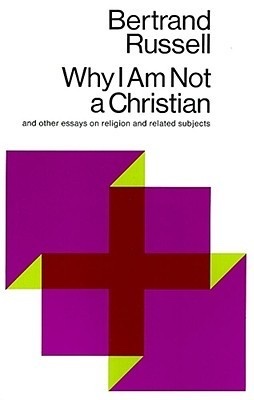 Why I Am Not a Christian and Other Essays on Religion and Related Subjects
 Tactics: A Game Plan for Discussing Your Christian Convictions