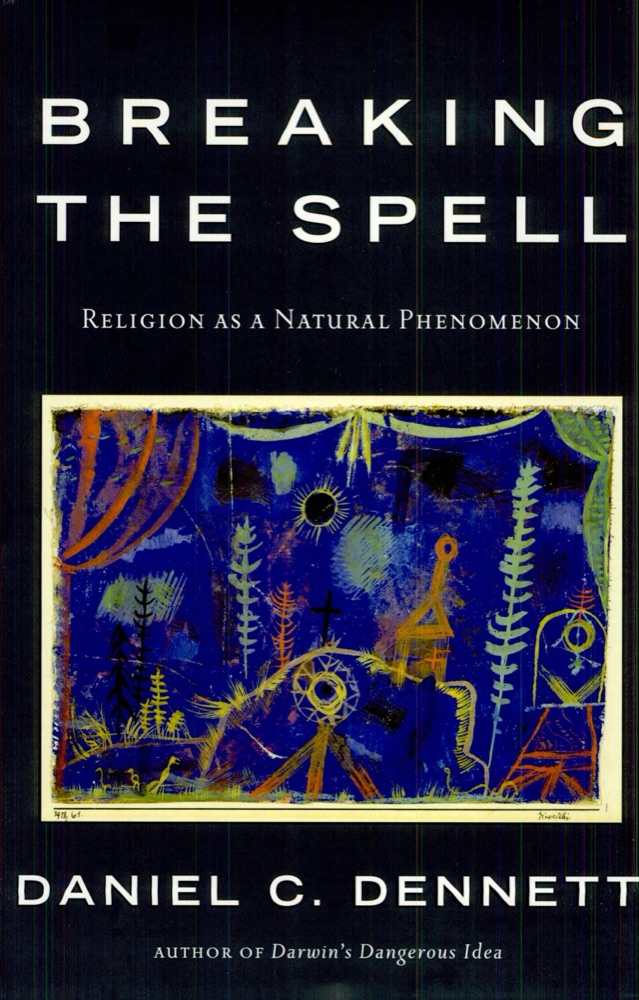

 Darwin's Dangerous Idea: Evolution and the Meanings of Life
Quotes from the Book
If you can approach the world's complexities, both its glories and its horrors, with an attitude of humble curiosity, acknowledging that however deeply you have seen, you have only scratched the surface, you will find worlds within worlds, beauties you could not heretofore imagine, and your own mundane preoccupations will shrink to proper size, not all that important in the greater scheme of things.
303
People are afraid of being more ignorant than their children―especially, apparantly, their daughters.
46
One of the surprising discoveries of modern psychology is how easy it is to be ignorant of your own ignorance.
36
Those who feel guilty contemplating "betraying" the tradition they love by acknowledging their disapproval of elements within it should reflect on the fact that the very tradition to which they are so loyal—the "eternal" tradition introduced to them in their youth—is in fact the evolved product of many adjustments firmly but delicately made by earlier lovers of the same tradition.
32
I should emphasize this, to keep well-meaning but misguided multiculturalists at bay: the theoretical entities in which these tribal people frankly believe — the gods and other spirits — don't exist. These people are mistaken, and you know it as well as I do. It is possible for highly intelligent people to have a very useful but mistaken theory, and we don't have to pretend otherwise in order to show respect for these people and their ways.
31
f you can approach the world’s complexities, both its glories and its horrors, with an attitude of humble curiosity, acknowledging that however deeply you have seen, you have only just scratched the surface, you will find worlds within worlds, beauties you could not heretofore imagine, and your own mundane preoccupations will shrink to proper size, not all that important in the greater scheme of things.
22
Philosophy is questions that may never be answered. Religion is answers that may never be questioned. —Anonymous
18
My faith in the expertise of physicists like Richard Feynman, for instance, permits me to endorse—and, if it comes to it, bet heavily on the truth of—a proposition that I don't understand. So far, my faith is not unlike religious faith, but I am not in the slightest bit motivated to go to my death rather than recant the formulas of physics. Watch: E doesn't equal mc2, it doesn't, it doesn't! I was lying, so there!
18
As the comedian Emo Phillips once said, “When I was a child, I used to pray to God for a bicycle. But then I realized that God doesn’t work in that way—so I stole a bike and prayed for forgiveness!
12
The more you have invested in your religion, the more you will be motivated to protect that investment. Stark
9
Good people will do good things, and bad people will do bad things. But for good people to do bad things—that takes religion. —Steven Weinberg, 1999
7
A mountain climber foolishly climbing alone slips off a precipice and finds himself dangling at the end of his safety rope, a thousand feet above a ravine. Unable to climb the rope or swing to a safe resting spot, he calls out in despair: “Hallooo, hallooo! Can anybody help me?” To his astonishment, the clouds part, a beautiful light pours through them, and a mighty voice replies, “Yes, my son, I can help you. Take your knife and cut the rope!” The climber takes out his knife, and then he stops, and thinks and thinks. Then he cries out: “Can anybody else help me?
7
I might repeat to myself slowly and soothingly, a list of quotations beautiful from minds profound—if I can remember any of the damn things. —Dorothy Parker
6
It is worth recalling that it took brave pioneers many years to overcome the powerful taboo against the dissection of human cadavers during the early years of modern medicine. And we should note that, notwithstanding the outrage and revulsion with which the idea of dissection was then received, overcoming that tradition has not led to the feared collapse of morality and decency. We live in an era in which human corpses are still treated with due respect—indeed, with rather more respect and decorum than they were treated with at the time dissection was still disreputable.
6
Words exist. What are they made of? Air under pressure? Ink? Some instances of the word "cat" are made of ink, and some are made of bursts of acoustic energy in the atmosphere, and some are made of patterns of glowing dots on computer screens, and some occur silently in thoughts, and what they have in common is just that they count as "the same" (tokens of the same type, as philosophers say) say in a system of symbols known as a language. Words are such familiar items in our language-drenched world that we tend to think of them as if they were unproblematically tangible things - as real as teacups and raindrops - but they are in fact quite abstract, even more abstract than voices or songs or haircuts or opportunities (and what are they made off?). What are words? Words are basically information packets of some sort, recipes for using one's vocal apparatus and ears (or hands or eyes) - and brains - in quite specific ways. A world is more than a sound or a spelling. For instance, fast sounds the same and is spelled the same in English and German, but has completely different meanings and roles in the two languages. Two different worlds, sharing only some of their surface properties. Words exist. Do memes exist? Yes, because words exist, and words are memes that can be pronounced.
4
When I was a child, I used to pray to God for a bicycle. But then I realized that God doesn’t work in that way—so I stole a bike and prayed for forgiveness!
4
My sacred values are obvious and quite ecumenical: democracy, justice, life, love, and truth (in alphabetical order).
3
People who want to study religion usually have an ax to grind. They either want to defend their favorite religion from its critics or want to demonstrate the irrationality and futility of religion, and this tends to infect their methods with bias.
3
There is only one way to respect the substance of any purported God-given moral edict: consider it conscientiously in the full light of reason, using all the evidence at our command. No God that was pleased by displays of unreasoning love would be worthy of worship.
3
Nothing is more difficult, and therefore more precious, than to be able to decide. —Napoleon Bonaparte
3
Ancestor worship must be an appealing idea to those who are about to become ancestors. —Steven Pinker, How the Mind Works
3
Like many other natural wonders, the human mind is something of a bag of tricks, cobbled together over the eons by the foresightless process of evolution by natural selection.
3
atheists and agnostics can have sacred values, values that are simply not up for re-evaluation at all. I have sacred
2
We have a better product than soap or automobiles. We have eternal life. —Reverend Jim Bakker8
2
Religions exist primarily for people to achieve together what they cannot achieve alone. —David Sloan Wilson, Darwin’s Cathedral
2
concept of cultural replicators—items that are copied over and over—has been given a name by Richard Dawkins (1976), who proposed to call them memes, a term that has recently been the focus of controversy. For the moment, I want to make a point that should be uncontroversial: cultural transmission can sometimes mimic genetic transmission, permitting competing
1
Sexual reproduction is thus a costly investment that has to pay for itself in the short run. The details of theory and experiment on this topic are fascinating (see, e.g., Maynard Smith, 1978; Ridley, 1993), but for our purposes a few highlights from the currently front-running theory are most instructive: sex (in vertebrates like us, at least) pays for itself by making our offspring relatively inscrutable to the parasites we endow them with from birth. Parasites have short lifespans compared with their hosts, and typically reproduce many times during their host’s lifetime. Mammals, for instance, are hosts to trillions of parasites. (Yes, right now, no matter how healthy and clean you are, there are trillions of parasites of thousands of different species inhabiting your gut, your blood, your skin, your hair, your mouth, and every other part of your body. They have been rapidly evolving to survive against the onslaught of your defenses since the day you were born.) Before a female can mature to reproductive age, her parasites evolve to fit her better than any glove. (Meanwhile, her immune system evolves to combat them, a standoff—if she is healthy—in an ongoing arms race.) If she gave birth to a clone, her parasites would leap to it and find themselves at home from the outset. They would be already optimized to their new surroundings. If instead she uses sexual reproduction to endow her offspring with a mixed set of genes (half from her mate), many of these genes—or, more directly, their products, in the offspring’s internal defenses—will be alien or cryptic to the ship-jumping parasites. Instead of home sweet home, the parasites will find themselves in terra incognita. This gives the offspring a big head start in the arms race.
1
Watch on YouTube
About Daniel C. Dennett
We have collected 82 quotes from 4 books by Daniel C. Dennett on BookQuoters.
More about the author →More by Daniel C. Dennett
Darwin's Dangerous Idea: Evolution and the Meanings of Life
 Freedom Evolves
 From Bacteria to Bach and Back: The Evolution of Minds
About the book
An innovative thinker tackles the controversial question of why we believe in God and how religion shapes our lives and our future.
For a growing number of people, there is nothing more important than religion. It is an integral part of their marriage, child rearing, and community. In this daring new book, distinguished philosopher Daniel C. Dennett takes a hard look at this phenomenon and asks why. Where does our devotion to God come from and what purpose does it serve? Is religion a blind evolutionary compulsion or a rational choice? In "Breaking the Spell," Dennett argues that the time has come to shed the light of science on the fundamental questions of faith. In a spirited narrative that ranges widely through history, philosophy, and psychology, Dennett explores how organized religion evolved from folk beliefs and why it is such a potent force today. Deftly and lucidly, he conten
Book details
- First published
- 2006
- Author
- Daniel C. Dennett
- Genre
- Nonfiction
- Goodreads rating
- 3.89 (13k ratings)
Keep reading
 The Portable Atheist: Essential Readings for the Nonbeliever
 The Varieties of Religious Experience
 The God Delusion
 The Gay Science
 Why I Am Not a Christian and Other Essays on Religion and Related Subjects
 A Language Older Than Words
 The Perennial Philosophy
 Religion for Atheists: A Non-Believer's Guide to the Uses of Religion
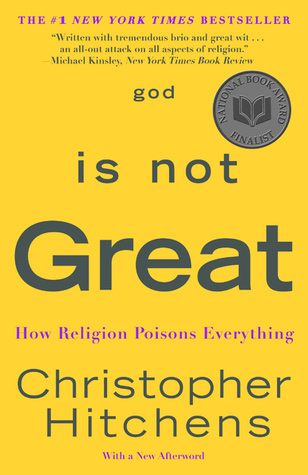 god is Not Great: How Religion Poisons Everything
 The Parafaith War
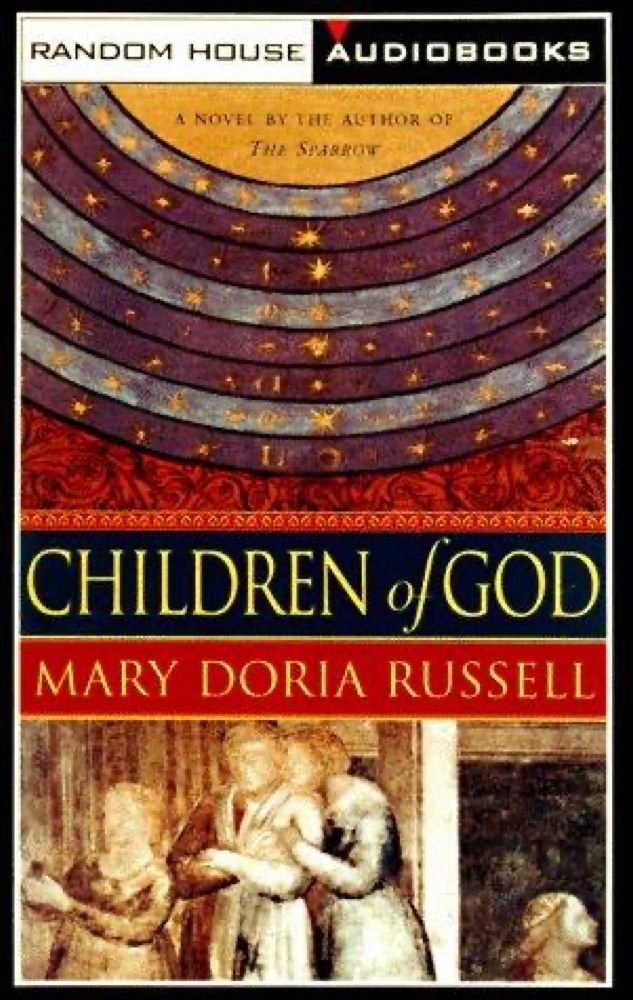 Children of God
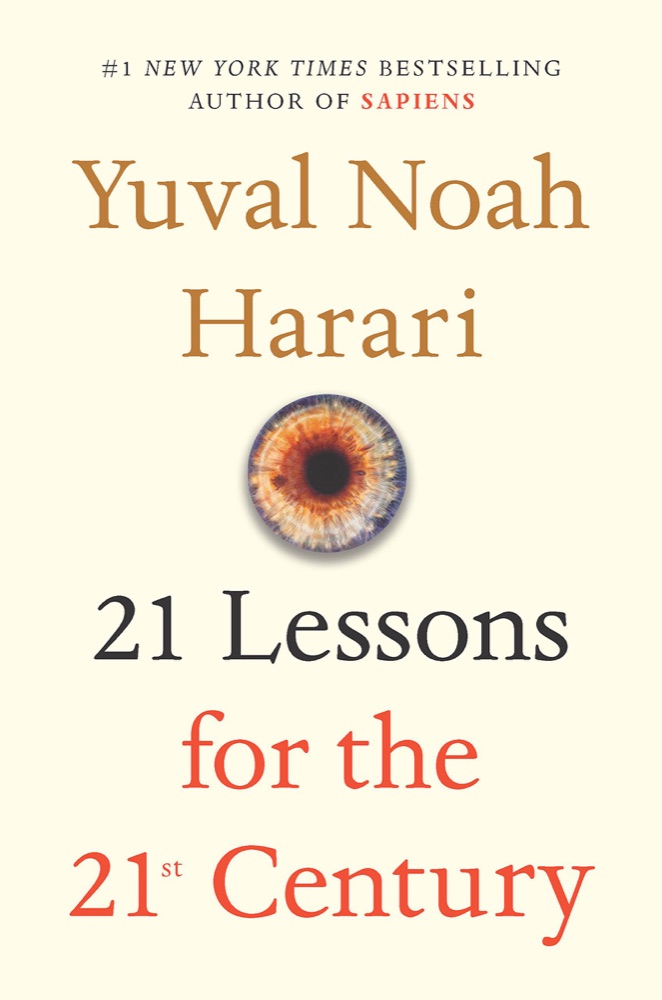 21 Lessons for the 21st Century
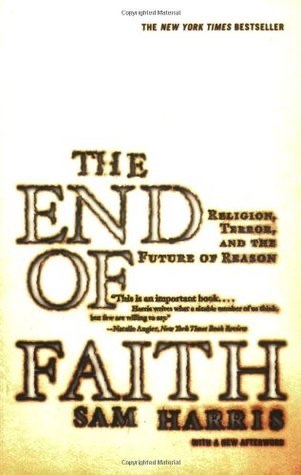 The End of Faith: Religion, Terror, and the Future of Reason
 Origin
 The Story of My Experiments With Truth
 The Meaning of It All: Thoughts of a Citizen-Scientist
 Island
 Living with a Wild God: A Nonbeliever's Search for the Truth about Everything
 Daybreak: Thoughts on the Prejudices of Morality
 The World's Religions
 Letter to a Christian Nation
 Heretics
 Miracles: What They Are, Why They Happen, and How They Can Change Your Life
 The Moral Landscape: How Science Can Determine Human Values
 Orthodoxy
 When I Was a Child I Read Books
 A Devil's Chaplain: Reflections on Hope, Lies, Science, and Love
 The Sign
 The World's Last Night: And Other Essays
 The Age of Reason
 God's Debris: A Thought Experiment
 Myths to Live By
 For Small Creatures Such as We: Rituals for Finding Meaning in Our Unlikely World
 A Little History of Religion
 Think: A Compelling Introduction to Philosophy
 The Power of Myth
 Parable of the Sower
 The Language of God: A Scientist Presents Evidence for Belief
 Surprised by Joy: The Shape of My Early Life
 God in Search of Man: A Philosophy of Judaism
 Children of Dune
 The Everlasting Man
 Villa Incognito
 The Story of B: An Adventure of the Mind and Spirit
 Letters and Papers from Prison
 Twilight of the Idols
 Maps of Meaning: The Architecture of Belief
 12 Rules for Life: An Antidote to Chaos
 My Bright Abyss: Meditation of a Modern Believer
 Enlightenment Now: The Case for Reason, Science, Humanism, and Progress
 I Am America
 Rationality: From AI to Zombies
 God, No! Signs You May Already Be an Atheist and Other Magical Tales
 The Seven Storey Mountain
 Tactics: A Game Plan for Discussing Your Christian Convictions
 The Bassoon King: My Life in Art, Faith, and Idiocy
 Religion Explained: The Evolutionary Origins of Religious Thought
 Small Wonder
 Genesis