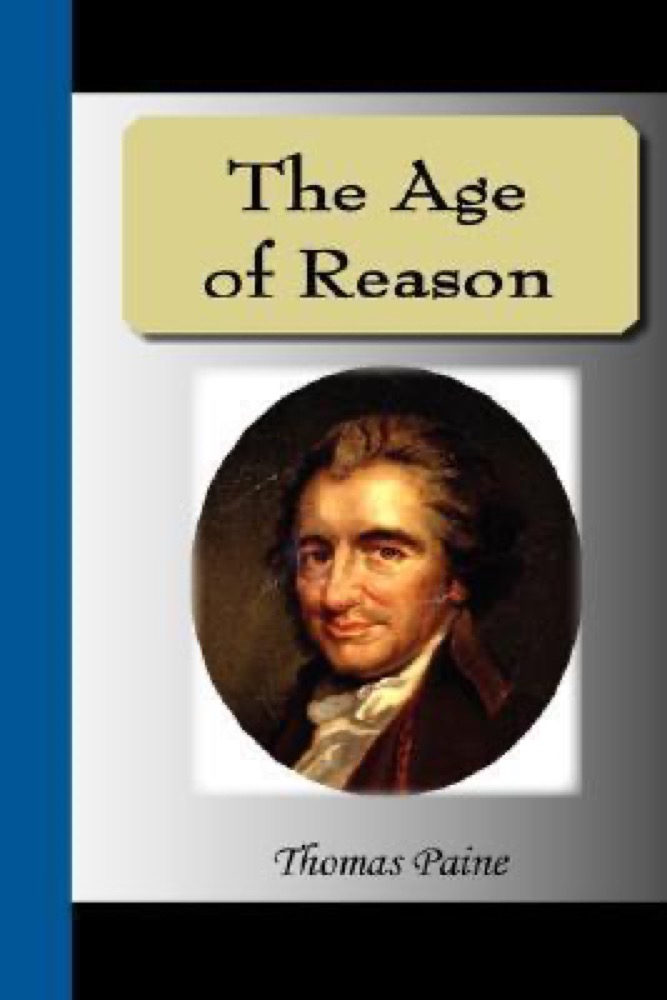

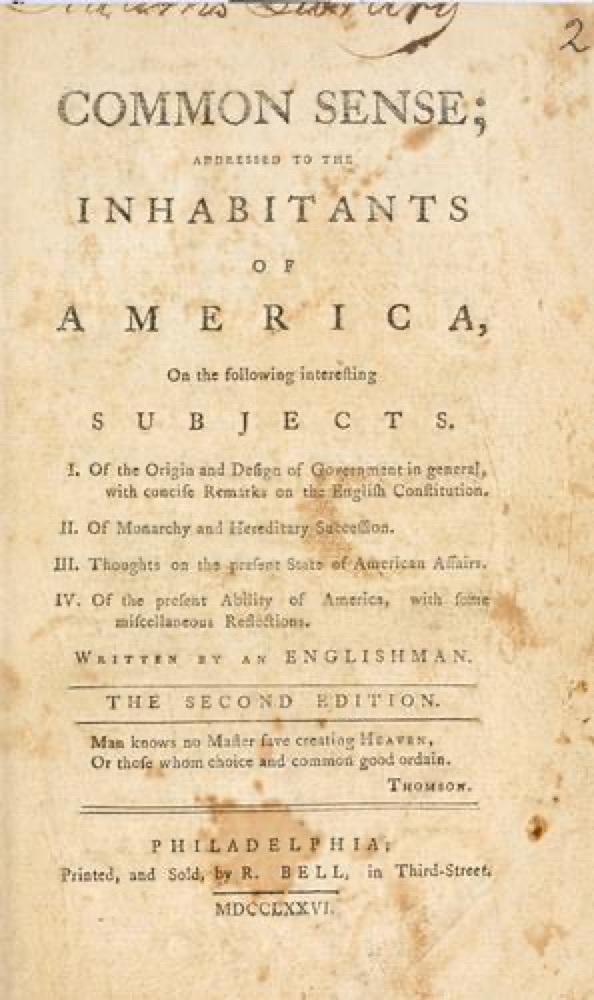
 Common Sense
Quotes from the Book
It is from the Bible that man has learned cruelty, rapine, and murder; for the belief of a cruel God makes a cruel man.
My own mind is my own church.
It is necessary to the happiness of man that he be mentally faithful to himself. Infidelity does not consist in believing, or in disbelieving, it consists in professing to believe what he does not believe.
Of all the systems of religion that ever were invented, there is no more derogatory to the Almighty, more unedifying to man, more repugnant to reason, and more contradictory to itself than this thing called Christianity. Too absurd for belief, too impossible to convince, and too inconsistent for practice, it renders the heart torpid or produces only atheists or fanatics. As an engine of power, it serves the purpose of despotism, and as a means of wealth, the avarice of priests, but so far as respects the good of man in general it leads to nothing here or hereafter.
Infidelity does not consist in believing, or in disbelieving; it consists in professing to believe what he does not believe.
It is a contradiction in terms and ideas, to call anything a revelation that comes to us at second-hand, either verbally or in writing. Revelation is necessarily limited to the first communication; after this, it is only an account of something which that person says was a revelation made to him; and though he may find himself obliged to believe it, it cannot be incumbent on me to believe it in the same manner; for it was not a revelation made to me, and I have only his word for it that it was made to him.
Whether we sleep or wake, the vast machinery of the universe still goes on.
Loving, of enemies is another dogma of feigned morality, and has besides no meaning. It is incumbent on man, as a moralist, that he does not revenge an injury; and it is equally as good in a political sense, for there is no end to retaliation; each retaliates on the other, and calls it justice: but to love in proportion to the injury, if it could be done, would be to offer a premium for a crime. Besides, the word enemies is too vague and general to be used in a moral maxim, which ought always to be clear and defined, like a proverb. If a man be the enemy of another from mistake and prejudice, as in the case of religious opinions, and sometimes in politics, that man is different to an enemy at heart with a criminal intention; and it is incumbent upon us, and it contributes also to our own tranquillity, that we put the best construction upon a thing that it will bear. But even this erroneous motive in him makes no motive for love on the other part; and to say that we can love voluntarily, and without a motive, is morally and physically impossible. Morality is injured by prescribing to it duties that, in the first place, are impossible to be performed, and if they could be would be productive of evil; or, as before said, be premiums for crime. The maxim of doing as we would be done unto does not include this strange doctrine of loving enemies; for no man expects to be loved himself for his crime or for his enmity. Those who preach this doctrine of loving their enemies, are in general the greatest persecutors, and they act consistently by so doing; for the doctrine is hypocritical, and it is natural that hypocrisy should act the reverse of what it preaches. For my own part, I disown the doctrine, and consider it as a feigned or fabulous morality; yet the man does not exist that can say I have persecuted him, or any man, or any set of men, either in the American Revolution, or in the French Revolution; or that I have, in any case, returned evil for evil.
The study of theology, as it stands in Christian churches, is the study of nothing; it is founded on nothing; it rests on no principles; it proceeds by no authorities; it has no data; it can demonstrate nothing; and it admits of no conclusion. Not anything can be studied as a science, without our being in possession of the principles upon which it is founded; and as this is the case with Christian theology, it is therefore the study of nothing.
But the resurrection of a dead person from the grave, and his ascension through the air, is a thing very different, as to the evidence it admits of, to the invisible conception of a child in the womb. The resurrection and ascension, supposing them to have taken place, admitted of public and ocular demonstration, like that of the ascension of a balloon, or the sun at noon day, to all Jerusalem at least. A thing which everybody is required to believe, requires that the proof and evidence of it should be equal to all, and universal; and as the public visibility of this last related act was the only evidence that could give sanction to the former part, the whole of it falls to the ground, because that evidence never was given. Instead of this, a small number of persons, not more than eight or nine, are introduced as proxies for the whole world, to say they saw it, and all the rest of the world are called upon to believe it. But it appears that Thomas did not believe the resurrection; and, as they say, would not believe without having ocular and manual demonstration himself. So neither will I; and the reason is equally as good for me, and for every other person, as for Thomas.
Each of those churches shows certain books, which they call revelation, or the Word of God. The Jews say that their Word of God was given by God to Moses face to face; the Christians say, that their Word of God came by divine inspiration; and the Turks say, that their Word of God (the Koran) was brought by an angel from heaven. Each of those churches accuses the other of unbelief; and, for my own part, I disbelieve them all.
It was needless, after this, to say that all was vanity and vexation of spirit; for it is impossible to derive happiness from the company of those whom we deprive of happiness.
Infidelity does not consist in believing, or in disbelieving; it consists in professing to believe what he does not believe. It is impossible to calculate the moral mischief, if I may so express it, that mental lying has produced in society. When a man has so far corrupted and prostituted the chastity of his mind, as to subscribe his professional belief to things he does not believe, he has prepared himself for the commission of every other crime.
When also I am told that a woman, called the Virgin Mary, said, or gave out, that she was with child without any cohabitation with a man, and that her betrothed husband, Joseph, said that an angel told him so, I have a right to believe them or not: such a circumstance required a much stronger evidence than their bare word for it: but we have not even this; for neither Joseph nor Mary wrote any such matter themselves. It is only reported by others that they said so. It is hearsay upon hearsay, and I do not chose to rest my belief upon such evidence.
That many good men have believed this strange fable [Christianity], and lived very good lives under that belief (for credulity is not a crime) is what I have no doubt of. In the first place, they were educated to believe it, and they would have believed anything else in the same manner. There are also many who have been so enthusiastically enraptured by what they conceived to be the infinite love of God to man, in making a sacrifice of himself, that the vehemence of the idea has forbidden and deterred them from examining into the absurdity and profaneness of the story.
The Almighty Lecturer, by displaying the principles of science in the structure of the universe, has invited man to study and to imitation. It is as if He has said to the inhabitants of this globe that we call ours, "I have made an earth for man to dwell upon, and I have rendered the starry heavens visible, to teach him science and the arts. He can now provide for his own comfort, and learn from my munificence to all to be kind to each other.
It is difficult beyond description to conceive that space can have no end; but it is more difficult to conceive an end. It is difficult beyond the power of man to conceive an eternal duration of what we call time; but it is more impossible to conceive a time when there shall be no time.
As to the ancient historians, from Herodotus to Tacitus, we credit them as far as they relate things probable and credible, and no further: for if we do, we must believe the two miracles which Tacitus relates were performed by Vespasian, that of curing a lame man, and a blind man, in just the same manner as the same things are told of Jesus Christ by his historians. We must also believe the miracles cited by Josephus, that of the sea of Pamphilia opening to let Alexander and his army pass, as is related of the Red Sea in Exodus. These miracles are quite as well authenticated as the Bible miracles, and yet we do not believe them; consequently the degree of evidence necessary to establish our belief of things naturally incredible, whether in the Bible or elsewhere, is far greater than that which obtains our belief to natural and probable things.
He prays dictatorially. When it is sunshine, he prays for rain, and when it is rain, he prays for sunshine. He follows the same idea in everything that he prays for; for what is the amount of all his prayers, but an attempt to make the Almighty change his mind, and act otherwise than he does? It is as if he were to say—- thou knowest not so well as I.
People in general know not what wickedness there is in this pretended word of God. Brought up in habits of superstition, they take it for granted that the Bible is true, and that it is good; they permit themselves not to doubt of it, and they carry the ideas they form of the benevolence of the Almighty to the book which they have been taught to believe was written by his authority. Good heavens! it is quite another thing, it is a book of lies, wickedness, and blasphemy.
Some Christians pretend that Christianity was not established by the sword; but of what period of time do they speak? It was impossible that twelve men could begin with the sword: they had not the power; but no sooner were the professors of Christianity sufficiently powerful to employ the sword than they did so, and the stake and faggot too; and Mahomet could not do it sooner. By the same spirit that Peter cut off the ear of the high priest's servant (if the story be true) he would cut off his head, and the head of his master, had he been able. Besides this, Christianity grounds itself originally upon the [Hebrew] Bible, and the Bible was established altogether by the sword, and that in the worst use of it — not to terrify, but to extirpate. The Jews made no converts: they butchered all. The Bible is the sire of the [New] Testament, and both are called the word of God. The Christians read both books; the ministers preach from both books; and this thing called Christianity is made up of both. It is then false to say that Christianity was not established by the sword.
About Thomas Paine
We have collected 76 quotes from 3 books by Thomas Paine on BookQuoters.
More about the author →More by Thomas Paine
Common Sense
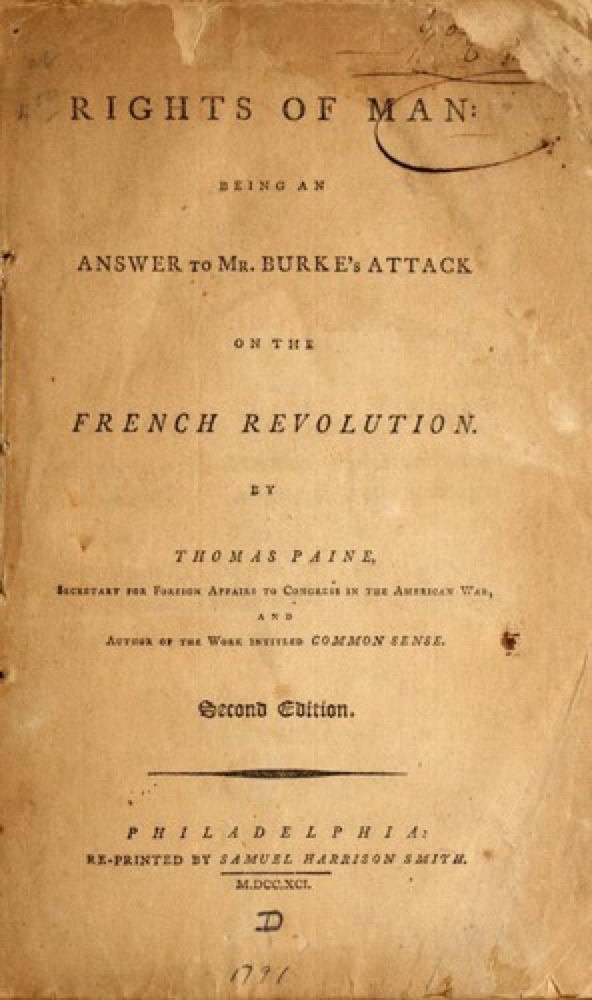 Rights of Man
Book details
- Author
- Thomas Paine
- Genre
- History
- Goodreads rating
- 4.12 (10k ratings) →
Keep reading
 The Everlasting Man
 The Portable Atheist: Essential Readings for the Nonbeliever
 Reasonable Faith
 Why I Am Not a Christian and Other Essays on Religion and Related Subjects
 Orthodoxy
 The God Delusion
 Summa Theologica
 Heretics
 The Reason for God: Belief in an Age of Skepticism
 The World's Last Night: And Other Essays
 Letters from the Earth: Uncensored Writings
 The Mind of the Maker: Dorothy L. Sayers' Witty Classic on the Trinity, Christianity, and Human Creativity
 On Christian Doctrine
 The Devil's Advocate
 Reflections on the Psalms
 The Story of My Experiments With Truth
 The Case for God
 Twilight of the Idols/The Anti-Christ
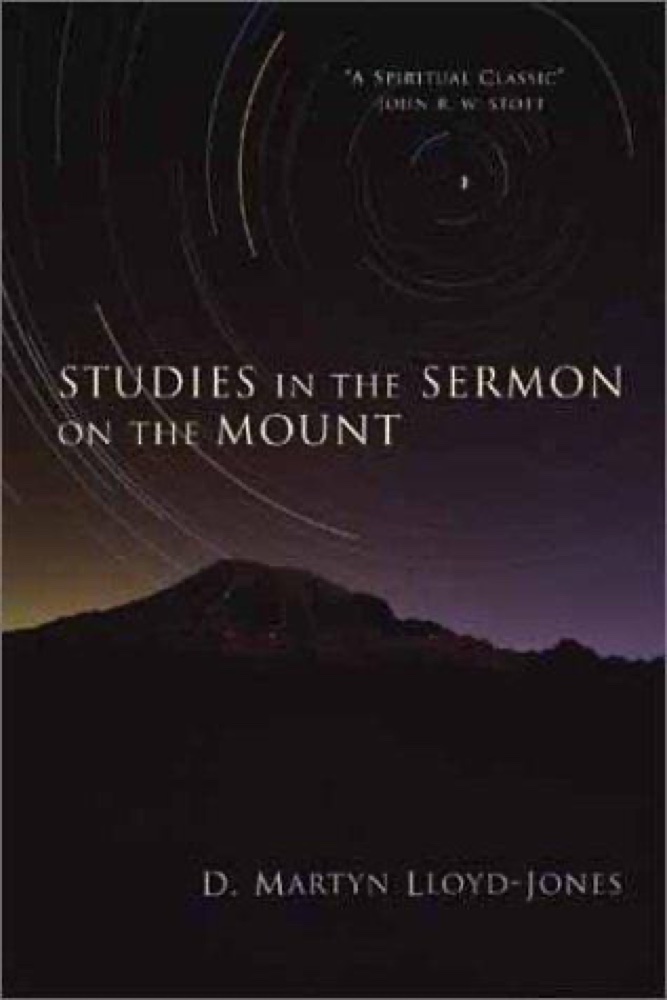 Studies in the Sermon on the Mount
 The Parafaith War
 Letters and Papers from Prison
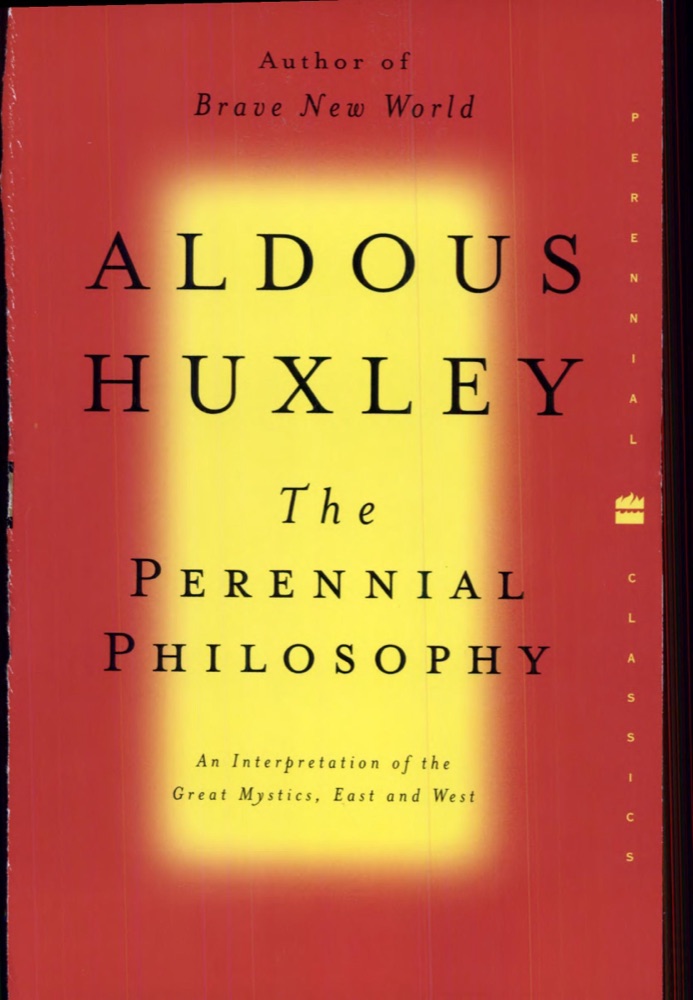 The Perennial Philosophy
 The End of Faith: Religion, Terror, and the Future of Reason
 Letter to a Christian Nation
 The Kingdom of God Is Within You
 The Anti-Christ
 The Knowledge of the Holy
 A History of God: The 4,000-Year Quest of Judaism, Christianity, and Islam
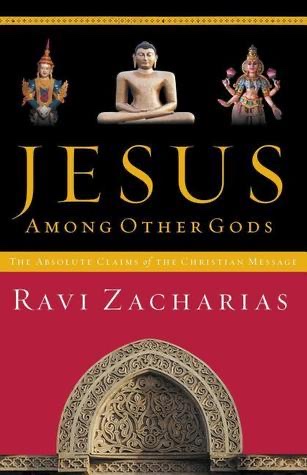 Jesus Among Other Gods: The Absolute Claims of the Christian Message
 The Gospel in a Pluralist Society
 A Canticle for Leibowitz
 God in Search of Man: A Philosophy of Judaism
 Daybreak: Thoughts on the Prejudices of Morality
 The Bible Jesus Read
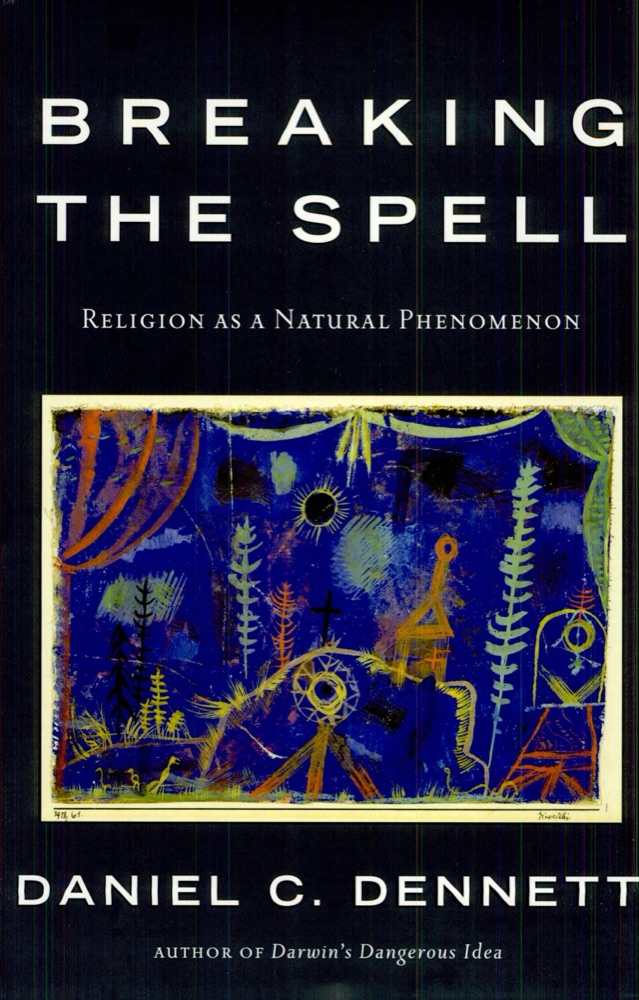 Breaking the Spell: Religion as a Natural Phenomenon
 Dialogues Concerning Natural Religion
 Mere Christianity
 The Rage Against God: How Atheism Led Me to Faith
 Tactics: A Game Plan for Discussing Your Christian Convictions
 The Crucible of Doubt: Reflections On the Quest for Faith
 The Varieties of Religious Experience
 Life of Christ
 Children of God
 The Future of an Illusion
 Persian Letters
 City of God
 A Little History of Religion
 The Seven Storey Mountain
 god is Not Great: How Religion Poisons Everything
 What's So Great About Christianity
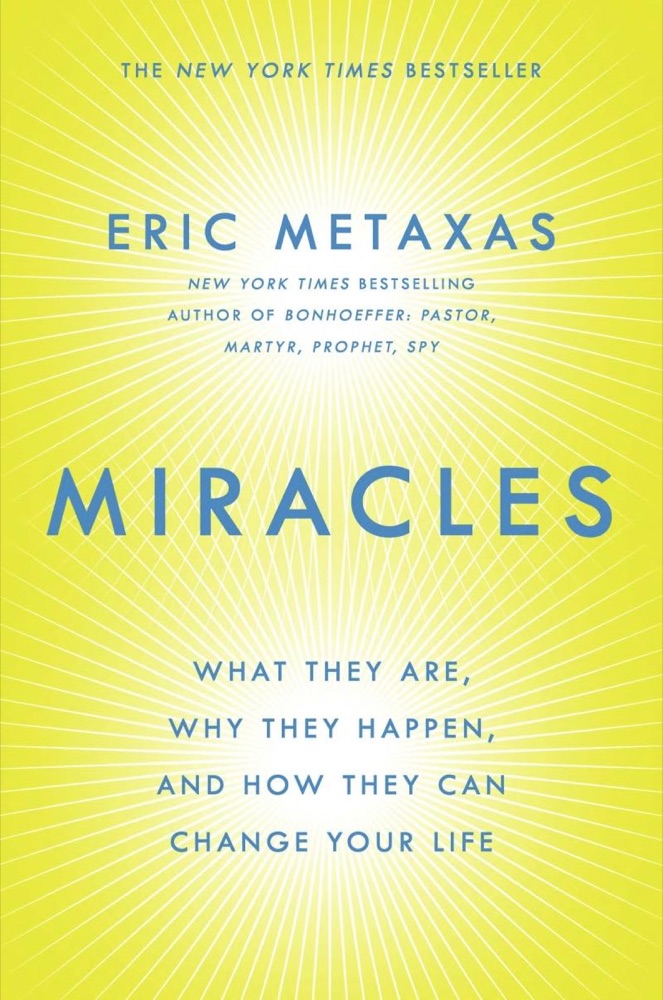 Miracles: What They Are, Why They Happen, and How They Can Change Your Life
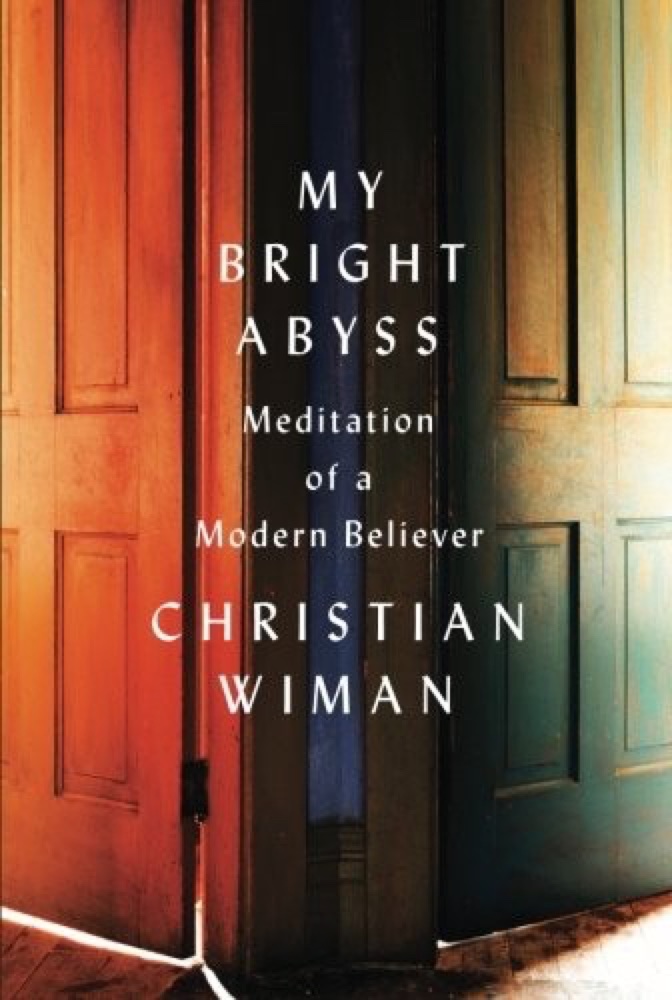 My Bright Abyss: Meditation of a Modern Believer
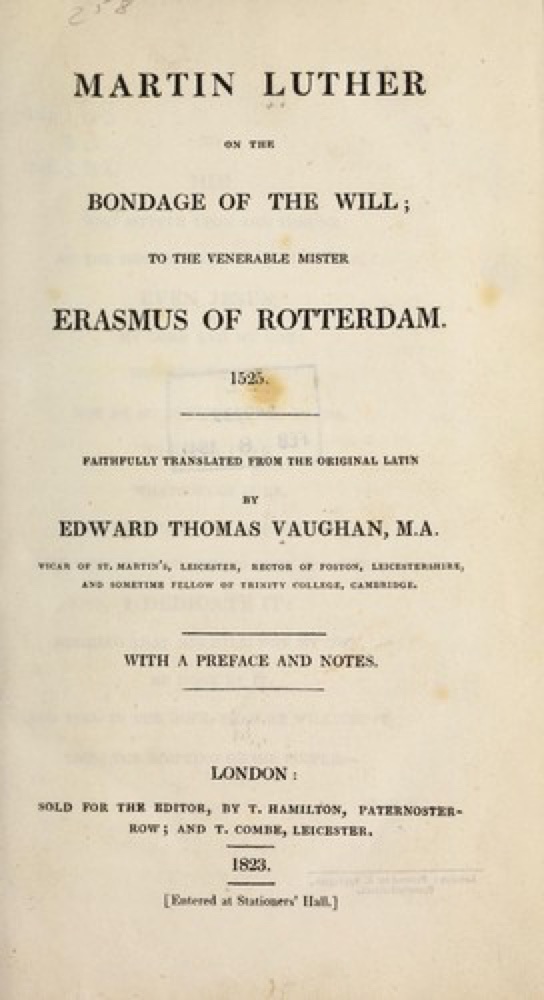 The Bondage of the Will
 Institutes of the Christian Religion, 2 Vols
 The Muqaddimah: An Introduction to History
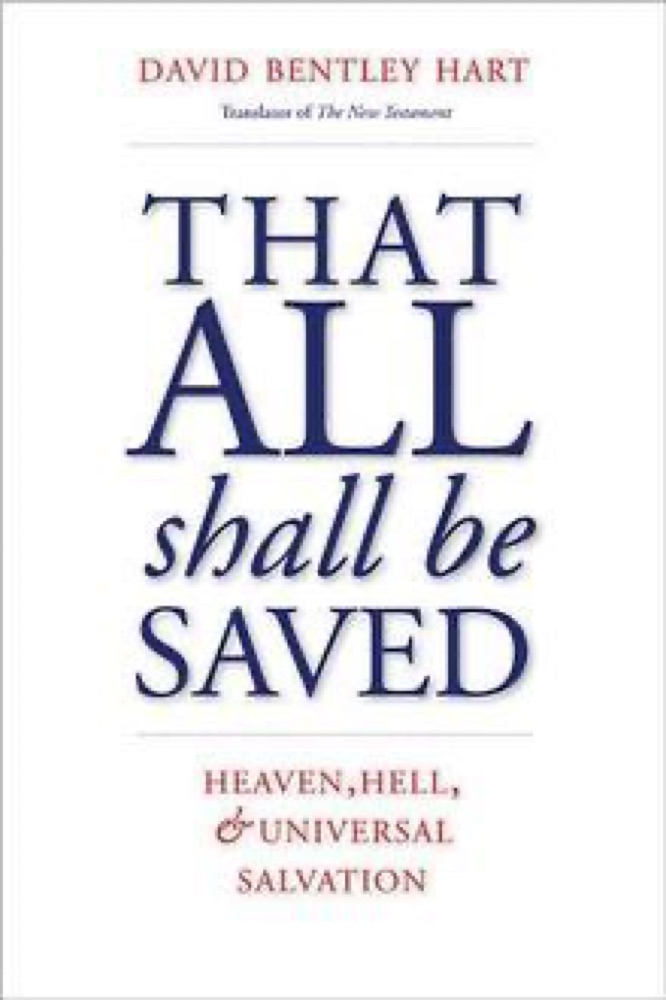 That All Shall Be Saved: Heaven, Hell, and Universal Salvation
 Forged: Writing in the Name of God—Why the Bible's Authors Are Not Who We Think They Are
 36 Arguments for the Existence of God: A Work of Fiction
 Ethics
 An Essay Concerning Human Understanding