
 The Ancestor's Tale: A Pilgrimage to the Dawn of Evolution
Quotes from the Book
Isn’t it remarkable that almost every child follows the same religion as their parents, and it always just happens to be the right religion!
29
When people say they are atheists they don’t mean they can’t prove that there are no gods. Strictly speaking, it’s impossible to prove that something does not exist. We don’t positively know there are no gods, just as we can’t prove that there are no fairies or pixies or elves or hobgoblins or leprechauns or pink unicorns; just as we can’t prove that Santa Claus or the Easter Bunny or the Tooth Fairy don’t exist. There’s a billion things you can imagine and nobody can disprove.
10
But failure to disprove something is not a good reason to believe it.
9
Pantheists are a little vague about what they believe. They say things like ‘My god is everything’ or ‘My god is nature’ or ‘My god is the universe’. Or ‘My god is the deep mystery of everything we don’t understand’. The great Albert Einstein used the word ‘God’ in pretty much this last sense. That’s very different from a god who listens to your prayers, reads your innermost thoughts and forgives (or punishes) your sins—all of which the Abrahamic God is supposed to do. Einstein was adamant that he didn’t believe in a personal god who does any of those things.
6
Scientific truths are true even if there’s nobody around to know about them; were true before humans appeared; will be true after we are extinct.
4
But that doesn’t stop it being true. And far more often than it is bewildering or frightening, scientific truth is wonderful, beautiful. You need courage to face the frightening, bewildering conclusions of science; and with the courage comes the opportunity to experience all that wonder and beauty. The courage to cut yourself adrift from comforting, tame apparent certainties and embrace the wild truth. Like my friend Julia did when she lost her Christian faith.
4
We can’t prove there are no fairies but that doesn’t mean we think there’s a 50:50 chance fairies exist.
4
physics come from, so God must have made them up.’ Wherever there is a gap in our understanding, people try to plug the gap with God. But the trouble with gaps is that science has the annoying habit of coming along and filling them. Darwin filled the biggest gap of all. And we should have the courage to expect that science will eventually fill the gaps that remain. That is the theme of this final chapter.
3
People growing up in different countries copy their parents and believe in the god or gods of their own country. These beliefs contradict each other, so they can’t all be right.
3
It is a matter of history that the spread of Islam, from Arabia throughout the Middle East and the Indian subcontinent, was due to military conquest. And the same goes for the spread of Christianity by the Spanish conquerors in South and Central America,
3
If I’d been born in ancient Greece, I’d worship Zeus and Aphrodite
3
Before writing was invented and before scientific archaeology started, word-of-mouth storytelling, with all its Chinese Whispery distortions, was the only way people learned about history.
3
One of my pet peeves is the habit of labelling young children with the religion of their parents: ‘Catholic child’, ‘Protestant child’, ‘Muslim child’. Such phrases can be heard used of children too young to talk, let alone hold religious opinions. It seems to me as absurd as talking about a ‘Socialist child’ or ‘Conservative child’, and nobody would ever use a phrase like that. I don’t think we should talk about ‘atheist children’ either.
3
You may have heard that DNA is a ‘blueprint’ for a body, but that’s deeply wrong. Houses and cars have blueprints. Babies don’t. The difference is entirely separate from the fact that cars and houses are designed whereas babies aren’t. Here’s the deeper difference. In a blueprint there’s a one-to-one ‘mapping’ between each bit of the house (or car) and each bit of the blueprint.
2
There are so many different faiths. How do you know the holy book you have been brought up with is the true one? And if all the others are wrong, what makes you think your holy book isn't wrong too?
2
When people say they are atheists they don’t mean they can prove that there are no gods. Strictly speaking, it’s impossible to prove that something does not exist. We don’t positively know there are no gods,
2
Atheists don’t have to fear a great spy camera in the sky. They only – so the argument goes – have to fear real cameras and real policemen. Maybe you’ve heard the cynical witticism ‘Conscience is knowing that someone is watching’.
1
Tanrı İbrahim'e İshak'ı yakılacak odunlar üzerinde bağlamasını emrettiğinde İbrahim sorgulamadan emre uymuştu. Tanrı İshak'ı kurtarmak için son anda araya girdiğinde, bir koçu göndermiş ve boynuzlarının yakındaki sık bir çalıya takılmasını sağlamıştı. İbrahim mesajı alıp Tanrı'ya istediği sunağı vermişti. Bu koçun aniden ortaya çıkışının resmi Kilise Okulu yorumlaması, olayın Tanrı'nın insanları kurban etmeyi durdurtup onların yerine hayvanları kurban edin deme yolu olduğudur. Fakat öyküdeki Tanrı karakteri o günlerde insanlarla sürekli konuşmaktadır aslında, çünkü zaten İbrahim'e İshak'ı öldürmesini söyleyen odur. Yani insanlar yerine koyunları kurban edin demek için zavallı İshak'ı böylesine korkunç bir ateşten gömleğe sokmak yerine bunu basitçe söylememiş olmak nedendir?
1
These beliefs contradict each other, so they can’t be all right
1
Yet it is an astonishing fact that nearly half the people in that great country believe literally in the story of Adam and Eve. Luckily the other half is there too, and they have made the United States the greatest scientific power in the history of the world. You have to wonder how much further ahead they would be if they weren’t held back by the scientifically ignorant half who believe every word of the Bible is literally true.
Watch on YouTube
About Richard Dawkins
We have collected 220 quotes from 11 books by Richard Dawkins on BookQuoters.
More about the author →More by Richard Dawkins
The Ancestor's Tale: A Pilgrimage to the Dawn of Evolution
 The Blind Watchmaker: Why the Evidence of Evolution Reveals a Universe Without Design
 The Selfish Gene
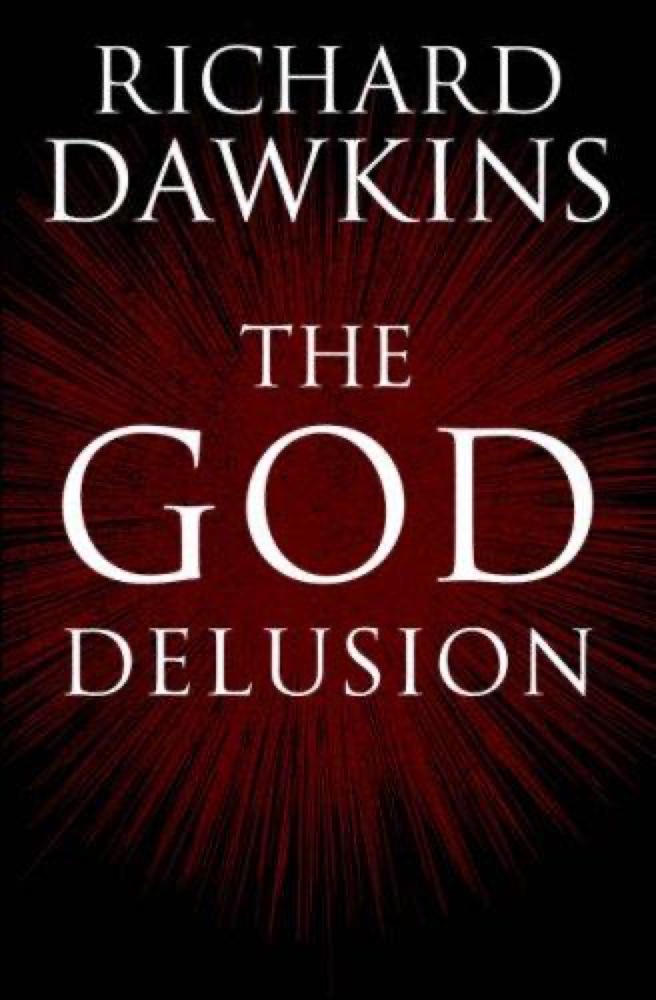 The God Delusion
About the book
Should we believe in God? In this new book, written for a new generation, the brilliant science writer and author of The God Delusion, explains why we shouldn't.
Should we believe in God? Do we need God in order to explain the existence of the universe? Do we need God in order to be good? In twelve chapters that address some of the most profound questions human beings confront, Dawkins marshals science, philosophy and comparative religion to interrogate the hypocrisies of all the religious systems and explain to readers of all ages how life emerged without a Creator, how evolution works and how our world came into being.
For anyone hoping to grapple with the meaning of life and what to believe, Outgrowing God is a challenging, thrilling and revelatory read.
Book details
- First published
- 2019
- Author
- Richard Dawkins
- Genre
- Nonfiction
- Goodreads rating
- 4.06 (6k ratings)
Keep reading
The God Delusion
 The Portable Atheist: Essential Readings for the Nonbeliever
 Why There Is No God: Simple Responses to 20 Common Arguments for the Existence of God
 I Don't Have Enough Faith to Be an Atheist
 Miracles: What They Are, Why They Happen, and How They Can Change Your Life
 Breaking the Spell: Religion as a Natural Phenomenon
 The Language of God: A Scientist Presents Evidence for Belief
 Letter to a Christian Nation
 Reasonable Faith
 The Varieties of Scientific Experience: A Personal View of the Search for God
 The Gospel of the Flying Spaghetti Monster
 A Little History of Religion
 Tactics: A Game Plan for Discussing Your Christian Convictions
 There Is a God: How the World's Most Notorious Atheist Changed His Mind
 The Age of Reason
 What's So Great About Christianity
 The Case for a Creator: A Journalist Investigates Scientific Evidence That Points Toward God
 Finding God in the Waves: How I Lost My Faith and Found It Again Through Science
 The Sign
 The Reason for God: Belief in an Age of Skepticism
 God, No! Signs You May Already Be an Atheist and Other Magical Tales
 The Meaning of It All: Thoughts of a Citizen-Scientist
 A History of God: The 4,000-Year Quest of Judaism, Christianity, and Islam
 God Is Not One: The Eight Rival Religions That Run the World--and Why Their Differences Matter
 Godless: How an Evangelical Preacher Became One of America's Leading Atheists
 The End of Faith: Religion, Terror, and the Future of Reason
 The Demon-Haunted World: Science as a Candle in the Dark
 god is Not Great: How Religion Poisons Everything
 The Case for Christianity
 The Magic of Reality: How We Know What's Really True
 The Rage Against God: How Atheism Led Me to Faith
 Religion Explained: The Evolutionary Origins of Religious Thought
 I Am America
 21 Lessons for the 21st Century
 Why I Am Not a Christian and Other Essays on Religion and Related Subjects
 The Everlasting Man
 Holy Envy: Finding God in the Faith of Others
 A Universe from Nothing: Why There Is Something Rather Than Nothing
 Why Does the World Exist?: An Existential Detective Story
 God's Debris: A Thought Experiment
 The Parafaith War
 The Lost World of Genesis One: Ancient Cosmology and the Origins Debate (Volume 2)
 Undeniable: Evolution and the Science of Creation
 Orthodoxy
 The Story of B: An Adventure of the Mind and Spirit
 Under the Glacier
 What Is the Bible?: How an Ancient Library of Poems, Letters, and Stories Can Transform the Way You Think and Feel About Everything
 For Small Creatures Such as We: Rituals for Finding Meaning in Our Unlikely World
 The Case for God
 Darwin's Dangerous Idea: Evolution and the Meanings of Life
 Why People Believe Weird Things: Pseudoscience, Superstition, and Other Confusions of Our Time
 Velvet Elvis: Repainting the Christian Faith
 The Knowledge of the Holy
 Living with a Wild God: A Nonbeliever's Search for the Truth about Everything
 Sophie's World
 The Mind of the Maker: Dorothy L. Sayers' Witty Classic on the Trinity, Christianity, and Human Creativity
 Man Seeks God: My Flirtations with the Divine
 A Devil's Chaplain: Reflections on Hope, Lies, Science, and Love
 The Three-Body Problem