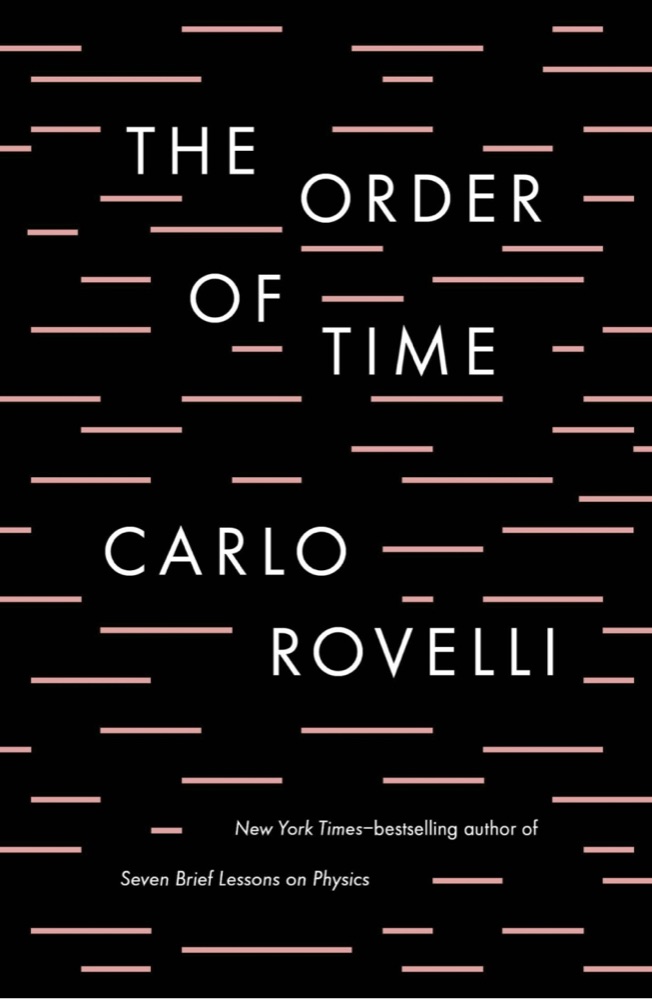
 The Order of Time
Quotes from the Book
I believe that we need to adapt our philosophy to our science, and not our science to our philosophy.
7
If I look at a forest from afar, I see a dark green velvet. As I move toward it, the velvet breaks up into trunks, branches and leaves: the bark of the trunks, the moss, the insects, the teeming complexity. In every eye of every ladybug, there is an extremely elaborate structure of cells connected to neurons that guide and enable them to live. Every cell is a city, every protein a castle of atoms; in each atomic nucleus an inferno of quantum dynamics is stirring, quarks and gluons swirl, excitations of quantum fields. This is only a small wood on a small planet that revolves around a little star, among one hundred billion stars in one of the thousand billion galaxies constellated with dazzling cosmic events. In every corner of the universe we find vertiginous wells of layers of reality.
5
What I see, in other words, is not a reproduction of the external world. It is what I expect, corrected by what I can grasp. The relevant input is not that which confirms what we already know, but that which contradicts our expectations.
5
The search for knowledge is not nourished by certainty: it is nourished by a radical absence of certainty.
3
The discovery of quantum theory, I believe, is the discovery that the properties of any entity are nothing other than the way in which that entity influences others. It exists only through its interactions. Quantum theory is the theory of how things influence each other. And this is the best description of nature that we have.
3
When Einstein objected to quantum mechanics by remarking that “God does not play dice,” Bohr responded by admonishing him, “Stop telling God what to do.” Which means: Nature is richer than our metaphysical prejudices. It has more imagination than we do.
3
Quantum theory is of no direct help in understanding the mind.
3
I believe that one of the greatest mistakes made by human beings is to want certainties when trying to understand something. The search for knowledge is not nourished by certainty: it is nourished by a radical absence of certainty. Thanks to the acute awareness of our ignorance, we are open to doubt and can continue to learn and to learn better. This has always been the strength of scientific thinking—thinking born of curiosity, revolt, change. There is no cardinal or final fixed point, philosophical or methodological, with which to anchor the adventure of knowledge.
2
Bertrand Russell describes the same idea thus: “the raw material out of which the world is built up is not of two sorts, one matter and the other mind; it is simply arranged in different patterns by its inter-relations: some arrangements may be called mental, while others may be called physical.
2
the properties of an object become manifest when this object interacts with others. We cannot separate the properties from these other objects. We cannot attribute them just to a single object. All of the (variable) properties of an object, in the final analysis, are such and exist only with respect to other objects.
2
A lightbulb does not emit continuous light, it emits a hail of evanescent photons. At small scale, there is no continuity, or fixity, in the real world: there are discrete events, interactions, gapped and discrete. Schrödinger had fought tooth and nail against quantum discontinuity, against Bohr’s quantum leaps, against Heisenberg’s world of matrices: he wanted to defend the image of continuous reality provided by classical intuition.
2
It is with sadness that every so often I spend a few hours on the internet, reading or listening to the mountain of stupidity dressed up with the word “quantum.
2
The fact that we live at the bottom of a deep gravity well, on the surface of a gas-covered planet going around a nuclear fireball 90 million miles away, and think this to be normal, is obviously some indication of how skewed our perspective tends to be.’104
1
I want a theory of physics that accounts for the structure of the universe, that clarifies what it is to be an observer in the universe, not a theory that makes the universe depend on me observing it.
1
to inquire about the ultimate foundation of everything is to ask a question that perhaps simply does not make sense.
1
Credo che uno dei grandi errori che fanno gli esseri umani quando tentano di capire qualcosa sia volere certezze. La ricerca della conoscenza non si nutre di certezze: si nutre di una radicale assenza di certezze. Grazie all'acuta consapevolezza della nostra ignoranza, siamo aperti al dubbio e possiamo imparare sempre meglio. Questa è sempre stata la forza del pensiero scientifico, pensiero della curiosità, della rivolta, del cambiamento. Non c'è un cardine, un punto fisso finale, filosofico o metodologico, a cui ancorare l'avventura del conoscere.
1
In qualunque angolo dell'universo troviamo vertiginosi pozzi di strati di realtà. In questi strati siamo riusciti a riconoscere regolarità, sulle quali abbiamo raccolto informazione rilevante per noi, che ci permette di farci un'immagine coerente dei singoli strati. Ciascuno è un'approssimazione. La realtà non è divisa in livelli. I livelli in cui la scomponiamo, gli oggetti in cui la dividiamo, sono i modi in cui la Natura si correla in noi, in quelle configurazioni dinamiche di eventi fisici nel nostro cervello che chiamiamo concetti. La separazione della realtà in livelli è relativa al nostro modo di interagire con essa.
1
The fractures are just gaps in our understanding. This is the sense of the question about the physical basis of the notion of meaning
The “anti-metaphysical” spirit that Mach promoted is an attitude of openness: We should not seek to teach the world how it should be. Let’s listen to the world instead
The limit is determined by the Planck constant ħ.73 This is the meaning of Planck’s constant. It is the limit up to which we can determine physical variables.
Entanglement is not a dance for two partners
Even if we know all that can be predicted about one object and another object
we never see a quantum superposition. What we see are consequences of the superposition. These consequences are called “quantum interference.” It is the interference that we see
What Born understands is that the value of Schrödinger’s ψ wave at a point in space is related to the probability of observing the electron at this point.
Everything we have been able to accomplish over the centuries has been achieved in a network of exchanges, collaborating. This is why the politics of collaboration is so much more sensible and effective than the politics of competition.
Every vision is partial. There is no way of seeing reality that is not dependent on a perspective--no point of view that is absolute and universal. And yet, points of view communicate. Knowledge is in dialogue with itself and with reality. In the dialogue, those points of view modify, enrich, converge--and our understanding of reality deepens.
Watch on YouTube
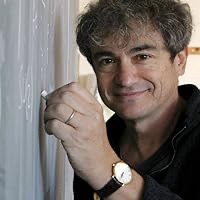
About Carlo Rovelli
We have collected 54 quotes from 2 books by Carlo Rovelli on BookQuoters.
More about the author →More by Carlo Rovelli
The Order of Time
About the book
A startling new look at quantum theory, from the bestselling author of Seven Brief Lessons on Physics and The Order of Time.
One of the world's most renowned theoretical physicists, Carlo Rovelli has entranced millions of readers with his singular perspective on the cosmos. In Helgoland, he examines the enduring enigma of quantum theory. The quantum world Rovelli describes is as beautiful as it is unnerving.
Helgoland is a treeless island in the North Sea where the twenty-three-year-old Werner Heisenberg made the crucial breakthrough for the creation of quantum mechanics, setting off a century of scientific revolution. Full of alarming ideas (ghost waves, distant objects that seem to be magically connected, cats that appear both dead and alive), quantum physics has led to countless discoveries and technological advancements. Today our understanding of the world is based on this the
Book details
- First published
- 2020
- Author
- Carlo Rovelli
- Genre
- Nonfiction
- Goodreads rating
- 4.08 (11k ratings)
The buzz
- The New York TimesReview in The New York Timesprofessional review (via Book Marks)
- The Wall Street JournalReview in The Wall Street Journalprofessional review (via Book Marks)
- The GuardianReview in The Guardianprofessional review (via Book Marks)
- NPRReview in NPRprofessional review (via Book Marks)
- The TimesReview in The Timesprofessional review (via Book Marks)
- New StatesmanReview in New Statesmanprofessional review (via Book Marks)
Keep reading
 Our Mathematical Universe: My Quest for the Ultimate Nature of Reality
 Existential Physics: A Scientist's Guide to Life's Biggest Questions
 The Big Picture: On the Origins of Life, Meaning, and the Universe Itself
 Parallel Worlds: A Journey Through Creation, Higher Dimensions, and the Future of the Cosmos
 The Grand Design
 The End of Time: The Next Revolution in Our Understanding of the Universe
 The Case Against Reality: Why Evolution Hid the Truth from Our Eyes
 Why Does the World Exist?: An Existential Detective Story
 What Is Real?: The Unfinished Quest for the Meaning of Quantum Physics
 The Feynman Lectures on Physics
 From Eternity to Here: The Quest for the Ultimate Theory of Time
 A Universe from Nothing: Why There Is Something Rather Than Nothing
 The Accidental Universe: The World You Thought You Knew
 When We Cease to Understand the World
 A Briefer History of Time
 The Fabric of the Cosmos: Space, Time, and the Texture of Reality
 Life on the Edge: The Coming of Age of Quantum Biology
 Astrophysics for People in a Hurry
 The Meaning of It All: Thoughts of a Citizen-Scientist
 The World According to Physics
 A Brief History of Time
 Metaphysics
 The Black Hole War: My Battle with Stephen Hawking to Make the World Safe for Quantum Mechanics
 The Universe in Your Hand: A Journey Through Space, Time, and Beyond
 The Character of Physical Law
 Hyperspace
 Chaos: Making a New Science
 The Elegant Universe: Superstrings, Hidden Dimensions, and the Quest for the Ultimate Theory
 Until the End of Time: Mind, Matter, and Our Search for Meaning in an Evolving Universe
 QED: The Strange Theory of Light and Matter
 Six Easy Pieces: Essentials of Physics By Its Most Brilliant Teacher
 Gödel, Escher, Bach: An Eternal Golden Braid
 The Master and His Emissary: The Divided Brain and the Making of the Western World
 Black Holes and Baby Universes and Other Essays
 Against Method
 Science and Sanity: An Introduction to Non-Aristotelian Systems and General Semantics
 The Blind Watchmaker: Why the Evidence of Evolution Reveals a Universe Without Design
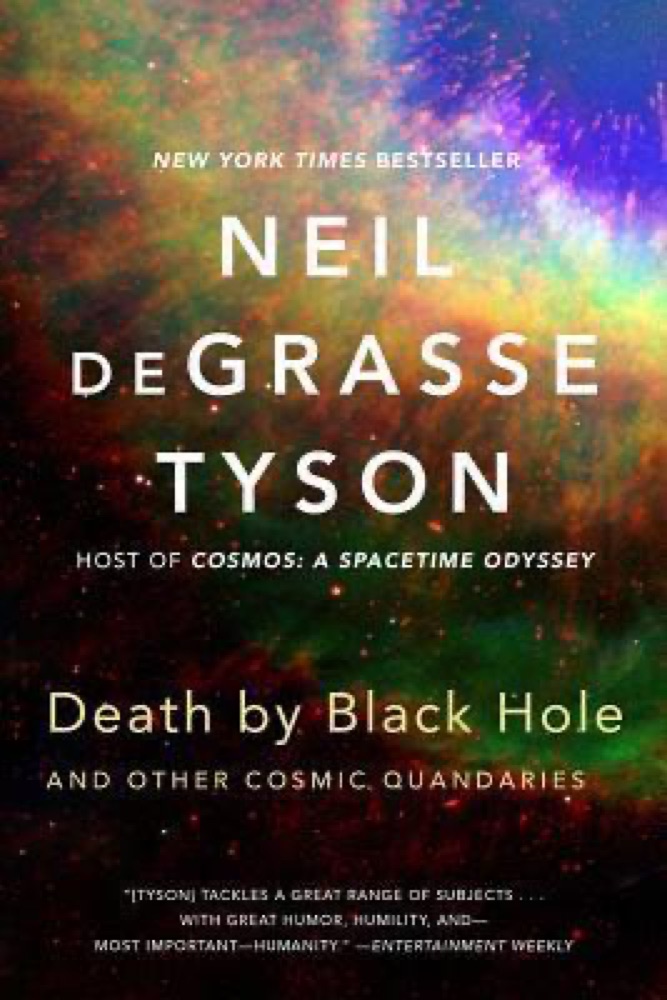 Death by Black Hole: And Other Cosmic Quandaries
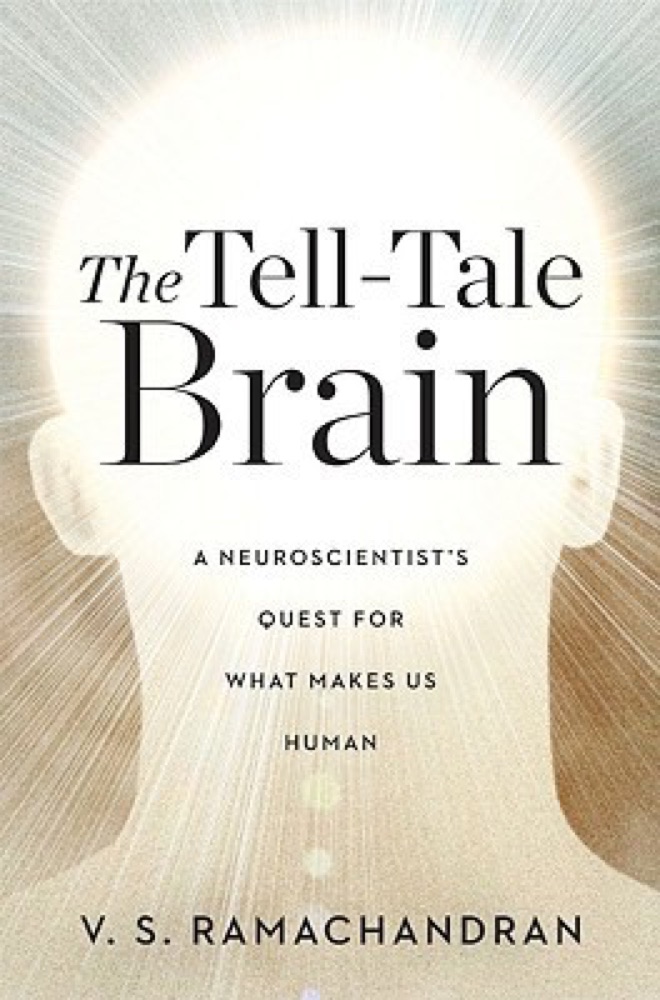 The Tell-Tale Brain: A Neuroscientist's Quest for What Makes Us Human
 Consilience: The Unity of Knowledge
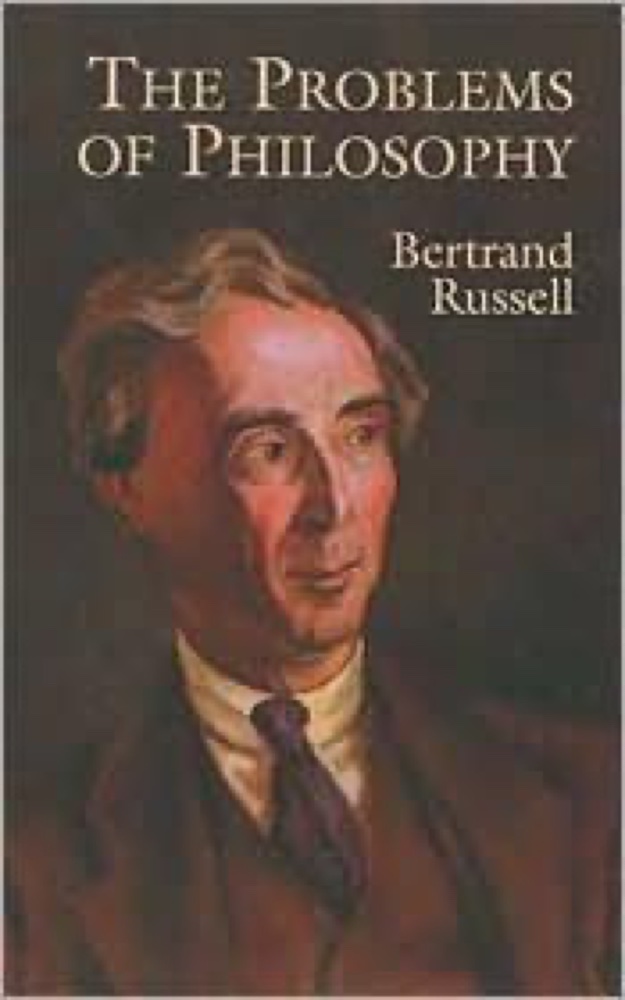 The Problems of Philosophy
 The Universe in a Single Atom: The Convergence of Science and Spirituality
 The Three-Body Problem
 Phenomenology of Perception
The Order of Time
Phenomenology of Perception
The Order of Time
 The Varieties of Scientific Experience: A Personal View of the Search for God
 Lost in Math: How Beauty Leads Physics Astray
 Three Roads To Quantum Gravity
 An Enquiry Concerning Human Understanding
 The Stuff of Thought: Language as a Window into Human Nature
 The Convoluted Universe, Book 1
 An Essay Concerning Human Understanding
 The Occult
 Exhalation
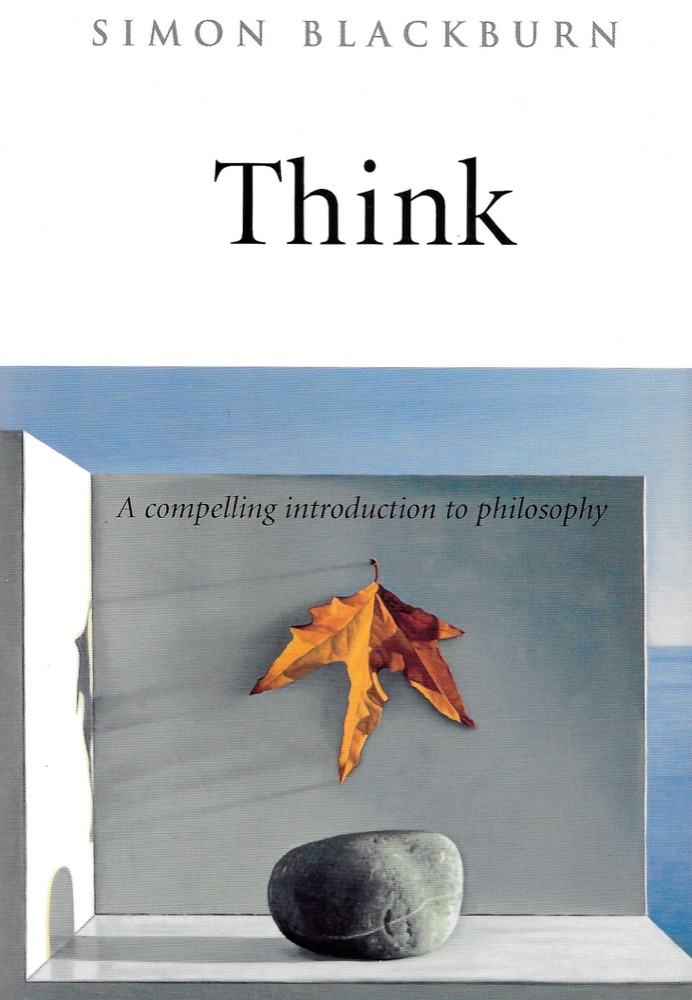 Think: A Compelling Introduction to Philosophy
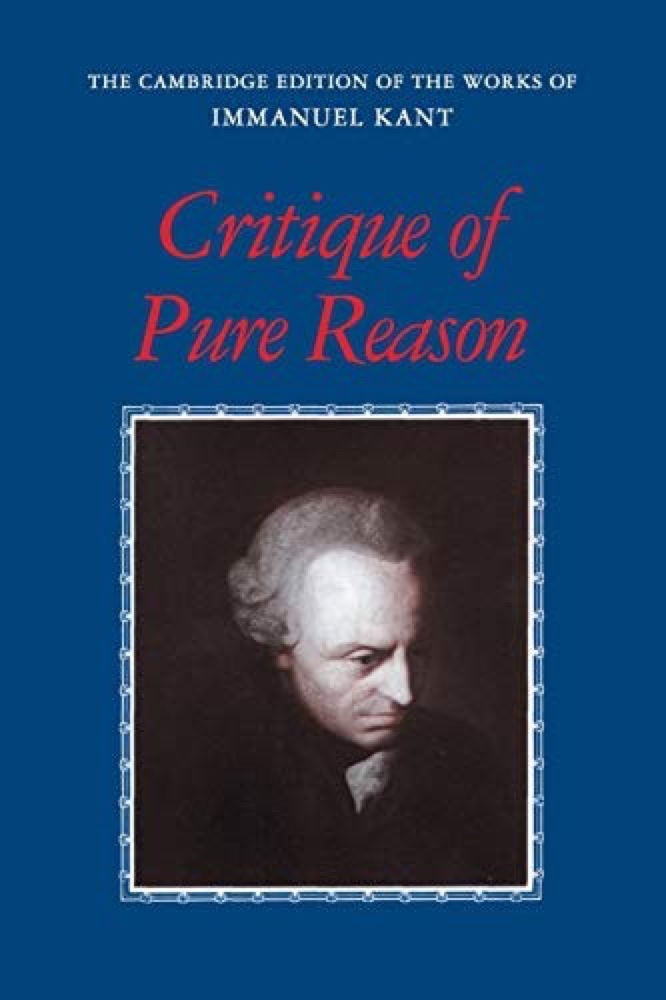 Critique of Pure Reason
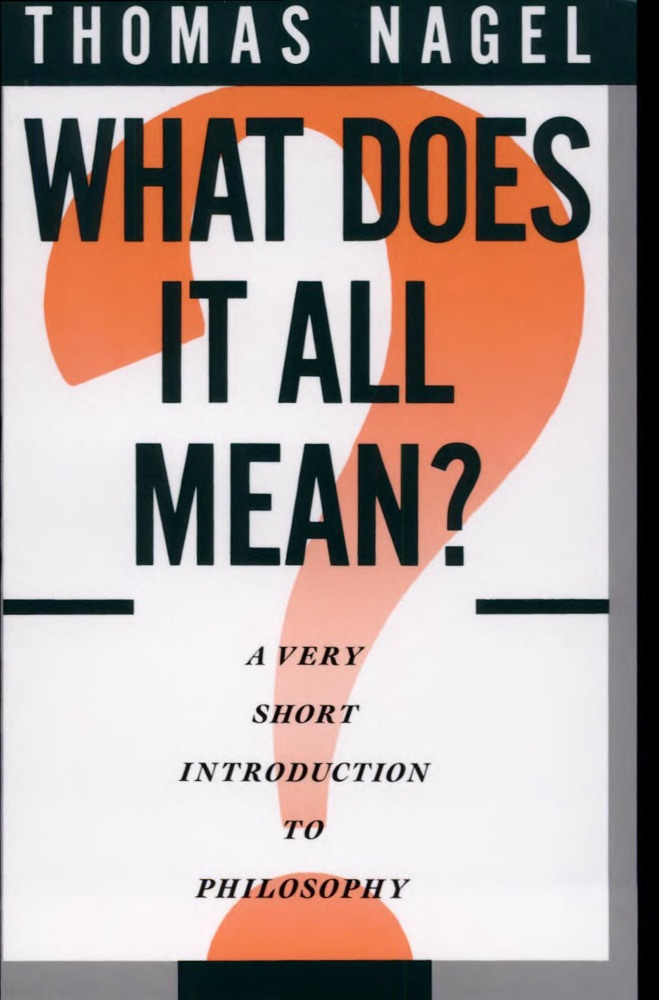 What Does It All Mean? A Very Short Introduction to Philosophy
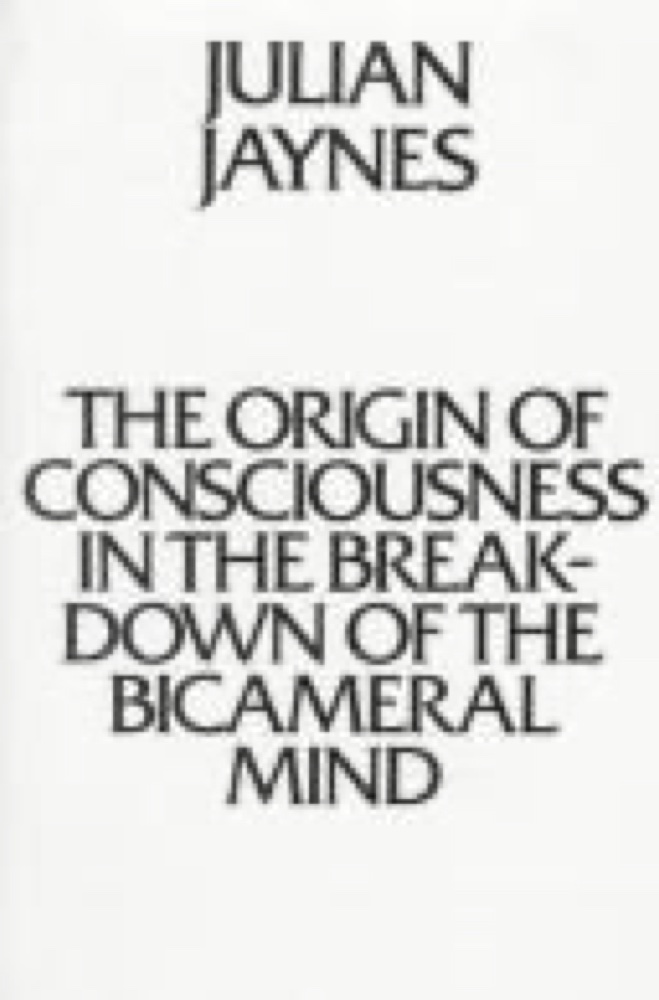 The Origin of Consciousness in the Breakdown of the Bicameral Mind
 Arcadia