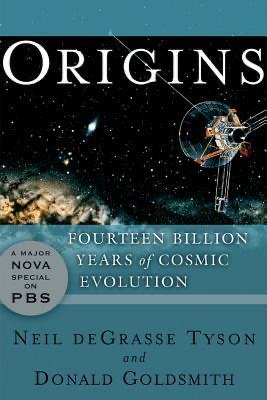
 Origins: Fourteen Billion Years of Cosmic Evolution
Quotes from the Book
Not only do we live among the stars, the stars live within us.
285
When scientifically investigating the natural world, the only thing worse than a blind believer is a seeing denier.
159
So you're made of detritus [from exploded stars]. Get over it. Or better yet, celebrate it. After all, what nobler thought can one cherish than that the universe lives within us all?
115
As a child, I was aware that, at night, infrared vision would reveal monsters hiding in the bedroom closet only if they were warm-blooded. But everybody knows that your average bedroom monster is reptilian and cold-blooded.
81
The remarkable feature of physical laws is that they apply everywhere, whether or not you choose to believe in them. After the laws of physics, everything else is opinion.
56
Allow intelligent design into science textbooks, lecture halls, and laboratories, and the cost to the frontier of scientific discovery—the frontier that drives the economies of the future—would be incalculable. I don't want students who could make the next major breakthrough in renewable energy sources or space travel to have been taught that anything they don't understand, and that nobody yet understands, is divinely constructed and therefore beyond their intellectual capacity. The day that happens, Americans will just sit in awe of what we don't understand, while we watch the rest of the world boldly go where no mortal has gone before.
47
Some morning while your eating breakfast and you need something new to think about, though, you might want to ponder the fact that you see your kids across the table not as they are but as they once were, about three nanoseconds ago.
47
While the Copernican principle comes with no guarantees that it will forever guide us to cosmic truths, it's worked quite well so far: not only is Earth not in the center of the solar system, but the solar system is not in the center of the Milky Way galaxy, the Milky Way galaxy is not in the center of the universe, and it may come to pass that our universe is just one of many that comprise a multiverse. And in case you're one of those people who thinks that the edge may be a special place, we are not at the edge of anything either.
42
If humans one day become extinct from a catastrophic collision, there would be no greater tragedy in the history of life in the universe. Not because we lacked the brain power to protect ourselves but because we lacked the foresight. The dominant species that replaces us in post-apocalyptic Earth just might wonder, as they gaze upon our mounted skeletons in their natural history museums, why large-headed Homo sapiens fared no better than the proverbially pea-brained dinosaurs.
41
Science is a philosophy of discovery. Intelligent design is a philosophy of ignorance.
40
In modern times, if the sole measure of what’s out there flows from your five senses then a precarious life awaits you.
40
In the twentieth century, astrophysicists in the United States discovered galaxies, the expanding of the universe, the nature of supernovas, quasars, black holes, gamma-ray bursts, the origin of the elements, the cosmic microwave background, and most of the known planets in orbit around solar systems other than our own. Although the Russians reached one or two places before us, we sent space probes to Mercury, Venus, Jupiter, Saturn, Uranus, and Neptune. American probes have also landed on Mars and on the asteroid Eros. And American astronauts have walked on the Moon. Nowadays most Americans take all this for granted, which is practically a working definition of culture: something everyone does or knows about, but no longer actively notices. While shopping at the supermarket, most Americans aren’t surprised to find an entire aisle filled with sugar-loaded, ready-to-eat breakfast cereals. But foreigners notice this kind of thing immediately, just as traveling Americans notice that supermarkets in Italy display vast selections of pasta and that markets in China and Japan offer an astonishing variety of rice. The flip side of not noticing your own culture is one of the great pleasures of foreign travel: realizing what you hadn’t noticed about your own country, and noticing what the people of other countries no longer realize about themselves.
35
What are the lessons to be learned from this journey of the mind? That humans are emotionally fragile, perennially gullible, hopelessly ignorant masters of an insignificantly small speck in the cosmos. Have a nice day.
32
Let's grant that the stars are scattered through space, hither and yon. But how hither, and how yon? To the unaided eye the brightest stars are more than a hundred times brighter than the dimmest. So the dim ones are obviously a hundred times farther away from Earth, aren't they? Nope. That simple argument boldly assumes that all stars are intrinsically equally luminous, automatically making the near ones brighter than the far ones. Stars, however, come in a staggering range of luminosities, spanning ten orders of magnitude ten powers of ten. So the brightest stars are not necessarily the ones closest to Earth. In fact, most of the stars you see in the night sky are of the highly luminous variety, and they lie extraordinarily far away. If most of the stars we see are highly luminous, then surely those stars are common throughout the galaxy. Nope again. High-luminosity stars are the rarest. In any given volume of space, they're outnumbered by the low-luminosity stars a thousand to one. It's the prodigious energy output of high-luminosity stars that enables you to see them across such large volumes of space.
31
Yes, not only humans but also every other organism in the cosmos, as well as the planets or moons on which they thrive, would not exist but for the wreckage of spent stars. So you’re made of detritus. Get over it. Or better yet, celebrate it. After all, what nobler thought can one cherish than that the universe lives within us all?
22
Still, our knowledge of the planets was meager, and where ignorance lurks, so too do the frontiers of discovery and imagination.
20
Without a doubt, the most spectacular way to die in space is to fall into a black hole.
18
When people believe a tale that conflicts with self-checkable evidence it tells me that people undervalue the role of evidence on formulating an internal belief system. Why this is so is not clear, but it enables many people to hold fast to ideas and notions based purely on supposition.
16
Our five senses even interfere with sensible answers to stupid metaphysical questions like, “If a tree falls in the forest and nobody is around to hear it, does it make a sound?” My best answer is, “How do you know it fell?” But that just gets people angry. So I offer a senseless analogy, “Q: If you can’t smell the carbon monoxide, then how do you know it’s there? A: You drop dead.” In modern times, if the sole measure of what’s out there flows from your five senses then a precarious life awaits you.
14
By the way, were we to find life-forms on Venus, we would probably call them Venutians, just as people from Mars would be Martians. But according to rules of Latin genitives, to be “of Venus” ought to make you a Venereal. Unfortunately, medical doctors reached that word before astronomers did. Can’t blame them, I suppose. Venereal disease long predates astronomy, which itself stands as only the second oldest profession.
13
After 50 years of television, there’s no other conclusion the aliens could draw, but that most humans are neurotic, death-hungry, dysfunctional idiots.
12
Let there be no doubt that as they are currently practiced, there is no common ground between science and religion.
11
And behold the greatest mystery of them all: an unopened can of diet Pepsi floats in water while an unopened can of regular Pepsi sinks.
9
Equipped with his five senses, man explores the universe around him and calls the adventure science. —EDWIN P. HUBBLE (1889–1953), The Nature of Science
9
When Herschel saw Flamsteed’s “star” drift against the background stars, he announced—operating under the unwitting assumption that planets were not on the list of things one might discover—that he had discovered a comet. Comets, after all, were known to move and to be discoverable. Herschel planned to call the newfound object Georgium Sidus (“Star of George”), after his benefactor, King George III of England. If the astronomical community had respected these wishes, the roster of our solar system would now include Mercury, Venus, Earth, Mars, Jupiter, Saturn, and George.
8
Knowledge of physical laws can, in some cases, give you the confidence to confront surly people. A few years ago I was having a hot-cocoa nightcap at a dessert shop in Pasadena, California. I had ordered it with whipped cream, of course. When it arrived at the table, I saw no trace of the stuff. After I told the waiter that my cocoa was plain, he asserted I couldn’t see the whipped cream because it sank to the bottom. Since whipped cream has a very low density and floats on all liquids that humans consume, I offered the waiter two possible explanations: either somebody forgot to add the whipped cream to my hot cocoa or the universal laws of physics were different in his restaurant. Unconvinced, he brought over a dollop of whipped cream to test for himself. After bobbing once or twice in my cup, the whipped cream sat up straight and afloat. What better proof do you need of the universality of physical laws?
8
If you ask people where they're from, they will typically say the name of the city where they were born, or perhaps the place on Earth's surface where they spent their formative years. Nothing wrong with that. But an astrochemically richer answer might be, "I hail from the explosive jetsam of a multitude of high-mass stars that died more than 5 billion years ago.
7
Perhaps these ancient observatories perennially impress modern people because modern people have no idea how the Sun, Moon, or stars move. We are too busy watching evening television to care what’s going on in the sky. To us, a simple rock alignment based on cosmic patterns looks like an Einsteinian feat. But a truly mysterious civilization would be one that made no cultural or architectural reference to the sky at all.
7
Watch on YouTube
About Neil deGrasse Tyson
We have collected 183 quotes from 7 books by Neil deGrasse Tyson on BookQuoters.
More about the author →More by Neil deGrasse Tyson
Origins: Fourteen Billion Years of Cosmic Evolution
 Astrophysics for People in a Hurry
 Starry Messenger: Cosmic Perspectives on Civilization
 Space Chronicles: Facing the Ultimate Frontier
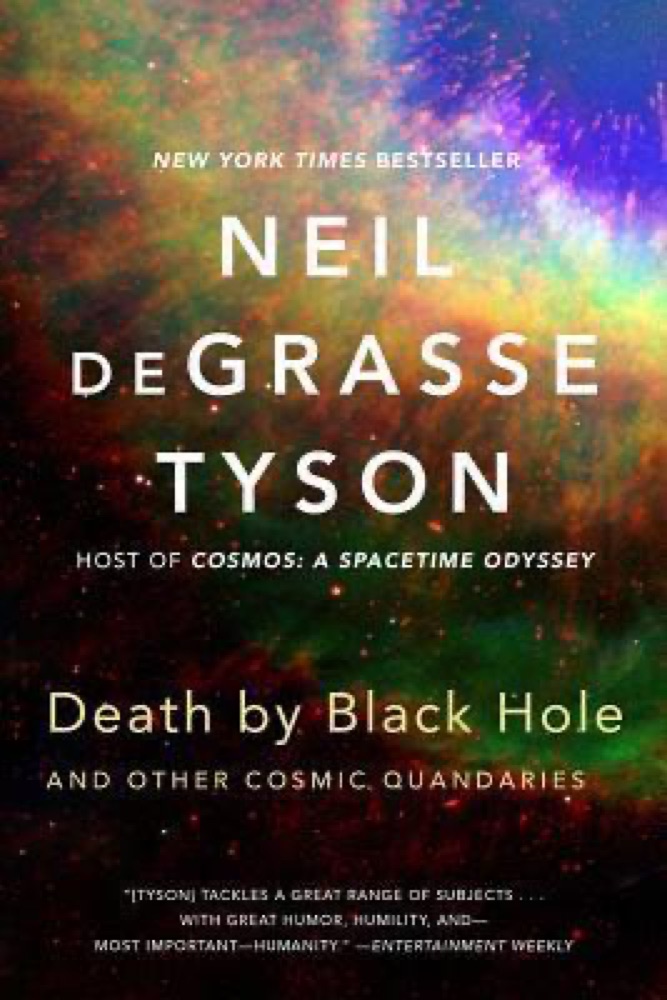
About the book
A vibrant collection of essays on the cosmos from the nation's best-known astrophysicist. "One of today's best popularizers of science." —Kirkus Reviews.
Loyal readers of the monthly "Universe" essays in Natural History magazine have long recognized Neil deGrasse Tyson's talent for guiding them through the mysteries of the cosmos with stunning clarity and almost childlike enthusiasm. Here, Tyson compiles his favorite essays across a myriad of cosmic topics.
The title essay introduces readers to the physics of black holes by explaining the gory details of what would happen to your body if you fell into one. "Holy Wars" examines the needless friction between science and religion in the context of historical conflicts. "The Search for Life in the Universe" explores astral life from the frontiers of astrobiology. And "Hollywood Nights" assails the movie industry's feeble efforts to ge
Book details
- First published
- 2006
- Author
- Neil deGrasse Tyson
- Genre
- Nonfiction
- Goodreads rating
- 4.10 (33k ratings)
Keep reading
Astrophysics for People in a Hurry
Space Chronicles: Facing the Ultimate Frontier
 A Universe from Nothing: Why There Is Something Rather Than Nothing
Origins: Fourteen Billion Years of Cosmic Evolution
A Universe from Nothing: Why There Is Something Rather Than Nothing
Origins: Fourteen Billion Years of Cosmic Evolution
 The Grand Design
 The Accidental Universe: The World You Thought You Knew
 The Three-Body Problem
 The Varieties of Scientific Experience: A Personal View of the Search for God
 Pale Blue Dot: A Vision of the Human Future in Space
 13 Things That Don't Make Sense: The Most Baffling Scientific Mysteries of Our Time
 A Brief History of Time
 The Case for a Creator: A Journalist Investigates Scientific Evidence That Points Toward God
 Until the End of Time: Mind, Matter, and Our Search for Meaning in an Evolving Universe
 The Demon-Haunted World: Science as a Candle in the Dark
 A Short History of Nearly Everything
 Bewilderment
 The Fifth Science
 Unweaving the Rainbow: Science, Delusion and the Appetite for Wonder
 Brief Answers to the Big Questions
 Death's End
 The End of Everything
 The Big Picture: On the Origins of Life, Meaning, and the Universe Itself
 A Briefer History of Time
 Black Holes and Baby Universes and Other Essays
 The Meaning of It All: Thoughts of a Citizen-Scientist
 Why Does the World Exist?: An Existential Detective Story
 The Universe in Your Hand: A Journey Through Space, Time, and Beyond
 Existential Physics: A Scientist's Guide to Life's Biggest Questions
 The Restaurant at the End of the Universe
 Echopraxia
 Parallel Worlds: A Journey Through Creation, Higher Dimensions, and the Future of the Cosmos
 The Blind Watchmaker: Why the Evidence of Evolution Reveals a Universe Without Design
 Our Mathematical Universe: My Quest for the Ultimate Nature of Reality
 Chariots of The Gods
 From Eternity to Here: The Quest for the Ultimate Theory of Time
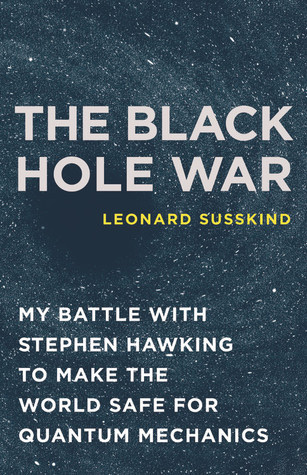 The Black Hole War: My Battle with Stephen Hawking to Make the World Safe for Quantum Mechanics
 Jurassic Park
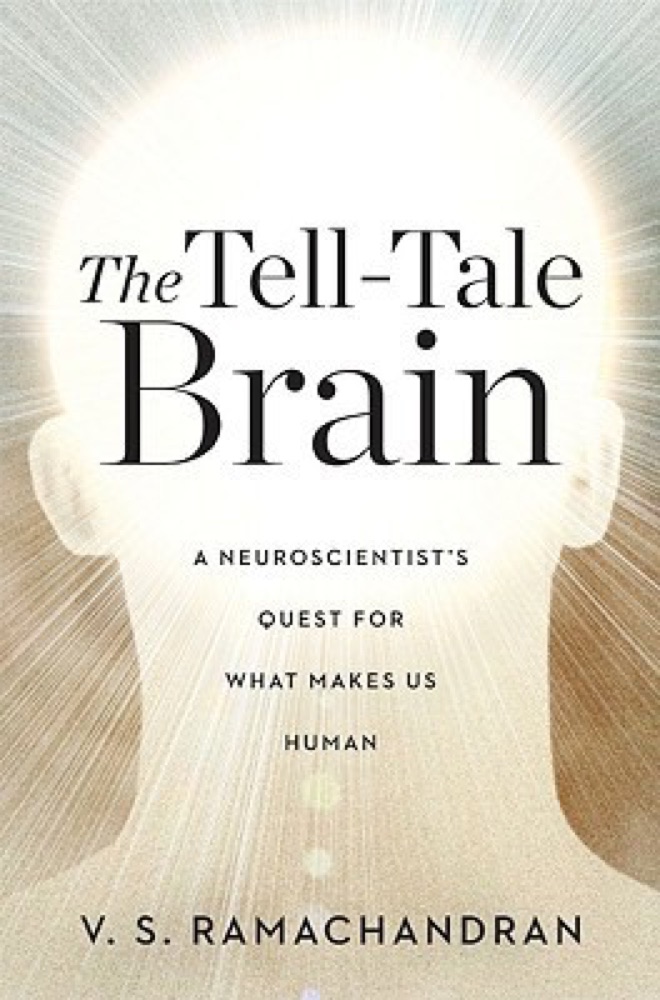 The Tell-Tale Brain: A Neuroscientist's Quest for What Makes Us Human
 The Magic of Reality: How We Know What's Really True
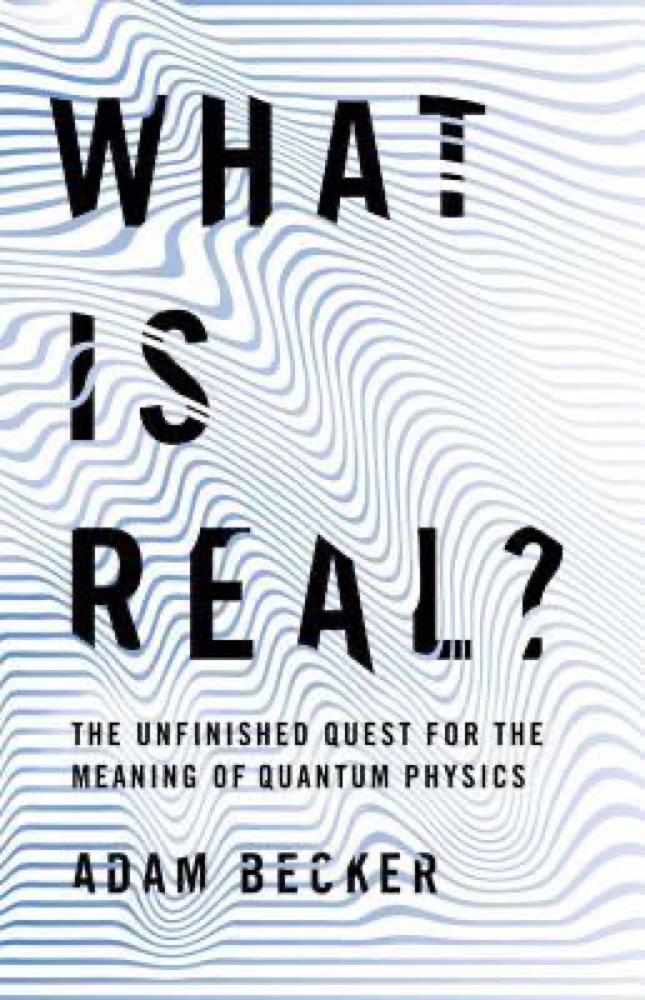 What Is Real?: The Unfinished Quest for the Meaning of Quantum Physics
 Darwin's Dangerous Idea: Evolution and the Meanings of Life
 Helgoland: Making Sense of the Quantum Revolution
 Solaris
 Travels
 Spook: Science Tackles the Afterlife
 The Star Diaries
 The Case Against Reality: Why Evolution Hid the Truth from Our Eyes
 The Lost World
 To Be Taught, If Fortunate
 Exhalation
 Songs of Distant Earth
 Invisible Planets: Contemporary Chinese Science Fiction in Translation
 Physics of the Impossible: A Scientific Exploration Into the World of Phasers, Force Fields, Teleportation, and Time Travel
 Orbital
 What If?: Serious Scientific Answers to Absurd Hypothetical Questions
 Packing for Mars: The Curious Science of Life in the Void
 Blindsight
 The Stone Gods
 Living with a Wild God: A Nonbeliever's Search for the Truth about Everything