

 Nickel and Dimed: On (Not) Getting by in America
Quotes from the Book
To acknowledge the existence of other people is also to acknowledge that they are not reliable sources of safety or comfort.
15
Morality, as far as I could see, originates in atheism and the realization that no higher power is coming along to feed the hungry or lift the fallen. Mercy is left entirely to us.
12
You can talk about depression as a "chemical imbalance" all you want, but it presents itself as an external antagonist - a "demon," a "beast," or a "black dog," as Samuel Johnson called it. It could pounce at any time, even in the most innocuous setting.
10
In fact, if you're not prepared to die when you're almost sixty, then I would say you've been falling down on your philosophical responsibilities as a grown-up human being.
8
I believe nothing. Belief is intellectual surrender; “faith” a state of willed self-delusion.
7
Too bad for any parent who has become accustomed to ruling by force, because at some point the kids just get too big to slap around.
6
I spent the first few months of graduate school pretending to be a student of theoretical physics. This required no great acting skill beyond the effort to appear unperturbed in the face of the inexplicable, which is as far as I can see one of the central tasks of adulthood.
5
Very often in a classroom or a conversation I feel like yelling, 'What difference does it make?' Because 94% of my life is occupied with utter trivia. Much of my rebelliousness starts with indifference to what is urgently important to others.
4
Somehow human authority is never enough; we must have special effects.
4
I had discovered that writing--with whatever instrument--was a powerful aid to thinking, and thinking was what I now resolved to do.
4
But who could resist the erotic lives of atoms and molecules - the violent passion of electrostatic attractions, the comfortable mutuality of covalent bonds, the gentle air kisses of van der Waals forces? The rules governing the couplings and uncouplings of tiny particles seemed to me as fascinating as the kinship rules of what we still called "primitive" societies - with the revulsion of like-charged particles, for example, functioning as a kind of incest taboo.
3
The most flattering spin I can put on this phase of paradoxes and metaphysical tangles is that I was smart enough, at age fourteen, to destroy any fledgling hypothesis I came up with. A tentative explanation, theory, or formulation would pop up in my brain only to be attacked by what amounted to a kind of logical immune system, bent on eliminating all that was weak or defective. Which is to say that my mind had become a scene of furious predation, littered with the half-eaten corpses of vast theories and brilliant syntheses.
3
As far as I can see, even now, after years of puzzling over the field of cognitive science, there is no clear line between entities to which science attributes mind and those it regards as mindless mechanisms.
3
mostly I saw her efforts to induct me into adulthood much as a calf might see its mother’s explanations of veal: I was being recruited into the great death march of biology—be born, reproduce, die.
3
You can and should use logic and reason all you want. But it would be a great mistake to ignore the stray bit of data that doesn't fit into your preconceived theories, that may even confound everything you thought you were sure of.
2
A hint of - dare I say? - animism has entered into the scientific worldview. The physical world is no longer either dead or passively obedient to the "laws.
2
Why "revere" the unknowable? Why not find out what it is?
2
As Eckhart, one of Otto's many sources, had asserted centuries earlier, referring to the Other as "God," the religious seeker must set aside "any idea about God as being good, wise, [or] compassionate.
2
I don't think you have ever really inhabited a city until you have walked down the street and seen every single person, no matter how unlikely or different from yourself, how disheveled or foreign, as a potential ally or recruit.
2
In fact, the idea of a God who is both all-powerful and all good is a logical impossibility.
2
I was an answer-seeking machine, in love with what I called "the truth," whether it came in the form of little truth particles stuck to the pages of books or vast patterns screaming out from the obvious and mundane.
2
That's what science is about: seeing the exact same things that other people do, finding the units of measurement with which to describe those things, communicating in the fewest and most precise words available. What could be saner—or more sociable—than that?
2
If this was mental illness, or even just a particularly clinical case of adolescence, I was bearing up pretty well.
2
You can think of it this way: Thought is electrical activity—a bunch of neurons firing up and connecting to each other—but all this mental circuitry has to function in a liquid environment that swarms with hormones and other small molecules whose levels can register in the mind as emotions. When the liquid starts turning into tar—or worse, going into whirlpool mode and threatening total disintegration—the only way out is to strengthen the neuronal scaffolding and try to keep the circuits dry. From “think in complete sentences” the rule evolved into “think.” So I would get to the answers by thinking—not by dreaming or imagining and of course not by praying or pleading to imaginary others.
1
Science "works", of course, but from an aesthetic point of view, was it really a great improvement over mythology? Why do we insist that theories "work", when they might just as well sit around and look pretty? I couldn't help observing that for every advance in science...some perfectly competent goddess or demiurge is put out of work, a hypothesized spirit dies, or a living thing surrenders its autonomy.
1
To fight against a war or, better yet, an entire "war machine," we had to become warriors ourselves. This is the cunning symmetry of war: Enemies tend to come to resemble one another. And this was perhaps especially so in a culture that appallingly—to us—applied the war meme to just about anything, as in the "War on Poverty.
1
Life" is of course a misnomer, since viruses, lacking the ability to eat or respire, are officially dead, which is in itself intriguing, showing as it does that the habit of predation can be taken up by clusters of molecules that are in no way alive.
1
What I wanted from people was simple enough. I wanted them to rush up to me and to each other and say, “Oh my God, what is this? What is happening here?” I wanted them to come pouring out of their houses and cars calling out, “Look at this! Just look at this! Do you see what I see? The strange juice rising in the grass and the trees, the great freely given, unearned beneficence of the sun?” In my fantasy some of them would buttonhole strangers for the first serious conversations of their lives. Others would throw their arms out and their heads back and scream at the sky in alternating terror and ecstasy. Passersby would hug. Tears of recognition and amazement would be shed. It would be the end of loneliness and falsity and the beginning, after all these wasted years, of whatever it is we are supposed to be doing here. And if they didn’t want to respond so demonstratively, then all I asked was a wink here and there, a carefully folded note.
1
Why did the adults in my life demand so much attention anyway? 'Are you listening Barbara?' was one of their favorite inquiries, followed up cleverly by, 'Then what did I say?' Sometimes their eyes bulged out so far when they asked these questions that I wondered whether the attention they needed wasn't medical. Or maybe they lacked inner resources and had no way of being sure they existed unless someone like me was around to confirm that they did, moment by moment, with appropriate eye contact and nods. And maybe they were right.
1
Without people around, furniture has nothing to do but bear witness to the structural inadequacies of the human body: How much padding, cushioning, embracing, enfolding, and supporting we had needed just to stumble about through our days!
1
Watch on YouTube
About Barbara Ehrenreich
We have collected 138 quotes from 6 books by Barbara Ehrenreich on BookQuoters.
More about the author →More by Barbara Ehrenreich
Nickel and Dimed: On (Not) Getting by in America
 Bait and Switch: The (Futile) Pursuit of the American Dream
 Bright-Sided: How the Relentless Promotion of Positive Thinking Has Undermined America
 Natural Causes: An Epidemic of Wellness, the Certainty of Dying, and Killing Ourselves to Live Longer
About the book
In middle age, Ehrenreich came across the journal she had kept during her tumultuous adolescence and set out to reconstruct that quest, which had taken her to the study of science and through a cataclysmic series of uncanny — or, as she later learned to call them, "mystical" — experiences. A staunch atheist and rationalist, she is profoundly shaken by the implications of her life-long search.
Part memoir, part philosophical and spiritual inquiry, Living with a Wild God brings an older woman's wry and erudite perspective to a young girl's uninhibited musings on the questions that, at one point or another, torment us all. Ehrenreich's most personal book ever will spark a lively and heated conversation about religion and spirituality, science and morality, and the "meaning of life."
Certain to be a classic, Living with a Wild God combines intellectual rigor with a frank account of t
Book details
- First published
- 2014
- Author
- Barbara Ehrenreich
- Genre
- Nonfiction
- Goodreads rating
- 3.37 (5k ratings)
Keep reading
 Stories of Your Life and Others
 Genesis
 A Language Older Than Words
 The Gone-Away World
 The Varieties of Religious Experience
 The Magic Mountain
 Foucault's Pendulum
 Breaking the Spell: Religion as a Natural Phenomenon
 Echopraxia
 The Three-Body Problem
 When Women Were Dragons
 The Fifth Science
 Surprised by Joy: The Shape of My Early Life
 Sophie's World
 That Hideous Strength
 The Meaning of It All: Thoughts of a Citizen-Scientist
 Point Omega
 Maps of Meaning: The Architecture of Belief
 Why Fish Don’t Exist: A Story of Loss, Love, and the Hidden Order of Life
 The Gay Science
 Drive Your Plow Over the Bones of the Dead
 The Empusium
 A Circle of Quiet
 No Time To Spare: Thinking About What Matters
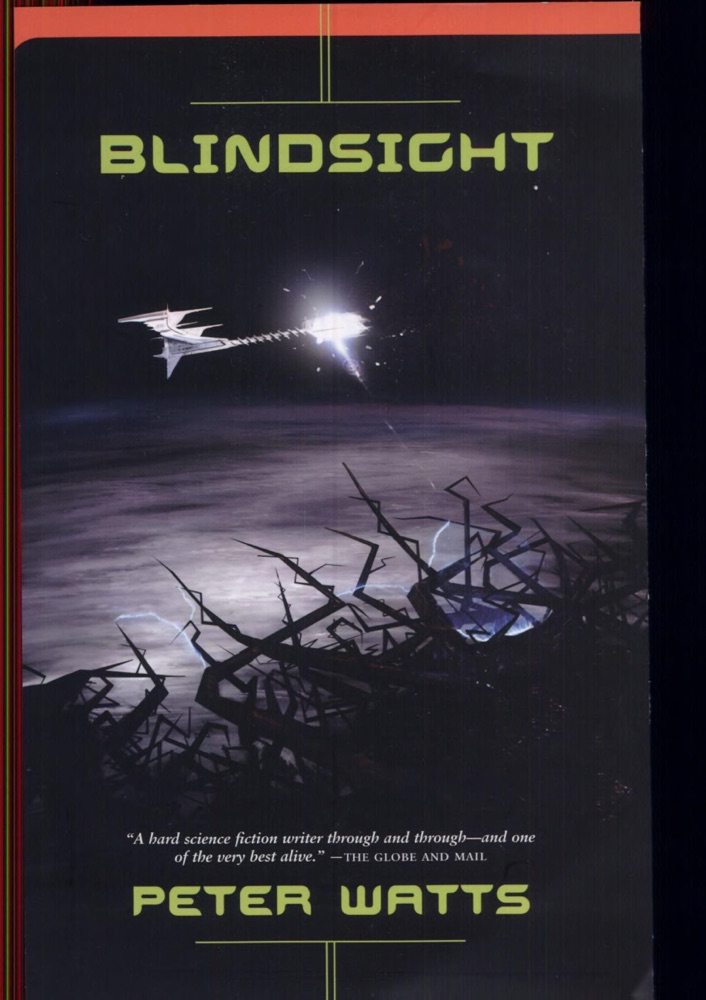 Blindsight
 Villa Incognito
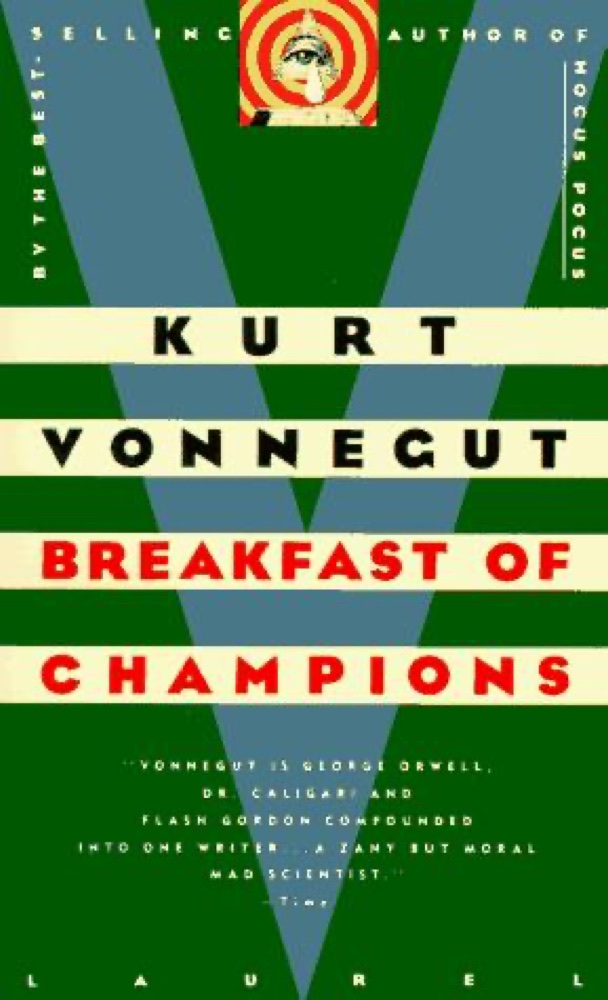 Breakfast of Champions
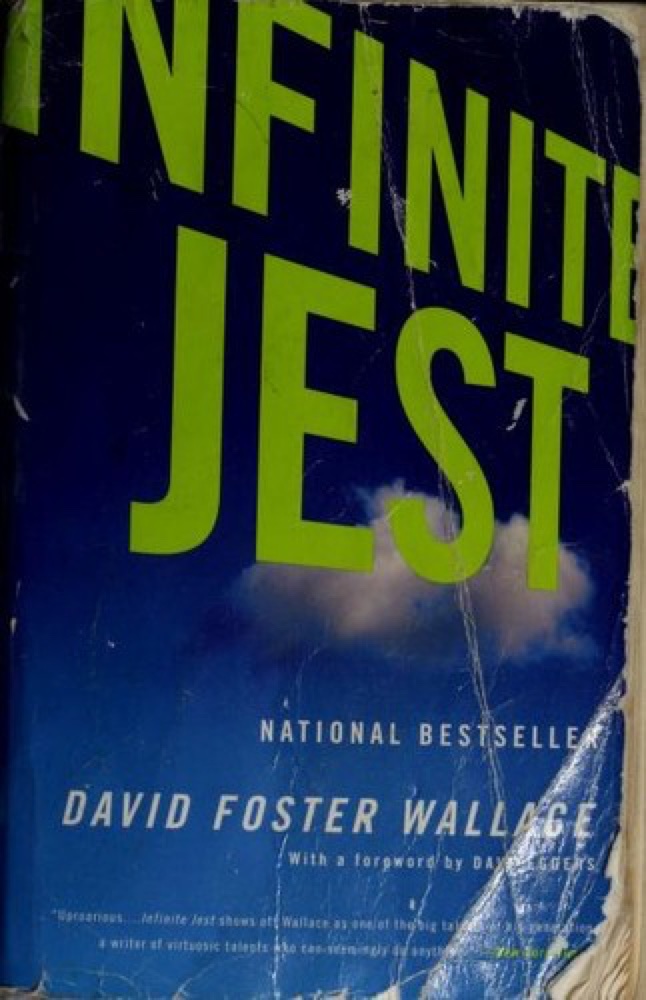 Infinite Jest
 Myths to Live By
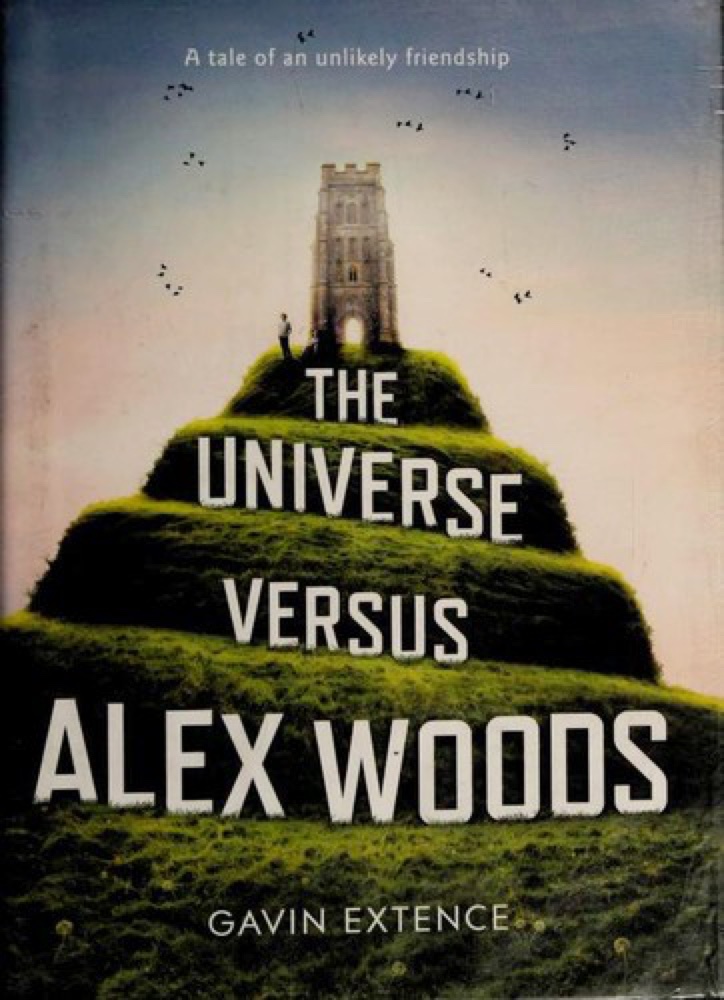 The Universe Versus Alex Woods
 Stella Maris
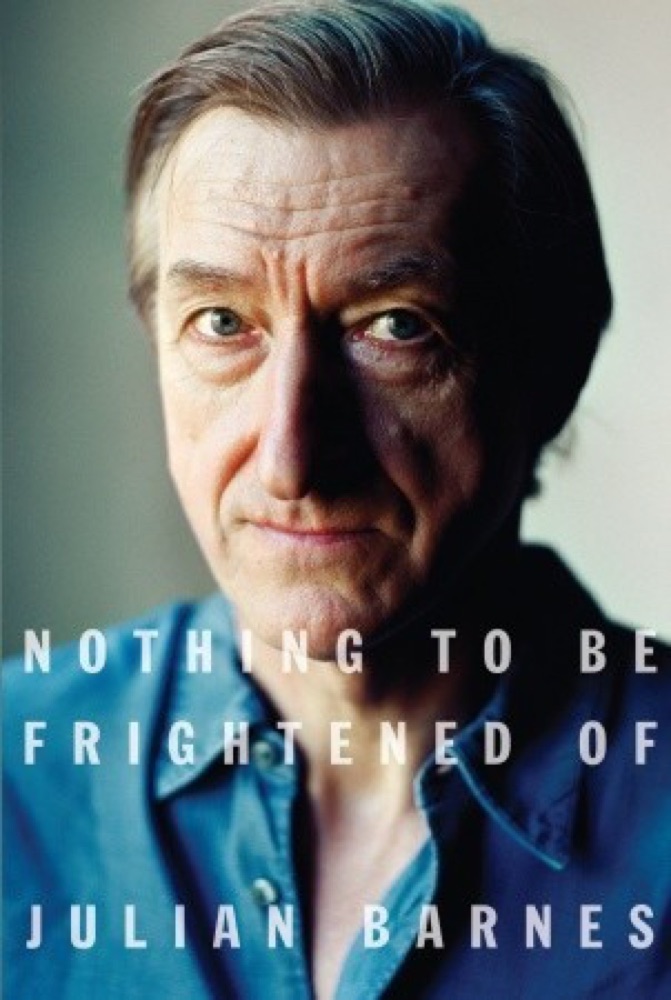 Nothing to Be Frightened Of
 Underground: The Tokyo Gas Attack and the Japanese Psyche
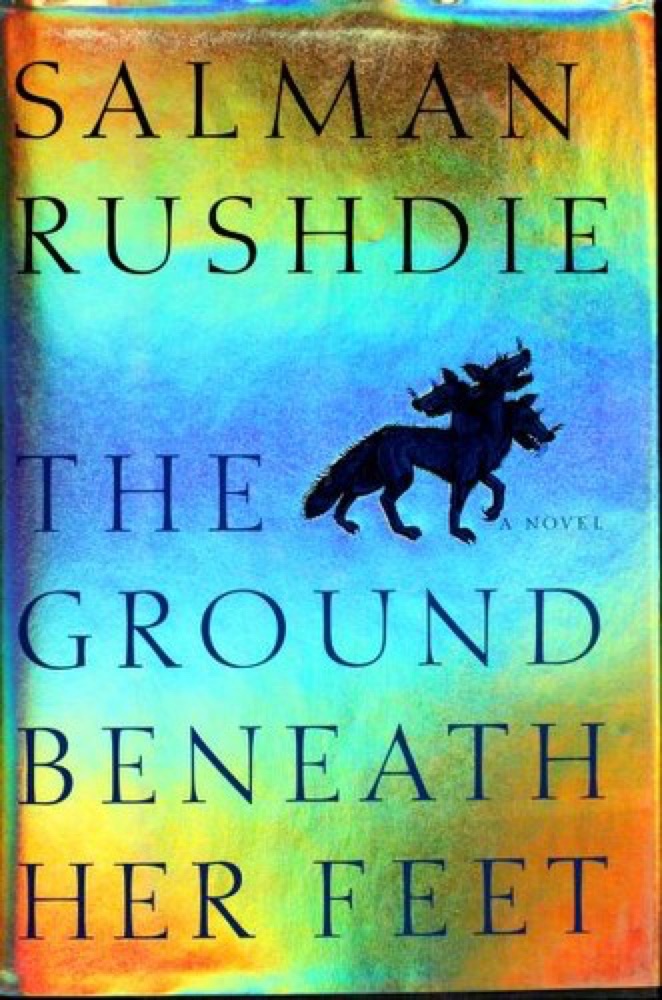 The Ground Beneath Her Feet
 Spook: Science Tackles the Afterlife
 The Rise of Endymion
 Humboldt's Gift
 Acceptance
 Gnomon
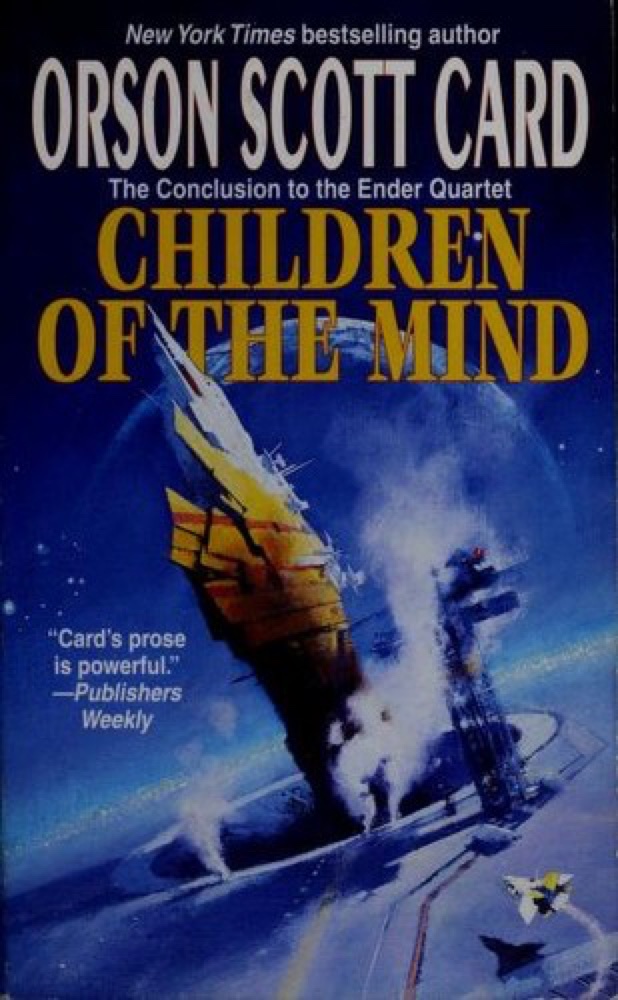 Children of the Mind
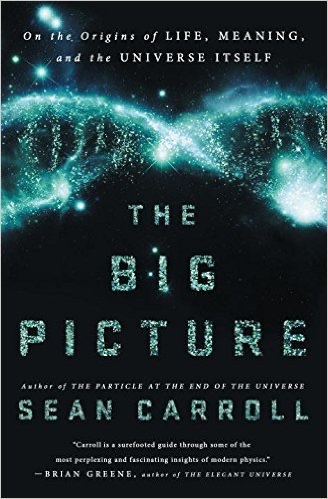 The Big Picture: On the Origins of Life, Meaning, and the Universe Itself
 False Memory
 The Myth of Sisyphus
 What Do You Care What Other People Think?
 The Wolf Gift
 The Story of My Experiments With Truth
 All the Birds in the Sky
 When I Was a Child I Read Books
 Flight Behavior
 Dust Tracks on a Road
 Even Cowgirls Get the Blues
 The Varieties of Scientific Experience: A Personal View of the Search for God
 Wired
Wired
 A Devil's Chaplain: Reflections on Hope, Lies, Science, and Love
 Slow Gods
 The Parafaith War
 Erewhon
 The Rebel Angels
 The Man in the High Castle
 Xenocide