
 Reasonable Faith
Quotes from the Book
Not knowing the answer to a question is not a valid excuse for making up a fairytale to explain it.
11
There is no evidence to suggest that God helps people. There is, however, ample evidence that people can help themselves and each other.
6
Reality is that which, when you stop believing in it, doesn't go away.” This touches on the heart of the argumentum ad populum fallacy. Physical reality does not require belief to sustain it, and belief will not modify the rules of the universe.
4
In order to indoctrinate their followers and secure obedience, religions frequently tear people down, creating an emptiness that must then be filled with Jesus, Allah or any other deity. People are told that they are inherently bad or sinful and that the only way to become good is by giving over control of their lives to faith. As there is no evidence that any of that is true, religion, in effect, is creating an imaginary problem simply so that it can sell an imaginary solution.
2
the truth is true even if no one believes it, and untrue claims are still untrue even if everyone believes them.
2
The religions that we have today are a small fraction of all religions that have existed throughout human history. The ones that we are left with have survived because they have more effectively adapted to attract and hold the allegiance of many people.
2
Close analysis of ‘miracles’ have never led to any proof for a supernatural explanation, and, in fact, many have proven to be cheap magic tricks, hallucinations or primitive misunderstandings of natural phenomena.
2
An all-loving god would surely not damn his children to an eternity of torture simply for being born into a culture that believes in the wrong deity, follows the wrong holy book or attends the wrong type of church services.
2
Belief in God can come with a high price for some. Some of the most powerful nations in the world are making major political decisions based on a belief in God. Wars are fought using religion, and the rights of some individuals and groups are oppressed in the name of God. The lives of billions of people around the world are affected by religious beliefs.
1
According to some believers, God answers prayers in one of three ways: “Yes,” “No,” and “Wait.” This sounds reasonable and even wise before you realize that this explanation is inherently meaningless. In fact, those three answers cover every possible outcome of any event. Either it will happen now, it will happen later or it won't happen at all. This is true whether you pray to a deity or to a bar of soap; it does nothing to prove the existence of a deity.
1
There is no single outside force imposing meaning on the events of your life. There is no evidence whatsoever that people’s life events conform to some sort of divine plan or predestination. Life is, objectively, meaningless; given the size and scope of the universe and our tiny role within it, it’s absurd to think that we might have any sort of cosmically vital role.
1
Similarly, while prayer is frequently a person's first response to a disaster, it's often the least helpful. Instead of praying for disaster victims, it would be more helpful to donate blood, send donations or volunteer. These are actions that can actually have a positive effect on someone.
1
Part of the beauty and wonder of being alive is the opportunity to make your own choices and create your own meaning.
1
religious beliefs have been so widespread because they tap into the psychological desires of many people, not because there is any external proof of their veracity.
1
No satisfaction based upon self-deception is solid, and, however unpleasant the truth may be, it is better to face it once for all, to get used to it, and to proceed to build your life in accordance with it.
1
With no evidence for an afterlife, we should recognize the true value of our current lives as our one and only shot at happiness. Wasting it on unfounded claims and ancient myths is an absolute tragedy.
1
If morality truly stemmed from an all-powerful deity, it would not change over time.
1
There are many examples that show that events with very small probability are not miraculous. In fact, they're commonplace. Mathematician J.E. Littlewood suggested that each one of us should expect one-in-a-million events to happen to us about once every month. Failing to recognize this is due to us ignoring the astronomically high number of events that occur which we find insignificant. Events that we do find significant, such as winning a lottery or dreaming about your mother calling you right before waking up to her call are just a tiny fraction of many other insignificant events with the same or even lower probability of occurring, such as the chance that you had a dream of your mother calling you and also running out of milk five days after at 7:21 am.
1
It simply doesn't make sense to make an unfounded claim with no evidence to back it and demand that the other person to either agree with you or disprove your unfounded statement.
1
An unknown cause is not the same as divine intervention.
1
The idea that a large group of people believing in something automatically makes it true is a logical fallacy called argumentum ad populum.
1
Moreover, the existence of “deathbed conversions” and similar experiences does not prove the existence of God. They only suggest that people are at their most irrational when frightened, in pain or delirious.
When something good happens to a believer, believers often attribute that to God. When a disaster occurs, believers often explain that God's will is mysterious and cannot be comprehended by mortals. These two claims are in opposition; if God's will cannot be comprehended, how do we know that he has good intentions at all?
An indescribable god may be unfalsifiable, but it is also unprovable.
If the Quran actually contained scientific breakthroughs, many of the countless believers who had studied the Quran would have made these made discoveries before the scientists. That none of these scientific predictions were revealed by interpretations of the Quran until after they'd come to light by scientists makes such claims highly dubious.
Instead of praying for disaster victims, it would be more helpful to donate blood, send donations or volunteer. These are actions that can actually have a positive effect on someone.
In the United States alone, about 140 children with easily treatable conditions died between 1975 and 1995 after parents withheld medical attention, relying only on prayer and faith
When considering the case of prayer's efficacy, you would need to avoid confirmation bias. Confirmation bias occurs when you record and remember events that confirm with your views and ignore or rationalize the times it didn't
However, there was a significant difference between those who were aware of the fact that they were being prayed for and those who did not know. Those who knew ended up suffering more complications, possibly due to the additional stress it caused.
After carefully following the recovery of 1,800 heart surgery patients for 30 days after the surgery, researchers found absolutely no link between prayer and recovery.
Watch on YouTube
About Armin Navabi
We have collected 30 quotes from 1 book by Armin Navabi on BookQuoters.
More about the author →About the book
• "Science can't explain the complexity and order of life; God must have designed it to be this way."• "God's existence is proven by scripture."• "There's no evidence that God doesn't exist."• "God has helped me so much. How could none of it be true?"• "Atheism has killed more people than religion, so it must be wrong!"
How many times have you heard arguments like these for why God exists? Why There Is No God provides simple, easy-to-understand counterpoints to the most popular arguments made for the existence of God. Each chapter presents a concise explanation of the argument, followed by a response illustrating the problems and fallacies inherent in it. Whether you're an atheist, a believer or undecided, this book offers a solid foundation for building your own inquiry about the concept of God.
Book details
- First published
- 2014
- Author
- Armin Navabi
- Genre
- Nonfiction
- Goodreads rating
- 3.94 (3k ratings)
Keep reading
Reasonable Faith
 Outgrowing God: A Beginner’s Guide to Atheism
 Miracles: What They Are, Why They Happen, and How They Can Change Your Life
 I Don't Have Enough Faith to Be an Atheist
 The God Delusion
 Letter to a Christian Nation
 The Reason for God: Belief in an Age of Skepticism
 The Sign
 The Portable Atheist: Essential Readings for the Nonbeliever
 God's Debris: A Thought Experiment
 The Case for Faith: A Journalist Investigates the Toughest Objections to Christianity
 Finding God in the Waves: How I Lost My Faith and Found It Again Through Science
 Tactics: A Game Plan for Discussing Your Christian Convictions
 Breaking the Spell: Religion as a Natural Phenomenon
 Godless: How an Evangelical Preacher Became One of America's Leading Atheists
 When Bad Things Happen to Good People
 The Language of God: A Scientist Presents Evidence for Belief
 The End of Faith: Religion, Terror, and the Future of Reason
 The Age of Reason
 A Little History of Religion
 The Gospel of the Flying Spaghetti Monster
 The Parafaith War
 The Knowledge of the Holy
 God Is Not One: The Eight Rival Religions That Run the World--and Why Their Differences Matter
 A History of God: The 4,000-Year Quest of Judaism, Christianity, and Islam
 The Meaning of It All: Thoughts of a Citizen-Scientist
 21 Lessons for the 21st Century
 The Varieties of Scientific Experience: A Personal View of the Search for God
 Man Seeks God: My Flirtations with the Divine
 Religion Explained: The Evolutionary Origins of Religious Thought
 There Is a God: How the World's Most Notorious Atheist Changed His Mind
 What's So Great About Christianity
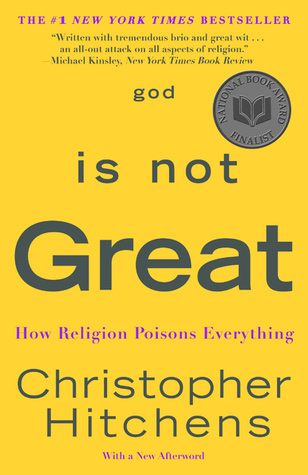 god is Not Great: How Religion Poisons Everything
 Why I Am Not a Christian and Other Essays on Religion and Related Subjects
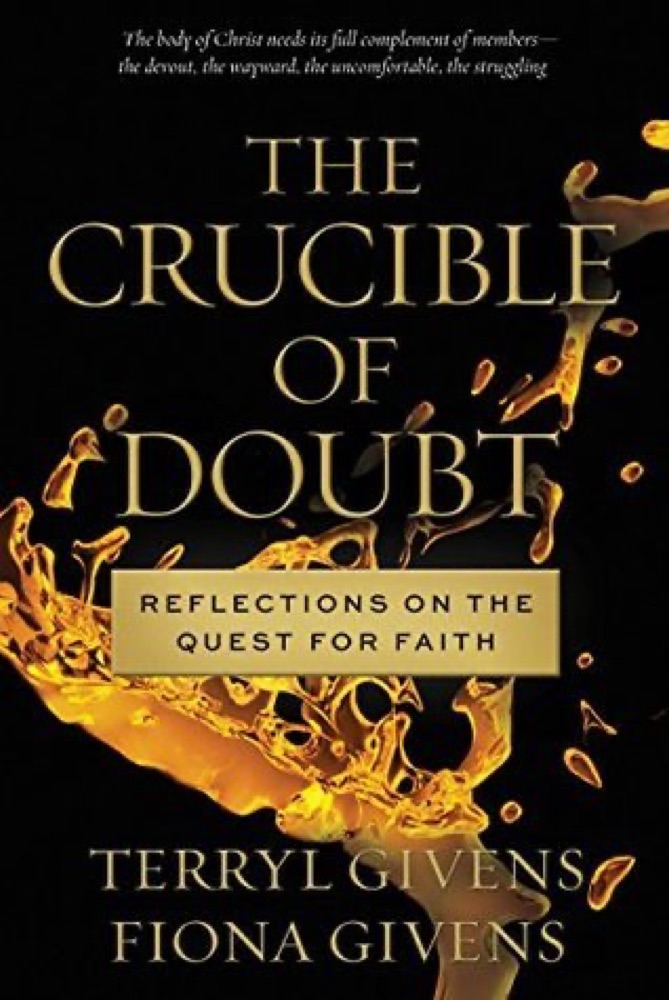 The Crucible of Doubt: Reflections On the Quest for Faith
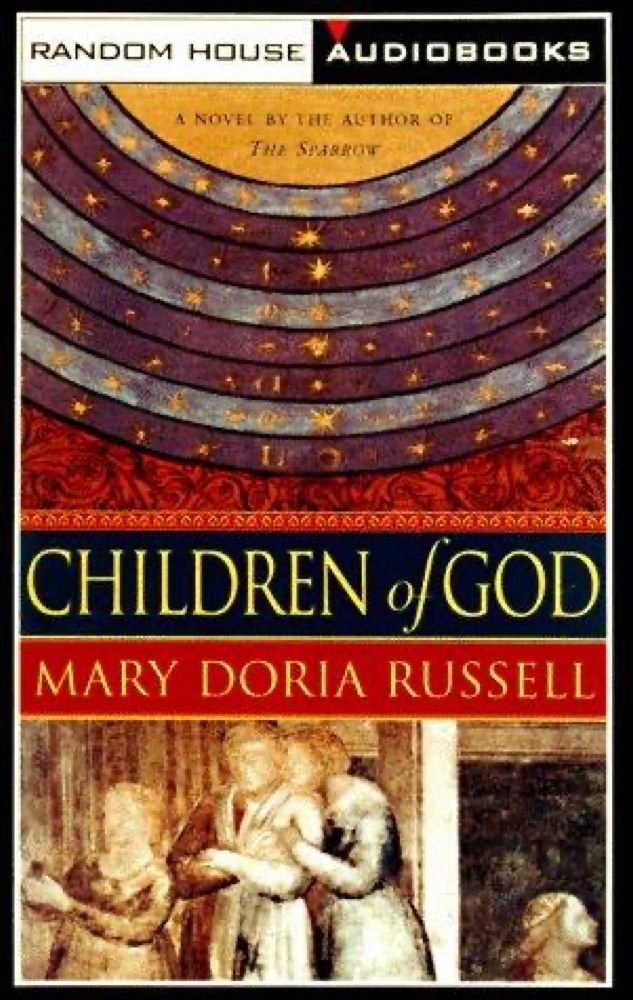 Children of God
 The Bible Jesus Read
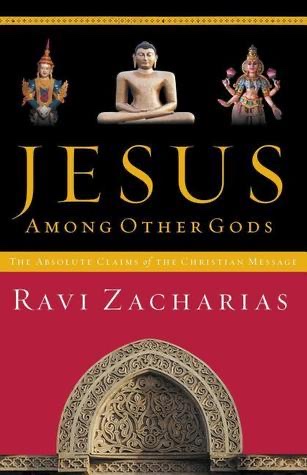 Jesus Among Other Gods: The Absolute Claims of the Christian Message
 Velvet Elvis: Repainting the Christian Faith
 The Magic of Reality: How We Know What's Really True
 My Bright Abyss: Meditation of a Modern Believer
 What We Talk about When We Talk about God
 The Case for God
 The Story of B: An Adventure of the Mind and Spirit
 Everything Belongs: The Gift of Contemplative Prayer
 A Course in Miracles
 Summa Theologica
 The Christian Atheist: Believing in God but Living As If He Doesn't Exist
 The Everlasting Man
 Plan B: Further Thoughts on Faith
 Why Does the World Exist?: An Existential Detective Story
 Rationality: From AI to Zombies
 The Moral Landscape: How Science Can Determine Human Values
 The Immortals of Meluha
 God, No! Signs You May Already Be an Atheist and Other Magical Tales
 Believing God
 The Case for a Creator: A Journalist Investigates Scientific Evidence That Points Toward God
 The Case for Christianity