 Life 3.0: Being Human in the Age of Artificial Intelligence
Quotes from the Book
There’s no better guarantee of failure than convincing yourself that success is impossible, and therefore never even trying.
34
I think that consciousness is the way information feels when being processed in certain complex ways.
21
Real knowledge is to know the extent of one’s ignorance. —Confucius The highest form of ignorance is when you reject something you don’t know anything about. —Wayne Dyer
17
Why do we perceive the world as stable and ourselves as local and unique? Here’s my guess: because it’s useful.
13
I feel that my main responsibility as a teacher isn’t to convey facts, but to rekindle that lost enthusiasm for asking questions.
11
So I feel that the experimental verdict is in: the world is weird, and we just have to learn to live with it.
9
Philosophy is written in this grand book, the universe, which stands continually open to our gaze. But the book cannot be understood unless one first learns to comprehend the language and read the characters in which it is written. It is written in the language of mathematics, and its characters are triangles, circles, and other geometric figures without which it is humanly impossible to understand a single word of it; without these one is wandering in a dark labyrinth. —Galileo Galilei, The Assayer, 1623
7
economics was largely a form of intellectual prostitution where you got rewarded for saying what the powers that be wanted to hear.
7
THE BOTTOM LINE • Parallel universes are not a theory, but a prediction of certain theories. • Eternal inflation predicts that our Universe (the spherical region of space from which light has had time to reach us during the 14 billion years since our Big Bang) is just one of infinitely many universes in a Level I multiverse where everything that can happen does happen somewhere. • For a theory to be scientific, we need not be able to observe and test all its predictions, merely at least one of them. Inflation is the leading theory for our cosmic origins because it’s passed observational tests, and parallel universes seem to be a non-optional part of the package. • Inflation converts potentiality into reality: if the mathematical equations governing
7
Evolution endowed us with intuition only for those aspects of physics that had survival value for our distant ancestors, such as the parabolic orbits of flying rocks (explaining our penchant for baseball). A cavewoman thinking too hard about what matter is ultimately made of might fail to notice the tiger sneaking up behind and get cleaned right out of the gene pool. Darwin’s theory thus makes the testable prediction that whenever we use technology to glimpse reality beyond the human scale, our evolved intuition should break down. We’ve repeatedly tested this prediction, and the results overwhelmingly support Darwin. At high speeds, Einstein realized that time slows down, and curmudgeons on the Swedish Nobel committee found this so weird that they refused to give him the Nobel Prize for his relativity theory. At low temperatures, liquid helium can flow upward. At high temperatures, colliding particles change identity; to me, an electron colliding with a positron and turning into a Z-boson feels about as intuitive as two colliding cars turning into a cruise ship. On microscopic scales, particles schizophrenically appear in two places at once, leading to the quantum conundrums mentioned above. On astronomically large scales… weirdness strikes again: if you intuitively understand all aspects of black holes [then you] should immediately put down this book and publish your findings before someone scoops you on the Nobel Prize for quantum gravity… [also,] the leading theory for what happened [in the early universe] suggests that space isn’t merely really really big, but actually infinite, containing infinitely many exact copies of you, and even more near-copies living out every possible variant of your life in two different types of parallel universes.
6
What is real? Is there more to reality than meets the eye? Yes! was Plato’s answer over two millennia ago. In his famous cave analogy, he likened us to people who’d lived their entire lives shackled in a cave, facing a blank wall, watching the shadows cast by things passing behind them, and eventually coming to mistakenly believe that these shadows were the full reality. Plato argued that what we humans call our everyday reality is similarly just a limited and distorted representation of the true reality, and that we must free ourselves from our mental shackles to begin comprehending it.
5
The highest form of ignorance is when you reject something you don’t know anything about. —Wayne Dyer
3
In other words, we’re more connected to the heavens than our ancestors realized: we’re made of star stuff. Just as we are in our Universe, our Universe is in us.
2
Accidental nuclear war between two superpowers may or may not happen in my lifetime, but if it does, it will obviously change everything. The climate change we're currently worrying about pales in comparison with nuclear winter, where a global dust cloud blocks sunlight for years, much like when an asteroid or supervolcano caused a mass extinction in the past. The 2008 economic turmoil was of course nothing compared to the resulting global crop failures, infrastructure collapse and mass starvation, with survivors succumbing to hungry armed gangs systematically pillaging from house to house. Do I expect to see this in my lifetime? I'd give it about 30%, putting it roughly on par with my getting cancer. Yet we devote way less attention and resources to reducing the risk of nuclear disaster than we do for cancer. And whereas humanity as a whole survives even if 30% get cancer, it's less obvious to what extent our civilization would survive a nuclear Armageddon. There are concrete and straightforward steps that can be taken to slash this risk, as spelled out in numerous reports by scientific organizations, but these never become major election issues and tend to get largely ignored.
2
With a sufficiently broad definition of mathematics, the ERH implies the Mathematical Universe Hypothesis (MUH) that our physical world is a mathematical structure. This means that our physical world not only is described by mathematics, but that it is mathematical (a mathematical structure), making us self-aware parts of a giant mathematical object.
2
The enormous usefulness of mathematics in the natural sciences is something bordering on the mysterious and … there is no rational explanation for it. —Eugene Wigner, 1960
2
But why has our physical world revealed such extreme mathematical regularity that astronomy superhero Galileo Galilei proclaimed nature to be “a book written in the language of mathematics,” and Nobel Laureate Eugene Wigner stressed the “unreasonable effectiveness of mathematics in the physical sciences” as a mystery demanding an explanation?
2
Physics is the ultimate intellectual adventure, the quest to understand the deepest mysteries of our Universe. Physics doesn’t take something fascinating and make it boring. Rather, it helps us see more clearly, adding to the beauty and wonder of the world around us. When I bike to work in the fall, I see beauty in the trees tinged with red, orange and gold. But seeing these trees through the lens of physics reveals even more beauty.
2
there’s no such thing as brown light! The color brown doesn’t exist in the external reality, but only in your internal reality: it’s simply what you perceive when seeing dim orange light against a darker background.
1
The German mathematician Emmy Noether proved in 1915 that each continuous symmetry of our mathematical structure leads to a so-called conservation law of physics, whereby some quantity is guaranteed to stay constant-and thereby has the sort of permanence that might make self-aware observers take note of it and give it a "baggage" name. All the conserved quantities that we discussed in Chapter 7 correspond to such symmetries: for example, energy corresponds to time-translation symmetry (that our laws of physics stay the same for all time), momentum corresponds to space-translation symmetry (that the laws are the same everywhere), angular momentum corresponds to rotation symmetry (that empty space has no special "up" direction) and electric charge corresponds to a certain symmetry of quantum mechanics. The Hungarian physicist Eugene Wigner went on to show that these symmetries also dictated all the quantum properties that particles can have, including mass and spin. In other words, between the two of them, Noether and Wigner showed that, at least in our own mathematical structure, studying the symmetries reveals what sort of "stuff" can exist in it.
1
Generations of physicists and chemists have studied what happens when you group together vast numbers of atoms, finding that their collective behavior depends on the pattern in which they're arranged:the key difference between a solid, a liquid and a gas lies not in the types of atoms, but in their arrangement. My guess is that we'll one day understand consciousness as yet another phase of matter. I'd expect there to be many types of consciousness just as there are many types of liquids, but in both cases, they share certain characteristic traits that we can aim to understand.
1
In other words, even though an observer moment objectively occupies less than a liter of volume and a second of time, it subjectively feels as if it occupies all the space you're aware of and all the time you remember. You feel as if you're observing this space and time form here and now, but all that space and time are just part of the reality model that you're experiencing. This is why you subjectively feel that time flows even though it doesn't.
1
However, in broad brushstrokes, we might say this: You're a pattern in spacetime. A mathematical pattern. Specifically, you're a braid in spacetime-indeed one of the most elaborate braids known.
1
Some key physical entities such as empty space, elementary particles and the wavefunction appear to be purely mathematical int he sense that their only intrinsic properties are mathematical properties.
1
Other big questions tackled by ancient cultures are at least as radical. What is real? Is there more to reality than meets the eye? Yes! was Plato's answer over two millennia ago. In his famous cave analogy, he likened us to people who'd lived their entire lives shacked ina a cave, facing a blank wall, watching the shadows cast by things passing behind them, and eventually coming to mistakenly believe that these shadows were the full reality. Plato argued that what we humans call our everyday reality is similarly just a limited and distorted representation of the true reality, and that we must free ourselves from our mental shackles to comprehending it.
1
Alas, I soon grew disillusioned, concluding that economics was largely a form of intellectual prostitution where you got rewarded for saying what the powers that be wanted to hear. Whatever a politician wanted to do, he or she could find an economist as advisor who had argued for doing precisely that. Franklin D. Roosevelt wanted to increase government spending, so he listened to John Maynard Keynes, whereas Ronald Reagan wanted to decrease government spending, so he listened to Milton Friedman.
1
There are more things in heaven and earth, Horatio, than are dreamt of in your philosophy. —William Shakespeare, Hamlet, act 1, scene 5
1
Think of mathematical symbols as mere labels without intrinsic meaning. It doesn’t matter whether you write, “Two plus two equals four,” “2 + 2 = 4,” or “Dos más dos es igual a cuatro.” The notation used to denote the entities and the relations is irrelevant; the only properties of integers are those embodied by the relations between them. That is, we don’t invent mathematical structures—we discover them, and invent only the notation for describing them.
1
Watch on YouTube
About Max Tegmark
More by Max Tegmark
Life 3.0: Being Human in the Age of Artificial Intelligence
About the book
Our Mathematical Universe is a journey to explore the mysteries uncovered by cosmology and to discover the nature of reality. Our Big Bang, our distant future, parallel worlds, the sub-atomic and intergalactic - none of them are what they seem. But there is a way to understand this immense strangeness - mathematics. Seeking an answer to the fundamental puzzle of why our universe seems so mathematical, Tegmark proposes a radical idea: that our physical world not only is described by mathematics, but that it is mathematics. This may offer answers to our deepest questions: How large is reality? What is everything made of? Why is our universe the way it is?
Table of Contents Preface
1 What Is Reality? Not What It Seems • What’s the Ultimate Question? • The Journey Begins
Part One: Zooming Out
2 Our Place in Space Cosmic Questions • How Big Is Space? • The Size of Earth •
Book details
- First published
- 2012
- Author
- Max Tegmark
- Genre
- Nonfiction
- Goodreads rating
- 4.18 (9k ratings)
Keep reading
 Helgoland: Making Sense of the Quantum Revolution
 Existential Physics: A Scientist's Guide to Life's Biggest Questions
 The Big Picture: On the Origins of Life, Meaning, and the Universe Itself
 The Grand Design
 The Accidental Universe: The World You Thought You Knew
 A Universe from Nothing: Why There Is Something Rather Than Nothing
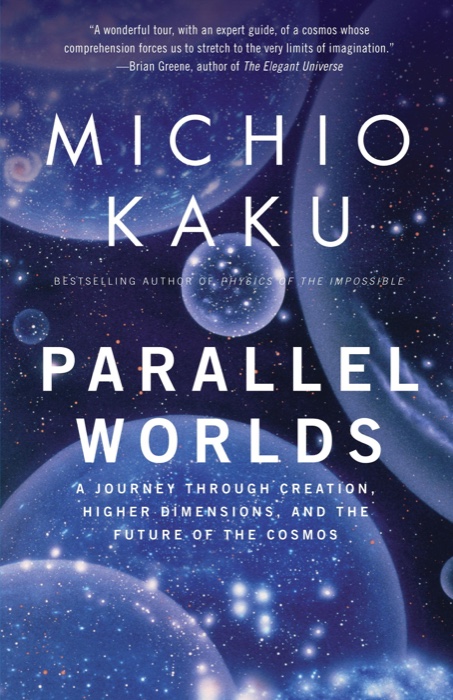 Parallel Worlds: A Journey Through Creation, Higher Dimensions, and the Future of the Cosmos
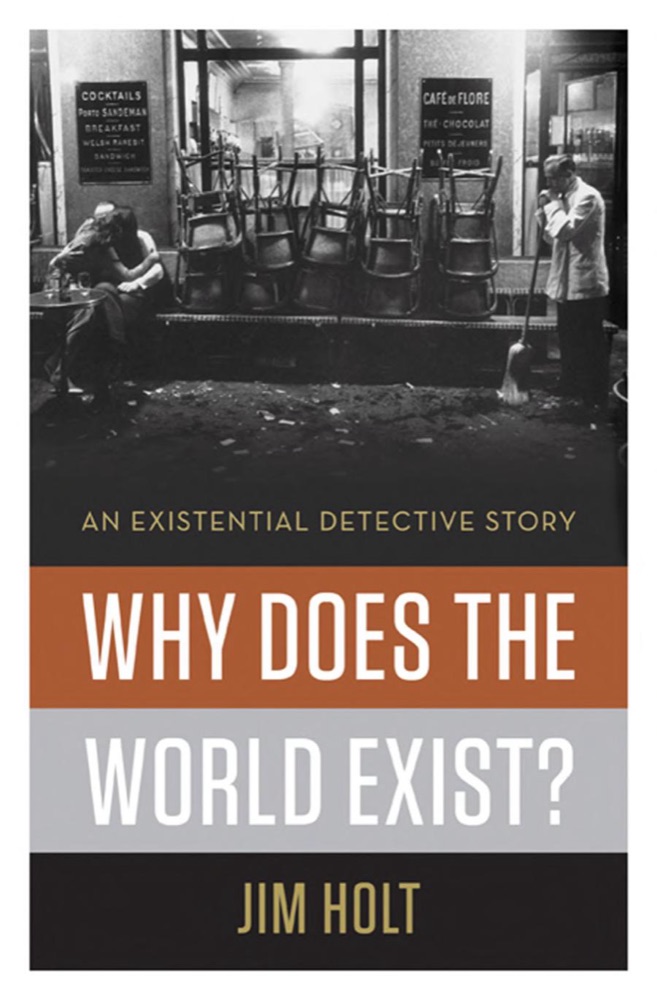 Why Does the World Exist?: An Existential Detective Story
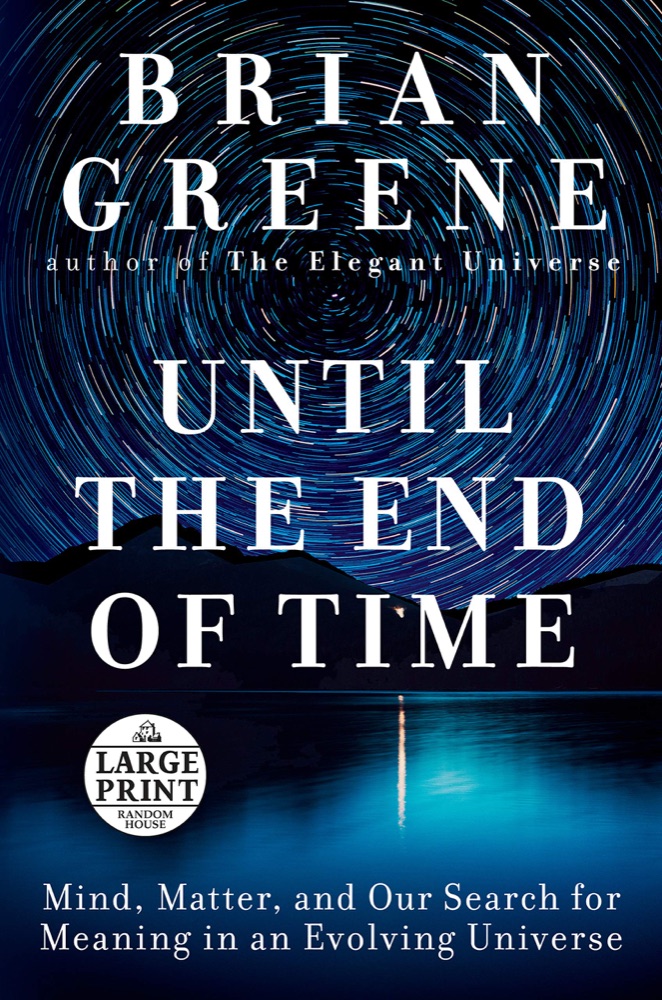 Until the End of Time: Mind, Matter, and Our Search for Meaning in an Evolving Universe
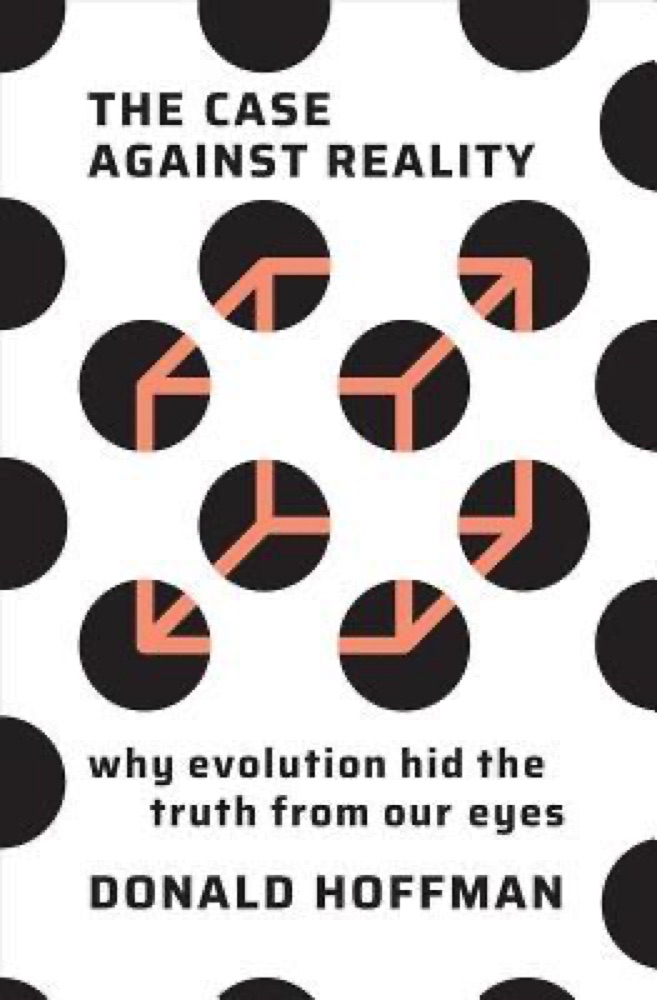 The Case Against Reality: Why Evolution Hid the Truth from Our Eyes
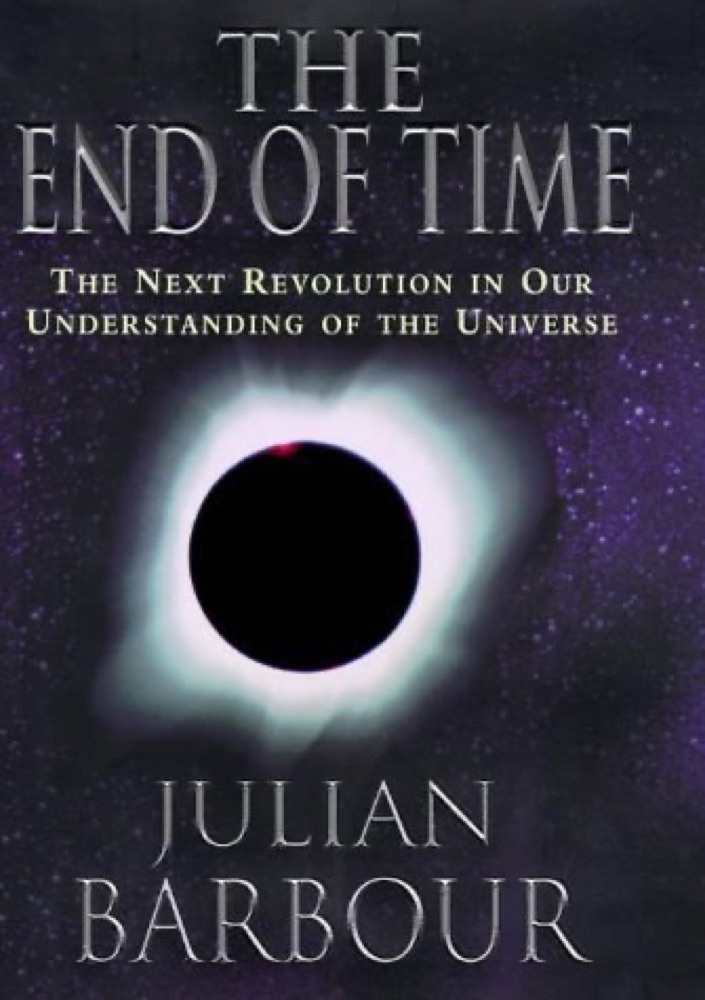 The End of Time: The Next Revolution in Our Understanding of the Universe
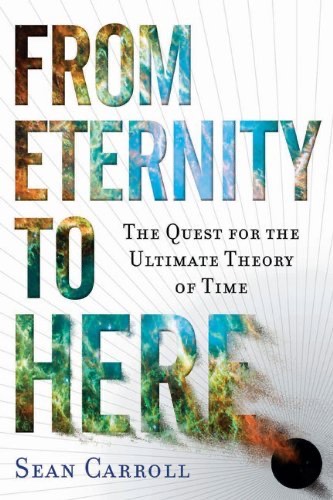 From Eternity to Here: The Quest for the Ultimate Theory of Time
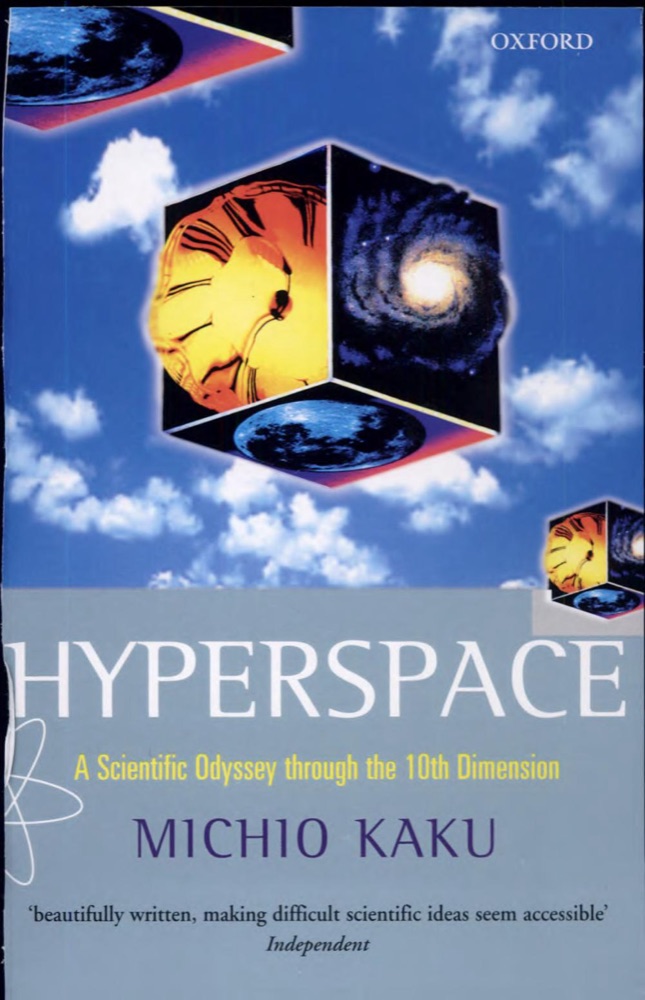 Hyperspace
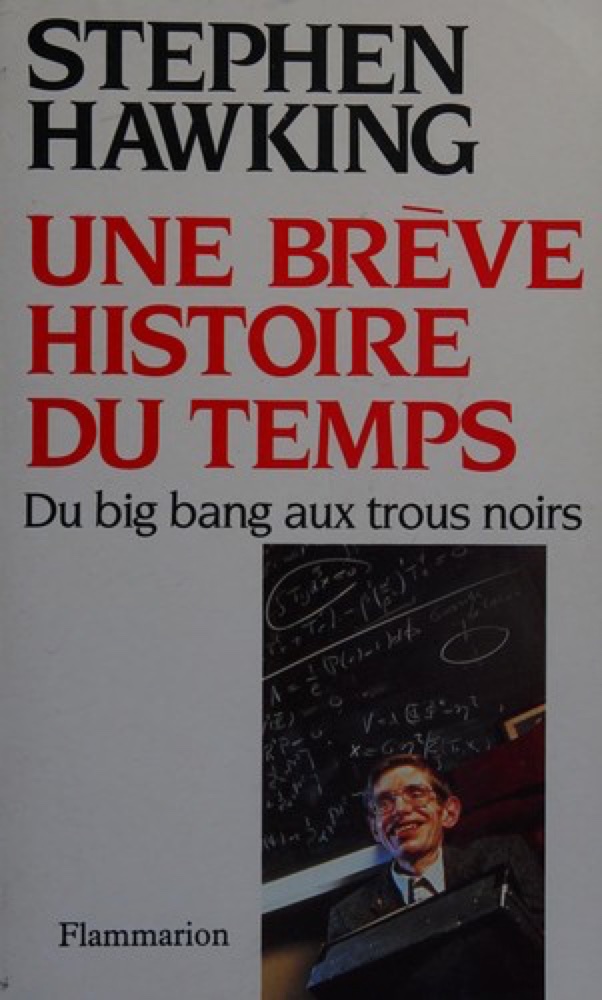 A Brief History of Time
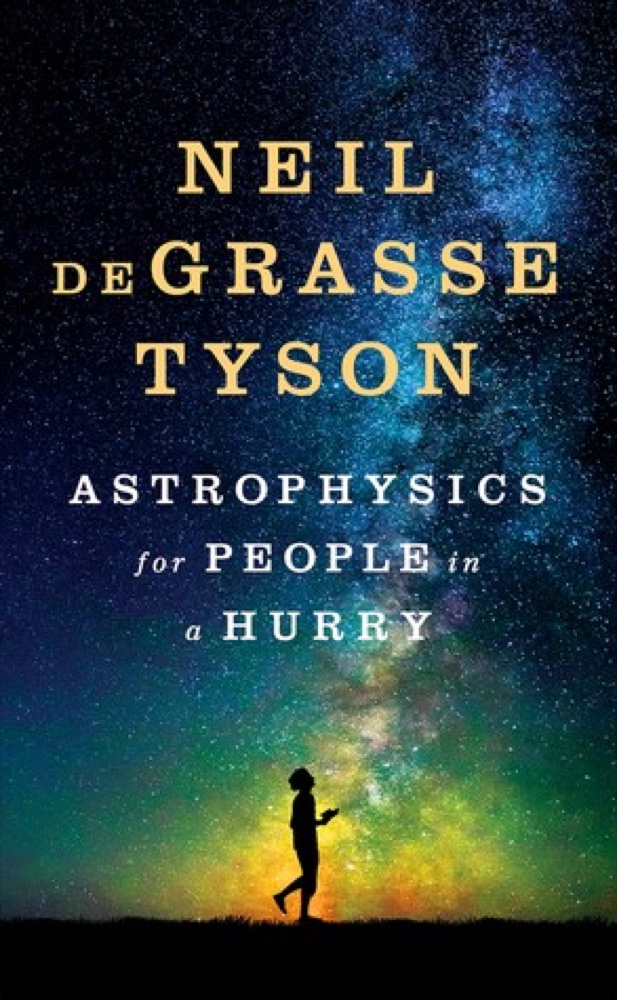 Astrophysics for People in a Hurry
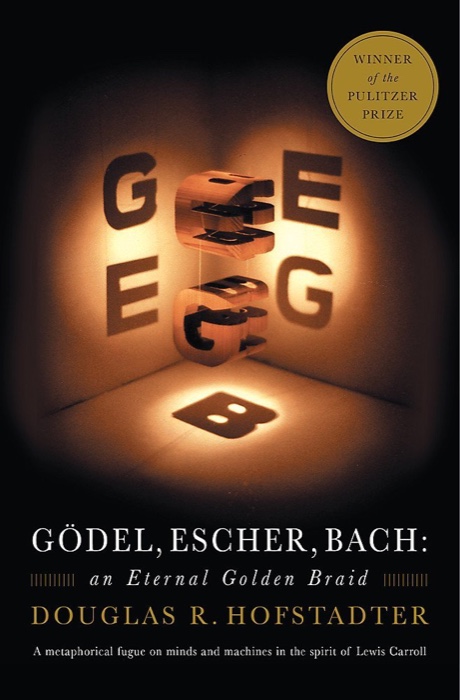 Gödel, Escher, Bach: An Eternal Golden Braid
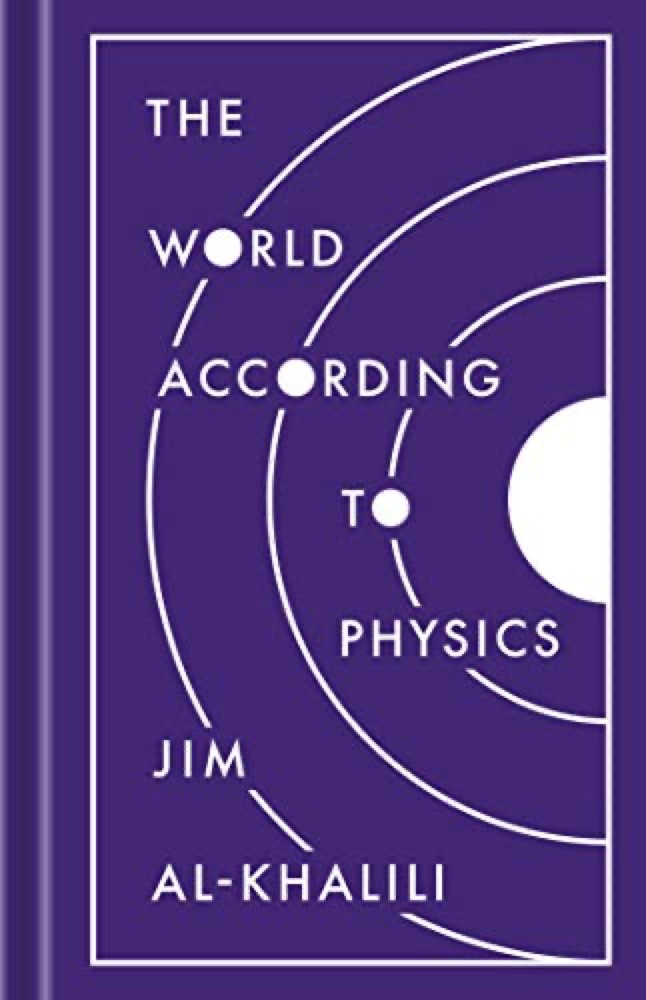 The World According to Physics
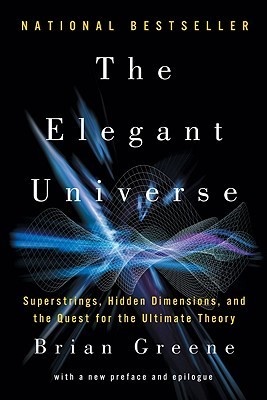 The Elegant Universe: Superstrings, Hidden Dimensions, and the Quest for the Ultimate Theory
 A Briefer History of Time
 The Fabric of the Cosmos: Space, Time, and the Texture of Reality
 The Meaning of It All: Thoughts of a Citizen-Scientist
 Lost in Math: How Beauty Leads Physics Astray
 The Feynman Lectures on Physics
 The End of Everything
 Death by Black Hole: And Other Cosmic Quandaries
 The Order of Time
 Chaos: Making a New Science
 Black Holes and Baby Universes and Other Essays
 The Universe in Your Hand: A Journey Through Space, Time, and Beyond
 The Character of Physical Law
 The Tell-Tale Brain: A Neuroscientist's Quest for What Makes Us Human
 The Stuff of Thought: Language as a Window into Human Nature
 What Is Real?: The Unfinished Quest for the Meaning of Quantum Physics
 The Three-Body Problem
 Metaphysics
 Cosmos
 When We Cease to Understand the World
 Brief Answers to the Big Questions
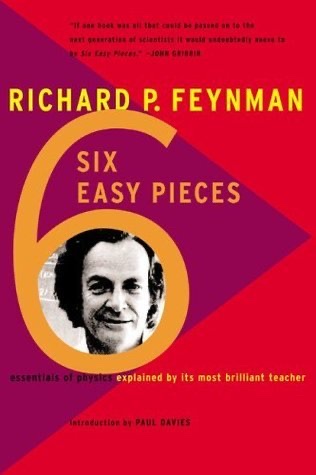 Six Easy Pieces: Essentials of Physics By Its Most Brilliant Teacher
 Exhalation
 The Blind Watchmaker: Why the Evidence of Evolution Reveals a Universe Without Design
 The Varieties of Scientific Experience: A Personal View of the Search for God
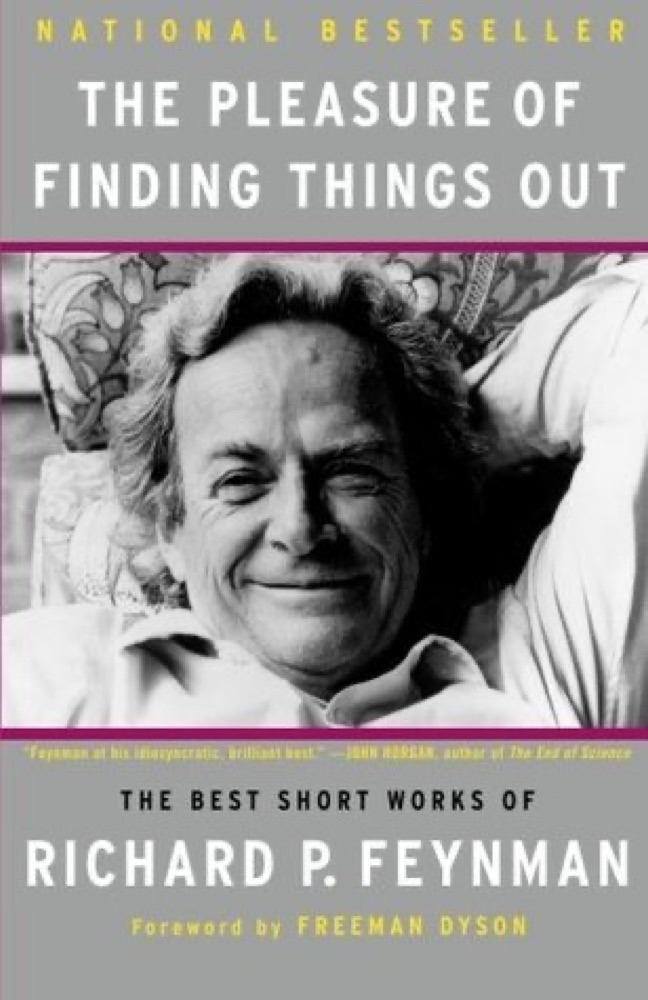 The Pleasure of Finding Things Out: The Best Short Works of Richard P. Feynman
 The Convoluted Universe, Book 1
 The Black Hole War: My Battle with Stephen Hawking to Make the World Safe for Quantum Mechanics
 The Case for a Creator: A Journalist Investigates Scientific Evidence That Points Toward God
 21 Lessons for the 21st Century
 Intuition: Knowing Beyond Logic
 The Master and His Emissary: The Divided Brain and the Making of the Western World
 Consilience: The Unity of Knowledge
 Unweaving the Rainbow: Science, Delusion and the Appetite for Wonder
 Arcadia
 Bewilderment
 What Does It All Mean? A Very Short Introduction to Philosophy
 Genome
 Space Chronicles: Facing the Ultimate Frontier
 Physics of the Impossible: A Scientific Exploration Into the World of Phasers, Force Fields, Teleportation, and Time Travel
 The Demon-Haunted World: Science as a Candle in the Dark
 Science and Sanity: An Introduction to Non-Aristotelian Systems and General Semantics