
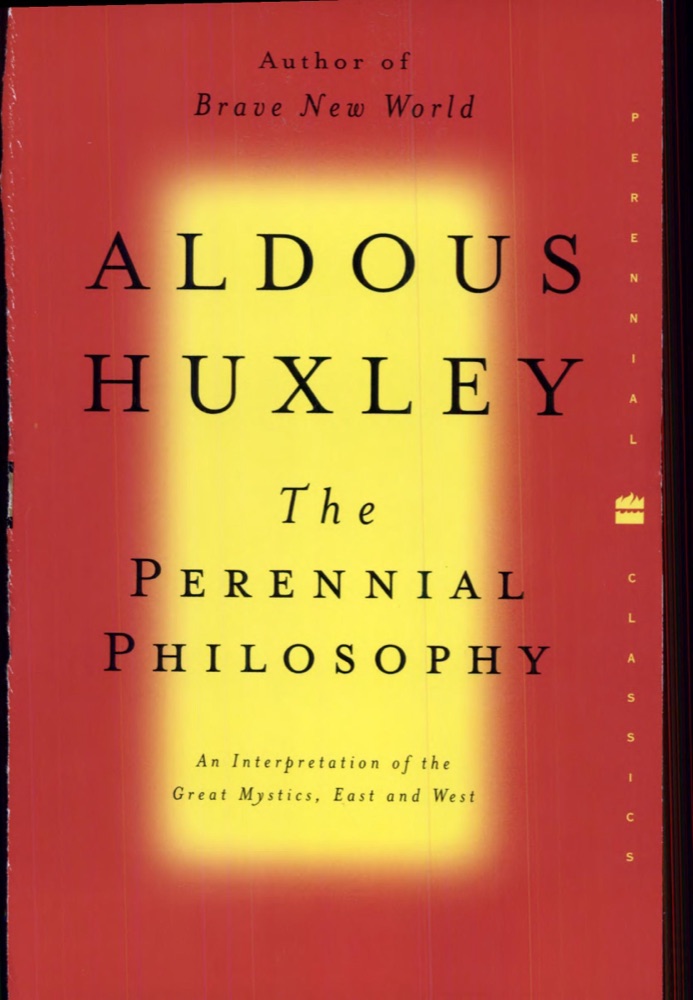
 The Perennial Philosophy
Quotes from the Book
Prayer is based on the remote possibility that someone is actually listening; but so is a lot of conversation. If the former seems far-fetched, consider the latter: even if someone is listening to your story, and really hearing, that person will disappear from existence in the blink of a cosmic eye, so why bother to tell this perhaps illusory and possibly un-listening person something he or she is unlikely to truly understand, just before the two of you blip back out of existence? We like to talk to people who answer us, intelligently if possible, but we do talk without needing response or expecting comprehension. Sometimes, the event is the word, the act of speaking. Once we pull that apart a bit, the action of talking becomes more important than the question of whether the talking is working-because we know, going in, that the talking is not working. That said, one might as well pray.
21
Plato offers the amazing idea that contemplation of the way things really are is, in itself, a purifying process that can bring human beings into the only divinity there is.
9
Epistemology is still a central issue in philosophy, and we moderns are particularly vexed with the question of how we can come to know anything outside what we already know, that is, how we can climb out of our own culture’s basic assumptions, and how we can hope to see beyond our brains’ basic formation.
5
Death is no problem because when we are alive we are not dead and when we are dead we don’t know it. So long as you can possibly worry about it, you’ve got nothing to worry about.
4
The sacrificial part of the Greek religion had to do with submitting to the wild chaotic world beyond one’s own will; getting used to the idea that your rational plans will be knocked around by larger forces. The ecstatic-ritual part of ancient Greek religion was a kind of throwing oneself into the chaos, not pitting your rationality against the tempestuous world, but rather leaving your rationality on the shore, letting the waves toss you about, and coming to identify with the waves, with the storm, with the weather.
4
[Based upon the message of "nothing new under the sun" in Ecclesiastes,] If nothing ever changes, then God has no plan.
2
Lucian [of Samosata; 120-190 CE] was trying to make his audience laugh, rather than start a revolution
2
Expect change. Accept death. Enjoy life. As Marcus Aurelius explained, the brains that got you through the troubles you have had so far will get you through any troubles yet to come.
1
brave thinking about truth is the secret to happiness: concerted and regular contemplation will transform us and let us taste what there is to taste of transcendence.
1
For Epicurus, living prudently, in deep appreciation of modest pleasures, was not just the route to happiness, it was happiness.
1
Jack Miles's wonderful literary reading of the Hebrew Bible as a biography of God offers the insight that after the Book of Job, God never speaks again. God may seem to silence Job, but Job silences God. It is lovely that Job silencing God is part of the text (though likely an accidental order of the books), because it reflects a real change in the real world after the Book of Job came into it.
1
Without the outside context of a political war between faith and reason, Epicurus does not fear that any single point he might award to the religious will be used against him. Nor is he eager to have his followers shunning prayer or ritual in order to demonstrate publicly their disbelief. Outside the context of a political war between faith and reason, more nuanced arrangements may be safely undertaken.
1
Some primary reasons that both Plato and Aristotle had for believing in God were utterly erroneous—simple errors caused by our being stuck to the planet and misled by the sensation that the planet is standing still. If they had been aware that the Earth spins, they would have understood that, by and large, we are making our own light show in the night sky. As it was, the precision of the movements of all the stars seemed astonishing. If we knew how we lined up among the planets, their motion would not seem so strange and willful. Also, had the philosophers been able to leave planet Earth for a jaunt in outer space, they could have seen that, at a distance from gravity and atmosphere, moving things tend to keep moving, without any need for an impelling force. From out there, the motion of the planets would seem natural as well.
1
Here one does not use logic to conquer chaos. Rather, one uses logic because the logic itself is beauty, is truth. Plato offers the amazing idea that contemplation of the way things really are is, in itself, a purifying process that can bring human beings into the only divinity there is.
1
One must devote oneself to figuring out that one must live for the good, for its own sake. It was a secular morality. Contemporaries did not know what to call a thing like that—he questioned their every faith, their every way of life—so they called it atheism.
1
Here, new information, new empirical data, led to a direct challenge to the way in which the gods were envisioned. This new doubt encouraged a new kind of punishment for doubt. Set up about 438 BCE, the law against Anaxagoras’s atheism held that society must “denounce those who do not believe in the divine beings or who teach doctrines about things in the sky.
1
The history of doubt is not only a history of the denial of God; it is also a history of those who have grappled with the religious questions and found the possibility of other answers.
1
Socrates counts among those great minds who actually cultivated doubt in the name of truth.
1
If humanity’s central existential difficulty comes from the fact that we have humanness—consciousness, hopes, dreams, loneliness, shame, plans, memory, a sense of fairness, love—and the universe does not, that means that we are constantly trying to wrangle our needs out of a universe that does not tend in such directions.
Plato’s sense that this was the only religion that would hold up nowadays was thoroughgoing. The only religion that could be really believed by anyone in his time, he said, is based on belief that the stars have intelligence, and that we and they have immortal souls of some sort.18 The more we learn—and mathematics is the queen of the soul’s subjects—the more we will ascend toward self-knowledge and universal truth. This ascension is the drama of Plato’s religion.
Job moans that it is wanton cruelty that suffering people, brutalized or in mourning, should have to relive their horrors in dreams. In fact, why should any of us, in seeking rest, be met with nightmares?
Watch on YouTube
About Jennifer Michael Hecht
We have collected 21 quotes from 1 book by Jennifer Michael Hecht on BookQuoters.
More about the author →About the book
In the tradition of grand sweeping histories such as From Dawn To Decadence, The Structure of Scientific Revolutions, and A History of God, Hecht champions doubt and questioning as one of the great and noble, if unheralded, intellectual traditions that distinguish the Western mind especially-from Socrates to Galileo and Darwin to Wittgenstein and Hawking. This is an account of the world's greatest ‘intellectual virtuosos,' who are also humanity's greatest doubters and disbelievers, from the ancient Greek philosophers, Jesus, and the Eastern religions, to modern secular equivalents Marx, Freud and Darwin—and their attempts to reconcile the seeming meaninglessness of the universe with the human need for meaning,
This remarkable book ranges from the early Greeks, Hebrew figures such as Job and Ecclesiastes, Eastern critical wisdom, Roman stoicism, Jesus as a man of doubt, Gnosticism and
Book details
- First published
- 2003
- Author
- Jennifer Michael Hecht
- Genre
- History
- Goodreads rating
- 4.08 (3k ratings)
Keep reading
The Perennial Philosophy
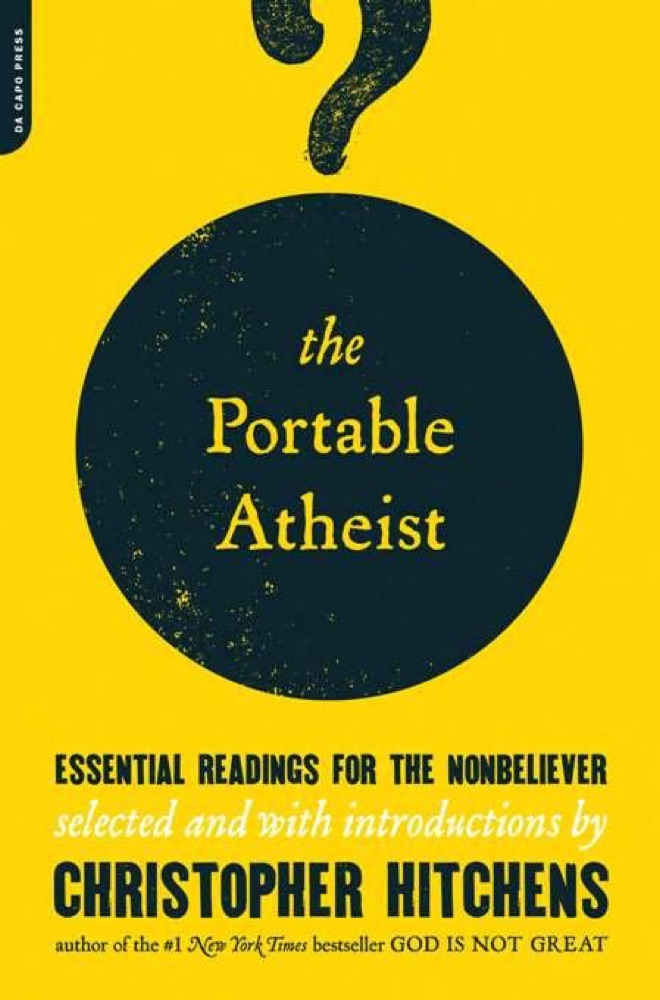 The Portable Atheist: Essential Readings for the Nonbeliever
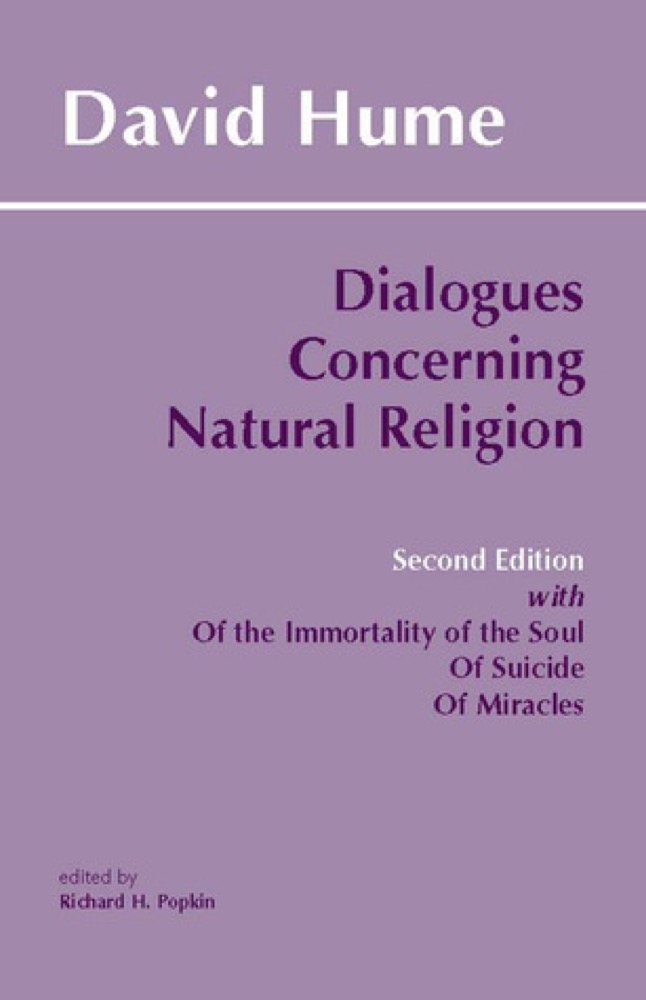 Dialogues Concerning Natural Religion
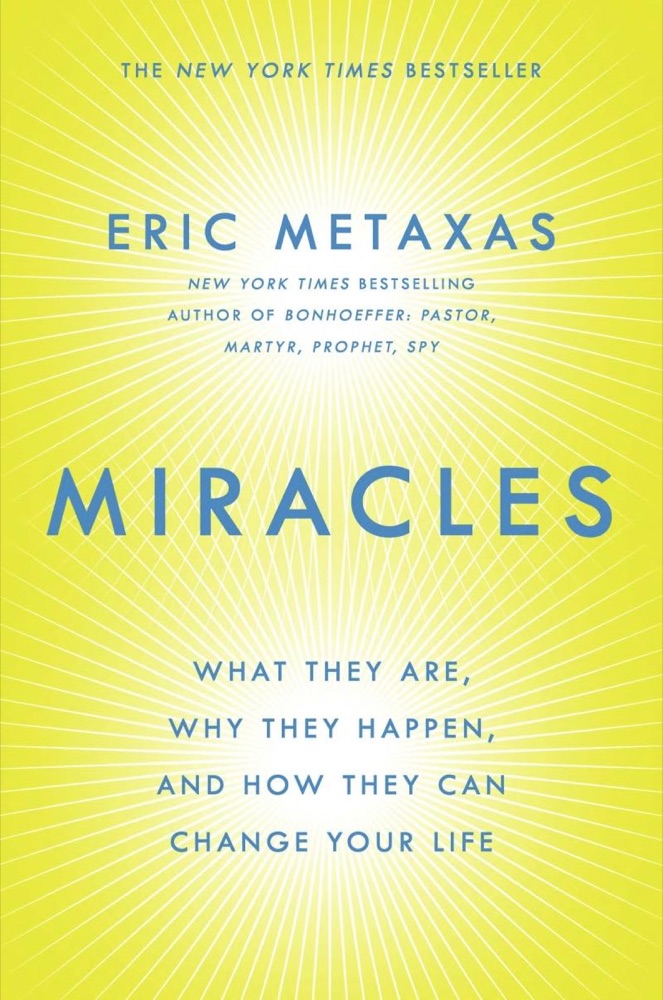 Miracles: What They Are, Why They Happen, and How They Can Change Your Life
 Orthodoxy
 The Everlasting Man
 The Greek Way
 The Varieties of Religious Experience
 Breaking the Spell: Religion as a Natural Phenomenon
 Myths to Live By
 Daybreak: Thoughts on the Prejudices of Morality
 A History of Western Philosophy
 Twilight of the Idols/The Anti-Christ
 Think: A Compelling Introduction to Philosophy
 The Age of Reason
 Basic Writings of Nietzsche
 The Occult
 The Consolations of Philosophy
 The World's Religions
 The Case for God
 21 Lessons for the 21st Century
 Why Does the World Exist?: An Existential Detective Story
 An Enquiry Concerning Human Understanding
 Theaetetus
 The Meaning of It All: Thoughts of a Citizen-Scientist
 The Wisdom of Insecurity: A Message for an Age of Anxiety
 The Mind of the Maker: Dorothy L. Sayers' Witty Classic on the Trinity, Christianity, and Human Creativity
 The World's Last Night: And Other Essays
 Confession of a Buddhist Atheist
 The Story of Philosophy: The Lives and Opinions of the World's Greatest Philosophers
 Critique of Pure Reason
 God in Search of Man: A Philosophy of Judaism
 The Myth of Sisyphus
 The Closing of the American Mind
 Irrational Man: A Study in Existential Philosophy
 The God Who Weeps: How Mormonism Makes Sense of Life
 The Spinoza Problem
 Reasonable Faith
 Heretics
 Summa Theologica
 Phaedrus
 The Parafaith War
 The God Delusion
 Tears and Saints
 Maps of Meaning: The Architecture of Belief
 Everything Belongs: The Gift of Contemplative Prayer
 Complete Works
 The Art of Happiness
 Pensées
 Why I Am Not a Christian and Other Essays on Religion and Related Subjects
 The Varieties of Scientific Experience: A Personal View of the Search for God
 My Bright Abyss: Meditation of a Modern Believer
 The Story of B: An Adventure of the Mind and Spirit
 A Little History of Religion
 Father Joe: The Man Who Saved My Soul
 The World as Will and Representation, Vol 1
 Consilience: The Unity of Knowledge
 Philosophical Dictionary
 Why People Believe Weird Things: Pseudoscience, Superstition, and Other Confusions of Our Time
 Religion for Atheists: A Non-Believer's Guide to the Uses of Religion