
 On Human Nature
Quotes from the Book
The love of complexity without reductionism makes art; the love of complexity with reductionism makes science.
60
Still, if history and science have taught us anything, it is that passion and desire are not the same as truth. The human mind evolved to believe in the gods. It did not evolve to believe in biology. Acceptance of the supernatural conveyed a great advantage throughout prehistory when the brain was evolving. Thus it is in sharp contrast to biology, which was developed as a product of the modern age and is not underwritten by genetic algorithms. The uncomfortable truth is that the two beliefs are not factually compatible. As a result those who hunger for both intellectual and religious truth will never acquire both in full measure.
46
I believe that in the process of locating new avenues of creative thought, we will also arrive at an existential conservatism. It is worth asking repeatedly: Where are our deepest roots? We are, it seems, Old World, catarrhine primates, brilliant emergent animals, defined genetically by our unique origins, blessed by our newfound biological genius, and secure in our homeland if we wish to make it so. What does it all mean? This is what it all means: To the extent that we depend on prosthetic devices to keep ourselves and the biosphere alive, we will render everything fragile. To the extent that we banish the rest of life, we will impoverish our own species for all time. And if we should surrender our genetic nature to machine-aided ratiocination, and our ethics and art and our very meaning to a habit of careless discursion in the name of progress, imagining ourselves godlike and absolved from our ancient heritage, we will become nothing.
24
Science, its imperfections notwithstanding, is the sword in the stone that humanity finally pulled. The question it poses, of universal and orderly materialism, is the most important that can be asked in philosophy and religion.
15
Preferring a search for objective reality over revelation is another way of satisfying religious hunger.
9
[E]very major religion today is a winner in the Darwinian struggle waged among cultures, and none ever flourished by tolerating its rivals.
7
Is a universe of discrete material particles possible only with one specific set of natural laws and parameter values? In other words, does human imagination, which can conceive of other laws and values, thereby exceed possible existence?
5
The cost of scientific advance is the humbling recognition that reality was not constructed to be easily grasped by the human mind. This is the cardinal tenet of scientific understanding: Our species and its ways of thinking are a product of evolution, not the purpose of evolution.
3
THE GREATEST CHALLENGE today, not just in cell biology and ecology but in all of science, is the accurate and complete description of complex systems.
1
Someone has defined insanity as an inability to choose among false alternatives. In dreams we are insane. We wander across our limitless dreamscapes as madmen.
1
It has become fashionable to speak of the Enlightenment as an idiosyncratic construction by European males in a bygone era, one way of thinking among many different constructions generated across time by a legion of other minds in other cultures, each of which deserves careful and respectful attention. To which the only decent response is yes, of course - to a point. Creative thought is forever precious, and all knowledge has value. But what counts most in the long haul of history is seminality, not sentiment. If we ask whose ideas were the seeds of the dominant ethic and shared hopes of contemporary humanity, whose resulted in the most material advancement in history, whose were the first of their kind and today enjoy the most emulation, then in that sense the Enlightenment, despite the erosion of its original vision and despite the shakiness of some of its premises, has been the principal inspiration not just of Western high culture but, increasingly, of the entire world.
1
But history shows that logic launched from introspection alone lacks thrust, can travel only so far, and usually heads in the wrong direction.
In such an endeavor it is not enough to say that history unfolds by processes too complex for reductionistic analysis. That is the white flag of the secular intellectual, the lazy modernist equivalent of The Will of God. On the other hand, it is too early to speak seriously of ultimate goals, such as perfect green-belted cities and robot expeditions to the nearest stars. It is enough to get Homo sapiens settled down and happy before we wreck the planet. A great deal of serious thinking is needed to navigate the decades immediately ahead. We are gaining in our ability to identify options in the political economy most likely to be ruinous. We have begun to probe the foundations of human nature, revealing what people intrinsically most need, and why. We are entering a new era of existentialism, not the old absurdist existentialism of Kierkegaard and Sartre, giving complete autonomy to the individual, but the concept that only unified learning, universally shared, makes accurate foresight and wise choice possible. In the course of all of it we are learning the fundamental principle that ethics is everything. Human social existence, unlike animal sociality, is based on the genetic propensity to form long-term contracts that evolve by culture into moral precepts and law. The rules of contract formation were not given to humanity from above, nor did they emerge randomly in the mechanics of the brain. They evolved over tens or hundreds of millennia because they conferred upon the genes prescribing them survival and the opportunity to be represented in future generations. We are not errant children who occasionally sin by disobeying instructions from outside our species. We are adults who have discovered which covenants are necessary for survival, and we have accepted the necessity of securing them by sacred oath. The search for consilience might seem at first to imprison creativity. The opposite is true. A united system of knowledge is the surest means of identifying the still unexplored domains of reality. It provides a clear map of what is known, and it frames the most productive questions for future inquiry. Historians of science often observe that asking the right question is more important than producing the right answer. The right answer to a trivial question is also trivial, but the right question, even when insoluble in exact form, is a guide to major discovery. And so it will ever be in the future excursions of science and imaginative flights of the arts.
One of its most distinguished practitioners, Alexander Rosenberg, has recently argued that philosophy in fact addresses just two issues: the questions that the sciences—physical, biological, and social—cannot answer, and the reasons for that incapacity.
It follows that most people would very much like science to prove the existence of God but not to take the measure of His capacity.
Watch on YouTube
About Edward O. Wilson
We have collected 74 quotes from 4 books by Edward O. Wilson on BookQuoters.
More about the author →More by Edward O. Wilson
About the book
One of our greatest scientists—and the winner of two Pulitzer Prizes for On Human Nature and The Ants—gives us a work of visionary importance that may be the crowning achievement of his career. In Consilience (a word that originally meant "jumping together"), Edward O. Wilson renews the Enlightenment's search for a unified theory of knowledge in disciplines that range from physics to biology, the social sciences and the humanities.
Using the natural sciences as his model, Wilson forges dramatic links between fields. He explores the chemistry of the mind and the genetic bases of culture. He postulates the biological principles underlying works of art from cave-drawings to Lolita. Presenting the latest findings in prose of wonderful clarity and oratorical eloquence, and synthesizing it into a dazzling whole, Consilience is science in the path-clearing traditions of Newton, Einstein, and
Book details
- First published
- 1998
- Author
- Edward O. Wilson
- Genre
- Nonfiction
- Goodreads rating
- 3.98 (5k ratings)
Keep reading
 The Social Conquest of Earth
 Darwin's Dangerous Idea: Evolution and the Meanings of Life
 The Big Picture: On the Origins of Life, Meaning, and the Universe Itself
 The Varieties of Scientific Experience: A Personal View of the Search for God
 A Devil's Chaplain: Reflections on Hope, Lies, Science, and Love
 A History of Western Philosophy
 The Ascent of Man
 An Enquiry Concerning Human Understanding
 Enlightenment Now: The Case for Reason, Science, Humanism, and Progress
 The Meaning of It All: Thoughts of a Citizen-Scientist
 Dialogues Concerning Natural Religion
 Why Does the World Exist?: An Existential Detective Story
 The Occult
 The Universe in a Single Atom: The Convergence of Science and Spirituality
 The Tell-Tale Brain: A Neuroscientist's Quest for What Makes Us Human
 Myths to Live By
 The Gene: An Intimate History
 The Grand Design
 Straw Dogs: Thoughts on Humans and Other Animals
 The Perennial Philosophy
 Against Method
 The Problems of Philosophy
 Critique of Pure Reason
 Dragons of Eden: Speculations on the Evolution of Human Intelligence
 Think: A Compelling Introduction to Philosophy
 The Accidental Universe: The World You Thought You Knew
 Truth and Method
 Irrational Man: A Study in Existential Philosophy
 The Crisis of the Modern World
 21 Lessons for the 21st Century
 Last and First Men
 The Master and His Emissary: The Divided Brain and the Making of the Western World
 The Blind Watchmaker: Why the Evidence of Evolution Reveals a Universe Without Design
 Sapiens: A Brief History of Humankind
 From Dawn to Decadence: 500 Years of Western Cultural Life, 1500 to the Present
 The Varieties of Religious Experience
 On Truth and Lies in a Nonmoral Sense
 How the Mind Works
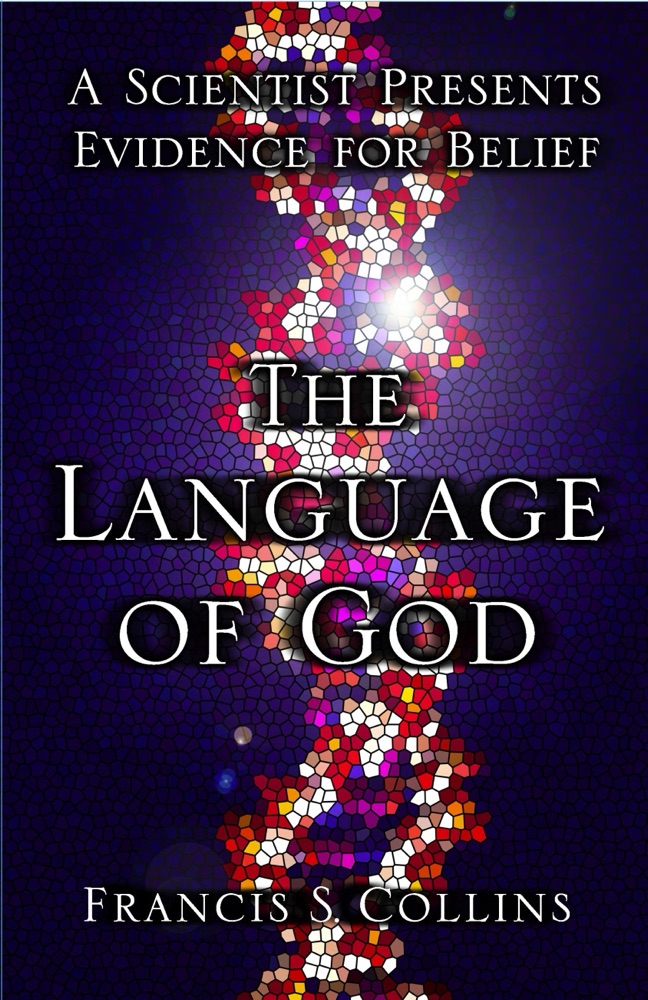 The Language of God: A Scientist Presents Evidence for Belief
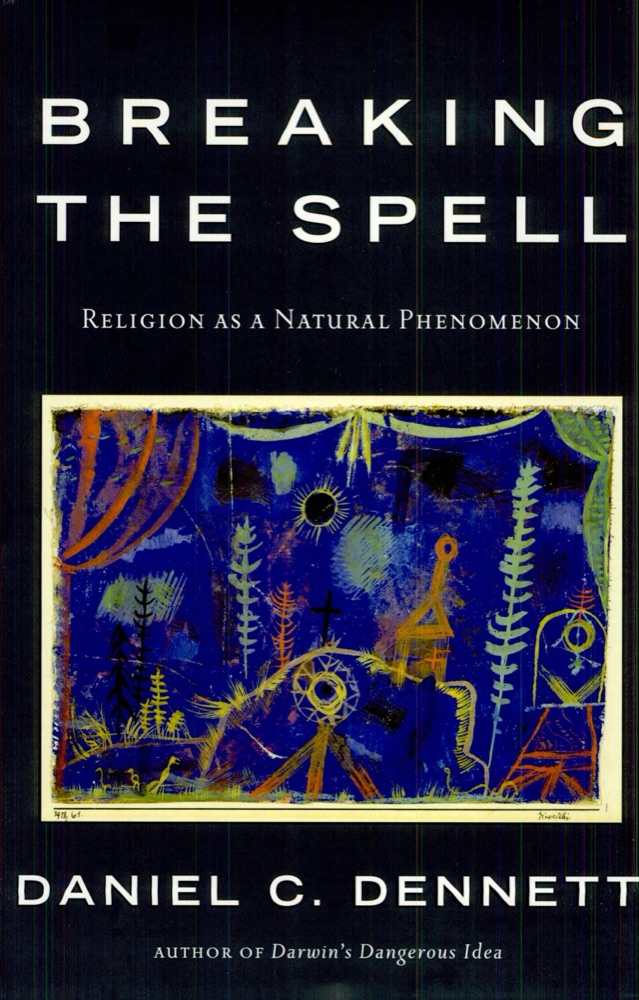 Breaking the Spell: Religion as a Natural Phenomenon
 Genesis
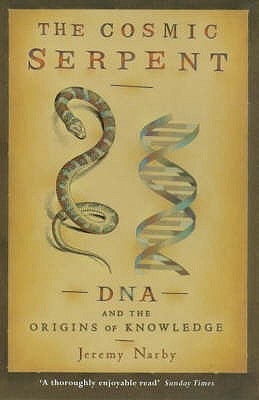 The Cosmic Serpent: DNA and the Origins of Knowledge
 The Story of B: An Adventure of the Mind and Spirit
 The Mind of the Maker: Dorothy L. Sayers' Witty Classic on the Trinity, Christianity, and Human Creativity
 The Closing of the American Mind
 The Blank Slate: The Modern Denial of Human Nature
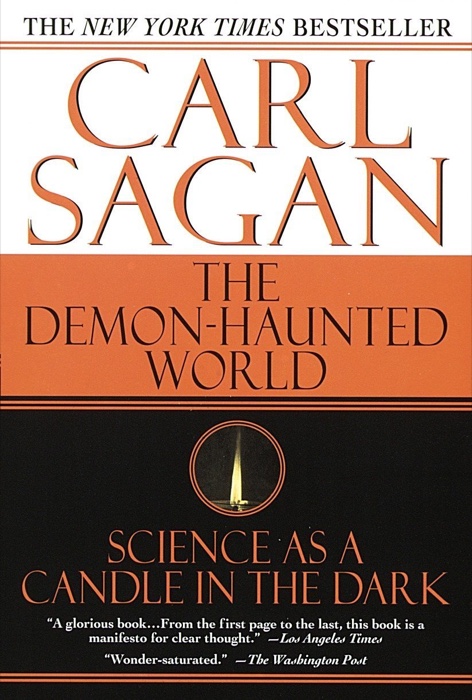 The Demon-Haunted World: Science as a Candle in the Dark
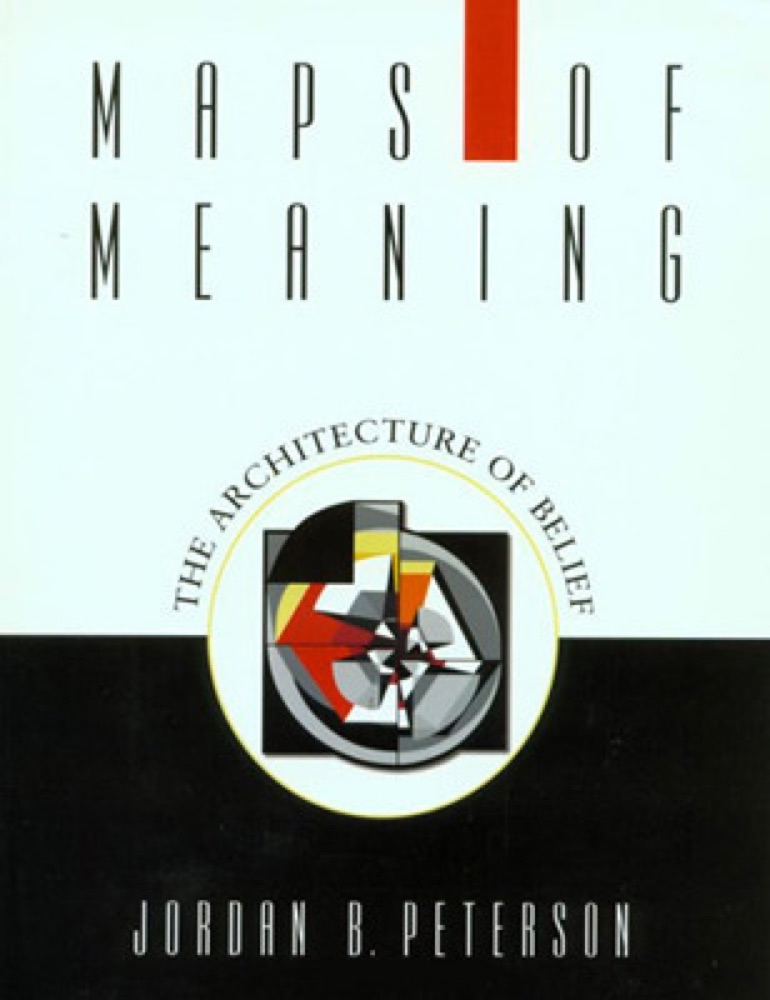 Maps of Meaning: The Architecture of Belief
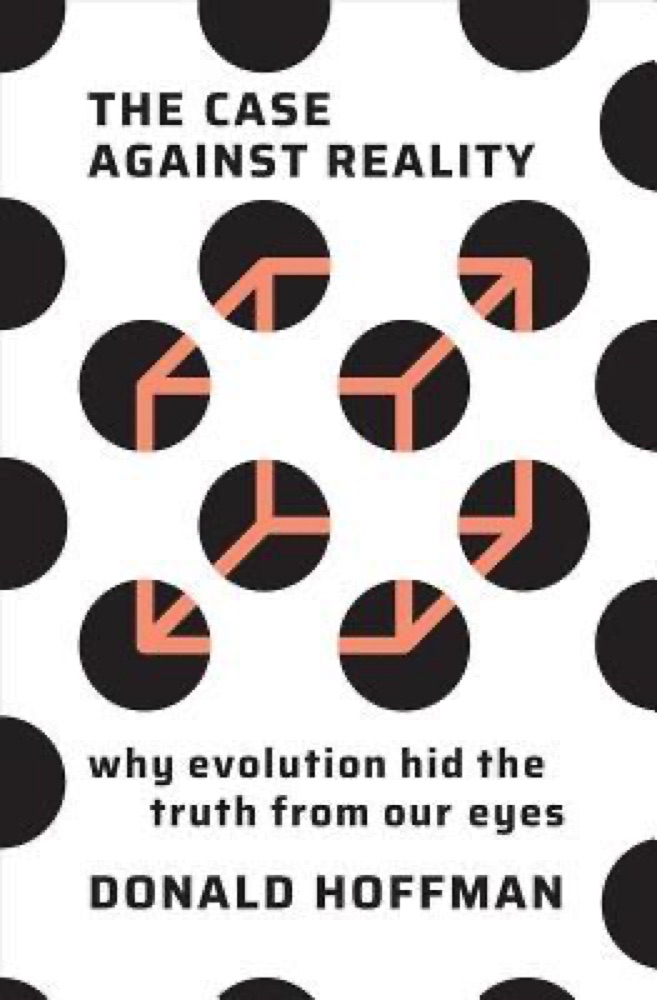 The Case Against Reality: Why Evolution Hid the Truth from Our Eyes
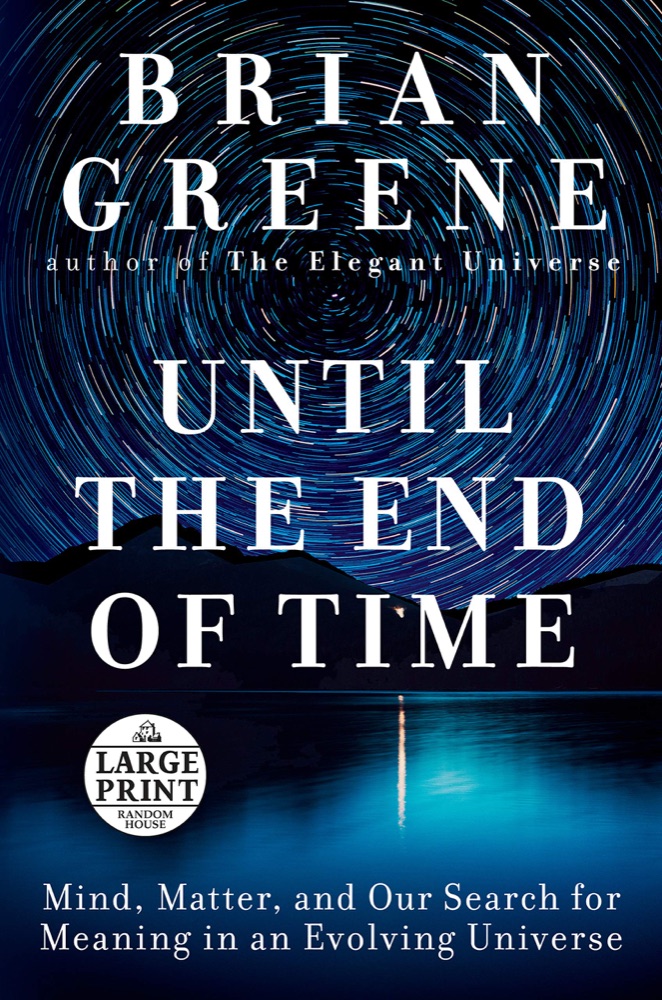 Until the End of Time: Mind, Matter, and Our Search for Meaning in an Evolving Universe
 The Wayfinders: Why Ancient Wisdom Matters in the Modern World
 Science and Sanity: An Introduction to Non-Aristotelian Systems and General Semantics
 There Is a God: How the World's Most Notorious Atheist Changed His Mind
 An Essay Concerning Human Understanding
 From Bacteria to Bach and Back: The Evolution of Minds
 The Case for a Creator: A Journalist Investigates Scientific Evidence That Points Toward God
 A Brief History of Thought: A Philosophical Guide to Living
 Metaphysics
 Homo Deus: A History of Tomorrow