
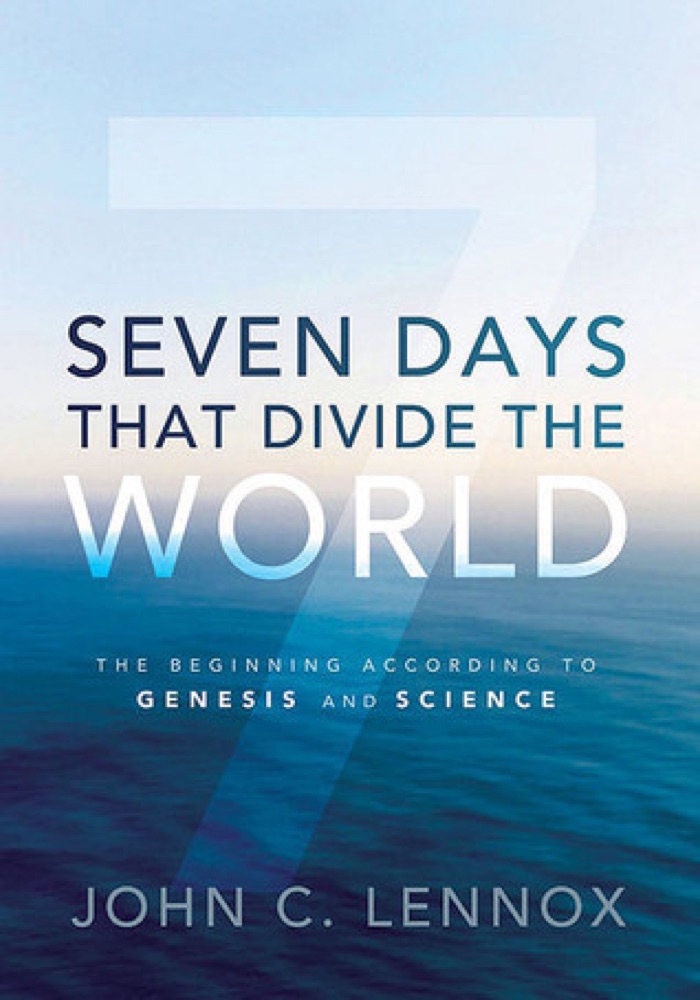
 Seven Days that Divide the World: The Beginning According to Genesis & Science
Quotes from the Book
The most central truth to the creation account is that this world is a place for God's presence.
13
The Bible's message must not be subjected to cultural imperialism. Its message transcends the culture in which it originated, but the form in which the message was imbedded was fully permeated by the ancient culture.
3
It seems to many that they have to make a choice: either believe the Bible and hold to a young earth, or abandon the Bible because of the persuasiveness of the case for an old earth. The good news is that we do not have to make such a choice. The Bible does not call for a young earth. Biblical faith need not be abandoned if one concludes from the scientific evidence that the earth is old.
3
But when we adopt the biblical perspective of the cosmic temple, it is no longer possible to look at the world (or space) in secular terms. It is not ours to exploit. We do not have natural resources, we have sacred resources. Obviously this view is far removed from a view that sees nature as divine: As sacred space the cosmos is his place. It is therefore not his person. The cosmos is his place, and our privileged place in it is his gift to us. The blessing he granted was that he gave us the permission and the ability to subdue and rule. We are stewards.
2
The Old World science found in the Bible would not be considered “wrong” or “false” as much as it would just offer a perspective from a different vantage point. Even today we can consider it true that the sky is blue, that the sun sets and that the moon shines. But we know that these are scientifically misleading statements. Science, however, simply offers one way of viewing the world, and it does not have a corner on truth. The Old World science in the Bible offers the perspective of the earthbound observer.
2
In the ancient Near East people were created as slaves to the gods. The world was created by the gods for the gods, and people met the needs of the gods.
1
It is difficult to think of the “natural world” as sacred (because we just designated it “natural”).
1
The Bible considers it much more important to say that God has made everything work rather than being content to say that God made the physical stuff.
1
I contend that there is a line between the seven days of Genesis 1 and the rest of history, making Genesis 1 a distinct beginning that is located in the past. If we see this as an account of functional origins, the line between is dotted rather than solid, as the narrative of Genesis 1 puts God in place to perpetuate the functions after they are established in the six days. In this way, day seven, God taking up his rest in the center of operations of the cosmos, positions him to run it. This continuing activity is not the same as the activity of the six days, but it is the reason why the six days took place.
1
Instead of offering a statement of causes, Genesis 1 is offering a statement of how everything will work according to God’s purposes. In that sense the text looks to the future (how this cosmos will function for human beings with God at its center) rather than to the past (how God brought material into being).[9] Purpose entails some level of causation (though it does not specify the level) and affirms sovereign control of the causation process.
1
If we follow the sense of the literature and its ideas of creation, we find that people in the ancient Near East did not think of creation in terms of making material things—instead, everything is function oriented. The gods are beginning their own operations and are making all of the elements of the cosmos operational. Creation thus constituted bringing order to the cosmos from an originally nonfunctional condition. It is from this reading of the literature that we may deduce a functional ontology in the ancient world—that is, that they offer accounts of functional origins rather than accounts of material origins.
1
Coincidence is just the word we use when we have not yet discovered the cause. . . . It’s an illusion of the human mind
If we desire to see the greatest work of the Creator
Concordists believe the Bible must agree—be in concord with—all the findings of contemporary science. Through the entire Bible, there is not a single instance in which God revealed to Israel a science beyond their own culture. No passage offers a scientific perspective that was not common to the Old World science of antiquity.[
But there are other ways to think about the question of existence. For example, we might consider what we mean when we talk about a company “existing.” It would clearly not be the same as a chair existing. Does a company exist when it has filed the appropriate papers of incorporation? Does it exist when it has a building or a website? In some sense the answer to these would have to be yes. But many would prefer to speak of a company as existing when it is doing business. Consider what is communicated when a small retail business frames and displays the first dollar bill from the first sale. As another alternative, consider a restaurant that is required to display its current permit from the city department of health. Without that permit, the restaurant could be said not to exist, for it cannot do any business. Here existence is connected to the authority that governs existence in relation to the function the business serves. It is the government permit that causes that restaurant to exist, and its existence is defined in functional terms.
Genesis is not metaphysically neutral—it mandates an affirmation of teleology (purpose), even as it leaves open the descriptive mechanism for material origins.
whereas in the rest of the ancient world creation was set up to serve the gods, a theocentric view, in Genesis, creation is not set up for the benefit of God but for the benefit of humanity—an anthropocentric view.
So on day one God created the basis for time; day two the basis for weather; and day three the basis for food. These three great functions—time, weather and food—are the foundation of life. If we desire to see the greatest work of the Creator, it is not to be found in the materials that he brought together—it is that he brought them together in such a way that they work.
there is no concept of a “natural” world in ancient Near Eastern thinking. The dichotomy between natural and supernatural is a relatively recent one.
God has given us a privileged role in the functioning of his cosmic temple. He has tailored the world to our needs, not to his (for he has no needs). It is his place, but it is designed for us and we are in relationship with him.
when we adopt the biblical perspective of the cosmic temple, it is no longer possible to look at the world (or space) in secular terms. It is not ours to exploit. We do not have natural resources, we have sacred resources. Obviously this view is far removed from a view that sees nature as divine: As sacred space the cosmos is his place. It is therefore not his person. The cosmos is his place, and our privileged place in it is his gift to us. The blessing he granted was that he gave us the permission and the ability to subdue and rule. We are stewards. At the same time we recognize that the most important feature of sacred space is found in what it is by definition: the place of God’s presence. The cosmic-temple idea recognizes that God is here and that all of this is his. It is this theology that becomes the basis for our respect of our world and the ecological sensitivity that we ought to nurture.
The objective is for public education to inform students of scientifically plausible mechanisms without straying from empirical science into metaphysical teleology or dysteleology,
impose our own cultural ideas on the text without thinking. The Bible’s message must not be subjected to cultural imperialism. Its message transcends the culture in which it originated, but the form in which the message was imbedded was fully permeated by the ancient culture. This was God’s design and we ignore it at our peril. Sound interpretation proceeds from the belief that the divine and human authors were competent communicators and that we can therefore comprehend their communication. But to do so, we must respect the integrity of the author by refraining from replacing his message with our own.
Though we cannot expect to be able to think like they thought, or read their minds, or penetrate very deeply into so much that is opaque to us in their culture, we can begin to see that there are other ways of thinking besides our own and begin to identify some of the ways in which we have been presumptuously ethnocentric.
We gain nothing by bringing God’s revelation into accordance with today’s science. In contrast, it makes perfect sense that God communicated his revelation to his immediate audience in terms they understood.
If God were intent on making his revelation correspond to science, we have to ask which science. We
The most respectful reading we can give to the text, the reading most faithful to the face value of the text—and the most “literal” understanding, if you will—is the one that comes from their world not ours. Consequently
In response to this objection, note that when Job believed that his understanding of the world and how it worked could be reduced to a single model (retribution principle: the righteous will prosper; the wicked will suffer), his suffering took him by surprise and was without explanation. How could such a thing happen? Why would God do this? The book is full of Job’s demand for an explanation. When God finally appears he does not offer an explanation, but offers a new insight to Job. By confronting Job with the vast complexity of the world, God shows that simplistic models are an inadequate basis for understanding what he is doing in the world. We trust his wisdom rather than demanding explanations for all that we observe in the world around us and in our own lives.
The idea that people think with their hearts describes physiology in ancient terms for the communication of other matters; it is not revelation concerning physiology. Consequently we need not try to come up with a physiology for our times that would explain how people think with their entrails. But a serious concordist would have to do so to save the reputation of the Bible. Concordists believe the Bible must agree—be in concord with—all the findings of contemporary science.
Watch on YouTube
About John H. Walton
We have collected 29 quotes from 1 book by John H. Walton on BookQuoters.
More about the author →About the book
In this astute mix of cultural critique and biblical studies, John H. Walton presents and defends twenty propositions supporting a literary and theological understanding of Genesis 1 within the context of the ancient Near Eastern world and unpacks its implications for our modern scientific understanding of origins. Ideal for students, professors, pastors and lay readers with an interest in the intelligent design controversy and creation-evolution debates, Walton's thoughtful analysis unpacks seldom appreciated aspects of the biblical text and sets Bible-believing scientists free to investigate the question of origins.
Book details
- First published
- 2009
- Author
- John H. Walton
- Genre
- Nonfiction
- Goodreads rating
- 4.23 (5k ratings)
Keep reading
Seven Days that Divide the World: The Beginning According to Genesis & Science
 The Language of God: A Scientist Presents Evidence for Belief
 The Case for a Creator: A Journalist Investigates Scientific Evidence That Points Toward God
 The Varieties of Scientific Experience: A Personal View of the Search for God
 Reasonable Faith
 The Bible Tells Me So: Why Defending Scripture Has Made Us Unable to Read It
 A History of God: The 4,000-Year Quest of Judaism, Christianity, and Islam
 Simply Christian
 Miracles: What They Are, Why They Happen, and How They Can Change Your Life
 The Mind of the Maker: Dorothy L. Sayers' Witty Classic on the Trinity, Christianity, and Human Creativity
 The Gospel in a Pluralist Society
 The Story of B: An Adventure of the Mind and Spirit
 The Age of Reason
 What's So Great About Christianity
 Escape from Reason
 The Orthodox Way
 Jesus Among Other Gods: The Absolute Claims of the Christian Message
 What Is the Bible?: How an Ancient Library of Poems, Letters, and Stories Can Transform the Way You Think and Feel About Everything
 Total Truth: Liberating Christianity from its Cultural Captivity
 The Reason for God: Belief in an Age of Skepticism
 How to Read the Bible for All Its Worth
 Outgrowing God: A Beginner’s Guide to Atheism
 The Perennial Philosophy
 We Who Wrestle with God: Perceptions of the Divine
 The Knowledge of the Holy
 God in Search of Man: A Philosophy of Judaism
 Scripture and the Authority of God: How to Read the Bible Today
 The Crucible of Doubt: Reflections On the Quest for Faith
 The Case for God
 The Everlasting Man
 The Social Conquest of Earth
 Dialogues Concerning Natural Religion
 Ethics
 Tactics: A Game Plan for Discussing Your Christian Convictions
 The Bible Jesus Read
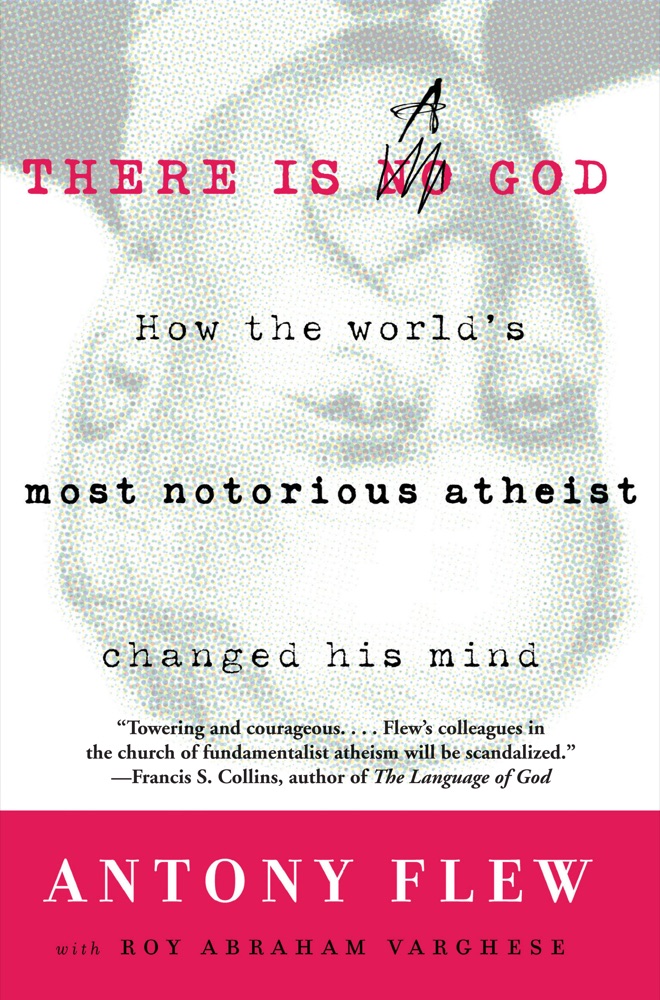 There Is a God: How the World's Most Notorious Atheist Changed His Mind
 The Divine Conspiracy: Rediscovering Our Hidden Life in God
 The God Delusion
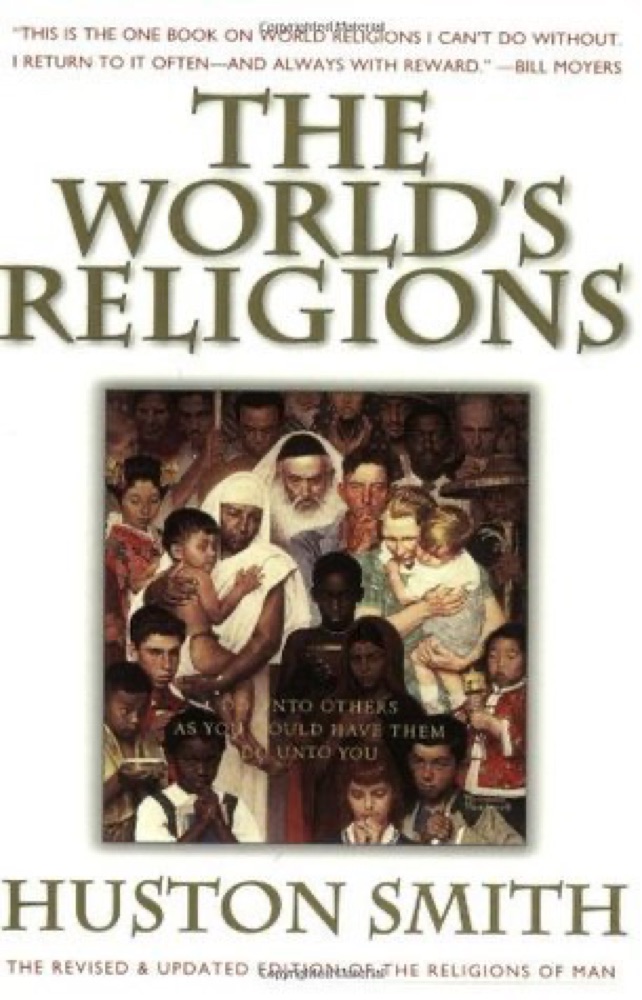 The World's Religions
 The Accidental Universe: The World You Thought You Knew
 Letter to a Christian Nation
 Why Does the World Exist?: An Existential Detective Story
 Myths to Live By
 Inspired: Slaying Giants, Walking on Water, and Loving the Bible Again
 Systematic Theology: An Introduction to Biblical Doctrine
 The Case for Christianity
 The Portable Atheist: Essential Readings for the Nonbeliever
 Consilience: The Unity of Knowledge
 Surprised by Hope: A Study of Christian Hope and Resurrection
 Finding God in the Waves: How I Lost My Faith and Found It Again Through Science
 Velvet Elvis: Repainting the Christian Faith
 Thou Art That: Transforming Religious Metaphor
 The Sovereignty of God
 Summa Theologica
 Think: The Life of the Mind and the Love of God
 The God Who Weeps: How Mormonism Makes Sense of Life
 A Little History of Religion
 On Christian Doctrine
 The Big Picture: On the Origins of Life, Meaning, and the Universe Itself
 The Immortality Key: Uncovering the Secret History of the Religion with No Name