
 The Mind Parasites
Quotes from the Book
Religion, mysticism and magic all spring from the same basic 'feeling' about the universe: a sudden feeling of meaning, which human beings sometimes 'pick up' accidentally, as your radio might pick up some unknown station. Poets feel that we are cut off from meaning by a thick, lead wall, and that sometimes for no reason we can understand the wall seems to vanish and we are suddenly overwhelmed with a sense of the infinite interestingness of things.
42
Our language has become a tired and inefficient thing in the hands of journalists and writers who have nothing to say.
18
Faculty X is simply that latent power in human beings possess to reach beyond the present. After all, we know perfectly well that the past is as real as the present, and that New York and Singapore and Lhasa and Stepney Green are all as real as the place I happen to be in at the moment. Yet my senses do not agree. They assure me that this place, here and now, is far more real than any other place or any other time. Only in certain moments of great inner intensity do I know this to be a lie. Faculty X is a sense of reality, the reality of other places and other times, and it is the possession of it — fragmentary and uncertain though it is — that distinguishes man from all other animals
15
Simple perception then is a fallacy. Besides the conscious prejudices that we are aware of imposing on the world, there are a thousand subconscious prejudices that we assume to be actuality.
10
The nineteenth century was the Age of Romanticism; for the first time in history, man stopped thinking of himself as an animal or a slave, and saw himself as a potential god. All of the cries of revolt against 'God' - De Sade, Byron's "Manfred", Schiller's "Robbers", Goethe's "Faust", Hoffmann's mad geniuses - are expressions of this new spirit. Is this why the 'spirits' decided to make a planned and consistent effort at 'communication'? It was the right moment. Man was beginning to understand himself.
5
Modern man has the possibility of understanding the mechanism of consciousness, and marching directly towards his objective, with the will flexed to its maximum efficiency.
4
I have mentioned already that in the occult tradition women are regarded as evil. In numerology, the female number 2, which represents gentleness, submissiveness, sweetness, is also the Devil’s number. The Hindu goddess Kali, the Divine Mother, is also the goddess of violence and destruction. Women tend to ‘think’ with their feelings and intuitions rather than with the logical faculty. A female assessment of a situation or a person is likely to be more accurate and delicate than a man’s, but it lacks long-range vision. One might put it crudely by saying that women suffer from short-sightedness, and men from long-sightedness; woman cannot see what lies far away; man cannot see what is close. Thus the two are ideal complements. The association of woman with evil arises from the situation in which the female assumes the male role, when a short-term logic is applied to long-term purposes.
3
But the main trouble with human beings is their tendency to become trapped in the ‘triviality of everydayness’ (to borrow Heidegger’s phrase), in the suffocating world of their personal preoccupations. And every time they do this, they forget the immense world of broader significance that stretches around them. And since man needs a sense of meaning to release his hidden energies, this forgetfulness pushes him deeper into depression and boredom, the sense that nothing is worth the effort.
3
Man must believe in realities outside his own smallness, outside the ‘triviality of everydayness’, if he is to do anything worthwhile.
2
It is important to understand that an enormous amount of our human experience is really a response to symbols. I speak in Origins of the Sexual Impulse of an underwear fetichist who stopped the car when he was driving with his wife, went into a garden, and removed a brassiere and panties from a clothesline; he laid these on the ground, and proceeded to go through the motions of copulation with them. Response to the symbol of ‘forbidden-ness’—another woman’s underwear—was obviously stronger than his response to the actuality of his wife beside him in the car. This is the peculiarity of human beings: that a symbol can gain a hold on the imagination and cause a more powerful response than the actuality that it represents. Control
2
Thinking about such a situation, one becomes aware of the human lack of detachment; our inexperience and immaturity in the complex problems of the human condition. But it should not be so. We have the ‘breathing spaces’ when we can take a detached point of view. If it was of life-or-death importance that we learned by these moments of insight, men would quickly become something closer to being godlike. But most of us can drift through life without making any great moral decisions. And so the human race has shown no advance in wisdom in three thousand years.
1
Now, although hypertension is accentuated by modern civilisation, it is not specifically a disease of civilisation. It is a disease of consciousness—that is, of being human. The farm labourer going to work is as likely to ignore his surroundings as the harassed car salesman. And if the inhabitants of some Amazon village are ‘closer to nature’ than New Yorkers, this is usually at the cost of dirt and ignorance and inconvenience. Hypertension is the price we pay for the symphonies of Beethoven, the novels of Balzac, the advances in medical knowledge that prevent children dying of smallpox. However, it is not a necessary and inescapable price. It is the result of ignorance, of bad management of our vital economy. The point to observe here is that although hypertension may not be necessary, it is as widespread as the common cold. It would not be inaccurate to say that all human beings live in a state of ‘vigilance’ and anxiety that is far above the level they actually need for vital efficiency. It is a general tendency of consciousness to ‘spread the attention too thinly’; and, like an over-excited child with too many toys on Christmas Day, the result is nervous exhaustion.
1
It is possible to stick too close to ‘facts’.
There is the fundamental situation: the tug of war between the world of magic and the boring real world, which is disappointing, whether it is offering you success or drudgery.
Prosperous countries are content with an easygoing religion; where there is poverty and misery, something sterner and darker is required. This is why Presbyterianism later made such an appeal in Scotland, and why Methodism flourished among the bleak and rainy villages of Cornwall. There is also something in the Manichean doctrine that appeals to the deep romanticism in human nature, the feeling that this world is hell and that man’s happiness lies in ‘another sphere.
one of the legends of Agrippa concerns a visit paid to his alchemical laboratory in Florence by the Wandering Jew himself. (In David Hoffman’s Chronicles of Cartaphilus, the Wandering Jew, the date is given as 1525.) Cartaphilus begged Agrippa to show him his childhood sweetheart in a magic mirror. Agrippa asked him to count off the decades since the girl died so that he could wave his wand for each decade; when the Jew reached 149, Agrippa began to feel dizzy; but the Jew went on numbering them until the mirror showed a scene 1,510 years earlier, in Palestine. The girl, Rebecca, appeared, and the Jew was so moved that he tried to speak to her—which Agrippa had strictly forbidden. The mirror immediately clouded over and the Jew fainted. On reviving, he identified himself as the Jew who struck Jesus when he was carrying the cross, and who has been condemned to walk the earth ever since.
In 1530 [H. C. Agrippa] published at Antwerp a book, On the Vanity of Sciences and Arts, a curious, nihilistic work, whose central thesis is that knowledge only brings man to disillusionment and recognition of how little he knows. It reads like an anticipation of Faust’s speech in Act I of Goethe’s play. The only worthwhile study, says Agrippa, is theology and scripture. He was undoubtedly sincere.
By this time, [Agrippa] had written his major work, the three-volume treatise On Occult Philosophy, although this had to wait more than twenty years for publication. It is a remarkable work for a man of twenty-four. He begins by stating clearly that magic is nothing to do with sorcery or the devil, but with various occult gifts—prophecy, second sight and so on. A typical chapter of the first volume is entitled ‘Of Light, Colours, Candles and Lamps, and to what Stars, Houses and Elements several Colours are ascribed.’ The ‘houses,’ of course, refers to the signs of the zodiac; each planet has two, one for the day and one for the night. But his central belief is stated at the beginning of the sixty-third chapter: ‘The fantasy, or imaginative power, has a ruling power over the passions of the soul, when these are bound to sensual apprehensions.’ That is to say, when my passions are bound up with physical things, rather than with ideas, my imagination begins to play a large part in my feelings. Some slight depression sends my spirits plummeting; I become a victim of a see-saw of emotion. The next sentence is slightly obscure, but expands this idea: ‘For [imagination] does, of its own accord, according to the diversity of the passions, first of all change the physical body with a sensible transmutation, by changing the accidents in the body, and by moving the spirit upward or downward, inward or outward…’ This is a remarkable sentence to have been written in 1510. It not only recognises the extent to which human beings, especially stupid ones, are the victims of auto-suggestion, but also that these moods affect the body directly. There is always present in hermetic literature this suggestion that man’s body is more dependent on his will than he ever realises. Agrippa goes on to point out that lovers can experience such a strong tie that they feel one another’s illnesses. People can die of sadness, when the will becomes inoperative. These doctrines of Agrippa might be compared with the assertion of Paracelsus, seven years his junior, that ‘Resolute imagination is the beginning of all magical operations,’ and that ‘It is possible that my spirit…through an ardent will alone, and without a sword, can stab and wound others.
Plotinus (A.D. 205–270) was not a Christian, but his influence on Christian mystics was enormous; he compared human beings to the choir standing around a choir master but with their attention distracted by things going on about them, so they fail to sing in tune or in time. He held that creation was a series of steps leading away from the One (or God); he called those steps emanations. (The Kabbalists later borrowed his ideas, as William Blake was to borrow from the Kabbalah.) This is definitely a non-Christian view, for Plotinus’s evil is a negative thing, depending upon how many steps you have taken away from the One; it is like someone walking away from a lighted house at night, moving further into the darkness of the garden. But why should people walk away, unless tempted by the Devil? Because, says Plotinus, we are empty-headed, and easily distracted. The philosopher is the man who determinedly ignores distractions and multiplicity, and tries to see back towards the One. ‘Such,’ he concludes, ‘is the life of gods and of godlike men; a liberation from all earthly bonds, a life that takes no pleasure in earthly things, a flight of the alone to the alone.
As to Orphism, it soon blended with the worship of the god Dionysus, who originated in Thrace, and who was worshipped there in the form of a bull. Dionysus was quickly accepted in seventh-century Greece, because he was exactly what the Greeks needed to complete their pantheon of gods; under the name Bacchus he became the god of wine, and his symbol was sometimes an enormous phallus. Frazer speaks of Thracian rites involving wild dances, thrilling music and tipsy excess, and notes that such goings-on were foreign to the clear rational nature of the Greeks. But the religion still spread like wildfire throughout Greece, especially among women—indicating, perhaps, a revolt against civilisation. It became a religion of orgies; women worked themselves into a frenzy and rushed about the hills, tearing to pieces any living creature they found. Euripides’ play The Bacchae tells how King Pentheus, who opposed the religion of Bacchus, was torn to pieces by a crowd of women, which included his mother and sisters, all in ‘Bacchic frenzy.’ In their ecstasy the worshippers of Bacchus became animals, and behaved like animals, killing living creatures and eating them raw. The profound significance of all this was recognised by the philosopher Nietzsche, who declared himself a disciple of the god Dionysus. He spoke of the ‘blissful ecstasy that rises from the innermost depths of man,’ dissolving his sense of personality: in short, the sexual or magical ecstasy. He saw Dionysus as a fundamental principle of human existence; man’s need to throw off his personality, to burst the dream-bubble that surrounds him and to experience total, ecstatic affirmation of everything. In this sense, Dionysus is fundamentally the god, or patron saint, of magic. The spirit of Dionysus pervades all magic, especially the black magic of the later witch cults, with their orgiastic witch’s sabbaths so like the orgies of Dionysus’s female worshippers, even to the use of goats, the animal sacred to Dionysus. (Is it not also significant that Dionysus is a horned god, like the Christian devil?) The ‘scent of truth’ that made Ouspensky prefer books on magic to the ‘hard facts’ of daily journalism is the scent of Dionysian freedom, man’s sudden absurd glimpse of his godlike potentialities. It is also true that the spirit of Dionysus, pushed to new extremes through frustration and egomania, permeates the work of De Sade. As Philip Vellacot remarks of Dionysus in his introduction to The Bacchae: ‘But, though in the first half of the play there is some room for sympathy with Dionysus, this sympathy steadily diminishes until at the end of the play, his inhuman cruelty inspires nothing but horror.’ But this misses the point about Dionysus—that sympathy is hardly an emotion he would appreciate. He descends like a storm wind, scattering all human emotion.
One does not have to believe in Rousseau’s ‘noble savage’ to believe that man’s fall from grace came with city dwelling; it is common sense. Some cities might be prosperous and secure, with good land and a strong ruler; but they would be the exceptions. Most cities would be little more than large groups of human beings living together for convenience, like rats in a sewer. The consequence is obvious. Man ceases to be an instinctive, simple creature. Whether he likes it or not, he has to become more calculating to survive. He also has to become, in a very special sense, more aggressive—not simply towards other men but towards the world. Before this time, there had only been small Neolithic communities, whose size was limited by their ability to produce food. If the population increased too fast, the weaker ones starved. It encouraged a passive, peaceful attitude towards life and nature. Big cities were more prosperous because men had pooled their resources, and because certain men could afford to become ‘specialists’—in metalwork, weaving, writing and so on. And there were many ways to keep yourself alive: labouring, trading or preying on other men. Unlike the Neolithic community, this was a world where enterprise counted for everything. It would be no exaggeration to say that the ‘rat race’ began in 4000 B.C.
You might say that the scientist is nothing more than a glorified accident-investigator. And the accident-investigator is himself the product of accident. But man is more deeply moved by meaning than by accident.
If I examine a painting through a microscope I shall learn about the texture of the paint, but nothing about the artists intention in painting the picture
And this is a point whose importance goes far beyond this discussion of the occult. We are considering the most important law of human nature. Man is at his best when he has a strong sense of purpose. When my consciousness is doing its proper work—grasping some of the immense complexity of the universe, and calculating how to increase its control and power—its energy flows into the subconscious, and arouses all the forces of the subconscious mind. When conscious purpose fails, everything else slowly breaks down.
Mystics of many countries and many centuries have spoken of this memory…’ And he defines the real danger of this ‘lunar knowledge’: ‘It is perhaps well that so few believe in it, for if many did many would go out of parliaments and universities and libraries and run into the wilderness to so waste the body, and to so hush the unquiet mind that, still living, they might pass the doors the dead pass daily; for who among the wise would trouble himself with making laws or in writing history or in weighing the earth if the things of eternity seemed ready to hand?’ Aldous Huxley makes the same point in speaking of the effects of mescalin in The Doors of Perception: that in a world in which everyone took psychedelics there would be no wars, but no civilisation either.
Human beings are the only living creatures who have this choice—of following the part that is great, or the part that is trivial. The difference depends upon the unique human faculty of imagination. When an animal is in a dull situation, it becomes dull; the fiercest of all birds, the hawk, becomes quiescent when a black bag is placed over its head. Man’s superior consciousness means that he can see further; his sense of purpose stretches into the distance. But we are still 99 per cent animal; few of us bother to develop this unique capacity. We drift along from day to day, becoming bored when things are dull, depressed when immediate prospects look poor, using our powers of foresight and imagination only when confronted by an interesting challenge, and allowing them to lie fallow in between. And this situation, we must admit, applies most of the time to all of us, including the Beethovens and Einsteins. ‘Involvement’ is our common lot. But what makes us uniquely human are the strange moments of non-involvement. The pressure vanishes. Suddenly we are seeing life from a distance, as if we were gods; seeing it from above, from a bird’s-eye view rather than the usual worm’s-eye view. In these moments of optimism and affirmation, it seems absurd that we should ever have sunk into a condition of depression or defeat, for it is suddenly obvious that we are undefeatable and indestructible. Every compromise or retreat is seen to be the result of absurd miscalculation. I
Watch on YouTube
About Colin Wilson
We have collected 34 quotes from 2 books by Colin Wilson on BookQuoters.
More about the author →More by Colin Wilson
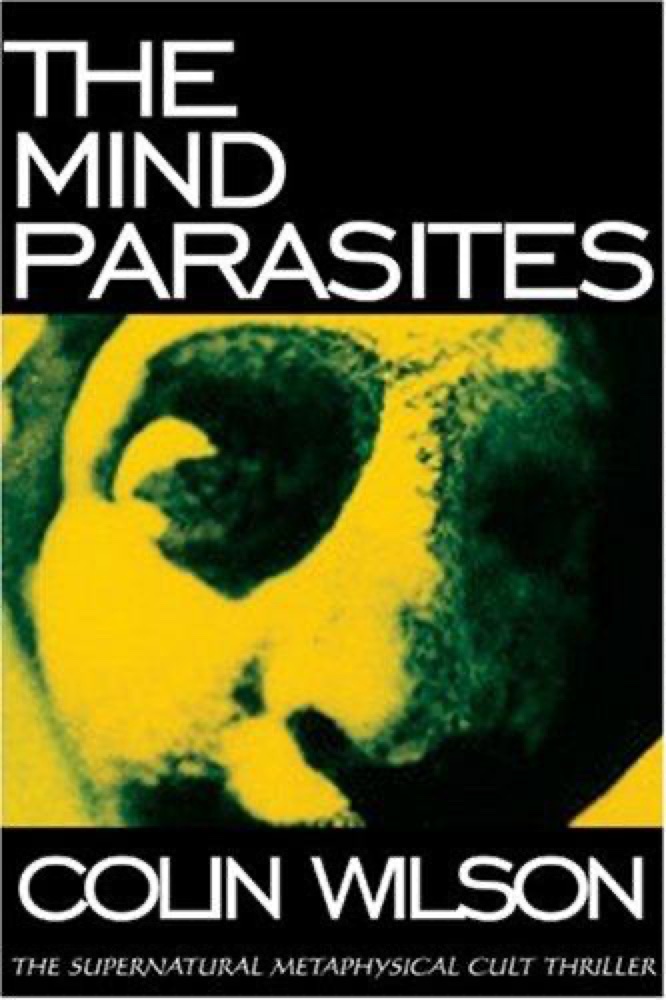
The Mind Parasites
About the book
Colin Wilson’s classic work is an essential guide to the mind-expanding experiences and discoveries of the occult in the 20th century. He produces a wonderfully skillful synthesis of the available material—one that sees the occult in the light of reason and reason in the light of the mystical and paranormal. The result is a wide-ranging survey of the subject that provides a comprehensive history of magic, an insightful exploration of our latent powers, and a journey of enlightenment.
Book details
- First published
- 1971
- Author
- Colin Wilson
- Genre
- Nonfiction
- Goodreads rating
- 3.91 (2k ratings)
Keep reading
 Myths to Live By
 Man and His Symbols
 The Perennial Philosophy
 Maps of Meaning: The Architecture of Belief
 On Truth and Lies in a Nonmoral Sense
 Daybreak: Thoughts on the Prejudices of Morality
 The Mind of the Maker: Dorothy L. Sayers' Witty Classic on the Trinity, Christianity, and Human Creativity
 The Everlasting Man
 Untimely Meditations
 The Crisis of the Modern World
 Irrational Man: A Study in Existential Philosophy
 The Varieties of Religious Experience
 The Discarded Image: An Introduction to Medieval and Renaissance Literature
 Food of the Gods: The Search for the Original Tree of Knowledge
 Last and First Men
 Dialogues Concerning Natural Religion
 The Ascent of Man
 The Master and His Emissary: The Divided Brain and the Making of the Western World
 The Doors of Perception & Heaven and Hell
 Straw Dogs: Thoughts on Humans and Other Animals
 An Enquiry Concerning Human Understanding
 From Dawn to Decadence: 500 Years of Western Cultural Life, 1500 to the Present
 Heretics
 The Convoluted Universe, Book 1
 Orthodoxy
 Modern Man in Search of a Soul
 An Essay Concerning Human Understanding
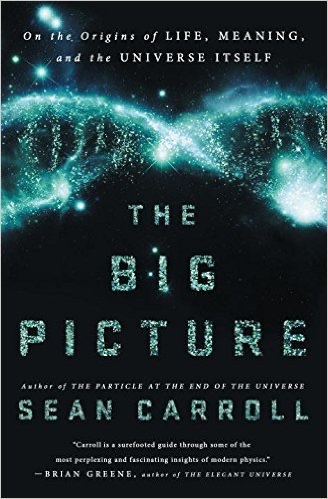 The Big Picture: On the Origins of Life, Meaning, and the Universe Itself
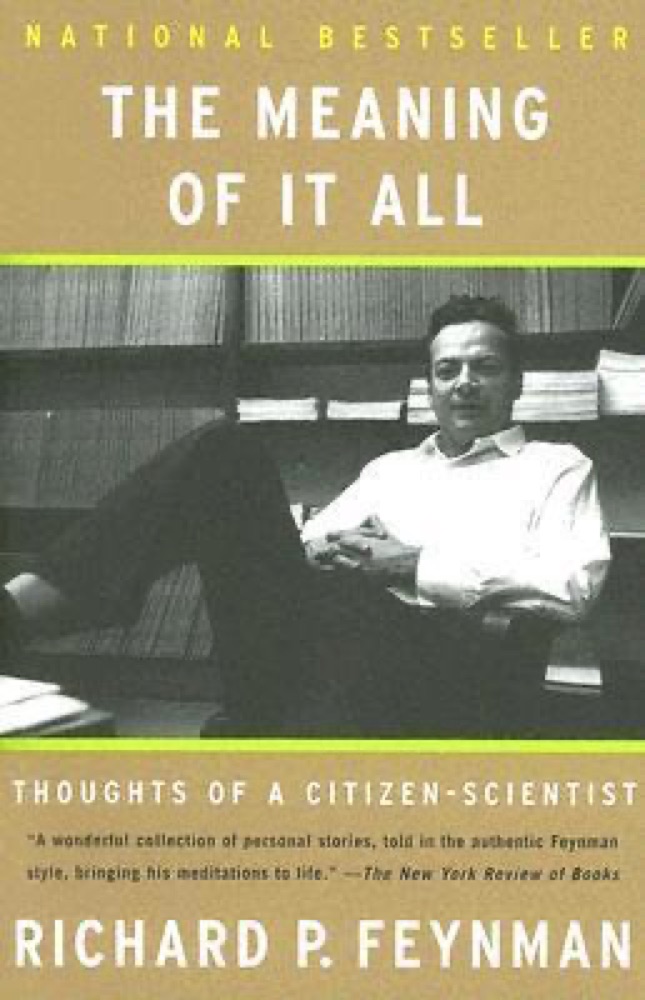 The Meaning of It All: Thoughts of a Citizen-Scientist
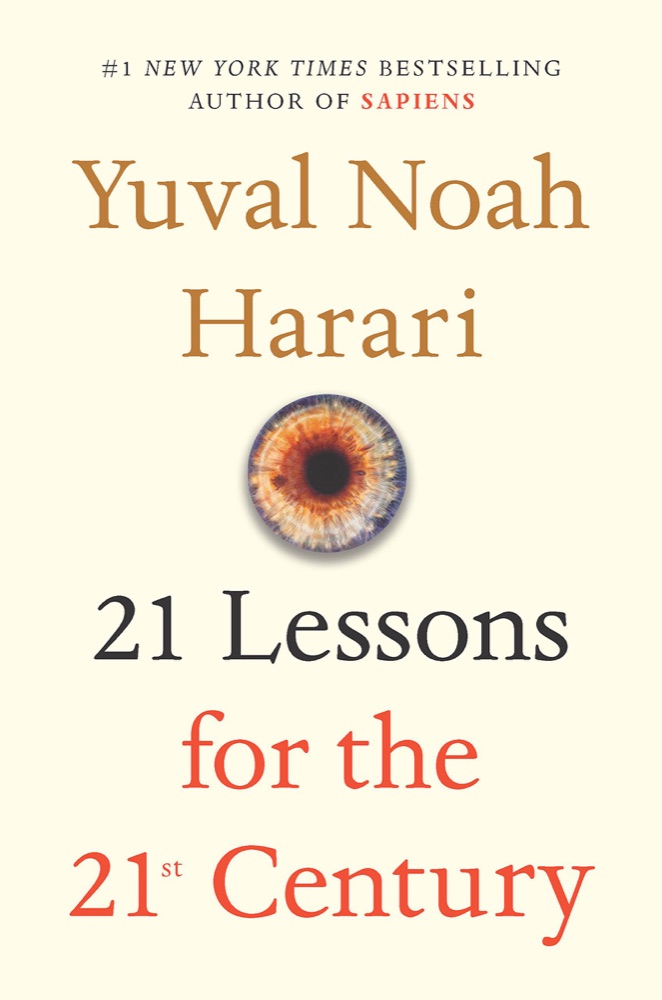 21 Lessons for the 21st Century
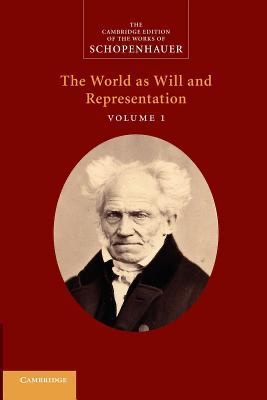 The World as Will and Representation, Vol 1
 The World's Religions
 A Language Older Than Words
 The Discovery of India
 Truth and Method
 Think: A Compelling Introduction to Philosophy
 The Secret Teachings of All Ages
 Drive Your Plow Over the Bones of the Dead
 A History of Western Philosophy
 The Myth of Sisyphus
 The Wisdom of Life
 Moravagine
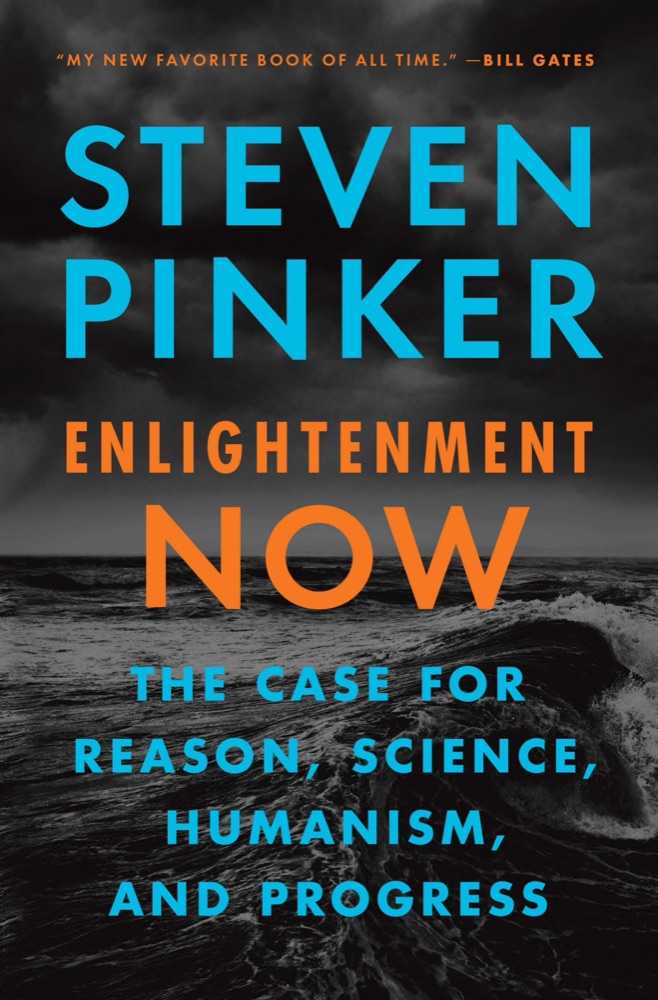 Enlightenment Now: The Case for Reason, Science, Humanism, and Progress
 The Cosmic Serpent: DNA and the Origins of Knowledge
 The Fifth Science
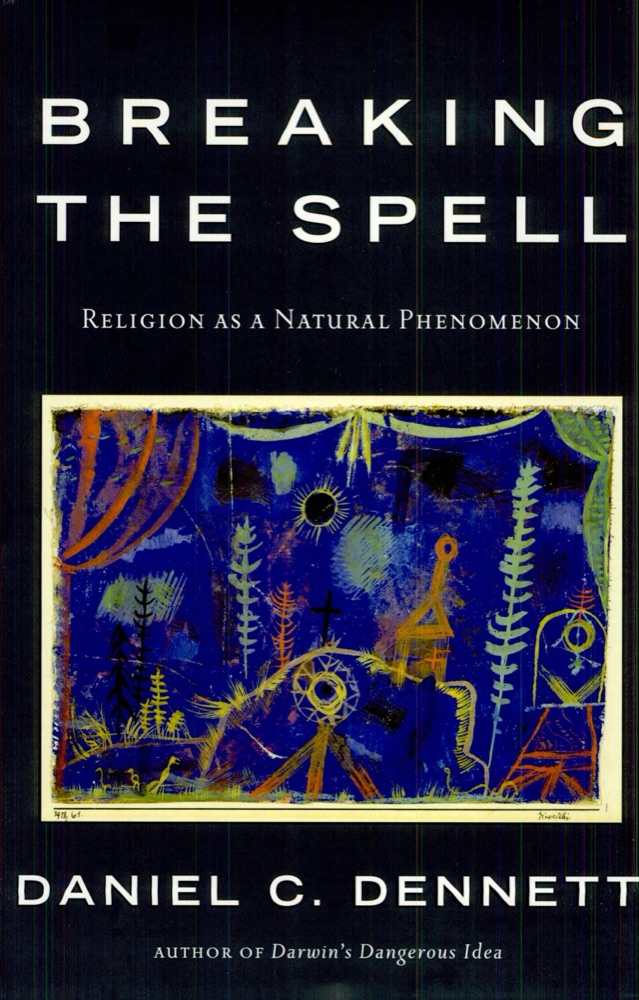 Breaking the Spell: Religion as a Natural Phenomenon
 The Man Without Qualities
 The Closing of the American Mind
 Dialectic of Enlightenment: Philosophical Fragments
 The Intellectual Life: Its Spirit, Conditions, Methods
 Tao: The Watercourse Way
 The Power of Myth
 The Conspiracy Against the Human Race
 Villa Incognito
 Understanding Media: The Extensions of Man
 The World's Last Night: And Other Essays
 Critique of Pure Reason
 The Origin of Consciousness in the Breakdown of the Bicameral Mind
 The Wisdom of Insecurity: A Message for an Age of Anxiety