
 Man's Search for Ultimate Meaning
Quotes from the Book
When we are no longer able to change a situation, we are challenged to change ourselves.
Everything can be taken from a man but one thing: the last of the human freedoms—to choose one’s attitude in any given set of circumstances, to choose one’s own way.
Don't aim at success. The more you aim at it and make it a target, the more you are going to miss it. For success, like happiness, cannot be pursued; it must ensue, and it only does so as the unintended side effect of one's personal dedication to a cause greater than oneself or as the by-product of one's surrender to a person other than oneself. Happiness must happen, and the same holds for success: you have to let it happen by not caring about it. I want you to listen to what your conscience commands you to do and go on to carry it out to the best of your knowledge. Then you will live to see that in the long-run—in the long-run, I say!—success will follow you precisely because you had forgotten to think about it
Those who have a 'why' to live, can bear with almost any 'how'.
But there was no need to be ashamed of tears, for tears bore witness that a man had the greatest of courage, the courage to suffer.
Love is the only way to grasp another human being in the innermost core of his personality. No one can become fully aware of the very essence of another human being unless he loves him. By his love he is enabled to see the essential traits and features in the beloved person; and even more, he sees that which is potential in him, which is not yet actualized but yet ought to be actualized. Furthermore, by his love, the loving person enables the beloved person to actualize these potentialities. By making him aware of what he can be and of what he should become, he makes these potentialities come true.
An abnormal reaction to an abnormal situation is normal behavior.
Ultimately, man should not ask what the meaning of his life is, but rather must recognize that it is he who is asked. In a word, each man is questioned by life; and he can only answer to life by answering for his own life; to life he can only respond by being responsible.
In some ways suffering ceases to be suffering at the moment it finds a meaning, such as the meaning of a sacrifice.
So live as if you were living already for the second time and as if you had acted the first time as wrongly as you are about to act now!
For the first time in my life I saw the truth as it is set into song by so many poets, proclaimed as the final wisdom by so many thinkers. The truth - that Love is the ultimate and highest goal to which man can aspire. Then I grasped the meaning of the greatest secret that human poetry and human thought and belief have to impart: The salvation of man is through love and in love.
It did not really matter what we expected from life, but rather what life expected from us. We needed to stop asking about the meaning of life, and instead to think of ourselves as those who were being questioned by life—daily and hourly. Our answer must consist, not in talk and meditation, but in right action and in right conduct. Life ultimately means taking the responsibility to find the right answer to its problems and to fulfill the tasks which it constantly sets for each individual.
No man should judge unless he asks himself in absolute honesty whether in a similar situation he might not have done the same.
Happiness cannot be pursued; it must ensue.
The pessimist resembles a man who observes with fear and sadness that his wall calendar, from which he daily tears a sheet, grows thinner with each passing day. On the other hand, the person who attacks the problems of life actively is like a man who removes each successive leaf from his calendar and files it neatly and carefully away with its predecessors, after first having jotted down a few diary notes on the back. He can reflect with pride and joy on all the richness set down in these notes, on all the life he has already lived to the fullest. What will it matter to him if he notices that he is growing old? Has he any reason to envy the young people whom he sees, or wax nostalgic over his own lost youth? What reasons has he to envy a young person? For the possibilities that a young person has, the future which is in store for him? No, thank you,' he will think. 'Instead of possibilities, I have realities in my past, not only the reality of work done and of love loved, but of sufferings bravely suffered. These sufferings are even the things of which I am most proud, although these are things which cannot inspire envy.
I do not forget any good deed done to me & I do not carry a grudge for a bad one.
A man who becomes conscious of the responsibility he bears toward a human being who affectionately waits for him, or to an unfinished work, will never be able to throw away his life. He knows the "why" for his existence, and will be able to bear almost any "how".
To draw an analogy: a man's suffering is similar to the behavior of a gas. If a certain quantity of gas is pumped into an empty chamber, it will fill the chamber completely and evenly, no matter how big the chamber. Thus suffering completely fills the human soul and conscious mind, no matter whether the suffering is great or little. Therefore the "size" of human suffering is absolutely relative.
Love goes very far beyond the physical person of the beloved. It finds its deepest meaning in his spiritual being, his inner self. Whether or not he is actually present, whether or not he is still alive at all, ceases somehow to be of importance.
By declaring that man is responsible and must actualize the potential meaning of his life, I wish to stress that the true meaning of life is to be discovered in the world rather than within man or his own psyche, as though it were a closed system. I have termed this constitutive characteristic "the self-transcendence of human existence." It denotes the fact that being human always points, and is directed, to something or someone, other than oneself--be it a meaning to fulfill or another human being to encounter. The more one forgets himself--by giving himself to a cause to serve or another person to love--the more human he is and the more he actualizes himself. What is called self-actualization is not an attainable aim at all, for the simple reason that the more one would strive for it, the more he would miss it. In other words, self-actualization is possible only as a side-effect of self-transcendence.
But today’s society is characterized by achievement orientation, and consequently it adores people who are successful and happy and, in particular, it adores the young. It virtually ignores the value of all those who are otherwise, and in so doing blurs the decisive difference between being valuable in the sense of dignity and being valuable in the sense of usefulness. If one is not cognizant of this difference and holds that an individual’s value stems only from his present usefulness, then, believe me, one owes it only to personal inconsistency not to plead for euthanasia along the lines of Hitler’s program, that is to say, ‘mercy’ killing of all those who have lost their social usefulness, be it because of old age, incurable illness, mental deterioration, or whatever handicap they may suffer. Confounding the dignity of man with mere usefulness arises from conceptual confusion that in turn may be traced back to the contemporary nihilism transmitted on many an academic campus and many an analytical couch.
Man does not simply exist but always decides what his existence will be, what he will become the next moment. By the same token, every human being has the freedom to change at any instant.
It is not freedom from conditions, but it is freedom to take a stand toward the conditions.
I recommend that the Statue of Liberty on the East Coast be supplemented by a Statue of Responsiblity on the West Coast.
A human being is not one thing among others; things determine each other, but man is ultimately self-determining. What he becomes - within the limits of endowment and environment- he has made out of himself. In the concentration camps, for example, in this living laboratory and on this testing ground, we watched and witnessed some of our comrades behave like swine while others behaved like saints. Man has both potentialities within himself; which one is actualized depends on decisions but not on conditions.
What is demanded of man is not, as some existential philosophers teach, to endure the meaninglessness of life, but rather to bear his incapacity to grasp its unconditional meaningfulness in rational terms.
For the world is in a bad state, but everything will become still worse unless each of us does his best.
Everyone has his own specific vocation or mission in life; everyone must carry out a concrete assignment that demands fulfillment. Therein he cannot be replaced, nor can his life be repeated. Thus, everyone's task is unique as is his specific opportunity to implement it.
A man's concern, even his despair, over the worthwhileness of life is an existential distress but by no means a mental disease.
Ironically enough, in the same way that fear brings to pass what one is afraid of, likewise a forced intention makes impossible what one forcibly wishes... Pleasure is, and must remain, a side-effect or by-product, and is destroyed and spoiled to the degree to which it is made a goal in itself.
Did you know?
- The book was originally published in German in 1946 as Ein Psychologe erlebt das Konzentrationslager ("A Psychologist Experiences the Concentration Camp").
- Its first English edition appeared in 1959 under the title From Death-Camp to Existentialism.
- Frankl was imprisoned in four Nazi concentration camps, including Theresienstadt and Auschwitz.
- The book introduces logotherapy, the psychotherapeutic method Frankl founded around the search for meaning.
- A 1991 survey for the Library of Congress and the Book-of-the-Month Club named it one of the ten most influential books in the United States.
- Frankl repeatedly cites Nietzsche's line, "He who has a why to live can bear almost any how."
About Viktor E. Frankl
Viktor E. Frankl (1905-1997) was an Austrian neurologist, psychiatrist, and Holocaust survivor who founded logotherapy, a form of existential psychotherapy centered on the human search for meaning. He earned his MD from the University of Vienna, later became a professor of neurology and psychiatry there, and authored dozens of books.
More about the author →More by Viktor E. Frankl
Man's Search for Ultimate Meaning
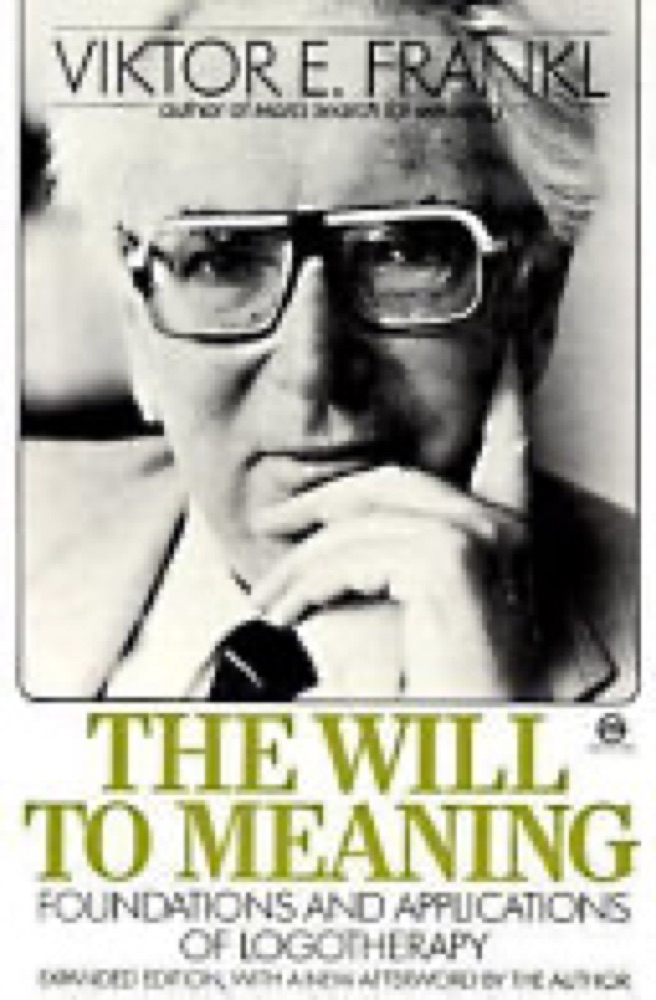 The Will to Meaning: Foundations and Applications of Logotherapy
About the book
Man's Search for Meaning is a memoir and work of psychology by the Austrian psychiatrist Viktor E. Frankl, first published in German in 1946 under the title Ein Psychologe erlebt das Konzentrationslager ("A Psychologist Experiences the Concentration Camp"). Its first part recounts Frankl's imprisonment in Nazi concentration camps, including Auschwitz, drawing on his experiences as a survivor to observe how prisoners endured, or failed to endure, extreme suffering. The second part introduces logotherapy, the school of psychotherapy Frankl founded, which holds that the primary human drive is not pleasure or power but the search for meaning in one's life.
From his observations in the camps, Frankl argues that even under the most degrading and hopeless conditions, human beings retain the freedom to choose their attitude toward their circumstances. He identifies several sources of meaning, including work and accomplishment, love and care for others, and the dignity found in facing unavoidable suffering. The book's recurring touchstone is Nietzsche's dictum, which Frankl quotes as "He who has a why to live can bear almost any how," a theme he ties directly to the psychological survival he witnessed.
The book became one of the most influential works of the twentieth century. It was named one of the ten most influential books in the United States in a 1991 survey conducted for the Library of Congress and the Book-of-the-Month Club, and by later counts it had sold many millions of copies in dozens of languages. Blending firsthand Holocaust testimony with an accessible introduction to existential psychology, it remains widely read as both a memoir of survival and a practical argument that meaning can be found in any circumstance.
Book details
- First published
- 1946
- Length
- 200 pages
- Reading time
- 3 hours
- Author
- Viktor E. Frankl
- Genre
- Classics
- Goodreads rating
- 4.37 (919k ratings) →
- First line
- “This book does not claim to be an account of facts and events but of personal experiences, experiences which millions of prisoners have suffered time and again.”
If you liked this, read…
- 1NightElie Wiesel's spare firsthand memoir of surviving Auschwitz and Buchenwald.
- 2The Diary of a Young GirlAnne Frank's personal record of hiding during the Holocaust.
- 3If This Is a ManPrimo Levi's reflective account of his year in Auschwitz.
- 4The Gulag ArchipelagoSolzhenitsyn's testimony on preserving human dignity inside a brutal camp system.
Keep reading
Man's Search for Ultimate Meaning
 The Ethics of Ambiguity
 If You Meet the Buddha on the Road, Kill Him! The Pilgrimage of Psychotherapy Patients
 When Nietzsche Wept
 The Myth of Sisyphus and Other Essays
 Ethics
 The Myth of Sisyphus
 The Schopenhauer Cure
 The Art of Being
 On the Suffering of the World
 Twilight of the Idols
 Atlas Shrugged
 The Man Without Qualities
 Ethics for the New Millennium
 The Road Less Travelled
 The Wisdom of Life
 Six Characters in Search of an Author
 The Nicomachean Ethics
 Escape from Freedom
 A Separate Reality
 The Consolation of Philosophy
 The World As I See It
 Thoughts in Solitude
 Sacred Hunger
 The Denial of Death
 The Varieties of Religious Experience
 As a Man Thinketh
 Toward a Psychology of Being
 Demons
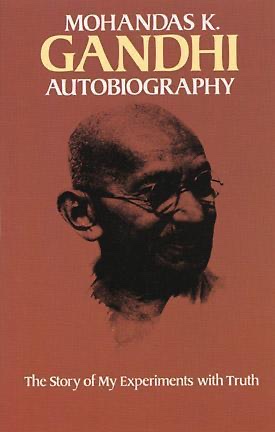 The Story of My Experiments With Truth
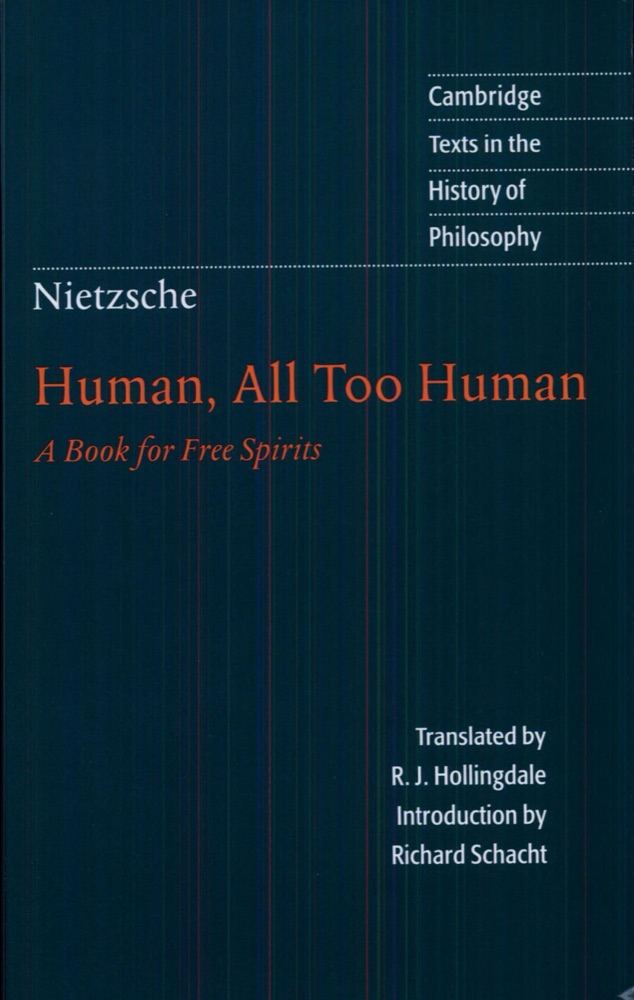 Human, All Too Human
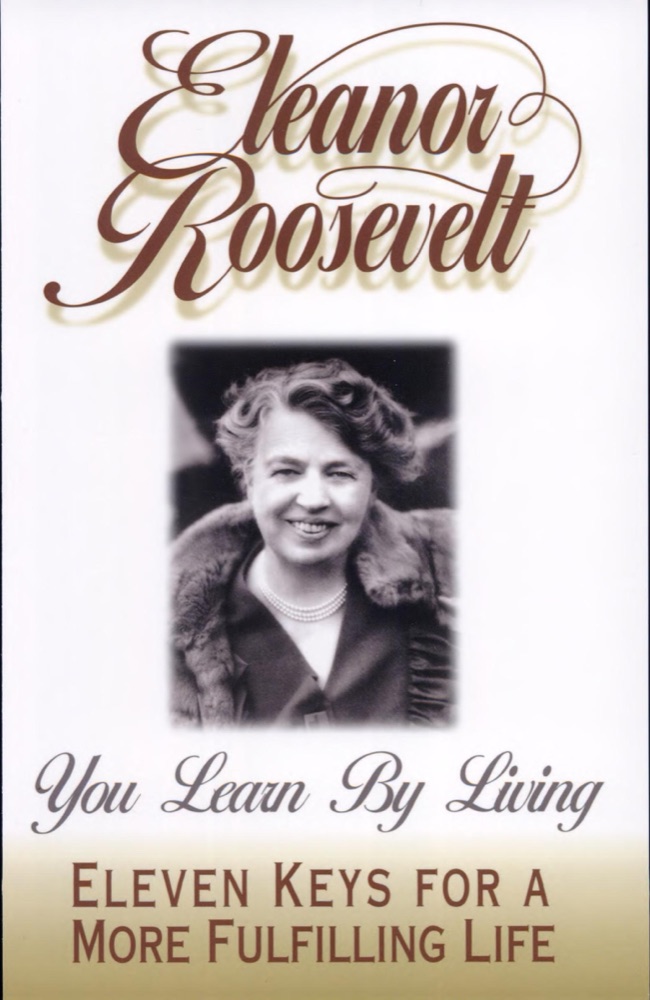 You Learn by Living: Eleven Keys for a More Fulfilling Life
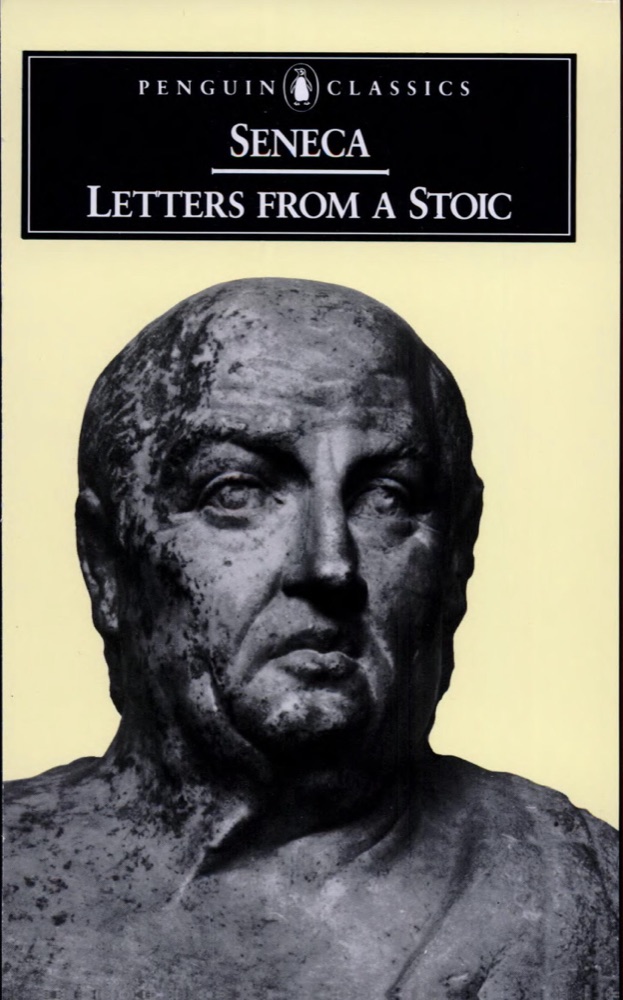 Letters from a Stoic
 Discourses and Selected Writings
 Notes from Underground
 The Children of Men
 Beyond Good and Evil
 The Screwtape Letters
 The Idiot
 Hagakure: The Book of the Samurai
 The Fall
 Demian
 Moral Letters to Lucilius Volume 1
 The Zahir
 Total Freedom: The Essential Krishnamurti
 Point Counter Point
 Man and His Symbols
 Existential Psychotherapy
 Crime and Punishment
 Life and Fate
 When Breath Becomes Air
 East of Eden
 The Problem of Pain
 The Count of Monte Cristo
 Embers
 The Wisdom of Insecurity: A Message for an Age of Anxiety
 Cutting for Stone
 Immortality