
 Why Buddhism Is True: The Science and Philosophy of Meditation and Enlightenment
Quotes from the Book
[L]asting love is something a person has to decide to experience. Lifelong monogamous devotion is just not natural—not for women even, and emphatically not for men. It requires what, for lack of a better term, we can call an act of will. . . . This isn't to say that a young man can't hope to be seized by love. . . . But whether the sheer fury of a man's feelings accurately gauges their likely endurance is another question. The ardor will surely fade, sooner or later, and the marriage will then live or die on respect, practical compatibility, simple affection, and (these days, especially) determination. With the help of these things, something worthy of the label 'love' can last until death. But it will be a different kind of love from the kind that began the marriage. Will it be a richer love, a deeper love, a more spiritual love? Opinions vary. But it's certainly a more impressive love.
108
We are built to be effective animals, not happy ones.
74
Whereas modern cynicism brought despair about the ability of the human species to realize laudable ideals, postmodern cynicism doesn't — not because it's optimistic, but because it can't take ideals seriously in the first place. The prevailing attitude is Absurdism. A postmodern magazine may be irreverent, but not bitterly irreverent, for it's not purposefully irreverent; its aim is indiscriminate, because everyone is equally ridiculous. And anyway, there's no moral basis for passing judgment. Just sit back and enjoy the show.
31
Nature has gone to great lengths to hide our subconscious from ourselves. Why?
25
Altruism, compassion, empathy, love, conscience, the sense of justice—all of these things, the things that hold society together, the things that allow our species to think so highly of itself, can now confidently be said to have a firm genetic basis. That’s the good news. The bad news is that, although these things are in some ways blessings for humanity as a whole, they didn’t evolve for the “good of the species” and aren’t reliably employed to that end. Quite the contrary: it is now clearer than ever how (and precisely why) the moral sentiments are used with brutal flexibility, switched on and off in keeping with self-interest; and how naturally oblivious we often are to this switching. In the new view, human beings are a species splendid in their array of moral equipment, tragic in their propensity to misuse it, and pathetic in their constitutional ignorance of the misuse. The title of this book is not wholly without irony.
22
Sensual pleasures are the whip natural selection uses to control us, to keep us in the thrall of its warped values system.
22
In all these assaults on the senses there is a great wisdom — not only about the addictiveness of pleasures but about their ephemerality. The essence of addiction, after all, is that pleasure tends to desperate and leave the mind agitated, hungry for more. The idea that just one more dollar, one more dalliance, one more rung on the ladder will leave us feeling sated reflects a misunderstanding about human nature — a misunderstanding, moreover, that is built into human nature; we are designed to feel that the next great goal will bring bliss, and the bliss is designed to evaporate shortly after we get there. Natural selection has a malicious sense of humor; it leads us along with a series of promises and then keeps saying ‘Just kidding.’ As the Bible puts it, ‘All the labour of man is for his mouth, and yet the appetite is not filled.’ Remarkably, we go our whole lives without ever really catching on. The advice of the sages — that we refuse to play this game — is nothing less than an incitement to mutiny, to rebel against our creator. Sensual pleasures are the whip natural selection uses to control us to keep us in the thrall of its warped value system. To cultivate some indifference to them is one plausible route to liberation. While few of us can claim to have traveled far on this route, the proliferation of this scriptural advice suggests it has been followed some distance with some success.
14
The proposition here is that the human brain is, in large part, a machine for winning arguments, a machine for convincing others that its owner is in the right—and thus a machine for convincing its owner of the same thing. The brain is like a good lawyer: given any set of interests to defend, it sets about convincing the world of their moral and logical worth, regardless of whether they in fact have any of either. Like a lawyer, the human brain wants victory, not truth; and, like a lawyer, it is sometimes more admirable for skill than for virtue.
8
Being a person's true friend means endorsing the untruths he holds dearest.
7
People may chuckle appreciatively at a male turkey that tries to mate with a poor rendition of a female's [suspended] head, but if you then point out that many a human male regularly gets aroused after looking at two-dimensional representations of a nude woman, they don't see the connection.
6
The sages may have been self-serving, like the rest of us, but that doesn't mean they weren't sages.
6
We are designed to feel that the next great goal will bring bliss, and the bliss is designed to evaporate shortly after we get there. Natural selection has a malicious sense of humor; it leads us along with a series of promises and then keeps saying “Just kidding.
4
from natural selection’s point of view, status assistance is the main purpose of friendship.
4
Understanding the often unconscious nature of genetic control is the first step toward understanding that—in many realms, not just sex—we’re all puppets, and our best hope for even partial liberation is to try to decipher the logic of the puppeteer.
4
Once you the forces that govern behavior,it's harder to blame the behaver
4
Here the contention is not just that the new Darwinian paradigm can help us realize whichever moral values we happen to choose. The claim is that the new paradigm can actually influence — legitimately — our choice of basic values in the first place. Some Darwinians insist that such influence can never be legitimate. What they have in mind is the naturalistic fallacy, whose past violation has so tainted their line of work. But what we're doing here doesn't violate the naturalistic fallacy. Quite the opposite. By studying nature — by seeing the origins of the retributive impulse — we see how we have been conned into committing the naturalistic fallacy without knowing it; we discover that the aura of divine truth surrounding retribution is nothing more than a tool with which nature — natural selection — gets us to uncritically accept its "values." Once this revelation hits norm, we are less likely to obey this aura, and thus less likely to commit the fallacy.
4
We are right to say that we never dislike people without a reason. But the reason, often, is that it is not in our interests to like them; liking them won’t elevate our social status, aid our acquisition of material or sexual resources, help our kin, or do any of the other things that during evolution have made genes prolific. The feeling of “rightness” accompanying our dislike is just window dressing. Once you’ve seen that, the feeling’s power may diminish.
3
Natural selection is an inanimate process, devoid of consciousness, yet is a tireless refiner, an ingenious craftsman.
3
What there is to be proud of? One answer is: Darwin-like behavior. Go above and beyond the call of a smoothly functioning conscience; help those who aren´t likely to help you in return, and do so when nobody is watching
3
The distinction was nicely drawn by a study in which both men and women were asked about the minimal level of intelligence they would accept in a person they were “dating.” The average response, for both male and female, was: average intelligence. They were also asked how smart a person would have to be before they would consent to sexual relations. The women said: Oh, in that case, markedly above average. The men said: Oh, in that case, markedly below average.
2
status is a resource.39 If status expands your access to food or sex, then it makes sense to seek status in the abstract, just as it makes sense to seek money even though you can’t eat it.
2
In this sense, yes, we are moral; we have, at least, the technical capacity for leading a truly examined life; we have self-awareness, memory, foresight, and judgment. But the last several decades of evolutionary thought lead one to emphasize the word technical. Chronically subjecting ourselves to a true and bracing moral scrutiny, and adjusting our behavior accordingly, is not something we are designed for. We are potentially moral animals—which is more than any other animal can say—but we aren’t naturally moral animals. To be moral animals, we must realize how thoroughly we aren’t.
2
Our generosity and affection have a narrow underlying purpose. They’re aimed either at kin, who share our genes, at nonkin of the opposite sex who can help package our genes for shipment to the next generation, or at nonkin of either sex who seem likely to return the favor. What’s more, the favor often entails dishonesty or malice; we do our friends the favor of overlooking their flaws, and seeing (if not magnifying) the flaws of their enemies. Affection is a tool of hostility. We form bonds to deepen fissures.
2
Certainly genetic differences matter. Some people’s genes dispose them to be unusually ambitious, or clever, or athletic, or artistic, or various other things— including unusually rich in serotonin. But these traits depend, for their flowering, on the environment (and sometimes on each other), and their eventual translation into status can rest heavily on chance. No one is born to lead, and no one is born to follow. And to the extent that some people are born with a leg up in the race (as they surely are), that birthright probably lies at least as much in cultural as in genetic advantage. In any event, there are good Darwinian reasons to believe that everyone is born with the capacity for high serotonin—with the equipment to function as a high status primate given a social setting conducive to their ascent. The whole point of the human brain is behavioral flexibility, and it would be very unlike natural selection, given that flexibility, to deny anyone a chance at the genetic payoffs of high status, should the opportunity arise.
2
..various people had long had the feeling that gain through pain was nature's way
2
we deceive ourselves in order to deceive others better. This hypothesis was tossed out during the mid-1970s by both Richard Alexander and Robert Trivers.
1
the best liar is he who makes the smallest amount of lying go the longest way.
1
This question goes way beyond my own little episodes of transcending overcaffeination and melancholy. It applies, in principle, to all negative feelings: fears, anxieties, loathing, self-loathing, and more. Imagine if our negative feelings, or at least lots of them, turned out to be illusions, and we could dispel them by just contemplating them from a particular vantage point.
1
Watch on YouTube
About Robert Wright
We have collected 58 quotes from 2 books by Robert Wright on BookQuoters.
More about the author →More by Robert Wright
Why Buddhism Is True: The Science and Philosophy of Meditation and Enlightenment
About the book
Are men literally born to cheat? Does monogamy actually serve women's interests? These are among the questions that have made The Moral Animal one of the most provocative science books in recent years. Wright unveils the genetic strategies behind everything from our sexual preferences to our office politics--as well as their implications for our moral codes and public policies. Illustrations.
Book details
- First published
- 1994
- Author
- Robert Wright
- Genre
- Nonfiction
- Goodreads rating
- 4.08 (12k ratings)
Keep reading
 The Blank Slate: The Modern Denial of Human Nature
 The Red Queen: Sex and the Evolution of Human Nature
 How the Mind Works
 The Elephant in the Brain: Hidden Motives in Everyday Life
 Moral Tribes: Emotion, Reason, and the Gap Between Us and Them
 The Moral Landscape: How Science Can Determine Human Values
 On Human Nature
 A Hunter-Gatherer's Guide to the 21st Century: Evolution and the Challenges of Modern Life
 The Laws of Human Nature
 Good Reasons for Bad Feelings: Insights from the Frontier of Evolutionary Psychiatry
 The Social Animal: The Hidden Sources of Love, Character, and Achievement
 Humankind: A Hopeful History
 The Mating Mind: How Sexual Choice Shaped the Evolution of Human Nature
 Psych: The Story of the Human Mind
 Shadows of Forgotten Ancestors
 Our Inner Ape: A Leading Primatologist Explains Why We are Who We Are
 The Selfish Gene
 The Social Conquest of Earth
 Straw Dogs: Thoughts on Humans and Other Animals
 A Language Older Than Words
 The Abolition of Man
 Why We Get Sick: The New Science of Darwinian Medicine
 Daybreak: Thoughts on the Prejudices of Morality
 Echopraxia
 Human, All Too Human
 Sex at Dawn: The Prehistoric Origins of Modern Sexuality
 Dragons of Eden: Speculations on the Evolution of Human Intelligence
 A Devil's Chaplain: Reflections on Hope, Lies, Science, and Love
 Civilized to Death: What Was Lost on the Way to Modernity
 Mama's Last Hug: Animal Emotions and What They Tell Us about Ourselves
 Sapiens: A Brief History of Humankind
 The Descent of Man
 The Happiness Hypothesis: Finding Modern Truth in Ancient Wisdom
 The Righteous Mind: Why Good People Are Divided by Politics and Religion
 The Gay Science
 Freedom Evolves
 Why Fish Don’t Exist: A Story of Loss, Love, and the Hidden Order of Life
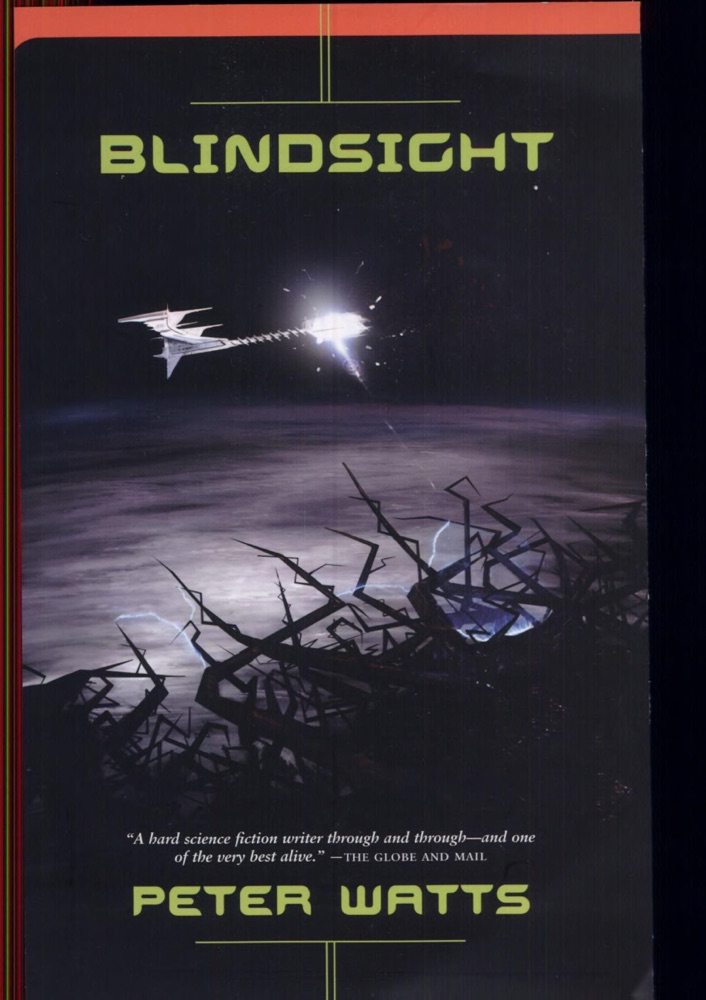 Blindsight
Why Buddhism Is True: The Science and Philosophy of Meditation and Enlightenment
Blindsight
Why Buddhism Is True: The Science and Philosophy of Meditation and Enlightenment
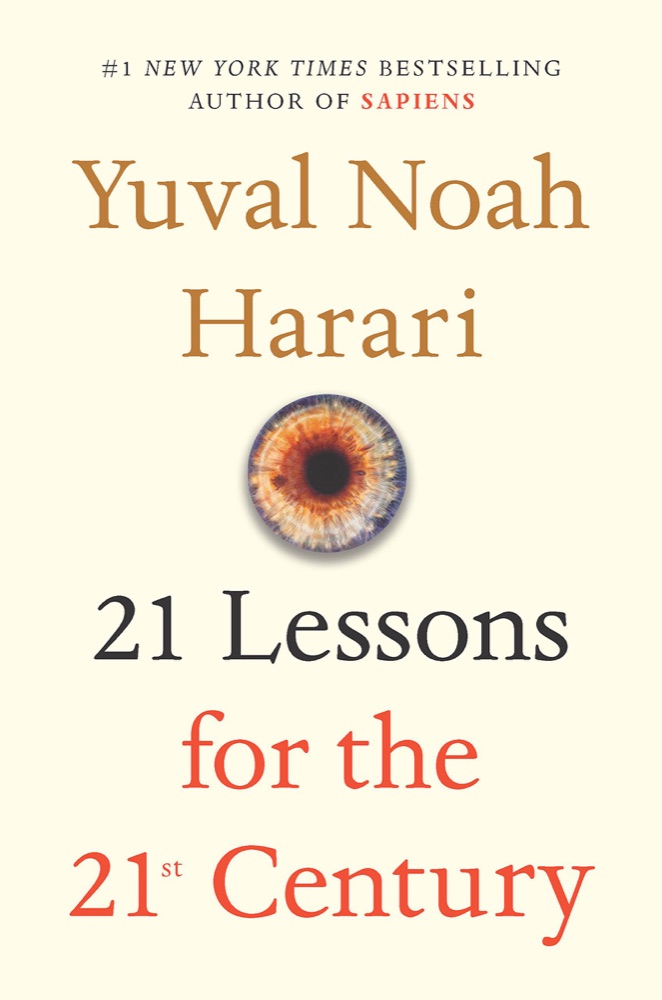 21 Lessons for the 21st Century
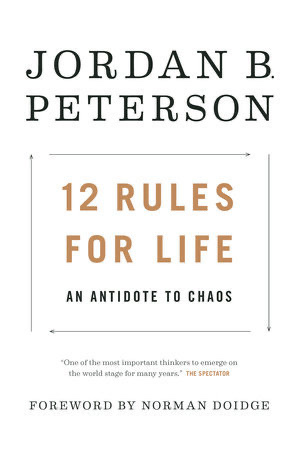 12 Rules for Life: An Antidote to Chaos
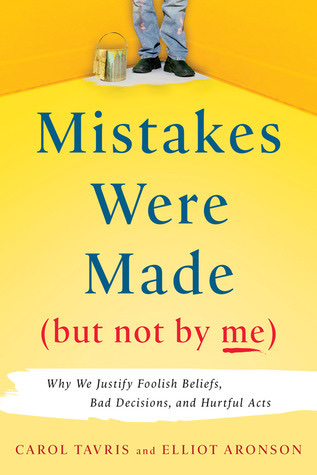 Mistakes Were Made (But Not by Me): Why We Justify Foolish Beliefs, Bad Decisions, and Hurtful Acts
 Darwin's Dangerous Idea: Evolution and the Meanings of Life
 Maps of Meaning: The Architecture of Belief
 We Learn Nothing
 The Varieties of Religious Experience
 The Philosopher and the Wolf
 How We Decide
 Behave: The Biology of Humans at Our Best and Worst
 Beyond Freedom and Dignity
 How to Be Perfect: The Correct Answer to Every Moral Question
 Natural Causes: An Epidemic of Wellness, the Certainty of Dying, and Killing Ourselves to Live Longer
 Lila: An Inquiry Into Morals
 What I Believe
 The Fifth Science
 You Are Not So Smart
 Homo Deus: A History of Tomorrow
 Animal: The Autobiography of a Female Body
 The Lucifer Effect: Understanding How Good People Turn Evil
 Villa Incognito