 These Truths: A History of the United States
Quotes from the Book
...we must be tolerant with ourselves and allow ourselves some deviations from the straight line we set up to follow. Even more we must allow others the same prerogative.
19
The most ignorant young man, who knows nothing of the needs of women, thinks himself a competent legislator, because he is a man,” Pankhurst told the crowd, eyeing the Harvard men. “This aristocratic attitude is a mistake.
16
The fight for women’s rights hasn’t come in waves. Wonder Woman was a product of the suffragist, feminist, and birth control movements of the 1900s and 1910s and became a source of the women’s liberation and feminist movements of the 1960s and 1970s. The fight for women’s rights has been a river, wending.
14
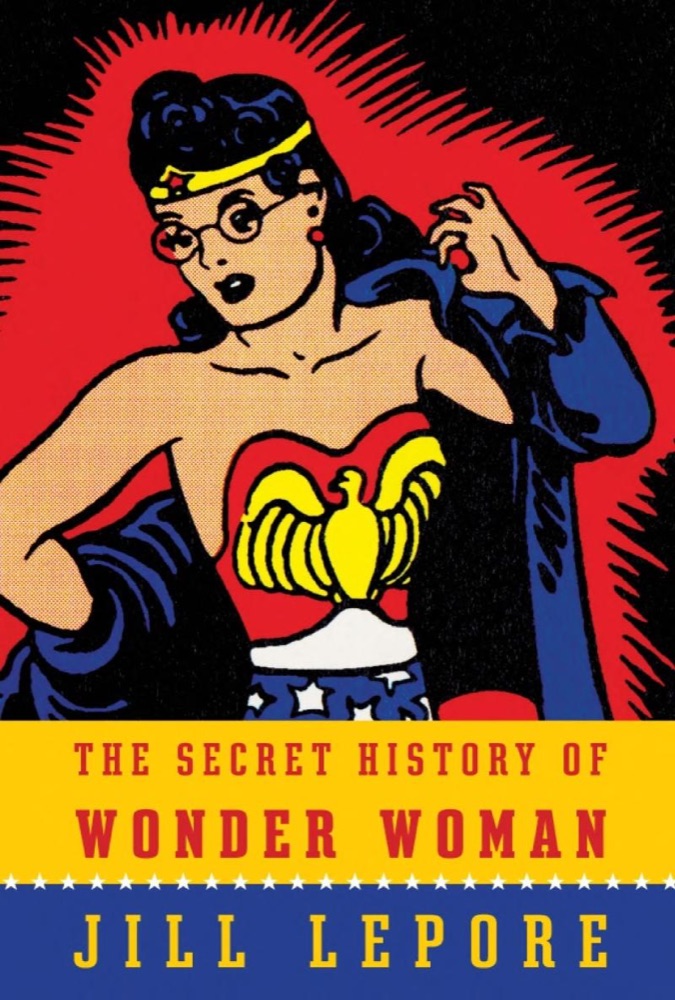
Wonder Woman isn't only an Amazonian princess with badass boots. She's the missing link in a chain of events that begins with the woman suffrage campaigns of the 1910s and ends with the troubled place of feminism fully a century later. Feminism made Wonder Woman. And then Wonder Woman remade feminism....
9
All feminists are suffragists, but not all suffragists are feminists,” as one feminist explained. Feminists rejected the idea of women as reformers whose moral authority came from their differentness from men—women were supposedly, by nature, more tender and loving and chaste and pure—and advocated instead women’s full and equal participation in politics, work, and the arts, on the grounds that women were in every way equal to men.
8
Mary Woolley wasn't only a suffragist; she was also a feminist. "Feminism is not a prejudice," she said, "It is a principle.
8
In the end, the judge ruled that no woman has “the right to copulate with a feeling of security that there will be no resulting conception”: if a woman isn’t willing to die in childbirth, she shouldn’t have sex.
7
Girls are also human beings, a point often overlooked.
6
Wonder Woman didn't begin in 1941 when William Moulton Marston turned in his first script to Sheldon Mayer. Wonder Woman began on a winter day in 1904 when Margaret Sanger dug Olive Byrne out of a snowbank.
6
female superhero, Marston insisted, was the best answer to the critics, since “the comics’ worst offense was their bloodcurdling masculinity.” He explained, A male hero, at best, lacks the qualities of maternal love and tenderness which are as essential to a normal child as the breath of life. Suppose your child’s ideal becomes a superman who uses his extraordinary power to help the weak. The most important ingredient in the human happiness recipe still is missing—love. It’s smart to be strong. It’s big to be generous. But it’s sissified, according to exclusively masculine rules, to be tender, loving, affectionate, and alluring. “Aw, that’s girl’s stuff!” snorts our young comics reader. “Who wants to be a girl?” And that’s the point; not even girls want to be girls so long as our feminine archetype lacks force, strength, power. Not wanting to be girls they don’t want to be tender, submissive, peaceloving as good women are. Women’s strong qualities have become despised because of their weak ones. The obvious remedy is to create a feminine character with all the strength of Superman plus all the allure of a good and beautiful woman.
6
Frankly, Wonder Woman is psychological propaganda for the new type of woman who should, I believe, rule the world. —William Moulton Marston, March 1945
6
Wonder Woman’ is gifted with tremendous physical strength—but unlike Superman she can be injured.” Marston went on, “ ‘Wonder Woman’ has bracelets welded on her wrists; with these she can repulse bullets. But if she lets any man weld chains on these bracelets, she loses her power. This, says Dr. Marston, is what happens to all women when they submit to a man’s domination.
5
Contrary to popular belief,” he began, “every normal person is both male and female in some degree.” What he called “erotic emotions” are felt by all people, toward virtually all other people. The problem is that “people not trained to an analytical point of view fail to consider these more complex expressions of erotic feeling,” and tend to regard them as abnormal.
4
The “basis of Feminism,” Sanger said, had to be a woman’s control over her own body, “the right to be a mother regardless of church or state.
4
You can be strong as any boy if you'll work hard and train yourself in athletics, the way boys do.
4
draw a woman who’s as powerful as Superman, as sexy as Miss Fury, as scantily clad as Sheena the jungle queen, and as patriotic as Captain America.
4
Wonder Woman left Paradise Island to fight fascism with feminism.
3
IT BEGAN WITH A GUN. On September 1, 1939, the German army invaded Poland. Two days later, Britain and France declared war on Germany. In the October 1939 issue of Detective Comics, Batman killed a vampire by shooting silver bullets into his heart. In the next issue, Batman fired a gun at two evil henchmen. When Whitney Ellsworth, DC’s editorial director, got a first look at a draft of the next installment, Batman was shooting again. Ellsworth shook his head and said, Take the gun out.1 Batman had debuted in Detective Com-ics in May 1939, the same month that the U.S. Supreme Court issued a ruling in United States v. Miller, a landmark gun-control case. It concerned the constitutionality of the 1934 National Firearms Act and the 1938 Federal Firearms Act, which effectively banned machine guns through prohibitive taxation, and regulated handgun ownership by introducing licensing, waiting period, and permit requirements. The National Rifle Association supported the legislation (at the time, the NRA was a sportsman’s organization). But gun manufacturers challenged it on the grounds that federal control of gun ownership violated the Second Amendment. FDR’s solicitor general said the Second Amendment had nothing to do with an individual right to own a gun; it had to do with the common defense. The court agreed, unanimously.
3
Reviewing a book written by someone you're living with and sleeping with is, needless to say, wrong.
3
Because I believe that deep down in woman’s nature lies slumbering the spirit of revolt. Because I believe that woman is enslaved by the world machine, by sex conventions, by motherhood and its present necessary child rearing, by wage-slavery, by middle-class morality, by customs, laws and superstitions. Because I believe that woman’s freedom depends upon awakening that spirit of revolt within her against these things which enslave her. Because I believe that these things which enslave woman must be fought openly, fearlessly, consciously.
2
In July 1970, the Women’s Liberation Basement Press, in Berkeley, California, launched an underground comic book called It Aint Me Babe. The cover of its first issue featured Wonder Woman marching in a rally protesting stock comic-book plots. Inside, Supergirl tells Superman to get lost, Veronica ditches Archie for Betty, Petunia Pig tells Porky Pig to cook his own dinner, and when Iggy tells Lulu “No girls allowed!” she has only one thing to say: “Fuck this shit!
2
Feminists in Greenwich Village had begun bobbing their hair in 1912. In 1915, it was still radical. “The idea, it seems, came from Russia,” the New York Times reported. “The intellectual women of that country were revolutionaries. For convenience in disguising themselves when the police trailed them, they cropped their hair.”2 Holloway was something of a revolutionary, too.
2
Between 1910 and 1920, the percentage of married women who worked had nearly doubled, and the number of married women in the professions had risen by 40 percent, Collier noted. “The question, therefore, is no longer, should women combine marriage with careers, but how?
2
Jack Byrne’s Fiction House became known for its powerful, invincible female heroes. At a time when many publishers had none, Fiction House employed more than twenty women artists.46 The popularity of comics soared. Gaines, who did not tend to hire women to do anything except secretarial work, began publishing All-American Comics in 1939. That same year, Superman became the first comic-book character to have an entire comic book all to himself; he could also be heard on the radio.47 The first episode of Batman appeared in Detective Comics #27, in May 1939. Three months later, Byrne Holloway Marston, staff artist for the Marston Chronicle, drew the first installment of “The Adventures of Bobby Doone.
2
Superman first bounded over tall buildings in 1938. Batman began lurking in the shadows in 1939. Wonder Woman landed in her invisible plane in 1941.
2
Between 1900 and 1930, the percentage of PhDs awarded to women doubled, and then, for three decades, it fell.6 The gains made by women in the beginning of the twentieth century were lost, everywhere, as women who had fought their way into colleges and graduate programs found that they were barred from the top ranks of the academy. No structural changes had been made that would have allowed women to pursue a life of the mind while raising children: many quit; many were kicked out; most gave up.
2
In 1934, after Upton Sinclair was defeated in his campaign to become the next governor of California, he labeled the advertising concern that defeated him a “lie factory.” Marston took much the same view. One of Wonder Woman’s most sinister adversaries, the Duke of Deception, runs an advertising firm called the Lie Factory.
1
Watch on YouTube
About Jill Lepore
We have collected 57 quotes from 2 books by Jill Lepore on BookQuoters.
More about the author →More by Jill Lepore
These Truths: A History of the United States
About the book
A cultural history of Wonder Woman traces the character's creation and enduring popularity, drawing on interviews and archival research to reveal the pivotal role of feminism in shaping her seven-decade story. Examines the life of Wonder Woman creator William Moulton Marston and his polyamorous relationship with wife Elizabeth Holloway and mistress Olive Byrne, both of whom inspired and influenced the comic book character's creation and development. -Abstract from WorldCat
Book details
- First published
- 2014
- Author
- Jill Lepore
- Genre
- Nonfiction
- Goodreads rating
- 3.74 (17k ratings)
Keep reading
 The Feminine Mystique
 Bygone Badass Broads: 52 Forgotten Women Who Changed the World
 America's Women: 400 Years of Dolls, Drudges, Helpmates, and Heroines
 Difficult Women: A History of Feminism in 11 Fights
 Right Wing Women
 The Soul of a Woman
 Women & Power: A Manifesto
 How to Be a Woman
 The Dialectic of Sex: The Case for Feminist Revolution
 The Truth Will Set You Free, But First It Will Piss You Off!: Thoughts on Life, Love, and Rebellion
 How to Suppress Women's Writing
 Herland
 The Mother of All Questions
 A Woman's Worth
 Unspeakable Things: Sex, Lies and Revolution
 Backlash: The Undeclared War Against American Women
 Code Girls: The Untold Story of the American Women Code Breakers Who Helped Win World War II
 Femina: A New History of the Middle Ages, Through the Women Written Out of it
 Brazen: Rebel Ladies Who Rocked the World
 Headscarves and Hymens: Why the Middle East Needs a Sexual Revolution
 Native Tongue
 The Underground Girls of Kabul: In Search of a Hidden Resistance in Afghanistan
 The Heroine's Journey: Woman's Quest for Wholeness
 Feminists Don't Wear Pink (And Other Lies): Amazing Women on What the F-Word Means to Them
 Misogyny: The World's Oldest Prejudice
 Cassandra Speaks: When Women Are the Storytellers, the Human Story Changes
 Against White Feminism: Notes on Disruption
 The Lady from the Black Lagoon: Hollywood Monsters and the Lost Legacy of Milicent Patrick
 The Right to Sex: Feminism in the Twenty-First Century
 The Geek Feminist Revolution
 The Second Sex
 Women's Liberation and the African Freedom Struggle
 Feminism Is for Everybody: Passionate Politics
 Conversations with RBG: Ruth Bader Ginsburg on Life, Love, Liberty, and Law
 Too Fat, Too Slutty, Too Loud: The Rise and Reign of the Unruly Woman
 The Female Eunuch
 Cunt: A Declaration of Independence
 Romantic Outlaws: The Extraordinary Lives of Mary Wollstonecraft and Her Daughter Mary Shelley
 Her Majesty's Royal Coven
 Outrageous Acts and Everyday Rebellions
 Feminist Fight Club: An Office Survival Manual for a Sexist Workplace
 Why I Am Not a Feminist: A Feminist Manifesto
 Dead Blondes and Bad Mothers
 Female Chauvinist Pigs: Women and the Rise of Raunch Culture
 Trainwreck: The Women We Love to Hate, Mock, and Fear... and Why
 The Women's Room
 Seven Women: And the Secret of Their Greatness
 The Woman They Could Not Silence: One Woman, Her Incredible Fight for Freedom, and the Men Who Tried to Make Her Disappear
 My Own Words
 Men Explain Things to Me
 It's Not About the Burqa
 The Moment of Lift: How Empowering Women Changes the World
 Invisible Women: Data Bias in a World Designed for Men
 The Exceptions: Nancy Hopkins, MIT, and the Fight for Women in Science
 The Book of the City of Ladies
 Woman: An Intimate Geography
 Whose Story Is This? Old Conflicts, New Chapters
 She Come By It Natural: Dolly Parton and the Women Who Lived Her Songs
 Feminist Theory: From Margin to Center
 The Female Man