
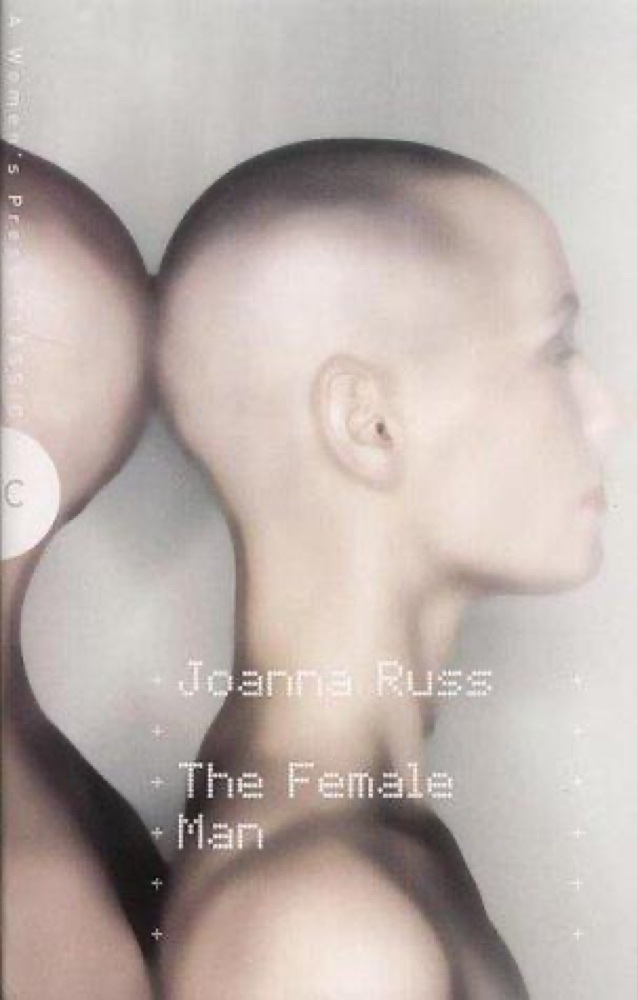
 The Female Man
Quotes from the Book
I once asked a young dissertation writer whether her suddenly grayed hair was due to ill health or personal tragedy; she answered: “It was the footnotes”.
53
Ignorance is not bad faith. But persistence in ignorance is.
38
At the level of high culture with which this book is concerned, active bigotry is probably fairly rare. It is also hardly ever necessary, since the social context is so far from neutral. To act in a way both sexist and racist, to maintain one's class privilege, it is only necessary to act in the customary, ordinary, usual, even polite manner.
20
Privileged groups, like everyone else, want to think well of themselves and to believe that they are acting generously and justly.
17
And middle-class women, although taught to value established forms, are in the same position as the working class: neither can use established forms to express what the forms were never intended to express (and may very well operate to conceal).
14
The idea that any art is achieved 'intuitively' is a dehumanization of the brains, effort, and the traditions of the artist, and a classification of said artist as subhuman. It is those supposed incapable of intelligence, training, or connection with a tradition who are described as working by instinct or intuition.
9
An as-yet-unpublished poet in Boulder, Colorado, once said to me that anything worth doing was worth doing badly. I may seem, in the foregoing sketchy pages, to have followed her advice rather too well.
8
I think from now on, I will not trust anyone who isn't angry.
7
If you are a woman and wish to become pre-eminent in a field, it's a good idea to (a) invent it and (b) locate it in an area either so badly paid or of such low status that men don't want it
6
The re-evaluation and rediscovery of minority art (including the cultural minority of women) is often conceived as a matter of remedying injustice and exclusiveness through doing justice to individual artists by allowing their work into the canon, which will thereby be more complete, but fundamentally unchanged.
5
When the memory of one's predecessors is buried, the assumption persists that there were none and each generation of women believes itself to be faced with the burden of doing everything for the first time. And if no one ever did it before, if no woman was ever that socially sacred creature, "a great writer," why do we think we can succeed now?
4
I think it no accident that the myth of the isolated achievement so often promotes women writers' less good work as their best work.
3
I know you're competent and your thesis advisor knows you're competent. The question in our minds is are you really serious about what you're doing?" This was said to a young woman who had already spent five years and over $10,000 getting to that point in her Ph.D. program.
3
When the memory of one’s predecessors is buried, the assumption persists that there were none and each generation of women believes itself to be faced with the burden of doing everything for the first time.
2
Fantasy is reality. Aristotle says that music is the most realistic of the arts because it represents the movements of the soul directly. Surely the mode of fantasy (which includes many genres and effects) is the only way in which some realities can be treated. I grew up in United States in the 1950s, in a world in which fantasy was supposed to be the opposite of reality. 'Rational,' 'mature' people were concerned only with a narrowly defined 'reality' and only the 'immature' or the 'neurotic' (all-purpose put-downs) had any truck with fantasy, which was then considered to be wishful thinking, escapism, and other bad things, attractive only to the weak and damaged. Only Communists, feminists, homosexuals and other deviants were unsatisfied with Things As They Were at the time and Heaven help you if you were one of those. I took to fantasy like a duckling to water. Unfortunately for me, there was nobody around then to tell me that fantasy was the most realistic of arts, expressing as it does the contents of the human soul directly.
2
I hesitate to mention this social dimension of sexism, racism, and class since it can be so easily used as an escape hatch by those too tired, too annoyed, too harried, or too comfortable to want to change. But it is true that although people are responsible for their actions, they are not responsible for the social context in which they must act or the social resources available to them. All of us must perforce accept large chunks of our culture readymade; there is not enough energy and time to do otherwise. Even so, the results of such nonthought can be appalling. At the level of high culture with which this book is concerned, active bigotry is probably fairly rare. It is also hardly ever necessary, since the social context is so far from neutral. To act in a way that is both sexist and racist, to maintain one’s class privilege, it is only necessary to act in the customary, ordinary, usual, even polite manner.
1
There used to be an odd, popular, and erroneous idea that the sun revolved around the earth. This has been replaced by an even odder, equally popular, and equally erroneous idea that the earth goes around the sun. In fact, the moon and the earth revolve around a common center, and this commonly-centered pair revolves with the sun around another common center, except that you must figure in all the solar planets here, so things get complicated. Then there is the motion of the solar system with regard to a great many other objects, e.g., the galaxy, and if at this point you ask what does the motion o f the earth really look like from the center o f the entire universe, say (and where are the Glotolog?), the only answer is: that it doesn’t. Because there isn’t.
1
The impulse behind fantasy I find to be dissatisfaction with literary realism. Realism leaves out so much. Any consensual reality (though wider even than realism) nonetheless leaves out a great deal also. Certainly one solution to the difficulty of treating experience that is not dealt with in the literary tradition, or even in consensual reality itself, is to 'skew' the reality of a piece of fiction, that is, to employ fantasy. Sometimes authors can't face the full reality of what they feel or know and can therefore express that reality only through hints and guesses. Fantasies often fit this pattern, for example, Edith Wharton's fine ghost story, 'Afterwards.' Wharton can't afford to investigate too explicitely the assumptions and values of the society which provided her with money and position; so although the story 'knows' in a sense that the artistic culture of the wealthy depends on devastatingly brutal commecial practices, none of this can be as explicit as, say, Sylvia Townsend Warner's wonderful historical novel, Summer Will Show, in which the mid-19th century heroine ends by reading the Communist Manifesto. But there are other stories, quite as 'Gothic' in method and tone, which do not fit this pattern. Authors may know what their experience is and yet be unable to name it, not because it is unconscious or unfaceable, but because it is not majority experience. Shirley Jackson strikes me as a writer who does both: for example, clearly portraying Eleanor (in The Haunting of Hill House) as an abused child long before the phrase itself was invented, occasionally using material she doesn't really seem to have understood; and sometimes dislocating reality because conventional forms simply will not express the kind of experience she knows exists. After all, reality is -- collectively speaking -- a social invention and is not itself real. Individually, it is as much something human beings do as it is something refractory that is prior to us and outside us.
1
I had planned to consult with a Black colleague, but when I approached her in the hall she had a crowd of students about, all of them talking, a stack of books in one arm, a mass of student papers in the other, seven committee reports wedged in between, as well as her small daughter in a backpack, and she was looking surreptitiously at her watch. So I went on reading and taking notes.
1
It's not that the authors are unskilled, but we must frequently venture outside our areas of original training. Either the work lies outside anybody's area of original training, or orthodox criticism (in Ellen Moers' words) averts its refined and weary eyes from what only feminists consider important or see as problematic. Much anti-feminist criticism of feminist writing can best be answered with, 'Yeah? And where were you at the time, twinkletoes? Writing your ten-thousandth essay on King Lear?
1
las mujeres confinadas en los hogares de los clérigos respetables no sabían menos que sus hermanos y padres sino que sus conocimientos eran otros y que si las mujeres no sabían lo que sabían los hombres, también es cierto que los hombres no sabían lo que sabían las mujeres, y que lo que los hombres no sabían incluía aquello que las mujeres eran.
de que el mundo, de que prácticamente todas las personas que lo habitan, va a seguir dando cada vez más responsabilidades a cualquier mujer que esté dispuesta a continuar aceptándolas. Y cuando las otras responsabilidades sean demasiado grandes, las que tenga consigo misma tendrán que desaparecer.
Aunque la gente es responsable de sus acciones, no es responsable del contexto social en el que tienen aur actuar ni de los recursos sociales que tiene a su disposición. No nos queda más remedio que aceptar que gran parte de nuestra cultura nos viene dada.
Hasta ahora, todas las técnicas que hemos analizado son medios para abordar una idea sencilla: Lo escribió ella. (Esto es, la persona «inadecuada» —en este caso, mujer— ha creado el valor «correcto», esto es, arte). Negación de la autoría: No lo escribió ella. Contaminación de la autoría: No debería haberlo escrito. Doble rasero del contenido: Sí, pero fíjate sobre qué cosas escribió. Falsa categorización: Ella no es realmente ella [una artista] y esto no es realmente esto [serio, del género literario correcto, estéticamente acertado, importante, etc.] así que, ¿cómo puede «ella» haber escrito «esto»? O sencillamente: Ni «ella» ni «esto» existen. (Una simple exclusión). Pero a veces se llega a admitir: Lo escribió ella. Esto es, a veces las autoras «inadecuadas» consiguen ingresar en el canon de los Grandes, el Permanente o (al menos) el Serio. ¿Queda alguna
About Joanna Russ
We have collected 53 quotes from 2 books by Joanna Russ on BookQuoters.
More about the author →More by Joanna Russ
The Female Man
About the book
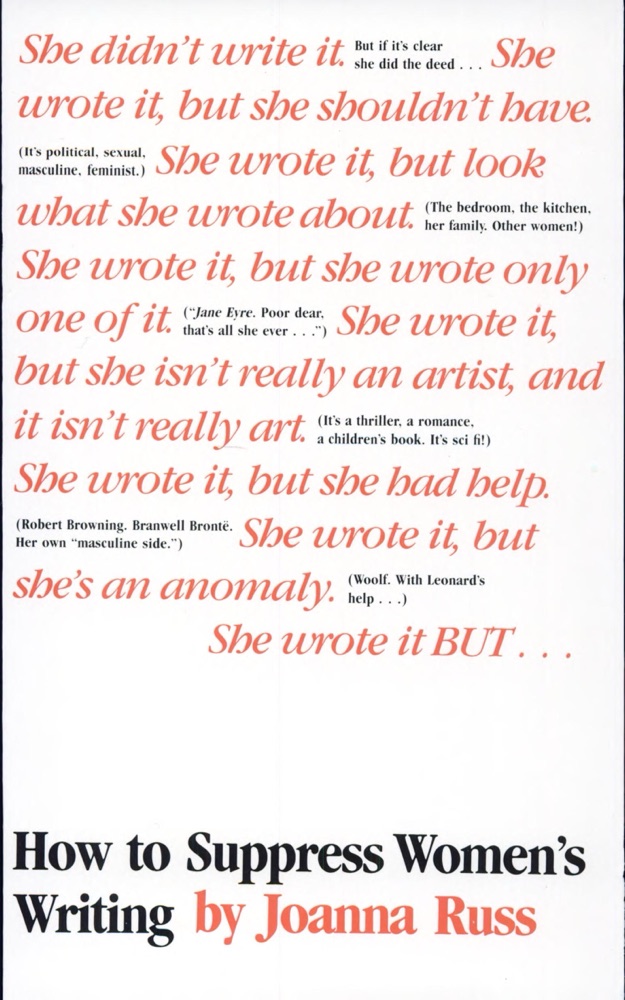
By the author of The Female Man, a provocative survey of the forces that work against women who dare to write.
"She didn't write it. She wrote it but she shouldn't have. She wrote it but look what she wrote about. She wrote it but she isn't really an artist, and it isn't really art. She wrote it but she had help. She wrote it but she's an anomaly. She wrote it BUT..."
How to Suppress Women's Writing is a meticulously researched and humorously written "guidebook" to the many ways women and other "minorities" have been barred from producing written art. In chapters entitled "Prohibitions," "Bad Faith," "Denial of Agency," Pollution of Agency," "The Double Standard of Content," "False Categorization," "Isolation," "Anomalousness," "Lack of Models," Responses," and "Aesthetics" Joanna Russ names, defines, and illustrates those barriers to art-making we may have felt but which tend to
Book details
- First published
- 1983
- Author
- Joanna Russ
- Genre
- Nonfiction
- Goodreads rating
- 4.26 (3k ratings)
Keep reading
 Whose Story Is This? Old Conflicts, New Chapters
 The Mother of All Questions
 In Search of Our Mothers' Gardens: Womanist Prose
 Men Explain Things to Me
 Elizabeth Costello
 The Wave in the Mind: Talks and Essays on the Writer, the Reader and the Imagination
 Monsters: A Fan's Dilemma
 Living a Feminist Life
 Why I Am Not a Feminist: A Feminist Manifesto
 This Bridge Called My Back: Writings by Radical Women of Color
 Old Babes in the Wood: Stories
 The Geek Feminist Revolution
 The Truth Will Set You Free, But First It Will Piss You Off!: Thoughts on Life, Love, and Rebellion
 Dæmon Voices
 The Source of Self-Regard: Selected Essays, Speeches, and Meditations
 No Time To Spare: Thinking About What Matters
 Opinions: A Decade of Arguments, Criticism, and Minding Other People’s Business
 My Life on the Road
 Native Tongue
 Herland
 The Feminine Mystique
 The Argonauts
 Incidental Inventions
 Outrageous Acts and Everyday Rebellions
 It's Not About the Burqa
 The Soul of a Woman
 More Than a Woman: A Brutally Honest and Hilarious Feminist Memoir on Parenting, Marriage, and Middle-Age
 The Summer Without Men
 Bad Feminist
 Feminist Fight Club: An Office Survival Manual for a Sexist Workplace
 Sister Outsider: Essays and Speeches
 Erasure
 What the Dog Saw and Other Adventures
 Cassandra Speaks: When Women Are the Storytellers, the Human Story Changes
 When Women Were Dragons
 A Room of One's Own
 Death in the Afternoon
 What's Wrong with the World
 Elizabeth Finch
 Things I've Been Silent About
 The Women's Room
 The Master's Tools Will Never Dismantle the Master's House
 The Madness of Crowds: Gender, Race and Identity
 Let Me Tell You What I Mean
 The Female Eunuch
 The Confessions of Frannie Langton
 Girl, Woman, Other
 Unspeakable Things: Sex, Lies and Revolution
 Too Much Happiness: Stories
 The Dialectic of Sex: The Case for Feminist Revolution
 Gnomon
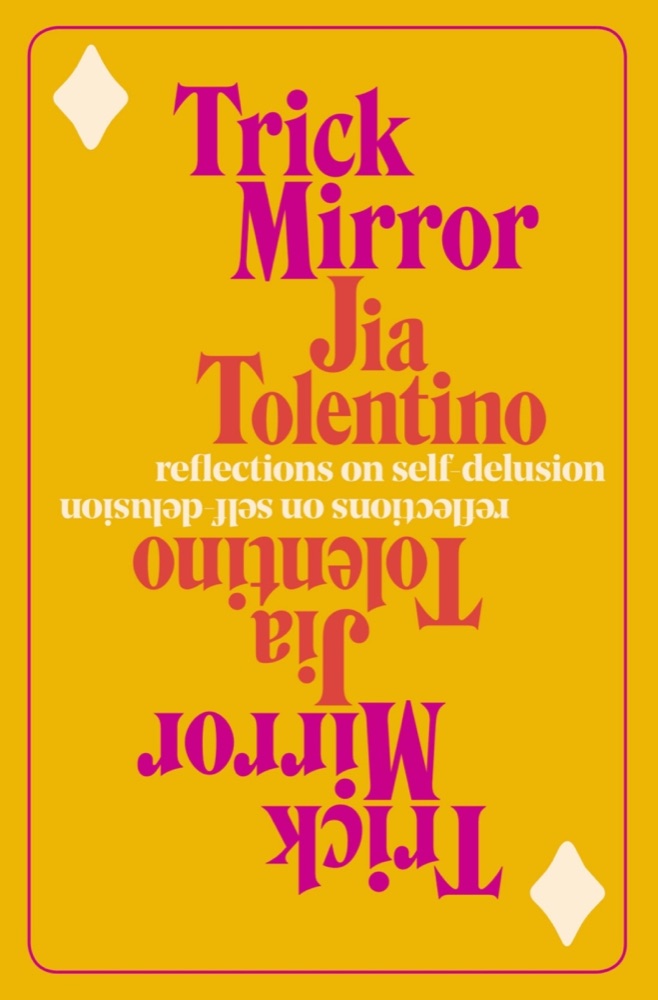 Trick Mirror: Reflections on Self-Delusion
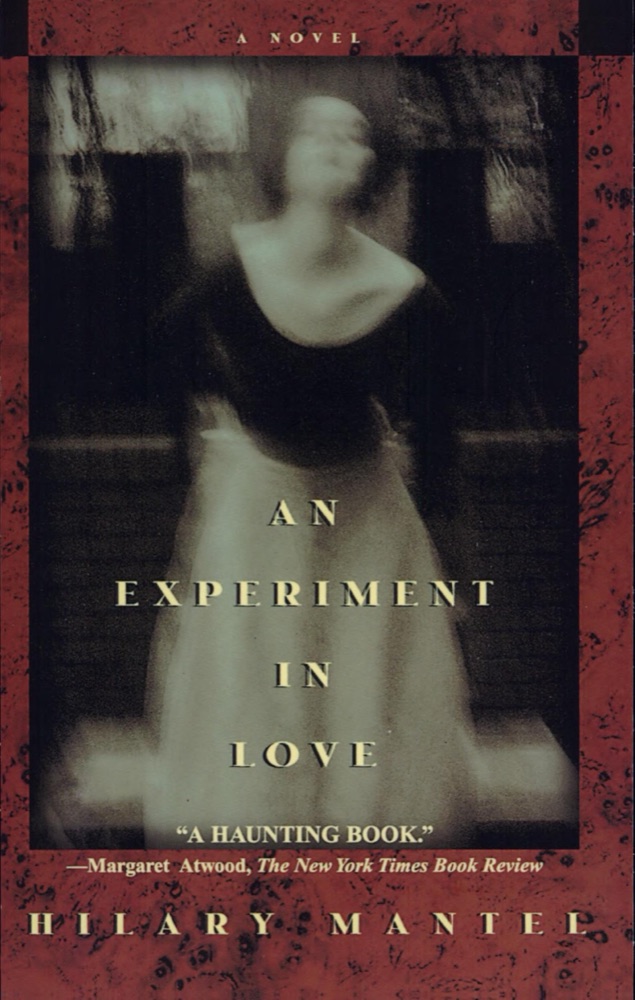 An Experiment in Love
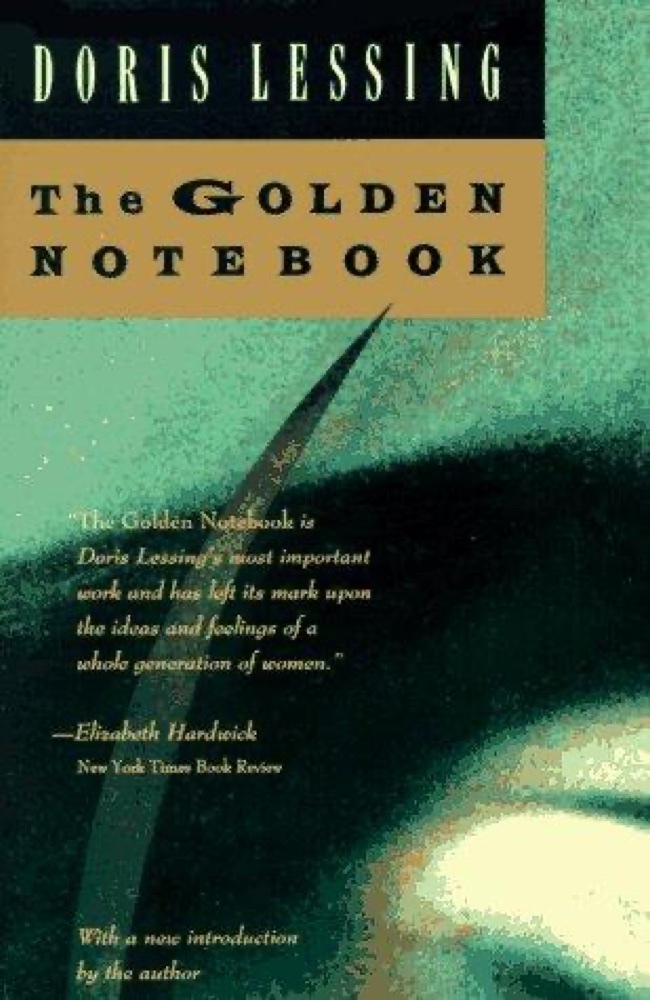 The Golden Notebook
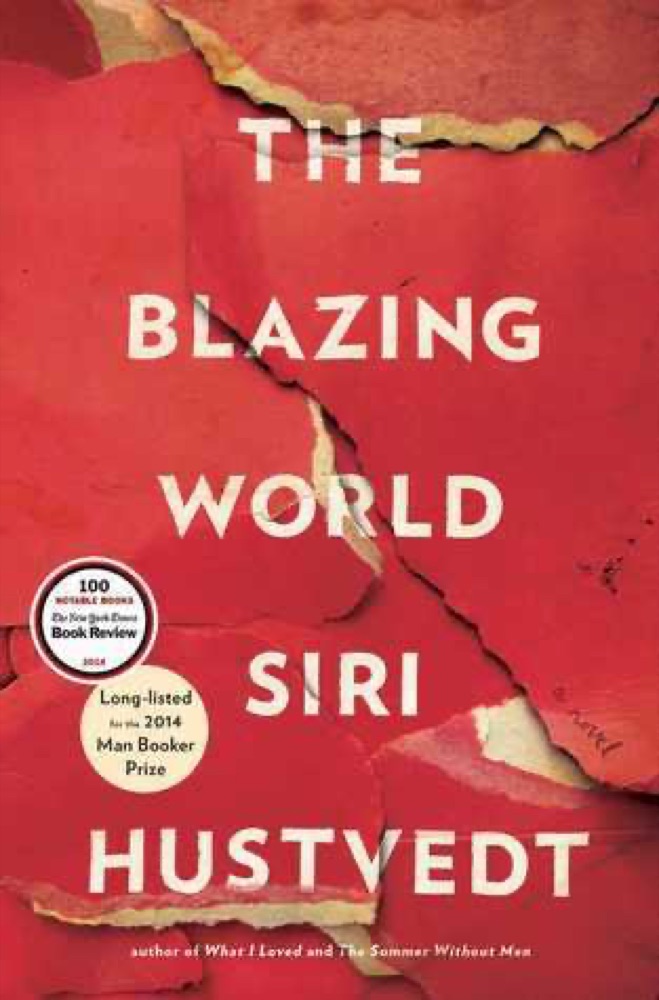 The Blazing World
 Burning Questions: Essays and Occasional Pieces, 2004 to 2021
 Hitch-22: A Memoir
 Cunt: A Declaration of Independence
 Mystery and Manners: Occasional Prose
 When I Was a Child I Read Books