
 Dead Blondes and Bad Mothers
Quotes from the Book
Not all men (and especially the wisest) share the opinion that it is bad for women to be educated. But it is very true that many foolish men have claimed this because it displeased them that women knew more than they did.
80
Causing any damage or harm to one party in order to help another party is not justice, and likewise, attacking all feminine conduct [in order to warn men away from individual women who are deceitful] is contrary to the truth, just as I will show you with a hypothetical case. Let us suppose they did this intending to draw fools away from foolishness. It would be as if I attacked fire -- a very good and necessary element nevertheless -- because some people burnt themselves, or water because someone drowned. The same can be said of all good things which can be used well or used badly. But one must not attack them if fools abuse them.
50
The man or the woman in whom resides greater virtue is the higher; neither the loftiness nor the lowliness of a person lies in the body according to the sex, but in the perfection of conduct and virtues.
44
If it were customary to send little girls to school and teach them the same subjects as are taught to boys, they would learn just as fully and would understand the subtleties of all arts and sciences.
39
As for those who state that it is thanks to a woman, the lady Eve, that man was expelled from paradise, my answer to them would be that man has gained far more through Mary than he ever lost through Eve.
36
How many women are there ... who because of their husbands' harshness spend their weary lives in the bond of marriage in greater suffering than if they were slaves among the Saracens?
34
How was she created? I'm not sure if you realize this, but it was in God's image. How can anybody dare to speak ill of something which bears such a noble imprint?
30
[J]ust the sight of this book, even though it was of no authority, made me wonder how it happened that so many different men – and learned men among them – have been and are so inclined to express both in speaking and in their treatises and writings so many wicked insults about women and their behaviour. Not only one or two ... but, more generally, from the treatises of all philosophers and poets and from all the orators – it would take too long to mention their names – it seems that they all speak from one and the same mouth. Thinking deeply about these matters, I began to examine my character and conduct as a natural woman and, similarly, I considered other women whose company I frequently kept, princesses, great ladies, women of the middle and lower classes, who had graciously told me of their most private and intimate thoughts, hoping that I could judge impartially and in good conscience whether the testimony of so many notable men could be true. To the best of my knowledge, no matter how long I confronted or dissected the problem, I could not see or realise how their claims could be true when compared to the natural behaviour and character of women.
18
There Adam slept, and God formed the body of woman from one of his ribs, signifying that she should stand at his side as a companion and never lie at his feet like a slave, and also that he should love her as his own flesh.
17
My Lady, you certainly tell me about wonderful constancy, strength and virtue and firmness of women, so can one say the same thing about men? (...) Response [by Lady Rectitude]: "Fair sweet friend, have you not yet heard the saying that the fool sees well enough a small cut in the face of his neighbour, but he disregards the great gaping one above his own eye? I will show you the great contradiction in what the men say about the changeability and inconstancy of women. It is true that they all generally insist that women are very frail [= fickle] by nature. And since they accuse women of frailty, one would suppose that they themselves take care to maintain a reputation for constancy, or at the very least, that the women are indeed less so than they are themselves. And yet, it is obvious that they demand of women greater constancy than they themselves have, for they who claim to be of this strong and noble condition cannot refrain from a whole number of very great defects and sins, and not out of ignorance, either, but out of pure malice, knowing well how badly they are misbehaving. But all this they excuse in themselves and say that it is in the nature of man to sin, yet if it so happens that any women stray into any misdeed (of which they themselves are the cause by their great power and longhandedness), then it's suddenly all frailty and inconstancy, they claim. But it seems to me that since they do call women frail, they should not support that frailty, and not ascribe to them as a great crime what in themselves they merely consider a little defect.
16
For you know that any evil spoken of women so generally only hurts those who say it, not women themselves.
8
I am Lady Justice, God´s most special daughter, for my essence flows directly from His own. I reside in Heaven, on Earth, or in Hell: in Heaven for the glory of the saints and blessed souls, on Earth to divide and allot to all their portion of good and evil as they deserve it, in Hell to punish the wicked.
2
She [Isis] invented a form of shorthand which she taught to the Egyptians and provided them a way to abridge their excessively involved script.
2
Through her ingenuity she invented a shorthand Greek script in which a long written narrative could be transcribed with far fewer letters, and which is still used by the Greeks today, a fine invention whose discovery demanded great sublety. She [Minerva/Pallas (Athena)] invented numbers and a means of quickly counting and adding sums.
2
Similarly, Medusa (or Gorgon) was celebrated for her outstanding beauty. She was a daughter of the very wealthy king Phorcys whose large kingdom was surrounded by the sea. This Medusa, according to the ancient stories, was of such striking beauty that not only did she surpass all other women--which was an amazing and supernatural thing--but she also attracted to herself, because of her pleasing appearance--her long and curly blond hair spun like gold, along with her beautiful face and body--every mortal creature upon whom she looked, so that she seemed to make people immovable. For this reason the fable claimed that they had turned to stone.
2
Those who have attacked women out of envy are often wretched men who have met women of greater intelligence and nobler ethic than they possess themselves, which pains them and makes them resentful.
1
El más grande es aquel o aquella que más méritos tiene. La superioridad o inferioridad de la gente no reside en su cuerpo, atendiendo a su sexo, sino en la perfección de sus hábitos y cualidades.
1
¡Levántate, hija mía! Salgamos sin tardanza hacia el Campo de las Letras. Es allí, en aquel país rico y fértil, donde será fundada la Ciudad de las Damas
1
Just as women's bodies are softer than men's, so their understanding is sharper.” ― Christine de Pizan She was the first woman in France to earn a living by her writing! Born 1364, she advocated for women's equality, wrote poetry, novels, biography, an autobiography, literary, political and religious commentary. She was the widowed mother of three and, perhaps, the first feminist!
1
Moreover, in order to show forth her wisdom and the excellence of her mind to the centuries to come, she [Nicostrata/Carmentis] worked and studied so hard that she invented her own letters, which were completely different from those of other nations, that is, she established the Latin alphabet and syntax, spelling, the difference between the vowels and consonants, as well as a complete introduction to the science of grammar.
1
Let me tell you that those who speak ill of women do more harm to themselves than they do to the women they actually slander.
What, my studious daughter, have you already put away the tool of your intelligence and consigned it to silence? Have you let your ink dry and abandoned your pen and the labour of your right hand, when you used to take such pleasure in it? Do you now intend to take seriously the propaganda of Laziness, who, if you are inclined to believe it, will sing sweetly to you: "You have done enough. It is time that you had a rest." 'But don't you know that, although after great labour the wise person rests [their] mind, now is not the time to abandon good work? It is not like you to be among those who give up in mid-course. The knight who leaves the field of battle before the moment of victory is deeply shamed, for the laurel wreath belongs to those who persevere. Now stand up and make your hand ready; get up out of the ashes of indolence!
Amica cara, non sta a me giustificare quelle donne che pongono troppa cura ed eleganza nel vestire. È questo senza dubbio un vizio, e non piccolo. Ogni raffinatezza esteriore che superi il dovuto della propria condizione è da biasimare. Tuttavia, non tanto per giustificare un vizio, quanto per impedire che alcuni si prendano la briga di rimproverare più del dovuto quelle donne che vediamo eleganti, ti dirò che di certo non tutte lo fanno per sedurre; al contrario, capita che parecchie persone, uomini e donne, per inclinazione naturale e onesta, si dilettino nell'eleganza, in abiti belli e ricchi, nella cura di sè e nel lusso.
Dama, credo senz'altro a tutto quello che voi dite e sono certa che vi sono molte donne belle, nobili e caste, che si sanno ben proteggere dalle trappole degli ingannatori. Tuttavia mi irrita e mi rende triste che gli uomini dicano che le donne vogliono essere stuprate e che a loro non dispiace essere violentate, anche quando si ribellano e urlano; non riesco a credere che possano gradire una così grave villania". Risposta: "Non dubitare, cara amica, le dame virtuose e oneste non traggono nessun piacere dall'essere violentate, ma un dolore senza paragoni.
Non tutti gli uomini quindi, specialmente i più colti, condividono l'opinione che sia male l'educazione per le donne. È ben vero che molti tra quelli meno istruiti lo sostengono: sarebbero molto irritati se le donne ne sapessero più di loro. ... Il parere femminile di tua madre, che ti voleva occupata con ago e filo nelle attività consuete delle donne, durante la tua infanzia fu l'ostacolo più grande allo studio e all'approfondimento delle scienze
Te lo ripeto, e non dubitare del contrario, che se ci fosse l'usanza di mandare le bambine a scuola e di insegnare loro le scienze come si fa con i bambini, imparerebbero altrettanto bene e capirebbero le sottigliezze di tutte le arti, così come essi fanno. E ogni tanto succede: come ti ho appena spiegato, così come le donne hanno un corpo più delicato degli uomini, più debole e meno adatto a certi compiti, esse hanno un'intelligenza più viva e più acuta là dove esse si applicano." "Lo sai perché le donne hanno un sapere limitato?...Senza dubbio esse non hanno l'esperienza di tante situazioni differenti, ma limitandosi alle occupazioni domestiche, restano a casa, e non c'è niente di più stimolante per un essere dotato di ragione che un'esperienza ricca e varia." "Dama, se le donne sono in grado di imparare e di ragionare quanto gli uomini, perchè non imparano di più?" Risposta:"Mia cara, come ti ho già detto è perché la società non ha bisogno che le donne si occupino degli affari degli uomini. È abbastanza che svolgano i compiti ordinari loro affidati. E in quanto all'opinione che la loro intelligenza è mediocre, poiché di solito sanno meno degli uomini, pensa solo agli abitanti delle campagne più isolate o degli altipiani. Converrai che in alcuni paesi sono così sempliciotti, che li si potrebbe scambiare per degli animali. E nonostante ciò, è innegabile che la Natura li abbia forniti degli stessi doni fisici e intellettuali che hanno gli uomini più saggi e più eruditi che si possono trovare nei grandi centri e nelle città. Tutto ciò deriva dal non poter imparare, nonostante che, come ti ho già detto, tra gli uomini come tra le donne, alcuni sianopiù intelligenti di altri.
Watch on YouTube
About Christine de Pizan
We have collected 26 quotes from 1 book by Christine de Pizan on BookQuoters.
More about the author →About the book
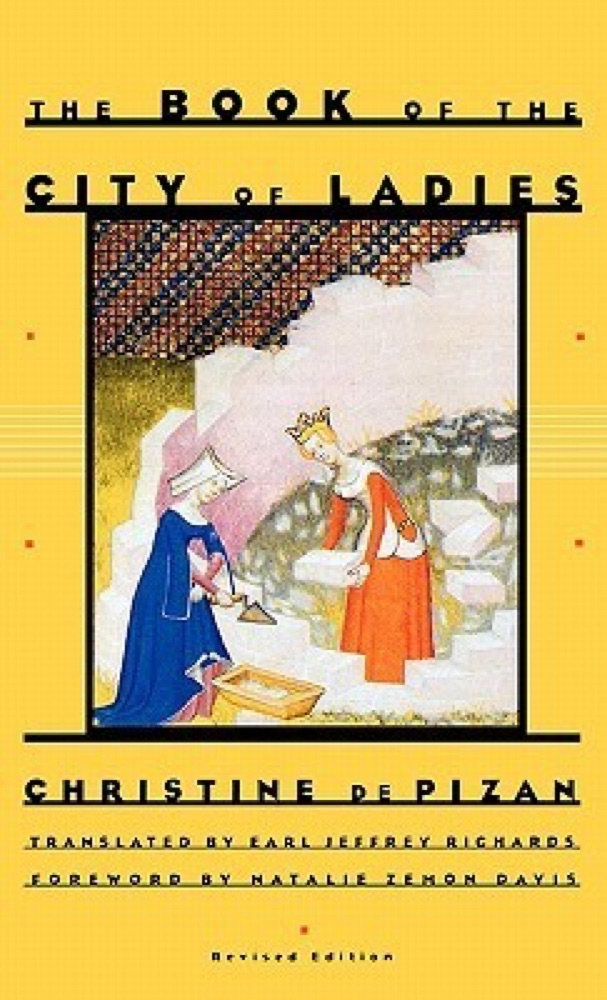
Escrita por Christine de Pizan entre 1404 e 1405, A Cidade das Mulheres é considerada a primeira obra feminista da história da literatura ocidental. Nascida em Veneza em 1364, Christine recebeu uma educação refinada na corte de Carlos V, em Paris, onde seu pai atuava como secretário e astrólogo. Espírito espantosamente moderno, ela reuniu um conhecimento excepcional e colocou sua inteligência e sua cultura a serviço das mulheres, denunciando a misoginia dominante em seu tempo, especialmente nos meios clericais.
Inspirada na Cidade de Deus, de Santo Agostinho, Christine de Pizan concebeu uma cidade utópica composta exclusivamente por mulheres, ao abrigo das calúnias e injustiças dos homens. Em seu livro, a autora, hoje reconhecida como a primeira mulher a viver profissionalmente de sua escrita, recupera figuras femininas de diferentes épocas ― guerreiras, artistas, sábias, amantes e sa
Book details
- First published
- 1405
- Author
- Christine de Pizan
- Genre
- Classics
- Goodreads rating
- 3.80 (5k ratings)
Keep reading
Dead Blondes and Bad Mothers
 The Soul of a Woman
 Femina: A New History of the Middle Ages, Through the Women Written Out of it
 How to Suppress Women's Writing
 In Defense of Witches: The Legacy of the Witch Hunts and Why Women Are Still on Trial
 The Kreutzer Sonata
 More Than a Woman: A Brutally Honest and Hilarious Feminist Memoir on Parenting, Marriage, and Middle-Age
 Dreams of Trespass: Tales of a Harem Girlhood
 The Female Man
 Mademoiselle de Maupin
 Misogyny: The World's Oldest Prejudice
 The Female Eunuch
 Bygone Badass Broads: 52 Forgotten Women Who Changed the World
 The Art of Love
 A Woman's Worth
 The Seducer’s Diary
 Whose Story Is This? Old Conflicts, New Chapters
 The Genius and the Goddess: a Novel
 Seven Women: And the Secret of Their Greatness
 A Winter's Promise
 Persian Letters
 Elizabeth Costello
 A Vindication of the Rights of Woman
 Right Wing Women
 Medea
Medea
 Letter to a Child Never Born
 La dame aux camélias
 Lilith
 Phaedo
 The Women's Room
 Pavilion of Women: A Novel of Life in the Women's Quarters
 The Penelopiad
 Lavinia
 The Fencing Master
 The Memoirs of Cleopatra
 Native Tongue
 The Mystery of Edwin Drood
 Doctor Glas
 The Enchantress of Florence
 Pandora's Jar: Women in the Greek Myths
 Captives of the Night
 Cousin Bette
 Cunt: A Declaration of Independence
 The Little Virtues
 Divine Might - Goddesses in Greek Myth
 Herland
 The History of Tom Jones, a Foundling
 Book Of Night Women
 The Professor
 Lysistrata
 Matrix
 The Second Sex
 The Blue Hour
 Moon Witch, Spider King
 A Girl Is a Body of Water
 The Arabian Nights
 The Decameron
 The Joys of Motherhood
 Honor
Honor