
 SPQR: A History of Ancient Rome
Quotes from the Book
You cannot easily fit women into a structure that is already coded as male; you have to change the structure.
115
For a start it doesn’t much matter what line you take as a woman, if you venture into traditional male territory, the abuse comes anyway. It is not what you say that prompts it, it’s simply the fact that you’re saying it.
55
When it comes to silencing women, Western culture has had thousands of years of practice.
52
we have no template for what a powerful woman looks like, except that she looks rather like a man.
35
We have to be more reflective about what power is, what it is for, and how it is measured. To put it another way, if women are not perceived to be fully within the structures of power, surely it is power that we need to redefine rather than women?
34
It is not just that it is more difficult for women to succeed; they get treated much more harshly if ever they mess up.
22
But in every way, the shared metaphors we use of female access to power - 'knocking on the door', 'storming the citadel', 'smashing the glass ceiling', or just giving them a 'leg up' - underline female exteriority. Women in power are seen as breaking down barriers, or alternatively as taking something to which they are not quite entitled.
19
Those reasons are much more basic: it is flagrantly unjust to keep women out, by whatever unconscious means we do so; and we simply cannot afford to do without women’s expertise, whether it is in technology, the economy or social care. If that means fewer men get into the legislature, as it must do – social change always has its losers as well as its winners – I am happy to look those men in the eye.
19
if women are not perceived to be fully within the structures of power, surely it is power that we need to redefine rather than women?
12
In the Roman world, Ovid’s Metamorphoses – that extraordinary mythological epic about people changing shape (and probably the most influential work of literature on Western art after the Bible) – repeatedly returns to the idea of the silencing of women in the process of their transformation.
10
These attitudes, assumptions and prejudices are hard-wired into us: not into our brains (there is no neurological reason for us to hear low-pitched voices as more authoritative than high-pitched ones), but into our culture, our language and millennia of our history.
9
What I mean is that public speaking and oratory were not merely things that ancient women didn’t do: they were exclusive practices and skills that defined masculinity as a gender.
9
More interesting is another cultural connection this reveals: that unpopular, controversial or just plain different views when voiced by a woman are taken as indications of her stupidity. It is not that you disagree, it is that she is stupid.
9
Women in power are seen as breaking down barriers, or alternatively as taking something to which they are not quite entitled.
8
How do I get my point heard? How do I get it noticed? How do I get to belong in the discussion? I am sure it is something some men feel too, but if there’s one thing that bonds women of all backgrounds, of all political colours, in all kinds of business and profession, it is the classic experience of the failed intervention; you’re at a meeting, you make a point, then a short silence follows, and after a few awkward seconds some man picks up where he had just left off: ‘What I was saying was …’ You might as well never have opened your mouth, and you end up blaming both yourself and the men whose exclusive club the discussion appears to be.
8
I do wonder if, in some places, the presence of large numbers of women in parliament means that parliament is where the power is not.
7
An enormous amount of modern feminist energy has been wasted on trying to prove that these Amazons did once exist, with all the seductive possibilities of a historical society that really was ruled by and for women. Dream on. The hard truth is that the Amazons were a Greek male myth. The basic message was that the only good Amazon was a dead one, or – to go back to awful Terry – one that had been mastered, in the bedroom. The underlying point was that it was the duty of men to save civilisation from the rule of women.
7
It is also true that one satiric stunt on US television featured a fake severed head of Trump himself, but in that case the (female) comedian concerned lost her job as a consequence. By contrast, this scene of Perseus-Trump brandishing the dripping, oozing head of Medusa-Clinton was very much part of the everyday, domestic American decorative world. You could buy it on T-shirts and tank tops, on coffee mugs, on laptop sleeves and tote bags (sometimes with the logo TRIUMPH, sometimes TRUMP). It may take a moment or two to take in that normalisation of gendered violence, but if you were ever doubtful about the extent to which the exclusion of women from power is culturally embedded or unsure of the continued strength of classical ways of formulating and justifying it – well, I give you Trump and Clinton, Perseus and Medusa, and rest my case.
7
Other classical writers insisted that the tone and timbre of women’s speech always threatened to subvert not just the voice of the male orator but also the social and political stability, the health, of the whole state.
7
And it was that idea of the divorce between women and power that made Melissa McCarthy’s parodies of the one time White House press secretary Sean Spicer on Saturday Night Live so effective. It was said that these annoyed President Trump more than most satires on his regime, because, according to one of the ‘sources close to him’, ‘he doesn’t like his people to appear weak.’ Decode that, and what it actually means is that he doesn’t like his men to be parodied by and as women. Weakness comes with a female gender.
6
But my basic premise is that our mental, cultural template for a powerful person remains resolutely male. If we close our eyes and try to conjure up the image of a president or – to move into the knowledge economy – a professor, what most of us see is not a woman.
6
Black Lives Matter, was founded by three women;
6
What I have in mind is the ability to be effective, to make a difference in the world, and the right to be taken seriously, together as much as individually. It is power in that sense that many women feel they don’t have – and that they want.
4
How have we learned to look at those women who exercise power, or who try to? What are the cultural underpinnings of misogyny in politics or the workplace, and its forms (what kind of misogyny, aimed at what or whom, using what words or images, and with what effects)? How and why do the conventional definitions of ‘power’ (or for that matter of ‘knowledge’, ‘expertise’ and ‘authority’) that we carry round in our heads exclude women?
4
It is, however, with Hillary Clinton that we see the Medusa theme at its starkest and nastiest.
4
to become a man (or at least an elite man) was to claim the right to speak.
4
Watch on YouTube
About Mary Beard
We have collected 87 quotes from 3 books by Mary Beard on BookQuoters.
More about the author →More by Mary Beard
SPQR: A History of Ancient Rome
 Emperor of Rome: Ruling the Ancient Roman World
About the book
At long last, Mary Beard addresses in one brave book the misogynists and trolls who mercilessly attack and demean women the world over, including, very often, Mary herself. In Women & Power, she traces the origins of this misogyny to its ancient roots, examining the pitfalls of gender and the ways that history has mistreated strong women since time immemorial. As far back as Homer’s Odyssey, Beard shows, women have been prohibited from leadership roles in civic life, public speech being defined as inherently male. From Medusa to Philomela (whose tongue was cut out), from Hillary Clinton to Elizabeth Warren (who was told to sit down), Beard draws illuminating parallels between our cultural assumptions about women’s relationship to power—and how powerful women provide a necessary example for all women who must resist being vacuumed into a male template. With personal reflections on her own
Book details
- First published
- 2017
- Author
- Mary Beard
- Genre
- Nonfiction
- Goodreads rating
- 4.02 (40k ratings)
The buzz
- The New York TimesReview in The New York Timesprofessional review (via Book Marks)
- The New YorkerReview in The New Yorkerprofessional review (via Book Marks)
- The Washington PostReview in The Washington Postprofessional review (via Book Marks)
- The GuardianReview in The Guardianprofessional review (via Book Marks)
- NPRReview in NPRprofessional review (via Book Marks)
- LA Review of BooksReview in LA Review of Booksprofessional review (via Book Marks)
Keep reading
 Boys Will Be Boys: Power, Patriarchy and the Toxic Bonds of Mateship
 Too Fat, Too Slutty, Too Loud: The Rise and Reign of the Unruly Woman
 Difficult Women: A History of Feminism in 11 Fights
 The Feminine Mystique
 Unspeakable Things: Sex, Lies and Revolution
 Headscarves and Hymens: Why the Middle East Needs a Sexual Revolution
 Right Wing Women
 Everyday Sexism
 Against White Feminism: Notes on Disruption
 Men Explain Things to Me
 The Truth Will Set You Free, But First It Will Piss You Off!: Thoughts on Life, Love, and Rebellion
 Feminism Is for Everybody: Passionate Politics
 Feminists Don't Wear Pink (And Other Lies): Amazing Women on What the F-Word Means to Them
 The Right to Sex: Feminism in the Twenty-First Century
 Sexual Politics
 The Dialectic of Sex: The Case for Feminist Revolution
 Invisible Women: Data Bias in a World Designed for Men
 The Soul of a Woman
 It's Not About the Burqa
 The Underground Girls of Kabul: In Search of a Hidden Resistance in Afghanistan
 Cassandra Speaks: When Women Are the Storytellers, the Human Story Changes
 Trainwreck: The Women We Love to Hate, Mock, and Fear... and Why
 Backlash: The Undeclared War Against American Women
 The Female Eunuch
 The Heroine's Journey: Woman's Quest for Wholeness
 Outrageous Acts and Everyday Rebellions
 Female Chauvinist Pigs: Women and the Rise of Raunch Culture
 Feminist Theory: From Margin to Center
 Feminist Fight Club: An Office Survival Manual for a Sexist Workplace
 A Woman's Worth
 How to Be a Woman
 What Happened
 Dead Blondes and Bad Mothers
 Women's Liberation and the African Freedom Struggle
 We Should All Be Feminists
 Entitled: How Male Privilege Hurts Women
 The Geek Feminist Revolution
 Lean In: Women, Work, and the Will to Lead
 Sex Object: A Memoir
 Why I Am Not a Feminist: A Feminist Manifesto
 Cunt: A Declaration of Independence
 Half the Sky: Turning Oppression Into Opportunity for Women Worldwide
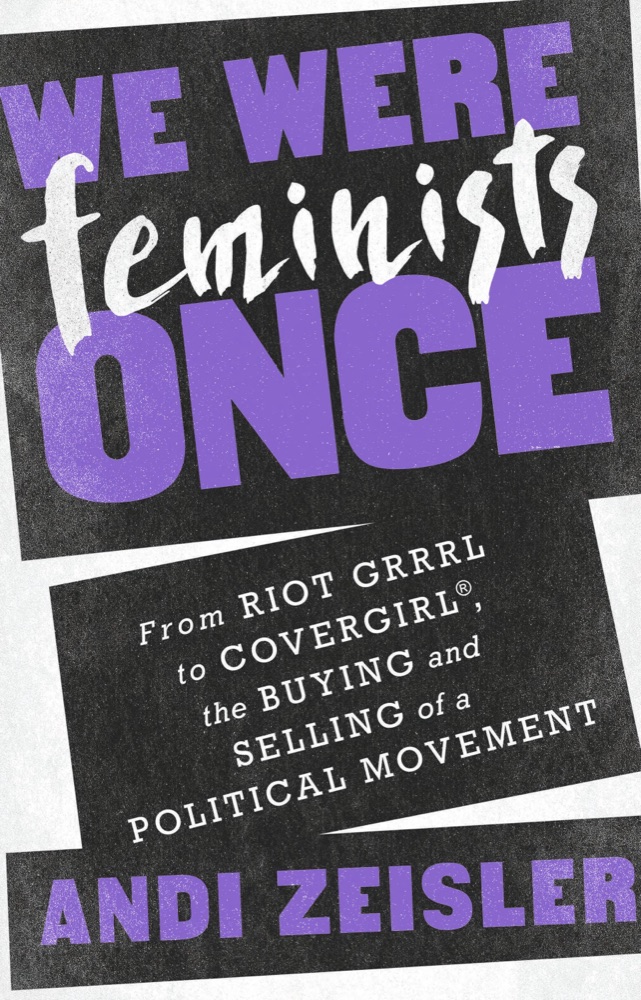 We Were Feminists Once: From Riot Grrrl to CoverGirl, the Buying and Selling of a Political Movement
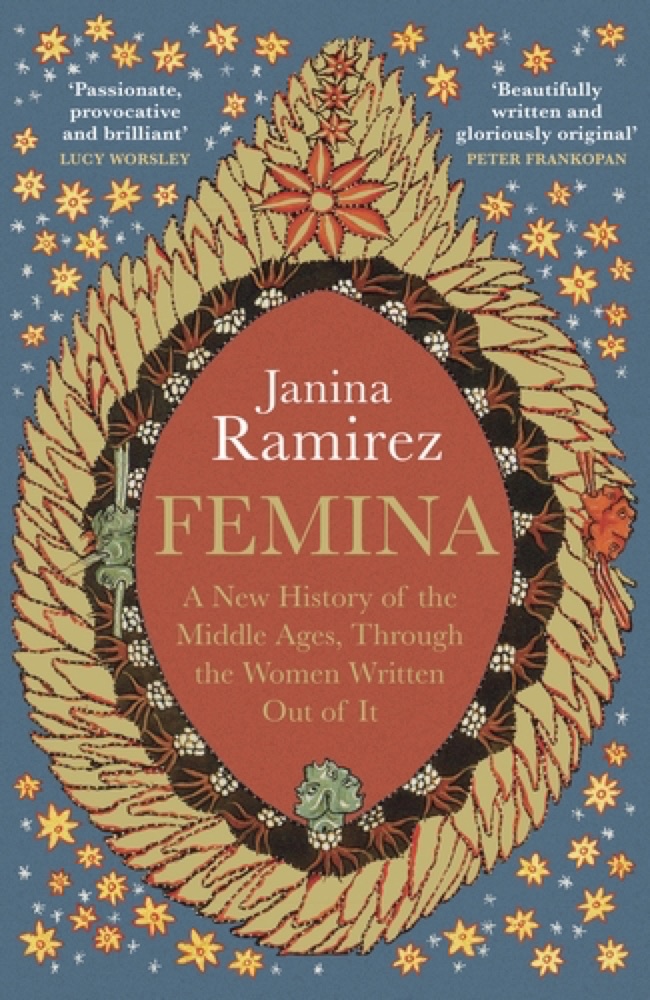 Femina: A New History of the Middle Ages, Through the Women Written Out of it
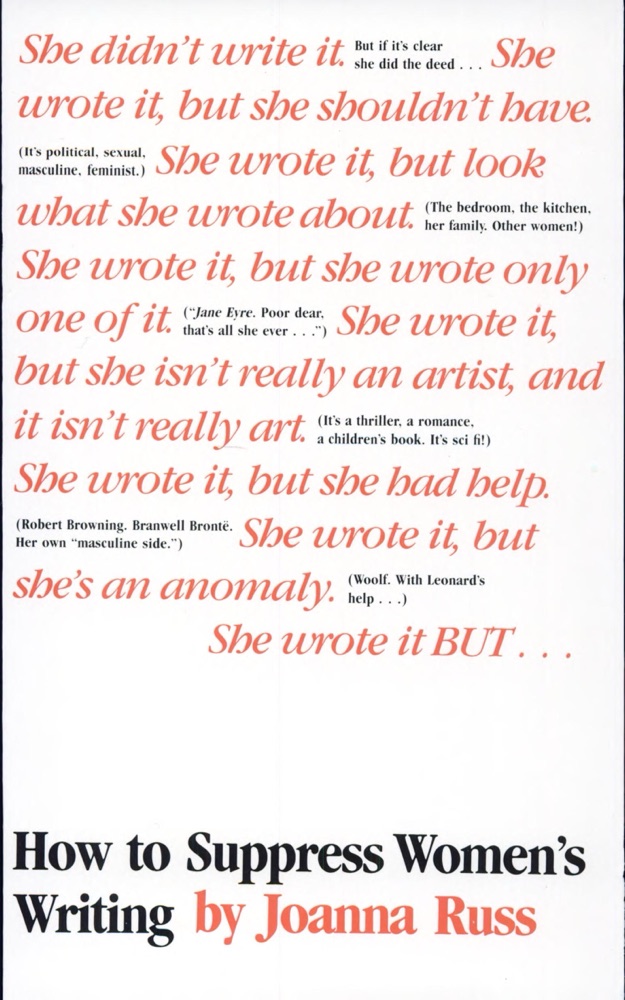 How to Suppress Women's Writing
 Nine Parts of Desire: The Hidden World of Islamic Women
 White Tears/Brown Scars: How White Feminism Betrays Women of Color
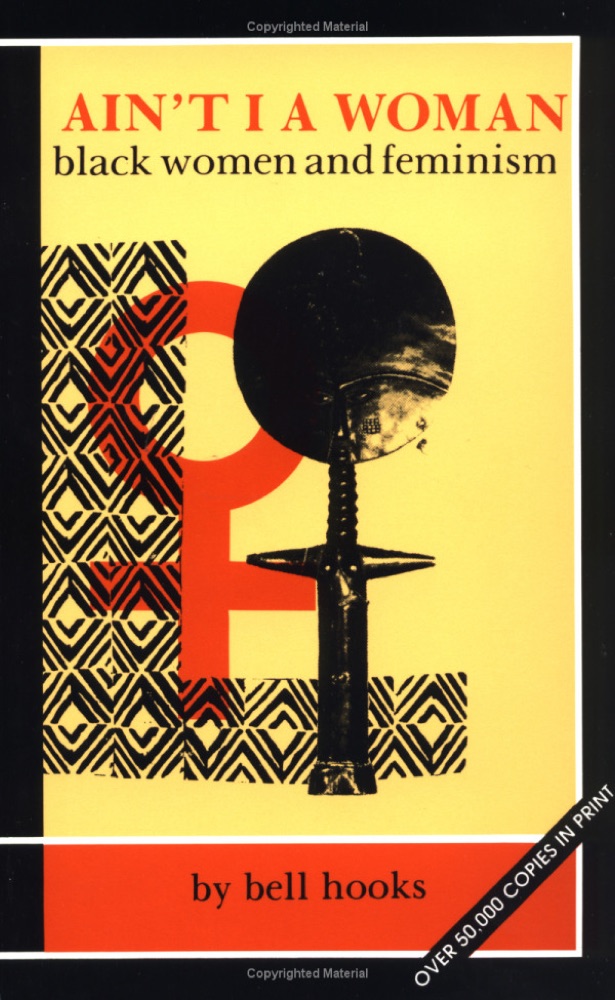 Ain't I a Woman: Black Women and Feminism
 Whose Story Is This? Old Conflicts, New Chapters
 Bad Feminist
 The Master's Tools Will Never Dismantle the Master's House
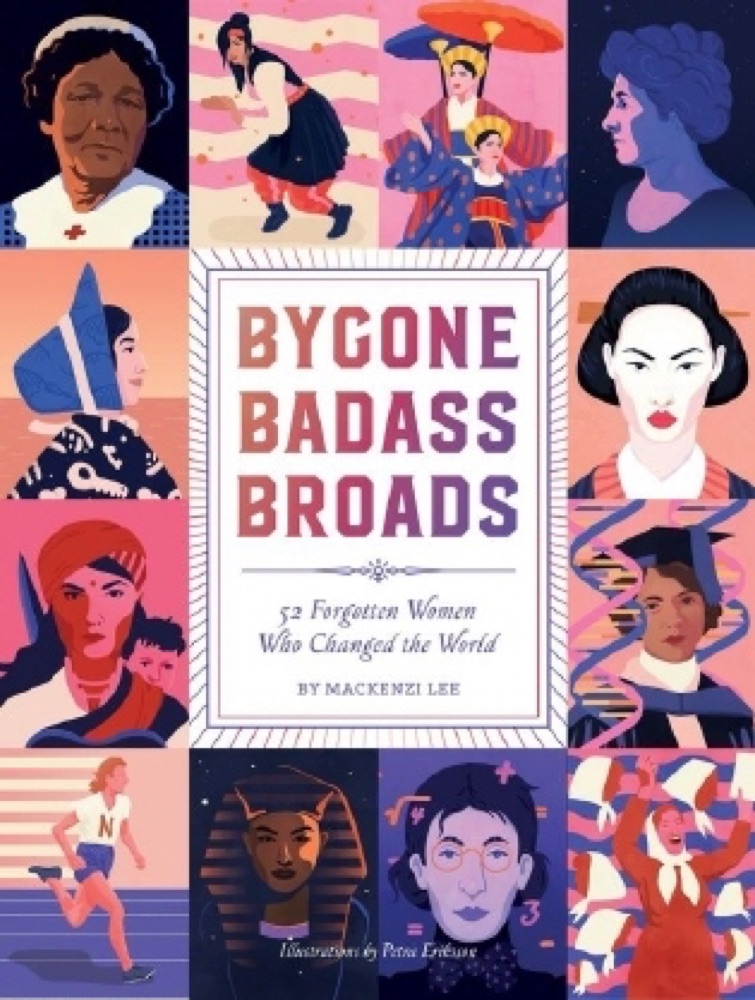 Bygone Badass Broads: 52 Forgotten Women Who Changed the World
 The Beauty Myth
 Not That Bad: Dispatches from Rape Culture
 Rage Becomes Her: The Power of Women's Anger
 The Moment of Lift: How Empowering Women Changes the World
 Hood Feminism: Notes from the Women That a Movement Forgot
 The Mother of All Questions
 Fix the System, Not the Women
 Intercourse