
 Wired for Story: The Writer's Guide to Using Brain Science to Hook Readers from the Very First Sentence
Quotes from the Book
Audiences love both the feeling part (reliving the life) and the thinking part (figuring out the puzzle) of a story. Every good story has both.
Good storytelling lets the audience relive events in the present so they can understand the forces, choices, and emotions that led the character to do what he did.
Any character who goes after a desire and is impeded is forced to struggle (otherwise the story is over.) And that struggle makes him change. So the ultimate goal of the dramatic code, and of the storyteller, is to present a change in a character or to illustrate why that change did not occur.
The story world isn't a copy of life as it is. It's life as human beings imagine it could be. It is human life condensed and heightened so that the audience can gain a better understanding of how life itself works.
No individual element in your story, including the hero, will work unless you first create it and define it in relation to all the other elements.
To empathize with someone means to care about and understand him. That’s why the trick to keeping the audience’s interest in a character, even when the character is not likable or is taking immoral actions, is to show the audience the hero’s motive.
time. Take a lot of it at the beginning of the writing process. I’m not talking about hours or even days. I’m talking about weeks. Don’t make the amateurish mistake of getting a hot premise and immediately running off to write scenes. You’ll get twenty to thirty pages into the story and run into a dead end you can’t escape.
The multistrand plot is clearly a much more simultaneous form of storytelling, emphasizing the group, or the minisociety, and how the characters compare.
Step 1: Write Something That May Change Your Life
Subplot is not one of the twenty-two steps because it’s not usually present and because it is really a plot of its own with its own structure. But it’s a great technique. It improves the character, theme, and texture of your story. On the other hand, it slows the desire line—the narrative drive. So you have to decide what is most important to you.
In the vast majority of stories, a character with weaknesses struggles to achieve something and ends up changed (positively or negatively) as a result.
Desire never stops. Equilibrium is temporary. The self-revelation is never simple, and it cannot guarantee the hero a satisfying life from that day forward. since a great story is always a living thing, its ending is no more final and certain than any other part of the story.
Tristram Shandy isn’t a story with a main plotline interrupted by digressions. It is a story of digressions interrupted by what appears to be a main plotline.
Genres are types of stories, with predetermined characters, themes, worlds, symbols, and plots. Genre plots are usually big, emphasizing revelations that are so stunning they sometimes flip the story upside down. Of course, these big plots lose some of their power by the fact that they are predetermined. The audience knows generally what is going to happen in any genre story, so only the particulars surprise them.
The moral argument is most powerful when it is most dramatic. That means, among other things, holding off the hero’s moral self-revelation and decision until as close to the end of the story as possible. Keep the question “Will the hero do the right thing, and will he do it in time?” in the back of the audience’s mind for as much of the story as you can.
2
THE GODFATHER • Premise The youngest son of a Mafia family takes revenge on the men who shot his father and becomes the new Godfather. W—weaknesses at the beginning: unconcerned, afraid, mainstream, legitimate, separated from the family A—basic action: takes revenge C—changed person: tyrannical, absolute ruler of the family The Godfather is a perfect example of why you want to go to the opposites of the basic action to determine the weaknesses and change of your hero. If Michael begins the story as a vengeful man, taking revenge on the men who shot his father will only make him seem more of the same. There’s no character change. But what if he starts off the opposite of vengeful?
2
A character with certain weaknesses, when being put through the wringer of a particular struggle, is forged and tempered into a changed being.
2
Stories don't show the audience the 'real world'; they show the story world. The story world isn't a copy of life as it is. It's life as human beings imagine it could be. It is human life condensed and heightened so that the audience can gain a better understanding of how life itself works.
2
A story tracks what a person wants, what he’ll do to get it, and what costs he’ll have to pay along the way.
2
Since a story is always a whole, and the organic end is found in the beginning, a great story always ends by signaling to the audience to go back to the beginning and experience it again. The story is an endless cycle––a Mobius strip––that is always different because the audience is always rethinking it in light of what just happened.
2
6. SELF-REVELATION The battle is an intense and painful experience for the hero. This crucible of battle causes the hero to have a major revelation about who he really is. Much of the quality of your story is based on the quality of this self-revelation. For a good self-revelation, you must first be aware that this step, like need, comes in two forms, psychological and moral.
1
FIELD OF DREAMS (novel Shoeless Joe by W. P. Kinsella, screenplay by Phil Alden Robinson, 1989) Field of Dreams is an American version of The Cherry Orchard in which the “orchard” wins. The competition in this story is over the value of the farmland that Ray has turned into a baseball diamond. • Ray: Baseball, family, passion for your dreams • Mark: Money, practical use of the land With characters as variations on a theme and opposition of values, you may want to use the technique of four-corner opposition, explained in Chapter 4. In four-corner opposition, you have a hero and a main opponent and at least two secondary opponents. This gives even the most complex story an organic unity. Each of the four main characters can represent a fundamentally different approach to the same moral problem, and each can express an entire system of values, without the story collapsing into a complicated mess.
1
The classic strategy for dramatizing the hero’s moral line is to give him a moral flaw at the beginning and then show how his desperation to beat the opponent brings out the worst in him. In short, he has to get worse before he gets better. Slowly but surely, he becomes aware that his central moral problem comes down to a choice between two ways of acting.
1
Make the options as equal as possible, with one seeming only slightly better than the other. A classic example of a choice between two positives is between love and honor. In A Farewell to Arms, the hero chooses love. In The Maltese Falcon (and almost all detective stories), the hero chooses honor.
1
KEY POINT: To be a true choice, your hero must either select one of two positive outcomes or, on rare occasions, avoid one of two negative outcomes (as in Sophie’s Choice).
1
Probably the most important step in that argument is the final moral choice you give to the hero. A lot of writers make the mistake of giving their hero a fake choice. A fake choice is between a positive and a negative. For example, you may force your hero to choose between going to prison and winning the girl. The outcome is obvious.
1
The central theme of a story is often crystallized by a moral choice the hero must make, typically near the end of the story. Theme is your view of the proper way to act in the world. It is your moral vision, and it is one of the main reasons you are writing your story. Theme is best expressed through the structure of the story, through what I call the moral argument.
1
STAR WARS • Premise When a princess falls into mortal danger, a young man uses his skills as a fighter to save her and defeat the evil forces of a galactic empire. W—weaknesses at the beginning: naive, impetuous, paralyzed, unfocused, lacking confidence A—basic action: uses his skills as a fighter C—changed person: self-esteem, a place among the chosen few, a fighter for good Luke’s initial weaknesses are definitely not the qualities of a fighter. But when constantly forced to use skills as a fighter, he is strengthened into a confident fighter for the good.
1
KEY POINT: Write down a number of possible options for the hero’s weaknesses and change.
1
KEY POINT: The basic action should be the one action best able to force the character to deal with his weaknesses and change.
1
W × A = C where W stands for weaknesses, both psychological and moral; A represents the struggle to accomplish the basic action in the middle of the story; and C stands for the changed person.
1
BIG (by Gary Ross & Anne Spielberg, 1988) A boy who suddenly wakes up to find he is a full-grown man promises to be a fun comedic fantasy. But what if you write a fantasy not set in some far-off, bizarre world but in a world an average kid would recognize? What if you send him to a real boy’s utopia, a toy company, and let him go out with a pretty, sexy woman? And what if the story isn’t just about a boy getting big physically but one that shows the ideal blend of man and boy for living a happy adult life?
1
Watch on YouTube
About John Truby
We have collected 32 quotes from 1 book by John Truby on BookQuoters.
More about the author →Book details
- First published
- 2007
- Author
- John Truby
- Genre
- Nonfiction
- Goodreads rating
- 4.25 (7k ratings)
Keep reading
Wired for Story: The Writer's Guide to Using Brain Science to Hook Readers from the Very First Sentence
 Screenplay: The Foundations of Screenwriting
 Story Genius: How to Use Brain Science to Go Beyond Outlining and Write a Riveting Novel
 Story: Substance, Structure, Style, and the Principles of Screenwriting
 Into the Woods: A Five Act Journey Into Story
 The Science of Storytelling
 Story Engineering: Character Development, Story Concept, Scene Construction
 Wonderbook: The Illustrated Guide to Creating Imaginative Fiction
 The Art of Fiction: Notes on Craft for Young Writers
 Storyworthy: Engage, Teach, Persuade, and Change Your Life through the Power of Storytelling
 The Emotional Craft of Fiction: How to Write the Story Beneath the Surface
 Stein on Writing
 Consider This: Moments in My Writing Life After Which Everything Was Different
 How Not to Write a Novel: 200 Classic Mistakes and How to Avoid Them—A Misstep-by-Misstep Guide
 Dæmon Voices
 On Becoming a Novelist
 The Writer's Journey: Mythic Structure for Writers
 Aspects of the Novel
 How Fiction Works
 The Library of the Unwritten
 Mystery and Manners: Occasional Prose
 The Hero's Journey: Joseph Campbell on His Life & Work
 How to Read Literature Like a Professor
 A Million Miles in a Thousand Years: What I Learned While Editing My Life
 The Language of the Night: Essays on Writing, Science Fiction, and Fantasy
 How to Read Literature
 Reality Hunger: A Manifesto
 The Neverending Story
 Becoming a Writer
 How to Write an Autobiographical Novel
 The View from the Cheap Seats: Selected Nonfiction
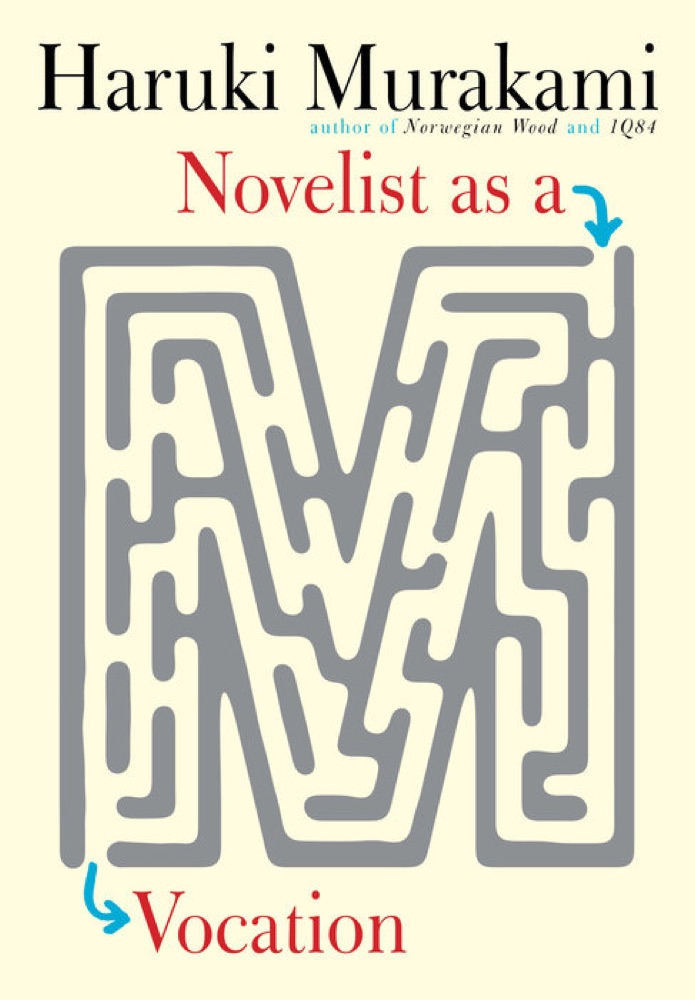 Novelist as a Vocation
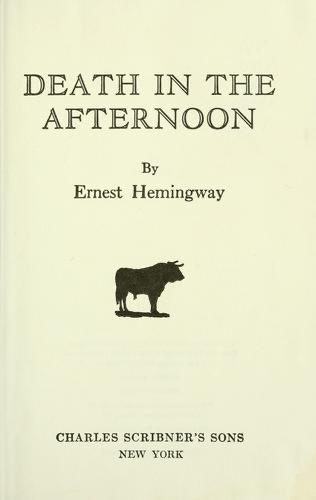 Death in the Afternoon
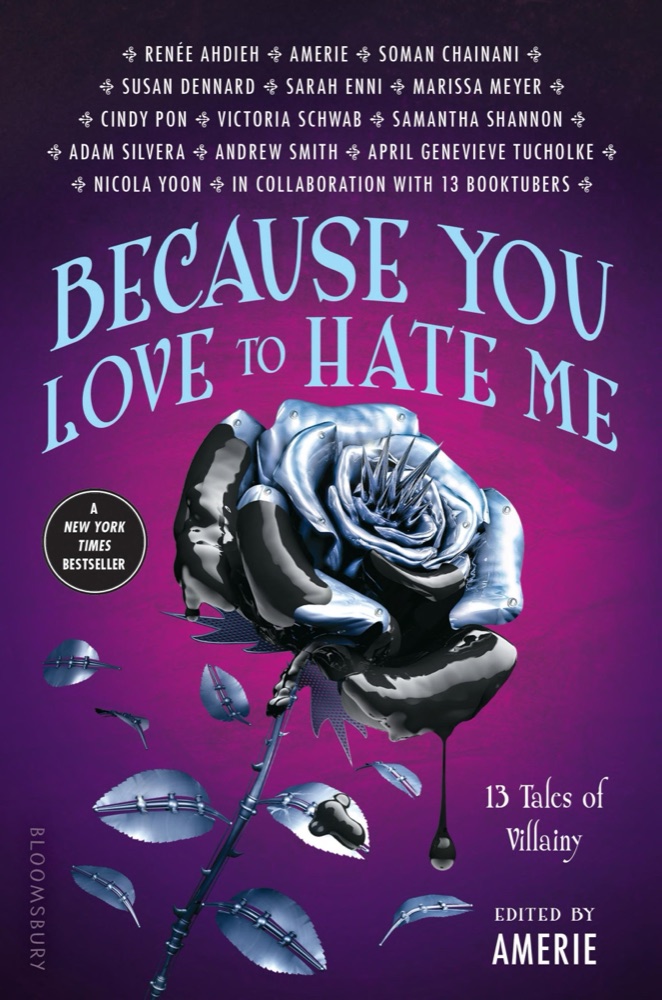 Because You Love to Hate Me: 13 Tales of Villainy
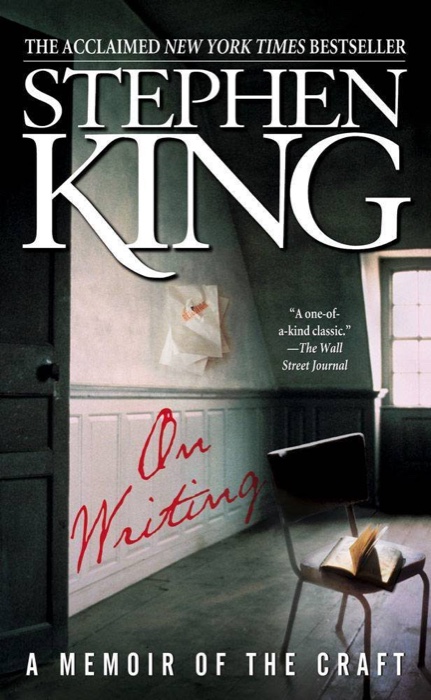 On Writing: A Memoir of the Craft
 The Well of Lost Plots
 Becoming Superman: My Journey from Poverty to Hollywood with Stops Along the Way at Murder, Madness, Mayhem, Movie Stars, Cults, Slums, Sociopaths, and War Crimes
 Tales from Earthsea
 A Life in Parts
 The Hakawati
 Once Upon a Wardrobe
 Tress of the Emerald Sea
 The Archive of Alternate Endings
 Life Is in the Transitions: Mastering Change at Any Age
 The Getaway Car: A Practical Memoir About Writing and Life
 The Rent Collector
 The Madwoman Upstairs
 Stories: All-New Tales
 Made to Stick: Why Some Ideas Survive and Others Die
 An Actor Prepares
 The Sense of Style: The Thinking Person's Guide to Writing in the 21st Century
 Sophie Quire and the Last Storyguard
 The Art of the Novel
 Flaubert's Parrot
 The Wave in the Mind: Talks and Essays on the Writer, the Reader and the Imagination
 The First Binding
 Arcadia
 The Unlikely Escape of Uriah Heep
 Burning Questions: Essays and Occasional Pieces, 2004 to 2021