 Amusing Ourselves to Death: Public Discourse in the Age of Show Business
Quotes from the Book
The world of the known and the not yet known is bridged by wonderment. But wonderment happens largely in a situation where the child’s world is separate from the adult world, where children must seek entry, through their questions, into the adult world. As media merge the two worlds, as the tension created by secrets to be unraveled is diminished, the calculus of wonderment changes. Curiosity is replaced by cynicism or, even worse, arrogance. We are left with children who rely not on authoritative adults but on news from nowhere. We are left with children who are given answers to questions they never asked. We are left, in short, without children.
15
In saying no one knew about the ideas implicit in the telegraph, I am not quite accurate. Thoreau knew. Or so one may surmise. It is alleged that upon being told that through the telegraph a man in Maine could instantly send a message to a man in Texas, Thoreau asked, "But what do they have to say to each other?" In asking this question, to which no serious interest was paid, Thoreau was directing attention to the psychological and social meaning of the telegraph, and in particular to its capacity to change the character of information -- from the personal and regional to the impersonal and global.
6
The literate mind has sown the seeds of its own destruction through the creation of media that render irrelevant those “traditional skills" on which literacy rests.
1
. . . wonderment happens largely in a situation where the child's world is separate from the adult world, where children must seek entry, through their questions, into the adult world. As media merge the two worlds, as the tension created by secrets to be unraveled is diminished, the calculus of wonderment changes. Curiosity is replaced by cynicism or, even worse, arrogance. We are left with children who rely not on authoritative adults but on news from nowhere. We are left with children who are given answers to questions they never asked. We are left, in short, without children.
...we must not overlook the fact that a reading people develop the capacity to conceptualize at a higher level of abstraction than do the illiterate.
Watch on YouTube
About Neil Postman
We have collected 65 quotes from 3 books by Neil Postman on BookQuoters.
More about the author →More by Neil Postman
Amusing Ourselves to Death: Public Discourse in the Age of Show Business
 Technopoly: The Surrender of Culture to Technology
About the book
From the vogue for nubile models to the explosion in the juvenile crime rate, this modern classic of social history and media traces the precipitous decline of childhood in America today ˆ’and the corresponding threat to the notion of adulthood.
Deftly marshaling a vast array of historical and demographic research, Neil Postman, author of Technopoly, suggests that childhood is a relatively recent invention, which came into being as the new medium of print imposed divisions between children and adults. But now these divisions are eroding under the barrage of television, which turns the adult secrets of sex and violence into popular entertainment and pitches both news and advertising at the intellectual level of ten-year-olds.
Book details
- First published
- 1982
- Author
- Neil Postman
- Genre
- Nonfiction
- Goodreads rating
- 3.97 (2k ratings)
Keep reading
 Reader, Come Home: The Reading Brain in a Digital World
 Understanding Media: The Extensions of Man
Amusing Ourselves to Death: Public Discourse in the Age of Show Business
Understanding Media: The Extensions of Man
Amusing Ourselves to Death: Public Discourse in the Age of Show Business
 The Medium is the Massage
 The Master and His Emissary: The Divided Brain and the Making of the Western World
 Curious: The Desire to Know and Why Your Future Depends On It
 Proust and the Squid: The Story and Science of the Reading Brain
 The Wave in the Mind: Talks and Essays on the Writer, the Reader and the Imagination
 The Enchanted Hour: The Miraculous Power of Reading Aloud in the Age of Distraction – A Neuroscience Guide for Parents on Brain Development and Family Bonds
 The Lost World
 Eating the Dinosaur
 Figuring
 How to Read a Book: The Classic Guide to Intelligent Reading
 The Vanishing American Adult: Our Coming-of-Age Crisis—and How to Rebuild a Culture of Self-Reliance
 But What If We're Wrong? Thinking About the Present As If It Were the Past
 The Social Animal: The Hidden Sources of Love, Character, and Achievement
 Dragons of Eden: Speculations on the Evolution of Human Intelligence
 Arcadia
 Gnomon
 From Dawn to Decadence: 500 Years of Western Cultural Life, 1500 to the Present
 An Appetite for Wonder: The Making of a Scientist
 Genesis
 The View from the Cheap Seats: Selected Nonfiction
 Lost Children Archive
 The Information: A History, a Theory, a Flood
 From Bacteria to Bach and Back: The Evolution of Minds
 The Closing of the American Mind
Technopoly: The Surrender of Culture to Technology
The Closing of the American Mind
Technopoly: The Surrender of Culture to Technology
 When I Was a Child I Read Books
 21 Lessons for the 21st Century
 The Death of Expertise: The Campaign Against Established Knowledge and Why It Matters
 The Language of the Night: Essays on Writing, Science Fiction, and Fantasy
 The Braindead Megaphone
 Enlightenment Now: The Case for Reason, Science, Humanism, and Progress
 You Are Not a Gadget
 How to Read Literature
 The Lost Symbol
 Walden Two
 Homo Deus: A History of Tomorrow
 Fall; or, Dodge in Hell
 The Ascent of Man
 Empire of Illusion: The End of Literacy and the Triumph of Spectacle
 Brave New World Revisited
 The Element: How Finding Your Passion Changes Everything
 The Meaning of It All: Thoughts of a Citizen-Scientist
 A Language Older Than Words
 The Occult
 The Stuff of Thought: Language as a Window into Human Nature
 How Children Fail
 Myths to Live By
 The Lost Tools of Learning
 Burning Questions: Essays and Occasional Pieces, 2004 to 2021
 Emile or On Education
 Too Like the Lightning
 Genome
 The Read-Aloud Handbook
 The Demon-Haunted World: Science as a Candle in the Dark
 How Should We Then Live? The Rise and Decline of Western Thought and Culture
 All Joy and No Fun: The Paradox of Modern Parenthood
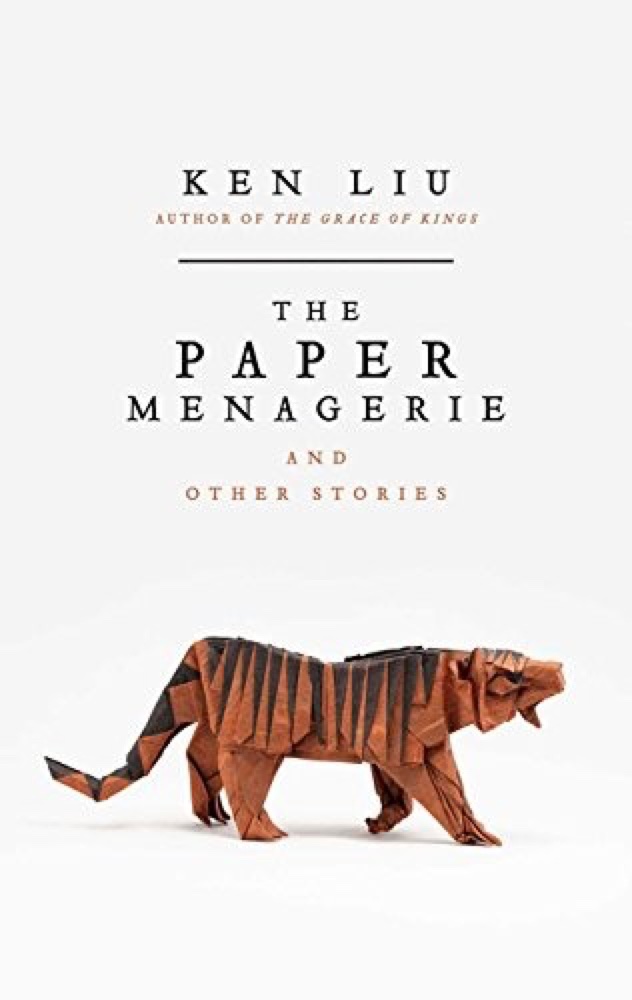 The Paper Menagerie and Other Stories