
 Housekeeping
Quotes from the Book
I experience religious dread whenever I find myself thinking that I know the limits of God’s grace, since I am utterly certain it exceeds any imagination a human being might have of it. God does, after all, so love the world.
41
I love the writers of my thousand books. It pleases me to think how astonished old Homer, whoever he was, would be to find his epics on the shelf of such an unimaginable being as myself, in the middle of an unrumored continent. I love the large minority of the writers on my shelves who have struggled with words and thoughts and, by my lights, have lost the struggle. All together they are my community, the creators of the very idea of books, poetry, and extended narratives, and of the amazing human conversation that has taken place across the millennia, through weal and woe, over the heads of interest and utility.
27
I am vehemently grateful that, by whatever means, I learned to assume that loneliness should be in part pleasure, sensitizing and clarifying, and that it is even a truer bond among people than any kind of proximity.
14
When we accept dismissive judgments of our community we stop having generous hope for it. We cease to be capable of serving its best interests.
11
I would say, for the moment, that community, at least community larger than the immediate family, consists very largely of imaginative love for people we do not know or whom we know very slightly. This thesis may be influenced by the fact that I have spent literal years of my life lovingly absorbed in the thoughts and perceptions of—who knows it better than I?—people who do not exist. And, just as writers are engrossed in the making of them, readers are profoundly moved and also influenced by the nonexistent, that great clan whose numbers increase prodigiously with every publishing season. I think fiction may be, whatever else, an exercise in the capacity for imaginative love, or sympathy, or identification.
10
Language is music. Written words are musical notation. The music of a piece of fiction establishes the way in which it is to be read, and, in the largest sense, what it means. It is essential to remember that characters have a music as well, a pitch and tempo, just as real people do. To make them believable, you must always be aware of what they would or would not say, where stresses would or would not fall.
9
I find that the hardest work in the world—it may in fact be impossible—is to persuade Easterners that growing up in the West is not intellectually crippling.
9
We are culturally predisposed to sheltering criticism from criticism; we have enshrined the iconoclast
7
We live in a moment in which old conflicts, much altered during their subterraneous years, have boiled up again. The struggle to own the past so that it can be made to serve contemporary interests has led to gross distortions. But it is true also that the experience of any generation is inevitably a warped lens through which to view the thought and the actions of any previous generation, especially when there is a lack of rigorous historical perspective to correct for these distortions. This second consideration may go some way toward explaining the fact that there are not two sides to what would otherwise be a great national controversy.
7
Someone told me recently that a commentator or some sort had said, "The United States is in spiritual free-fall." When people make such remarks, such appalling judgements, they never include themselves, their friends, those with whom they agree. They have drawn, as they say, a bright line between an "us" and a "them." Those on the other side of the line are assumed to be unworthy of respect or hearing, and are in fact to be regarded as a huge problem to the "us" who presume to judge "them." This tedious pattern has repeated itself endlessly through human history and is, as I have said, the end of community and the beginning of tribalism.
6
The peculiarities of my early education are one way in which being from the West has set me apart. A man in Alabama asked me how I felt the West was different from the East and the South, and I replied that in the West "lonesome" is a word with strongly positive connotations. I must have phrased my answer better at the time, because both he and I were struck by the apt ness of the remark, and people in Alabama are far too sensitive to language to be pleased with a phrase such as "strongly positive connotations." For the moment it will have to serve, however. I remember when I was a child at Coolin or Sagle or Talache, walking into the woods by myself and feeling the solitude around me build like electricity and pass through my body with a jolt that made my hair prickle. I remember kneeling by a creek that spilled and pooled among rocks and fallen trees with the unspeakably tender growth of small trees already sprouting from their backs, and thinking, there is only one thing wrong here, which is my own presence, and that is the slightest imaginable intrusion - feeling that my solitude, my loneliness, made me almost acceptable in so sacred a place.
6
The alienation, the downright visceral frustration, of the new American ideologues, the bone in their craw, is the unacknowledged fact that America has never been an especially capitalist country. The postal system, the land grant provision for public education, the national park system, the Homestead Act, the graduated income tax, the Social Security system, the G.I. Bill -- all of these were and are massive distributions or redistributions of wealth meant to benefit the population at large.
5
I have never heard anyone speculate on the origins and function of irony, but I can say with confidence that it is only a little less pervasive in our universe than carbon.
5
What if good institutions were in fact the product of good intentions? What if the cynicism that is supposed to be rigor and the acquisitiveness that is supposed to be realism are making us forget the origins of the greatness we lay claim to - power and wealth as secondary consequences of the progress of freedom, or, as Whitman would prefer, Democracy?
5
Anger and self-righteousness combined with cynicism about the world as he or she sees it are the marks of the ideologue. There is always an element of nostalgia, too, because the ideologue is confident that he or she is moved by a special loyalty to a natural order, or to a good and normative past, which others defy or betray.
4
Say that we are a puff of warm breath in a very cold universe. By this kind of reckoning we are either immeasurably insignificant or we are incalculably precious and interesting.
3
Every writer I know, when asked how to become a writer, responds with one word:Read.
3
The difference between theism and new atheist science is the difference between mystery and certainty. Certainty is a relic, an atavism, a husk we ought to have outgrown. Mystery is openness to possibility, even at the scale now implied by physics and cosmology. The primordial human tropism toward mystery may well have provided the impetus for all that we have learned.
3
Cranky old Leviticus gave us—gave Christ—not only “Thou shalt love thy neighbor as thyself” but also the rather forgotten “Thou shalt love the stranger as thyself,” two verses that appear to be merged in the Parable of the Good Samaritan.
2
The embrace of essential beastliness, made scientific and respectable by a reading of Darwin that may or may not have done justice to his intentions, thrilled and enthralled Western thought in certain quarters and in fact still does enthrall persons and groups that experience live in society as a barely tolerable constraint on a kind of freedom they consider a birthright. This freedom appears to have most of the essential features of a war of each against all, whether a hot war that compels them to go armed to Starbucks or to church or a cold war that makes a virtue of craftiness and guile, the ability to loot and wreck the national economy without getting caught.
2
There is clearly a feeling abroad that God smiled on our beginnings, and that we should return to them as we can. If we really did attempt to return to them, we would find Moses as well as Christ, Calvin, and his legions of intellectual heirs. And we would find a recurrent, passionate, insistence on bounty or liberality, mercy and liberality, on being kind and liberal, liberal and bountiful, and enjoying the great blessings God has promised to liberality to the poor.
2
We live on a little island of the articulable, which we tend to mistake for reality itself.
2
In the First Epistle of Peter we are told to honor everyone, and I have never been in a situation where I felt this instruction was inappropriate. When we accept dismissive judgements of our community we stop having generous hopes for it. We cease to be capable of serving its best interests.
2
I think fiction may be, whatever else, an exercise in the capacity for imaginative love, or sympathy, or identification.
2
There is no strictly secular language that can translate religious awe.
2
Eliminate the overwhelming cost of phantom wars and fools' errands, and humankind might begin to balance its books. After all, its only debts are to itself.
2
Etymologically, a disaster is a bad star.
2
If these laws [in the Bible] belonged to any other ancient culture we would approach them very differently. We need not bother to reject the code of Hammurabi. Presumably it is because Moses is still felt to make some claim on us that this project of discrediting his law is persisted in with such energy. The unscholarly character of the project may derive from the supposed familiarity of the subject.
2
At very best there are two problems with ideology. The first is that it does not represent or conform to or even address reality. It is a straight-edge ruler of a fractal universe. And the second is that it inspires in its believers the notion that the fault here lies with miscreant fact, which should therefore be conformed to the requirements of theory by all means necessary. To the ideologue this would amount to putting the world right, ridding it of ambiguity and of those tedious and endless moral and ethical questions that dog us through life, and that those around us so rarely answer to our satisfaction.
1
Law in seventeenth-century Maryland forbade the use of the words “papist” (Catholic) or “round-head” (Puritan), fighting words in the Old World whose effects were muted here by methods still familiar to us. We learned early to live with diversity, at least by the standards of the time. It is useful to remember that the terrible Thirty Years War (1618–1648) was fought among European Christians during the early period of European settlement in America, and that New En gland was largely populated by British Protestant refugees of religious oppression and warfare in Protestant Britain. What might look like homogeneity in nostalgic retrospect was felt and acted upon as intolerable difference justifying enormity in these cultures of origin. Our national ancestors generally managed, by the standards then prevailing, to avoid encouraging the same conflicts here.
1
Watch on YouTube
About Marilynne Robinson
We have collected 147 quotes from 5 books by Marilynne Robinson on BookQuoters.
More about the author →
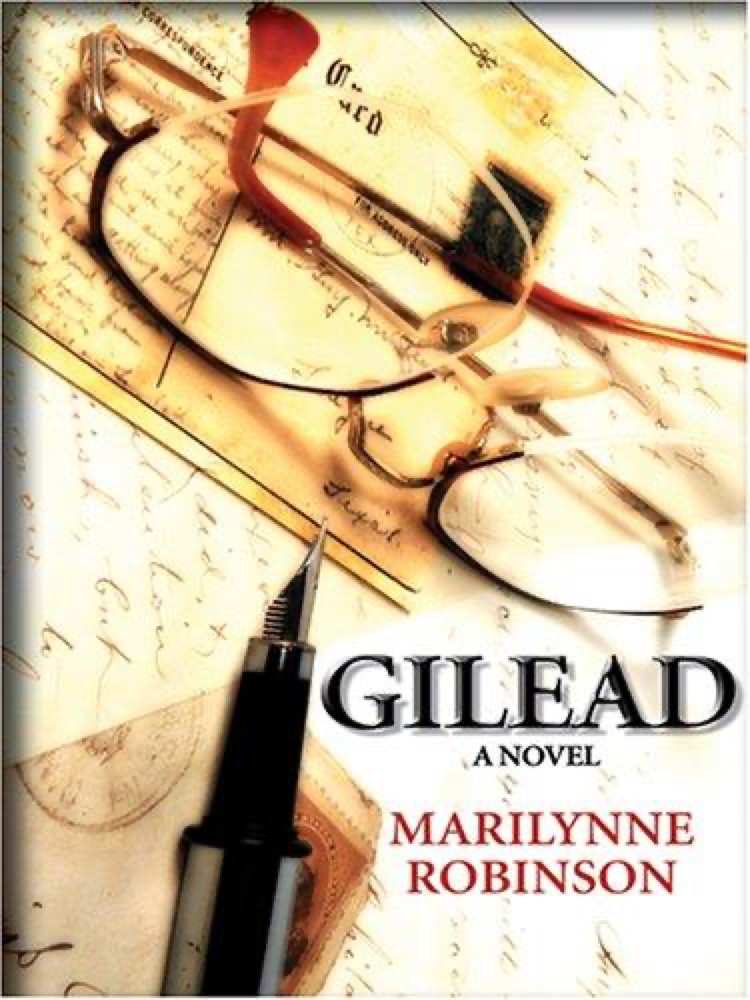
About the book
Since the 1981 publication of Marilynne Robinson’s novel, Housekeeping—a stunning debut that was nominated for the Pulitzer Prize—she has built a sterling reputation not only as a writer of sharp, subtly moving prose, but also as a rigorous thinker and incisive essayist. Her compelling and demanding collection The Death of Adam—in which she reflected on her Presbyterian upbringing, investigated the roots of Midwestern abolitionism, and mounted a memorable defense of Calvinism—is respected as a classic of the genre, praised by Doris Lessing as “a useful antidote to the increasingly crude and slogan-loving culture we inhabit.”
In this new collection she returns to the themes which have preoccupied her work: the role of faith in modern life, the inadequacy of fact, the contradictions inherent in human nature. Clear-eyed and forceful as ever, Robinson demonstrates once again why she is r
Book details
- First published
- 2012
- Author
- Marilynne Robinson
- Genre
- Nonfiction
- Goodreads rating
- 3.87 (3k ratings)
Keep reading
 The Source of Self-Regard: Selected Essays, Speeches, and Meditations
 From Dawn to Decadence: 500 Years of Western Cultural Life, 1500 to the Present
 Surprised by Joy: The Shape of My Early Life
 A Language Older Than Words
 Heretics
 The Closing of the American Mind
 On the Genealogy of Morals/Ecce Homo
 The World's Last Night: And Other Essays
 Consider the Lobster and Other Essays
 A Circle of Quiet
 Arguably: Selected Essays
 The Everlasting Man
 The Varieties of Religious Experience
 Mystery and Manners: Occasional Prose
 The Braindead Megaphone
 Daybreak: Thoughts on the Prejudices of Morality
 No Time To Spare: Thinking About What Matters
 The Story of My Experiments With Truth
 Religion for Atheists: A Non-Believer's Guide to the Uses of Religion
 What's Wrong with the World
 Breaking the Spell: Religion as a Natural Phenomenon
 Daniel Deronda
 Small Wonder
 The Fall of Babel
 On the Genealogy of Morals
 Nothing to Be Frightened Of
 Dust Tracks on a Road
 Wampeters, Foma and Granfalloons
 Hitch-22: A Memoir
 Asymmetry
 Too Like the Lightning
 Erewhon
 Persian Letters
 The Golden House
 Villa Incognito
 The State of the Art
 Myths to Live By
 In the Light of What We Know
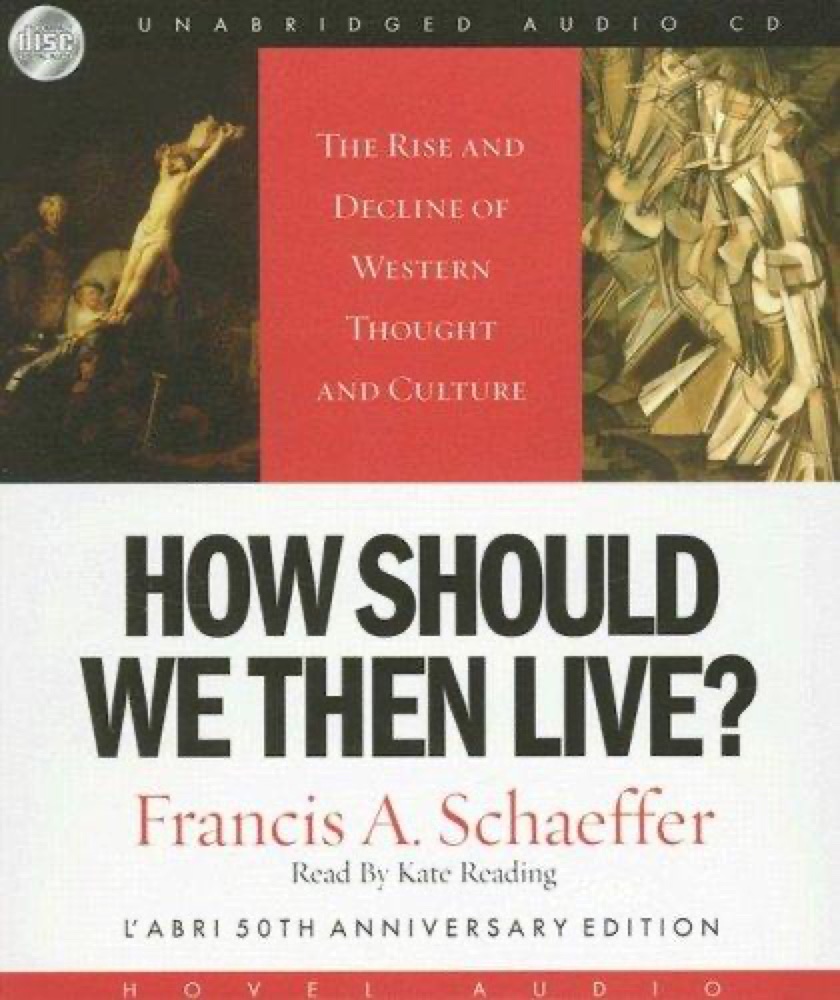 How Should We Then Live? The Rise and Decline of Western Thought and Culture
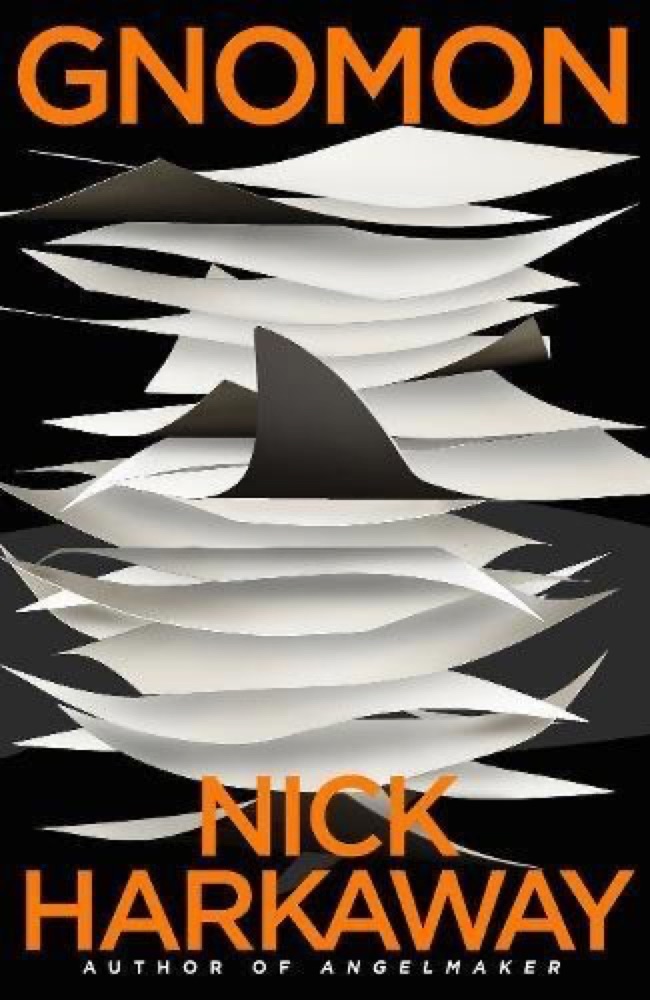 Gnomon
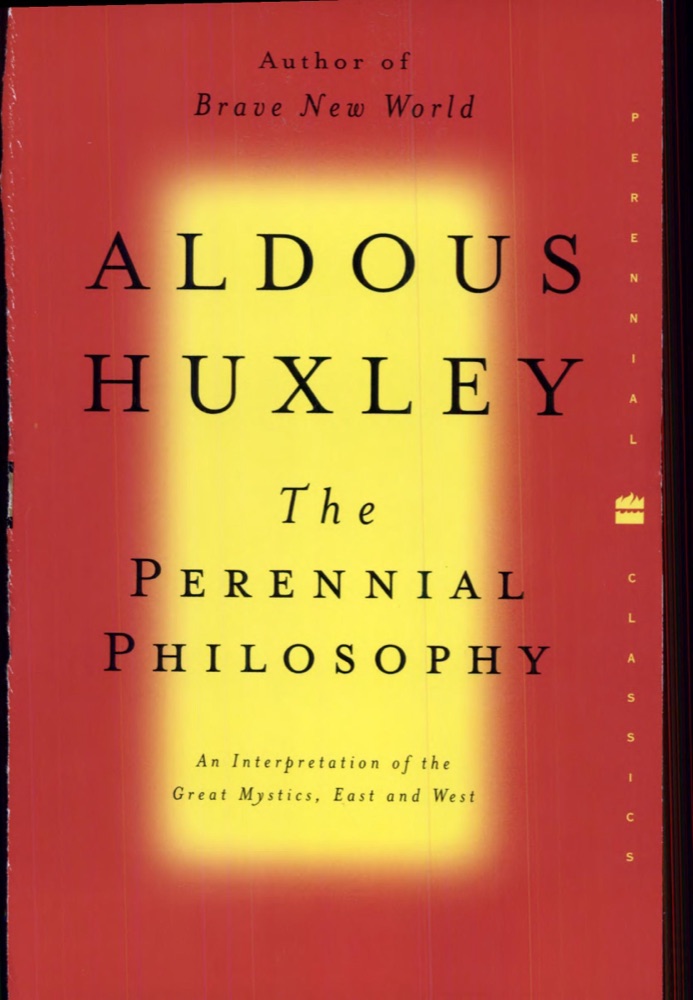 The Perennial Philosophy
 Walden and other writings
 In Search of Our Mothers' Gardens: Womanist Prose
 One Man's Meat
 The Habit of Being: Letters of Flannery O'Connor
 The Wave in the Mind: Talks and Essays on the Writer, the Reader and the Imagination
 How to Be Alone
 The Mind of the Maker: Dorothy L. Sayers' Witty Classic on the Trinity, Christianity, and Human Creativity
 The Abundance
 Skinny Legs and All
 Genesis
 The Essential Writings of Ralph Waldo Emerson
 The Audacity of Hope: Thoughts on Reclaiming the American Dream
 Living with a Wild God: A Nonbeliever's Search for the Truth about Everything
 The Gone-Away World
 The Weight of Glory
 Why I Am Not a Christian and Other Essays on Religion and Related Subjects
 The Essays of Ralph Waldo Emerson
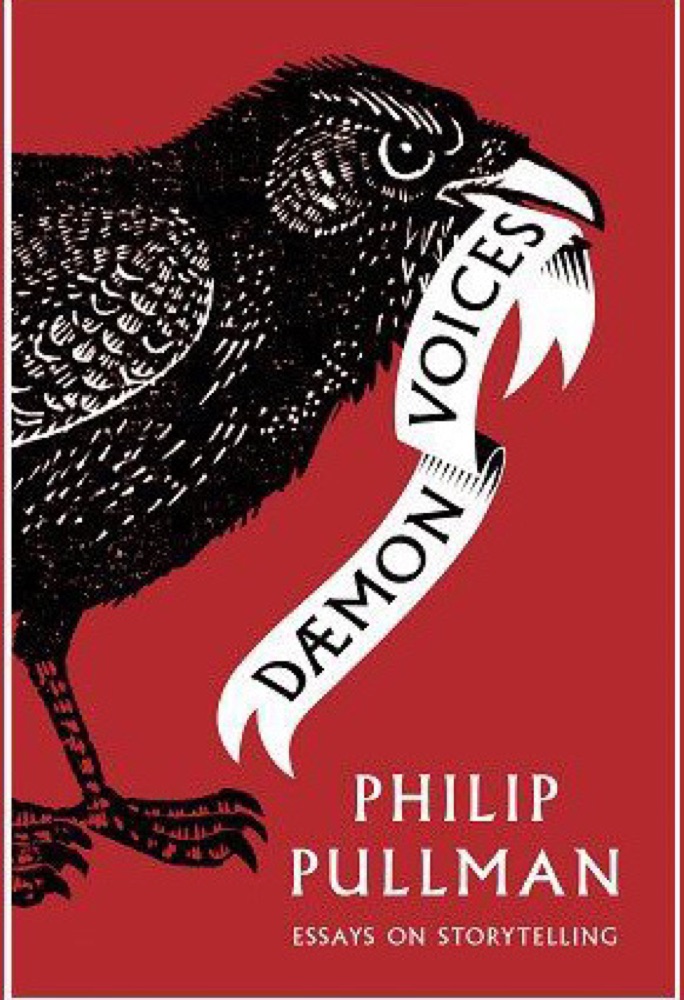 Dæmon Voices
 Anthills of the Savannah