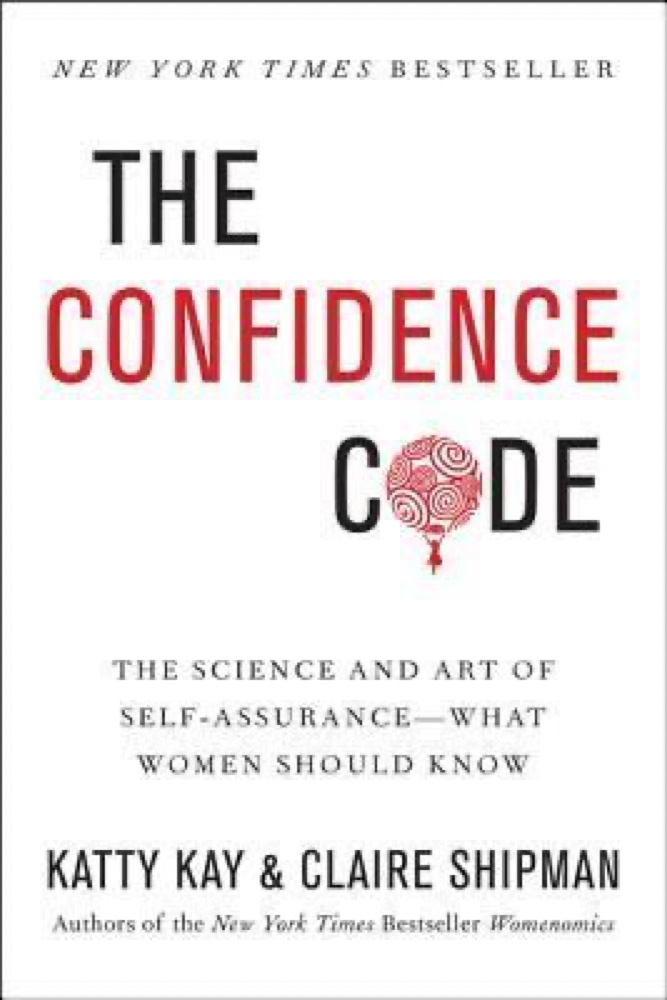
 On Confidence
Quotes from the Book
Simply put, a woman’s brain is not her friend when it comes to confidence. We think too much and we think about the wrong things. Thinking harder and harder and harder won’t solve our issues, though, it won’t make us more confident, and it most certainly freezes decision making, not to mention action. Remember, the female brain works differently from the male brain; we really do have more going on, we are more keenly aware of everything happening around us, and that all becomes part of our cognitive stew. Ruminating drains the confidence from us. Those negative thoughts, and nightmare scenarios masquerading as problem solving, spin on an endless loop. We render ourselves unable to be in the moment or to trust our instincts because we are captive to those distracting, destructive thoughts, which gradually squeeze all the spontaneity out of life and work. We have got to stop ruminating.
8
Having talent isn’t merely about being competent; confidence is actually a part of that talent.
7
Confidence is the purity of action produced by a mind free of doubt.
6
Fake it til you make it. Okay, here's the one to avoid. Attempt this bit of pop psychology at your peril. Originally an observation made by Aristotle, "Men acquire a particular quality by constantly acting a certain way," the modern version has become tainted by its suggested swagger, and if performed in that fashion can easily go wrong. The very notion of straying far from our real selves is at odds with the central premise of this book. Confidence isn't about pretending or putting on an act; it springs from the genuine accomplishment and work. Jenny Crocker told us, in fact, that not only does faking it not work as a confidence booster, but it almost certainly make us feel less secure, because knowingly masquerading as something we're not makes us anxious. Moreover, as good as we might be at faking it, we'll certainly project those subtle false signals described by Cameron Anderson, and that won't help us much, either. The appeal of faking it, if only for a while, is that it offers a crutch --a way to begin. Here's a better way to reframe the premise for a quick confidence jump start: Don't pretend to be anything or anyone -- simply take action. Do one small brave thing, and then enxt one will be easier, and soon confidence will flow. We know -- fake it till you make it sounds catchier -- but this actually works.
5
The propensity to dwell on failure and mistakes, and an inability to shut out the outside world are, in his mind, the biggest psychological impediments for his female players, and they directly affect performance and confidence on the court.
5
Confidence, ultimately, is the characteristic that distinguishes those who imagine from those who do.
4
If you choose not to act, you have little chance of success. What’s more, when you choose to act, you’re able to succeed more frequently than you think. How often in life do we avoid doing something because we think we’ll fail? Is failure really worse than doing nothing? And how often might we actually have triumphed if we had just decided to give it a try?
4
A pessimist sees the difficulty in every opportunity; an optimist sees the opportunity in every difficulty.
3
What matters is that mastering one thing gives you the confidence to try something else.
3
Gaining confidence means getting outside your comfort zone, experiencing setbacks, and, with determination, picking yourself up again.
3
Dare the difference. That we like. “You have to be savvy about it,” Lagarde allows, “but you also, in a sense, have to be confident about the difference.
3
Self-efficacy is defined as a belief in your ability to succeed at something.
2
You live in a world where everything you do is bad and nothing you do makes a difference. It’s what’s called ‘learned helplessness.
2
Confidence, at least the part that’s not in our genes, requires hard work, substantial risk, determined persistence, and sometimes bitter failure. Building it demands regular exposure to all of these things. You
2
When a man walks into a room, they’re assumed to be competent until they prove otherwise.
2
She doesn’t hesitate often. She told us that good leadership means being an efficient decision maker, and she doesn’t tolerate indecision in others. “When somebody says to me, ‘Well, I don’t know what to do,’ I don’t have time for that. Because if I ask you to give me your opinion and you’re wishy-washy with me, I’m moving on. We’re always on a fast-moving train,” she said, crisply, and we got a sense she’s not somebody you’d want to let down.
2
But there are times when speaking up is required, and women have got to master that distinction. “We’re taught to be more self-deprecating,” she told us. “I think it all begins on the playground, and then society reinforces it. We believe that we should wait until we are absolutely sure that we are ready for something before we ask for it.” It took her a decade in the workplace to learn to ask for something boldly, without waiting. She was in her early thirties, working in the Chicago
2
Unlike self-esteem, optimism isn’t a judgment on your inner self-worth; it’s an attitude you have that is based on your view of the outside world. You’re not optimistic because of your talents or your innate goodness; you are optimistic because you interpret the world positively.
1
Preparation and practice melded with a sense of purpose—the zone of confidence.
1
Men tend to let things go, slide off their backs. Women tend to be more self-reflective: ‘What did I do wrong?’ as opposed to thinking it’s just a bad set of circumstances and so let’s move on.
1
Mastery isn't about being the best tennis player or the best mom. The resonance of mastery is in the process and progress. It is about work, and learning to develop an appetite for challenge. Mastery inevitably means encountering hurdles; you won't always overcome them, but you won't let them stop you from trying. You may never become a world-class swimmer, but you will learn to swim across the lake. And the unexpected by-product of all of that hard work you put in to mastering things? Confidence. Not only did you learn to do something well, but you got a freebie. The next point is invaluable. The confidence you get from mastery is contagious. It spreads. It doesn't even really matter what you master: For a child, it can be as simple as tying a shoe. What matters is that mastering one thing gives you the confidence to try something else.
1
If the action involves something scary, then what we call courage might also be needed for the action to occur,” Petty explained. “Or if it’s difficult, a strong will to persist might also be needed. Anger, intelligence, creativity can play a role.” But confidence, he told us, is the most important factor. It first turns our thoughts into judgments about what we are capable of, and it then transforms those judgments into actions. Confidence is the stuff that turns thoughts into action.
1
When dopamine, which gets us moving, is commingled with serotonin, which induces calm thought, and oxytocin, which generates warm and positive attitudes toward others, confidence can much more easily take hold.
1
more generally low-key personalities suddenly rise to a specific challenge. In fact, they thrive. They actually need some stress to do their best.
1
even though we can generate new supplies of oxytocin by having babies and by hugging more, some of us are simply born with more of it, and thus may start out with a higher baseline of confidence-enhancing attitudes and behaviors.
1
success correlates more closely with confidence than it does with competence.
1
In the most basic terms, what we need to do is start acting and risking and failing, and stop mumbling and apologizing and prevaricating.
1
The irony is that perfectionism actually inhibits achievement. Bob Sullivan and Hugh Thompson, authors of The Plateau Effect, call it the “enemy of the good,” leading to piles of useless, unfinished work, and hours of wasted time, because, in the pursuit of it, we put off difficult tasks waiting to be perfectly ready before we start.
1
Watch on YouTube
About Katty Kay
About the book
Following the success of Lean In and Why Women Should Rule the World, the authors of the bestselling Womenomics provide an informative and practical guide to understanding the importance of confidence—and learning how to achieve it—for women of all ages and at all stages of their career.
Working women today are better educated and more well qualified than ever before. Yet men still predominate in the corporate world. In The Confidence Code, Claire Shipman and Katty Kay argue that the key reason is confidence.
Combining cutting-edge research in genetics, gender, behavior, and cognition—with examples from their own lives and those of other successful women in politics, media, and business—Kay and Shipman go beyond admonishing women to "lean in."Instead, they offer the inspiration and practical advice women need to close the gap and achieve the careers they want and deserve.
Book details
- First published
- 2014
- Author
- Katty Kay
- Genre
- Nonfiction
- Goodreads rating
- 3.71 (17k ratings)
Keep reading
On Confidence
 The Confidence Gap
 Mindset: The New Psychology of Success
 Presence: Bringing Your Boldest Self to Your Biggest Challenges
 Brave, Not Perfect: Fear Less, Fail More, and Live Bolder
 Magic of Thinking Big
 Psycho-Cybernetics
 David and Goliath: Underdogs, Misfits, and the Art of Battling Giants
 Lean In: Women, Work, and the Will to Lead
 Grit: The Power of Passion and Perseverance
 Grit to Great: How Perseverance, Passion, and Pluck Take You from Ordinary to Extraordinary
 Peak Performance: Elevate Your Game, Avoid Burnout, and Thrive with the New Science of Success
 The 5 Second Rule: Transform Your Life, Work, and Confidence with Everyday Courage
 Mind Gym: An Athlete's Guide to Inner Excellence
 How to Fail at Almost Everything and Still Win Big: Kind of the Story of My Life
 Ego Is the Enemy
 Late Bloomers: The Power of Patience in a World Obsessed with Early Achievement
 Lead from the Outside: How to Build Your Future and Make Real Change
 The Happiness Advantage: The Seven Principles of Positive Psychology That Fuel Success and Performance at Work
 Targeting Success, Develop the Right Business Attitude to be Successful in the Workplace
 Barking Up the Wrong Tree: The Surprising Science Behind Why Everything You Know About Success Is (Mostly) Wrong
 Dare to Lead
 Creativity, Inc.: Overcoming the Unseen Forces That Stand in the Way of True Inspiration
 The 7 Habits of Highly Effective People: Personal Workbook
 Personality Isn't Permanent: Break Free from Self-Limiting Beliefs and Rewrite Your Story
 The Art of Impossible: A Peak Performance Primer
 Smarter Faster Better: The Secrets of Being Productive in Life and Business
 High Performance Habits: How Extraordinary People Become That Way
 Think and Grow Rich
 How to Be a Bawse: A Guide to Conquering Life
 The Power of Focus
 Maximum Achievement: Strategies and Skills That Will Unlock Your Hidden Powers to Succeed
 You Can Win: A Step by Step Tool for Top Achievers
 Principles: Life and Work
 Tribe Of Mentors: Transformative Wisdom From Icons and Innovators to Help You Navigate Life's Challenges
 It Takes What It Takes: How to Think Neutrally and Gain Control of Your Life
 The Defining Decade: Why Your Twenties Matter—And How to Make the Most of Them Now
 The Best Advice I Ever Got: Lessons from Extraordinary Lives
 Peak: Secrets from the New Science of Expertise
 Do Epic Shit
 Becoming Bulletproof: Protect Yourself, Read People, Influence Situations, and Live Fearlessly
 Tools of Titans: The Tactics, Routines, and Habits of Billionaires, Icons, and World-Class Performers
 What Color Is Your Parachute? A Practical Manual for Job-Hunters and Career-Changers
 Think Again: The Power of Knowing What You Don't Know
 The Algebra of Happiness: Notes on the Pursuit of Success, Love, and Meaning
 Mastery
 Firestarters: How Innovators, Instigators, and Initiators Can Inspire You to Ignite Your Own Life
 Flow: The Psychology of Optimal Experience
 The Ride of a Lifetime: Lessons Learned from 15 Years as CEO of the Walt Disney Company
 Give and Take: A Revolutionary Approach to Success
 Law of Success
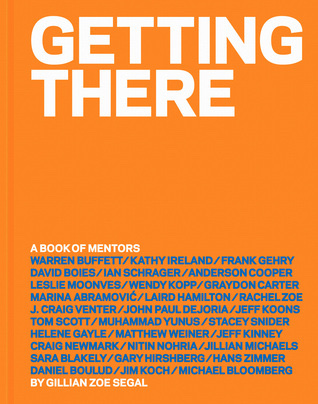 Getting There: A Book of Mentors
 Girl, Stop Apologizing: A Shame-Free Plan for Embracing and Achieving Your Goals
 Emotional Intelligence 2.0: With Access Code
 It's Not How Good You Are, It's How Good You Want To Be
 The Success Principles: How to Get from Where You Are to Where You Want to Be
 Improv Wisdom: Don't Prepare, Just Show Up
 Awaken The Giant Within
 Be a People Person