
 Discipline and Punish: The Birth of the Prison
Quotes from the Book
This book first arose out of a passage in [Jorge Luis] Borges, out of the laughter that shattered, as I read the passage, all the familiar landmarks of my thought—our thought that bears the stamp of our age and our geography—breaking up all the ordered surfaces and all the planes with which we are accustomed to tame the wild profusion of existing things, and continuing long afterwards to disturb and threaten with collapse our age-old distinction between the Same and the Other. This passage quotes a ‘certain Chinese encyclopaedia’ in which it is written that ‘animals are divided into: (a) belonging to the Emperor, (b) embalmed, (c) tame, (d) suckling pigs, (e) sirens, (f) fabulous, (g) stray dogs, (h) included in the present classification, (i) frenzied, (j) innumerable, (k) drawn with a very fine camelhair brush, (l) et cetera, (m) having just broken the water pitcher, (n) that from a long way off look like flies’. In the wonderment of this taxonomy, the thing we apprehend in one great leap, the thing that, by means of the fable, is demonstrated as the exotic charm of another system of thought, is the limitation of our own, the stark impossibility of thinking that.
22
To all those who still wish to talk about man, about his reign or his liberation, to all those who still ask themselves questions about what man is in his essence, to all those who wish to take him as their starting-point in their attempts to reach the truth, to all those who, on the other hand, refer all knowledge back to the truths of man himself, to all those who refuse to formalize without anthropologizing, who refuse to mythologize without demystifying, who refuse to think without immediately thinking that it is man who is thinking, to all these warped and twisted forms of reflection we can answer only with a philosophical laugh – which means, to a certain extent, a silent one.
14
It is comforting, however, and a source of profound relief to think that man is only a recent invention, a figure not yet two centuries old, a new wrinkle in our knowledge, and that he will disappear again as soon as that knowledge has discovered a new form.
12
In any given culture and at any given moment, there is always only one 'episteme' that defines the conditions of possibility of all knowledge, whether expressed in theory or silently invested in a practice.
12
Marxism exists in nineteenth-century thought like a fish in water: that is, it is unable to breathe anywhere else.
10
It is no longer possible to think in our day other than in the void left by man's disappearance.
8
From the point of view of wealth, there is no difference between need, comfort and pleasure
7
After Sade, violence, life and death, desire, and sexuality will extend, below the level of representation, an immense expanse of darkness, which we are now attempting to recover...in our discourse, in our freedom, in our thought.
7
This last point is a request to the English-speaking reader. In France, certain half-witted ‘commentators’ persist in labelling me a ‘structuralist’. I have been unable to get it into their tiny minds that I have used none of the methods, concepts, or key terms that characterize structural analysis. I should be grateful if a more serious public would free me from a connection that certainly does me honour, but that I have not deserved.
7
This book first arose out of a passage in Borges, out of the laughter that shattered, as I read the passage, all the familiar landmarks of my thought—our thought that bears the stamp of our age and our geography—breaking up all the ordered surfaces and all the planes with which we are accustomed to tame the wild profusion of existing things, and continuing long afterwards to disturb and threaten with collapse our age-old distinction between the Same and the Other. This passage quotes a ‘certain Chinese encyclopaedia’ in which it is written that ‘animals are divided into: (a) belonging to the Emperor, (b) embalmed, (c) tame, (d) suckling pigs, (e) sirens, (f) fabulous, (g) stray dogs, (h) included in the present classification, (i) frenzied, (j) innumerable, (k) drawn with a very fine camelhair brush, (l) et cetera, (m) having just broken the water pitcher, (n) that from a long way off look like flies’. In the wonderment of this taxonomy, the thing we apprehend in one great leap, the thing that, by means of the fable, is demonstrated as the exotic charm of another system of thought, is the limitation of our own, the stark impossibility of thinking that.
5
In France at least, the history of science and thought gives pride of place to mathematics, cosmology, and physics – noble sciences, rigorous sciences, sciences of the necessary, all close to philosophy: one can observe in their history the almost uninterrupted emergence of truth and pure reason. The other disciplines, however – those, for example, that concern living beings, languages, or economic facts – are considered too tinged with empirical thought, too exposed to the vagaries of chance or imagery, to age-old traditions and external events, for it to be supposed that their history could be anything other than irregular.
5
Among the mutations that have affected the knowledge of things ... only one, which began a century and a half ago ... has allowed the figure of man to appear.
4
Acredita-se que é simular um paradoxo supor, por um só instante, o que poderiam ser o mundo, o pensamento e a verdade se o homem não existisse. É que estamos tão ofuscados pela recente evidência do homem que sequer guardamos em nossa lembrança o tempo, todavia pouco distante, em que existiam o mundo, sua ordem, os seres humanos, mas não o homem. Compreende-se o poder de abalo que pôde ter e que conserva ainda o pensamento de Nietzsche, quando anunciou, sob a forma do acontecimento iminente, da Promessa-Ameaça, que, bem logo, o homem não seria mais - mas, sim, o super-homem; o que, numa filosofia do Retorno, queria dizer que o homem, já desde muito tempo, havia desaparecido e não cessava de desaparecer, e que nosso pensamento moderno do homem, nossa solicitude para com ele, nosso humanismo dormiam serenamente sobre sua retumbante inexistência. A nós, que nos acreditamos ligados a uma finitude que só a nós pertence e que nos abre, pelo conhecer, a verdade do mundo, não deveria ser lembrado que estamos presos ao dorso de um tigre?
3
Tanrı dünyaya yazılı kelimeleri yerleştirmiştir; Adem hayvanlara ilk adlarını verdiğinde, yalnızca bu görülür ve sessiz işaretleri okumuştur; Yasa insanların hafızasına değil de, levhalara emanet edilmiştir; ve gerçek söz bulunması gereken bir kitabın içindedir. Hem Vigenere, hem de Duret -ve hemen hemen aynı terimlerle-, doğada ve hatta insan bilgisinde yazılı olanın, koyulan adı kesinlikle her zaman öncelediğini söylüyorlardı.
1
Watch on YouTube
About Michel Foucault
We have collected 112 quotes from 5 books by Michel Foucault on BookQuoters.
More about the author →More by Michel Foucault
Discipline and Punish: The Birth of the Prison
 Madness and Civilization: A History of Insanity in the Age of Reason
 The History of Sexuality, Volume 1: An Introduction
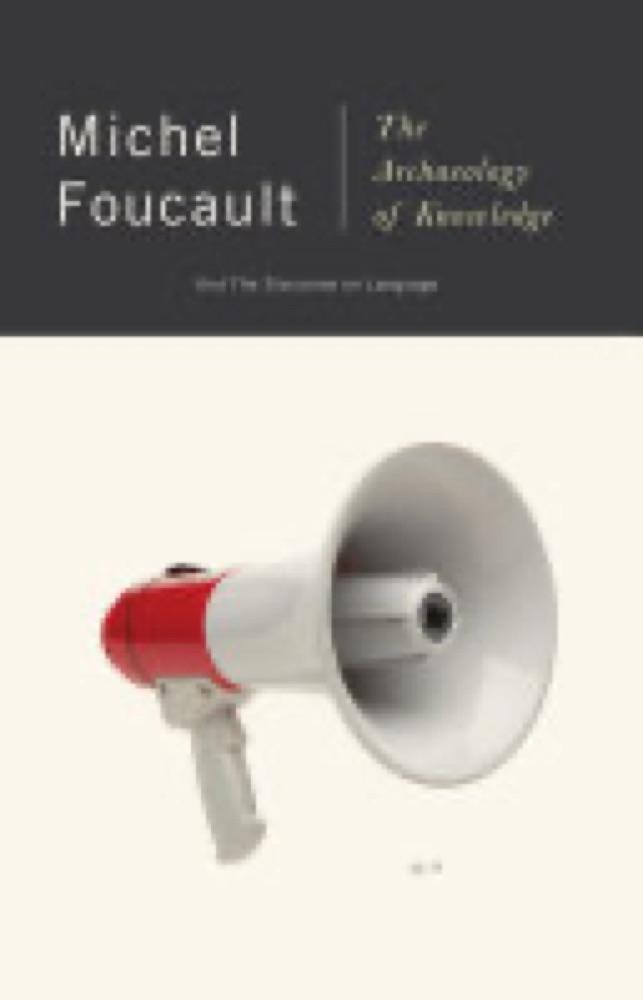 The Archaeology of Knowledge and The Discourse on Language
About the book
Librarian note: an alternate cover for this edition can be found here.
With vast erudition, Foucault cuts across disciplines and reaches back into seventeenth century to show how classical systems of knowledge, which linked all of nature within a great chain of being and analogies between the stars in the heavens and the features in a human face, gave way to the modern sciences of biology, philology, and political economy. The result is nothing less than an archaeology of the sciences that unearths old patterns of meaning and reveals the shocking arbitrariness of our received truths.
In the work that established him as the most important French thinker since Sartre, Michel Foucault offers startling evidence that “man”—man as a subject of scientific knowledge—is at best a recent invention, the result of a fundamental mutation in our culture.
Book details
- First published
- 1966
- Author
- Michel Foucault
- Genre
- Philosophy
- Goodreads rating
- 4.12 (10k ratings)
Keep reading
 On Truth and Lies in a Nonmoral Sense
 From Dawn to Decadence: 500 Years of Western Cultural Life, 1500 to the Present
 Irrational Man: A Study in Existential Philosophy
 The Ascent of Man
 The Crisis of the Modern World
 A History of Western Philosophy
 An Enquiry Concerning Human Understanding
 The Historian's Craft: Reflections on the Nature and Uses of History and the Techniques and Methods of Those Who Write It.
 Selections from the Prison Notebooks
 The Occult
 The World as Will and Representation, Vol 1
 The Story of Philosophy: The Lives and Opinions of the World's Greatest Philosophers
 Last and First Men
 Consilience: The Unity of Knowledge
 Truth and Method
 The Master and His Emissary: The Divided Brain and the Making of the Western World
 Untimely Meditations
 Dialectic of Enlightenment: Philosophical Fragments
 The Problems of Philosophy
 Dialogues Concerning Natural Religion
 Understanding Media: The Extensions of Man
 Myths to Live By
 The Discarded Image: An Introduction to Medieval and Renaissance Literature
 Selected Non-Fictions
 Pensées
 A Treatise of Human Nature
 The Medium is the Massage
 Phenomenology of Perception
 An Essay Concerning Human Understanding
 The Human Condition
 The Perennial Philosophy
 The Revolt of the Masses
 The Will to Power
 Critique of Pure Reason
 The Gene: An Intimate History
 Labyrinths: Selected Stories and Other Writings
 Literary Theory: An Introduction
 The Origin of Consciousness in the Breakdown of the Bicameral Mind
 The Everlasting Man
The Archaeology of Knowledge and The Discourse on Language
The Everlasting Man
The Archaeology of Knowledge and The Discourse on Language
 The Big Picture: On the Origins of Life, Meaning, and the Universe Itself
 The Closing of the American Mind
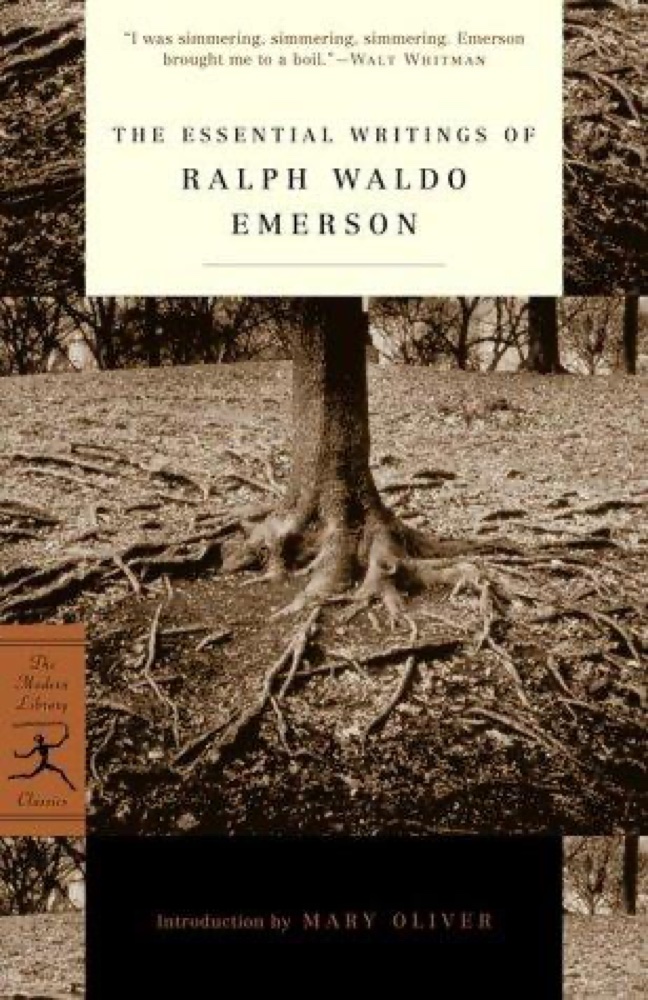 The Essential Writings of Ralph Waldo Emerson
 Science and Sanity: An Introduction to Non-Aristotelian Systems and General Semantics
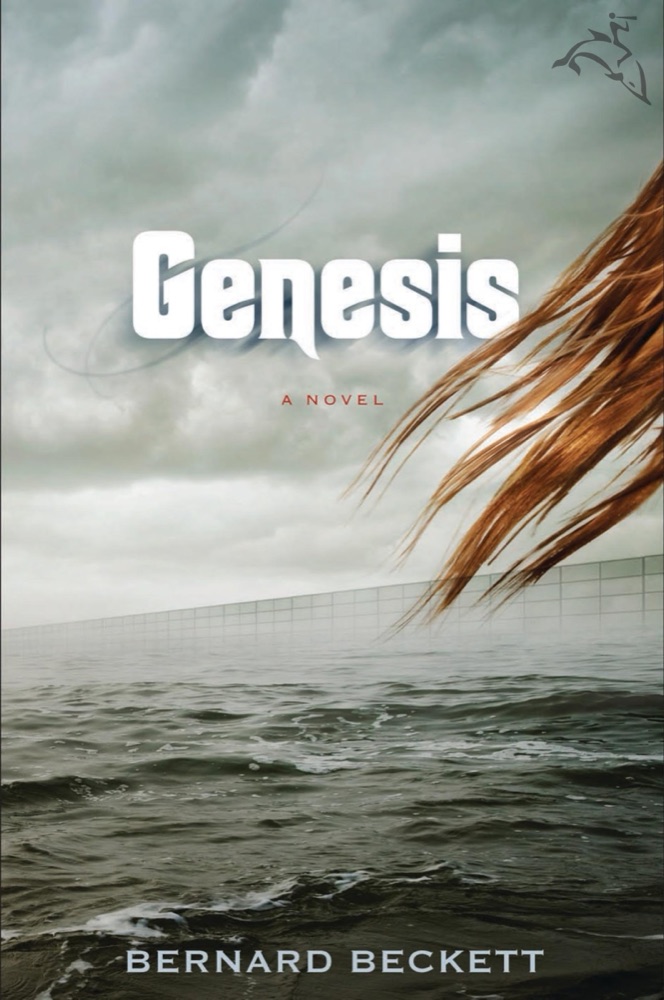 Genesis
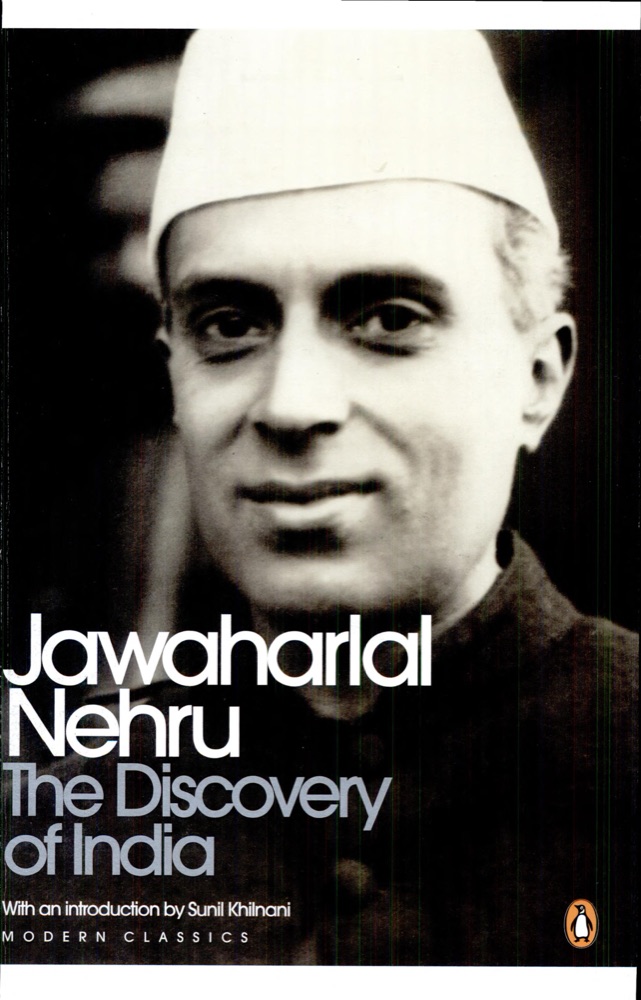 The Discovery of India
 Man and His Symbols
 When We Cease to Understand the World
 The Essays of Ralph Waldo Emerson
 Moravagine
 A Brief History of Thought: A Philosophical Guide to Living
 The Elementary Particles
 The Art of the Novel
 Sexual Personae: Art and Decadence from Nefertiti to Emily Dickinson
 The Secret Teachings of All Ages
 Simulacra and Simulation
 The Futurological Congress: From the Memoirs of Ijon Tichy
 Discourse on Method and Meditations on First Philosophy
 Complete Works of Oscar Wilde
 A Thousand Plateaus: Capitalism and Schizophrenia