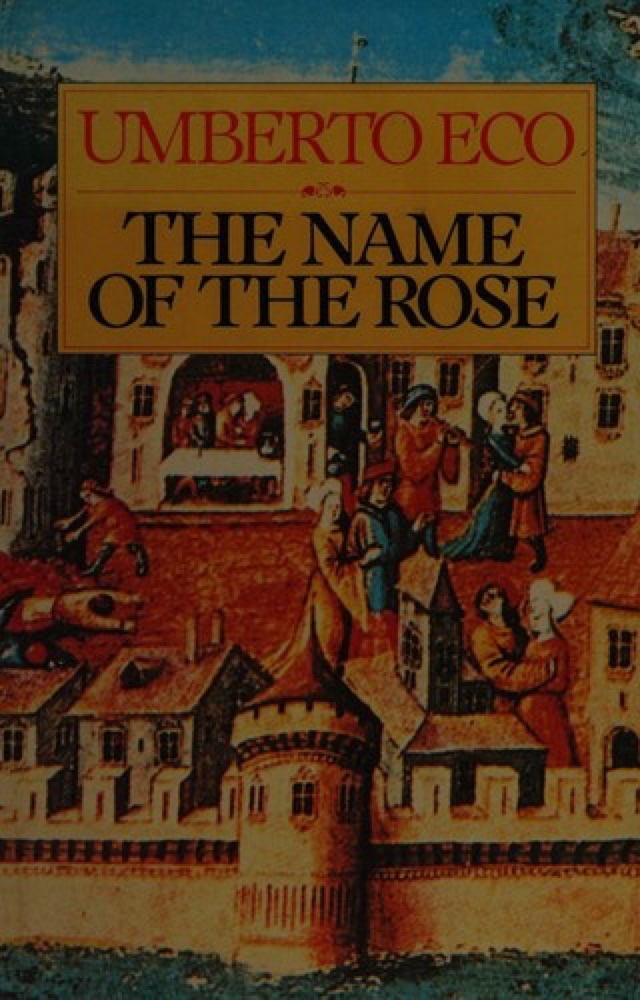

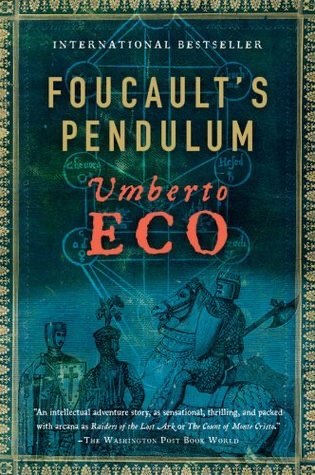
 Foucault's Pendulum
Quotes from the Book
Books are not made to be believed, but to be subjected to inquiry. When we consider a book, we mustn't ask ourselves what it says but what it means...
Then why do you want to know?" "Because learning does not consist only of knowing what we must or we can do, but also of knowing what we could do and perhaps should not do.
What is love? There is nothing in the world, neither man nor Devil nor any thing, that I hold as suspect as love, for it penetrates the soul more than any other thing. Nothing exists that so fills and binds the heart as love does. Therefore, unless you have those weapons that subdue it, the soul plunges through love into an immense abyss.
Until then I had thought each book spoke of the things, human or divine, that lie outside books. Now I realized that not infrequently books speak of books: it is as if they spoke among themselves. In the light of this reflection, the library seemed all the more disturbing to me. It was then the place of a long, centuries-old murmuring, an imperceptible dialogue between one parchment and another, a living thing, a receptacle of powers not to be ruled by a human mind, a treasure of secrets emanated by many minds, surviving the death of those who had produced them or had been their conveyors.
Daytime sleep is like the sin of the flesh; the more you have the more you want, and yet you feel unhappy, sated and unsated at the same time.
We live for books. A sweet mission in this world dominated by disorder and decay.
Monsters exist because they are part of the divine plan, and in the horrible features of those same monsters the power of the creator is revealed.
A dream is a scripture, and many scriptures are nothing but dreams.
Show not what has been done, but what can be. How beautiful the world would be if there were a procedure for moving through labyrinths.
True learning must not be content with ideas, which are, in fact, signs, but must discover things in their individual truth.
A narrator should not supply interpretations of his work; otherwise he would have not written a novel, which is a machine for generating interpretations.
Yesterday's rose endures in its name, we hold empty names.
The order that our mind imagines is like a net, or like a ladder, built to attain something. But afterward you must throw the ladder away, because you discover that, even if it was useful, it was meaningless.
A book is a fragile creature, it suffers the wear of time, it fears rodents, the elements and clumsy hands. so the librarian protects the books not only against mankind but also against nature and devotes his life to this war with the forces of oblivion.
After so many years even the fire of passion dies, and with it what was believed the light of the truth. Who of us is able to say now whether Hector or Achilles was right, Agamemnon or Priam, when they fought over the beauty of a woman who is now dust and ashes?
How peaceful life would be without Love, Adso. How Safe. How Tranquil. And how Dull.
How beautiful was the spectacle of nature not yet touched by the often perverse wisdom of man!
The older I grow and the more I abandon myself to God's will, the less I value intelligence that wants to know and will that wants to do; and as the only element of salvation I recognize faith, which can wait patiently, without asking too many questions.
I dared, for the first and last time in my life, to express a theological conclusion: "But how can a necessary being exist totally polluted with the possible? What difference is there, then, between God and primogenial chaos? Isn't affirming God's absolute omnipotence and His absolute freedom with regard to His own choices tantamount to demonstrating that God does not exist?
This, in fact, is the power of the imagination, which, combining the memory of gold with that of the mountain, can compose the idea of a golden mountain.
Under torture you are as if under the dominion of those grasses that produce visions. Everything you have heard told, everything you have read returns to your mind, as if you were being transported, not toward heaven, but toward hell. Under torture you say not only what the inquisitor wants, but also what you imagine might please him, because a bond (this, truly, diabolical) is established between you and him ... These things I know, Ubertino; I also have belonged to those groups of men who believe they can produce the truth with white-hot iron. Well, let me tell you, the white heat of truth comes from another flame.
A monk should surely love his books with humility, wishing their good and not the glory of his own curiosity; but what the temptation of adultery is for laymen and the yearning for riches is for secular ecclesiastics, the seduction of knowledge is for monks.
We stopped to browse in the cases, and now that William - with his new glasses on his nose - could linger and read the books, at every title he discovered he let out exclamations of happiness, either because he knew the work, or because he had been seeking it for a long time, or finally because he had never heard it mentioned and was highly excited and titillated. In short, for him every book was like a fabulous animal that he was meeting in a strange land.
...a book is a fragile creature, it suffers the wear of time, it fears rodents, the elements, clumsy hands. If for a hundred and a hundred years everyone had been able freely to handle our codices, the majority of them would no longer exist. So the librarian protects them not only against mankind but also against nature, and devotes his life to this war with the forces of oblivion, the enemy of truth.
But why do some people support [the heretics]?" "Because it serves their purposes, which concern the faith rarely, and more often the conquest of power." "Is that why the church of Rome accuses all its adversaries of heresy?" "That is why, and that is also why it recognizes as orthodoxy any heresy it can bring back under its own control or must accept because the heresy has become too strong.
The list could surely go on, and there is nothing more wonderful than a list, instrument of wondrous hypotyposis.
Did you know?
- The novel was originally written in Italian and first published in 1980 by the Milan publisher Bompiani.
- The English translation was made by William Weaver and published in 1983.
- The detective-friar protagonist, William of Baskerville, is named partly in homage to Sherlock Holmes, echoing The Hound of the Baskervilles.
- The story is set in 1327 in a Benedictine abbey in Northern Italy and is narrated in old age by the monk Adso of Melk.
- It was adapted into a 1986 film directed by Jean-Jacques Annaud starring Sean Connery.
- Author Umberto Eco was a professor of semiotics, and the novel is deeply concerned with signs and interpretation.
About Umberto Eco
Umberto Eco (1932-2016) was an Italian novelist, medievalist, and professor of semiotics at the University of Bologna. Widely known for his scholarly work on signs and interpretation, he became an international literary figure with his debut novel The Name of the Rose.
More about the author →More by Umberto Eco
All books by Umberto Eco →
About the book
"The Name of the Rose" is a historical murder mystery by the Italian semiotician and novelist Umberto Eco, first published in Italian in 1980 and translated into English by William Weaver in 1983. Set in a wealthy Benedictine abbey in Northern Italy in the year 1327, it follows the Franciscan friar William of Baskerville and his young novice Adso of Melk, who arrive for a theological disputation only to be drawn into investigating a series of mysterious deaths among the monks. Their inquiry leads them into the abbey's labyrinthine library and its jealously guarded secrets, even as an inquisitor arrives to hunt for heresy.
Beneath its detective-story surface, the novel is a dense meditation on signs, interpretation, and the nature of truth. Eco, a scholar of semiotics, packs the book with medieval theology, philosophy, and debates about knowledge, laughter, and forbidden books, using the monastery as a stage for a clash between free inquiry and the fear of dangerous ideas. William's rationalist detective method openly evokes Sherlock Holmes, while the story questions whether meaning can ever be fixed in words at all.
An international bestseller, "The Name of the Rose" won Italy's Strega Prize in 1981 and the French Prix Medicis Etranger in 1982, and it helped bring both Eco and literary postmodernism to a mass audience. It was adapted into a 1986 film directed by Jean-Jacques Annaud and starring Sean Connery, and later into a 2019 television miniseries. The novel remains one of the most widely read and discussed works of late twentieth-century fiction, admired for blending erudition with the pleasures of a page-turning mystery.
Key characters
- William of BaskervilleFranciscan friar and rationalist investigator of the deaths
- Adso of MelkWilliam's young Benedictine novice and the story's narrator
- Jorge of BurgosAged, blind monk fiercely devoted to guarding the library's secrets
- Bernard GuiInquisitor who arrives to root out heresy at the abbey
- MalachiKeeper of the abbey's labyrinthine library
Book details
- First published
- 1980
- Length
- 512 pages
- Reading time
- 31 hours
- Author
- Umberto Eco
- Genre
- Classics
- Goodreads rating
- 4.14 (403k ratings) →
- First line
- “In the beginning was the Word and the Word was with God, and the Word was God.”
Movie & TV adaptations
- IMDb
- IMDb
If you liked this, read…
- 1The Hound of the BaskervillesThe Holmesian detective method that William of Baskerville openly evokes.
- 2Foucault's PendulumEco's later intellectual mystery blending erudition with conspiracy and interpretation.
Keep reading
 Daniel Deronda
 The Magic Mountain
 She
She
 The Abundance
 The Book That Held Her Heart
 Selected Non-Fictions
 Complete Works of Oscar Wilde
 The Gay Science
 The Secret History
 Time Regained
 Ben-Hur: A Tale of the Christ
 The Inquisitor's Tale: Or, The Three Magical Children and Their Holy Dog
 Leonardo's Notebooks
 The Essays of Ralph Waldo Emerson
 The Island of the Day Before
 Empire of Silence
 The Enchantress of Florence
 The Picture of Dorian Gray
 Phaedrus
 The Seven Storey Mountain
 Illuminations: Essays and Reflections
 The Letters of J.R.R. Tolkien
 Arm of the Sphinx
 Kushiel's Avatar
 A Tale of Love and Darkness
 The Etched City
 The Everlasting Man
 The Swerve: How the World Became Modern
 The Book of Laughter and Forgetting
 Narcissus and Goldmund
 In Search of Lost Time
 The Da Vinci Code
 The Shadow of the Wind
 The Common Reader
 The Wisdom of Life
 Maldoror and the Complete Works
 The Neverending Story
 The Story of My Life
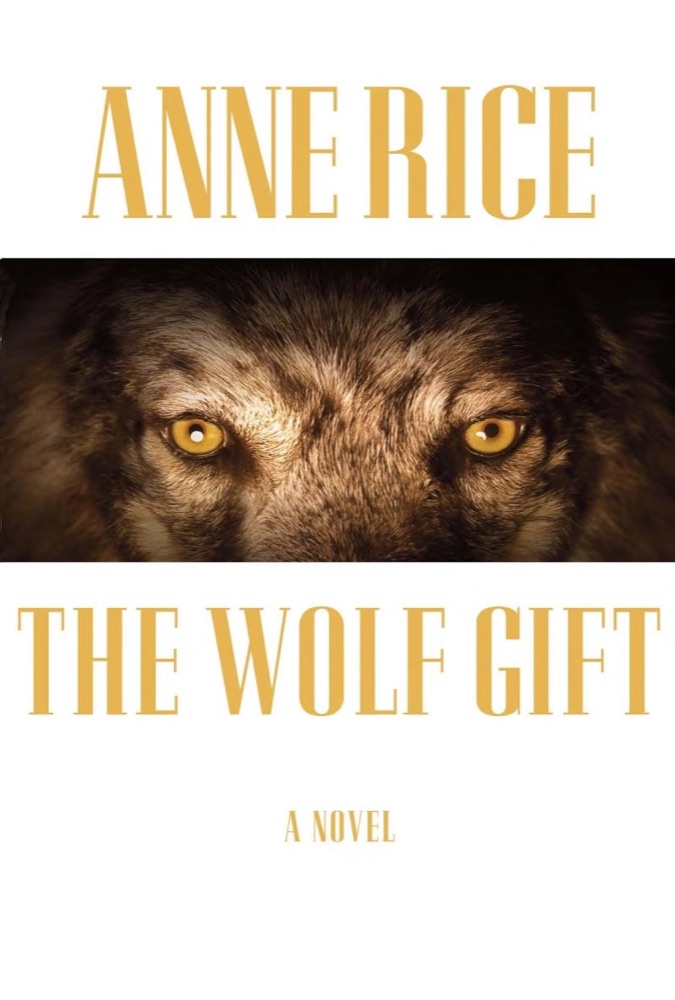 The Wolf Gift
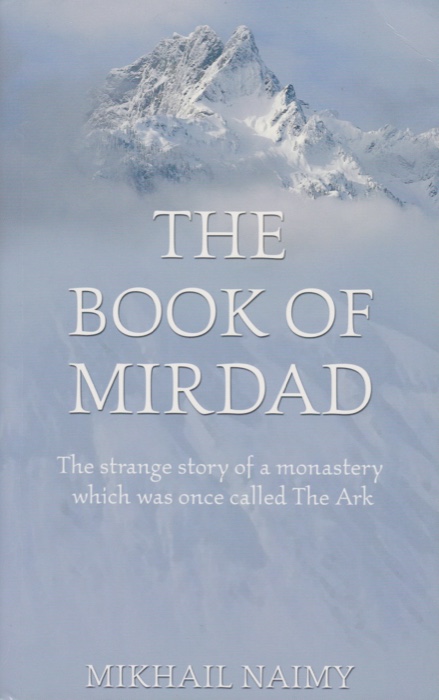 The Book of Mirdad: The Strange Story of a Monastery Which Was Once Called the Ark
 The Last Librarian
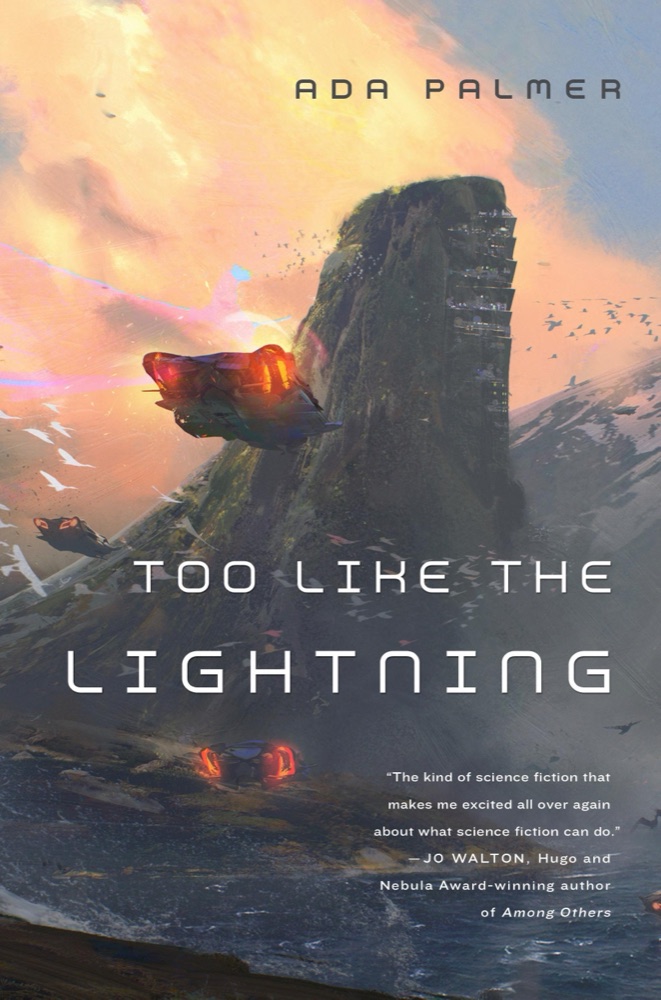 Too Like the Lightning
 The Enchanted
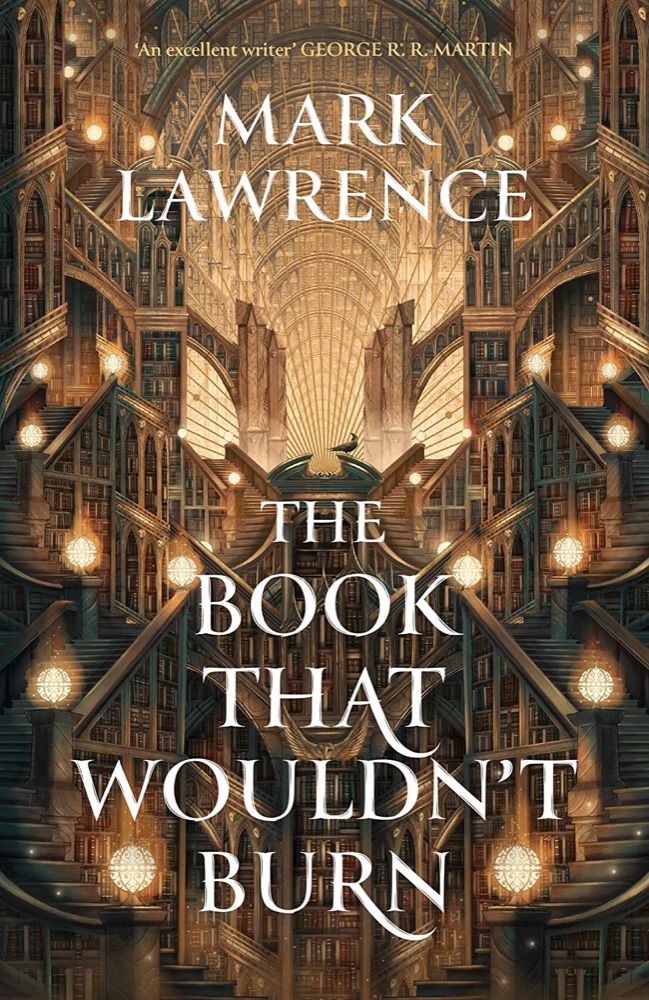 The Book That Wouldn’t Burn
 Orthodoxy
 Forge of Darkness
 The Recognitions
 The Signature of All Things
 The Secret Scripture
 The Intellectual Life: Its Spirit, Conditions, Methods
 Monday or Tuesday
 The Golden Compass
 Winter's Tale
 East of Eden
 The World as Will and Representation, Vol 1
 The Claw of the Conciliator
 The Left Hand of Darkness
 A Luminous Republic
 The Fall of Babel
 Art and Lies