 Candide
Quotes from the Book
Common sense is not so common.
1.9k
Our wretched species is so made that those who walk on the well-trodden path always throw stones at those who are showing a new road.
577
The best is the enemy of good.
196
What can you say to a man who tells you he prefers obeying God rather than men, and that as a result he's certain he'll go to heaven if he cuts your throat?
170
Le mieux est l'ennemi du bien. (The perfect is the enemy of the good.)
141
Discord is the great ill of mankind; and tolerance is the only remedy for it.
81
One always begins with the simple, then comes the complex, and by superior enlightenment one often reverts in the end to the simple. Such is the course of human intelligence.
71
So it is the human condition that to wish for the greatness of one's fatherland is to wish evil to one's neighbors. The citizen of the universe would be the man who wishes his country never to be either greater or smaller, richer or poorer.
54
One merit of poetry few persons will deny: it says more and in fewer words than prose.
37
What is tolerance? It is a necessary consequence of humanity. We are all fallible, let us then pardon each other's follies. This is the first principle of natural right.
31
The truths of religion are never so well understood as by those who have lost the power of reasoning.
25
It is proved...that things cannot be other than they are, for since everything was made for a purpose, it follows that everything is made for the best purpose.
20
What is madness? To have erroneous perceptions, and to reason correctly from them?
16
Morality is everywhere the same for all men, therefore it comes from God; sects differ, therefore they are the work of men.
12
The Jews are an ignorant and barbarous people, who have long united the most sordid avarice with the most detestable superstition and the most invincible hatred for every people by whom they are tolerated and enriched.
8
Sect and error are synonymous.
7
People have declaimed against luxury for two thousand years, in verse and prose, and people have always delighted in it.
7
Antiquity is full of eulogies of another more remote antiquity.
6
It is fancy rather than taste which produces so many new fashions.
5
These two sentiments, "liberty and equality," do not necessarily lead to calumny, rapine, assassination, poisoning, and devastation of the lands of neighbors; but, the towering ambition and thirst for power of the great precipitate them head-long into every species of crime in all periods and all places.
4
In short, the alphabet was the origin of all man's knowledge, and of all his errors.
4
if a philosopher wishes to be useful to human society, he must announce a God.
4
It is, it seems to me, to stop one's eyes and understanding to maintain that there is no design in nature; and if there is design, there is an intelligent cause, there exists a God. People
4
The beauty which strikes the senses merely, the imagination, and that which is called "intelligence," is
4
I leave there, and I say to my husband: "If you are without sin, shave me, imprison me, take my property; but if you have committed more sins than I have, it is for me to shave you, to have you imprisoned, and to seize your fortune. In justice these things should be equal.
4
As to fictions which represent nothing, teach nothing, and from which nothing results, are they anything more than falsities? And if they are incoherent and heaped together without choice, are they anything better than dreams?
3
He who would not wish his country to be bigger or smaller, richer or poorer, would be a citizen of the universe.
3
It needs twenty years to lead man from the plant state in which he is within his mother's womb, and the pure animal state which is the lot of his early childhood, to the state when the maturity of the reason begins to appear. It has needed thirty centuries to learn a little about his structure. It would need eternity to learn something about his soul. It takes an instant to kill him.
3
beauty is often very relative, just as what is decent in Japan is indecent in Rome, and what is fashionable in Paris, is not fashionable in Pekin; and he saved himself the trouble of composing a long treatise on beauty.
3
I was in hopes," said Pangloss, "that I should reason with you a little about causes and effects, about the best of possible worlds, the origin of evil, the nature of the soul, and the pre-established harmony." At these words, the Dervish shut the door in their faces.
2
Watch on YouTube
About Voltaire
We have collected 76 quotes from 4 books by Voltaire on BookQuoters.
More about the author →More by Voltaire

About the book
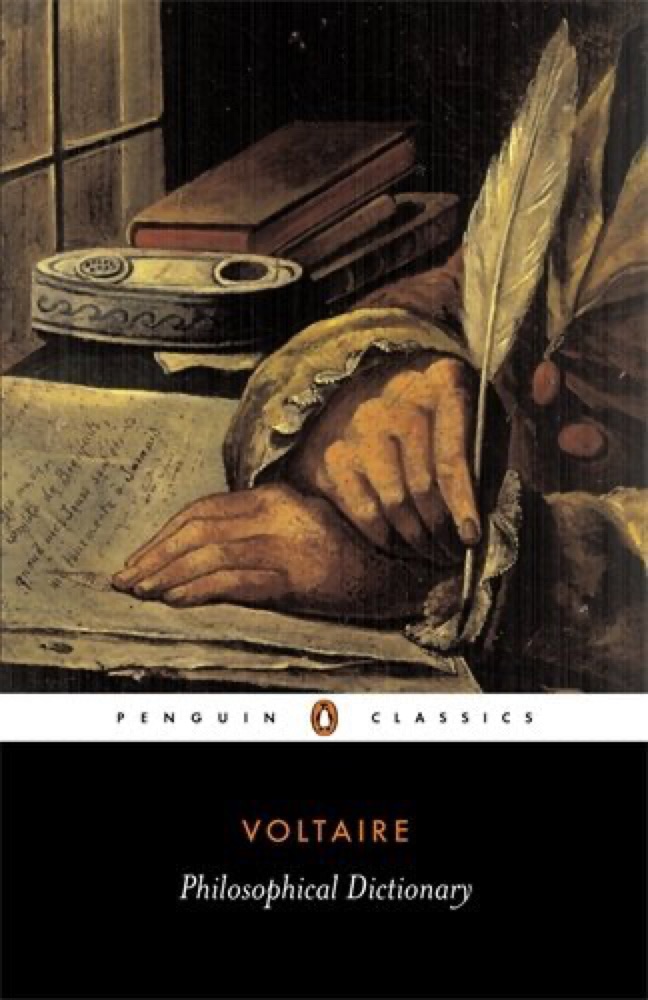
Voltaire's Philosophical Dictionary is a series of short essays, hortatory and propagandist, over an enormously wide range of subjects. It was deliberately planned as a revolutionary book and was duly denounced on all sides and described as 'a deplorable monument of the extent to which inteligence and erudition can be abused'. The subjects treated include Abraham, Angel and Anthropophages; Baptism, Beauty and Beasts; Fables, Fraud and Fanaticism; Metempsychosis, Miracles and Moses; all of them exposed to Voltaire's lucid scrutiny, his elegant irony and his passionate love of reason and justice.
Book details
- First published
- 1764
- Author
- Voltaire
- Genre
- Philosophy
- Goodreads rating
- 4.06 (2k ratings)
Keep reading
 On the Genealogy of Morals
 Heretics
 Persian Letters
 The Will to Power
 Human, All Too Human
 Pensées
 The Laws of Plato
 Ethics
 The Wisdom of Life
 The Republic
 The World as Will and Representation, Vol 1
 Fragments
 A Treatise of Human Nature
 From Dawn to Decadence: 500 Years of Western Cultural Life, 1500 to the Present
 The Essays of Ralph Waldo Emerson
 Emile or On Education
 Critique of Pure Reason
 An Enquiry Concerning Human Understanding
 Daniel Deronda
 Complete Works of Oscar Wilde
 The Marriage of Heaven and Hell
 The Perennial Philosophy
 A History of Western Philosophy
 Too Like the Lightning
 The Muqaddimah: An Introduction to History
 Complete Works
 The Magic Mountain
 The Enneads
 Julian
 Why I Am Not a Christian and Other Essays on Religion and Related Subjects
 Erewhon
 The Way Things Are
 City of God
 The Story of My Experiments With Truth
 Orthodoxy
 god is Not Great: How Religion Poisons Everything
 The Everlasting Man
 An Essay Concerning Human Understanding
 Dialogues Concerning Natural Religion
 Leonardo's Notebooks
 Logicomix: An Epic Search for Truth
 The Greek Way
 Maldoror and the Complete Works
 The Parafaith War
 Summa Theologica
 The Varieties of Religious Experience
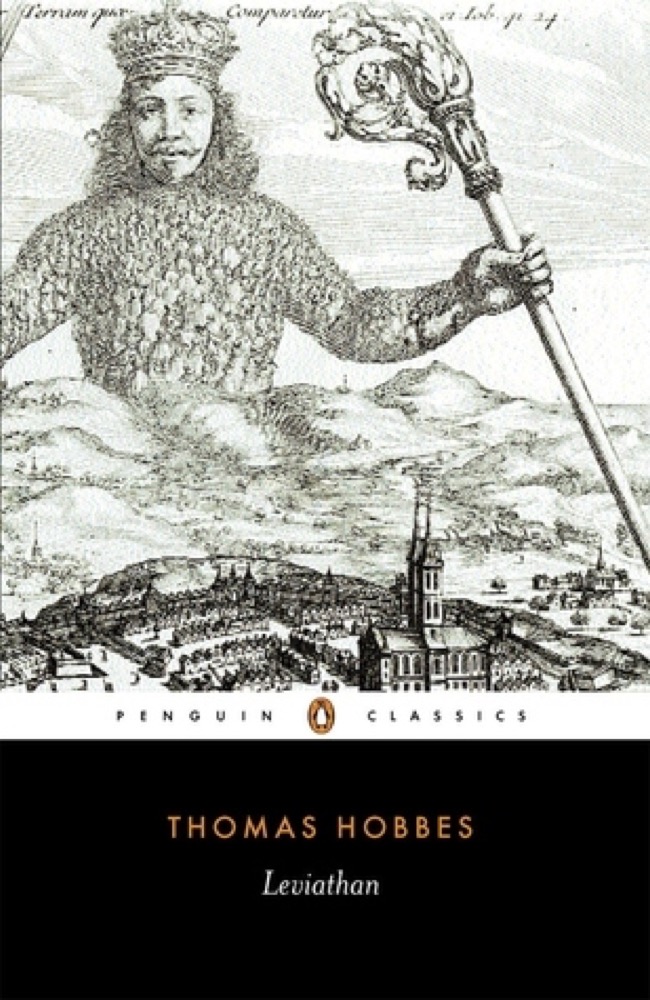 Leviathan
 The Complete Essays
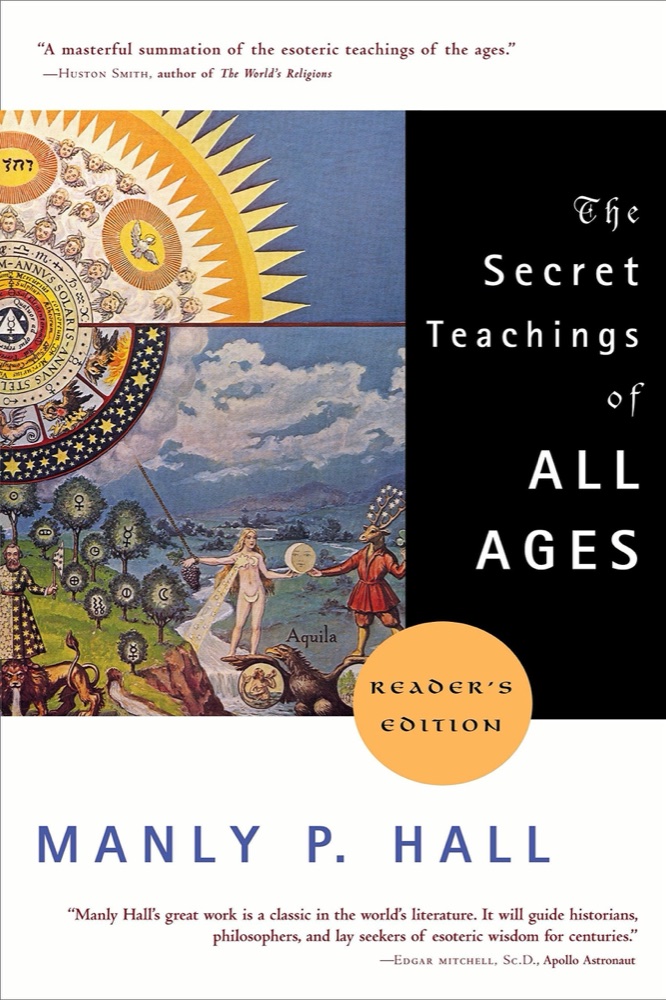 The Secret Teachings of All Ages
 The Revolt of the Angels
 The Closing of the American Mind
 Empire of Silence
 Common Sense
 The Story of Philosophy: The Lives and Opinions of the World's Greatest Philosophers
 When I Was a Child I Read Books
 Our Oriental Heritage
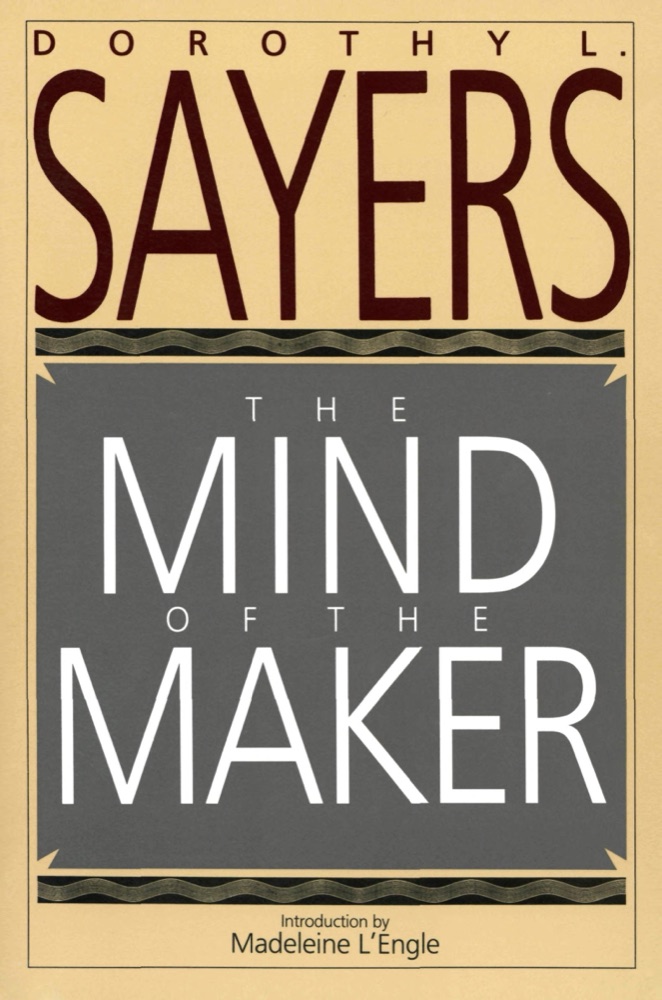 The Mind of the Maker: Dorothy L. Sayers' Witty Classic on the Trinity, Christianity, and Human Creativity
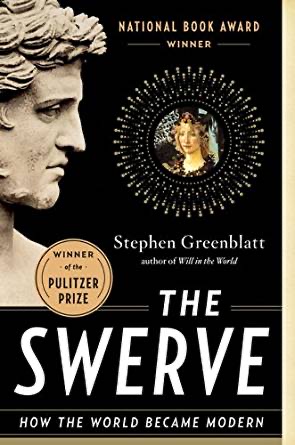 The Swerve: How the World Became Modern
 Ninety-Three
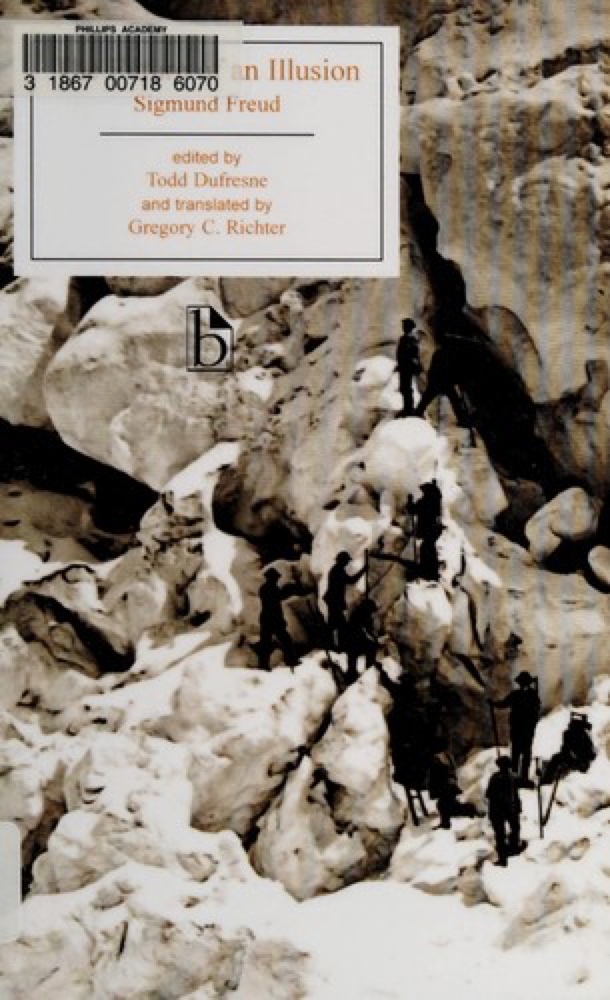 The Future of an Illusion