
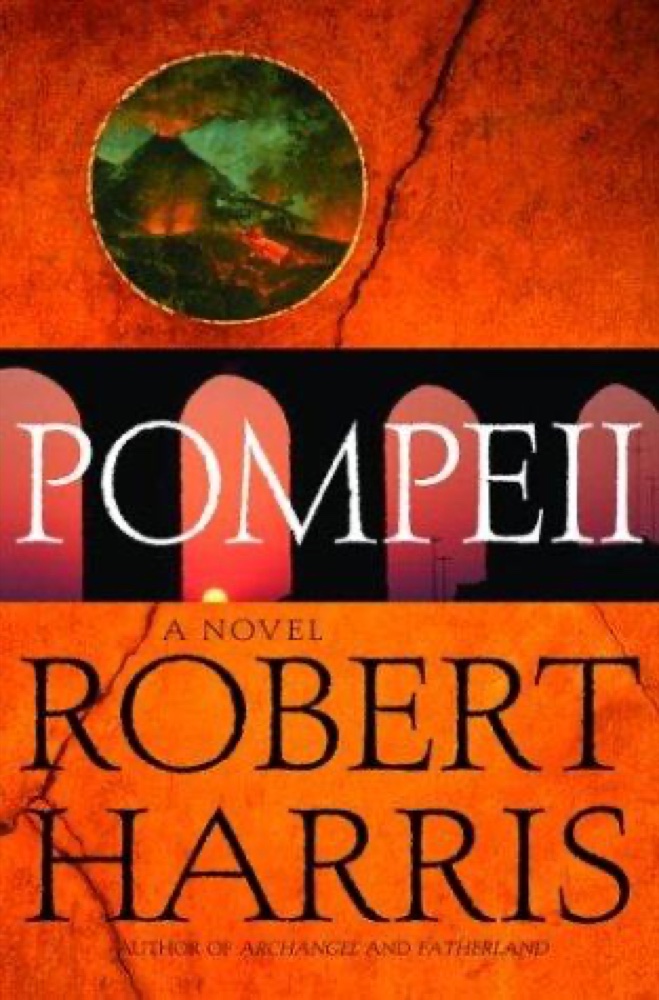
 Pompeii
Quotes from the Book
Power brings a man many luxuries, but a clean pair of hands is seldom among them.
Cicero smiled at us. 'The art of life is to deal with problems as they arise, rather than destory one's spirit by worrying about them too far in advance. Especially tonight.
You can always spot a fool, for he is a man who will tell you he knows who is going to win an election.
Another of Cicero's maxims was that if you must do something unpopular, you might as well do it wholeheartedly, for in politics there is no credit to be won by timidity.
Politics? Boring? Politics is history on the wing! What other sphere of human activity calls forth all that is most noble in men's souls, and all that is most base? Or has such excitement? Or more vividly exposes our strengths and weaknesses? Boring? You might as well say that life itself is boring!
It is perseverance, and not genius that takes a man to the top. Rome is full of unrecognized geniuses. Only perseverance enables you to move forward in the world.
Sometimes," he said, summing up the discussion with an aphorism I have never forgotten, "if you find yourself stuck in politics, the thing to do is start a fight--start a fight, even if you do not know how you are going to win it, because it is only when a fight is on, and everything is in motion, that you can hope to see your way through.
What a heap of ash most political careers amount to, when one really stops to consider them!
I found, for example, that Cicero was fond of repeating certain phrases, and these I learned to reduce to a line, or even a few dots--thus proving what most people already know, that politicians essentially say the same thing over and over again.
Sometimes it is foolish to articulate an ambition too early--exposing it prematurely to the laughter and skepticism of the world can destroy it before it is even properly born. But sometimes the opposite occurs, and the very act of mentioning a thing makes it suddenly seem possible, even plausible.
No one can really claim to know politics properly until he has stayed up all night writing a speech for delivery the following day. While the world sleeps, the orator paces by lamplight, wondering what madness ever brought him to this occupation in the first place. Arguments are prepared and discarded. The exhausted mind ceases to have any coherent grip upon the purpose of the enterprise, so that often--usually an hour or two after midnight--there comes a point where failing to turn up, feigning illness, and hiding at home seem the only realistic options. And then, somehow, just asa panic and humiliation beckon, the parts cohere, and there it is: a speech. A second-rate orator now retires gratefully to bed. A Cicero stays up and commits it to memory.
The art of life is to deal with problems as they arise, rather than destroy one’s spirit by worrying about them too far in advance.
if you find yourself stuck in politics, the thing to do is start a fight—start a fight, even if you do not know how you are going to win it, because it is only when a fight is on, and everything is in motion, that you can hope to see your way through.
Ich stellte mir seine Gedanken als einen schnellen, schmalen Wasserstrom vor, der sich durch die Fugen eines gefliesten Bodens bewegte - erst vorwärts, dann nach links und rechts ausgreifend, an einem Punkt kurz innehaltend, in eine andere Richtung weiter vorstoßend, sich immer weiter ausbreitend und verzweigend und dabei in seiner schimmernden, flüssigen Bewegung all die kleinen Möglichkeiten, Kosequenzen und Wahrscheinlichkeiten bedenkend.
Eloquence which does not startle I don’t consider eloquence.” CICERO, LETTER TO BRUTUS, 48 B.C.
Then came a volley of colorful abuse, delivered in such an imperious voice, at at such a volume, that Terentia's distant ancestor, who had commanded the Roman line against Hannibal at Cannae a century and a half before, must surely have sat bolt upright in his tomb.
I sense that I am dawdling in this narrative, having already reached my eighth roll of Hieratica, and need to speed it up a little, else either I shall die on the job, or you will be worn out reading.
Politics is a country idiot capable of concentrating on only one thing at a time.
The art of life is to deal with problems as they arise, rather than destroy one’s spirit by worrying about them too far in advance. Especially
He was a devoted follower of the teachings of Epicurus — “that pleasure is the beginning and end of living happily” — although I hasten to add that he was an Epicurean not in the commonly misunderstood sense, as a seeker after luxury, but in the true meaning, as a pursuer of what the Greeks call ataraxia, or freedom from disturbance. He consequently avoided arguments and unpleasantness of any kind (needless to say, he was unmarried) and desired only to contemplate philosophy by day and dine by night with his cultured friends. He
Atticus’s rule was that while he would never lend a book, any of his friends were free whenever they liked to come up and read or even make their own copies. And it was here, beneath a head of Aristotle, that we found Atticus reclining that afternoon, dressed in the loose white tunic of a Greek, and reading, if I remember rightly, a volume of Kyriai doxai, the principal doctrines of Epicurus. He came straight to the point. “I was at dinner last
The trouble with Lucious," he said, putting his feet up on the desk after this cousin has gone," is that he thinks politics is a fight for justice. Politics is a profession.
Nowadays, of course, most senators employ a slave or two two out their speeches; I have even heard of some who have no idea of what they are going to say until the next is place in front of them; how these fellows can call themselves statesman defeats me
that pleasure is the beginning and end of living happily
Cicero himself appeared, hand in hand with Tullia, nodding good morning to everyone, greeting each by name (“the first rule in politics, Tiro: never forget a face”).
As praetor, Cicero was expected to take in promising pupils from good families to study law with him, and in May, after the Senate recess, a new young intern of sixteen joined his chambers. This was Marcus Caelius Rufus from Interamnia, the son of a wealthy banker and prominent election official of the Velina tribe. Cicero agreed, largely as a political favor, to supervise the boy’s training
THE JOURNEY BACK from Regium to Rome was easier than our progress south had been, for by now it was early spring, and the mainland soft and welcoming. Not that we had much opportunity to admire the birds and flowers. Cicero worked every mile of the way, swaying and pitching in the back of his covered wagon, as he assembled the outline of his case against Verres. I would fetch documents from the baggage cart as he needed them and walk along at the rear of his carriage taking down his dictation, which was no easy feat. His plan, as I understood it, was to separate the mass of evidence into four sets of charges — corruption as a judge, extortion in collecting taxes and official revenues, the plundering of private and municipal property, and finally, illegal and tyrannical punishments. Witness statements and records were grouped accordingly, and even as he bounced along, he began drafting whole passages of his opening speech. (Just as he had trained his body to carry the weight of his ambition, so he had, by effort of will, cured himself of travel sickness, and over the years he was to do a vast amount of work while journeying up and down Italy.) In this manner, almost without his noticing where he was, we completed the trip in less than a fortnight and came at last to Rome on the Ides of March,
That so many people can derive so much pleasure from such a revolting spectacle,” he said to me when he returned home that night, “almost makes one doubt the very premise on which democracy is based.” But he was pleased nevertheless that the masses now thought of him as a good sport, as well as “the Scholar” and “the Greek.
waived his right to a province. For one thing, he did not want to
Watch on YouTube
About Robert Harris
We have collected 163 quotes from 8 books by Robert Harris on BookQuoters.
More about the author →

Book details
- Author
- Robert Harris
- Genre
- Fiction
- Goodreads rating
- 4.14 (43k ratings) →
Keep reading
 Dictator
 Conspirata
 The Ides of March
 Augustus
 Lives of the Stoics: The Art of Living from Zeno to Marcus Aurelius
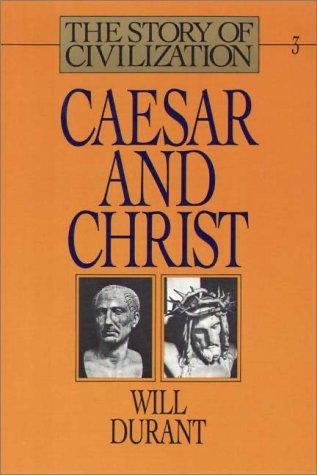 Caesar and Christ
 The March of Folly: From Troy to Vietnam
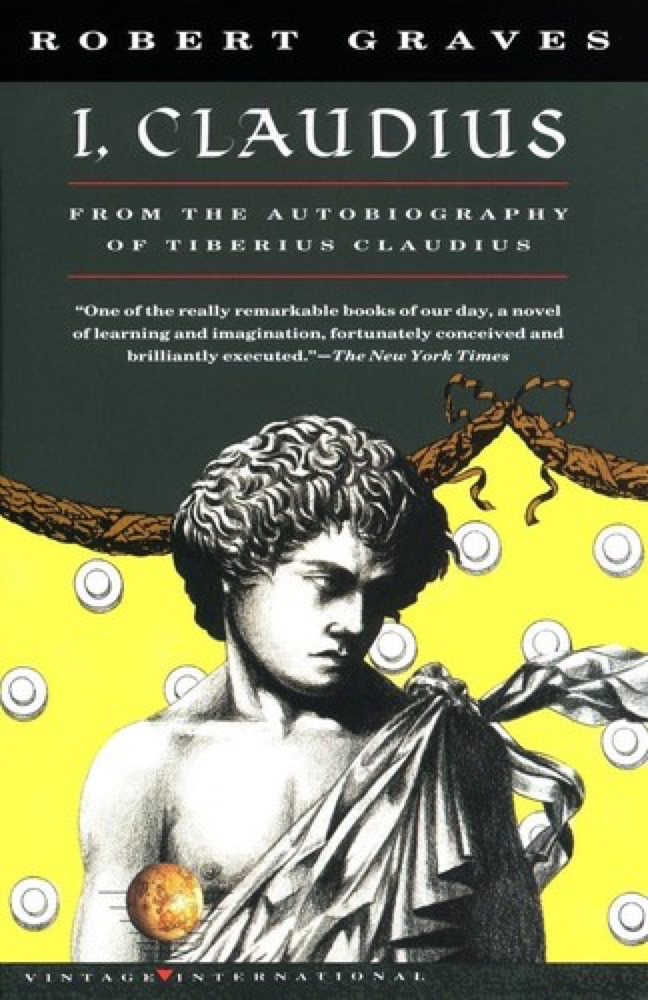 I, Claudius
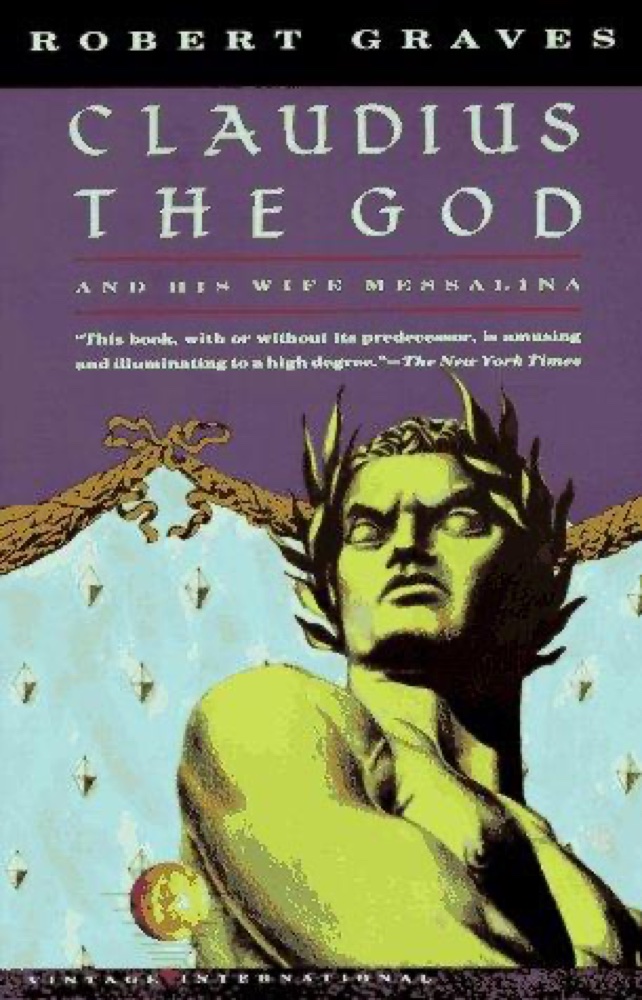 Claudius the God and His Wife Messalina
 Plutarch's Lives
 Foundation
 History of the Peloponnesian War
 The Autobiography of Benjamin Franklin
 The Proud Tower: A Portrait of the World Before the War, 1890-1914
 Gorgias
 The Dream of Scipio
 The Republic
 Foundation and Empire
 The Education of Henry Adams
 The Decline and Fall of the Roman Empire
 The Memoirs of Cleopatra
 Burr
Burr
 Essays
 The History of Tom Jones, a Foundling
 Gulliver's Travels
 The Walking Drum
 The History of the Decline and Fall of the Roman Empire Volume I
 Julius Caesar
 It Can't Happen Here
 Parallel Lives
 Letters to a Young Contrarian
 Stone's Fall
 Felix Holt: The Radical
 A Connecticut Yankee in King Arthur's Court
 Prelude to Foundation
 Princeps' Fury
 Walden & Civil Disobedience
 The Napoleon of Notting Hill
 The Rise of Theodore Roosevelt
 Puck of Pook's Hill
 The Man Who Was Thursday
 Bring Up the Bodies
 The Secret Agent
 Table for Two
 A Gentleman in Moscow
 Academ's Fury
 The Grace of Kings
 Civil Disobedience
 The Hands of the Emperor
 A Drop of Corruption
 Victory
 Don Quixote
 The Will to Battle
 The Histories
 The Once and Future King
 Antic Hay
 The Journeys of Socrates
 The Swerve: How the World Became Modern
 The Twelve Caesars