
 Walden & Civil Disobedience
Quotes from the Book
I was not born to be forced. I will breathe after my own fashion. Let us see who is the strongest.
1.2k
Take long walks in stormy weather or through deep snows in the fields and woods, if you would keep your spirits up. Deal with brute nature. Be cold and hungry and weary.
269
All voting is a sort of gaming, like checkers or back gammon, with a slight moral tinge to it, a playing with right and wrong, with moral questions; and betting naturally accompanies it. The character of the voters is not staked. I cast my vote, perchance, as I think right; but I am not vitally concerned that that right should prevail. I am willing to leave it to the majority. Its obligation, therefore, never exceeds that of expediency. Even voting for the right is doing nothing for it. It is only expressing to men feebly your desire that it should prevail. A wise man will not leave the right to the mercy of chance, nor wish it to prevail through the power of the majority.
111
There will never be a really free and enlightened state until the state comes to recognize the individual as a higher and independent power, from which all its own power and authority are derived.
68
Any man more right than his neighbors constitutes a majority of one already.
60
The rich man is always sold to the institution which makes him rich.
45
Law never made men a whit more just; and, by means of their respect for it, even the well-disposed are daily made the agents of injustice.
43
For it matters not how small the beginning may seem to be: what is once well done is done forever.
33
It is not desirable to cultivate a respect for the law, so much as for the right.
30
If a thousand men were not to pay their tax bills this year, that would not be a violent and bloody measure, as it would be to pay them, and enable the State to commit violence and shed innocent blood. This is, in fact, the definition of a peaceable revolution, if any such is possible.
28
Let your life be a counter-friction to stop the machine. What I have to do is to see, at any rate, that I do not lend myself to the wrong which I condemn.
23
Unjust laws exist: shall we be content to obey them, or shall we endeavor to amend them, and obey them until we have succeeded, or shall we transgress them at once? Men, generally, under such a government as this, think that they ought to wait until they have persuaded the majority to alter them. They think that, if they should resist, the remedy would be worse than the evil. But it is the fault of the government itself that the remedy is worse than the evil. It makes it worse. Why is it not more apt to anticipate and provide for reform? Why does it not cherish its wise minority? Why does it cry and resist before it is hurt? Why does it not encourage its citizens to put out its faults, and do better than it would have them? Why does it always crucify Christ and excommunicate Copernicus and Luther, and pronounce Washington and Franklin rebels?
22
A common and natural result of an undue respect of law is, that you may see a file of soldiers, colonel, captain, corporal, privates, powder-monkeys, and all, marching in admirable order over hill and dale to the wars, against their wills, ay, against their common sense and consciences, which makes it very steep marching indeed, and produces a palpitation of the heart.
20
I ask for, not at once no government, but at once a better government.
19
A minority is powerless while it conforms to the majority.
18
Your church is a baby-house made of blocks.
18
If any think that their influence would be lost there, and their voices no longer afflict the ear of the State, that they would not be as an enemy within its walls, they do not know how much truth is stronger than errors, nor how much more eloquently and effectively he can combat injustice who has experienced a little in his own person. Cast your whole vote, not a strip of paper merely, but your whole influence.
15
A wise man will not leave the right to the mercy of chance, nor wish it to prevail through the power of the majority.
14
The mass of men serve the state thus, not as men mainly, but as machines, with their bodies. They are the standing army, and the militia, jailers, constables, posse comitatus, etc. In most cases there is no free exercise whatever of the judgement or of the moral sense; but they put themselves on a level with wood and earth and stones; and wooden men can perhaps be manufactured that will serve the purpose as well. Such command no more respect than men of straw or a lump of dirt. They have the same sort of worth only as horses and dogs. Yet such as these even are commonly esteemed good citizens. Others--as most legislators, politicians, lawyers, ministers, and office-holders--serve the state chiefly with their heads; and, as they rarely make any moral distinctions, they are as likely to serve the devil, without intending it, as God.
13
I saw to what extent the people among whom I lived could be trusted as good neighbors and friends; that their friendship was for summer weather only; that they did not greatly propose to do right; that they were a distinct race from me by their prejudices and superstitions,
13
The government itself, which is only the mode which the people have chosen to execute their will, is equally liable to be abused and perverted before the people can act through it.
13
the state never intentionally confronts a man's sense, intellectual or moral, but only his body, his senses. It is not armed with superior wit or honesty, but with superior physical strength. I was not born to be forced. I will breathe after my own fashion. Let us see who is the strongest.
11
government is best which governs least"; and I should like to see it acted up to more rapidly and systematically. Carried out, it finally amounts to this, which also I believe—"That government is best which governs not at all"; and when men are prepared for it, that will be the kind of government which they will have.
10
If we were left solely to the wordy wit of legislators in Congress for our guidance, uncorrected by the seasonable experience and the effectual complaints of the people, America would not long retain her rank among the nations.
10
Is there not a sort of blood shed when the conscience is wounded? Through this wound a man's real manhood and immortality flow out, and he bleeds to an everlasting death.
9
I came into this world, not chiefly to make this a good place to live in, but to live in it, be it good or bad.
9
How can a man be satisfied to entertain an opinion merely, and enjoy it?
9
Our legislators have not yet learned the comparative value of free-trade and of freedom, of union, and of rectitude, to a nation. They have no genius or talent for comparatively humble questions of taxation and finance, commerce and manufacturers and agriculture. Nuestros legisladores no han aprendido todavía el valor comparativo del libre cambio y la libertad, la unión y la rectitud hacia la nación. No tienen genio ni talento para hacerse preguntas humildes sobre impuestos y finanzas, comercio, manufactura y agricultura.
9
Watch on YouTube
About Henry David Thoreau
We have collected 188 quotes from 8 books by Henry David Thoreau on BookQuoters.
More about the author →More by Henry David Thoreau
All books by Henry David Thoreau →

About the book
Resistance to Civil Government, called Civil Disobedience for short, is an essay by American transcendentalist Henry David Thoreau that was first published in 1849. In it, Thoreau argues that individuals should not permit governments to overrule or atrophy their consciences, and that they have a duty to avoid allowing such acquiescence to enable the government to make them the agents of injustice. Thoreau was motivated in part by his disgust with slavery and the Mexican–American War (1846–1848).
Book details
- First published
- 1849
- Author
- Henry David Thoreau
- Genre
- Philosophy
- Goodreads rating
- 3.94 (20k ratings)
Keep reading
 Civil Disobedience and Other Essays
 Rights of Man
 Reflections on the Revolution in France
 Democracy in America
 On Liberty
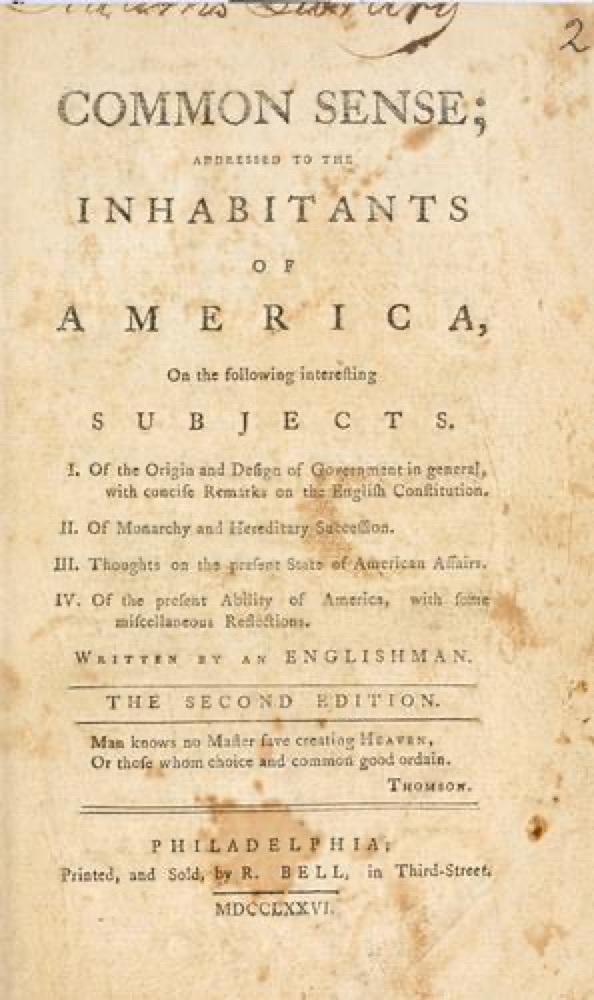 Common Sense
 Politics
 The Social Contract
 The Revolution: A Manifesto
 The Federalist Papers
 On the Republic / On the Laws
 Rules for Radicals: A Pragmatic Primer for Realistic Radicals
 The Road to Serfdom
 Gorgias
 Theological-Political Treatise
 Anarchy, State, and Utopia
 You Can't Be Neutral on a Moving Train: A Personal History of Our Times
 Letter from the Birmingham Jail
 It Can't Happen Here
 Utopia
 Self-Reliance and Other Essays
Walden & Civil Disobedience
Self-Reliance and Other Essays
Walden & Civil Disobedience
 The Moon is a Harsh Mistress
 Second Treatise of Government
 Children of Dune
 The Iron Heel
 History of the Peloponnesian War
 The Republic
 Walden Two
 Starship Troopers
 The Spirit of the Laws
 The Autobiography of Martin Luther King, Jr.
 De la Démocratie en Amérique, tome II
 God Emperor of Dune
 Ill Fares the Land
 The Story of My Experiments With Truth
 Behold a Pale Horse
 An Enemy of the People
 Faith of the Fallen
 Ancillary Justice
 The Secret Agent
 Doing Justice: A Prosecutor's Thoughts on Crime, Punishment, and the Rule of Law
 Empire
 Independent Study
 The 5000 Year Leap: A Miracle That Changed the World
 Naked Empire
 The Dispossessed
 The First Circle
 One Nation: What We Can All Do to Save America's Future
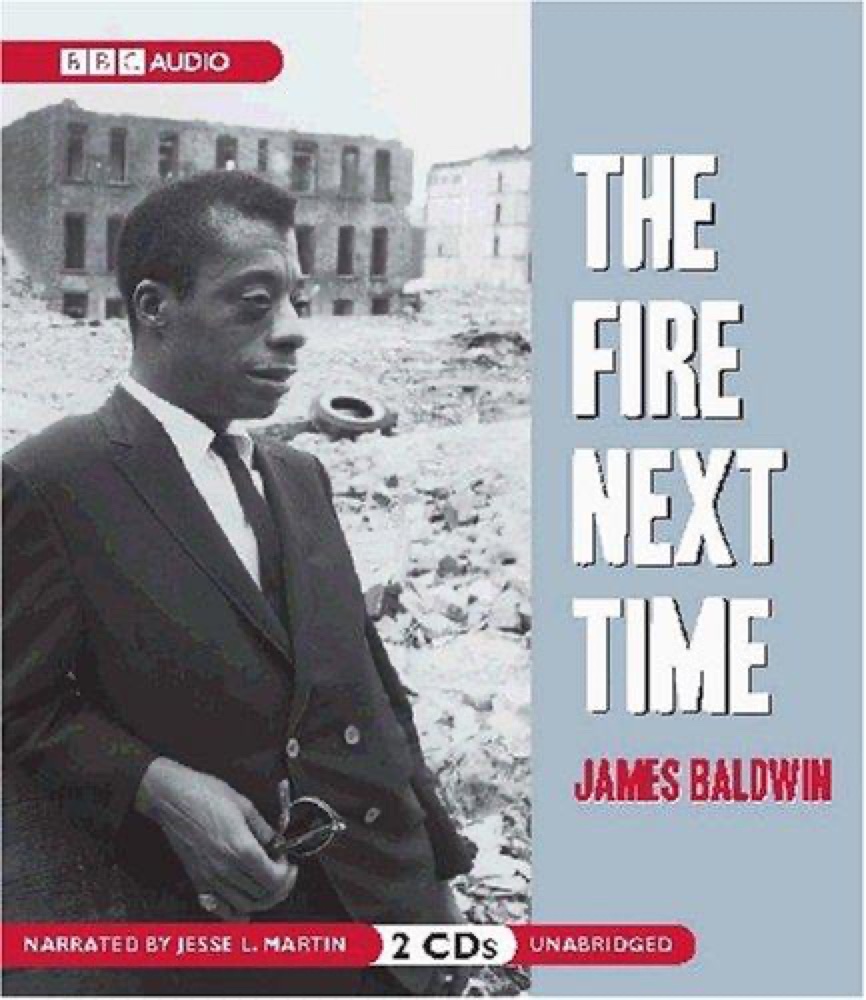 The Fire Next Time
 Justice: What's the Right Thing to Do?
 The Autobiography of Benjamin Franklin
 Leviathan
 The Constitution of Liberty
 Liberalism: The Classical Tradition
 Life Without Principle
 Discourses and Selected Writings
 The Machiavellians: Defenders of Freedom
 Assata: An Autobiography
 Promises to Keep: On Life and Politics