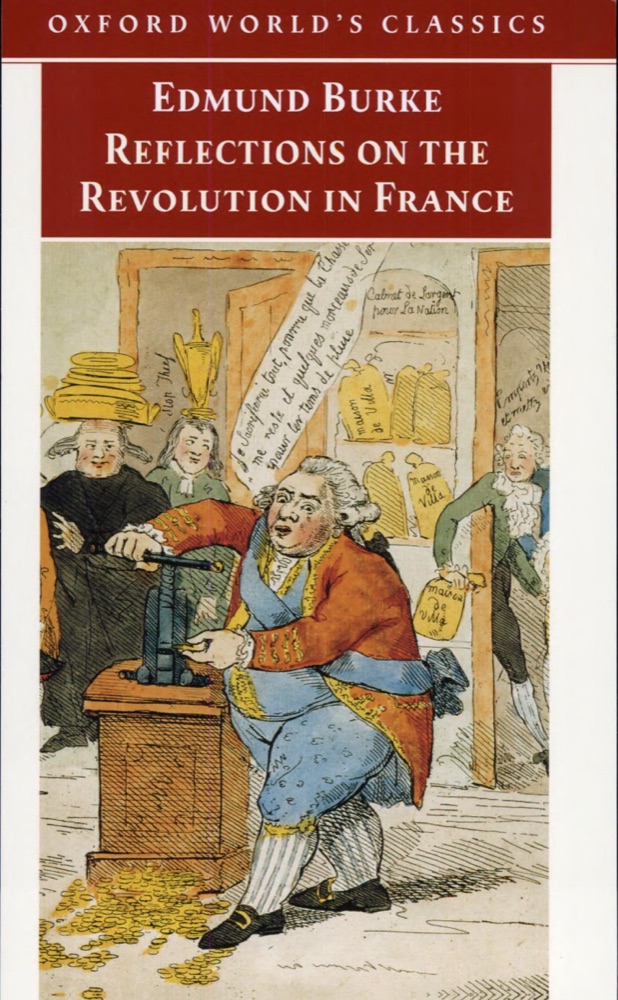
 Reflections on the Revolution in France
Quotes from the Book
The accumulation of all powers, legislative, executive, and judiciary, in the same hands, whether of one, a few, or many, and whether hereditary, selfappointed, or elective, may justly be pronounced the very definition of tyranny.
Safety from external danger is the most powerful director of national conduct. Even the ardent love of liberty will, after a time, give way to its dictates. The violent destruction of life and property incident to war, the continual effort and alarm attendant on a state of continual danger, will compel nations the most attached to liberty to resort for repose and security to institutions which have a tendency to destroy their civil and political rights. To be more safe, they at length become willing to run the risk of being less free.
It has been frequently remarked, that it seems to have been reserved to the people of this country to decide, by their conduct and example, the important question, whether societies of men are really capable or not, of establishing good government from reflection and choice, or whether they are forever destined to depend, for their political constitutions, on accident and force.
You must first enable the government to control the governed; and in the next place, oblige it to control itself.
On the other hand, it will be equally forgotten that the vigor of government is essential to the security of liberty; that, in the contemplation of a sound and well-informed judgment, their interest can never be separated; and that a dangerous ambition more often lurks behind the specious mask of zeal for the rights of the people than under the forbidden appearance of zeal for the firmness and efficiency of government. History will teach us that the former has been found a much more certain road to the introduction of despotism than the latter, and that of those men who have overturned the liberties of republics, the greatest number have begun their career by paying an obsequious court to the people; commencing demagogues, and ending tyrants.
When occasions present themselves in which the interests of the people are at variance with their inclinations, it is the duty of the persons whom they have appointed to be the guardians of those interests to withstand the temporary delusion in order to give them time and opportunity for more cool and sedate reflection. Instances might be cited in which a conduct of this kind has saved the people from very fatal consequences of their own mistakes, and has procured lasting monuments of their gratitude to the men who had courage and magnanimity enough to serve them at the peril of their displeasure.
The best we can hope for concerning the people at large is that they be properly armed.
The operations of the federal government will be most extensive and important in times of war and danger; those of the State governments, in times of peace and security.
A powerful, victorious ally is yet another name for master.
For in politics, as in religion, it is equally absurd to aim at making proselytes by fire and sword. Heresies in either can rarely be cured by persecution.
It may be a reflection on human nature, that such devices should be necessary to control the abuses of government. But what is government itself, but the greatest of all reflections on human nature? If men were angels, no government would be necessary. If angels were to govern men, neither external nor internal controls on government would be necessary. In framing a government which is to be administered by men over men, the great difficulty lies in this: you must first enable the government to control the governed; and in the next place oblige it to control itself.
Liberty is to faction what air is to fire...
Vigor of government is essential to the security of liberty.
Distrust naturally creates distrust, and by nothing is good will and kind conduct more speedily changed.
To all general purposes we have uniformly been one people each individual citizen everywhere enjoying the same national rights, privileges, and protection.
Have we not already seen enough of the fallacy and extravagance of those idle theories which have amused us with promises of an exemption from the imperfections, weaknesses and evils incident to society in every shape?
A good Government implies two things: first, fidelity to the object of Government, which is the happiness of the People; secondly, a knowledge of the means by which that object can be best attained.
And a further reason for caution, in this respect, might be drawn from the reflection that we are not always sure that those who advocate the truth are influenced by purer principles than their antagonists. Ambition, avarice, personal animosity, party opposition, and many other motives not more laudable than these, are apt to operate as well upon those who support as those who oppose the right side of a question. Were there not even these inducements to moderation, nothing could be more ill-judged than that intolerant spirit which has, at all times, characterized political parties. For in politics, as in religion, it is equally absurd to aim at making proselytes by fire and sword. Heresies in either can rarely be cured by persecution.
Among the many objects to which a wise and free people find it necessary to direct their attention, that of providing for their safety seems to be the first.
Divide et impera must be the motto of every nation that either hates or fears us.
It will be of little avail to the people, that the laws are made by men of their own choice, if the laws be so voluminous that they cannot be read, or so incoherent that they cannot be understood;
If the federal government should overpass the just bounds of its authority and make a tyrannical use of its powers, the people, whose creature it is, must appeal to the standard they have formed, and take such measures to redress the injury done to the Constitution as the exigency may suggest and prudence justify.
By a faction, I understand a number of citizens, whether amounting to a majority or a minority of the whole, who are united and actuated by some common impulse of passion, or of interest, adversed to the rights of other citizens, or to the permanent and aggregate interests of the community.
To judge from the conduct of the opposite parties, we shall be led to conclude that they will mutually hope to evince the justness of their opinions, and to increase the number of their converts by the loudness of their declamations and the bitterness of their invectives. An enlightened zeal for the energy and efficiency of government will be stigmatized as the offspring of a temper fond of despotic power and hostile to the principles of liberty. An over-scrupulous jealousy of danger to the rights of the people, which is more commonly the fault of the head than of the heart, will be represented as mere pretense and artifice, the stale bait for popularity at the expense of the public good.
Experience is the oracle of truth; and where its responses are unequivocal, they ought to be conclusive and sacred.
It is too true, however disgraceful it may be to human nature, that nations in general will make war whenever they have a prospect of getting anything by it.
If we are to be one Nation in any respect, it clearly ought to be in respect to other Nations.
The great and radical vice in the construction of the existing Confederation is in the principle of LEGISLATION for STATES or GOVERNMENTS, in their CORPORATE or COLLECTIVE CAPACITIES, and as contradistinguished from the INDIVIDUALS of which they consist.
Have we not already seen enough of the fallacy and extravagance of those idle theories which have amused us with promises of an exemption from the imperfections, weaknesses and evils incident to society in every shape? Is it not time to awake from the deceitful dream of a golden age, and to adopt as a practical maxim for the direction of our political conduct that we, as well as the other inhabitants of the globe, are yet remote from the happy empire of perfect wisdom and perfect virtue?
A dangerous ambition more often lurks behind the specious mask of zeal for the rights of the people, than under the forbidding appearance of zeal for the firmness and efficiency of Government.
Watch on YouTube
About Alexander Hamilton
We have collected 30 quotes from 1 book by Alexander Hamilton on BookQuoters.
More about the author →Book details
- Author
- Alexander Hamilton
- Genre
- Classics
- Goodreads rating
- 4.10 (43k ratings) →
Keep reading
Reflections on the Revolution in France
 Common Sense
 Civil Disobedience
 Rights of Man
 The Revolution: A Manifesto
 The Spirit of the Laws
 Democracy in America
 The 5000 Year Leap: A Miracle That Changed the World
 On Liberty
 The Social Contract
 Politics
 The Discourses
 The Road to Serfdom
 Civil Disobedience and Other Essays
 The Machiavellians: Defenders of Freedom
 The Old Regime and the French Revolution
 Behold a Pale Horse
 Ameritopia: The Unmaking of America
 Parliament of Whores: A Lone Humorist Attempts to Explain the Entire U.S. Government
 De la Démocratie en Amérique, tome II
 On Liberty and Other Essays
 The Constitution of Liberty
 On the Republic / On the Laws
 Second Treatise of Government
 These Truths: A History of the United States
 The Declaration of Independence and The Constitution of the United States
 Liberalism: The Classical Tradition
 Theological-Political Treatise
 The March of Folly: From Troy to Vietnam
 The Law
 Political Theology: Four Chapters on the Concept of Sovereignty
 Ill Fares the Land
 The Republic
 A Theory of Justice
 A People's History of the United States
 The Next Decade: Where We've Been . . . and Where We're Going
 Capitalism and Freedom
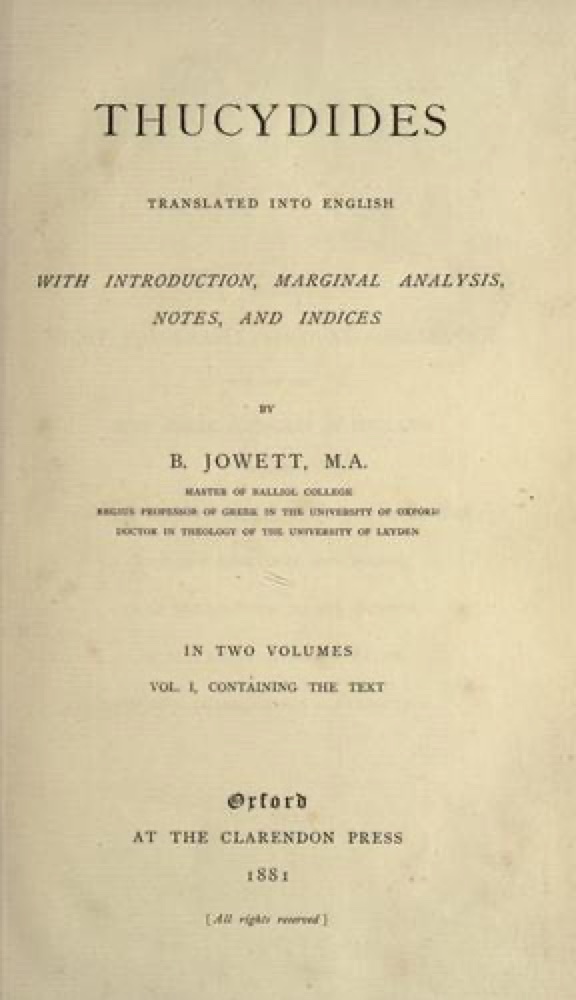 History of the Peloponnesian War
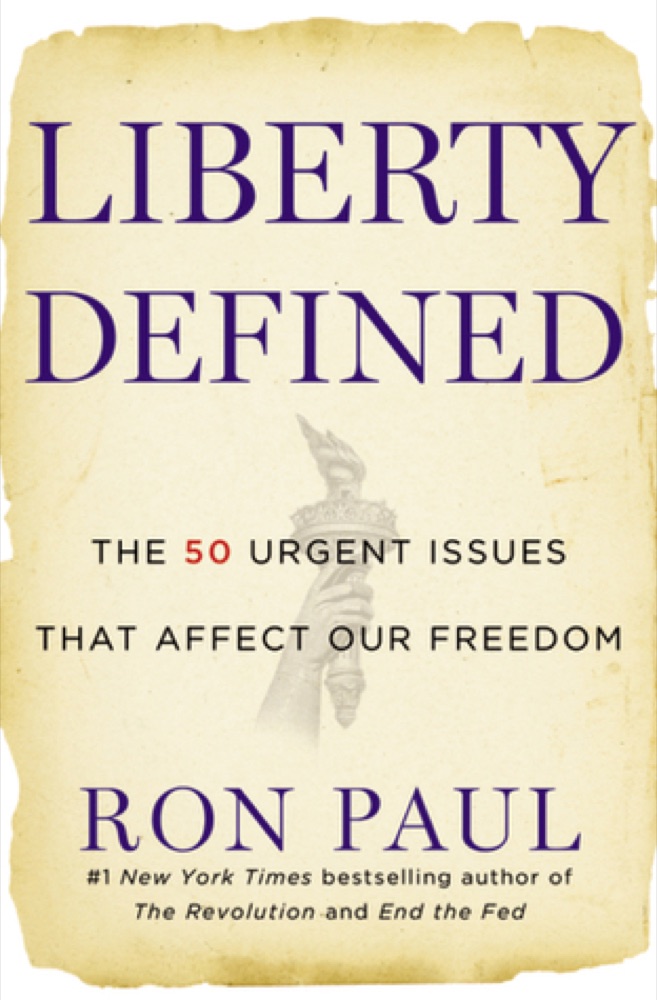 Liberty Defined: 50 Essential Issues That Affect Our Freedom
 It Can't Happen Here
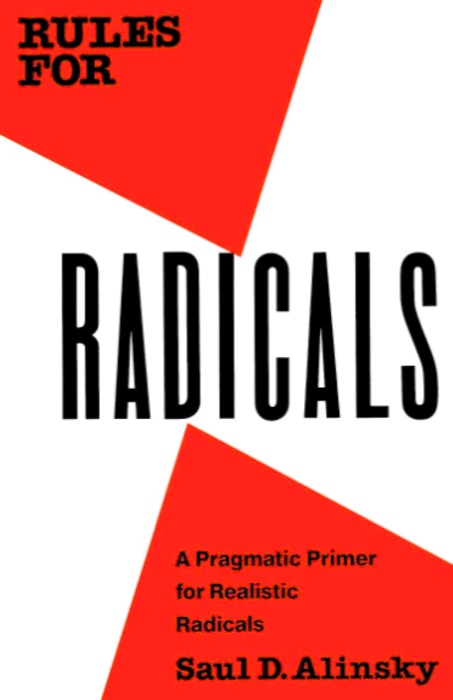 Rules for Radicals: A Pragmatic Primer for Realistic Radicals
 The Iron Heel
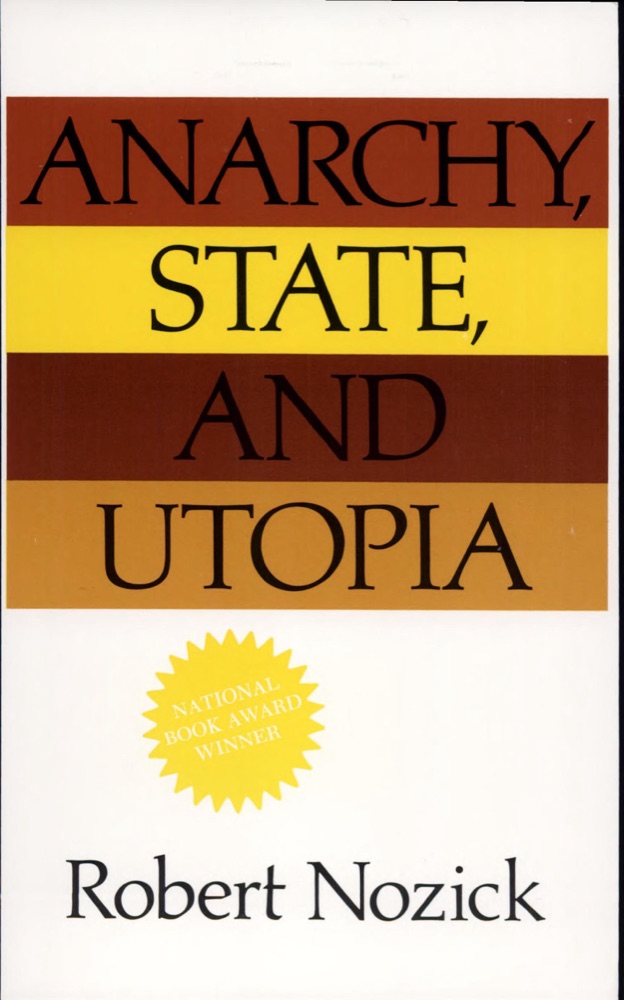 Anarchy, State, and Utopia
 Conspirators' Hierarchy: The Story of the Committee of 300
 The Lessons of History
 One Nation: What We Can All Do to Save America's Future
 Burr
Burr
 Children of Dune
 Arguably: Selected Essays
 The Origins of Totalitarianism
 The Chomsky-Foucault Debate: On Human Nature
 Chomsky On Anarchism
 The Greatest Sentence Ever Written
 Profiles in Courage
 Capitalism: The Unknown Ideal
 The Subjection of Women
 Empire
 The Dosadi Experiment
 Elements of the Philosophy of Right
 Founding Brothers: The Revolutionary Generation