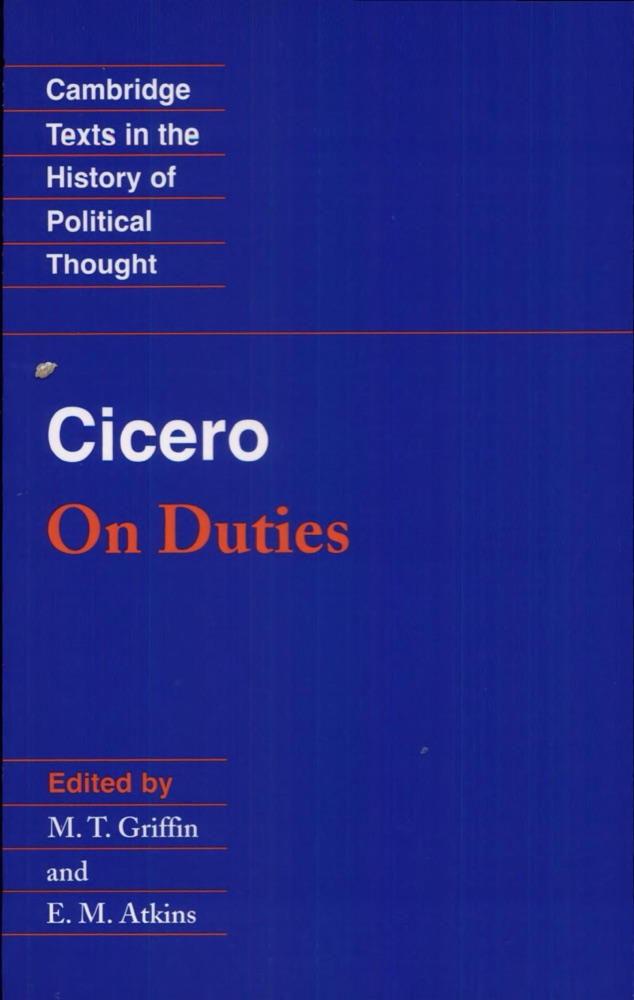
 On Duties
Quotes from the Book
True law is right reason in agreement with nature; it is of universal application, unchanging and everlasting; it summons to duty by its commands, and averts from wrongdoing by its prohibitions.
37
In a republic this rule ought to be observed: that the majority should not have the predominant power.
34
The good life is impossible without a good state; and there is no greater blessing than a well-ordered state.
10
In communities and individuals alike, excessive freedom topples over into excessive slavery. Extreme freedom produces a tyrant, along with the extremely harsh and evil slavery that goes with him.
8
Justice looks for no prize and no price; it is sought for itself, and is at once the cause and meaning of all the virtues. . . . The worst kind of injustice is to look for profit from injustice.
7
Honesty is the best policy
5
There is no doubt that a person who is called generous and open-handed has duty in mind, not gain. So likewise justice looks for no prize and no price; it is sought for itself, and is at once the cause and meaning of all the virtues.
5
What can be more certain than this, that no one should be so stupid and so arrogant as to believe that reason and intelligence are present in him but not in the heavens and in the world? Or that those things which are barely understood by the highest intellectual reasoning are kept in motion without any intelligence at all? As for the person who is not impelled to give thanks for the procession of the stars, the alternation of day and night, the regular succession of the seasons, and the fruits which are produced for our enjoyment—how can such a person be counted as human at all?
4
The aim of a ship's captain is a successful voyage; a doctor's, health; a general's, victory. So the aim of our ideal statesman is the citizens' happy life--that is, a life secure in wealth, rich in resources, abundant in renown, and honorable in its moral character. That is the task which I wish him to accomplish--the greatest and best that any man can have.
4
For riches, fame, and power, without wisdom and a just method of regulating ourselves and commanding others, a government is full of discredit and insolent arrogance, nor is there any kind of government more deformed than that in which the wealthiest are regarded as the noblest.
3
When conscience reigns, it allows no resting-place to lust, violence, and temerity.
3
We are born for justice, and . . . what is just is based, not on opinion, but on nature.
3
By all means press on . . . and bear in mind that you are not mortal, but only that body of yours. You are not the person presented by your physical appearance. A man's true self is his mind, not that form which can be pointed out by a finger.
3
But when there is mutual fear between one individual and another, and between one class and another, then, because no one can rely on his own strength, a kind of pact is made between the people and the powerful few. From that emerges the compromise recommended by Scipio, i.e. the mixed form of government. You see, the mother of justice is not nature, nor good intentions, but weakness. For when one is faced with a threefold choice: (a) to do injury
2
There might be believed to exist one Universal Monarch in heaven [who] be accounted both king and father of all creatures.
2
However one defines man, the same definition applies to us all.
2
Watch on YouTube
About Marcus Tullius Cicero
We have collected 46 quotes from 3 books by Marcus Tullius Cicero on BookQuoters.
More about the author →More by Marcus Tullius Cicero
About the book
Cicero (Marcus Tullius, 106-43 BCE), Roman lawyer, orator, politician and philosopher, of whom we know more than of any other Roman, lived through the stirring era which saw the rise, dictatorship, and death of Julius Caesar in a tottering republic. In his political speeches especially and in his correspondence we see the excitement, tension and intrigue of politics and the part he played in the turmoil of the time. Of about 106 speeches, delivered before the Roman people or the Senate if they were political, before jurors if judicial, 58 survive (a few of them incompletely). In the fourteenth century Petrarch and other Italian humanists discovered manuscripts containing more than 900 letters of which more than 800 were written by Cicero and nearly 100 by others to him. These afford a revelation of the man all the more striking because most were not written for publication. Six rhetorica
Book details
- First published
- 1928
- Author
- Marcus Tullius Cicero
- Genre
- Philosophy
- Goodreads rating
- 3.88 (3k ratings)
Keep reading
 Politics
 On Liberty
 Rights of Man
 The Social Contract
 The Laws of Plato
 Civil Disobedience
 Gorgias
 Common Sense
 Reflections on the Revolution in France
 Theological-Political Treatise
 Justice: What's the Right Thing to Do?
 The Nicomachean Ethics
 Democracy in America
 Elements of the Philosophy of Right
 The Spirit of the Laws
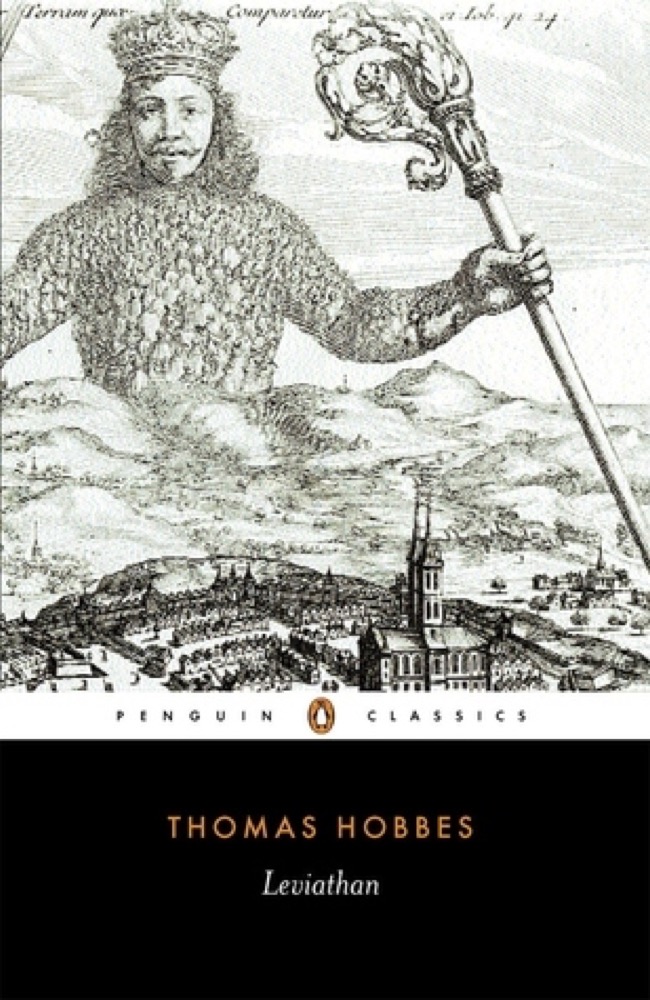 Leviathan
 The Will to Power
 Ethics
 Doing Justice: A Prosecutor's Thoughts on Crime, Punishment, and the Rule of Law
 Utopia
 Groundwork of the Metaphysics of Morals
 Civil Disobedience and Other Essays
 The Republic
 The Discourses
 Rules for Radicals: A Pragmatic Primer for Realistic Radicals
 Second Treatise of Government
 The Muqaddimah: An Introduction to History
 The Story of My Experiments With Truth
 Faith of the Fallen
 On the Genealogy of Morals
 The Ides of March
On Duties
The Ides of March
On Duties
 A Theory of Justice
 Dictator
 God Emperor of Dune
 Self-Reliance and Other Essays
 Heretics
 Philosophical Dictionary
 A Calendar of Wisdom: Daily Thoughts to Nourish the Soul
 The Virtue of Selfishness: A New Concept of Egoism
 The Soul of Man Under Socialism
 The Ego and Its Own
 Persian Letters
 The Ethics of Ambiguity
 The Immortals of Meluha
 Daybreak: Thoughts on the Prejudices of Morality
 Shōgun
 The Wisdom of Life
 The Way of All Flesh
 The Machiavellians: Defenders of Freedom
 Self-Reliance: An Excerpt from Collected Essays, First Series
 Discourse on the Origin of Inequality
 Naked Empire
 The Constitution of Liberty
 Emile or On Education
 Children of Dune
 The Consolation of Philosophy
 City of God
 Sacred Hunger
 The Theory of Moral Sentiments