
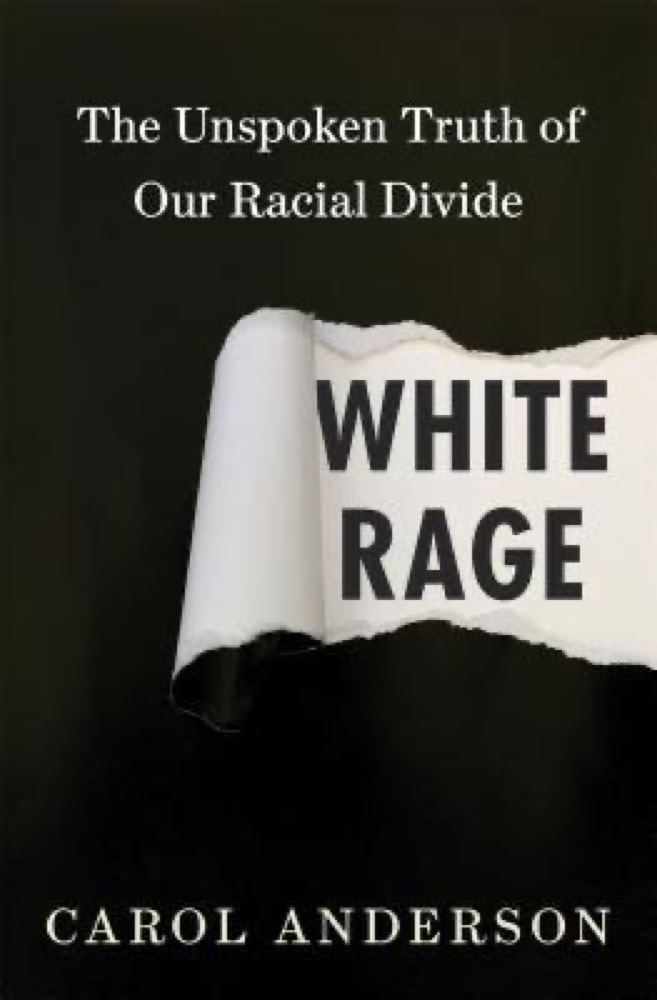
 White Rage: The Unspoken Truth of Our Racial Divide
Quotes from the Book
They target the socioeconomic characteristics of a people (poverty, lack of mobility, illiteracy, etc.) and then soak the new laws in “racially neutral justifications—such as administrative efficiency” or “fiscal responsibility”—to cover the discriminatory intent.
1
In short, Virginia ensured that there would be schooling for whites but not blacks; and after that, the state changed its laws so that those who were illiterate would not be able to vote.
1
In 2016 and 2017, whites were the only racial group where the majority cast a ballot for Donald Trump and Roy Moore, two wholly unqualified candidates who paraded their white supremacist views in a suit and tie.
The wholesale slaughter of African Americans in Colfax, Louisiana (1873), Wilmington, North Carolina (1898), and Ocoee, Florida (1920), resulted in the loss of hundreds of lives simply because whites were enraged that black people had voted.
On Facebook, the Russians posted under the name Blacktivist, which they had used to elbow their way into a series of rallies in Buffalo, New York, that were demanding answers about the mysterious jailhouse death of a young African American woman, India Cummings. After muscling their way into the protests, the Russians began inflating their stature and profile using an internet bot farm that gave Blacktivist an even larger following than Black Lives Matter had. With their bona fides secured, the undercover Russians then began posting about the upcoming 2016 election. “They would say things like: ‘What have the Democrats done for you the last four years, the last 60 years’ ” and then, when the unspoken reply was “nothing,” the Russians in their best cyber-militancy mode would answer: “ ‘Show them your power by not showing up to vote.’ ” The message spread like a virulent toxin.6 One election expert observed that “Russians understood how important minority voters were to Hillary Clinton’s chances in this election. They were able to read the situation and say, ‘If we demobilize this community, it could have enough of an impact.
Iowa congressman Steve King lamented the passing of "a time in American history when you had to be a male property owner in order to vote." Florida congressional candidate Ted Yoho echoed that sentiment when he also proffered, "You used to have to be a property owner to vote." Of course, after the Great Recession, with African American homeownership lower than it had been during the 1930s and the lowest of all ethnic and racial groups in the United States, the implications of the GOP longings were obvious.
A Republican seizure of power based not on the strength of the party's ideas but on massive disfranchisement denies citizens not only their rights, but also the "talisman" of humanity that voting represents. The lie of voter fraud breaks a World War II veteran down into a simple, horrifying statement: "I wasn't a citizen no more." It forces a man, a retired engineer who was instrumental in building this nation, into facing a bitter truth: "I am not wanted in this state." It eviscerates the key sense of self-worthy in a disabled man who has to pen the painful words "My constitutional rights have been stripped from me." It maligns thousands of African Americans who resiliently weathered the Missouri cold and hours of bureaucratic runarounds as nothing but criminals and frauds. It leaves a woman suffering from lung cancer absolutely "distraught" and convinced that "they prevented us from voting," because none of her IDs could penetrate Wisconsin's law. It shatters the dying wish of a woman who, in her last moments on earth, wanted to cast a vote for possibly the first woman president of the United States. But an expired driver's license meant none of that was to be.
The goal of all the GOP voter ID laws is to reduce significantly the demographic and political impact of a growing share of the American electorate. To diminish the ability of black, Latinos, and Asians, as well as the poor and students to choose government representatives and the types of policies they support. Unfortunately, it's working.
The ACLU and NAACP went right after the core of the issue—there was no voter fraud. Therefore, there was no state interest at stake—certainly nothing that could warrant this assault on the Fifteenth Amendment. It "bear[s] repeating," they asserted, that Indiana had "not identified even a single instance of voter impersonation fraud occurring at the polls in the history of Indiana" and no one in the state has "ever been charged" with that crime. Ever. Moreover, when the bill was being drafted, "no evidence of in-person impersonation fraud was presented to the legislature," making SEA 483, at best, a solution in search of a problem.
Based on a perception that had been carefully crafted, cultivated, and stoked by the GOP, state governments believed they had a mandate, a calling even, to wrestle this virtually nonexistent voter impersonation fraud to the ground.
All that had to happen was for the GOP to reinforce the lie of voter fraud, create the public perception of democracy imperiled, increase the groundswell to "protect the integrity of the ballot box," require exactly the type of identification that blacks, the poor, the young, and the elderly did not have, and, equally important, mask these acts of aggressive voter suppression behind the nobility of being "civic-minded.
Paul Weyrich, a conservative activist and founder of the American Legislative Exchange Council (ALEC), which eventually crafted voter suppression legislation that spread like a cancer throughout the United States, was brutally clear: "I don't want everybody to vote.
[Jeff] Sessions was "someone who thinks that the VRA ought not to have ever been in existence" because, for him, it was an "intrusive piece of legislation." Thus, in a move that flipped the Voting Rights Act on its head, his investigation targeted only counties where African Americans had won office.
The VRA was nevertheless a seismic shift in thought, action, and execution for the U.S. government when compared with the Civil Rights Act of 1957 and its equally enfeebled companion legislation of 1960. Rather than passively waiting for locales to violate the rights of American citizens and then sitting still until those who had been routinely brutalized by this system made a formal complaint, the VRA put the responsibility for adhering to the Constitution onto state and local governments.
The Civil Rights Act (1957), while seemingly a landmark piece of legislation, was actually a paper tiger that had no ability to protect the right to vote. The act did create the Civil Rights Commission, upgrade the Department of Justice's section on civil rights to a division, and authorize the U.S. attorney general to sue those violating the voting rights of American citizens. But it was—by design and implementation—no match for the entrenched resistance to black citizenship.
America was paralyzed; on one hand, by the power of the Southern Democrats in Congress, whose inordinate political strength and control of key committees was based on their ability to win reelection after reelection because of massive disfranchisement and racial terror; and on the other, by the missionary-like belief that America was the champion of democracy and freedom in the battle against the Soviet Union, whose death grip on human rights had no limits.
The tools of Jim Crow disfranchisement worked all too well. In 1867, the percentage of African American adults registered to vote in Mississippi was 66.9 percent; by 1955, it was 4.3 percent.
Whites had already posted a sign on the black church in Taylor County, Georgia: "The first Negro to vote will never vote again." Snipes was not deterred. In July 1946, he cast his ballot in Taylor County's primary. In fact, he was the only black person to do so; and with that act of democratic bravery, Maceo Snipes signed his death warrant. A few days later four white men showed up at Snipes's house and demanded that he step outside. As he stood on the porch, they pointed their guns at him and began firing. Snipes staggered and fell to the ground. They just walked away. His mother ran out of the house and got him to the hospital, but in Jim Crow America, black patients did not have the right to health care. He lay in a room the size of a closet unattended for six hours bleeding, just bleeding. This strong man, this veteran, lingered for two more days, but the damage was too extensive, the medical treatment too slow, and Georgia's hate too deep.
What the states could not accomplish by law, they were more than willing to achieve by violence. The wholesale slaughter of African Americans in Colfax, Louisiana (1873), Wilmington, North Carolina (1898), and Ocoee, Florida (1920), resulted in the loss of hundreds of lives simply because whites were enraged that black people had voted.
Another powerful tool to stop African Americans from having any political voice was the white primary. Key to the white primary effectiveness was the fact that from Reconstruction until 1968 the South was a one-party system—only Democrats needed apply, so despised was the party of Lincoln. Several of the states, therefore, began to discern that one way to skirt around the Fifteenth Amendment was to tinker with the primary election, during which the Democratic candidate was chosen.
As late as November 9, 1963, Texas saw the enormous value of the poll tax and voted to maintain this tool of disfranchisement because "removing the poll tax requirement...would 'allow' minorities to 'flood the polls.
Arkansas, for example, raised "only 5 percent of [its] total school budget by the poll tax, a tax that [kept] a good 80 percent of [the state's] adult citizens from voting.
Despite the fact that this scene played out over and over in registrars' offices across the South—where a registrar in Mississippi could even ask African Americans, "How many bubbles in a bar of soap?" —the law itself was just race-neutral enough to withstand judicial scrutiny.
Bilbo was pointing to the power of the literacy test and understanding clause, which were tailor-made for societies that systematically refused to educate millions of their citizens and ensured that the bulk of the population remained functionally illiterate...for most of the twentieth century, many Jim Crow school systems did not have high schools for African Americans.
One delegate questioned him: "Will it not be done by fraud and discrimination?" "By fraud, no. By discrimination, yes," Glass retorted.
In 1890...the Magnolia State passed the Mississippi Plan, a dizzying array of poll taxes, literacy tests, understanding clauses, newfangled voter registration rules, and "good character" clauses—all intentionally racially discriminatory but dressed up in the genteel garb of bringing "integrity" to the voting booth.
Watch on YouTube
About Carol Anderson
We have collected 55 quotes from 2 books by Carol Anderson on BookQuoters.
More about the author →More by Carol Anderson
White Rage: The Unspoken Truth of Our Racial Divide
About the book
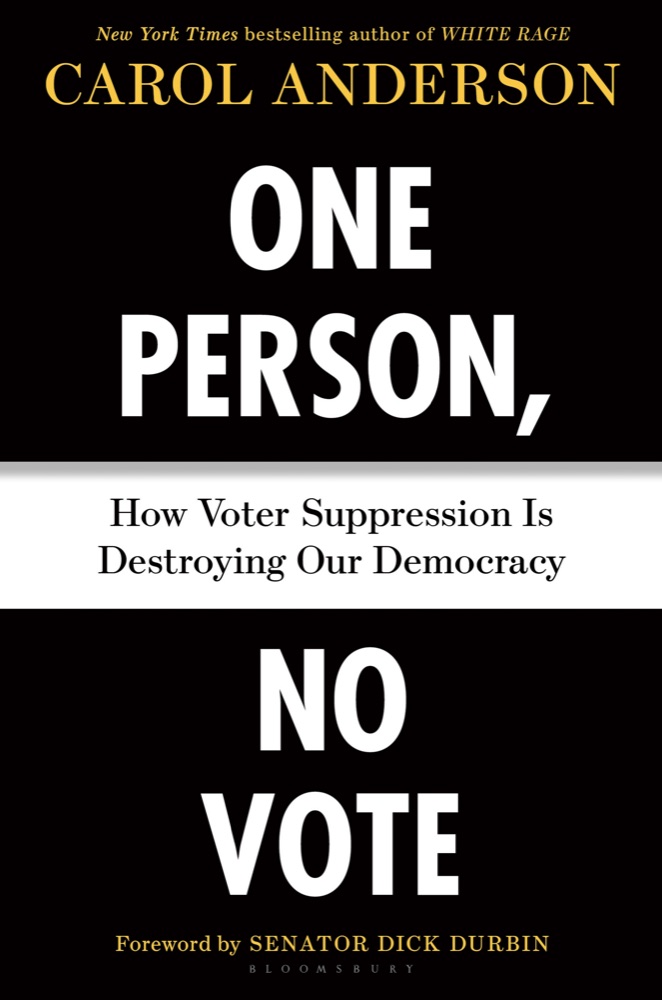
From the award-winning, New York Times bestselling author of White Rage, the startling—and timely—history of voter suppression in America, with a foreword by Senator Dick Durbin.
In her New York Times bestseller White Rage, Carol Anderson laid bare an insidious history of policies that have systematically impeded black progress in America, from 1865 to our combustible present. With One Person, No Vote, she chronicles a related history: the rollbacks to African American participation in the vote since the 2013 Supreme Court decision that eviscerated the Voting Rights Act of 1965. Known as the Shelby ruling, this decision effectively allowed districts with a demonstrated history of racial discrimination to change voting requirements without approval from the Department of Justice.
Focusing on the aftermath of Shelby, Anderson follows the astonishing story of government-dictated racia
Book details
- First published
- 2018
- Author
- Carol Anderson
- Genre
- Nonfiction
- Goodreads rating
- 4.38 (3k ratings)
The buzz
- The New York TimesReview in The New York Timesprofessional review (via Book Marks)
- The Washington PostReview in The Washington Postprofessional review (via Book Marks)
- Los Angeles TimesReview in Los Angeles Timesprofessional review (via Book Marks)
- Kirkus ReviewsReview in Kirkus Reviewsprofessional review (via Book Marks)
- Star TribuneReview in Star Tribuneprofessional review (via Book Marks)
- BooklistReview in Booklistprofessional review (via Book Marks)
Keep reading
White Rage: The Unspoken Truth of Our Racial Divide
 Simple Justice: The History of Brown v. Board of Education and Black America's Struggle for Equality
 Myth America: Historians Take On the Biggest Legends and Lies About Our Past
 A Fever in the Heartland: The Ku Klux Klan's Plot to Take Over America, and the Woman Who Stopped Them
 The Color of Law: A Forgotten History of How Our Government Segregated America
 Stony the Road: Reconstruction, White Supremacy, and the Rise of Jim Crow
 Un-Trumping America: A Plan to Make America a Democracy Again
 The Blood of Emmett Till
 Four Hundred Souls: A Community History of African America, 1619-2019
 Devil in the Grove: Thurgood Marshall, the Groveland Boys, and the Dawn of a New America
 The New Jim Crow: Mass Incarceration in the Age of Colorblindness
 Silent Covenants: Brown v. Board of Education and the Unfulfilled Hopes for Racial Reform
 White Trash: The 400-Year Untold History of Class in America
 We Were Eight Years in Power: An American Tragedy
 Nixonland: The Rise of a President and the Fracturing of America
 Black Reconstruction in America 1860-1880
 Strangers in Their Own Land: Anger and Mourning on the American Right
 Black AF History: The Un-Whitewashed Story of America
 The Warmth of Other Suns: The Epic Story of America's Great Migration
 America (The Book): A Citizen's Guide to Democracy Inaction
 Robert E. Lee and Me: A Southerner's Reckoning with the Myth of the Lost Cause
 Why We Can't Wait
 Evil Geniuses: The Unmaking of America
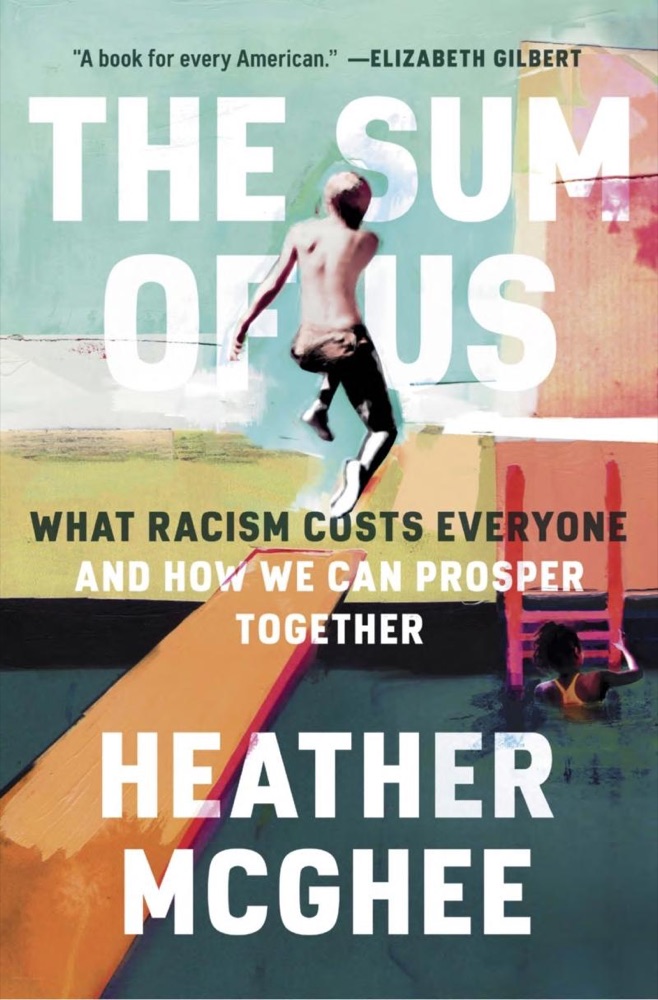 The Sum of Us: What Racism Costs Everyone and How We Can Prosper Together
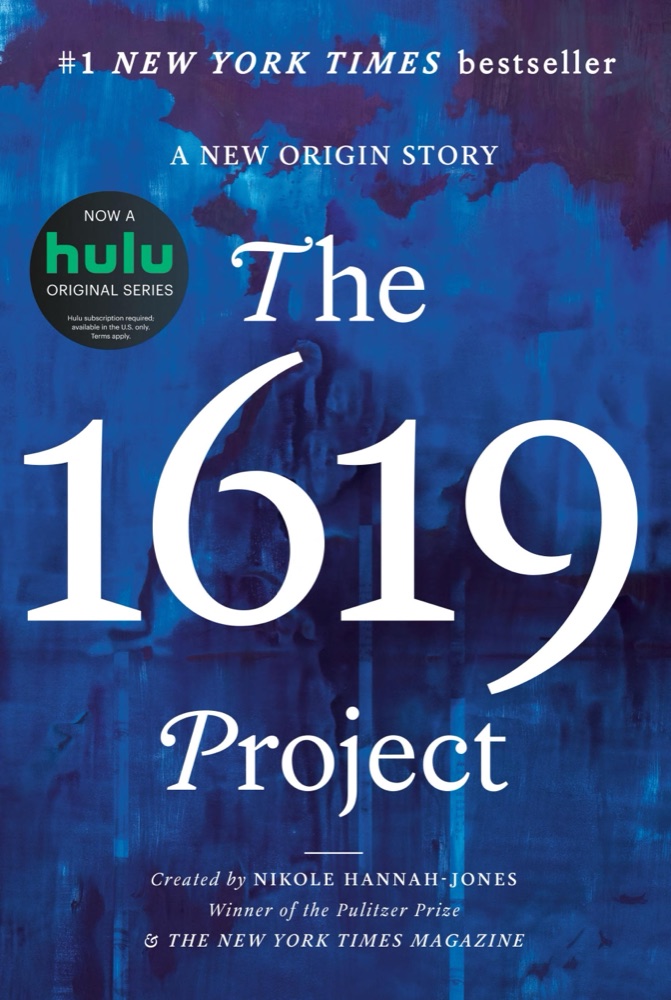 The 1619 Project: A New Origin Story
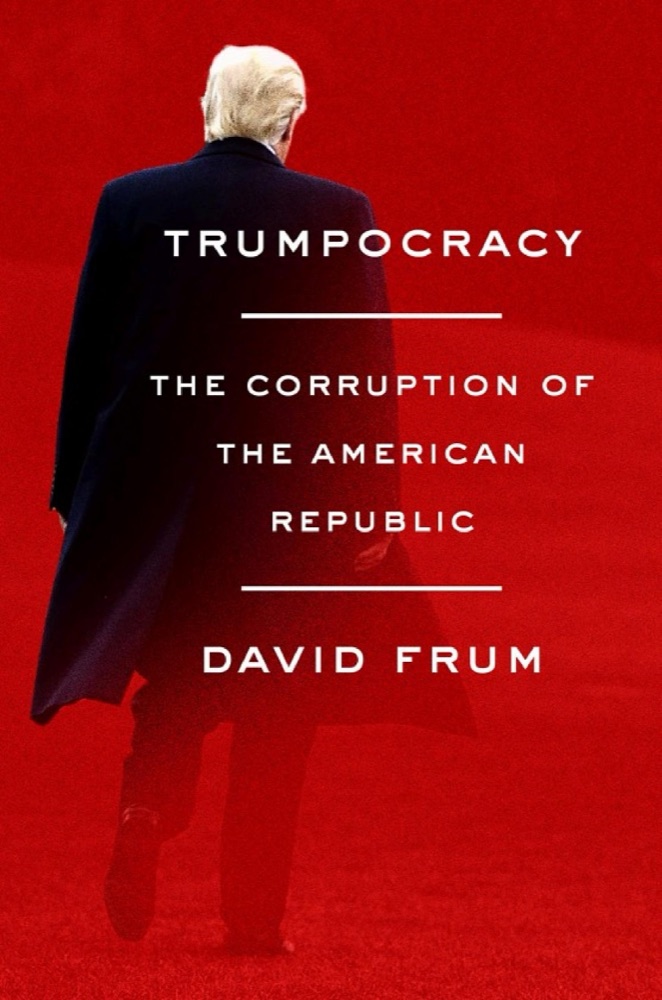 Trumpocracy: The Corruption of the American Republic
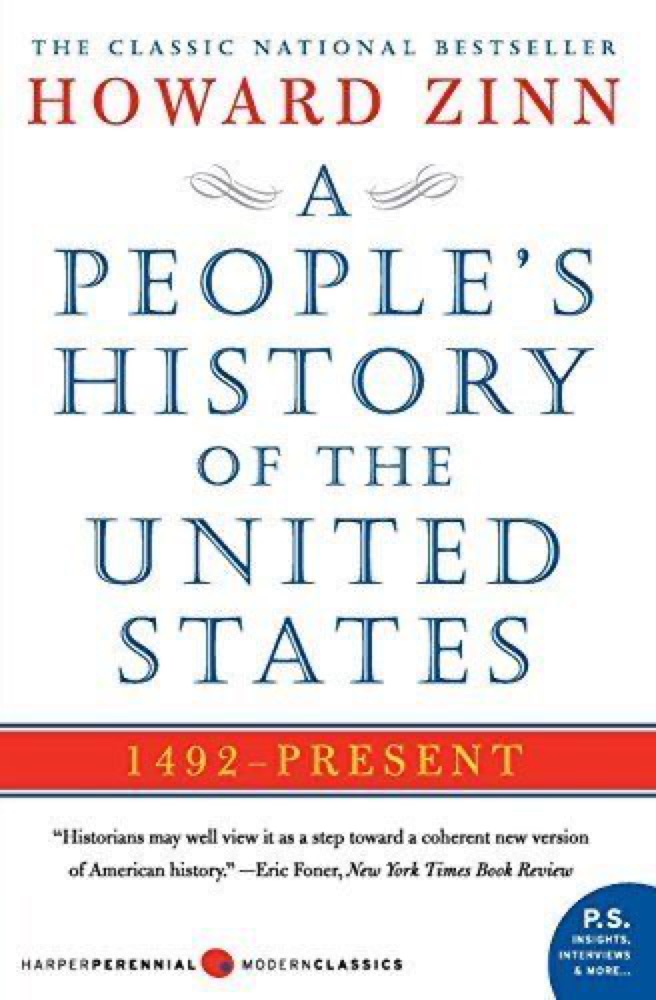 A People's History of the United States
 Uncomfortable Conversations With a Black Man
 Stamped from the Beginning: The Definitive History of Racist Ideas in America
 A Colony in a Nation
 These Truths: A History of the United States
 Blood Done Sign My Name: A True Story
 The Hemingses of Monticello: An American Family
 We Gon' Be Alright: Notes on Race and Resegregation
 Becoming Abolitionists: Police, Protests, and the Pursuit of Freedom
 Deer Hunting with Jesus: Dispatches from America's Class War
 Black No More
 Why We're Polarized
 Black Klansman: A Memoir
 The End of the Myth: From the Frontier to the Border Wall in the Mind of America
 The Identity Trap: A Story of Ideas and Power in Our Time
 The Path to Power
 Edge of Eternity
 Tears We Cannot Stop: A Sermon to White America
 Before the Storm: Barry Goldwater and the Unmaking of the American Consensus
 One Nation: What We Can All Do to Save America's Future
 Assata: An Autobiography
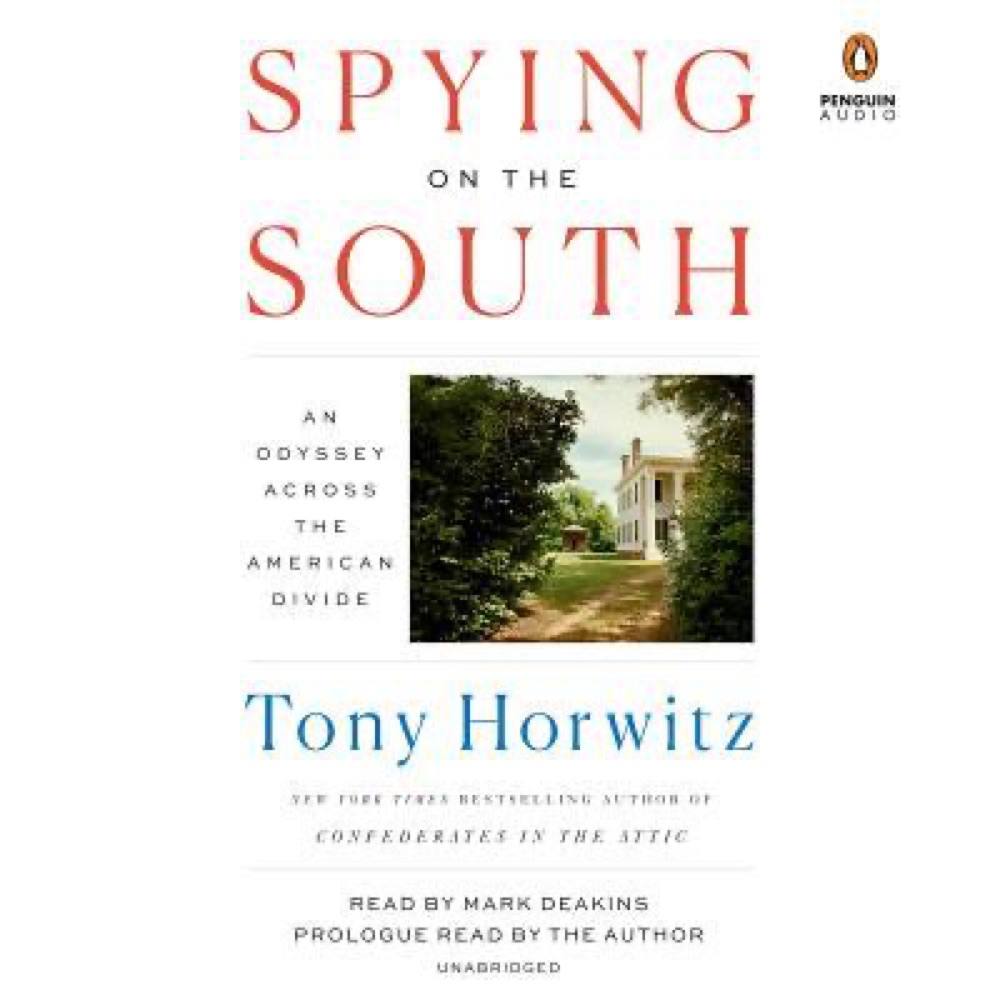 Spying on the South: An Odyssey Across the American Divide
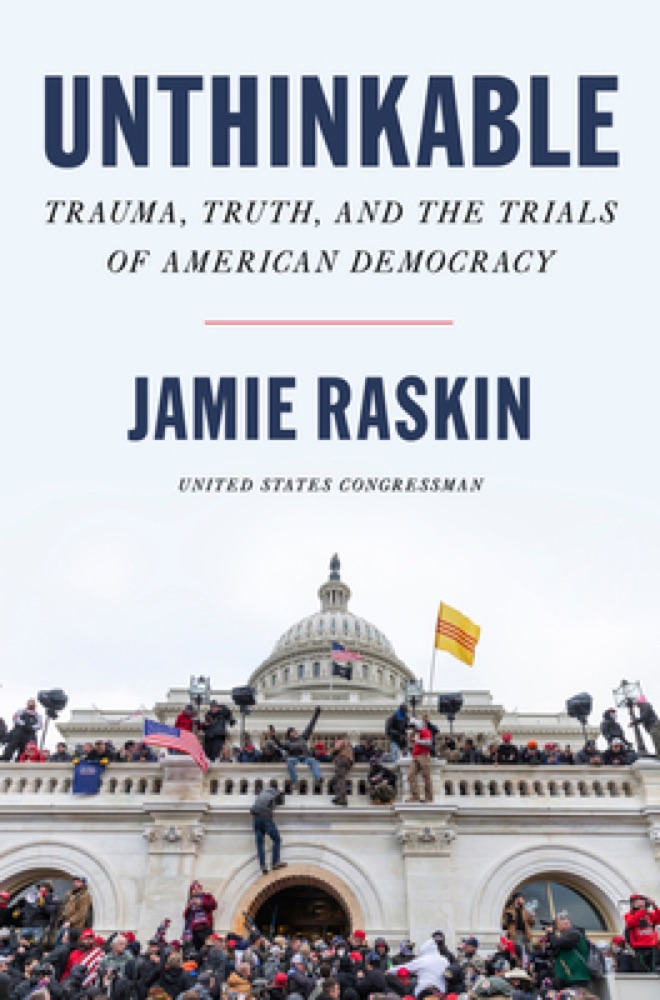 Unthinkable: Trauma, Truth, and the Trials of American Democracy
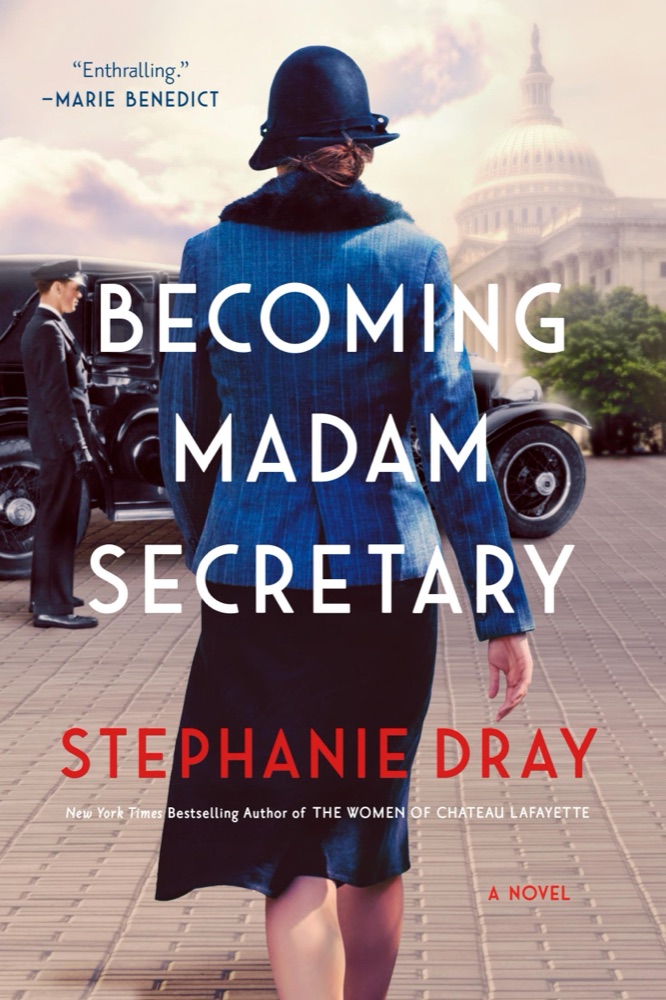 Becoming Madam Secretary
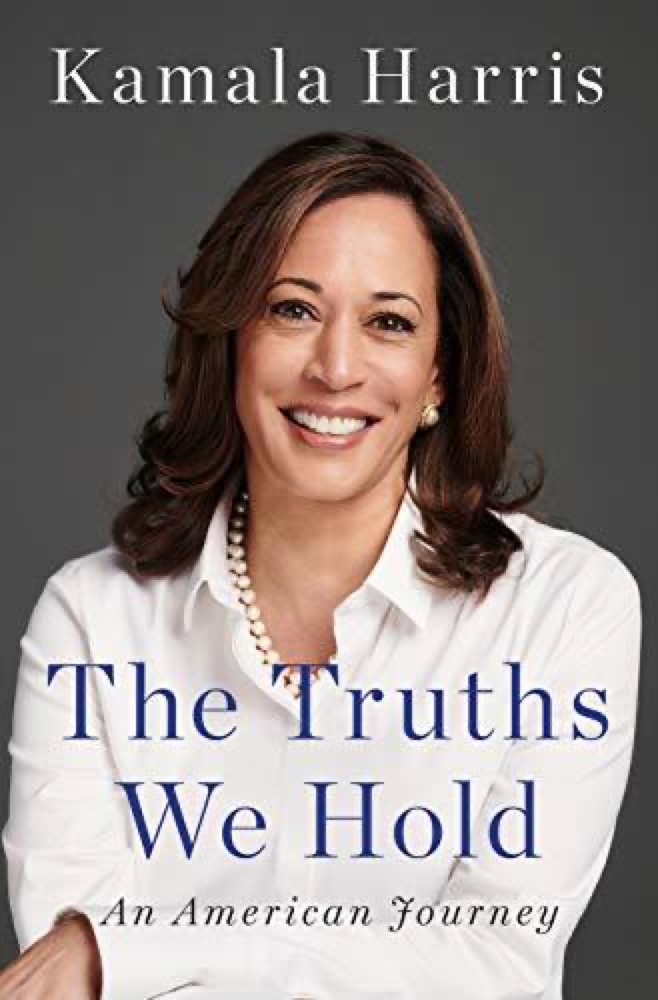 The Truths We Hold: An American Journey
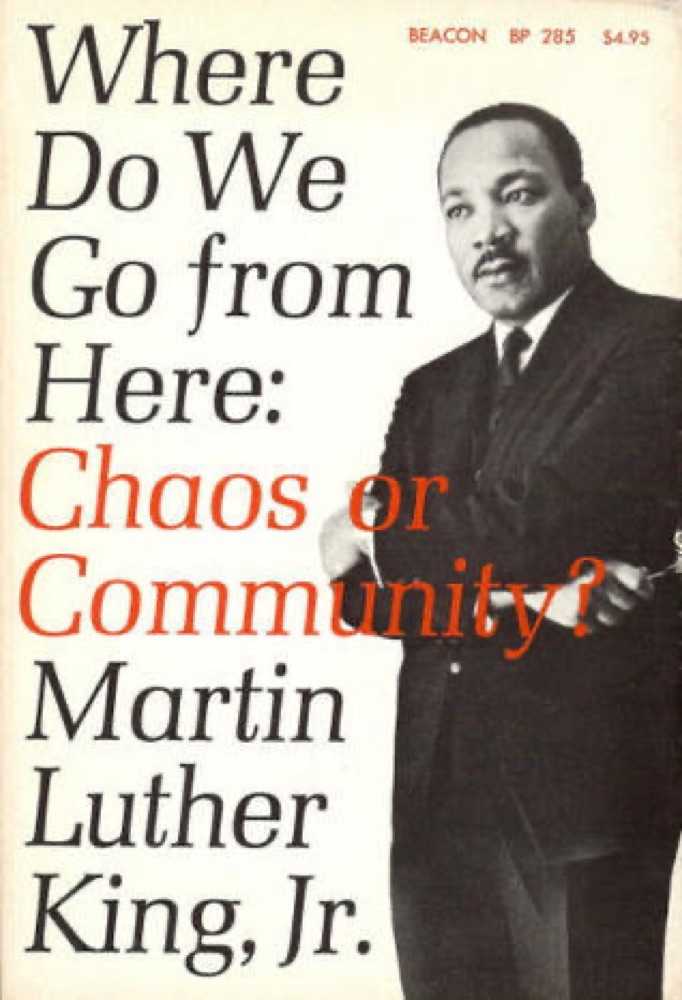 Where Do We Go from Here: Chaos or Community?
 The Revolution: A Manifesto
 Identity: The Demand for Dignity and the Politics of Resentment
 The Soul of America: The Battle for Our Better Angels
 Begin Again: James Baldwin's America and Its Urgent Lessons for Our Own
 Promises to Keep: On Life and Politics
 The Half Has Never Been Told: Slavery and the Making of American Capitalism
 The Disuniting of America: Reflections on a Multicultural Society
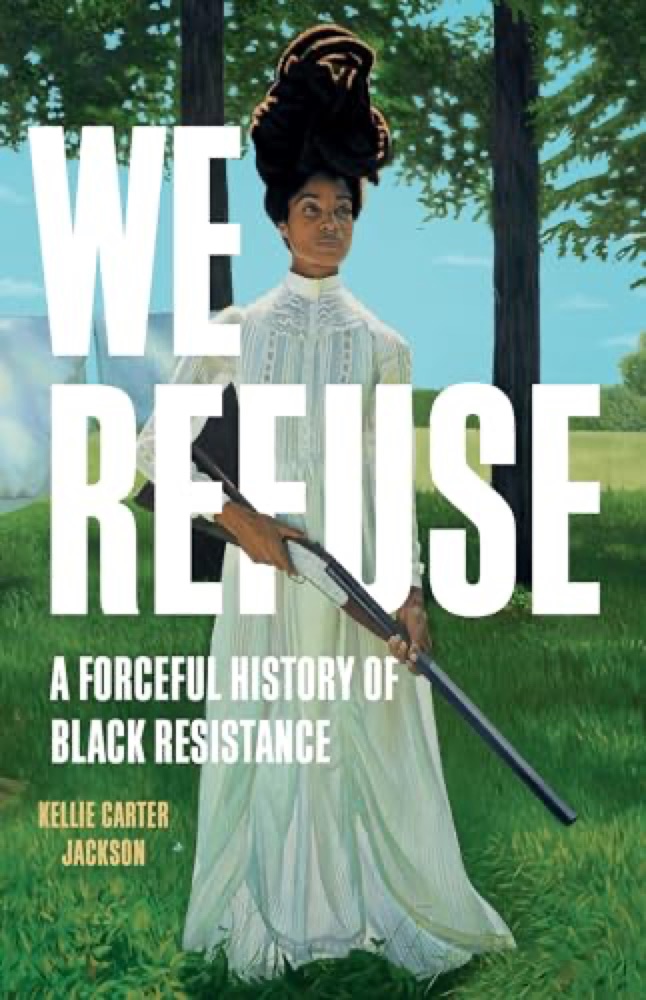 We Refuse: A Forceful History of Black Resistance