
 Confederates in the Attic: Dispatches from the Unfinished Civil War
Quotes from the Book
There was another, much clearer survival of freethinking ways. Sisterdale had never had a church, and Joe said his family had rarely spoken of religion except to dismiss it. "Dad would tell us, 'Dat's for Catholics', or 'Dat's for Lutherans, not us,' and said that if he wanted to talk to God he could do it in the fields.
2
These westbound pioneers slogged through the morass on foot, or in wagons drawn by mules and oxen. Impossible for them to conceive that their mud march would one day become sport for modern Americans,
2
UPON LEAVING MEXICO, THE OLMSTEDS RODE STRAIGHT TO SAN Antonio and "prepared for more rapid travel," shedding "useless weight" for their journey out of Texas. Having spent more than four months traversing the state, they exited it in three weeks, via Houston and Beaumont. By the time they neared Louisiana, "the hot, soggy breath of the approaching summer was extremely depressing." This was particularly so for John, who'd set off for Texas with "the hope of invigorating weakened lungs." Instead, the "abominable diet, and the fatigue" had "served to null the fresh benefits of pure air and stimulating travel." While slogging through a swampy plan near Beaumont, John fell from the saddle "in faint exhaustion," lying facedown on the ground for half an hour, "hardly breathing, and unable to speak.
1
Riotte fought to keep the Zeitung and free-state effort alive, but like Douai he was worn down by foes who "vomit fire and poison against me." Rather than "act the part of Sisiphus," he planned to found a new German colony in northern Mexico to "build up a more solid wall against slavery" than was possible in the US, In his letters to Olmsted, Riotte also delineated, with keen transatlantic insight, a divide that he felt had doomed their efforts from the start. "We are judged from the standpoint of an American-indeed a very strange people!" he wrote. Riotte and his ilk viewed society "as a congregation of men, whose aim it is to elevate the wellbeing of the aggregate by the combined exertion." Americans, by contrast, "look first upon themselves as private individuals, entitled to ask for all the rights and benefits of an organized community even to the detriment of the whole.... We idealize the community-you the individual! How is it possible, that we ever should amalgamate?" Riotte closed by praising Olmsted's writing on the South but expressed doubt that it would diminish the Slave Power. "I don't know of any historical record of an Aristocracy giving up their privileges, except in the case of revolutionary pressure.
1
Western Texas was just such a project: a grandiose scheme, germinated in secret, and unlikely to bear fruit for years. As laid out in private correspondence with Adolf Douai and other co-conspirators in Texas, the plan called for the "immigration of one or two thousand staunch and steadfast northern men, supporters of Freedom." These infiltrators should come quietly and in small groups at first, forming a "nucleus" in alliance with free- state Germans. Thereafter, migrants from the North and Europe would "pour in," aided by new railroad lines. Olmsted kept refining and expanding on this plan, long after his return from Texas. It became, in effect, a dry run for his career as a landscape architect, including blueprints for a string of planned communities across the frontier of the Cotton Kingdom. "I have a private grand political hobby which I must display to you," he disclosed to a Northern ally, in a letter filled with geometric shapes, lines, and arrows. The sketch was nothing less than a sweeping design for winning what Olmsted called the "war between the power of Slavery and of Freedom on this continent.
1
In his letters to Olmsted, Riotte also delineated, with keen transatlantic insight, a divide that he felt had doomed their efforts from the start. "We are judged from the standpoint of an American-indeed a very strange people!" he wrote. Riotte and his ilk viewed society "as a congregation of men; whose aim it is to elevate the wellbeing of the aggregate by the combined exertion." Americans, by contrast, "look first upon themselves as private individuals, entitled to ask for all the rights and benefits of an organized community even to the detriment of the whole.... We idealize the community-you the individual! How is it possible, that we ever should amalgamate?" Riotte closed by praising Olmsted's writing on the South but expressed doubt that it would diminish the Slave Power. "I don't know of any histori- cal record of an Aristocracy giving up their privileges, except in the case of revolutionary pressure.
1
I wandered over to the adobe birthplace of Ignacio Seguin Zaragoza, whose father was posted at the garrison in the early 1800s. Zaragoza went on to become a national hero in Mexico, leading a reformist revolt against Santa Anna and defeat- ing an invading French force on May 5, 1862, the date celebrated as Cinco de Mayo. While exploring the birthplace, I met Alberto Perez, a history and so- cial studies teacher in the Dallas area who was visiting with his family. When I confessed my ignorance of Zaragoza, he smiled and said, "You're not alone. A lot of Texans don't know him, either, or even that Mexico had its own fight for independence." The son of Mexican immigrants, Perez had taught at a predominantly Hispanic school in Dallas named for Zaragoza. Even there, he'd found it hard to bring nuance to students' understanding of Mexico and Texas in the nineteenth century. "The word 'revolution' slants it from the start," he said. "It makes kids think of the American Revolution and throwing off oppression." Perez tried to balance this with a broader, Mexican perspective. Anglos had been invited to settle Texas and were granted rights, citizenship, and considerable latitude in their adherence to distant authority. Mexico's aboli- tion of slavery, for instance, had little force on its northeastern frontier, where Southerners needed only to produce a "contract" that technically la- beled their human chattel as indentured servants. "Then the Anglos basically decided, 'We don't like your rules,"" Perez said. "This is our country now.
1
The only person of color in any of the photographs was a black waiter. Blacks were otherwise barred from the dance hall, as were locals of Mexican descent. In the Texas of that day, laws and customs known as Juan Crow subjected Hispanics to discrimination and segregation similar to that inflicted on African Americans.
1
the inscription at its base put San Jacinto on a par with Waterloo and other exalted fights. The defeat of Santa Anna, the "self-styled 'Napoleon of the West,"" led to the annexation of Texas, war with Mexico, and the "acquisition" of "one third of the present area of the American nation." As such, "San Jacinto was one of the decisive battles of the world.
1
Bowlin was previously divorced and had learned a thing or two. "Set of titties or a college education-buy either of those for your old lady and she's done," he said, "She doesn't need you anymore.
1
I respect those most who do what I want to do least.
1
No way can be found in this boasted land of civilization and Christianity to punish the perpetrators of this bloody and monstrous Crime,” Grant lamented of Colfax. “The spirit of hatred and violence is stronger than law.
1
they could not see how the North could be so foolish as to determinedly prevent the extension of Slavery.” Doing so would harm industry and commerce—which was all they thought truly mattered in the North. “This was the end of their track.
1
Kristel had grown up in Piedras Negras but crossed the bridge to attend school in Eagle Pass and later found work in Texas. Her family also owned property in a rural town thirty miles from Piedras
He sensed this was part of a larger trend, to chase the remaining quirk out of Sisterdale and turn the sleepy community into a boutiquey getaway for wealthy weekenders.
Bret Cali didn’t fit my image of a rural Texas storekeeper. A handsome man in his forties, blue-eyed with unruly black hair, he tuned the store’s sound system to jazz and popped two bottles of Shiner Bock. The store’s walls had Pulp Fiction and Blues Brothers posters; plastic pink flamingoes perched in the yard.
Also inhabiting the river valley were what Olmsted called “political hermits,” single men who lived in “huts or caves” along the Guadalupe, “earning a tough livelihood chiefly by splitting shingles.
Most Germans in antebellum Texas also lacked the large landholdings or capital needed to make slave labor practicable.
I’d encountered Winders by the front door of the church and at first had mistaken him for a visiting Alamaniac. Bearded, and clad in a cravat, top hat, and frock coat, he stood before a clot of visitors, reading from William Travis’s letters from the Alamo proclaiming, “God and Texas! Victory or Death!!
industries and policies abetting this explosive growth—oil, defense, deregulation, hostility to unions and taxes—but
The interior was likewise plain, with an unpainted wood floor and bar, plank ceiling, and patrons drinking two-dollar beers from cans and bottles.
territory to save his own skin after being captured at San Jacinto. “But many Mexicans still see what happened in the 1830s and ’40s as outright robbery of their land.
The Nationalists, in turn, struck me as Super-Texans, taking the spirit of the state’s revolution to its libertarian extreme. No authority—save God—should tell them what they could or couldn’t do, anywhere, at any time.
This turned out to be a promotional display for an upcoming rattlesnake roundup.
This obligatory supersizing seemed incongruous, given that the state legislature only convened every other year, for 140 days—a testament to Texas’s long history of hostility to centralized authority.
had become the nation’s eleventh largest city and the center of a metro area of over two million.
Watch on YouTube
About Tony Horwitz
We have collected 48 quotes from 3 books by Tony Horwitz on BookQuoters.
More about the author →More by Tony Horwitz
Confederates in the Attic: Dispatches from the Unfinished Civil War
 A Voyage Long and Strange: Rediscovering the New World
About the book
Beloved best-selling author Tony Horwitz retraces Frederick Law Olmsted's epic journey across the American South in the 1850s, as he too searches for common ground in a dangerously riven nation.
On the eve of the Civil War, an up-and-coming newspaper, the New York Times, sent a young travel writer to explore the South, which was alien territory to the Connecticut Yankee correspondent and to his Northern readers. Identified in the paper as "Yeoman," to protect his identity, the writer roamed eleven states and six thousand miles, jolting the nation with his dispatches about slavery and the extremism of its defenders.
This extraordinary journey would also re-shape the nation's landscape, driving "Yeoman"--real name Frederick Law Olmsted--to embark on his career as America's first and foremost architect of urban parks and other public spaces.
Over a century and half later, there are echoe
Book details
- First published
- 2019
- Author
- Tony Horwitz
- Genre
- History
- Goodreads rating
- 4.00 (5k ratings)
Keep reading
 The Path to Power
 American Colossus: The Triumph of Capitalism, 1865-1900
 God Save Texas: A Journey into the Soul of the Lone Star State
 The Warmth of Other Suns: The Epic Story of America's Great Migration
 Killers of the Flower Moon: The Osage Murders and the Birth of the FBI
 Friday Night Lights: A Town, a Team, and a Dream
 The End of the Myth: From the Frontier to the Border Wall in the Mind of America
 Battle Cry of Freedom
 A Fever in the Heartland: The Ku Klux Klan's Plot to Take Over America, and the Woman Who Stopped Them
 Life on the Mississippi
 April 1865: The Month That Saved America
 The Civil War, Vol. 3: Red River to Appomattox
 The Proud Tower: A Portrait of the World Before the War, 1890-1914
 Undaunted Courage: The Pioneering First Mission to Explore America's Wild Frontier
 Shadow Country
 The Hemingses of Monticello: An American Family
 Blood Done Sign My Name: A True Story
 The Path Between the Seas: The Creation of the Panama Canal, 1870-1914
 Bury My Heart at Wounded Knee: An Indian History of the American West
 Made in America: An Informal History of the English Language in the United States
 The Fifties
 Mason & Dixon
 These Truths: A History of the United States
 Black No More
 Strangers in Their Own Land: Anger and Mourning on the American Right
 Edge of Eternity
 The Underground Railroad
 White Trash: The 400-Year Untold History of Class in America
 The First Salute : View of the American Revolution
 Prairie Fires: The American Dreams of Laura Ingalls Wilder
 South and West: From a Notebook
 One Summer: America, 1927
 The Rough Riders
 The First Tycoon: The Epic Life of Cornelius Vanderbilt
 Assassination Vacation
 Shaman
 Nixonland: The Rise of a President and the Fracturing of America
 The Boys from Biloxi
 The Love Songs of W.E.B. Du Bois
 Black AF History: The Un-Whitewashed Story of America
 Radio Free Albemuth
 Chesapeake
 Burr
Burr
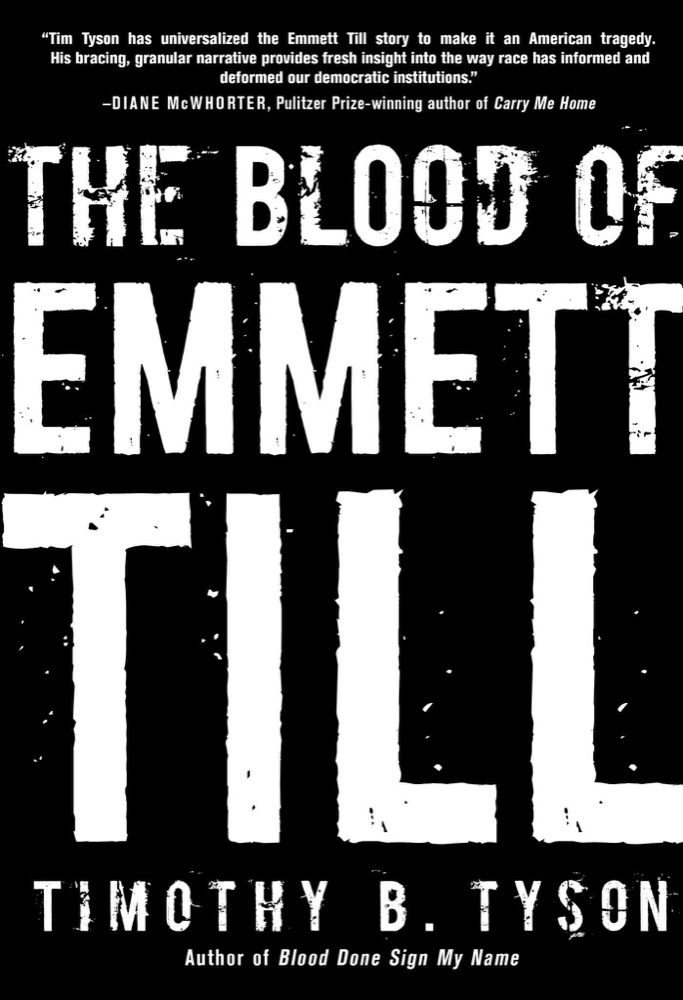 The Blood of Emmett Till
 Simple Justice: The History of Brown v. Board of Education and Black America's Struggle for Equality
 The Black Jacobins: Toussaint L'Ouverture and the San Domingo Revolution
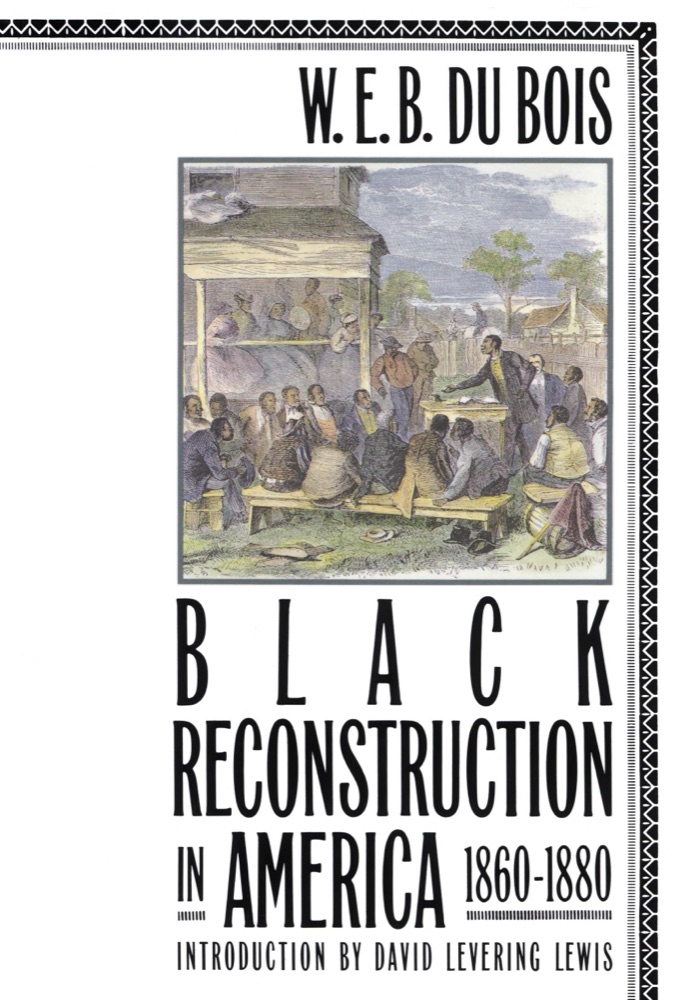 Black Reconstruction in America 1860-1880
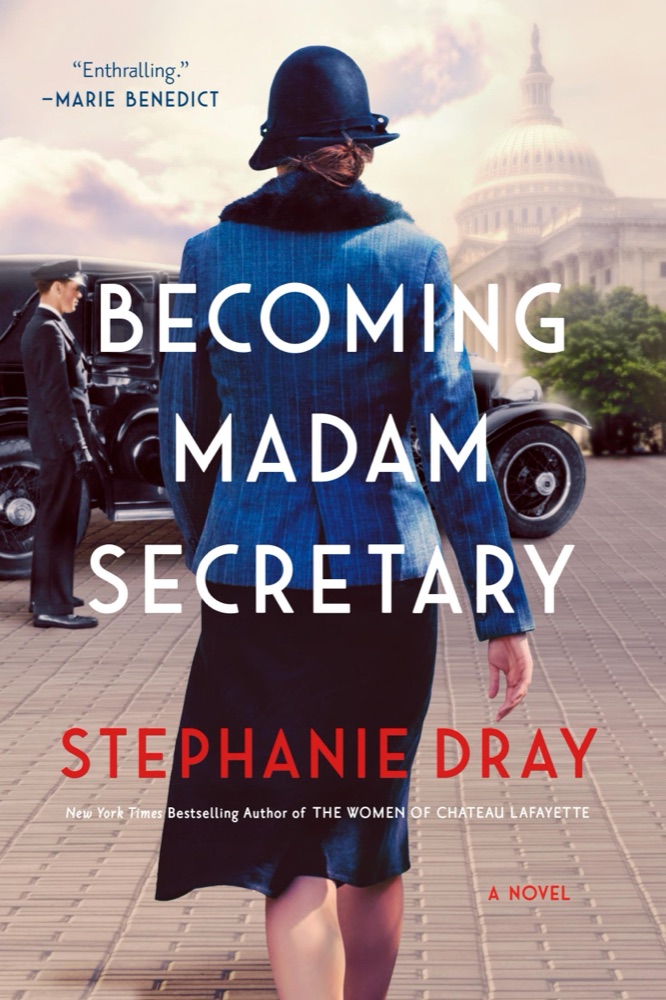 Becoming Madam Secretary
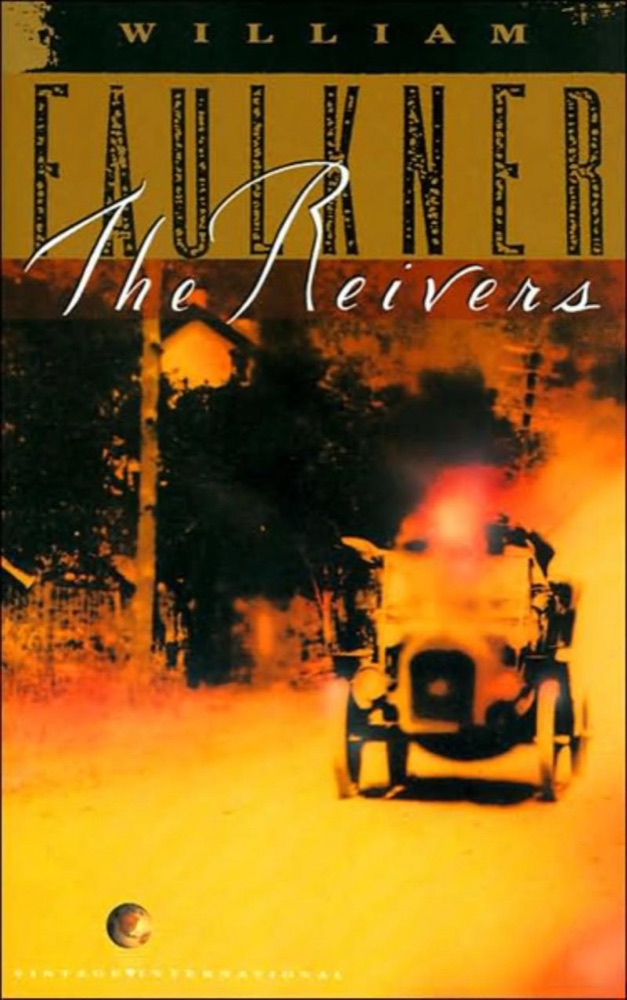 The Reivers
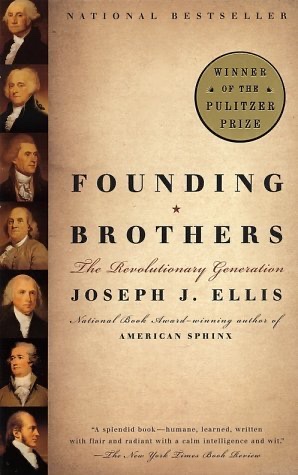 Founding Brothers: The Revolutionary Generation
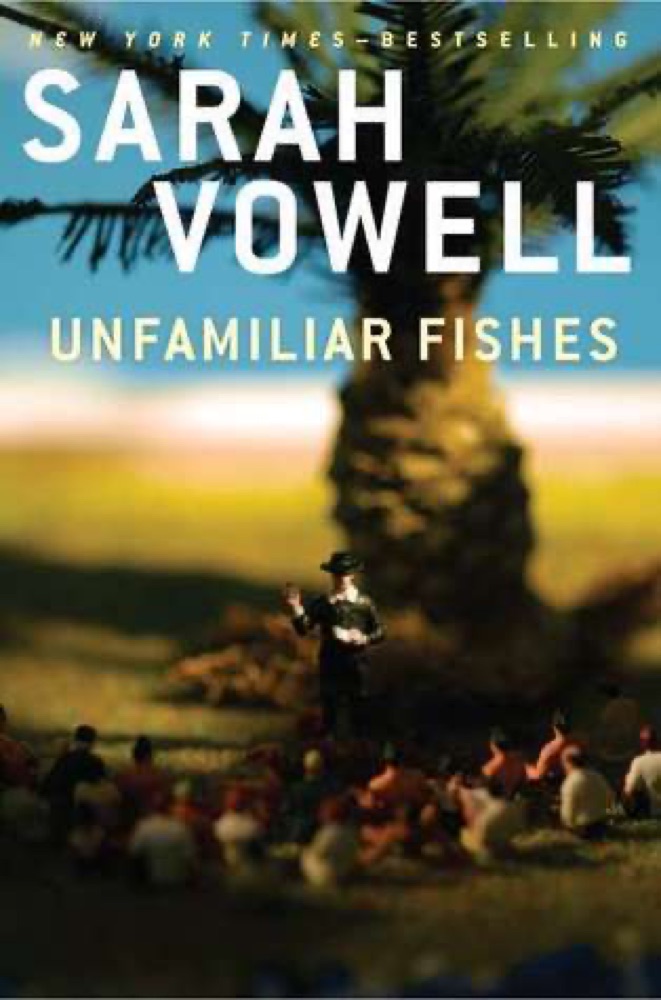 Unfamiliar Fishes
 Crook Manifesto
 Destiny of the Republic: A Tale of Madness, Medicine and the Murder of a President
 Babbitt
 Devil in the Grove: Thurgood Marshall, the Groveland Boys, and the Dawn of a New America
 The Devil in the White City: Murder, Magic, and Madness at the Fair That Changed America
 The Autobiography of an Ex-Coloured Man
 The 42nd Parallel
 Harlem Shuffle