
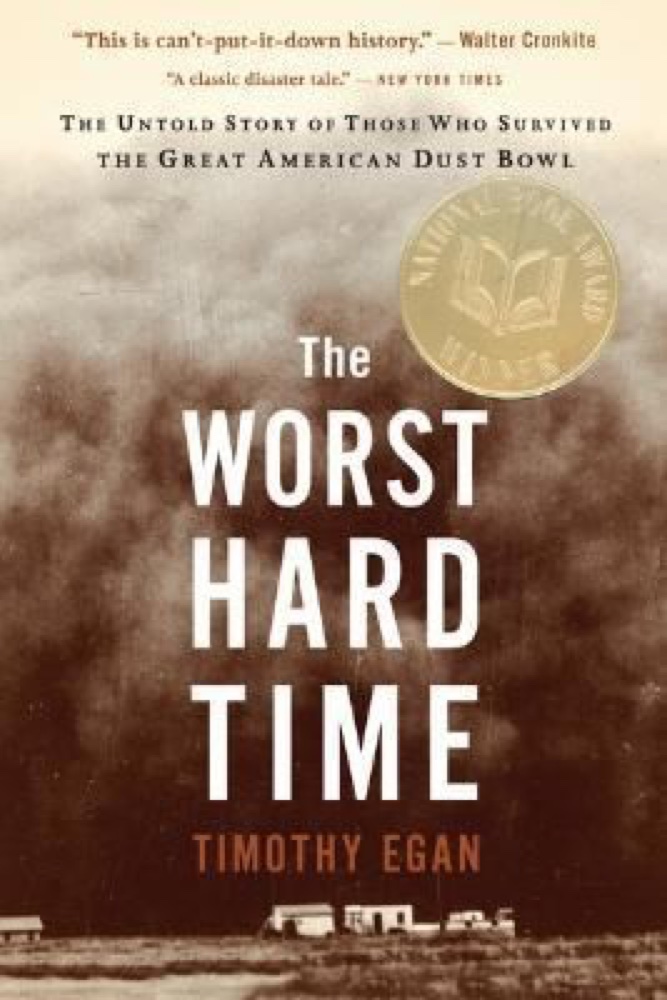
 The Worst Hard Time: The Untold Story of Those Who Survived the Great American Dust Bowl
Quotes from the Book
Men talk of the Negro problem,” said Frederick Douglass in one of his last public speeches, in 1893. “There is no Negro problem. The problem is whether the American people have loyalty enough, honor enough, patriotism enough to live up to their own Constitution.
12
He discovered that if he said something often enough, no matter how untrue, people would believe it.
12
When hate was on the ballot, especially in the guise of virtue, a majority of voters knew exactly what to do.
8
With the abolition of slavery, Black people were no longer counted as three-fifths but as a full person in the census. Ultimately, that gave twenty-five additional congressional seats to a one-party South that violently suppressed the vote of those newly recognized people. In 1880, 50 percent of Black men in the former Confederacy voted. By 1920, less than 1 percent exercised this fundamental right.
7
They didn’t hide by day and only come out at night. They were people who held their communities together, bankers and merchants, lawyers and doctors, coaches and teachers, servants of God and shapers of opinion.
6
Jim Crow was a bipartisan crime.
6
The Klan prided itself on how quickly it could spread a lie: from a kitchen table to the whole state in six hours or less.
6
The governor of Georgia, Clifford Walker, told a Klan rally in 1924 that the United States should “build a wall of steel, a wall as high as heaven” against immigrants.
6
These people needed to hate something smaller than themselves as much as they needed to have faith in something greater than themselves. The Ku Klux Klan “filled a need,
5
What if the leaders of the 1920s Klan didn't drive public sentiment, but rode it? A vein of hatred was always there for the tapping. It's there still, and explains much of the madness threatening American life a hundred years after Stephenson made a mockery of the moral principles of the Heartland.
5
Had he been in the house, he might have faced a lynching. The Klansmen told her that “good Christian white people” would not tolerate a troublemaker stirring things up among “the good negroes.” They smashed every window in the house before galloping off into the night. A few days later, the preacher’s wife gave birth to a son—the boy who would become Malcolm X. —
5
A mob with clubs had chased a group of immigrant miners out of town in 1921. The whiff of socialism was enough to inflame the attackers. Irish laborers had helped to build the city; refugees of the Great Famine dug the ditch that would become the Wabash and Erie Canal, largest in the United States, connecting Evansville to Lake Erie, 460 miles to the north. But because of their religion, they were second-class citizens in the caste system that the Klan exploited in Evansville.
4
Isn’t it strange that with all our educational advantages,” noted the Hoosier writer Meredith Nicholson, so many “Indiana citizens could be induced to pay $10 for the privilege of hating their neighbors and wearing a sheet?
4
the Klan birthed in Indiana—a state that had lost 25,000 men fighting the Confederacy just a half century earlier—would soon have more Klansmen than any other state.
4
At least fifty people were taken down to the Trinity River bottoms in Dallas for whippings and acid brandings. Should they call the police, they would be reporting something already known and even encouraged within the blue wall, for a majority of Dallas officers were now oath-bound members of the hooded order. Proof of Malcolm X’s later observation that the Klan had ‘changed its bedsheets for a policeman’s uniform
4
This was even harder to accept for 200,000 Black soldiers who had returned from military service in France and felt entitled to be full citizens. “The great war in Europe, its recoil on America, the ferment in the United States, all conspired to break up the stereotyped conception of the Negro’s place,” wrote James Weldon Johnson, the literary polymath, a leader of the Harlem Renaissance. Cities erupted in violent attacks on Black property and life. And as vigilante executions by a hangman’s noose continued without sanction in the South, Congress could not muster enough votes to pass an anti-lynching law.
3
What should have been shattering news—a Klansman dictating orders to elected officials and leaders of the dominant political party—barely caused a stir.
3
The state’s racial animus dated to at least 1844, when the provisional government ordered all Black people out of the territory. After Oregon became a state in 1859, it banned nonwhites from living there. Following the Civil War, Oregon was one of only six states to refuse to ratify the 15th Amendment, which granted full voting rights to all male citizens, regardless of race. By the mid-1920s, there were more Klansmen, per capita, in Oregon than any state but Indiana.
2
Nazi Germany defended its own 1936 eugenics law by pointing to the United States as a role model. In 1981, Oregon performed the nation’s last legal forced sterilization.
2
Stephenson had succeeded with an unusual formula for a mass movement: men were the muscle, women spread the poison, and ministers sanctified it all.
2
What many Americans heard about Jews they got from Henry Ford, operating out of a Michigan base less than three hundred miles from Indianapolis. His newspaper, the Dearborn Independent, was a fire hose of anti-Semitism and reached a peak circulation of nearly one million readers.
2
Madge Oberholtzer deserves a plaque of her own.
2
At day’s end, he was sitting on his front porch when a member of the Klan walked up the steps of a house nearby and plopped into a chair on the veranda. Once the mask was off, the boy could see that the now visible congregant of the Invisible Empire was his neighbor, Mrs. Crousore.
2
Throughout the country, the Klan could no longer claim owners of banks, editors of newspapers, and judges on state courts as sworn members. Those days were gone—a shameful aberration in the American story, the Chicago Tribune wrote in the wake of the crumbling Klan. The paper sketched an outline that sounded like a bad fairy tale. “It came about that American citizens in Indiana were judged by their religion, condemned because of their race, illegally punished because of their opinions, hounded because of their personal conduct, and a state of terror was substituted for a state of law.
1
In attitude and politics, Indiana was the most Southern of Northern states—North Dixie, it was often called—settled by people from Tennessee, Kentucky, and the Carolinas. In its early constitution, Article XIII specifically prohibited free Blacks or “mulattos” from residing in the state. Near the close of the nineteenth century, Indiana’s treatment of African Americans was “as inhuman as ever characterized the cotton fields of Georgia or the rice swamps of the Carolinas,” said James M. Townsend, who served one term in the statehouse in the 1880s.
1
Laughlin’s law also drew strong interest from a circle of proto-Nazi scientists in Germany. Laughlin himself would later praise Hitler for understanding that “the central mission of all politics is race hygiene.
1
All the right people did not turn down invitations to parties in Irvington. Hoosier Klansmen were not repulsed by his behavior, at least not outwardly. Many chose selective amnesia, in service to the greater good of the Invisible Empire and what it stood for. Some were even impressed. For here was a man liberated from shame, a man who not only boasted of being able to get away with any violation of human decency for his entire life, but had just proved it for all to see.
1
He was the sole victim of this entire episode, he said. Again, he compared himself to Jesus, martyr of a monumental injustice. The trial was a farce, “the most appalling persecution to which man has been subjected to since the days that civilization abandoned the bludgeon.
1
Watch on YouTube
About Timothy Egan
We have collected 78 quotes from 4 books by Timothy Egan on BookQuoters.
More about the author →More by Timothy Egan
The Worst Hard Time: The Untold Story of Those Who Survived the Great American Dust Bowl
 Short Nights of the Shadow Catcher: The Epic Life and Immortal Photographs of Edward Curtis
 A Pilgrimage to Eternity: From Canterbury to Rome in Search of a Faith
About the book
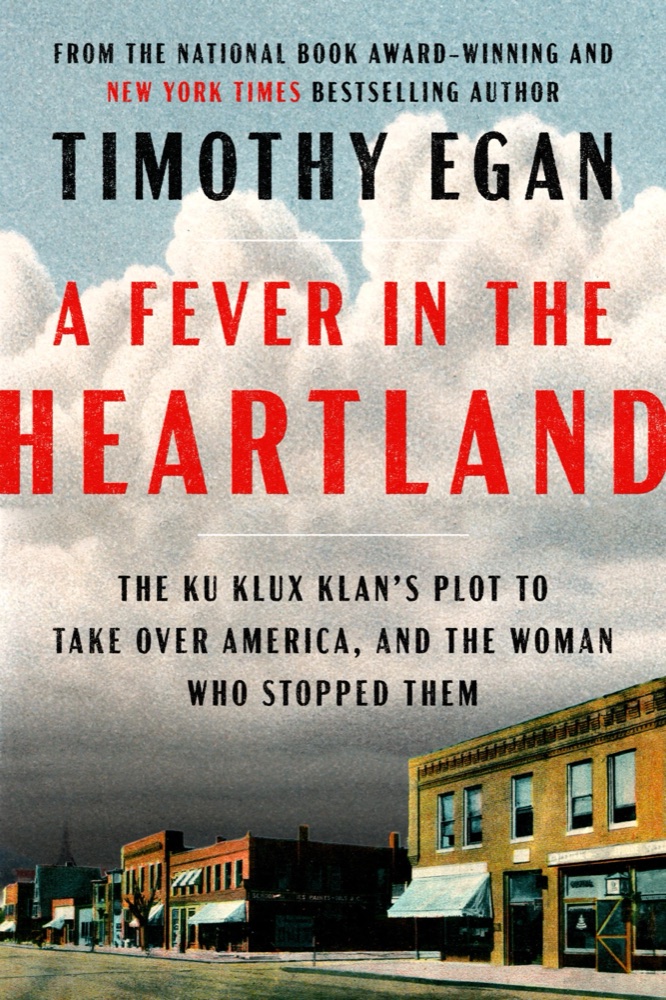
A historical thriller by the Pulitzer and National Book Award-winning author that tells the riveting story of the Klan's rise to power in the 1920s, the cunning con man who drove that rise, and the woman who stopped them.
The Roaring Twenties--the Jazz Age--has been characterized as a time of Gatsby frivolity. But it was also the height of the uniquely American hate group, the Ku Klux Klan. Their domain was not the old Confederacy, but the Heartland and the West. They hated Blacks, Jews, Catholics and immigrants in equal measure, and took radical steps to keep these people from the American promise. And the man who set in motion their takeover of great swaths of America was a charismatic charlatan named D.C. Stephenson.
Stephenson was a magnetic presence whose life story changed with every telling. Within two years of his arrival in Indiana, he’d become the Grand Dragon of the st
Book details
- First published
- 2023
- Author
- Timothy Egan
- Genre
- Nonfiction
- Goodreads rating
- 4.35 (52k ratings)
The buzz
- The New York TimesReview in The New York Timesprofessional review (via Book Marks)
- The Washington PostReview in The Washington Postprofessional review (via Book Marks)
- Kirkus ReviewsReview in Kirkus Reviewsprofessional review (via Book Marks)
- Publishers WeeklyReview in Publishers Weeklyprofessional review (via Book Marks)
- Star TribuneReview in Star Tribuneprofessional review (via Book Marks)
- BooklistReview in Booklistprofessional review (via Book Marks)
Keep reading
 Devil in the Grove: Thurgood Marshall, the Groveland Boys, and the Dawn of a New America
 The Blood of Emmett Till
 Black Klansman: A Memoir
 White Rage: The Unspoken Truth of Our Racial Divide
 Black No More
 The Warmth of Other Suns: The Epic Story of America's Great Migration
 Simple Justice: The History of Brown v. Board of Education and Black America's Struggle for Equality
 Black AF History: The Un-Whitewashed Story of America
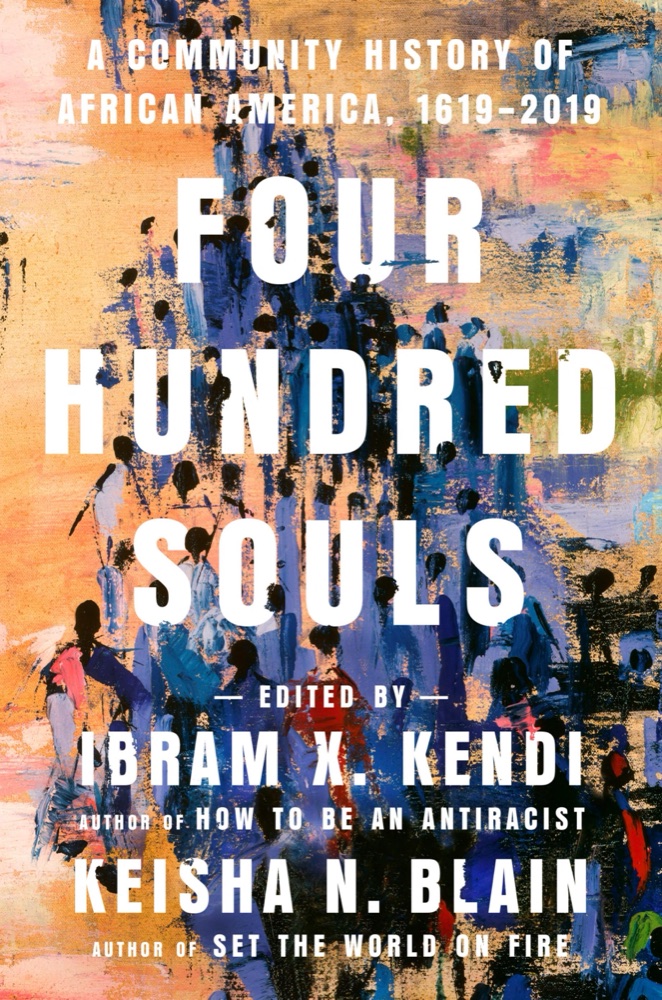 Four Hundred Souls: A Community History of African America, 1619-2019
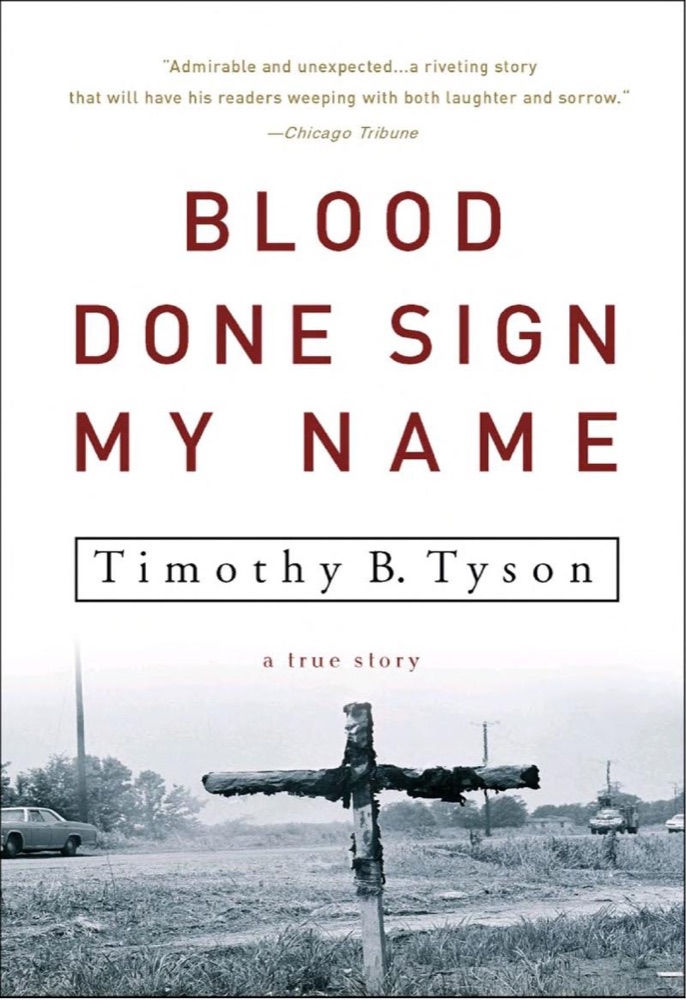 Blood Done Sign My Name: A True Story
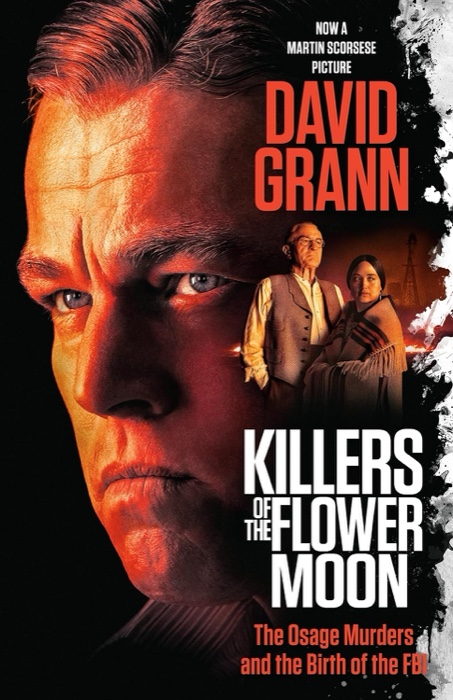 Killers of the Flower Moon: The Osage Murders and the Birth of the FBI
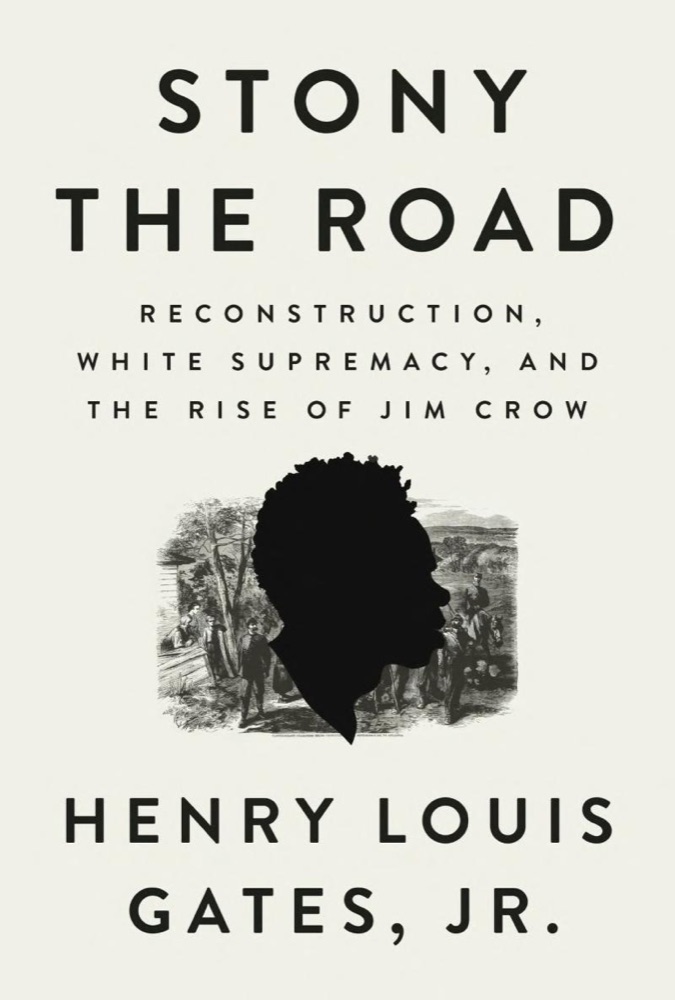 Stony the Road: Reconstruction, White Supremacy, and the Rise of Jim Crow
 Why We Can't Wait
 The Hemingses of Monticello: An American Family
 Myth America: Historians Take On the Biggest Legends and Lies About Our Past
 Spying on the South: An Odyssey Across the American Divide
 American Colossus: The Triumph of Capitalism, 1865-1900
 Robert E. Lee and Me: A Southerner's Reckoning with the Myth of the Lost Cause
 The Path to Power
 We Were Eight Years in Power: An American Tragedy
 Nixonland: The Rise of a President and the Fracturing of America
 Stamped from the Beginning: The Definitive History of Racist Ideas in America
 Edge of Eternity
 One Person, No Vote: How Voter Suppression Is Destroying Our Democracy
 The Confessions of Nat Turner
 Black Reconstruction in America 1860-1880
 Destiny of the Republic: A Tale of Madness, Medicine and the Murder of a President
 The Underground Railroad
 Battle Cry of Freedom
 These Truths: A History of the United States
 The 1619 Project: A New Origin Story
 Dark Days
 Before the Storm: Barry Goldwater and the Unmaking of the American Consensus
 The Autobiography of an Ex-Coloured Man
 No Name in the Street
 Shaman
 Crook Manifesto
 Malcolm X: A Life of Reinvention
 Friday Night Lights: A Town, a Team, and a Dream
 The Half Has Never Been Told: Slavery and the Making of American Capitalism
 Burn Down Master's House
 The Small and the Mighty: Twelve Unsung Americans Who Changed the Course of History, from the Founding to the Civil Rights Movement
 Stamped (For Kids): Racism, Antiracism, and You
 Modern Times: The World from the Twenties to the Nineties
 Unthinkable: Trauma, Truth, and the Trials of American Democracy
 The Untold History of The United States
 Where Do We Go from Here: Chaos or Community?
 April 1865: The Month That Saved America
 Ghettoside: A True Story of Murder in America
 Culture Warlords: My Journey Into the Dark Web of White Supremacy
 All the Sinners Bleed
 White Trash: The 400-Year Untold History of Class in America
 The Love Songs of W.E.B. Du Bois
 The Black Jacobins: Toussaint L'Ouverture and the San Domingo Revolution
 A People's History of the United States
 The End of the Myth: From the Frontier to the Border Wall in the Mind of America
 Becoming Madam Secretary
 It Can't Happen Here
 The Nickel Boys
 The Invisible Bridge: The Fall of Nixon and the Rise of Reagan