
 SPQR: A History of Ancient Rome
Quotes from the Book
A man who commands thirty legions always knows best’, was his apt reply.
3
But we should never assume that the tales of unglamorous administration are more trustworthy than the stories of glamorous excess. They too have a strongly ideological side in constructing an image of a perfect emperor.
3
It is also captured in the story of Hadrian who - when asked to adjudicate whether a baby born eleven months after the death of its 'father' could be considered legitimate - went off to do his own research in the medical textbooks. He came up with the answer 'yes', which was bizarrely wrong even by ancient scientific standards.
2
Autocracy, it suggests, upturns the ‘natural’ order of things and replaces reality with sham, undermining your trust in what you think you see.
2
As often in history, xenophobia and cultural prejudice at Rome went hand in hand with ethnic diversity and an openness to the outside world. But one thing’s for sure: these rulers in the flesh were far more diverse, and increasingly so, than you would imagine from all those line-ups of lookalike, white marble imperial busts that we now see on museum shelves.
2
But the unsettling logic was that he turned fact and fiction upside down, creating a topsy-turvy world in which no one could know who (or what) was play-acting. A corrupt autocracy was all smoke and distorting mirrors. Or, as his Roman biographer summed up, Elagabalus had ‘a fake life’. The magnifying lens of these stories helps us to see clearly the anxieties that surrounded imperial rule at Rome. It was more than the capacity to kill. The power of the emperor stopped at nothing. It warped the senses, and it thrived in malevolent chaos.
1
We read of Augustus’s benefactions to the people on a massive scale (or bribery, as some might have seen it), in the form of entertainments as well as wine, grain and cash handouts to hundreds of thousands of citizens,
1
For Pliny, ‘all citizens’ meant ‘all citizens like me’. But his point is clear: biological heredity is an unsatisfactory way of selecting a man to rule the Roman world.
1
From as far back as we can trace, adoption at Rome had a different function from most adoptions today. It was a means of ensuring the continuity of property and family name when there were no surviving sons by birth (this was a world in which half the children born did not live to reach the age of ten). The majority of those adopted were not babies or young children but adult men, often with their birth parents still living.
1
The basic rule is that the flimsier the claims to power, the more insistent and extravagant the signs and portents had to be. Vespasian, who became emperor in 69 CE in the civil war after the death of Nero, an outsider with no direct links to earlier rulers, was even credited with performing miracles in almost biblical style. In Egypt, on his way to Rome to take up the throne, he is said to have restored sight to a blind man with his spit, and to have made a lame man walk with his touch. It was one way of compensating for a lack of imperial connections.
1
Augustus himself is reported to have boasted that he found Rome a ‘city of brick’ and left (some of) it ‘a city of marble’. But these architectural developments were often part of a more significant project, to reconfigure the cityscape around the idea of the emperor, to make his presence seem inevitable, even ‘natural’.
1
My suspicion is that little more than a lick of paint can have been required, but it was certainly part of a post-civil war, ‘Make Rome Great Again’ campaign.
1
Beyond the superficially dreary roster of facts and figures in What I Did, three particular requirements for an emperor stand out, as they do in Pliny’s Speech of Praise: he should conquer, he should be a benefactor, and he should sponsor new buildings or restore those that have fallen into disrepair.
1
As Tacitus darkly observed in the second century CE, in the first words of his Annals, a history of the early emperors, ‘From the very beginning Rome has been ruled by kings’.
1
A Roman ‘emperor’ was much less likely to refer to himself as imperator than as princeps, the origin of our word ‘prince’, though in Latin it meant not much more than ‘leader’.
1
Emperor of Rome is about rulers and ruled.
1
The power of the emperor stopped at nothing. It warped the senses, and it thrived in malevolent chaos.
1
Serious history, however, is about more than the bare facts.
1
I am more interested in how those stories of madness arose, in how the business of empire was really conducted, and in Roman fears that the rule of the emperors was not so much bloodstained (they expected that), but was a strange and unsettling dystopia built on deception and fakery.
1
In Pliny’s vote of thanks, he explicitly praised the way in which Trajan – Nerva’s choice of son and the first in this series of ‘adoptive’ emperors, as they are now sometimes called – had come to the throne. He presented it as a matter of pride that ‘the man who is going to rule over all citizens should be chosen out of all of them’. Choice is a better guarantee of a good emperor than mere accident of birth or, as he put it, than whatever a wife produces.
Trenchantly, if not entirely accurately, one Roman historian in the fourth century CE claimed that after the death of Domitian in 96, ‘all emperors were foreigners’.
As Pliny comes close to acknowledging, there is no better way of influencing a man’s behaviour than praising him for the qualities that you want him to have, whether he has them or not.
We shall even find emperors appearing in various guises in their subjects’ dreams (not always a good sign: ‘to dream of being an emperor foretells death to anyone who is sick’, as one dream-interpreter warned in the second century CE).
Watch on YouTube
About Mary Beard
We have collected 87 quotes from 3 books by Mary Beard on BookQuoters.
More about the author →More by Mary Beard
SPQR: A History of Ancient Rome
 Women & Power: A Manifesto
About the book
A sweeping account of the social and political world of the Roman emperors by “the world’s most famous classicist” ( Guardian ). In her international bestseller SPQR , Mary Beard told the thousand-year story of ancient Rome. Now she shines her spotlight on the emperors who ruled the Roman empire, from Julius Caesar (assassinated 44 BCE) to Alexander Severus (assassinated 235 CE).
Emperor of Rome is not your usual chronological account of Roman rulers, such as the mad Caligula, the monster Nero, the philosopher Marcus Aurelius. Beard asks bigger questions: What power did emperors actually have? Was the Roman palace really so bloodstained? She tracks down the emperor at home, at the races, on his travels, even on his way to heaven. She introduces his wives and lovers, rivals and slaves, court jesters and soldiers―and the ordinary people who pressed begging letters into his hands.
Emp
Book details
- First published
- 2023
- Author
- Mary Beard
- Genre
- History
- Goodreads rating
- 4.08 (8k ratings)
The buzz
- The New York TimesReview in The New York Timesprofessional review (via Book Marks)
- The Washington PostReview in The Washington Postprofessional review (via Book Marks)
- The Wall Street JournalReview in The Wall Street Journalprofessional review (via Book Marks)
- The GuardianReview in The Guardianprofessional review (via Book Marks)
- The Times Literary SupplementReview in The Times Literary Supplementprofessional review (via Book Marks)
- The TimesReview in The Timesprofessional review (via Book Marks)
Keep reading
SPQR: A History of Ancient Rome
 The History of the Decline and Fall of the Roman Empire Volume I
 The Fall of the Roman Empire: A New History of Rome and the Barbarians
 Caesar and Christ
 Plutarch's Lives
 The Decline and Fall of the Roman Empire
 Rubicon: The Last Years of the Roman Republic
 The Twelve Caesars
 The Annals of Imperial Rome
 I, Claudius
 Imperium: A Novel of Ancient Rome
 Claudius the God and His Wife Messalina
 The Discourses
 Lily of the Nile
 The Histories
 A History of the World in 100 Objects
 Augustus
 Lives of the Stoics: The Art of Living from Zeno to Marcus Aurelius
 Dictator
 The March of Folly: From Troy to Vietnam
 How the Irish Saved Civilization
 The Fall of Rome and the End of Civilization
 A Distant Mirror: The Calamitous 14th Century
 Cleopatra: A Life
 Sailing to Sarantium
 The Ides of March
 The Darkening Age: The Christian Destruction of the Classical World
 Danubia: A Personal History of Habsburg Europe
 The Campaigns of Alexander
 The Napoleon of Notting Hill
 Parallel Lives
 Unruly: The Ridiculous History of England's Kings and Queens
 Europe: A History
 The Will to Battle
 The Mask of Dimitrios
 The Emperor
 The Messiah Matrix
 Children of Ash and Elm: A History of the Vikings
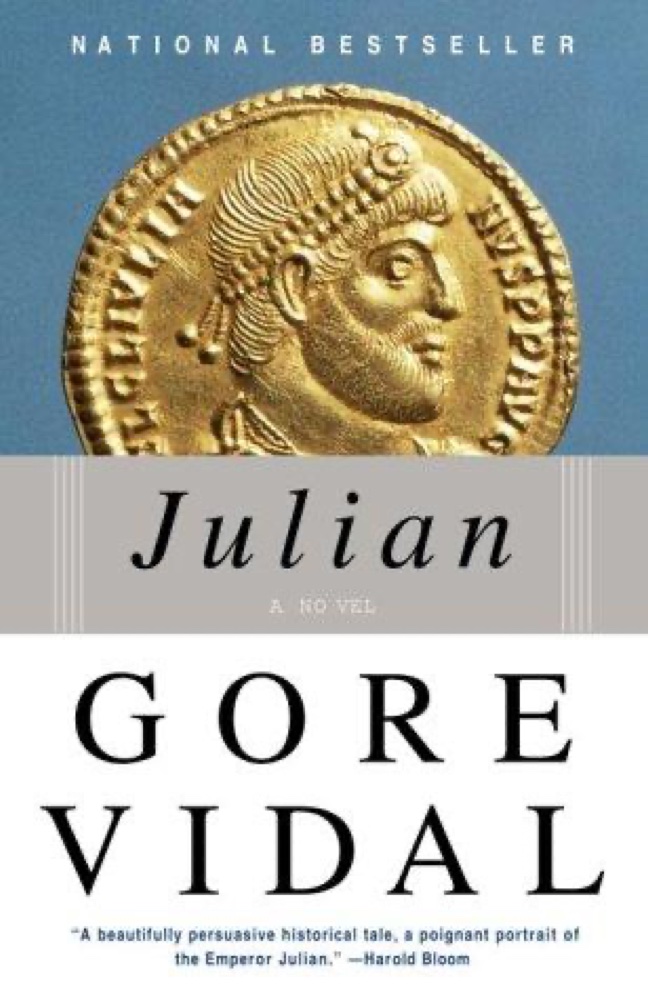 Julian
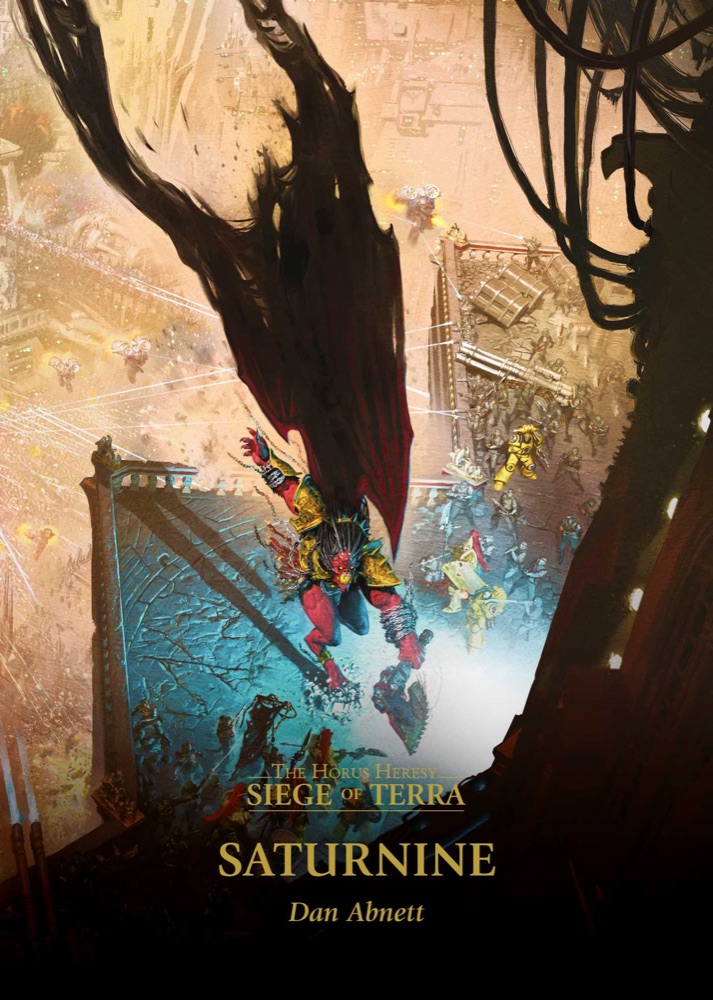 Saturnine
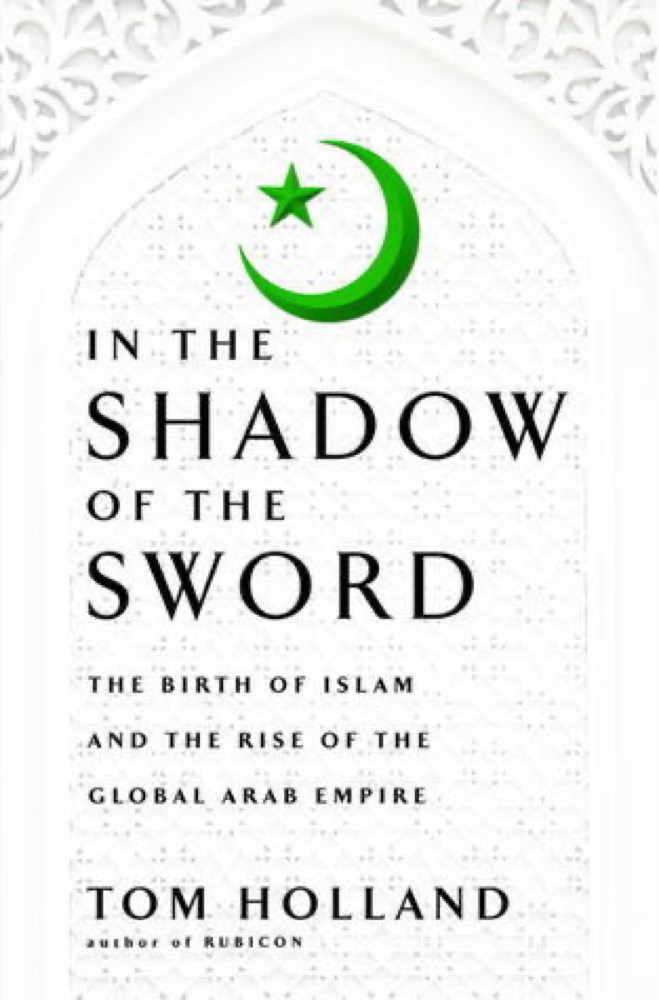 In the Shadow of the Sword: The Birth of Islam and the Rise of the Global Arab Empire
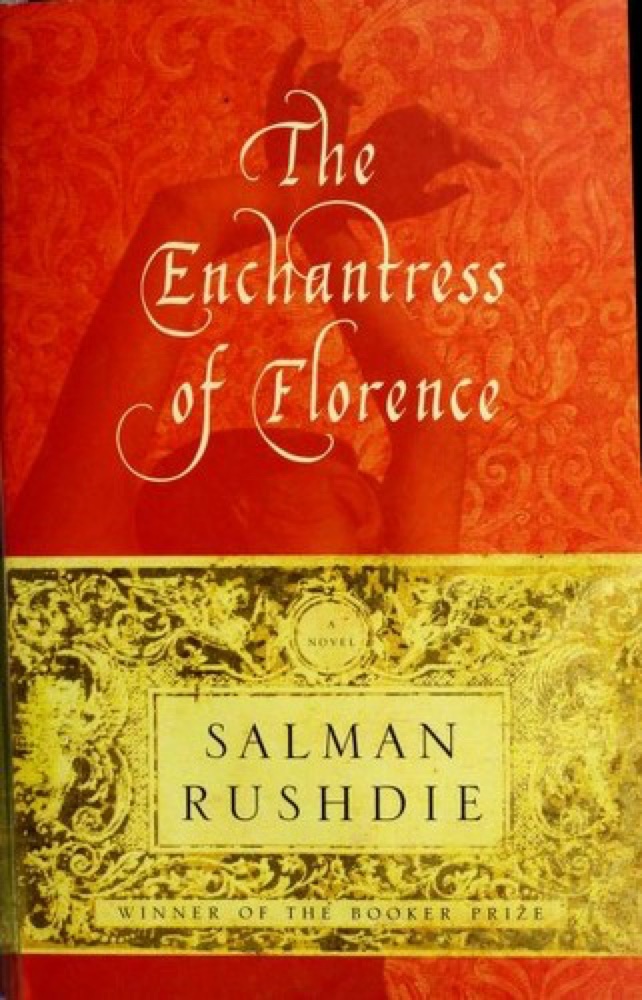 The Enchantress of Florence
 The Old Regime and the French Revolution
 Victory City
 Civilization: The West and the Rest
 The Secret History of the Mongol Queens: How the Daughters of Genghis Khan Rescued His Empire
 Foundation and Empire
 The Memoirs of Cleopatra
 Godblight
 Ultima
 God Emperor of Dune
 The Dream of Scipio
 A Drop of Corruption
 The Mask of Fear
 First Lord's Fury
 The Proud Tower: A Portrait of the World Before the War, 1890-1914
 The Sixteen Satires
 Horus Rising
 The Truth: Stage Adaptation
 The Paris Vendetta