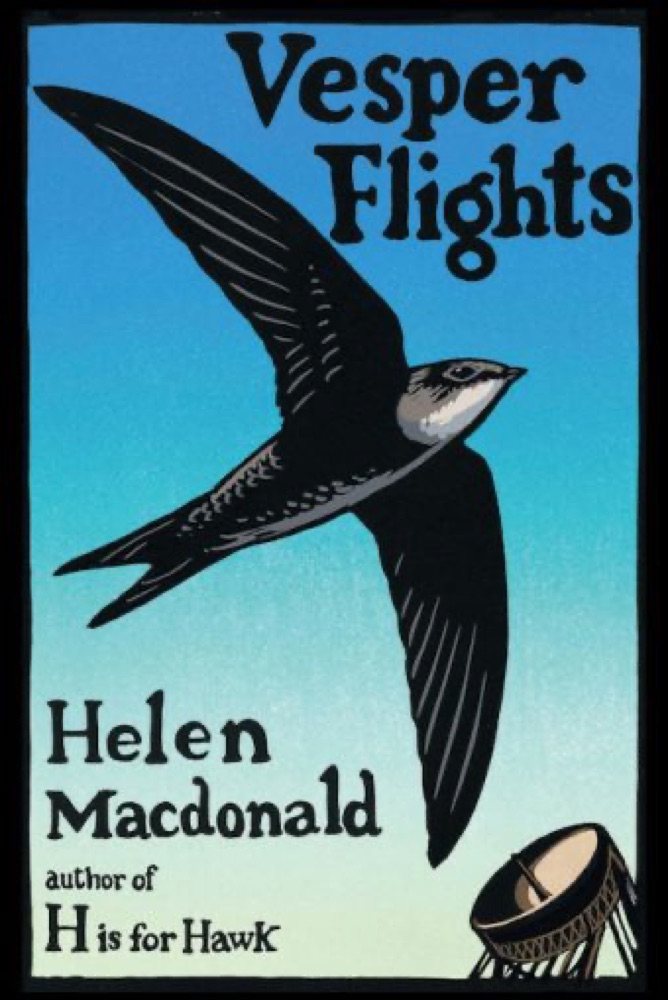
 Vesper Flights
Quotes from the Book
There is a time in life when you expect the world to be always full of new things. And then comes a day when you realise that is not how it will be at all. You see that life will become a thing made of holes. Absences. Losses. Things that were there and are no longer. And you realise, too, that you have to grow around and between the gaps, [...]
We carry the lives we've imagined as we carry the lives we have, and sometimes a reckoning comes of all the lives we have lost.
Here’s a word. Bereavement. Or, Bereaved. Bereft. It’s from the Old English bereafian, meaning ‘to deprive of, take away, seize, rob’. Robbed. Seized. It happens to everyone. But you feel it alone. Shocking loss isn’t to be shared, no matter how hard you try.
In England Have My Bones White wrote one of the saddest sentences I have ever read: ‘Falling in love is a desolating experience, but not when it is with a countryside.’ He could not imagine a human love returned. He had to displace his desires onto the landscape, that great, blank green field that cannot love you back, but cannot hurt you either.
When you are learning how to do something, you do not have to worry about whether or not you are good at it. But when you have done something, have learned how to do it, you are not safe any more. Being an expert opens you up to judgement.
The hawk was everything I wanted to be: solitary, self-possessed, free from grief, and numb to the hurts of human life.
I think of what wild animals are in our imaginations. And how they are disappearing — not just from the wild, but from people’s everyday lives, replaced by images of themselves in print and on screen. The rarer they get, the fewer meanings animals can have. Eventually rarity is all they are made of. The condor is an icon of extinction. There’s little else to it now but being the last of its kind. And in this lies the diminution of the world. How can you love something, how can you fight to protect it, if all it means is loss?
Old England is an imaginary place, a landscape built from words, woodcuts, films, paintings, picturesque engravings. It is a place imagined by people, and people do not live very long or look very hard. We are very bad at scale. The things that live in the soil are too small to care about; climate change too large to imagine. We are bad at time too. We cannot remember what lived here before we did; we cannot love what is not. Nor can we imagine what will be different when we are dead. We live out our three score and ten, and tie our knots and lines only to ourselves. We take solace in pictures, and we wipe the hills of history.
When you are broken, you run. But you don't always run away. Sometimes, helplessly, you run towards.
You see that life will become a thing made of holes. Absences. Losses. Things that were there and are no longer. And you realise, too, that you have to grow around and between the gaps, though you can put your hand out to where things were and feel that tense, shining dullness of the space where the memories are.
It took me a long time to realise how many of our classic books on animals were by gay writers who wrote of their relationships with animals in lieu of human loves of which they could not speak.
Nature in her green, tranquil woods heals and soothes all affliction,’ wrote John Muir. ‘Earth hath no sorrows that earth cannot heal.’ Now I knew this for what it was: a beguiling but dangerous lie. I was furious with myself and my own conscious certainty that t his was the cure I needed. Hands are for other humans to hold. They should not be reserved exclusively as perches for hawks. And the wild is not a panacea for the human soul; too much in the air can corrode it to nothing.
Like a good academic, I thought books were for answers.
I wish that we would not fight for landscapes that remind us of who we think we are. I wish we would fight, instead, for landscapes buzzing and glowing with life in all its variousness.
It happens to everyone. But you feel it alone. Shocking loss isn’t to be shared, no matter how hard you try.
The archaeology of grief is not ordered. It is more like earth under a spade, turning up things you had forgotten. Surprising things come to light: not simply memories, but states of mind, emotions, older ways of seeing the world.
Hands are for other human hands to hold.
The hawk had filled the house with wildness as a bowl of lilies fills a house with scent.
Of all the lessons I’ve learned in my months with Mabel this is the greatest of all: that there is a world of things out there – rocks and trees and stones and grass and all the things that crawl and run and fly. They are all things in themselves, but we make them sensible to us by giving them meanings that shore up our own views of the world. In my time with Mabel I’ve learned how you feel more human once you have known, even in your imagination, what it is like to be not. And I have learned, too, the danger that comes in mistaking the wildness we give a thing for the wildness that animates it. Goshawks are things of death and blood and gore, but they are not excuses for atrocities. Their inhumanity is to be treasured because what they do has nothing to do with us at all.
Promises that are broken, again and again, through fear, through loss of nerve, through any number of things that hide that deep desire, at heart, to obliterate one's broken self.
Hunting makes you animal, but the death of an animal makes you human.
the world is full of signs and wonders that come, and go, and if you are lucky you might see them. Once, twice. Perhaps never again.
Some things happen only once, twice in a lifetime. The world is full of signs and wonders that come, and go, and if you are lucky you might be alive to see them.
The kind of madness I had was different. It was quiet, and very, very dangerous. It was a madness designed to keep me sane.
What happens to the mind after bereavement makes no sense until later. Even as I watched I’d half-realised Prideaux was a figure I’d picked out for a father. But what I should have realised, too, on those northern roads, is that what the mind does after losing one’s father isn’t just to pick new fathers from the world, but pick new selves to love them with.
We are very bad at scale. The things that live in the soil are too small to care about; climate change too large to imagine. We are bad at time, too. We cannot remember what lived here before we did; we cannot love what is not. Nor can we imagine what will be different when we are dead. We live out our three score and ten, and tie our knots and lines only to ourselves. We take solace in pictures, and we wipe the hills of history.
Watching, not doing. Seeking safety in not being seen. It's a habit you can fall into, willing yourself into invisibility. And it doesn't serve you well in life. Believe me it doesn't. Not with people and loves and hearts and homes and work. But for the first few days with a new hawk, making yourself disappear is the greatest skill in the world.
It’s not an untouched wilderness like a mountaintop, but a ramshackle wildness in which people and the land have conspired to strangeness.
Being a novice is safe. When you are learning how to do something, you do not have to worry about whether or not you are good at it. But when you have done something, have learned how to do it, you are not safe any more. Being an expert opens you up to judgement.
Watch on YouTube
About Helen Macdonald
We have collected 59 quotes from 2 books by Helen Macdonald on BookQuoters.
More about the author →More by Helen Macdonald
Vesper Flights
Book details
- Author
- Helen Macdonald
- Genre
- Nonfiction
- Goodreads rating
- 3.73 (85k ratings) →
The buzz
- The New York TimesReview in The New York Timesprofessional review (via Book Marks)
- The New YorkerReview in The New Yorkerprofessional review (via Book Marks)
- The Washington PostReview in The Washington Postprofessional review (via Book Marks)
- The Wall Street JournalReview in The Wall Street Journalprofessional review (via Book Marks)
- The GuardianReview in The Guardianprofessional review (via Book Marks)
- Los Angeles TimesReview in Los Angeles Timesprofessional review (via Book Marks)
Keep reading
Vesper Flights
 West with the Night
 Kafka on the Shore
 Hard-Boiled Wonderland and the End of the World
 Sexing the Cherry
 The Goldfinch
 The Island of Missing Trees
 The Serpent King
 The Stone Gods
 The Ground Beneath Her Feet
 The Shock of the Fall
 The Sea, the Sea
 And the Mountains Echoed
 In the Wild Light
 View with a Grain of Sand: Selected Poems
 A Sudden Light
 The Kite Runner
 High Tide in Tucson
 The Dog Stars
 Levels of Life
 Something Wicked This Way Comes
 The Wind-Up Bird Chronicle
 Split Tooth
 There Are Rivers in the Sky
 Out of Oz
 These Silent Woods
 The Painted Drum
 The Quick and the Dead
 Sometimes a Great Notion
 Chances Are...
 A Boy and His Dog at the End of the World
 Devolution: A Firsthand Account of the Rainier Sasquatch Massacre
 Angle of Repose
 The Names
 Different Seasons
 The Bee Sting
 False Memory
 Boy's Life
 The Empusium
 Flights
 Deep Creek: Finding Hope in the High Country
 What I Loved
 Oranges Are Not the Only Fruit
 Smilla's Sense of Snow
 The Year of Magical Thinking
 Drive Your Plow Over the Bones of the Dead
 Fugitive Pieces
 The Golden Compass
 When Women Were Dragons
 The Hour I First Believed
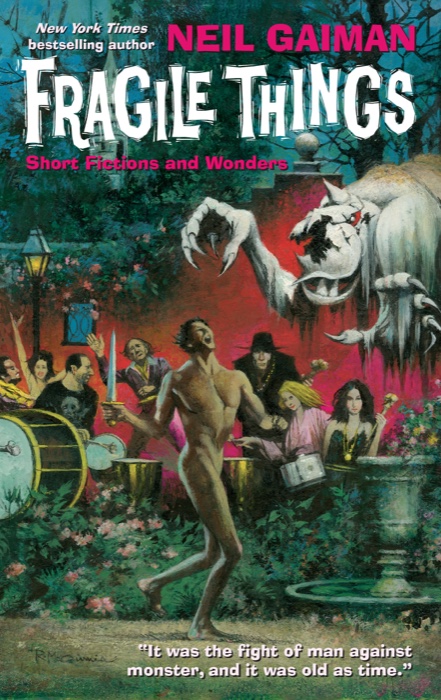 Fragile Things: Short Fictions and Wonders
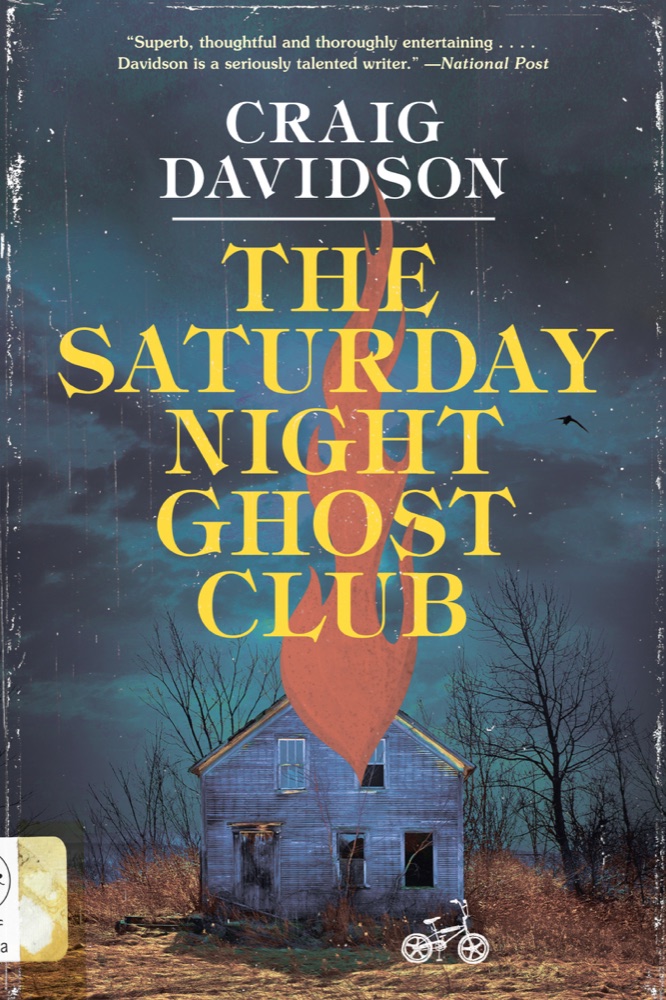 The Saturday Night Ghost Club
 Anthropology of an American Girl
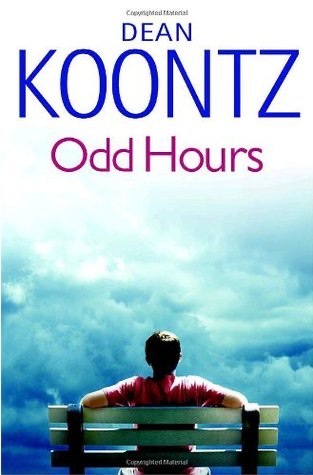 Odd Hours
 Turtles All the Way Down
 The Place of Tides
 The Color of Everything: A Journey to Quiet the Chaos Within
 The Hurting Kind: Poems
 No One Writes Back
 The Fall