 The Lost City of Z: A Tale of Deadly Obsession in the Amazon
Quotes from the Book
How humans love plundering a forest, like spoiled children with their parents' ATM cards and no concept of moderation
7
God could not be everywhere and so he created mothers;
6
The jungle at night is the greatest freak show on earth. When the sun goes down the landscape welcomes a churning nightshift of murdering, slithering, creeping, fornicating, stalking, swimming, glowing life. To walk the Amazon by night is to enter a world where you are gravely disadvantaged compared to millions of sensory savants.
4
In the most savage and dizzyingly vast wilderness on earth, the rule is simple: Never go out alone. Yet there are those among us who have difficulty accepting what we have not found out for ourselves, who pass a WET PAINT sign and cannot help touching the wall. We simply have to know.
1
I needed adventure: not a vacation, not a distraction, but true, meaningful adventure.
1
At a time in history when scientists are recording unprecedented extinction rates and many people feel that the loss of biological diversity and deteriorating natural systems is the defining issue of our time, the west Amazon is ground zero. Nowhere are the stakes higher.
1
Carl Sagan put it in its simplest terms when he wrote, “Anything else you’re interested in is not going to happen if you can’t breathe the air and drink the water.” Despite
1
What looked like a beached whale was lying not five feet from us. I could actually feel the blood drain from my temples as synapses struggled to register what my eyes were seeing. All the while we stood motionless, bobbing gently up and down for a long moment of slack-jawed silence. The snake before us was lying flat on the ground, but her back was as tall as our knees. Her gargantuan shape spread out in sweeping curves into the darkness in either direction, her fat midsection just feet from where we stood. Vision came in waves of comprehension instead of all at once. This snake was easily double the size of the one we had caught just two weeks earlier. This was a monster.
the farther from humans you travel
Rudyard Kipling wrote that God could not be everywhere and so he created mothers;
Convinced that the jungle held a lost civilization
the dry season butterflies flock in clouds of thousands on the riverbanks in color variations that would stun a rainbow.
How easily a life passes from a body, leaving nothing but cold, inanimate tissue.
This was a creature that, except for the brief days in safety as a kitten, swatting at her mother’s tail and taking in a new world, had spent every waking moment fighting for life. Like one endless solo expedition, her life was a solitary battle for survival. Each morsel of food won required skill, stealth, and often the risk of injury or death. Stalking the beaches and brush of the long river beneath black thunderheads of the Amazon sky, she had managed to survive through all adversity in one of the most competitive and unforgiving ecosystems on earth.
Bolivians recently elected their first indigenous president, Evo Morales, and gave constitutional rights to the earth. Rivers, fish, air, trees—these things have rights there and are regarded as part of the collective public interest, of the inheritance that everyone is entitled to.
The last wolves in the Yellowstone area were killed in 1926, and the park remained without them until scientists reintroduced the species in 1995. The resulting changes that the predators caused in the ecosystem shocked everyone. For decades, the elk herds had overpopulated and overgrazed the riversides, munching the aspen, willow, and other tree saplings before they could mature. With the reintroduction of wolves, the elk numbers fell by half, and their behavior changed—they move more often now, because even when the wolves aren’t around, the elk are on guard. With the elk moving often and in fewer numbers, new trees are able to grow, for the first time in almost a century. The rich new foliage allowed beaver numbers to increase, which in turn had positive impacts on the fish population. Coyote numbers also fell sharply under the rule of wolves, allowing more rodents, rabbits, and small mammal life to flourish—this, combined with the increased fish stocks, benefited raptors like the bald eagle. With wolves culling coyotes, there are more red foxes; with willow trees growing, there is a greater diversity and abundance of songbirds.
I mentally recited the mantra that I knew to be true after years of experience—that the plan falling apart is a natural part of any worthwhile adventure.
I have witnessed a kind of generational amnesia to ecological abundance. It is a sinister phenomenon whereby members of each generation seem to accept what they see around them as the way things ought to be. It is a problem of shifting baselines, a lowering of the standards by which we judge the condition of our environment. Over generations and across continents, this collective inability to accurately assess environmental change has become a serious problem.
They say the Amazon is the lungs of our planet, and it is true that nearly 20 percent of the oxygen on earth is produced there. Yet in the Amazon most of the oxygen that the jungle produces is absorbed back up each night through respiration. Inhaling and exhaling, the basin is almost entirely a closed system of self-sustaining processes. It is in fact the fallen leaves that lead to the creation of oxygen in a magnificently large process.
Alternatively, if you prefer the hardened scientist’s perspective, Carl Sagan put it in its simplest terms when he wrote, “Anything else you’re interested in is not going to happen if you can’t breathe the air and drink the water.
She knew full well that in conservation the victories are temporary; it is the losses that are final.
Whatever riches it is possible to possess in life, having parents who are behind you and who understand whatever it is that makes you you is among the most valuable assets a child can have.
Amid the diversity grows one tree that produces sap almost completely made of hydrocarbons, producing 1,500 gallons of sap each year that can be poured directly into a diesel motor as fuel.
To properly appreciate the scope of topographic magnificence of the Madre de Dios you’d need to imagine cramming the varied temperature range contained within the latitudes between Peru and Alaska into a dozen miles: from frozen peaks to steaming jungle.
Watch on YouTube
About Paul Rosolie
We have collected 24 quotes from 1 book by Paul Rosolie on BookQuoters.
More about the author →About the book
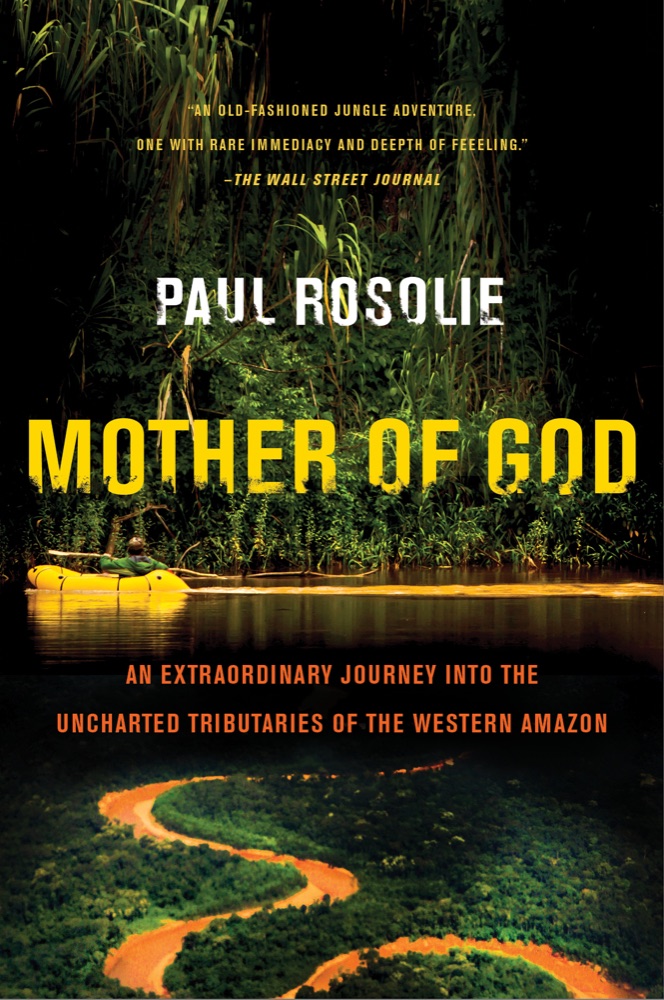
For fans of The Lost City of Z, Walking the Amazon, and Turn Right at Machu Picchu comes naturalist and explorer Paul Rosolie's extraordinary adventure in the uncharted tributaries of the Western Amazon--a tale of discovery that vividly captures the awe, beauty, and isolation of this endangered land and presents an impassioned call to save it.
In the Madre de Dios--Mother of God--region of Peru, where the Amazon River begins its massive flow, the Andean Mountain cloud forests fall into lowland Amazon Rainforest, creating the most biodiversity-rich place on the planet. In January 2006, when he was just a restless eighteen-year-old hungry for adventure, Paul Rosolie embarked on a journey to the west Amazon that would transform his life.
Venturing alone into some of the most inaccessible reaches of the jungle, he encountered giant snakes, floating forests, isolated tribes untouched by
Book details
- First published
- 2014
- Author
- Paul Rosolie
- Genre
- Nonfiction
- Goodreads rating
- 4.42 (4k ratings)
Keep reading
The Lost City of Z: A Tale of Deadly Obsession in the Amazon
 Feral: Rewilding the Land, the Sea and Human Life
 The Forest Unseen: A Year’s Watch in Nature
 The World Without Us
 The Dark Forest
 Elephant Whisperer
 Desert Solitaire
 The Adventures of China Iron
 Barkskins
 The Overstory
 Jaguars Ripped My Flesh
 Wild Ones: A Sometimes Dismaying, Weirdly Reassuring Story About Looking at People Looking at Animals in America
 Arctic Dreams
 The Wild Places
 The Ends of the World
 Voyage of the Beagle
 The Emerald Mile: The Epic Story of the Fastest Ride in History Through the Heart of the Grand Canyon
 Vanishing Treasures: A Bestiary of Extraordinary Endangered Creatures
 Walking
 The Extinction of Irena Rey
 State of Wonder
 Songs of Distant Earth
 Under a White Sky: The Nature of the Future
 Gathering Moss: A Natural and Cultural History of Mosses
 The Eagle Tree
 The Night Watchman
 Wilding
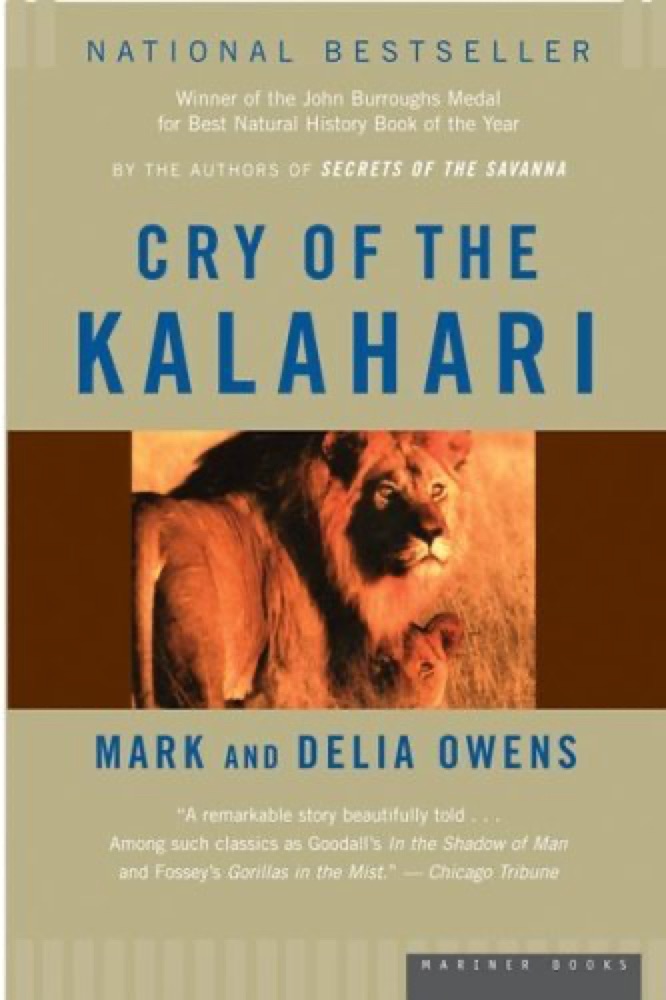 Cry of the Kalahari
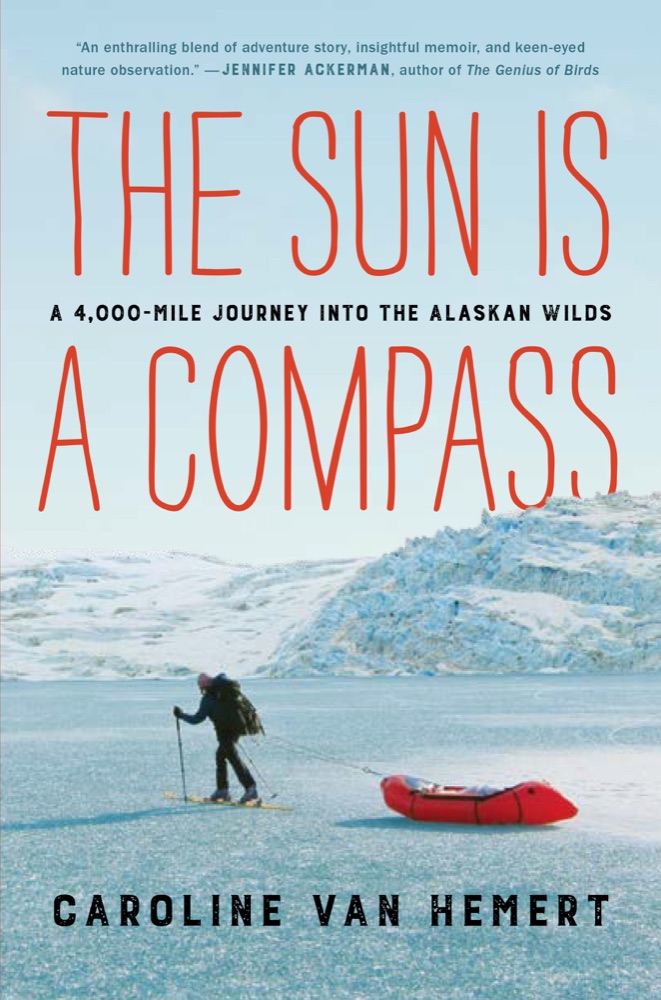 The Sun is a Compass: A 4,000-Mile Journey into the Alaskan Wilds
 The Hour of Land: A Personal Topography of America's National Parks
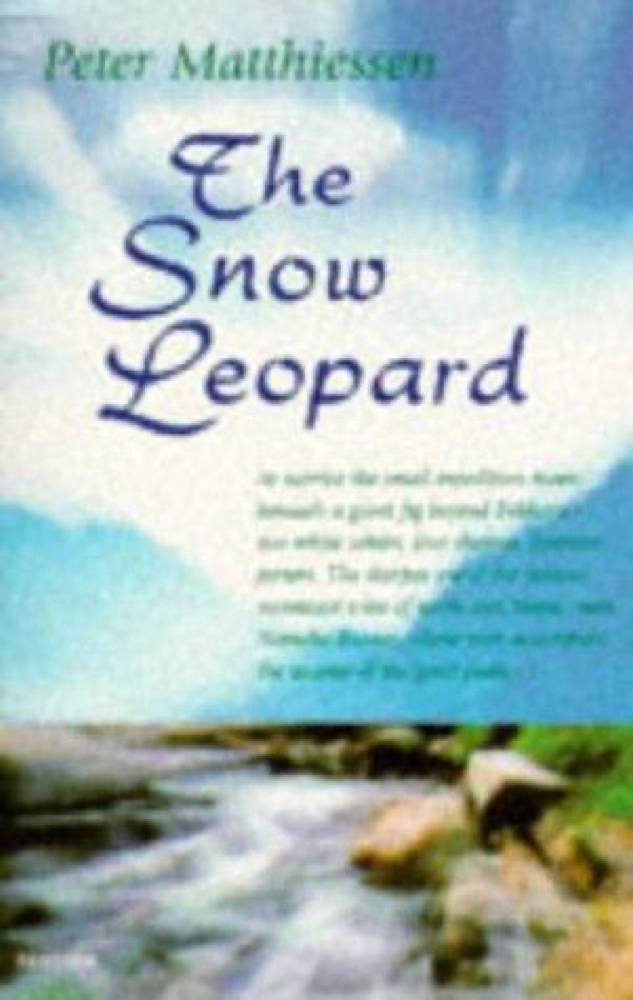 The Snow Leopard
 The Journey Home: Some Words in Defense of the American West
 Last Chance to See
 The Last Ranger
 The Covenant of Water
 Jungle
 Death's End
 The Outermost House: A Year of Life on the Great Beach of Cape Cod
 A Life on Our Planet: My Witness Statement and a Vision for the Future
 A Sand County Almanac and Sketches Here and There
 The Fifth Science
 The Abundance
 Kon-Tiki
 The Wandering Earth
 Always Coming Home
 Falter: Has the Human Game Begun to Play Itself Out?
 On Trails: An Exploration
 The Stardust Grail
 The Nature Fix: Why Nature Makes Us Happier, Healthier, and More Creative
 Devolution: A Firsthand Account of the Rainier Sasquatch Massacre
 The Last Train to Zona Verde: My Ultimate African Safari
 In Ascension
 The Stone Gods
 A Walk in the Woods
 Submergence
 The Immense Journey
 Vesper Flights
 All the Water in the World
 Billions & Billions: Thoughts on Life and Death at the Brink of the Millennium
 Playground