
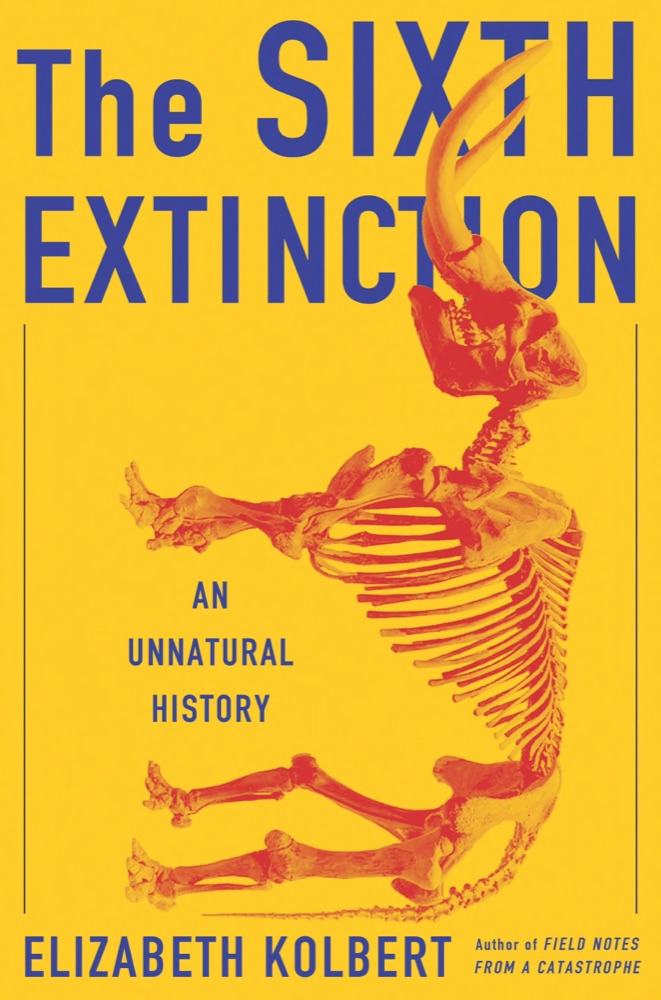
 The Sixth Extinction: An Unnatural History
Quotes from the Book
The battle for life on the first day of the Paleocene is won and lost by little more than biological threads. Only those organisms that are able to find shelter—below the ground, beneath the water—have any chance. All others, from the largest Edmontosaurus to the smallest insect, perish. There is no behavior that can save them. Evolution prepared them for the world of tomorrow, and perhaps the day after, but not for this.
4
This is not a monument to loss. This is an ode to resilience that can only be seen in the wake of catastrophe.
4
It's an extension of how we often cope in the wake of our own personal traumas, remembering the wounds as we struggle to see the growth stimulated by terrible events. Resilience has no meaning without disaster.
3
Beginnings need endings, a lesson that we can either hold carefully or that we can deny until it finds us.
2
That's the goal of paleontology, after all - to start with the offerings of death and work back towards life.
1
I feel like I miss the non-avian dinosaurs—nostalgia for a time I can never witness, when dinosaurs ruled the Earth.
1
In time, extinction comes for all species. Some leave descendants. Others do not. Beautiful as the image is, there is no tree of life. The shape of biodiversity is more like a chaotic blanket, individual threads splitting, being snipped off, branching again, creating an incredible tangle of species that are both discrete and connected. All the species alive in this moment, at the dawn of the Paleogene, will eventually perish. But some will sprout populations a little different from their point of origin, variations that will survive even as their parent species disappear, and with them the same ecological dance will begin again. The species that exist today will shape what tomorrow looks like, life itself driving the profusion of so many unique forms.
1
evolutionary radiation unlike any seen before. It’s not just the birds that are awaiting the revival of the plants, though. For insects,
It could be 350 years, and maybe longer, before we completely understand the relationship between the brain and the mind. But meanwhile, a reasonable working hypothesis is that the mind is what the brain does.
And here, we often leave the epic tale. The dinosaurs were dominant, even cocky in our prehistoric visions. The largest, strangest, and most ferocious of all inhabited the Late Cretaceous world of soggy swamps and steaming forests. A wayward asteroid suddenly ended their reign, leaving the meek to inherit the Earth. Just as the dinosaurs once benefitted from a mass extinction that allowed them to step out of the shadow of ancient crocodile relatives 201 million years ago, so, too, were our warm-blooded, snuffly little forebears the recipients of good fortune they never earned nor have ever repaid.
Any aspect of the mind that is not transcendental must rely upon the physical processes of the brain. Mental activity, whether conscious or unconscious, maps to neural activity, much like a picture of a sunset on your computer screen maps to a pattern of magnetic charges on your hard drive. Apart from potential transcendental factors, the brain is the necessary and proximally sufficient condition for the mind; it’s only proximally sufficient because the brain is nested in a larger network of biological and cultural causes and conditions, and is affected itself by the mind.
Most animals don’t have nervous systems complex enough to allow these strategies’ alarms to grow into significant distress. But our vastly more developed brain is fertile ground for a harvest of suffering. Only we humans worry about the future, regret the past, and blame ourselves for the present. We get frustrated when we can’t have what we want, and disappointed when what we like ends. We suffer that we suffer. We get upset about being in pain, angry about dying, sad about waking up sad yet another day. This kind of suffering—which encompasses most of our unhappiness and dissatisfaction—is constructed by the brain. It is made up. Which is ironic, poignant—and supremely hopeful. For if the brain is the cause of suffering, it can also be its cure.
Over hundreds of millions of years of evolution, our ancestors developed three fundamental strategies for survival: Creating separations—in order to form boundaries between themselves and the world, and between one mental state and another Maintaining stability—in order to keep physical and mental systems in a healthy balance. Approaching opportunities and avoiding threats—in order to gain things that promote offspring, and escape or resist things that don’t. These strategies have been extraordinarily effective for survival. But Mother Nature doesn’t care how they feel. To motivate animals, including ourselves, to follow these strategies and pass on their genes, neural networks evolved to create pain and distress under certain conditions: when separations break down, stability is shaken, opportunities disappoint, and threats loom. Unfortunately, these conditions happen all the time, because: Everything is connected. Everything keeps changing. Opportunities routinely remain unfulfilled or lose their luster, and many threats are inescapable (e.g., aging and death) Let’s see how all this makes you suffer.
That may not be so easy at first; most people bring less kindness to themselves than to others.
Beautiful as the image is, there is no tree of life. The shape of biodiversity is more like a chaotic blanket, individual threads splitting, being snipped off, branching again, creating an incredible tangle of species that are both discrete and connected.
The sweet, rancid stench already wafting from the erstwhile Triceratops is intoxicating.
Physicists calculated that the initial impact that created the Chicxulub crater in Central America would have been powerful enough to blow many terrestrial dinosaurs in the vicinity off into space.
And those bigger bodies run hot. Eoconodon and its mammalian neighbors are endotherms. They maintain their body heat at a high, constant temperature, generated from the inside. The mammals do not need to lie out in the sun to warm up each morning like the crocodiles or the little crunchy lizards Eoconodon sometimes nabs as the reptiles go about their sluggish morning routine. The mammals are always quick, always ready, but maintaining such an active state requires more fuel. Simply scarfing down any plants in the vicinity won’t do. Mammals need energy-rich foods that provide more nutrition for each chew, and they need to find them every day. Gorging might hold over the likes of Eoconodon for a day or two, but the fuel goes fast. Without sufficient salad in the surrounding environment, the possibilities of growing larger would stay closed.
Often, this is about as far as the discussion goes: an immense rock smacked into the planet and myriad species were summarily snuffed out. Simple as that.
Watch on YouTube
About Riley Black
We have collected 19 quotes from 1 book by Riley Black on BookQuoters.
More about the author →About the book
Winner of the AAAS/Subaru Prize for Excellence in Science Books!
"This is top-drawer science writing." ―Publishers Weekly, starred review
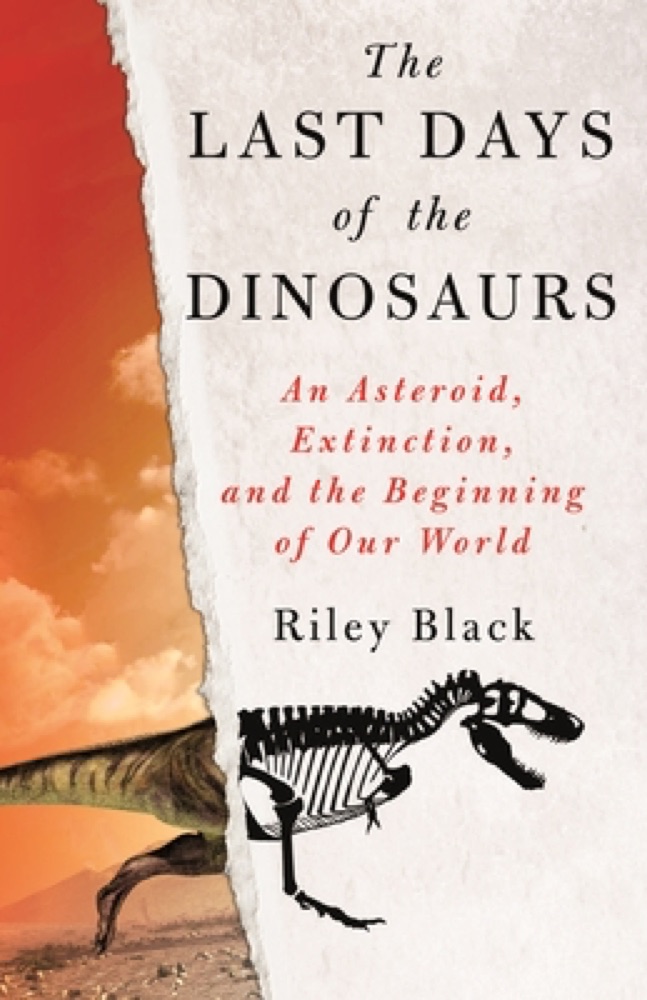
In The Last Days of the Dinosaurs, Riley Black walks readers through what happened in the days, the years, the centuries, and the million years after the impact, tracking the sweeping disruptions that overtook this one spot, and imagining what might have been happening elsewhere on the globe. Life’s losses were sharp and deeply-felt, but the hope carried by the beings that survived sets the stage for the world as we know it now.
Picture yourself in the Cretaceous period. It’s a sunny afternoon in the Hell Creek of ancient Montana 66 million years ago. A Triceratops horridus ambles along the edge of the forest. In a matter of hours, everything here will be wiped away. Lush verdure will be replaced with fire. Tyrannosaurus rex will be toppled from the
Book details
- First published
- 2022
- Author
- Riley Black
- Genre
- Nonfiction
- Goodreads rating
- 3.94 (4k ratings)
The buzz
- Publishers WeeklyReview in Publishers Weeklyprofessional review (via Book Marks)
- LibraryjournalReview in Libraryjournalprofessional review (via Book Marks)
- BooklistReview in Booklistprofessional review (via Book Marks)
- Shelf AwarenessReview in Shelf Awarenessprofessional review (via Book Marks)
Keep reading
The Sixth Extinction: An Unnatural History
 Shadows of Forgotten Ancestors
 The Lost World
 The Ends of the World
 Vanishing Treasures: A Bestiary of Extraordinary Endangered Creatures
 The World Without Us
 Jurassic Park
 The Fifth Science
 Underland: A Deep Time Journey
 The Ancestor's Tale: A Pilgrimage to the Dawn of Evolution
 Death's End
 Dragons of Eden: Speculations on the Evolution of Human Intelligence
 Why Fish Don’t Exist: A Story of Loss, Love, and the Hidden Order of Life
 Undeniable: Evolution and the Science of Creation
 Genome
 The Rise and Reign of the Mammals: A New History, from the Shadow of the Dinosaurs to Us – A Bestselling Book on the Natural History of Mammalian Evolution
 A Short History of Nearly Everything
 The Dark Forest
 Billions & Billions: Thoughts on Life and Death at the Brink of the Millennium
 The Third Chimpanzee: The Evolution and Future of the Human Animal
 Wild Ones: A Sometimes Dismaying, Weirdly Reassuring Story About Looking at People Looking at Animals in America
 A Life on Our Planet: My Witness Statement and a Vision for the Future
 The Blind Watchmaker: Why the Evidence of Evolution Reveals a Universe Without Design
 Devolution: A Firsthand Account of the Rainier Sasquatch Massacre
 The Mountain in the Sea
 The Origin of Species
 The Overstory
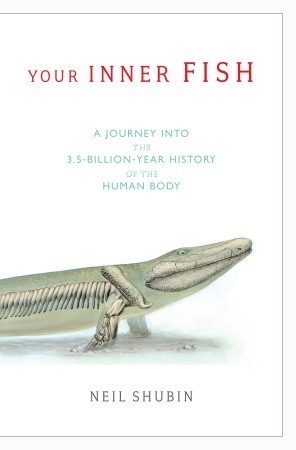 Your Inner Fish: A Journey Into the 3.5-Billion-Year History of the Human Body
 To Be Taught, If Fortunate
 The Immense Journey
 The Greatest Show on Earth: The Evidence for Evolution
 The Lives of a Cell: Notes of a Biology Watcher
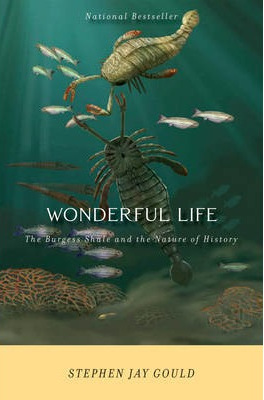 Wonderful Life: The Burgess Shale and the Nature of History
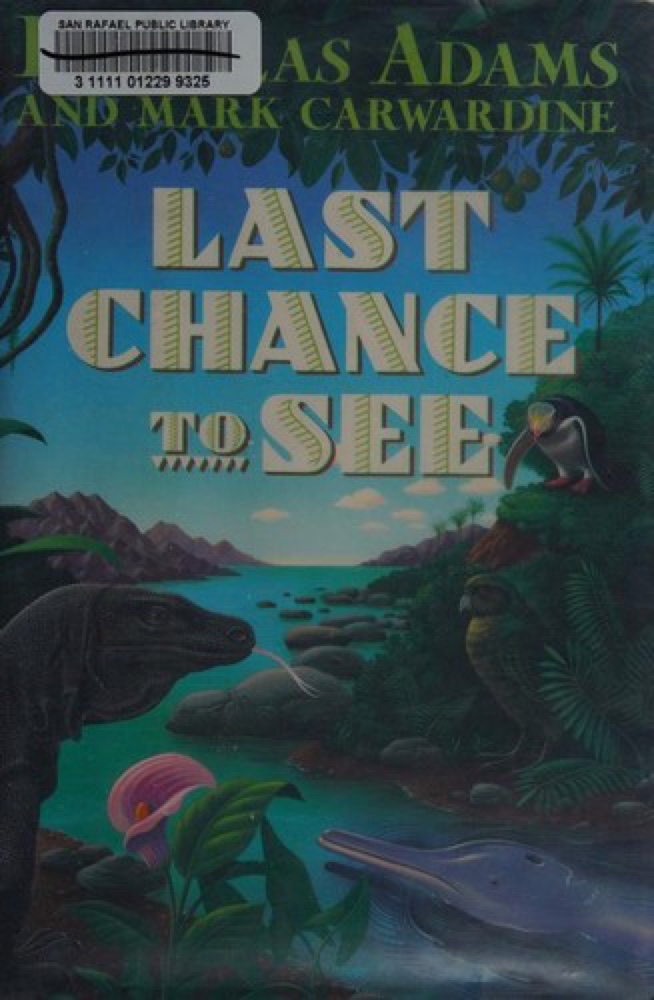 Last Chance to See
 Falter: Has the Human Game Begun to Play Itself Out?
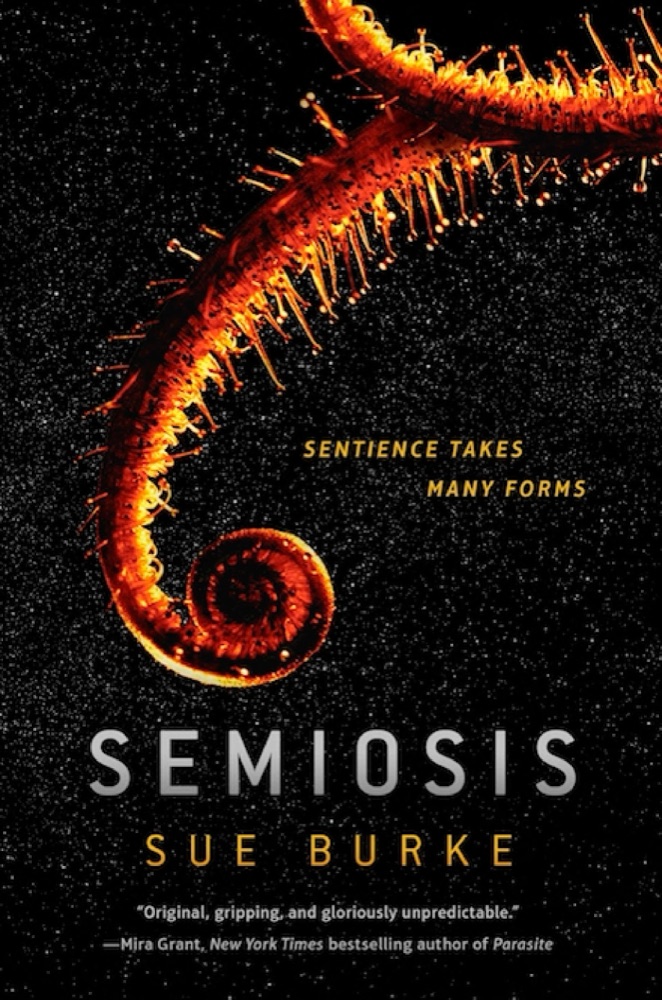 Semiosis
 The Light Eaters: How the Unseen World of Plant Intelligence Offers a New Understanding of Life on Earth
 The Evolutionary Void
 The Social Conquest of Earth
 Other Minds
 A Short History of Progress
 Blue Remembered Earth
 Scatter, Adapt, and Remember: How Humans Will Survive a Mass Extinction
 2312
2312
 The Forest Unseen: A Year’s Watch in Nature
 The Drowned World
 The Stone Gods
 The Rise of Endymion
 Under a White Sky: The Nature of the Future
 Vesper Flights
 Martin Marten
 The Log from the Sea of Cortez
 Until the End of Time: Mind, Matter, and Our Search for Meaning in an Evolving Universe
 Gathering Moss: A Natural and Cultural History of Mosses
 Earth
Earth
 Venomous Lumpsucker
 The Big Picture: On the Origins of Life, Meaning, and the Universe Itself
 The Shape of Water
 The Three-Body Problem
 Echopraxia