 Happiness: A Guide to Developing Life's Most Important Skill
Quotes from the Book
Of all the means to insure happiness throughout the whole life, by far the most important is the acquisition of friends.
300
Accustom yourself to the belief that death is of no concern to us, since all good and evil lie in sensation and sensation ends with death. Therefore the true belief that death is nothing to us makes a mortal life happy, not by adding to it an infinite time, but by taking away the desire for immortality. For there is no reason why the man who is thoroughly assured that there is nothing to fear in death should find anything to fear in life. So, too, he is foolish who says that he fears death, not because it will be painful when it comes, but because the anticipation of it is painful; for that which is no burden when it is present gives pain to no purpose when it is anticipated. Death, the most dreaded of evils, is therefore of no concern to us; for while we exist death is not present, and when death is present we no longer exist. It is therefore nothing either to the living or to the dead since it is not present to the living, and the dead no longer are.
103
The purpose of all knowledge, metaphysical as well as scientific, is to achieve what Epicurus called ataraxia, freedom from irrational fears and anxieties of all sorts—in brief, peace of mind.
41
The most important consequence of self-sufficiency is freedom.
31
Men inflict injuries from hatred, jealousy or contempt, but the wise man masters all these passions by means of reason.
15
if a person fights the clear evidence of his senses he will never be able to share in genuine tranquillity
11
With the Epicureans it was never science for the sake of science but always science for the sake of human happiness.
10
The conquest of fear, especially fear of unaccountable divine beings who meddle in nature at will, means a reduction in the sum total of human pain and suffering and opens the door to the calm acceptance of a new picture of the world—a world in which nature is autonomous and where there are ideal beings who never meddle.
8
Two of Epicurus’s early influences, Democritus and Pyrrho, had actually journeyed all the way to what is now India, where they had encountered Buddhism in the schools of the gymnosophists
8
Of all the things that wisdom provides for the happiness of the whole man, by far the most important is the acquisition of friendship.
7
Epicurus as a moral empiricist felt that our immediate feelings are far more cogent and authoritative guides to the good life than abstract maxims, verbal indoctrination, or even the voice of reason itself. Hence he based his ethics on nature, not on convention or on reason.
6
The esteem of others is outside our control; we must attend instead to healing ourselves.
5
Let no one be slow to seek wisdom when he is young nor weary in the search of it when he has grown old. For no age is too early or too late for the health of the soul.
5
If you summarily rule out any single sensation and do not make a distinction between the element of belief that is superimposed on a percept that awaits verification and what is actually present in sensation or in the feelings or some percept of the mind itself, you will cast doubt on all other sensations by your unfounded interpretation and consequently abandon all the criteria of truth. On the other hand, in cases of interpreted data, if you accept as true those that need verification as well as those that do not, you will still be in error, since the whole question at issue in every judgment of what is true or not true will be left intact.
5
The risings and settings of the sun, the moon, and the other heavenly bodies may come about from the lighting up and quenching of their fires…; for nothing in our sensory experience runs counter to this hypothesis. Or the said effects may be caused by the emergence of these bodies from a point above the earth and again by the earth’s position in front of them; for nothing in our sensory experience is against this.45 Here two alternative explanations of “risings and settings” are offered; both are of equal value and equally true, since neither is contradicted by anything in our experience. On the contrary, we have all seen fires die down from lack of fuel, and lights obscured or blacked out by objects coming in front of them.
5
The blessed and indestructible being of the divine has no concerns of its own, nor does it make trouble for others. It is not affected by feelings of anger or benevolence, because these are found where there is lack of strength.
4
We must laugh and philosophize and manage our households and look after our other affairs all at the same time, and never stop proclaiming the words of the true philosophy.
4
Nothing is sufficient for the person who finds sufficiency too little.
3
panta rei (“All things are in flux”),
3
It is not true religion to be seen turning with veiled head ever and anon toward an image of stone, or drawing nigh to every god's altar, or prostrating oneself on the ground with suppliant hands before the holy shrines; nor is it piety to wet the altars with the abundant blood of beasts and to twine vow with vow. True religion is rather the power to contemplate nature with a mind set at peace.
2
Don’t ruin the things you have by wanting what you don’t have, but realize that they too are things you once did wish for.
2
The strong stand taken by the Epicureans against all these tendencies was taken not in the name of science and human knowledge alone but in the name of human happiness, on the reasonable assumption that if men know the true nature of reality they are more likely to be happy than if they do not. Hence the happy and the good life presupposes knowing and knowing how to know.
2
Epicurus’s notion of happiness has a decidedly Buddhist quality. Happiness is tranquility, and tranquility comes principally from putting aside worldly “hankerings”—ambitions for power, status, involvement in government, the pursuit of voluptuous sensory experiences, and the accumulation of material goods. Two of Epicurus’s most quoted maxims distill this idea: “Not what we have, but what we enjoy, constitutes our abundance” and, in its more admonitory form, “Nothing is enough for the man to whom enough is too little.
2
Today the doctrine of metaphysical free will appears to us as one of those archaic relics of traditional religion that Epicurus and Lucretius should have done their utmost to combat. Moral freedom and determinism are by no means incompatible. Man is himself a causal agent in nature and is morally responsible when he acts “freely,” i.e., from his own settled character and in his own capacity as an individual, provided he is exempt from external force or pressure.
2
A free man cannot acquire many possessions, because this is no easy feat without becoming a hireling of mobs or dynasts. And yet he has a constant abundance of everything, and if he should chance to gain many possessions, he could easily portion them out so as to win his neighbors’ good will.
2
One who understands the limits of the good life knows that what eliminates the pains brought on by need and what makes the whole of life perfect is easily obtained, so that there is no need for enterprises that entail the struggle for success.
2
Unlike at the Academy or the Lyceum, women, some of them concubines and mistresses, as well as a few slaves, joined the conversation; further, many of the students here had arrived without academic credentials in mathematics or music, de rigueur for entry to the other Athenian schools of higher learning. Everyone in the Garden radiated earnestness and good cheer. The subject under discussion was happiness.
2
About Epicurus
We have collected 27 quotes from 1 book by Epicurus on BookQuoters.
More about the author →About the book
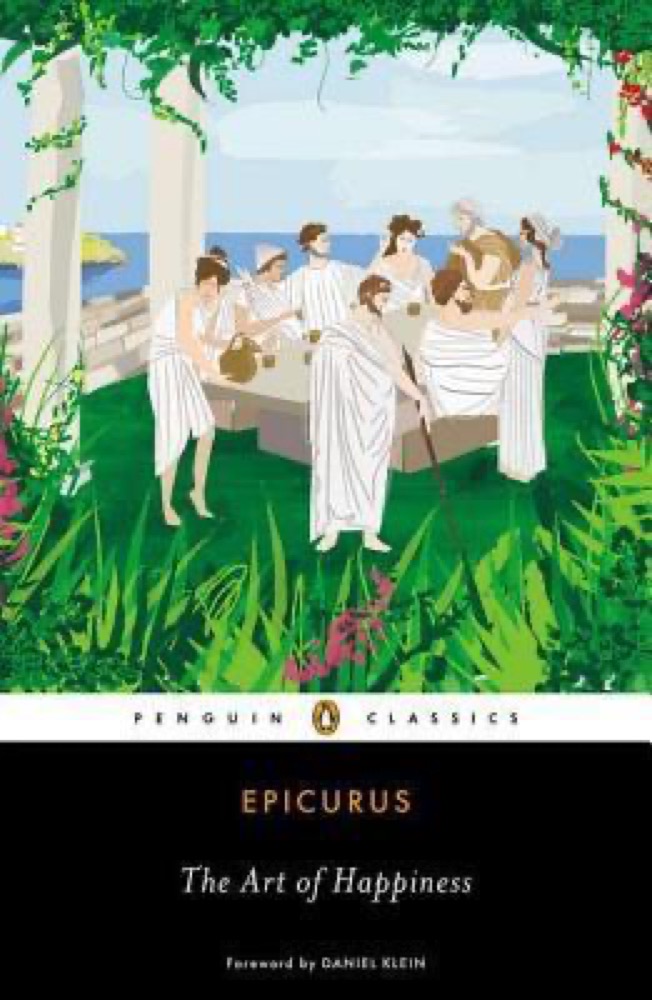
New to Penguin Classics and the perfect companion volume to bestselling author Daniel Klein's new book, "Travels with Epicurus"The teachings of Epicurus--about life and death, religion and science, physical sensation, happiness, morality, and friendship--attracted legions of adherents throughout the ancient Mediterranean world and deeply influenced later European thought. Though Epicurus faced hostile opposition for centuries after his death, he counts among his many admirers Thomas Hobbes, Thomas Jefferson, Karl Marx, and Isaac Newton. This volume includes all of his extant writings--his letters, doctrines, and Vatican sayings--alongside parallel passages from the greatest exponent of his philosophy, Lucretius, extracts from Diogenes Laertius' "Life of Epicurus," a lucid introductory essay about Epicurean philosophy, and a foreword by Daniel Klein, author of "Travels with Epicurus" and
Book details
- First published
- 2012
- Author
- Epicurus
- Genre
- Philosophy
- Goodreads rating
- 3.79 (7k ratings) →
Keep reading
Happiness: A Guide to Developing Life's Most Important Skill
 The Socrates Express: In Search of Life Lessons from Dead Philosophers
 The Conquest of Happiness
 The Consolations of Philosophy
 A Guide to the Good Life: The Ancient Art of Stoic Joy
 The Nicomachean Ethics
 Ethics
 Stoicism and the Art of Happiness
 The Wisdom of Life
 A Calendar of Wisdom: Daily Thoughts to Nourish the Soul
 The World as Will and Representation, Vol 1
 The Consolation of Philosophy
 The Will to Power
 The Schopenhauer Cure
 Travels with Epicurus: A Journey to a Greek Island in Search of a Fulfilled Life
 The Varieties of Religious Experience
 Letters from a Stoic
 The Gay Science
 Twilight of the Idols
 The Story of Philosophy: The Lives and Opinions of the World's Greatest Philosophers
 The Science of Mind
 The Perennial Philosophy
 The Intellectual Life: Its Spirit, Conditions, Methods
 The Spinoza Problem
 The Happiness Hypothesis: Finding Modern Truth in Ancient Wisdom
 A History of Western Philosophy
 The World As I See It
 The Ethics of Ambiguity
 The Greek Way
 Ethics for the New Millennium
 The I Ching or Book of Changes
 The Swerve: How the World Became Modern
 Complete Works of Swami Vivekananda, 9 Vols.
 The Wise Heart: A Guide to the Universal Teachings of Buddhist Psychology
 What I Believe
 Emile or On Education
 The Yoga Sutras of Patanjali
 The Book of Chuang Tzu
 Autobiography of a Yogi
 Total Freedom: The Essential Krishnamurti
 The Upanishads
 How to Be Perfect: The Correct Answer to Every Moral Question
 Utilitarianism
 The Secret Teachings of All Ages
 How to Use Your Enemies
 The Myth of Sisyphus
 The Philosopher and the Wolf
 How to See Yourself As You Really Are
 The Book: On the Taboo Against Knowing Who You Are
 The Glass Bead Game
 The Laws of Plato
 How to Live: A Life of Montaigne in One Question and Twenty Attempts at an Answer
 Hippie
 Reveries of the Solitary Walker
 How to Know Higher Worlds: A Modern Path of Initiation
 An Enquiry Concerning Human Understanding
 The Myth of Sisyphus and Other Essays
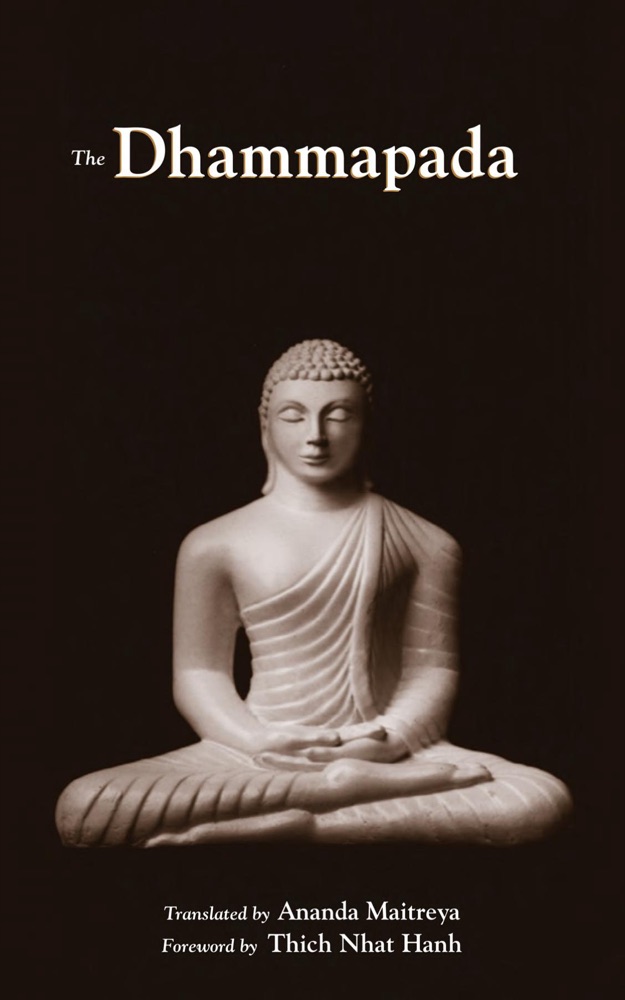 The Dhammapada
 Man's Search for Meaning