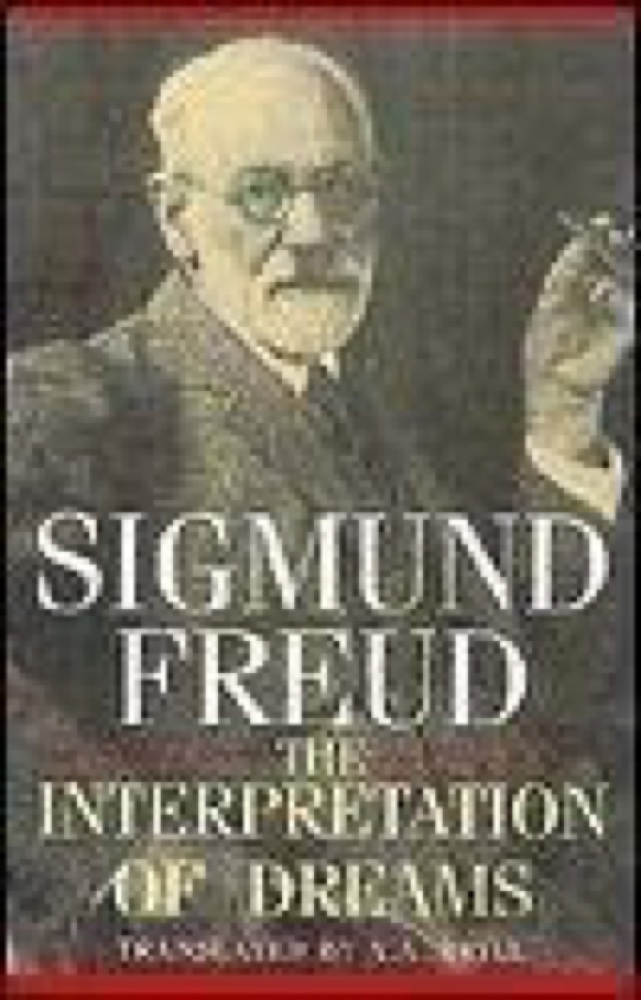
 The Interpretation of Dreams
Quotes from the Book
Religion is an attempt to get control over the sensory world, in which we are placed, by means of the wish-world, which we have developed inside us as a result of biological and psychological necessities. But it cannot achieve its end. Its doctrines carry with them the stamp of the times in which they originated, the ignorant childhood days of the human race. Its consolations deserve no trust. Experience teaches us that the world is not a nursery. The ethical commands, to which religion seeks to lend its weight, require some other foundations instead, for human society cannot do without them, and it is dangerous to link up obedience to them with religious belief. If one attempts to assign to religion its place in man’s evolution, it seems not so much to be a lasting acquisition, as a parallel to the neurosis which the civilized individual must pass through on his way from childhood to maturity.
512
We live in very remarkable times. We find with astonishment that progress has concluded an alliance with barbarism.
7
If our research leads us to a result that reduces religion to the status of a neurosis of mankind and explains it's grandiose powers in the same way as we sould neurotic obsession in our individual patients, then we may be sure we shall incur in this country the greatest resentment of the powers that be.
5
All that is to live in endless song Must in life-time first be drown'd.
4
In such a case a person would hear of something new which, on the ground of certain evidence, he is asked to accept as true; yet it contradicts many of his wishes and offends some of his highly treasured convictions. He will then hesitate, look for arguments to cast doubt on the new material, and so will struggle for a while until at last he admits it himself: " all this is true after all, although I find it hard to accept and it is painful to have to believe in it." All we learn from this process is that it needs time for the intellectual work of the Ego to overcome objections that are invested by strong feelings.
4
No probability, however seductive, can protect us from error; even if all parts of a problem seem to fit together like the pieces of a jigsaw puzzle, one has to remember that the probable need not necessarily be the truth, and the truth not always probable.
2
We venture now to draw the following conclusion: if Moses was an Egyptian and if he transmitted to the Jews his own religion then it was that of Ikhnaton, the Aton religion.
1
concordance between the individual and the mass is in this point almost complete. The masses, too, retain an impression of the past in unconscious memory traces. The case of the individual seems to be clear enough. The memory trace of early events he has retained, but he has retained it in a special psychological condition. One can say that the individual always knew of them, in the sense that we know repressed material. We have formed certain conceptions—and they can easily be proved by analysis—of how something gets forgotten and of how after a time it can come to light again. The forgotten material is not extinguished, only " repressed " ; its traces are extant in the memory in their original freshness, but they are isolated by " counter-cathexes." They cannot establish contact with the other intellectual processes; they are unconscious, inaccessible to consciousness. It may happen that certain parts of the repressed material have escaped this process, have remained accessible to memory and occasionally reappear in consciousness, but even then they are isolated, a foreign
1
I do not maintain that this suspicion is unmerited. If our research leads us to a result that reduces religion to the status of a neurosis of mankind and explains its grandiose powers in the same way as we should a neurotic obsession in our individual patients, then we may be sure we shall incur in this country the greatest resentment of the powers that be.
The oldest source is considered to be J, the Jahvistic, in the author of which the most modern research workers think they can recognize the priest Ebjatar, a contemporary of King David.
one has to remember that the probable need not necessarily be the truth and the truth not always probable.
Moses is an Egyptian probably of noble origin whom the myth undertakes to transform into a Jew.
I am Sargon, the mighty king, King of Agade. My mother was a Vestal; my father I knew not; while my father’s brother dwelt in the mountains. In my town Azupirani it lies on the banks of Euphrates my mother, the Vestal, conceived me. Secretly she bore me. She laid me in a basket of sedge, closed the opening with pitch and lowered me into the river. The stream did not drown me, but carried me to Akki, the drawer of water. Akki, the drawer of water, in the goodness of his heart lifted me out of the water. Akki, the drawer of water, as his own son he brought me up. Akki, the drawer of water, made me his gardener. When I was a gardener Istar fell in love with me. I became king and for fortyfive years I ruled as king.
Watch on YouTube
About Sigmund Freud
We have collected 145 quotes from 8 books by Sigmund Freud on BookQuoters.
More about the author →More by Sigmund Freud
The Interpretation of Dreams
 Civilization and Its Discontents
 The Future of an Illusion
 Totem and Taboo
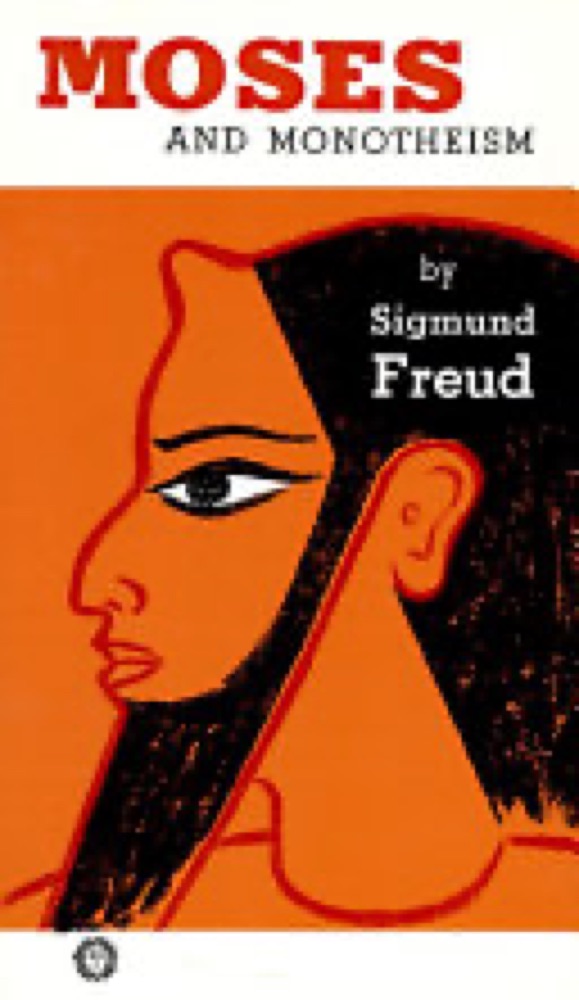
About the book
بدون شک ادیان نقش بسیار مهمی برای متمدن کردن انسان ماقبل تاریخ داشتهاند. فروید با بازگو کردن توتم و تابو این نکته را برای ما روشن میکند که ایجاد حریم و قانون لازمه ی تمدن است و ریشه در ساختار روانی و محیط خانوادگی که در آن پرورش یافتهایم دارد. البته در این خصوص نباید تمدن را معادل دین بدانیم زیرا در دین اشخاص مقداری از انرژی لیبیدویی را صرف اعمال آیینی و عبادی میکنند اما در تمدن حاضر، افراد به این تشویق میشوند که انرژی لیبیدوییی را درارزشهای اجتماعی و جامعه پسند سرمایه گذاری کنند. بیدین بودن و یا بی اعتقادی به خدا ممکن است در نهایت ازفراخودی ناشی شود که اثر و حضور پدر را در کودکی به درستی درک نکرده. در حالی که از دین گذشتن به این معنا میباشد که اعتقاد به خدا درونی شده است و جایگاه پدر به هیچ کسی تعلق ندارد، جز خدا و دیگر درگیر اعمال آیینی دین نیستند. فرا خود این افراد ، نظیر افرادی هستند که گلبرگ در سطح فرا عرفی معرفی میکند.
Book details
- First published
- 1939
- Author
- Sigmund Freud
- Genre
- Nonfiction
- Goodreads rating
- 3.69 (3k ratings)
Keep reading
 The Case for God
 A History of God: The 4,000-Year Quest of Judaism, Christianity, and Islam
 The Age of Reason
 The Muqaddimah: An Introduction to History
The Future of an Illusion
The Muqaddimah: An Introduction to History
The Future of an Illusion
 The Everlasting Man
 The World's Religions
 The Parafaith War
 The Varieties of Religious Experience
 Myths to Live By
 Breaking the Spell: Religion as a Natural Phenomenon
 God in Search of Man: A Philosophy of Judaism
 The Portable Atheist: Essential Readings for the Nonbeliever
 Twilight of the Idols/The Anti-Christ
 Philosophical Dictionary
 Persian Letters
 Two Years Eight Months and Twenty-Eight Nights
 Children of God
 The Perennial Philosophy
 The Story of My Experiments With Truth
 We Who Wrestle with God: Perceptions of the Divine
 The End of Faith: Religion, Terror, and the Future of Reason
 Daybreak: Thoughts on the Prejudices of Morality
 A Canticle for Leibowitz
 The Da Vinci Code
 A Severe Mercy: A Story of Faith, Tragedy and Triumph
 Letters from the Earth: Uncensored Writings
 The Knowledge of the Holy
 Reasonable Faith
 Ben-Hur: A Tale of the Christ
 The Prophetic Imagination
 The God Delusion
 The Discovery of Heaven
 Human, All Too Human
 The Secret Magdalene
 god is Not Great: How Religion Poisons Everything
 The Book of Mirdad: The Strange Story of a Monastery Which Was Once Called the Ark
 Julian
 Beelzebub's Tales to His Grandson
 Reflections on the Psalms
 The World's Last Night: And Other Essays
 The Divine Invasion
 The Jesus Incident
 House Corrino
 Our Oriental Heritage
 Heretics
 Children of Dune
 Orthodoxy
 Eifelheim
 The Bible Jesus Read
 A Little History of Religion
 Origin
 The Source
 On Christian Doctrine
 The Mind of the Maker: Dorothy L. Sayers' Witty Classic on the Trinity, Christianity, and Human Creativity
 Dialogues Concerning Natural Religion
 The Discovery of India
 Under the Banner of Heaven: A Story of Violent Faith
 Purification of the Heart: Signs, Symptoms and Cures of the Spiritual Diseases of the Heart
 The White Luck Warrior