
 Recognizing the Stranger: On Palestine and Narrative
Quotes from the Book
Our massacres are only interrupted by commercial breaks. Judges legalize them. Correspondents kill us with passive voice. If we are lucky, diplomats say that our death concerns them, but they never mention the culprit, let alone condemn the culprit. Politicians, inert, inept, or complicit, fund our demise, then feign sympathy, if any. Academics stand idle. That is, until the dust settles, then they will write books about what should have been.
14
It was disorienting, albeit sobering, to realize that advocating for Palestine, like all things, is entrenched in and informed by capitalism, that there was a market for our suffering, something that, for many, may have already been self-evident.
9
Palestine is a microcosm of the world: wretched, raging, fraught, and fragmented. On fire. Stubborn. Ineligible. Dignified. The lens we lend the Palestinian reveals how we see each other, how we see everything else.
8
And do their words matter when their policies speak for themselves?
7
We forget that belief has little to do with truth. People tend to believe the powerful, the compelling, not the sincere. The truth, that which is factual and historically accurate, is irrelevant in the face of the dominant, institutionally mainstreamed narratives that forge their truth.
6
Why do we give the authority of narration to those who have murdered and displaced us when the scarcity of their guilt means honesty is unlikely? Why do we wait for those carrying the batons to confess when our bruised bodies tell the whole truth?
6
The very quality of propaganda—illogic—is precisely its strongest suit, because it is a distraction. Distraction from what? The focal point: colonialism, siege, military occupation.
6
The idea is to spit out the bait and spit at the accusation. To demystify and reject what it is they demand of us: perfect victimhood and perfect surrender.
5
The Palestinian People have consistently made it crystal clear that our enemy is Zionism, an ideology of dispossession, an expansionist and racist settler-colonial enterprise. Zionism, not Jews. Our capacity to produce such distinction is admirable and impressive, considering the heavy-handedness with which Zionism attempts to synonymize itself with Judaism. However, this distinction is not our responsibility, and, personally, it is not my priority.
5
The settler is self-deluded. The settler’s gaze ignores the ruins atop which the settler town is built. Always in the settler’s peripheral vision, rubble is both ubiquitous and unobtrusive, filtered out like our eyes do our noses.
5
But how many hours have you wasted defending against ad hominem attacks (No, our men are gentle fathers!) or assuaging the paranoias of strawman arguments (No, “from the river to the sea” is not a secret call to genocide!) or navigating slippery slopes (No, a free Palestine will not lead to a second Holocaust!) or pausing for red herrings (No, there are no tunnels under the hospital!) or appealing to authority (Even the Israeli scholars agree that it is a genocide!) or debunking equivocations (No, anti-Zionism is not antisemitism!)? The very quality of propaganda—illogic—is precisely its strongest suit, because it is a distraction.
4
Resistance, in the Western mind, is a mutating concept. While Ukrainian resistance is glorified for its guerrilla warfare tactics, Palestinian resistance—termed “terrorism”—is puzzling, perverted, and pathological. Mainstream media’s insistence on these framings is not due to any fundamental differences in the ways both peoples exercise violence. Nor is it solely because of Ukrainians’ skin color; one needs to look no further than the Irish Republican Army to see that whiteness alone is no golden ticket—at least not in a war against British colonialism. Rather, the tonal shift employed in media coverage is simply in service of the West’s strategic interests. While the Israeli settler-colonial regime is the United States’ most important ally in the Middle East, and practically an offshoot of Europe, created to protect Western imperialism, Russia represents an “existential” threat to the West.
4
There is a thin line between representation, particularly liberal reductions around representation, and the reproduction of the Palestinian as a fetish or a token, thus as a dehumanized subject once more.
3
Take the genre of Israelis and Palestinians making films together. The Palestinian filmmaker is chaperoned to the film festival, allowed on stage as their authoritative cosignatory’s charismatic sidekick. No one—not the producer of the festival, not the columnist writing a review—seems to care about the content of the film, whether it is good or garbage. What matters most is that the film was codirected, a mode that satisfies a libidinal urge in the viewers. They eavesdrop on a forbidden conversation, a titillating reconciliation between the slayer and the slain. Discussions about the film, reviews, the way it is promoted, and our excited elevator pitches to one another all become mastur-batory, reducing the film to the fact that it was a collaboration between an Israeli and a Palestinian, fulfilling the viewer’s fantasy of a happy ending to an otherwise miserable story. We turn it into a fetish.
3
Curating the native as “respectable” is a misplaced priority because it redirects critical scrutiny away from the colonizer, which in turn neglects the innate injustice of the colonial project.
3
Those asking, What happens to the settlers? have not once thought about the fate of the six million Palestinian refugees agonizing in exile. This is not so much a polemic but an observation, a fatigued observation, reiterated incessantly. Such distracting questions feed the discursive loop that prioritizes the settlers’ theoretical future over our material present that is already marked with extermination.
2
Did I really have to go and “see for myself,” or did I ignore a century of Palestinian literature? Am I cognizant of how that refusal to engage local and grassroots knowledge production continues to undermine its value on the world stage, undermining also the value and authority of Palestinian narration? Do I have a class analysis in my work? Do I acknowledge that I get awards for saying similar things to what the student movement has been criminalized, suspended, and censured for saying? Do I name my institutional backing? What are the material and monetary conditions of those whose voices I amplify? Am I only referencing dead guys? What does my works cited page look like?
2
I am certain some readers will find those previous lines uncomfortable or even incendiary, but that is precisely the point: language comparing Zionists to Nazis is scrutinized—even penalized—more than the government policies and military actions that beg for the analogy to be made.
2
It is not my fault that they are Jewish. I have zero interest in apologizing for centuries-old tropes created by Europeans, when millions of us confront real, tangible oppression, living behind cement walls, or under siege, or in exile, and living with woes too expansive to summarize. I am tired of the impulse to preemptively distance myself from something of which I am not guilty, and particularly tired of the constant burden to prove that I am not inherently bigoted. I’m tired of the pearl-clutching pretense that should such animosity exist, its existence would be inexplicable and rootless, of the academics and the intellectuals punching down on the unfiltered among us. Most of all, I am tired of the false equivalence between semantic “violence” and systemic violence: only one party in this “conflict” is actively engaged in the intentional and systematic attempted eradication of an entire population.
2
Racism is not a question of attitude; it’s a question of power. Racism gets its power from capitalism. Thus, if you’re anti-racist, whether you know it or not, you must be anti-capitalist. The power for racism, the power for sexism, comes from capitalism, not an attitude.” Kwame Ture, in response to a student’s question after a talk at Federal City College (now the University of the District of Columbia), in October 1968.
2
Western knowledge producers or those using Western voices in their knowledge production should ask themselves a few questions: Where do Palestinians fit in this work? Do they have any agency, or are they a tool to drive the point across? Are my filmmaking practices extractive? How can I practice responsible authorship? Have I instilled in my project enough cues to incentivize my audience to consume it critically, or am I patting myself on the back? Am I doing the challenging chore of speaking to my bigoted, acrimonious community, accosting my Zionist aunt at the dinner table, or am I preaching—pandering, really—to the choir? Did I really have to go and “see for myself,” or did I ignore a century of Palestinian literature? Am I cognizant of how that refusal to engage local and grassroots knowledge production continues to undermine its value on the world stage, undermining also the value and authority of Palestinian narration? Do I have a class analysis in my work? Do I acknowledge that I get awards for saying similar things to what the student movement has been criminalized, suspended, and censured for saying? Do I name my institutional backing? What are the material and monetary conditions of those whose voices I amplify? Am I only referencing dead guys? What does my works cited page look like?
2
Yet the strategy of favoring non-Palestinian voices does little to bypass the reader’s anti-Palestinian bias. Instead, it reifies that bias and the power structures that manufacture it, cementing the impression that Palestinian voices are suspicious or subpar.
2
Colonial logic gaslights us to believe that it is our shortcomings, not colonialism itself, that stand between us and liberation.
2
There is no uniform way to grieve the killing of your loved ones. Sometimes it is graceful, other times it is vengeful.
2
You need to be polite in your suffering, should you be granted the right to a roof over your head. Crass statements are corrosive to your plight, even when such statements are about those who first steal your home and then loot your tent.
2
I know that the price of a joke is volatile. Sometimes it is libel, censure, harassment, even handcuffs. Other times, it is free. But that latitude, rare as it may be, is worth the gamble. In this realm, laughter is akin to faith in its ability to make wounds hurt a little less. Although I did not explore it much in this book, I have found solace in humor. I have found in it an agency, a mobility, a life. And much like faith consoles a bereaved mother by promising that her slain child, who has been blown to bits, is actually whole, in a better place, a martyr in heaven, laughter brings that better place to earth. The choice to be irreverent at the podium liberates both the speaker and their audience, albeit briefly. In the pause between the laughter that follows a sardonic observation, something sacred takes place in the unconscious. The grand stage becomes an intimate living room, and the tragedy at hand, whatever it may be, becomes a family affair. The speaker exiles the prestige of the podium from his mind, discarding the role he was coerced into rehearsing, proclaiming what he had been taught to whisper. The spectators are, for a moment, implicated in the spectacle, polluted by its imperfections, in on the joke. Something sacred occurs in the unconscious: a world without pretenses where we look each other in the eye.
1
What becomes of the 2.3 million Palestinians in Gaza, who calendars are marked by routine bombardments? What are the mental and muscular consequences of being forced to transform a taxi into a hearse? What becomes of the nurse whose shift is interrupted by the arrival of her husband’s corpse on a stretcher? What about the father wandering with what remains of his son in two plastic bags? What happens to him after all of this death, once he is alone and away from the cameras? What kind of man will the boy carrying his brother’s limbs in a bag grow up to be? Does it matter whether he emerges as Abd el-Hadi or as Abu Obaida? Does it make Zionism any less indefensible?
1
- [ ] Zionism is best defined by its material manifestations — Zionism is what Zionism does. When Zionism’s most recent manifestation is genocide, what difference does it make whether the encampments protesting this genocide are utopias of coexistence? What difference does it make how the grieving grieve? Curating the native as “respectable” is a misplaced priority because it redirects critical scrutiny away from the colonizer, which in turn neglects the innate injustice of the colonial project. This misplaced focus insinuates that the oppressed must earn what they are already entitled to: liberty, dignity, and basic rights. Otherwise, if the native is not “respectable,” slavery and subjugation would be necessarily applicable, rather than morally reprehensible. Nothing reveals more about the colonizer’s psyche than these arrogant expectations.
1
In this realm, laughter is akin to faith in its ability to make wounds hurt a little less.
1
And in that performance of irreverence, you enmesh yourself in their complexities, you make room for them in the public discourse, no matter how they articulate themselves, and you reassign the blame from the victim to the perpetrator. Otherwise, we would be punching down—we would save ourselves and ascend in our careers by throwing others under the bus. For one to be described as genteel, someone else needs to be viewed as savage.
1
Did you know?
- The book grew out of El-Kurd's February 2023 Edward Said Memorial Lecture delivered at Princeton University.
- It debuted at #9 on The New York Times paperback nonfiction bestseller list for the week of March 2, 2025.
- It won the 2025 Palestine Book Award.
- Historian Robin D. G. Kelley called it "a new Discourse on Colonialism for the twenty-first century."
- It is El-Kurd's first nonfiction book, following his 2021 poetry collection Rifqa, also published by Haymarket Books.
- Author Arundhati Roy described the book as "a river of fire" that "will clear the fog."
About Mohammed El-Kurd
Mohammed el-Kurd (born 1998) is a Palestinian writer, poet, and journalist from the Sheikh Jarrah neighborhood of East Jerusalem, where part of his family's home was taken over by Israeli settlers. He serves as the first Palestine Correspondent for The Nation, authored the poetry collection Rifqa (2021), and was named one of TIME's 100 most influential people in 2021.
More about the author →About the book
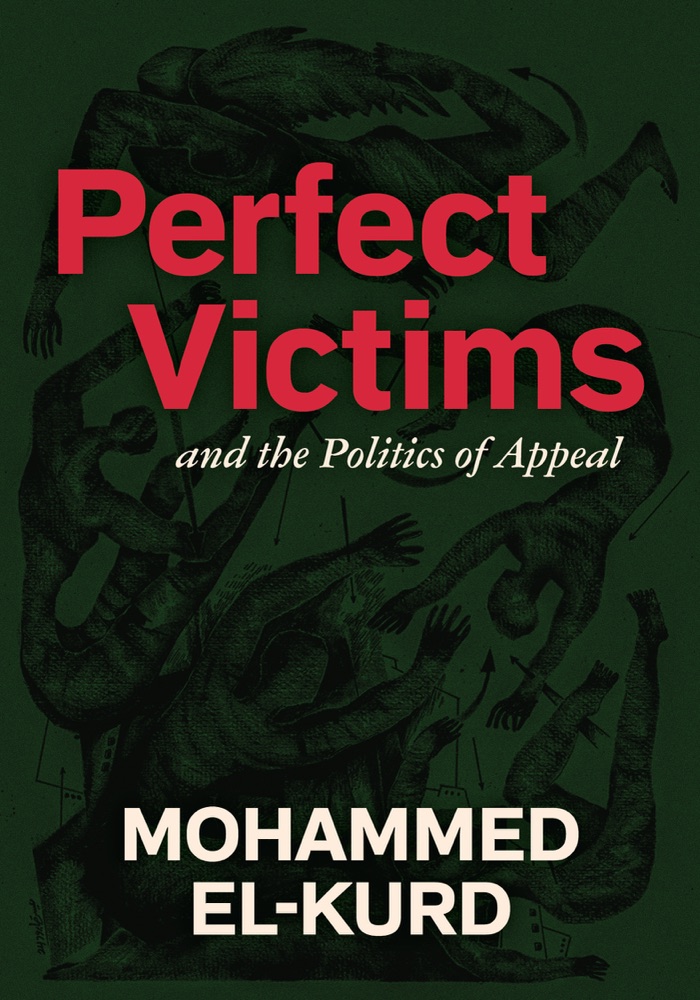
"Perfect Victims and the Politics of Appeal" is Palestinian writer Mohammed El-Kurd's first work of nonfiction, a book-length essay that interrogates what he calls "the politics of appeal" — the language and posture used to render Palestinians sympathetic and worthy of the West's attention. Drawing on testimony, historical analysis, and reportage, El-Kurd argues that the demand for a "perfect victim" forces Palestinians to prove their innocence and humanity while occupying powers escape accountability.
Across nine chapters and an epilogue, El-Kurd examines themes of dehumanization, propaganda, testimony, and identity politics, contending that conditioning sympathy on pitiable powerlessness cedes moral authority to those who preside over a world structured by colonial brutality. He insists instead on Palestinian dignity expressed without performative deference or self-condemnation, refusing the bargain by which the oppressed must contort their suffering into palatable shapes to earn recognition.
The book debuted at #9 on The New York Times paperback nonfiction bestseller list for the week of March 2, 2025, and won the 2025 Palestine Book Award. Historian Robin D. G. Kelley described it as "a new Discourse on Colonialism for the twenty-first century," and it drew substantial critical engagement in outlets including Jewish Currents and Arab News, with some reviewers noting how little coverage the bestseller received in major newspapers.
Book details
- First published
- 2025
- Length
- 256 pages
- Reading time
- 5 hours
- Author
- Mohammed El-Kurd
- Genre
- Nonfiction
- Goodreads rating
- 4.77 (6k ratings)
Critical reception
- Debuted at #9 on The New York Times paperback nonfiction bestseller list for the week of March 2, 2025.
- Won the 2025 Palestine Book Award.
- Historian Robin D. G. Kelley described it as "a new Discourse on Colonialism for the twenty-first century."
- Some reviewers noted the bestseller received minimal coverage in major newspapers.
The buzz
- Jewish CurrentsThe Sympathy Trap2025Examines El-Kurd's critique of victimhood as the condition for sympathy.
- Arab NewsBook Review: 'Perfect Victims' by Mohammed El-Kurd2025Frames the book as a manifesto rejecting sanitized Palestinian victimhood.
If you liked this, read…
- 1The Question of Palestine by Edward W. SaidFoundational analysis of how Palestinian narrative and representation are contested in the West.
- 2Discourse on Colonialism by Aimé CésaireThe anti-colonial polemic Robin D. G. Kelley invoked as El-Kurd's twenty-first-century counterpart.
- 3Rifqa by Mohammed El-KurdEl-Kurd's debut poetry collection on dispossession and resistance in Sheikh Jarrah.
Keep reading
Recognizing the Stranger: On Palestine and Narrative
 One Day, Everyone Will Have Always Been Against This
 On Palestine
 The Message
 Doppelganger: A Trip into the Mirror World
 The Question of Palestine
 Arguably: Selected Essays
 My Promised Land: The Triumph and Tragedy of Israel
 We Wish to Inform You That Tomorrow We Will Be Killed with Our Families
 The War on the West: An Instant NYT Bestselling History of the Modern World
 Regarding the Pain of Others
 The Source of Self-Regard: Selected Essays, Speeches, and Meditations
 The Wretched of the Earth
 Between the World and Me
 A People's History of the United States
 No Name in the Street
 Where Do We Go from Here: Chaos or Community?
 On Democracies and Death Cults: Israel and the Future of Civilization
 I Shall Not Hate: A Gaza Doctor's Journey on the Road to Peace and Human Dignity
 Hitch-22: A Memoir
 Resistance, Rebellion and Death: Essays
 Opinions: A Decade of Arguments, Criticism, and Minding Other People’s Business
 Ten Myths About Israel
 Infidel
 The View From Flyover Country: Essays by Sarah Kendzior
 Understanding Power: The Indispensable Chomsky
 Just Us: An American Conversation
 The Committed
 Discourse on Colonialism
 What's Left?
 Sister Outsider: Essays and Speeches
 Culture Warlords: My Journey Into the Dark Web of White Supremacy
 An Ordinary Man: An Autobiography
 Notes from No Man's Land
 When I Was a Child I Read Books
 Endgame, Vol. 1: The Problem of Civilization
 The Better Angels of Our Nature: Why Violence Has Declined
 You Can't Be Neutral on a Moving Train: A Personal History of Our Times
 Apeirogon
 The Chomsky-Foucault Debate: On Human Nature
 Nobody Knows My Name
 Elite Capture: How the Powerful Took Over Identity Politics
 Whose Story Is This? Old Conflicts, New Chapters
 The Fire Next Time
 Pedagogy of the Oppressed
 On the Other Side of Freedom: The Case for Hope
 The Strange Death of Europe: Immigration, Identity, Islam
 A Small Place
 The Coming Insurrection
 World War Z: An Oral History of the Zombie War
 Assata: An Autobiography
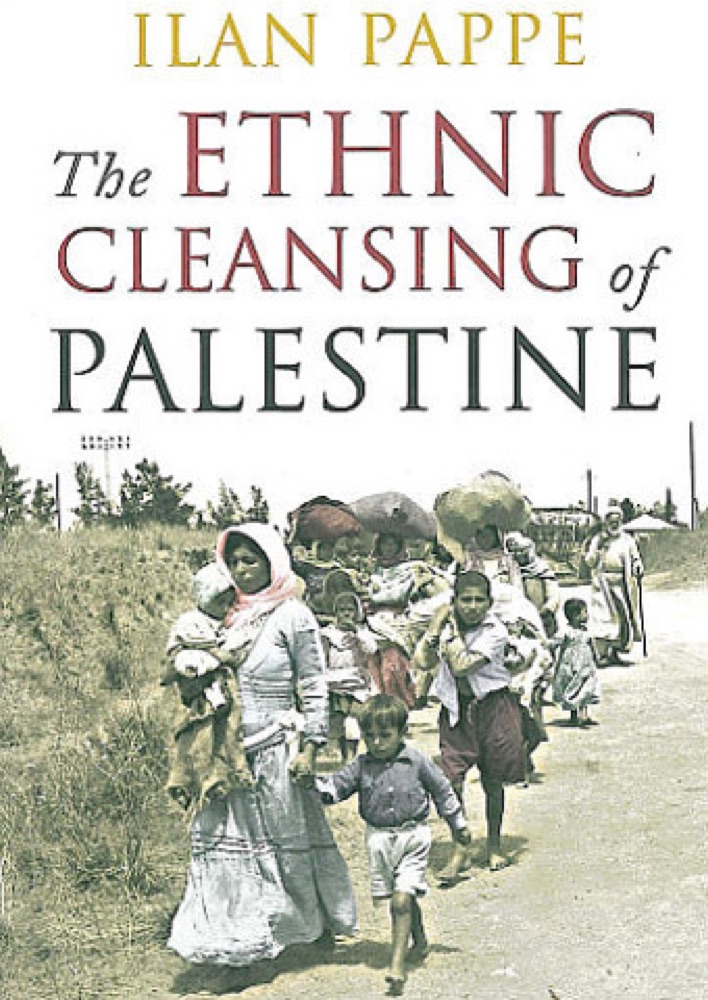 The Ethnic Cleansing of Palestine
 The Audacity of Hope: Thoughts on Reclaiming the American Dream
 Islam and the Future of Tolerance: A Dialogue
 Empire of Illusion: The End of Literacy and the Triumph of Spectacle
 Conflict Is Not Abuse: Overstating Harm, Community Responsibility, and the Duty of Repair
 Black Rednecks and White Liberals
 Daughters of Smoke and Fire
 Letter from the Birmingham Jail
 First As Tragedy, Then As Farce