
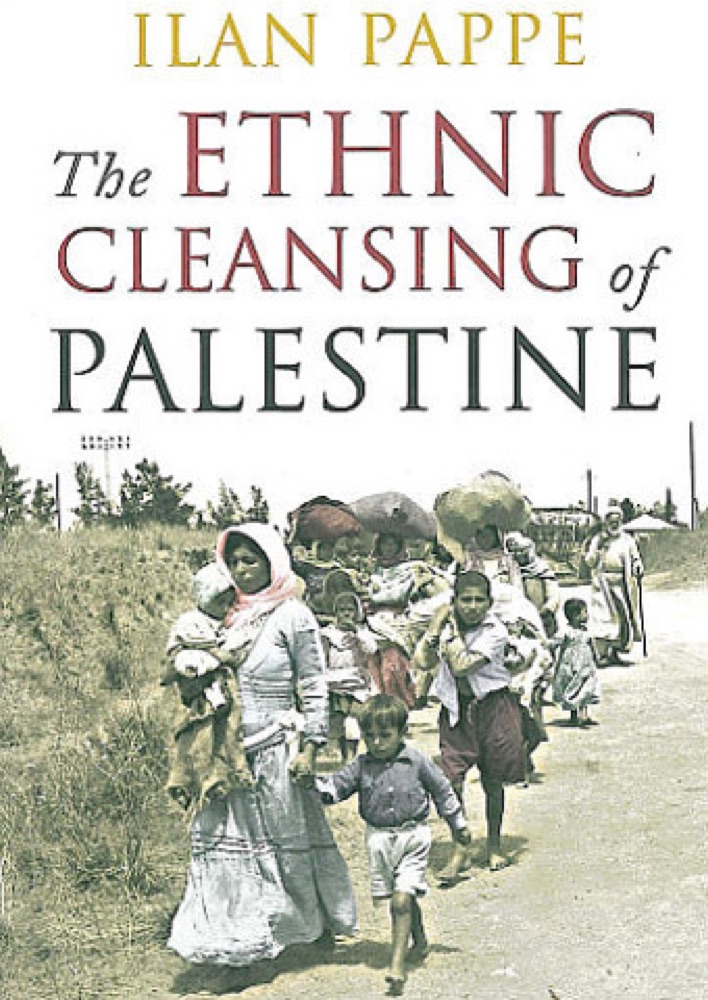
 The Ethnic Cleansing of Palestine
Quotes from the Book
Zionism offered itself as the solution to anti-Semitism, but became the main reason for its continued presence.
39
The litmus test of any democracy is the level of tolerance it is willing to extend towards the minorities living in it. In this respect, Israel falls far short of being a true democracy.
35
Denying people the right of return to their homeland, and at the same time offering this right to others who have no connection to the land, is a model of undemocratic practice.
19
History lies at the core of every conflict. A true and unbiased understanding of the past offers the possibility of peace. The distortion or manipulation of history, in contrast, will only sow disaster.
7
And therefore we should acknowledge that the Oslo process was not a fair and equal pursuit of peace, but a compromise agreed to by a defeated, colonized people.
6
In other words, though they did not believe in God, He had nonetheless promised them Palestine.
6
Ben-Gurion articulated clearly the place of expulsion in the future of the Zionist project in Palestine when he wrote that same year, "With compulsory transfer we would have a vast area for settlement... I support compulsory transfer. I don't see anything immoral in it.
3
The geographer Oren Yiftachel from Ben-Gurion University, depicted Israel as an ethnocracy, a regime governing a mixed ethnic state with a legal and formal preference for one ethnic group over all the others. Others went further, labeling Israel an apartheid state or a settler colonial state. In short, whatever description these critical scholars offered, "democracy" was not among them.
3
as demanded in the famous UN Security Council Resolution 242 very shortly after the war ended. As readers probably know, a Security Council resolution is more binding than a resolution by the General Assembly. And this was one of the few Security Council resolutions criticizing Israel that was not vetoed by the United States.
3
The plan (Dalet) included the following clear reference to the methods to be employed in the process of cleansing the (Palestinian) population: 'Destruction of villages (setting fire to, blowing up, and planting mines in the debris), especially those population centers which are difficult to control continuously... Mounting search and control operations according to the following guidelines: encirclement of the village and conducting a search inside it. In the event of resistance, the armed force must be destroyed and the population must be expelled outside the borders of the state.
2
When (Berl Katznelson) heard that the British government was considering the possibility of moving the Palestinians within Palestine, he was greatly disappointed: "The transfer to 'inside of Palestine' would mean the area of Shechem. I believe that their future lies in Syria and Iraq." In those days, (Zionist) leaders like Katznelson hoped that the British would convince, or induce, the local population to leave.
1
The news appeared briefly for two days, and disappeared. And no one seem to care, and no one seems to know. In the far away village of Um al-Fahem, Children—should I say citizens of the state—played in the mud And one of them seemed suspicious to one of our brave soldiers who shouted at him: Stop! An order is an order An order is an order, but the foolish boy did not stand, He ran away So our brave soldier shot, no wonder And hit and killed the boy. And no one talked about it.
History lies at the core of every conflict. A true and unbiased understanding of the past offers the possibility of peace. The distortion or manipulation of history, in contrast, will only sow disaster. As the example of the Israel–Palestine conflict shows, historical disinformation, even of the most recent past, can do tremendous harm. This willful misunderstanding of history can promote oppression and protect a regime of colonization and occupation. It is not surprising, therefore, that policies of disinformation and distortion continue to the present and play an important part in perpetuating the conflict, leaving very little hope for the future.
A replacement dictionary has been in the making for many years, redefining Zionism as colonialism, Israel as an apartheid state, and the Nakbah as ethnic cleansing.
The two-states solution is like a corpse taken out in the morgue every now and then, dressed up nicely, and presented as a living thing.
Settler colonialism differs from classical colonialism in three respects. The first is that settler colonies rely only initially and temporarily on the empire for their survival. In fact, in many cases, as in Palestine and South Africa, the settlers do not belong to the same nation as the imperial power that initially supports them. More often than not they ceded from the empire, redefining themselves as a new nation, sometimes through a liberation struggle against the very empire that supported them (as happened during the American Revolution for instance). The second difference is that settler colonialism is motivated by a desire to take over land in a foreign country, while classical colonialism covets the natural resources in its new geographical possessions. The third difference concerns the way they treat the new destination of settlement. Unlike conventional colonial projects conducted in the service of an empire or a mother country, settler colonialists were refugees of a kind seeking not just a home, but a homeland. The problem was that the new “homelands” were already inhabited by other people. In response, the settler communities argued that the new land was theirs by divine or moral right, even if, in cases other than Zionism, they did not claim to have lived there thousands of years ago. In many cases, the accepted method for overcoming such obstacles was the genocide of the indigenous locals.
It would be fair to conclude, then, that successive Israeli governments did all they could to leave the Palestinians with no option but to trust, and vote for, the one group prepared to resist an occupation described by the renowned American author Michael Chabon as 'the most grievous injustice I have seen in my life.
The reality of the current colonization of vast parts of the West Bank by Israel renders any two-states solution an improbable vision...The two-states solution, as noted earlier, is an Israeli invention that was meant to square a circle...The two-states solution, indirectly one should say, is based on the assumption that Israel and Judaism are the same. Thus, Israel insists that what it does, it does in the name of Judaism and when its actions are rejected by people around the world the criticism is not only directed toward Israel but also toward Judaism.
For a while, Americans seemed uneasy about the fact that several Palestinians a day were bing killed, and that a large number of the victims were children. There was also some discomfort about Israel's use of collective punishments, house demolitions, and arrests without trial. But they got used to all this.
Isrrael participated in that conference [the Lausanne meeting of April 1949] only because it was a precondition for its acceptance as a full member of the UN, who also demanded that Israel sign a protocol, called the May Protocol, committing itself to the terms of Resolution 194, which included an unconditional call for the Palestinian refugees to return to their homes or to be given compensation. A day after it was signed in May 1949, Israel was admitted to the UN and immediately retracted its commitment to the protocol.
Today more than 90 percent of land is owned by the Jewish National Fund (JNF). Landowners are not allowed to engage in transactions with non-Jewish citizens and public land is prioritized for the use of national projects, which means that new Jewish settlements are being built while there are hardly any new Palestinian settlements. Thus, the biggest Palestinian city, Nazareth, despite the tripling of its population since 1948, has not expanded one square kilometer, whereas the development town built above it, Upper Nazareth, has tripled in size, on land expropriated from Palestinian landowners.
Before 1967, Israel definitely could not have been depicted as a democracy. As we have seen in previous chapters, the state subjected one-fifth of its citizenship to military rule based on draconian British Mandatory emergency regulations that denied the Palestinians any basic human or civil rights.
It was clear to the government that denying citizenship on the one hand, and not allowing independence on the other, condemned the inhabitants of the West Bank and the Gaza Strip to life without basic civil and human rights...The demographic fear that haunted Ben-Gurion -- a greater Israel with no Jewish majority -- was cynically resolved by incarcerating the population of the occupied territories in a non-citizenship prison.
The most reasonable compensation for the particular case of the Palestinian refugees was stated clearly already in December 1948 by the UN General Assembly in its Resolution 194: the unconditional return of the refugees and their families to their homeland (an homes where possible). Without some such restitution, the state of Israel will continue to exist as a hostile enclave at the heart of the Arab world, the last reminder of a colonialist past that complicates Israel's relationship not only with the Palestinians, but with the Arab world as a whole.
As long as the full implications of Israel's past and present ethnic cleansing policies are not recognized and tackled by the international community, there will be no solution to the Israeli-Palestinian conflict.
The crime committed by the leadership of the Zionist movement, which became the government of Israel, was that of ethnic cleansing. This is not mere rhetoric but an indictment with far-reaching political, legal, and moral implications. The definition of the crime was clarified in the aftermath of the 1990s civil war in the Balkans: ethnic cleansing is any action by one ethnic group meant to drive out another ethnic group with the purpose of transforming a mixed ethnic region into a pure one.
What is clear is that the ethnic cleansing of the Palestinians can in no way be justified as a "punishment" for their rejecting a UN peace plan that was devised without any consultation with the Palestinians themselves.
If one asserts that Palestine was a land without people waiting for the people without a land, then the Palestinians are robbed of any argument for protecting themselves. All their efforts to hold onto their land become baseless violent acts against the rightful owners. As such, it is difficult to separate the discussion of Zionism as colonialism from the question of the Palestinians as a colonized native people. The two are linked together in the same analysis.
David Ben-Gurion, the leader of the Jewish community during the Mandatory period and Israel's first prime minister, described the Palestinian workers and farmers as beit mihush ("an infested hotbed of pain").
Watch on YouTube
About Ilan Pappé
We have collected 67 quotes from 3 books by Ilan Pappé on BookQuoters.
More about the author →More by Ilan Pappé
The Ethnic Cleansing of Palestine
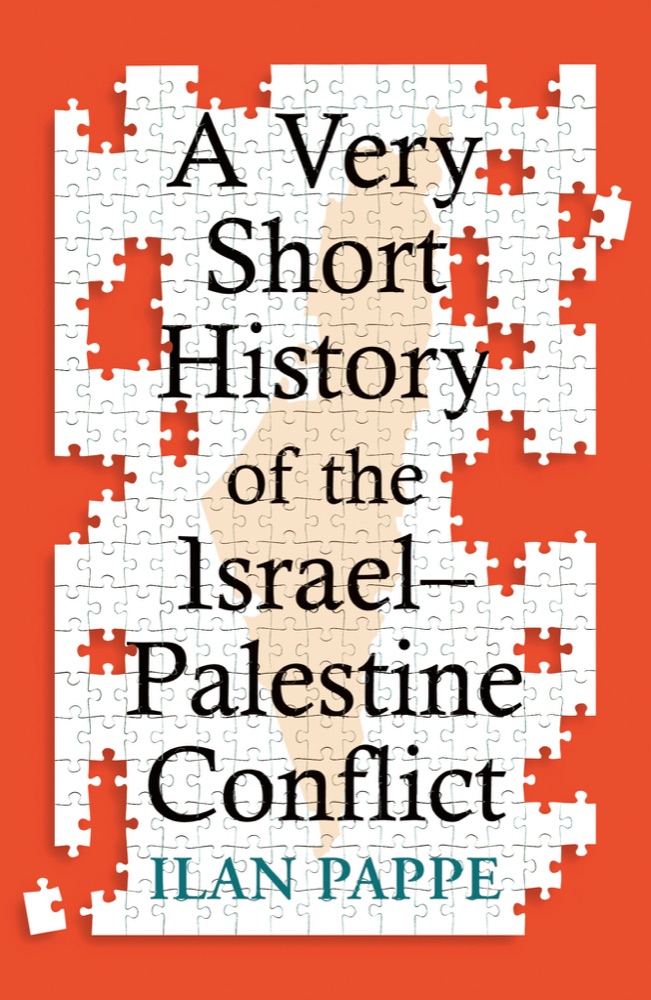 A Very Short History of the Israel–Palestine Conflict
About the book
The myths and reality behind the state of Israel and Israeli-Palestinian conflict—from “the most eloquent writer on Palestinian history” ( New Statesman )
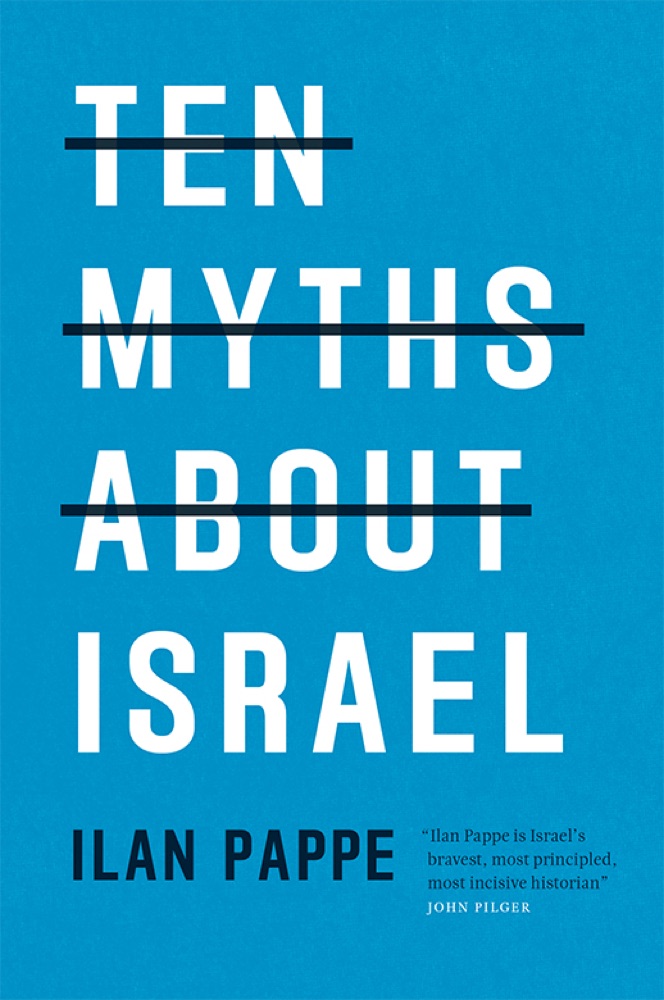
In this groundbreaking book, published on the fiftieth anniversary of the Occupation, the outspoken and radical Israeli historian Ilan Pappe examines the most contested ideas concerning the origins and identity of the contemporary state of Israel.
The “ten myths” that Pappe explores—repeated endlessly in the media, enforced by the military, accepted without question by the world’s governments—reinforce the regional status quo. He explores the claim that Palestine was an empty land at the time of the Balfour Declaration, as well as the formation of Zionism and its role in the early decades of nation building. He asks whether the Palestinians voluntarily left their homeland in 1948, and whether June 1967 was a war of “no choice.” Turni
Book details
- First published
- 2017
- Author
- Ilan Pappé
- Genre
- Nonfiction
- Goodreads rating
- 4.39 (6k ratings)
Keep reading
 The Hundred Years’ War on Palestine: A History of Settler Colonialism and Resistance, 1917–2017
The Ethnic Cleansing of Palestine
The Hundred Years’ War on Palestine: A History of Settler Colonialism and Resistance, 1917–2017
The Ethnic Cleansing of Palestine
 On Palestine
A Very Short History of the Israel–Palestine Conflict
On Palestine
A Very Short History of the Israel–Palestine Conflict
 My Promised Land: The Triumph and Tragedy of Israel
 The Question of Palestine
 The Palestine Laboratory: How Israel Exports the Technology of Occupation Around the World
 On Democracies and Death Cults: Israel and the Future of Civilization
 Palestine: Peace Not Apartheid
 Perfect Victims and the Politics of Appeal
 The Invention of the Jewish People
 Recognizing the Stranger: On Palestine and Narrative
 Exodus
 O Jerusalem
 From Beirut to Jerusalem
 One Day, Everyone Will Have Always Been Against This
 We Wish to Inform You That Tomorrow We Will Be Killed with Our Families
 The Message
 Imperial Ambitions: Conversations on the Post-9/11 World
 Start-up Nation: The Story of Israel's Economic Miracle
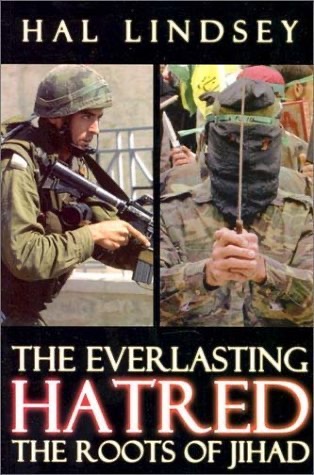 The Everlasting Hatred: The Roots of Jihad
 Eichmann in Jerusalem: A Report on the Banality of Evil
 Son of Hamas
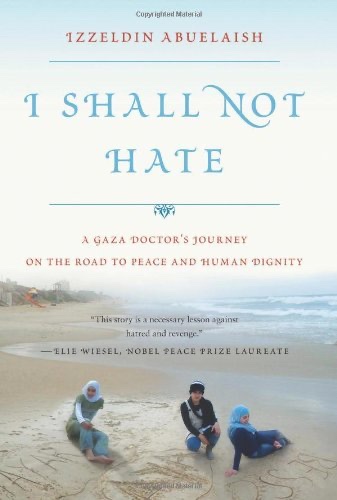 I Shall Not Hate: A Gaza Doctor's Journey on the Road to Peace and Human Dignity
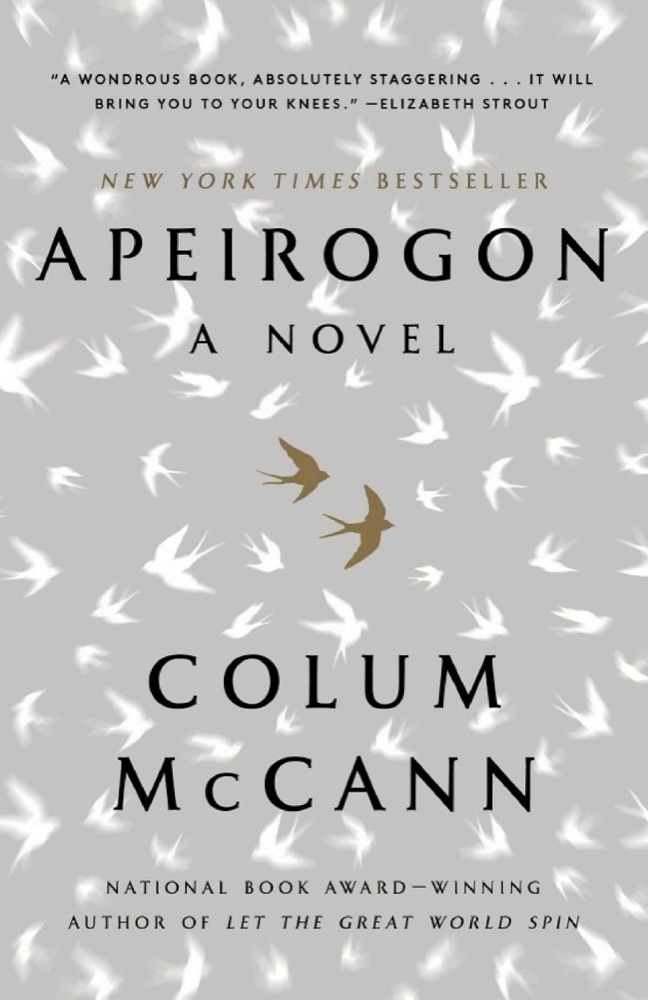 Apeirogon
 A People's History of the United States
 Flashpoints: The Emerging Crisis in Europe
 The Strange Death of Europe: Immigration, Identity, Islam
 The Revenge Of Geography: What the Map Tells Us About Coming Conflicts and the Battle Against Fate
 Postwar: A History of Europe Since 1945
 Bloodlands: Europe Between Hitler and Stalin
 The Origins of Totalitarianism
 The Wretched of the Earth
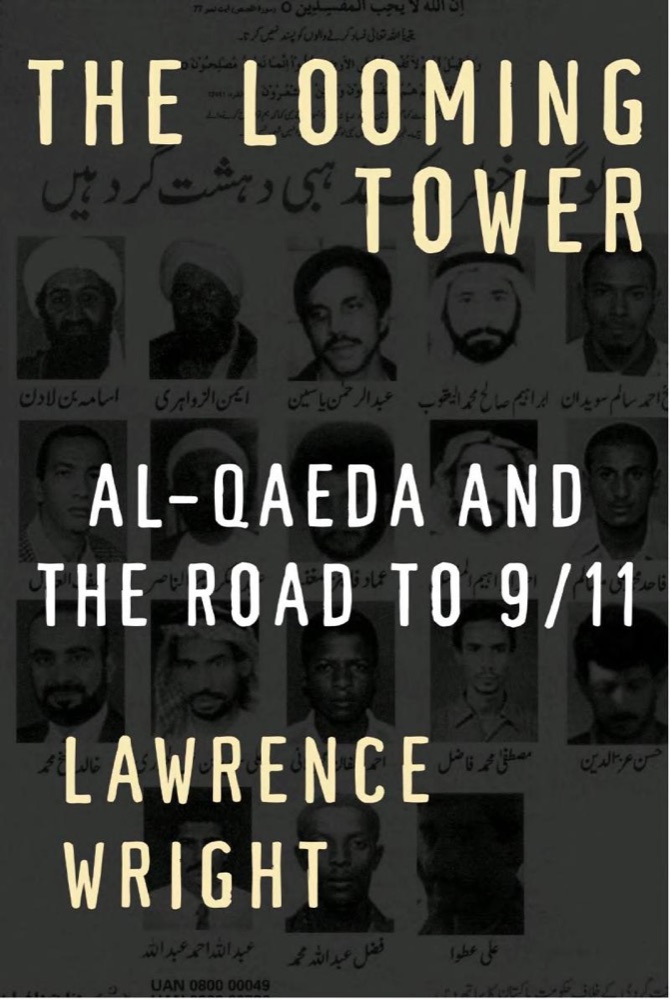 The Looming Tower: Al-Qaeda and the Road to 9/11
 The Jakarta Method: Washington's Anticommunist Crusade and the Mass Murder Program that Shaped Our World
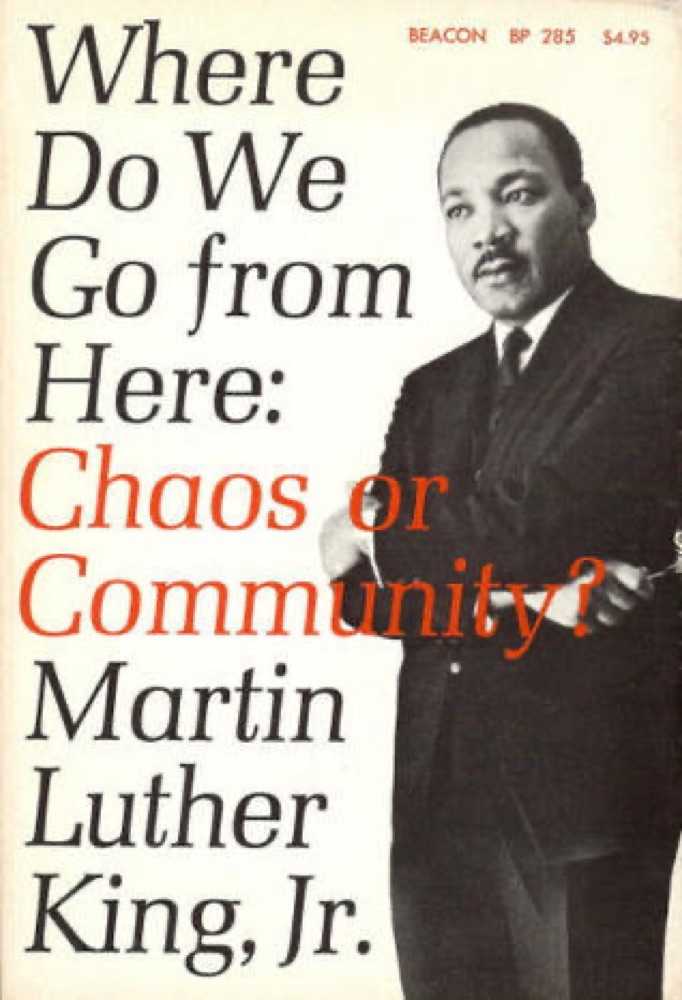 Where Do We Go from Here: Chaos or Community?
 Imperium
 Understanding Power: The Indispensable Chomsky
 Desert Queen: The Extraordinary Life of Gertrude Bell: Adventurer, Adviser to Kings, Ally of Lawrence of Arabia
 Say Nothing: A True Story of Murder and Memory in Northern Ireland
 Arguably: Selected Essays
 Upheaval: Turning Points for Nations in Crisis
 Border: A Journey to the Edge of Europe
 Minor Detail
 The Muqaddimah: An Introduction to History
 No Name in the Street
 What's Left?
 Doppelganger: A Trip into the Mirror World
 Defying Hitler
 The Secret Servant
 Things You May Find Hidden in My Ear: Poems from Gaza
 The Haj
 A World Without Islam
 Twilight of Democracy: The Seductive Lure of Authoritarianism
 World Order
 Modern Times: The World from the Twenties to the Nineties
 On Tyranny: Twenty Lessons from the Twentieth Century
 The Trial of Henry Kissinger
 Gaza Writes Back (#1)
 This Kind of War: A Study in Unpreparedness