
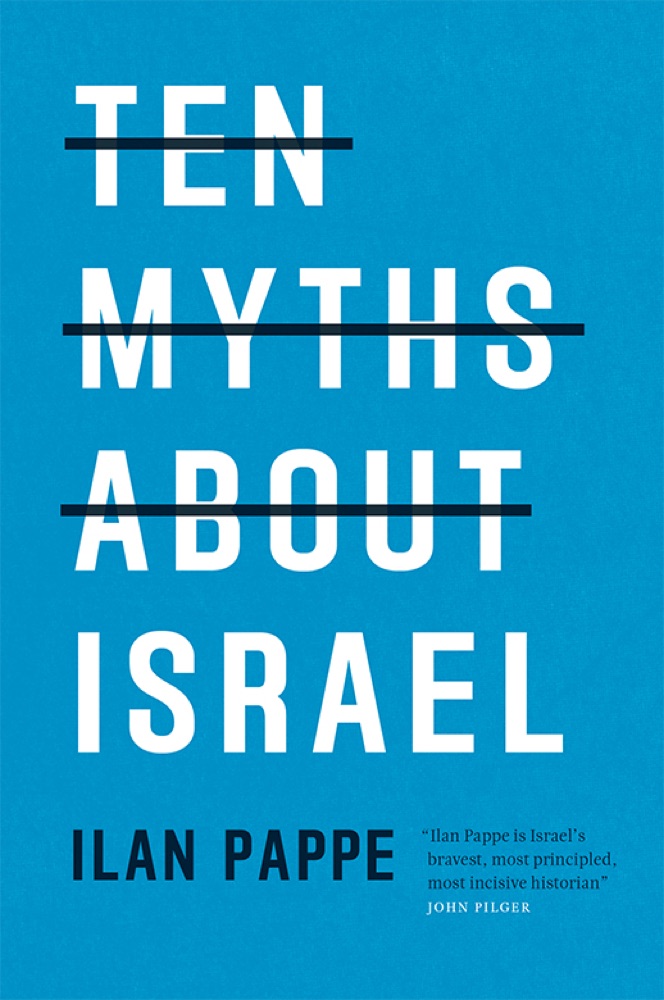
 Ten Myths About Israel
Quotes from the Book
Ethnonationalist ideology grows when accountable democracy withers. Israel is the ultimate model and goal.
4
One of those prominent Jewish dissidents was Ronnie Kasrils, who served as the minister for intelligence between 2004 and 2008 under an ANC government. He told the Guardian that the comparison between the two nations wasn’t accidental. “Israelis claim that they are the chosen people, the elect of God, and find a biblical justification for their racism and Zionist exclusivity,” he said. “This is just like the Afrikaners of apartheid South Africa, who also had the biblical notion that the land was their God-given right. Like the Zionists who claimed that Palestine in the 1940s was ‘a land without people for a people without land,’ so the Afrikaner settlers spread the myth that there were no black people in South Africa when they first settled in the 17th century. They conquered by force of arms and terror and the provocation of a series of bloody colonial wars of conquest.
2
This kind of dehumanization is the inevitable result of endless occupation. It is also an export asset. What’s appealing to growing numbers of regimes globally is learning how Israel gets away with politicide. That term was adapted to Israel/Palestine by the late Israeli scholar and professor of sociology Baruch Kimmerling, who argued in 2003 that Israel’s domestic and foreign policy is “largely oriented towards one major goal: the politicide of the Palestinian people. By politicide I mean a process that has, as its ultimate goal, the dissolution of the Palestinian people’s existence as a legitimate social, political, and economic entity. This process may also but not necessarily include their partial or complete ethnic cleansing from the territory known as the Land of Israel.
2
The driving forces of this [defense] industry is that they want the conflict with the Palestinians to go forever. Moral considerations are never considered when Israel aids dictatorships. It’s about money and being a powerful nation.
2
Israel’s constant drone surveillance over Gaza also impressed President Vladimir Putin. Moscow needed reliable surveillance drones after it lost many planes during its war in 2008 against Georgia in South Ossetia. Tbilisi had used Israeli drones, and years later Moscow decided to follow suit. Having seen Israeli operations over Gaza, Russia licensed the Israeli Aerospace Industries Searcher II, renamed “Forpost” by its new owners, and it became a key asset in Russian support for Syrian President Bashar al-Assad.33 Israel trained Russian pilots to operate the drones. Russia and Israel maintained a close relationship during the Syrian civil war despite the former supporting Assad and the latter worrying about the growing presence of Russian allies Iran and Hizbollah in the country. This led Prime Minister Benjamin Netanyahu (and Naftali Bennett) to routinely attack Iranian and Syrian military positions in Syria to stop the transfer of weapons to Hizbollah. However, Moscow usually turned a blind eye to these attacks, assisted by a de-escalation hotline between the two governments.
1
Working with present-day genocidal regimes doesn’t bother Israel but it has also refused to publicly acknowledge past genocides. The Armenian genocide, formally recognized by US President Joe Biden in 2021, occurred in 1915 and 1916. Due to relations with Turkey, Israel has refused to recognize the Armenian genocide, and declassified documents prove that Israeli officials worked for decades to pressure countries and individuals around the world who wanted to do so.
1
Exact figures are impossible to obtain, since the state never releases them, but today there are over three hundred multinational companies and six thousand start-ups that employ hundreds of thousands of people. Sales are booming, with defense exports reaching an all-time high in 2021 of US$11.3 billion, having risen 55 percent in two years. Israel’s cybersecurity firms are also soaring, with US$8.8 billion raised in one hundred deals in 2021. In the same year, Israeli cyber companies took in 40 percent of the world’s funding in the sector.
1
A book was published in 2021 that had received financial backing from Elbit. The Bulgarian Army and the Rescue of Bulgaria’s Jews, 1941–1944 is a revisionist history that falsely claims that the Bulgarian state saved Jews during World War Two. Elbit wanted to get a foothold in the Bulgarian arms market. Raz Segal and Amos Goldberg, “Distorting the Holocaust to Boost the International Arms Trade,” Nation, July 26, 2022.
1
Elbit, the biggest private arms manufacturer in Israel today. Established in 1966, it quickly became an essential supplier of equipment for Israeli tanks and aircraft. Years later it had become a major exporter of weapons to both democracies and despots, working closely with the US military and a host of other nations to develop a range of equipment, from drones to night vision googles and land surveillance systems to deadly high-tech munitions. Elbit is still today intimately tied to the Israeli security establishment, and has even moved into the book publishing industry.
1
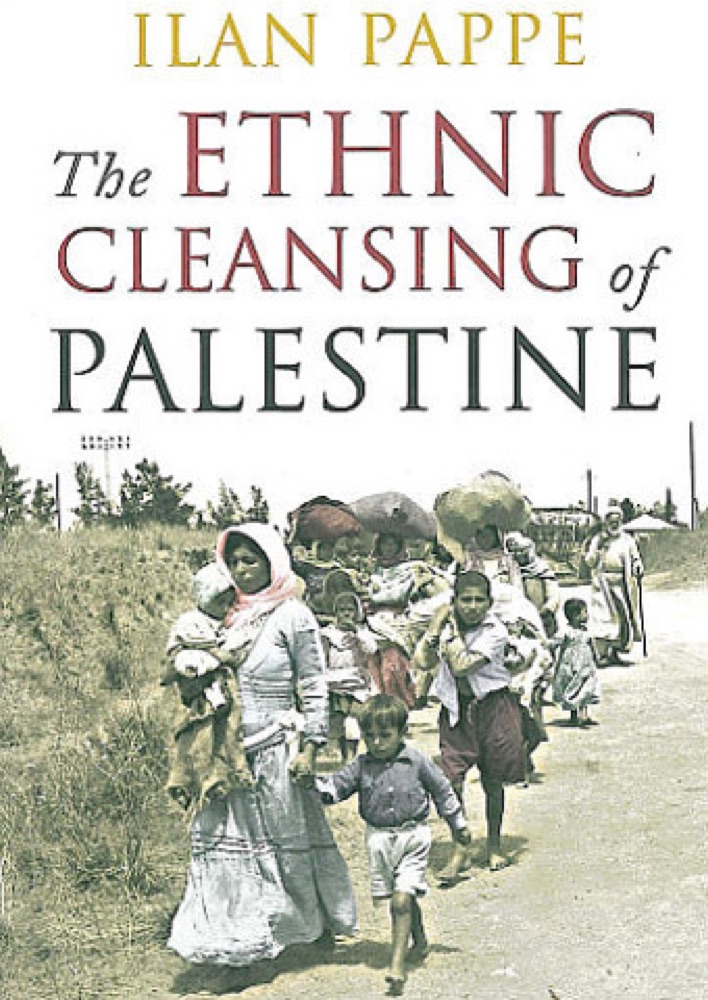
The extent of the carnage inflicted on the Palestinian population was incalculable. Between 1947 and 1949, at least 750,000 civilians out of a population of 1.9 million were forcibly expelled and made refugees beyond the borders of the new state. Palestinians call it the Nakba, the catastrophe. Over seven months, 531 villages were destroyed and 15,000 people were killed. The remaining Palestinians suffered beatings, rape, and internment.
1
A survey in 2021 conducted by Jewish Electorate Institute, a group led by leading Jewish Democrats, found that 34 percent of Jews agreed that “Israel’s treatment of Palestinians is similar to racism in the United States,” 25 percent agreed that “Israel is an apartheid state,” and 22 percent agreed that “Israel is committing genocide against the Palestinians.” A 2022 survey by the major pro-Israel lobby group, the American Jewish Committee, confirmed this trend. Nearly 44 percent of young Jewish Americans didn’t feel very connected to Israel and more than one in five millennial American Jews backed one democratic state in Israel and Palestine. Another study in the same year, conducted by Pew Research Center, found that young Americans under the age of thirty viewed both Israelis and Palestinians equally favorably.
1
Palestine is Israel’s workshop, where an occupied nation on its doorstep provides millions of subju-gated people as a laboratory for the most precise and successful methods of domination.
1
Israel has developed a world-class weapons industry with equipment conveniently tested on occupied Palestinians, then marketed as “battle-tested.” Cashing in on the IDF brand has successfully led to Israeli security companies being some of the most successful in the world. The Palestine laboratory is a signature Israeli selling point.
1
Israel’s claim to be a thriving democracy in the heart of the Middle East is challenged by the facts. All media outlets in Israel, along with publishers and authors, must submit stories related to foreign affairs and security to the Israeli Defense Forces (IDF) chief military censor before publication. No other Western country has such a system. It’s an archaic regulation that began soon after Israel was born. The censor has the power to entirely block the story or partially redact it.3 What’s deemed valid is highly questionable, since the priorities of the national security establishment will be very different to what’s required for a healthy, democratic state. This contradiction was clear when Israel’s chief censor, Ariella Ben Avraham, left her position in 2020 and took a job with the country’s leading cyber-surveillance company, NSO Group.
1
I don’t care what the Gentiles do with the arms. The main thing is that the Jews profit. Israeli advisor in Guatemala from the 1980s
1
Despite this sentiment running through the Jewish community in most of the world, I soon became uncomfortable with both the explicit racism against Palestinians that I heard and knee-jerk support for all Israeli actions. It was like a cult where opposing voices were condemned and cast out. I remember my Jewish friends during my teenage years, who mouthed what they had heard from their parents and rabbis. Few of them had been to Israel, let alone Palestine, but the dominant narrative was based around fear; Jews were constantly under attack and Israel was the solution. No matter that Palestinians had to suffer to make Jews feel safe. This felt like a perverted lesson from the Holocaust.
1
Vladimir Putin’s invasion of Ukraine in 2022, and the unprecedented nature of Western outrage and sanctions against it, indicates what is possible when there is unquestioning uniformity of opinion against an enemy state’s actions. It’s inconceivable that similar boycott, divestment, and sanction initiatives would be taken against other human rights abusers, such as Saudi Arabia, Egypt, and Israel—all friends of Washington and London. Our friends can kill and maim with impunity.
The worst case scenario, long feared but never realized, is ethnic cleansing against occupied Palestinians or population transfer, forcible expulsion under the guise of national security.
The logic of rapacious capitalism without oversight is a key barrier to curtailment of mass surveillance.
The impact of Frontex using drones to locate refugees has caused the loss of many lives at sea. And that's exactly the point.
It is arguable whether drone attacks, launched by drone pilots against people who have no idea what's coming, are even war at all but something more grotesque; dehumanisation of those targeted because there is no real, human contact between the attacker and victim. Israel and the US instead celebrate these killings by releasing drone footage to the media.
It is a desire to militarily destroy an opponent but also erase its history and ability to remember what has been lost.
NSO named its prize product after the winged horse in Greek mythology because the founders thought that it was akin to a Trojan horse flying through the air and into a mobile phone.
Trump’s presidency rightly caused outrage in large sections of the mainstream media, from his hard-right border policies to separation of young children from their parents. But as despicable as these policies were, little of that anger is expressed when they cover similar Israeli policies. In 2019 Trump reportedly suggested to his aides that to stop migrants entering the US, border guards should shoot them in the leg to slow them down and electrify the fence with sharp spikes on top to pierce human flesh.66 He later asked whether it was possible to build a water-filled trench around the border with snakes and alligators.
The close relationship between Arizona and Israel long proceeded Donald Trump’s presidency. One journalist called the area the “Palestine-Mexico border” due to both nations sharing the same surveillance companies and co-operation.64 Tucson Mayor Jonathan Rothschild, who left office in 2019 after spending years welcoming Israel’s high-tech companies to build a home in Arizona, once said, “If you go to Israel and you come to Southern Arizona and close your eyes and spin yourself a few times you might not be able to tell the difference.”65 The reasons behind the collaboration are tied to two geographic spaces defined by some as vast and unoccupied and therefore deserving of colonization and control. It’s the settler-colonial mentality. Israel is helped by the fact that it’s a bipartisan American political belief that backing the Jewish state is akin to necessary religious doctrine. Arizona, like Palestine, is thus a testing ground. “Arizona is meant to be a showcase for technology before it expands across the country,” Tucson-based journalist and author Todd Miller told me. “Before 9/11, there was Border Patrol presence on Native American territory, but now it’s hugely expanded with surveillance technology. Native Americans are being racially profiled at border patrol checkpoints.” For the border profiteers, Palestinians and Native Americans are both equally deserving of monitoring. It was therefore not surprising that autonomous surveillance robots started appearing on both the Israel/Gaza border and US–Mexico border in 2021 and 2022.
But if Chinese technology and its ideology is a threat the world, why is Israel not viewed in the same way? It is inarguable that Israel, a nation with a tiny population compared to China, has sold more of this equipment and impacted more people, and yet the outrage around Israeli actions is muted. It is clear that this is because Israel is an ally of the West and therefore not an official “enemy,” while Beijing is now designated as a national security threat and therefore must be targeted in a multitude of ways. It shows both a lack of care for populations suffering under Israeli-designed surveillance and selective outrage about high-tech monitoring. Both nations are behaving despicably toward their unwanted populations, but only one is sanctioned and demonized.
Neither China nor Israel needs the other to repress their unwanted minorities, since both have spent years developing techniques to do so, and yet their collaboration and collusion is increasing.42 A burgeoning defense relationship surged at the end of the Cold War, solidified by Israel’s selling of weapons to Beijing after the 1989 Tiananmen Square massacre, when many other nations imposed an arms embargo. Israeli company Magal Security Systems, builder of high-tech fences and walls along Israel’s southern and northern borders and the long separation wall between Israel and the West Bank, has installed detection systems at China’s airports.
Chinese techno-authoritarianism scares the West. The language used is dystopian, and the fear heightened. Readers or viewers are meant to take away the idea that Beijing under President Xi Jinping is destined to create a global infrastructure of control, a unique threat to the world and incomparable to any other nation. Take a September 2020 article in the Atlantic in which journalist Ross Anderson painted a petrifying image of China wanting to have worldwide domination of artificial intelligence. “In the near future,” he wrote, “every person who enters a public space could be identified, instantly, by AI matching them to an ocean of personal data, including their every text communication, and their body’s one-of-a-kind protein-construction schema.” He noted that algorithms will soon be able to gather a multitude of data points, such as reading habits, purchases, travel records, and friends, as well as predict political opposition before it occurs.
For Palestinians in the West Bank and Gaza, Israel controls the population registry, leaving them at the mercy of Israeli occupation whims. Israel has controlled this registry since 1967 with absolute power over granting Palestinian passports and ID cards and impacting whether they’re allowed to enter or exit the territory.32 Because Israel no longer processes Palestinian family reunification requests, thousands of Palestinians live as noncitizens and can’t access jobs, healthcare, proper education, or the legal system. Indian officials fear a Palestinian-style insurgency against its rule in Kashmir, or at least claim that they do to justify harsh countermeasures. During the conflict between Israel and Hamas in May 2021, a mural in Srinagar with the words “We are Palestine” appeared and the local graffiti artist Mudasir Gul was forced to deface his own work before being arrested. Twenty Kashmiris were arrested for demonstrating in support of Palestine.
Unsurprisingly, the nation’s xenophobia has seeped into popular culture. Bollywood, long known for its extensive Muslim involvement across the entire industry, is being forced to toe the anti-Islam perspective. Many in Bollywood happily pushed the hard-line Hindu nationalist agenda, releasing films that openly celebrated the actions of the Indian armed forces. In a similar vein, the Israeli series Fauda, which features undercover Israeli agents in the West Bank, has been hugely popular among right-wing Indians, looking for a sugar hit of war on terror and anti-Islamist propaganda in a slickly produced format. During the May 2020 Covid-19 lockdown, the right-wing economist Subramanian Swamy, who sits on the BJP national executive, tweeted that he loved Fauda.28 The post-9/11 “war on terror” suited both India and Israel in their plans to pacify their respective unwanted populations. To this end, Israel trained Indian forces in counterinsurgency. Following a 2014 agreement between Israel and India, pledging to cooperate on “public and homeland security,” countless Indian officers, special forces, pilots, and commandoes visited Israel for training. In 2020, Israel refused to screen Indian police officers to determine if they had committed any abuses in India. Israeli human rights advocate Eitay Mack and a range of other activists petitioned the Israeli Supreme Court in 2020 to demand that Israel stop training Indian police officers who “blind, murder, rape, torture and hide civilians in Kashmir.” The court rejected the request, and in the words of the three justices, “without detracting from the importance of the issue of human rights violations in Kashmir.
Watch on YouTube
About Antony Loewenstein
We have collected 30 quotes from 1 book by Antony Loewenstein on BookQuoters.
More about the author →About the book
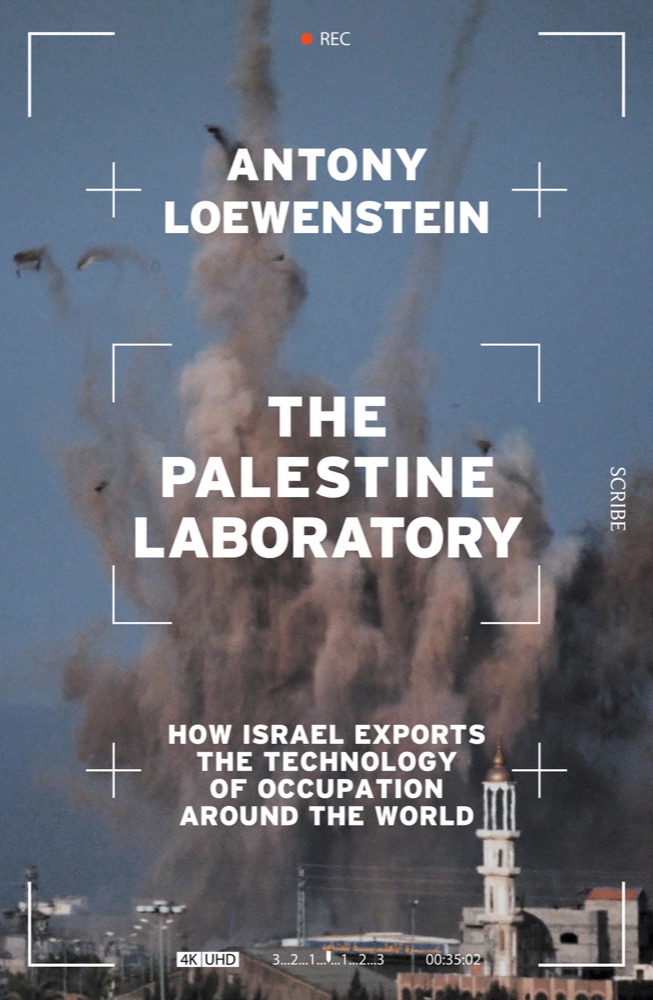
Bestselling journalist Antony Loewenstein uncovers the widespread commercialisation and brutal deployment globally of Israel’s occupation-enforcing technologies.
For more than 50 years, the occupation of the West Bank and Gaza has given the Israeli state invaluable experience in controlling an ‘enemy’ population, the Palestinians. It’s here that they have perfected the architecture of control, using the occupied Palestinian territories as a testing ground for weaponry and surveillance technology that they then export around the world.
The Palestine Laboratory shows in depth and for the first time how Israel has become a leader in developing spying technology and defence hardware that fuels some of the globe’s most brutal conflicts — from the Pegasus software that hacked Jeff Bezos’s and Jamal Khashoggi’s phones, and the weapons sold to the Myanmar army that has murdered thousands o
Book details
- First published
- 2023
- Author
- Antony Loewenstein
- Genre
- Nonfiction
- Goodreads rating
- 4.42 (3k ratings)
Keep reading
Ten Myths About Israel
 The Hundred Years’ War on Palestine: A History of Settler Colonialism and Resistance, 1917–2017
 On Palestine
 On Democracies and Death Cults: Israel and the Future of Civilization
 The Ethnic Cleansing of Palestine
 My Promised Land: The Triumph and Tragedy of Israel
 A Very Short History of the Israel–Palestine Conflict
 Palestine: Peace Not Apartheid
 The Question of Palestine
 Start-up Nation: The Story of Israel's Economic Miracle
 Perfect Victims and the Politics of Appeal
 Recognizing the Stranger: On Palestine and Narrative
 Exodus
 One Day, Everyone Will Have Always Been Against This
 Imperial Ambitions: Conversations on the Post-9/11 World
 The Secret Servant
 From Beirut to Jerusalem
 The Everlasting Hatred: The Roots of Jihad
 The Invention of the Jewish People
 O Jerusalem
 The Jakarta Method: Washington's Anticommunist Crusade and the Mass Murder Program that Shaped Our World
 Son of Hamas
 Prisoners of Geography: Ten Maps That Tell You Everything You Need to Know About Global Politics
 I Shall Not Hate: A Gaza Doctor's Journey on the Road to Peace and Human Dignity
 We Wish to Inform You That Tomorrow We Will Be Killed with Our Families
 The Message
 Capitalism: A Ghost Story
 The Looming Tower: Al-Qaeda and the Road to 9/11
 Hostage: An NYT Bestselling War Memoir of Survival and the Human Spirit in Gaza
 Imperium
 Flashpoints: The Emerging Crisis in Europe
 The Revenge Of Geography: What the Map Tells Us About Coming Conflicts and the Battle Against Fate
 Bloodlands: Europe Between Hitler and Stalin
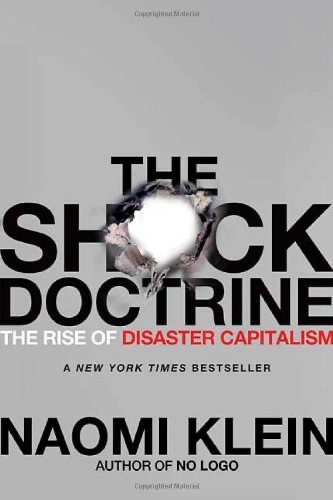 The Shock Doctrine: The Rise of Disaster Capitalism
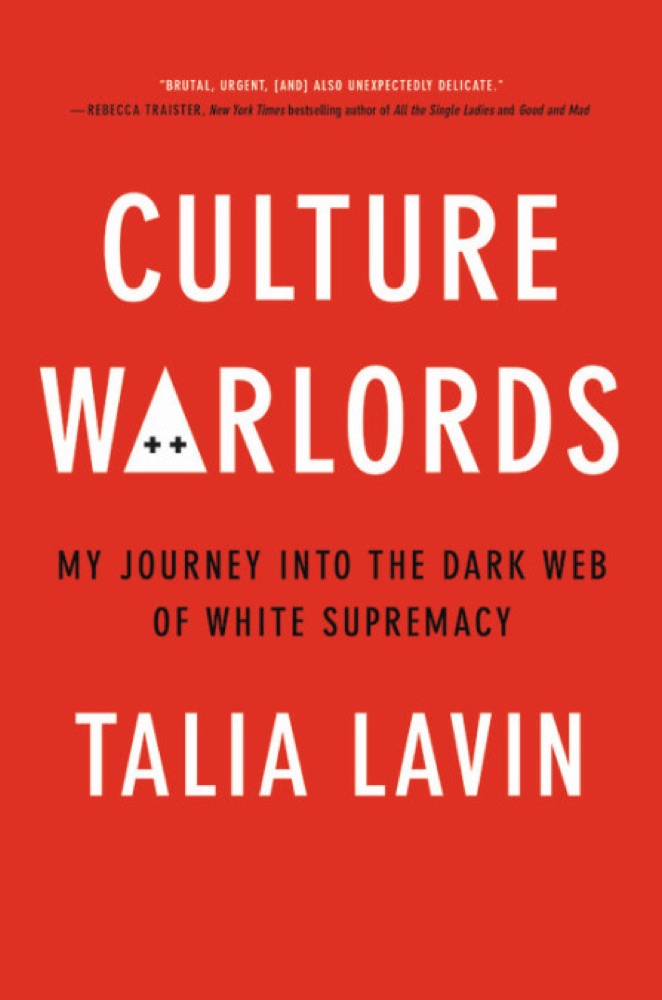 Culture Warlords: My Journey Into the Dark Web of White Supremacy
 Doppelganger: A Trip into the Mirror World
 Apeirogon
 Things You May Find Hidden in My Ear: Poems from Gaza
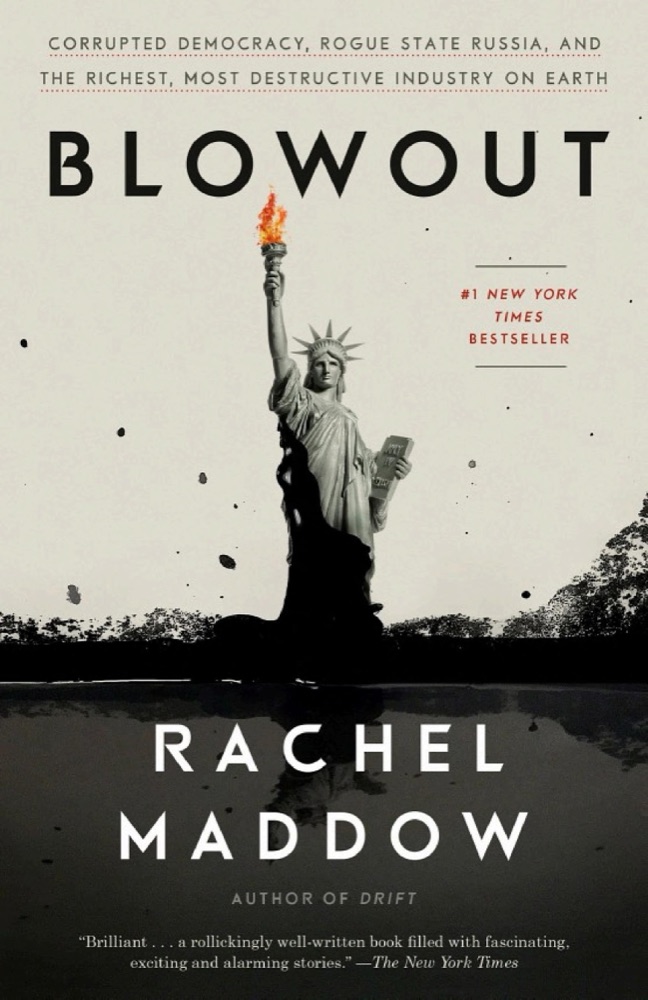 Blowout
 Border: A Journey to the Edge of Europe
 Red Notice: A True Story of High Finance, Murder, and One Man's Fight for Justice
 Mossad
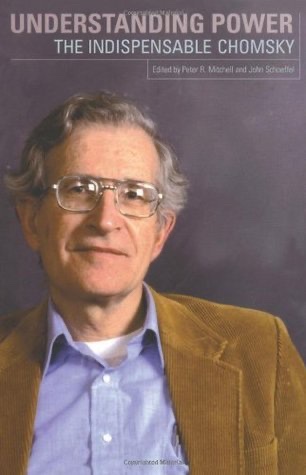 Understanding Power: The Indispensable Chomsky
 Minor Detail
 Patriot: A Memoir
 Eichmann in Jerusalem: A Report on the Banality of Evil
 Upheaval: Turning Points for Nations in Crisis
 Postwar: A History of Europe Since 1945
 Conspirators' Hierarchy: The Story of the Committee of 300
 Dead Fall
 Behold a Pale Horse
 Say Nothing: A True Story of Murder and Memory in Northern Ireland
 Nuclear War: A Scenario
 The Strange Death of Europe: Immigration, Identity, Islam
 Emergency Sex (And Other Desperate Measures): True Stories from a War Zone
 A World Without Islam
 Drift
Drift
 The Next 100 Years: A Forecast for the 21st Century
 The World As It Is: Inside the Obama White House
 Quotations from Chairman Mao Tsetung