 Jesus of Nazareth: The Infancy Narratives
Quotes from the Book
I myself have read the writings and teachings of the heretics, polluting my soul for a while with their abominable notions, though deriving this benefit: I was able to refute them for myself and loathe them even more.
6
The Lord created me in the beginning of his ways, for his works; before the world he established me, in the beginning, before he made the earth, before he made the depths, before the mountains were settled,
5
But most wonderful of all is the fact that we who have consecrated ourselves to him, honor him not only with our voices and with the sound of words, but also with complete elevation of soul, so that we choose to give testimony unto him rather than to preserve our own lives.
4
the first and only begotten of God which was before every creature and creation visible and invisible, the commander-in-chief of the rational and immortal host of heaven, the messenger of the great counsel, the executor of the Father's unspoken will, the creator, with the Father, of all things, the second cause of the universe after the Father, the true and only-begotten Son of God, the Lord and God and King of all created things, the one who has received dominion and power, with divinity itself, and with might and honor from the Father; as it is said in regard to him in the mystical passages of Scripture which speak of his divinity: "In the beginning was the Word, and the Word was with God, and the Word was God." [John 1:1] "All things were made by him; and without him was not anything made." [John 1:3]
3
From afar they raise their voices like torches, and they cry out, as from some lofty and conspicuous watchtower, admonishing us where to walk and how to direct the course of our work steadily and safely.
3
Of all evils, indeed, famine is the worst, and it destroys nothing so effectively as shame. For that which under other circumstances is worthy of respect, in the midst of famine is despised. Thus women snatched the food from the very mouths of their husbands and children, from their fathers, and what was most pitiable of all, mothers from their babes. And while their dearest ones were wasting away in their arms, they were not ashamed to take away from them the last drops that supported life.
2
After relating these things concerning John, he makes mention of our Saviour in the same work, in the following words: And there lived at that time Jesus, a wise man, if indeed it be proper to call him a man. For he was a doer of wonderful works, and a teacher of such men as receive the truth in gladness. And he attached to himself many of the Jews, and many also of the Greeks. He was the Christ. 8. When Pilate, on the accusation of our principal men, condemned him to the cross, those who had loved him in the beginning did not cease loving him. For he appeared unto them again alive on the third day, the divine prophets having told these and countless other wonderful things concerning him. Moreover, the race of Christians, named after him, continues down to the present day.
2
Whence it is evident that the perfect religion committed to us by the teaching of Christ is not new and strange, but, if the truth must be spoken, it is the first and the true religion. This may suffice for this subject.
2
It is my intention, moreover, to recount the misfortunes which immediately came upon the whole Jewish nation in consequence of their plots against our Saviour, and to record the ways and the times in which the divine word has been attacked by the Gentiles, and to describe the character of those who at various periods have contended for it in the face of blood and of tortures, as well as the confessions which have been made in our own days, and finally the gracious and kindly succor which our Saviour has afforded them all. Since I propose to write of all these things I shall commence my work with the beginning of the dispensation of our Saviour and Lord Jesus Christ.
2
Under the latter, Herod, the first foreigner, was given the Kingdom of the Jews by the Romans. As Josephus relates, he was an Idumean on his father’s side and an Arabian on his mother’s. But Africanus, who was also no common writer, says that they who were more accurately informed about him report that he was a son of Antipater, and that the latter was the son of a certain Herod of Ascalon, one of the so-called servants of the temple of Apollo.
1
But increasing freedom transformed our character to arrogance and sloth; we began envying and abusing each other, cutting our own throats, as occasion offered, with weapons of sharp-edged swords; rulers hurled themselves at rulers and lay men waged party fights against laymen, and unspeakable hypocrisy and dissimulation were carried to the limit of wickedness. At last, while the gatherings were still crowded, divide judgment, with its wonted mercy, gently and gradually began to order things its own way, and with Christians in the army the persecutions began.
1
5. How, immediately after his crime against our Saviour and the other infants, the punishment sent by God drove him on to his death, we can best learn from the words of that historian who, in the seventeenth book of his Antiquities of the Jews, writes as follows concerning his end: 6. “But the disease of Herod grew more severe, God inflicting punishment for his crimes. For a slow fire burned in him which was not so apparent to those who touched him, but augmented his internal distress; for he had a terrible desire for food which it was not possible to resist. He was affected also with ulceration of the intestines, and with especially severe pains in the colon, while a watery and transparent humor settled about his feet. 7. He suffered also from a similar trouble in his abdomen. Nay more, his privy member was putrefied and produced worms. He found also excessive difficulty in breathing, and it was particularly disagreeable because of the offensiveness of the odor and the rapidity of respiration. 8. He had convulsions also in every limb, which gave him uncontrollable strength. It was said, indeed, by those who possessed the power of divination and wisdom to explain such events, that God had inflicted this punishment upon the King on account of his great impiety.
1
The Lord said unto me, Thou art my Son, this day have I begotten thee. Ask of me, and I will give thee the nations for thine inheritance, and the uttermost parts of the earth for thy possession.
1
12. To these belong his statement that there will be a period of some thousand years after the resurrection of the dead, and that the kingdom of Christ will be set up in material form on this very earth. I suppose he got these ideas through a misunderstanding of the apostolic accounts, not perceiving that the things said by them were spoken mystically in figures. 13. For he appears to have been of very limited understanding, as one can see from his discourses. But it was due to him that so many of the Church Fathers after him adopted a like opinion, urging in their own support the antiquity of the man; as for instance Irenæus and any one else that may have proclaimed similar views.
1
The disease then seized upon his whole body and distracted it by various torments. For he had a slow fever, and the itching of the skin of his whole body was insupportable. He suffered also from continuous pains in his colon, and there were swellings on his feet like those of a person suffering from dropsy, while his abdomen was inflamed and his privy member so putrefied as to produce worms. Besides this he could breathe only in an upright posture, and then only with difficulty, and he had convulsions in all his limbs, so that the diviners said that his diseases were a punishment.
1
2. It is admitted that when in recent times the appearance of our Saviour Jesus Christ had become known to all men there immediately made its appearance a new nation; a nation confessedly not small, and not dwelling in some corner of the earth, but the most numerous and pious of all nations, indestructible and unconquerable, because it always receives assistance from God. This nation, thus suddenly appearing at the time appointed by the inscrutable counsel of God, is the one which has been honored by all with the name of Christ.
1
He, although he received no symbols and types of high priesthood from any one, although he was not born of a race of priests, although he was not elevated to a kingdom by military guards, although he was not a prophet like those of old, although he obtained no honor nor pre-eminence among the Jews, nevertheless was adorned by the Father with all, if not with the symbols, yet with the truth itself.
1
For immediately in the beginning, after his original life of blessedness, the first man despised the command of God, and fell into this mortal and perishable state, and exchanged his former divinely inspired luxury for this curse-laden earth. His descendants having filled our earth, showed themselves much worse, with the exception of one here and there, and entered upon a certain brutal and insupportable mode of life.
1
It is my purpose also to give the names and number and times of those who through love of innovation have run into the greatest errors, and, proclaiming themselves discoverers of knowledge falsely so-called [1 Timothy 6:20] have like fierce wolves unmercifully devastated the flock of Christ.
1
Other historians have confined themselves to the recording of victories in war and triumphs over enemies, of the exploits of the commanders and the heroism of their men, stained with the blood of the thousands they have slaughtered for the sake of children and country and possessions; it is peaceful wars, fought for the very peace of the soul, and men who in such wars have fought manfully for truth rather than for country, for true religion rather than for their dear ones, that my account of God’s commonwealth will inscribe on imperishable monuments; it is the unshakeable determination of the champions of true religion, their courage and endurance, their triumphs over demons and victories over invisible opponents, and the crowns which all this won for them at the last, that it will make famous for all time.
rests at Ephesus; and moreover John, who was both a witness and a teacher, who reclined upon the bosom of the Lord, and being a priest wore the sacerdotal plate. He also sleeps at Ephesus.” 4. So much concerning their death. And in the Dialogue of Caius which we mentioned a little above, Proclus, against whom he directed his disputation, in agreement with what has been quoted, speaks thus concerning the death of
Watch on YouTube
About Eusebius
We have collected 21 quotes from 1 book by Eusebius on BookQuoters.
More about the author →About the book
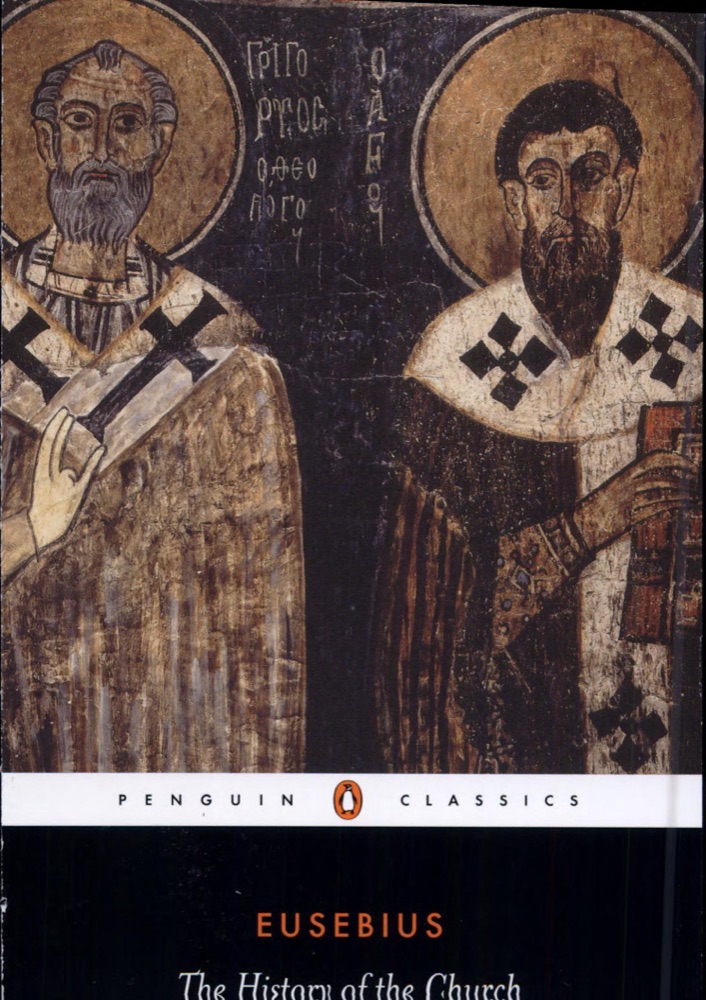
Eusebius's account is the only surviving historical record of the Church during its crucial first 300 years.
Bishop Eusebius, a learned scholar who lived most of his life in Caesarea in Palestine, broke new ground in writing the History and provided a model for all later ecclesiastical historians. In tracing the history of the Church from the time of Christ to the Great Persecution at the beginning of the fourth century, and ending with the conversion of the Emperor Constantine, his aim was to show the purity and continuity of the doctrinal tradition of Christianity and its struggle against persecutors and heretics.
Keep reading
Jesus of Nazareth: The Infancy Narratives
 On the Incarnation
 Zealot: The Life and Times of Jesus of Nazareth
 Jesus the Christ
 The New Oxford Annotated Bible: New Revised Standard Version
 The Orthodox Study Bible
 Life of Christ
 The Book of Mormon: Another Testament of Jesus Christ
 Paul: A Biography
 The Book of Mormon: Another Testament of Jesus Christ
 Killing Jesus: A History
 A Church in the House: Restoring Daily Worship to the Christian Household
 Forged: Writing in the Name of God—Why the Bible's Authors Are Not Who We Think They Are
 How Jesus Became God: The Exaltation of a Jewish Preacher from Galilee
 Systematic Theology: An Introduction to Biblical Doctrine
 The Attributes of God
 Lord of the World
 The Case for Christ
 Studies in the Sermon on the Mount
 The Darkening Age: The Christian Destruction of the Classical World
 The Messiah Matrix
 How God Became King: The Forgotten Story of the Gospels
 The Challenge of Jesus: Rediscovering Who Jesus Was & Is
 A History of God: The 4,000-Year Quest of Judaism, Christianity, and Islam
 Saint Thomas Aquinas
 The Cross of Christ
 Godless: How an Evangelical Preacher Became One of America's Leading Atheists
 Seeking Allah, Finding Jesus: A Devout Muslim Encounters Christianity
 Tortured for Christ
 The Age of Reason
 The Sovereignty of God
 The Apostle : A Life of Paul
 The Jesus I Never Knew
 Grace Abounding to the Chief of Sinners
 The Order
 Book of Mormon, Doctrine and Covenants, Pearl of Great Price
 Jesus and the Disinherited
 That All Shall Be Saved: Heaven, Hell, and Universal Salvation
 Jesus Among Other Gods: The Absolute Claims of the Christian Message
 The Holy Bible: King James Version
 Apollyon
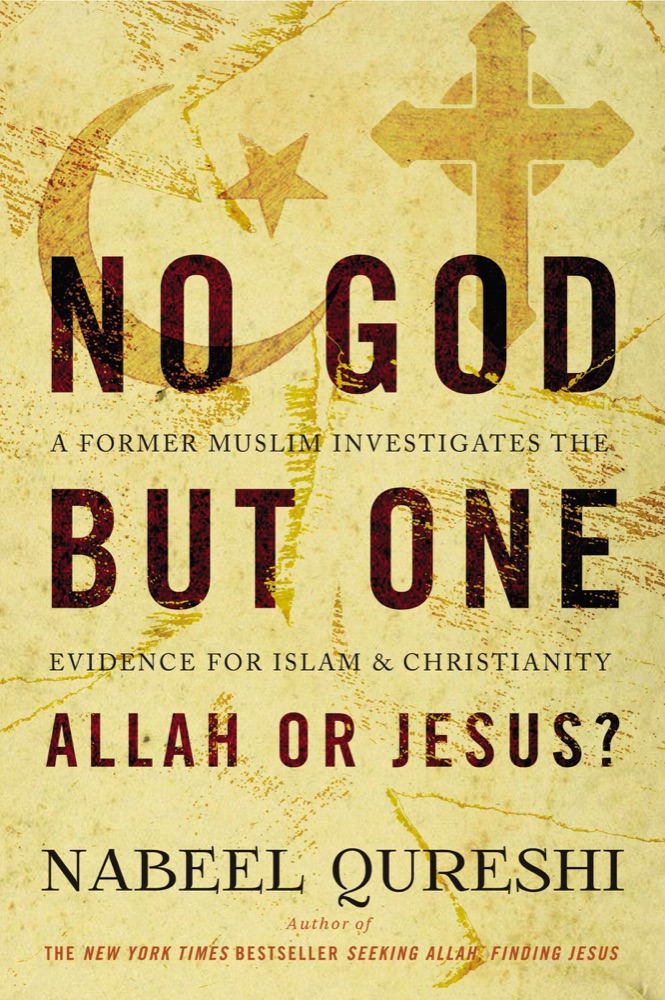 No God but One: Allah or Jesus?: A Former Muslim Investigates the Evidence for Islam and Christianity
 The Holy Bible: Gospel of Matthew
 On Christian Doctrine
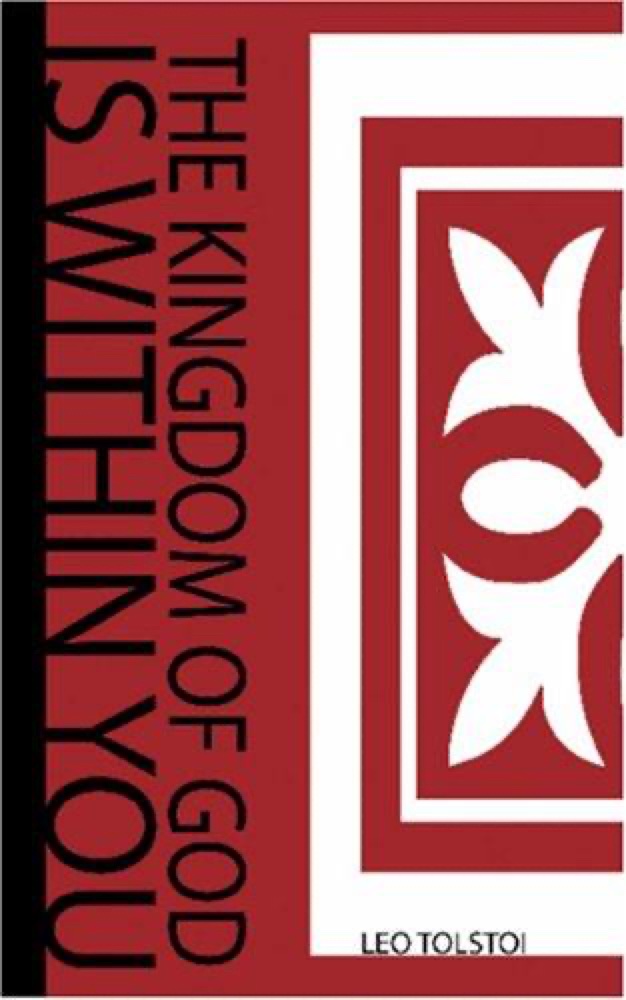 The Kingdom of God Is Within You
 Foxe's Book of Martyrs
 The Holiness of God
 Life Application Study Bible: NIV
 Bonhoeffer: Pastor, Martyr, Prophet, Spy
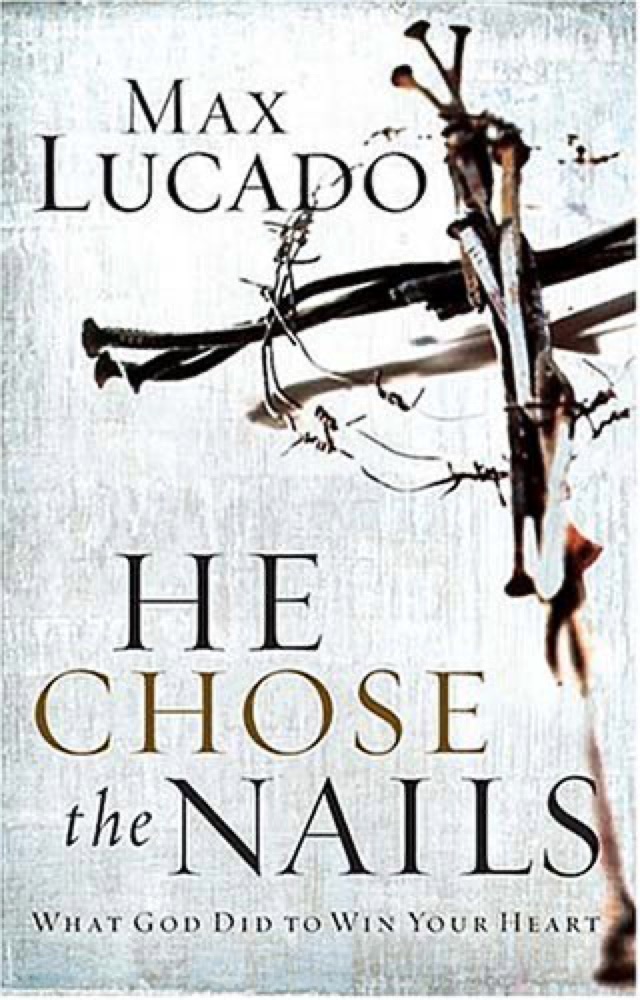 He Chose the Nails: What God Did to Win Your Heart
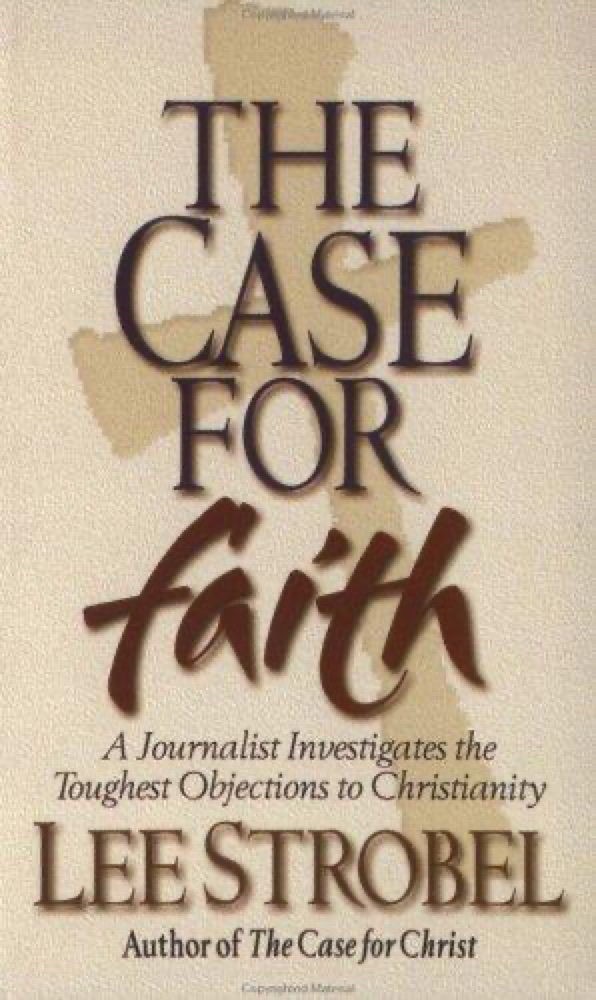 The Case for Faith: A Journalist Investigates the Toughest Objections to Christianity
 Morning and Evening, Based on the English Standard Version
 On Christian Liberty
 King's Cross: The Story of the World in the Life of Jesus
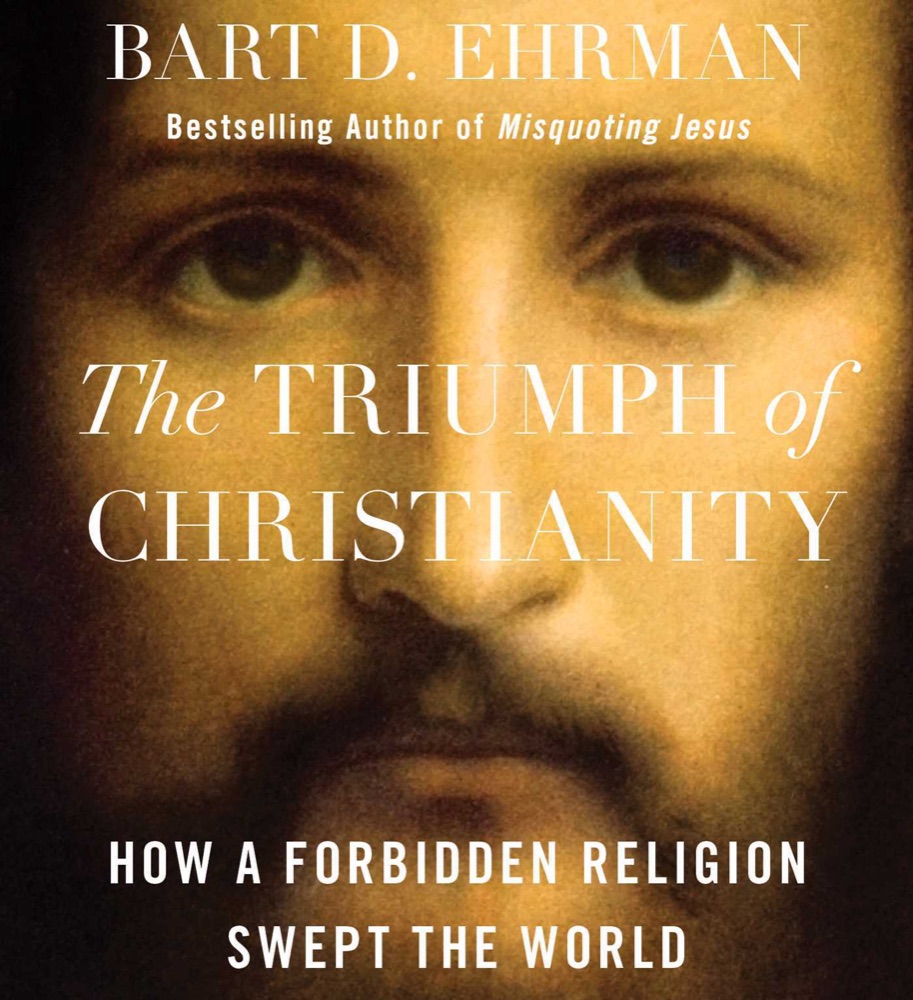 The Triumph of Christianity: How a Forbidden Religion Swept the World
 The Bruised Reed
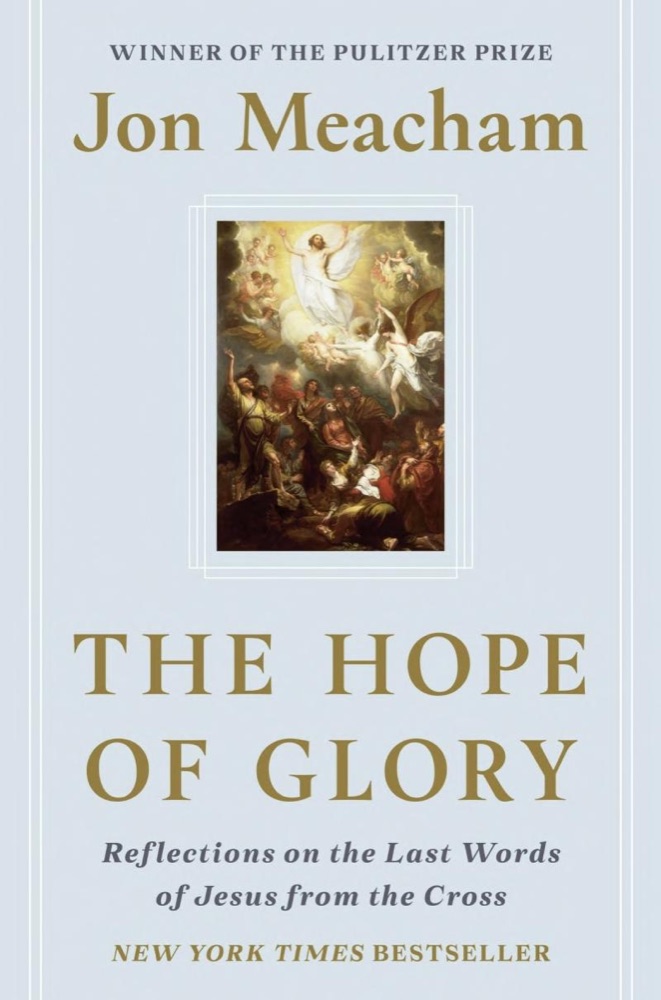 The Hope of Glory: Reflections on the Last Words of Jesus from the Cross
 The Bible Jesus Read
 The Anti-Christ