
 Misquoting Jesus: The Story Behind Who Changed the Bible and Why
Quotes from the Book
The word “cult” comes from the Latin phrase cultus deorum, which literally means “the care of the gods.” A cultic act is any ritualized practice that is done out of reverence to or worship of the gods. Such activities lay at the heart of pagan religions. Doctrines and ethics did not.
5
Philosophers talked a lot about how people should act toward one another, as members of a family, in relationships with friends and neighbors, as citizens of a city. Good behavior was part of being a worthwhile human being and a responsible citizen. But it generally was not a part of religious activities.
3
Martyrdoms would rarely lead to conversions because they were themselves relatively rare. The vast majority of pagans—including the millions who eventually converted—never saw a martyrdom, as recent scholarship has shown. As the most prolific and one of the best-traveled authors of the first three Christian centuries, Origen of Alexandria, stated in no uncertain terms: “Only a small number of people, easily counted, have died for the Christian religion.
2
The Apology of Socrates was Plato’s account of the legal defense that Socrates made at his trial in Athens. The speech itself is one of the great classics of ancient literature. They executed him anyway.
1
Justin alludes to his conversion, indicating that originally it was Christians’ martyrdom that showed him they deserved to be believed.34 They were willing to die for what they held dear. Of how many people can that be said? Or, to put it differently, how many martyrs for Zeus do we hear about?
1
And so Christianity was the only evangelistic religion that we know of in antiquity, and, along with Judaism, it was also the only one that was exclusive. That combination of evangelism and exclusion proved to be decisive
1
They all subscribed to the existence of many gods and all were based on cultic acts of worship, such as sacrifice, prayer, and divination. As such, they were by and large inclusive. None of them insisted their god was the only divine being, or that this god was to be worshiped in only one particular way everywhere. As a corollary, these religions were highly tolerant of differences. So too was the Roman government, both centrally in Rome and throughout the provinces. There were exceptions, but only when a cult was judged to be morally degenerate or socially dangerous.
1
Constantius decreed that any Christian who converted to Judaism was to have his property entirely confiscated (Theodosian Code 16.8.8). Under Theodosius I it was declared that any Christian who married a Jew would be guilty of the crime of adultery In the early fifth century, Jews were deprived of the right to serve in the imperial service. Later it became illegal for Jews to build or even repair a synagogue. In sum, anyone who did not subscribe to the “apostolic discipline and the evangelic doctrine” that promoted the theologically correct understanding of the Trinity (this would include Arians of various kinds) was legally pronounced “demented and insane” and was to “be smitten first by divine vengeance and secondly by the retribution of Our own initiative, which We shall assume in accordance with the divine judgment” (Theodosian Code 16.1.2).
1
Pagans never had to affirm anything. As odd as this seems, pagans were not required to believe truths about the gods. Paganism was instead about performing the proper, traditional cultic acts.
1
In 303 CE, the Roman emperor Diocletian declared war on the Christian church and instigated the most massive persecution it ever endured. In 312 CE, the emperor Constantine himself converted to become a Christian. In 391 to 392 CE, the vehemently orthodox Christian Theodosius declared all pagan practices illegal and in effect made Christianity the state religion of Rome. With the growth of Christianity came moments of heightened intolerance. Sometimes this intolerance erupted in ugly acts of violence, suppression, and coercion. Christians were not, of course, the only intolerant people on the planet. They themselves had been the victims of violent coercion early in the century.
1
Constantius II ordered pagan temples closed and sacrificial practices stopped. We have already seen a law issued in 341 CE: “Superstition shall cease; the madness of sacrifices shall be abolished... [anyone]... who performs sacrifices . . . shall suffer the infliction of a suitable punishment and the effect of an immediate sentence” (Theodosian Code 16.10.2). In a law of 346 CE, the penalties are specified: Temples “in all places and in all cities” are to be “immediately closed” and “access to them forbidden.” No one may perform a sacrifice. Anyone who does “shall be struck down with the avenging sword” and his “property shall be confiscated.” Any governor who fails to avenge such crimes “shall be similarly punished” (Theodosian Code 16.10.4); And perhaps more drastically, later in Constantius’s reign, in 356: “Anyone who sacrifices or worships images shall be executed” (Theodosian Code 16.10.6).
1
But the punishments! Imperial bureaucrats who accepted bribes were to have their hands cut off (Theodosian Code 1.16.7); ineffective guardians of girls who had been seduced were to have molten lead poured down their throats (Theodosian Code 9.24.1); tax collectors who treated women tax delinquents rudely were to “be done to death with exquisite tortures”; anyone who served as an informer was to be strangled and “the tongue of envy cut off from its roots and plucked out” (Theodosian Code 10.10.2); slaves who informed on their masters were to be crucified (Theodosian Code 9.5.1.1); How is one to account for such judicial cruelty from a Christian emperor? MacMullen suggests that by the fourth century Christianity was revealing an increasingly cruel streak. He notes in particular the heightened popularity of the Christian literature... in recounting in graphic detail the torments of hell for those who refuse to do God’s will. Possibly what applied to heaven applied to earth: If this is how God handles sin, then who are we to act differently? Religious beliefs may have made judicial punishment specially aggressive, harsh, and ruthless.
1
We simply do not know how many Christians suffered imprisonment or died at the hands of the authorities: possibly hundreds of people, although almost certainly not many thousands. We do know that, in the end, the Christians came out on top. Constantine converted, and with one brief exception all the emperors to follow were Christian. There would never again be an official Roman persecution of the Christians. Throughout these early centuries of on-again, off-again opposition, Christians were not always bullied, beaten, tortured, and executed. Most of the time, in most places, they were simply left in peace. Many Christians went from cradle to grave without facing any public ridicule, opposition, or persecution. We do not hear much about these Christians for an obvious reason: peace and quiet rarely make it into the history books.
1
Nero did not, technically speaking, prosecute Christians for being Christian. He executed them for committing arson. True, they probably were not guilty, but that was the charge. Being a Christian was not punishable, but setting fire to Rome was. Nero’s persecution was localized. It involved only the city of Rome. Nothing indicates that Christians elsewhere in the empire suffered any consequences. Even more significant, it appears that none of Nero’s successors down to Trajan (ruled 98–117 CE) persecuted Christians. Between Nero in 64 CE and Marcus Aurelius in 177 CE, the only mention of an emperor’s intervention in Christian affairs, apart from the episode involving Trajan found in Pliny’s letters, is a letter from the emperor Hadrian that gives instructions to a local governor to conduct his trials against the Christians fairly.
1
If there were just 2.5 million to 3.5 million Christians in the year 300, the church would have to grow only at a rate of 26 percent to reach 30 million by the year 400. For the fourth century, if the rate really was around 25 percent per decade, that would only mean that every hundred Christians would need to convert just two or occasionally three people a year.
1
We have very little evidence to suggest that serious intellectuals converted to the Christian faith between the time of Paul and the mid-second century. Most converts would have been lower-class and uneducated. This was certainly true in Paul’s own day. In a letter to one of his largest congregations, he explicitly reminds the Corinthians about their own constituency: “Consider your calling, brothers and sisters: Not many of you were wise...
1
atheism was an exceedingly rare phenomenon in antiquity: very few people believed there were literally no gods. The word “atheism” itself, however, simply means “without the gods,” and one could be “without” them while still acknowledging they existed. ...atheism applied more normally to “anyone who rejected or neglected the traditional modes of honoring the gods.” That is to say, anyone who abjectly refused to participate in the worship of divine beings could be labeled an atheist. Such a person could expect a good deal of opprobrium and sometimes civil action. The Christians were often accused of being atheists. Obviously that was not because they denied the divine realm but because they refused to acknowledge (and act as if) it was inhabited by more than the one being they worshiped and refused to interact with it in traditional ways.
1
Some scholars have argued that ancient religion was principally concerned with averting the gods’ anger. But this divine anger was aroused almost always because of neglect. he gods—or at least one ofthem—had not been respected and worshiped properly or sufficiently. That was the main logic behind Roman persecution of the Christians. Because this group of miscreants refused to worship the gods, there was hell to pay.
1
Today we are familiar with the funereal abbreviation “RIP” (“Rest in Peace”). Ancient Romans had something comparable, a seven-letter abbreviation that spoke volumes: “I was not; I was; I am not; I care not.” The meaning is clear. There was no existence before birth. A person existed only after being born. After death there once more was no existence.
1
There was a scant role for ethics in the paganism. It is not that ancient people were less ethical than people today; it is that ethics had little to do with religion. If it had a “location” in ancient life, it was in philosophy.
1
Because of the open nature of polytheism, there was virtually no such thing as “conversion.” Anyone who chose to begin worshiping a new god was welcome to do so and was not required or expected to leave behind any previous practices of worship or make an exclusive commitment to this one deity.
1
Ancient people, whether pagans, Jews, or Christians, did not neatly differentiate between the religious and the political. They would have had a hard time understanding the difference.
1
Research on conversion has demonstrated that, long after such an experience, a convert tends to confuse what actually happened in light of everything that occurs in its aftermath. That is to say, years later, the accounts people tell, to both themselves and others, have been slanted by all they have learned, thought, and experienced in the interim.
1
On the practical level, the gods were understood to be closely connected with every aspect of the social and political life of a community... On the imperial level this meant that it was widely known—and genuinely believed by most—that it was the gods who had made the empire great... The Christians refused to worship or even acknowledge the gods of the empire, claiming in fact that these were evil, demonic beings, not beneficent deities that promoted the just cause of the greatest empire the world had ever known. The refusal to worship was seen by others to be dangerous to the well-being of the empire and thus to the security of the state. And so the decision to persecute—which seems to us, perhaps, to be a strictly religious affair—was at the time inherently sociopolitical as well.
1
Conversion was not a widely known phenomenon in antiquity. Pagan religions had almost nothing like it. They were polytheistic, and anyone who decided, as a pagan, to worship a new or different god was never required to relinquish any former gods or their previous patterns of worship. Pagan religions were additive, not restrictive.
1
The ancient triumph of Christianity proved to be the single greatest cultural transformation our world has ever seen. Without it the entire history of Late Antiquity would not have happened as it did. We would never have had the Middle Ages, the Reformation, the Renaissance, or modernity as we know it. There could never have been a Matthew Arnold. Or any of the Victorian poets. Or any of the other authors of our canon: no Milton, no Shakespeare, no Chaucer. We would have had none of our revered artists: Michelangelo, Leonardo da Vinci, or Rembrandt. And none of our brilliant composers: Mozart, Handel, or Bach. To be sure, we would have had other Miltons, Michelangelos, and Mozarts in their places, and it is impossible to know whether these would have been better or worse. But they would have been incalculably different.
1
God was saving this world. He had destroyed the power of sin by the death of Jesus; he had destroyed the power of death by the resurrection of Jesus; and he would destroy the power of evil by the return of Jesus.
1
Paul did not see himself as switching religions. He came to realize that Christ was the fulfillment of Judaism, of everything that God had planned and revealed within the sacred Jewish Scriptures.
1
But the message was not only for Jews. It was for all people, Jew and gentile. And it came to gentiles apart from observing the Jewish law. Thus, to be members of God’s covenantal people, it was not necessary for gentiles to become Jews. They did not need to be circumcised, observe the Sabbath, keep kosher, or follow any of the other prescriptions of the law. They needed only to believe in the death and resurrection of the messiah Jesus. This was an earth-shattering realization for Paul.
1
If salvation could come by belonging to the covenantal community of the chosen people, or by keeping the Law of Moses, there would be no reason for God’s messiah to have suffered an excruciating death. Following the law thus must have no bearing on how a person stands in a right relationship with God.
1
Watch on YouTube
About Bart D. Ehrman
We have collected 152 quotes from 6 books by Bart D. Ehrman on BookQuoters.
More about the author →More by Bart D. Ehrman
Misquoting Jesus: The Story Behind Who Changed the Bible and Why
 Heaven and Hell: A History of the Afterlife
 How Jesus Became God: The Exaltation of a Jewish Preacher from Galilee
About the book
The “marvelous” (Reza Aslan, bestselling author of Zealot), New York Times bestselling story of how Christianity became the dominant religion in the West.How did a religion whose first believers were twenty or so illiterate day laborers in a remote part of the empire became the official religion of Rome, converting some thirty million people in just four centuries? In The Triumph of Christianity, early Christian historian Bart D. Ehrman weaves the rigorously-researched answer to this question “into a vivid, nuanced, and enormously readable narrative” (Elaine Pagels, National Book Award-winning author of The Gnostic Gospels), showing how a handful of charismatic characters used a brilliant social strategy and an irresistible message to win over hearts and minds one at a time. This “humane, thoughtful and intelligent” book (The New York Times Book Review) upends the way we think about the
Book details
- First published
- 2018
- Author
- Bart D. Ehrman
- Genre
- History
- Goodreads rating
- 3.93 (3k ratings)
Keep reading
 The Darkening Age: The Christian Destruction of the Classical World
 Zealot: The Life and Times of Jesus of Nazareth
How Jesus Became God: The Exaltation of a Jewish Preacher from Galilee
Zealot: The Life and Times of Jesus of Nazareth
How Jesus Became God: The Exaltation of a Jewish Preacher from Galilee
 Godless: How an Evangelical Preacher Became One of America's Leading Atheists
 Forged: Writing in the Name of God—Why the Bible's Authors Are Not Who We Think They Are
 The Reason for God: Belief in an Age of Skepticism
 A History of God: The 4,000-Year Quest of Judaism, Christianity, and Islam
 The Case for Christ
 What's So Great About Christianity
 The Immortality Key: Uncovering the Secret History of the Religion with No Name
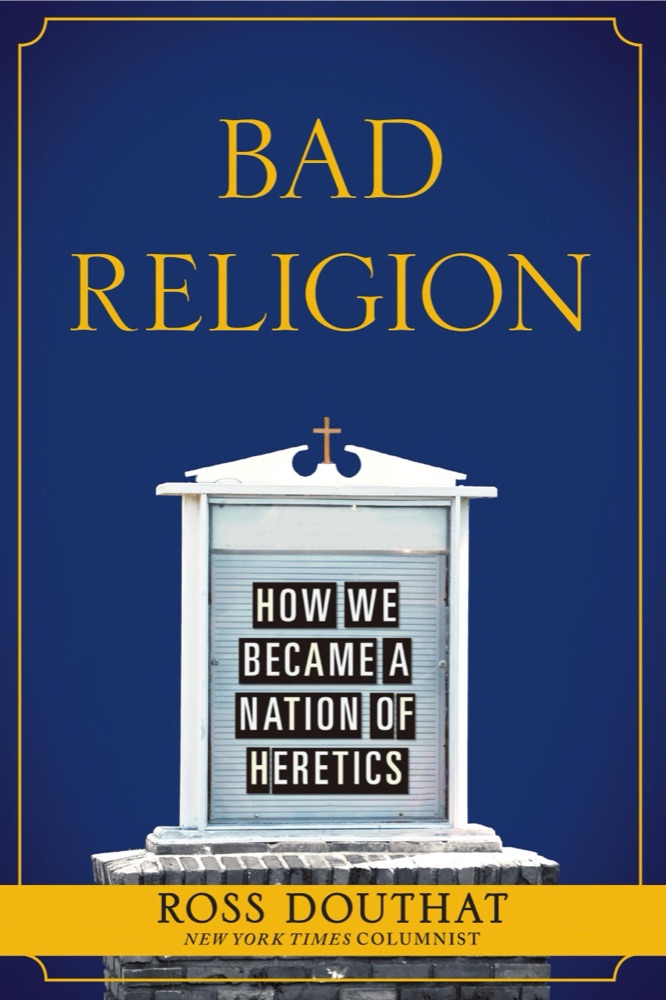 Bad Religion: How We Became a Nation of Heretics
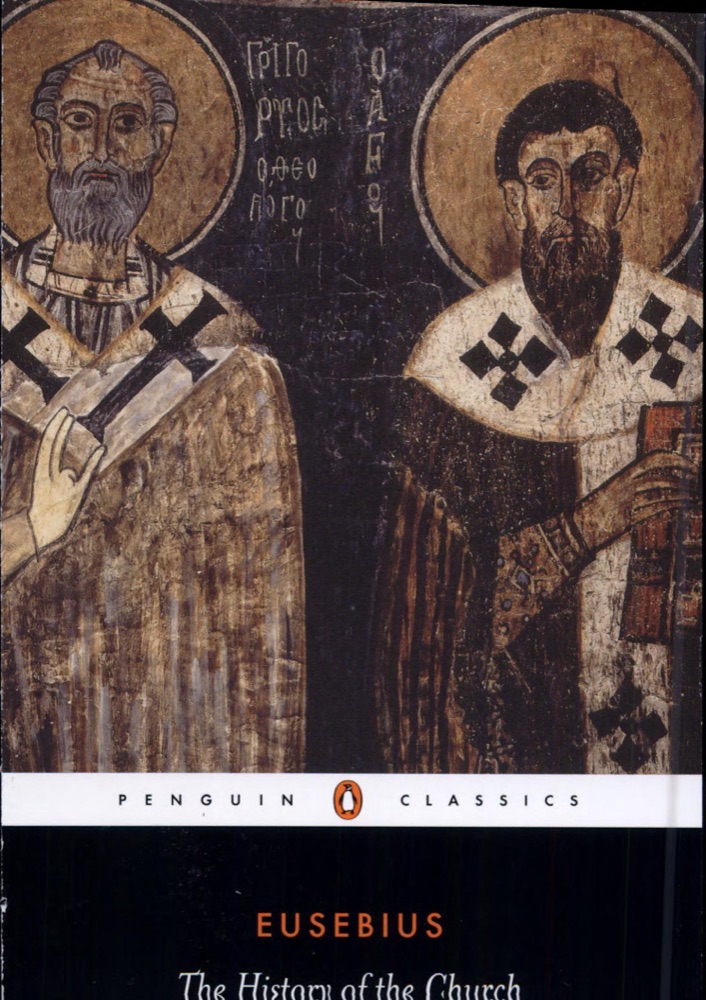 The History of the Church: From Christ to Constantine
 The Messiah Matrix
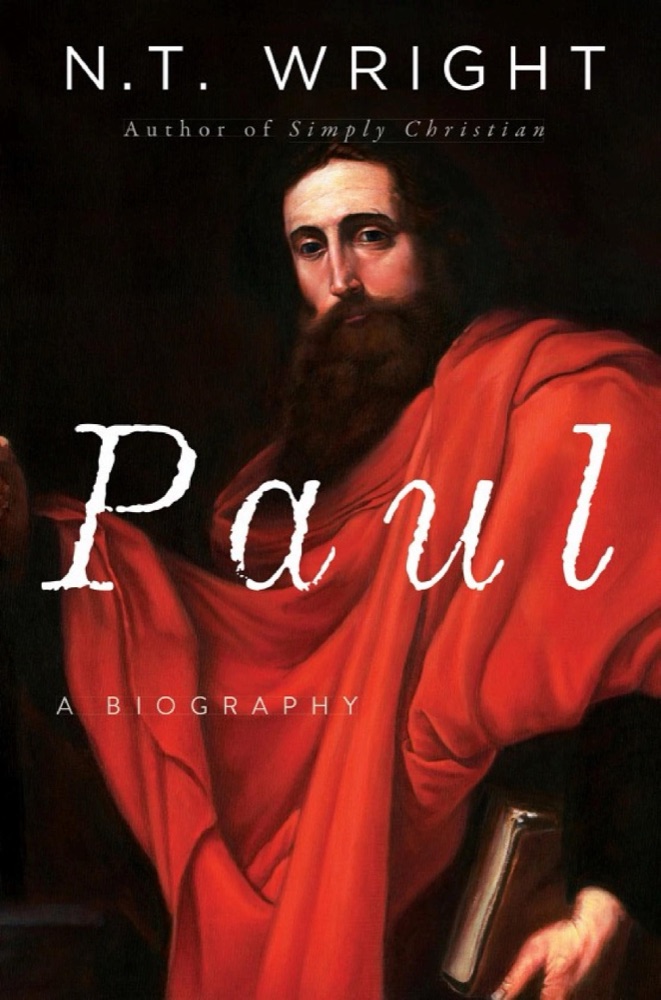 Paul: A Biography
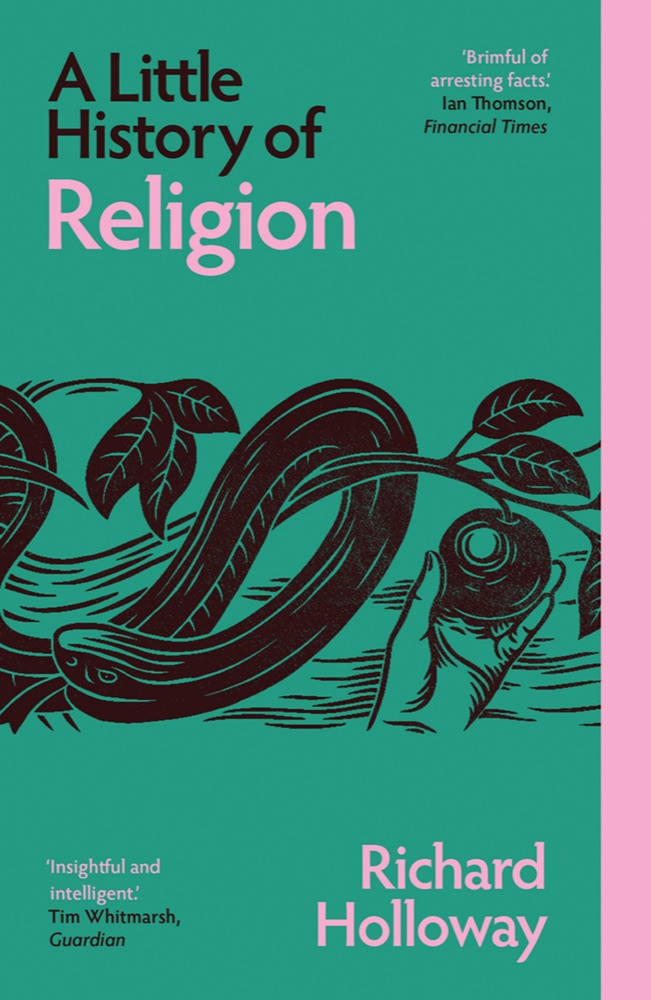 A Little History of Religion
 The Case for God
 Simply Christian
 Resident Aliens: Life in the Christian Colony
 The Prodigal God: Recovering the Heart of the Christian Faith
 No God but One: Allah or Jesus?: A Former Muslim Investigates the Evidence for Islam and Christianity
 The Order
 Jesus Among Other Gods: The Absolute Claims of the Christian Message
 The Age of Reason
 Life of Christ
 Jesus for President: Politics for Ordinary Radicals
 The Benedict Option: A Strategy for Christians in a Post-Christian Nation
 Total Truth: Liberating Christianity from its Cultural Captivity
 On the Incarnation
 The Case for Faith: A Journalist Investigates the Toughest Objections to Christianity
 Surprised by Hope: A Study of Christian Hope and Resurrection
 Ethics
 Amazing Grace: A Vocabulary of Faith
 The Politics of Jesus
 Letter to a Christian Nation
 That All Shall Be Saved: Heaven, Hell, and Universal Salvation
 God Is Not One: The Eight Rival Religions That Run the World--and Why Their Differences Matter
 The Spirit of the Disciplines: Understanding How God Changes Lives
 The Rage Against God: How Atheism Led Me to Faith
 Studies in the Sermon on the Mount
 Escape from Reason
 The Portable Atheist: Essential Readings for the Nonbeliever
 The Holiness of God
 Reasonable Faith
 Tortured for Christ
 Behold the Man
 Jesus of Nazareth: The Infancy Narratives
 Sinners in the Hands of a Loving God: The Scandalous Truth of the Very Good News
 The Cross of Christ
 Seeking Allah, Finding Jesus: A Devout Muslim Encounters Christianity
 What Is the Bible?: How an Ancient Library of Poems, Letters, and Stories Can Transform the Way You Think and Feel About Everything
 King's Cross: The Story of the World in the Life of Jesus
 unChristian: What a New Generation Really Thinks about Christianity... and Why It Matters
 Separation of Church and Hate: A Sane Person's Guide to Taking Back the Bible from Fundamentalists, Fascists, and Flock-Fleecing Frauds
 The Kingdom of God Is Within You
 Bonhoeffer: Pastor, Martyr, Prophet, Spy
 Under the Banner of Heaven: A Story of Violent Faith
 Holy Envy: Finding God in the Faith of Others
 Tactics: A Game Plan for Discussing Your Christian Convictions