 Wealth, Poverty and Politics: An International Perspective
Quotes from the Book
The moral ascendancy of equality has made it difficult to use concepts such as virtue, excellence, beauty and – above all – truth.
6
There are better and worse ditch diggers and garbage collectors. People who work in industry know that no matter how apparently mindless a job is, the job can still be done better or worse, with significant economic consequences.
3
The causes of human deficiencies in intelligence—or parenting, or social behavior, or work behavior—lay outside the individual. They were caused by flaws in society.
2
the use of tests endured and grew because society’s largest institutions—schools, military forces, industries, governments—depend significantly on measurable individual differences.
2
Once again, academia and the mass media are straining every muscle to suppress debate.
2
Page 548: We can imagine no recommendation for using the government to manipulate fertility that does not have dangers. But this highlights the problem: The United States already has policies that inadvertently social-engineer who has babies, and it is encouraging the wrong women. If the United States did as much to encourage high-IQ women to have babies as it now does to encourage low-IQ women, it would rightly be described as engaging in aggressive manipulation of fertility. The technically precise description of America's fertility policy is that it subsidizes births among poor women, who are also disproportionately at the low end of the intelligence distribution. We urge generally that these policies, represented by the extensive network of cash and services for low-income women who have babies, be ended.
2
Richard Lynn was able to assemble eleven studies in his 1991 review of the literature. He estimated the median black African IQ to be 75, approximately 1.7 standard deviations below the U.S. overall population average, about 10 points lower than the current figure for American blacks.
2
How large is the black-white difference? The usual answer to this question is one standard deviation. In discussing IQ tests, for example, the black mean is commonly given as 85, the white mean as 100, and the standard deviation as 15.
2
Most Americans think that crime has gotten far too high. But in the ruminations about how the nation has reached this state and what might be done, too little attention has been given to one of the best-documented relationships in the study of crime: As a group, criminals are below average in intelligence.
2
Cognitive sorting continues from the time that students enter college to the time they get a degree
2
How good a predictor of job productivity is a cognitive test score compared to a job interview? Reference checks? College transcript? The answer, probably surprising to many, is that the test score is a better predictor of job performance than any other single measure. This is the conclusion to be drawn from a meta-analysis on the different predictors of job performance, as shown in the table below.
2
The logic is straightforward: A college degree supplies a credential & sometimes specific job skills that, combined with the college graduate's greater average level of intelligence should reduce the independent role of IQ in ways that would not apply as strongly to high school graduates.
1
because economic success in life depends in part on the talents measured by IQ tests, and because social standing depends in part on economic success, it follows that social standing is bound to be based to some extent on inherited differences.
1
The contrary notion—that individual differences could not easily be diminished by government intervention—collided head-on with the enthusiasm for egalitarianism, which itself collided head-on with a half-century of IQ data indicating that differences in intelligence are intractable and significantly heritable
1
To those who held the behaviorist view, human potential was almost perfectly malleable, shaped by the environment.
1
Three generations of imbeciles are enough,” Justice Oliver Wendell Holmes declared in an opinion upholding the constitutionality of such a law.
1
Within a few years, the letters “IQ” had entered the American vernacular, where they remain today as a universally understood synonym for intelligence.
1
By 1908, the concept of mental level (later called mental age) had been developed, followed in a few years by a slightly more sophisticated concept, the intelligence quotient.
1
The course of learning is affected by intelligence, in Spearman’s view, but it was not the thing in itself. Spearmanian intelligence was a measure of a person’s capacity for complex mental work.
1
in 1904, a former British Army officer named Charles Spearman made a conceptual and statistical breakthrough that has shaped both the development and much of the methodological controversy about mental tests ever since.
1
People differ in their talents, their intellectual strengths and weaknesses, their preferred forms of imagery, their mental vigor.
1
he was led to put in formal terms what most people had always taken for granted: People vary in their intellectual abilities and the differences matter, to them personally and to society.
1
Darwin had asserted that the transmission of inherited intelligence was a key step in human evolution, driving our simian ancestors apart from the other apes.
1
Gossip about who in the tribe is cleverest has probably been a topic of conversation around the fire since fires, and conversation, were invented.
1
Literate cultures everywhere and throughout history have had words for saying that some people are smarter than others. Given the survival value of intelligence, the concept must be still older than that.
1
That the word intelligence describes something real and that it varies from person to person is as universal and ancient as any understanding about the state of being human.
1
But there can be no real progress in solving America’s social problems when they are as misperceived as they are today. What good can come of understanding the relationship of intelligence to social structure and public policy? Little good can come without it.
1
In trying to think through what is happening and why and in trying to understand thereby what ought to be done, the nation’s social scientists and journalists and politicians seek explanations.
1
The relationships we will be discussing are among the most sensitive in contemporary America—so sensitive that hardly anyone writes or talks about them in public. It is not for lack of information, as you will see.
1
Watch on YouTube
About Richard J. Herrnstein
About the book
The controversial book linking intelligence to class and race in modern society, and what public policy can do to mitigate socioeconomic differences in IQ, birth rate, crime, fertility, welfare, and poverty.
Book details
- First published
- 1994
- Author
- Richard J. Herrnstein
- Genre
- Nonfiction
- Goodreads rating
- 3.61 (4k ratings)
Keep reading
Wealth, Poverty and Politics: An International Perspective
 The Social Animal: The Hidden Sources of Love, Character, and Achievement
 Dragons of Eden: Speculations on the Evolution of Human Intelligence
 Coming Apart: The State of White America, 1960-2010
 Freakonomics: A Rogue Economist Explores the Hidden Side of Everything
 Twilight of the Elites: America After Meritocracy
 Superior: The Return of Race Science
 A Hunter-Gatherer's Guide to the 21st Century: Evolution and the Challenges of Modern Life
 Enlightenment Now: The Case for Reason, Science, Humanism, and Progress
 Curious: The Desire to Know and Why Your Future Depends On It
 The Lessons of History
 From Dawn to Decadence: 500 Years of Western Cultural Life, 1500 to the Present
 Anti-Intellectualism in American Life
 The Diamond Age
 The Spirit Level: Why More Equal Societies Almost Always Do Better
 The Element: How Finding Your Passion Changes Everything
 What's Our Problem?: A Self-Help Book for Societies
 Thinking In Pictures: and Other Reports from My Life with Autism
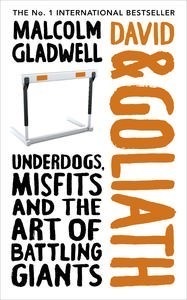 David and Goliath: Underdogs, Misfits, and the Art of Battling Giants
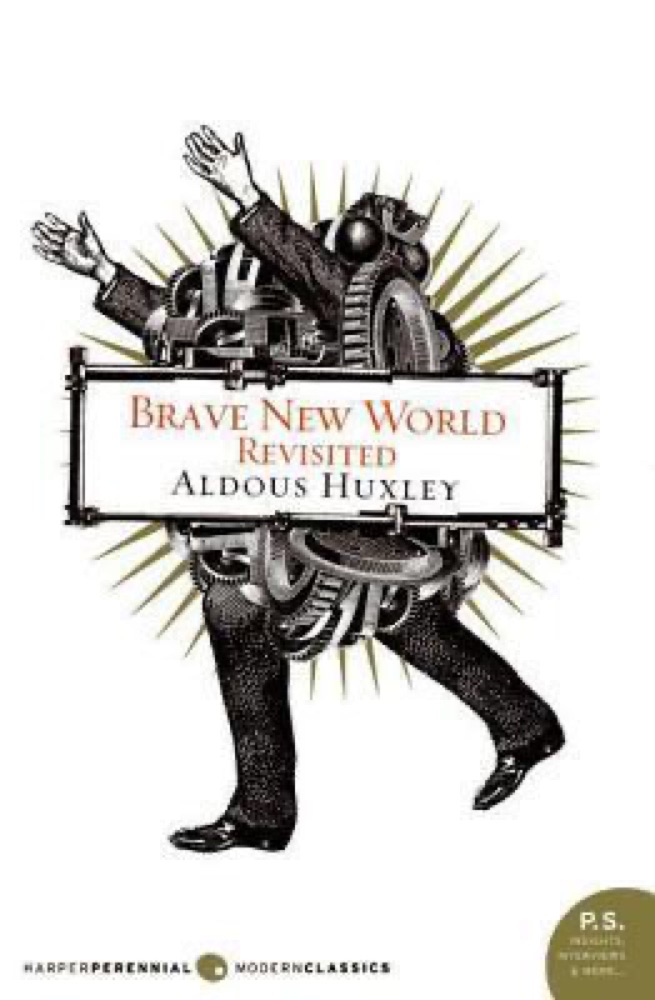 Brave New World Revisited
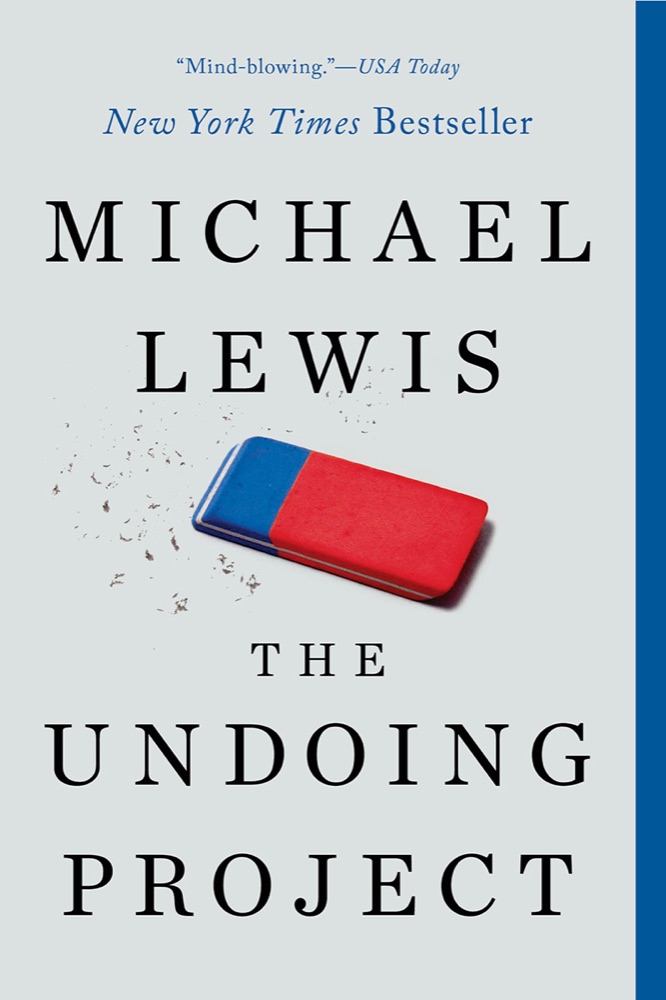 The Undoing Project: A Friendship That Changed Our Minds
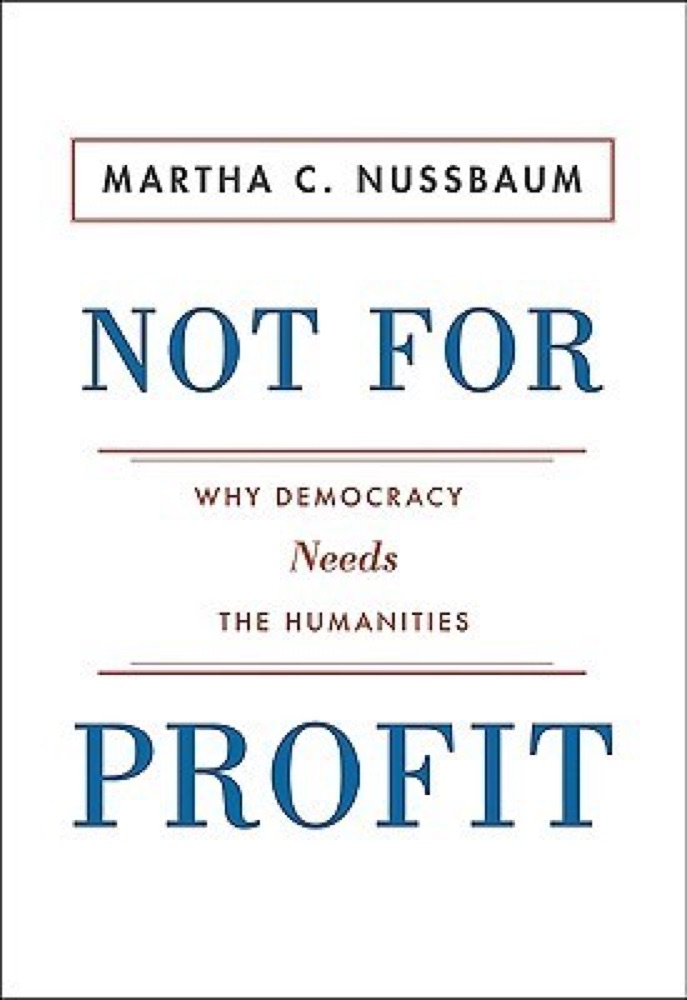 Not for Profit: Why Democracy Needs the Humanities
 How to Argue With a Racist: What Our Genes Do (and Don't) Say About Human Difference
 The Evolution of Everything: How New Ideas Emerge
 Superintelligence: Paths, Dangers, Strategies
 From Bacteria to Bach and Back: The Evolution of Minds
 Parasitic Mind: How Infectious Ideas Are Killing Common Sense
 The Rational Optimist: How Prosperity Evolves
 What the Dog Saw and Other Adventures
 The World Is Flat: A Brief History of the Twenty-first Century
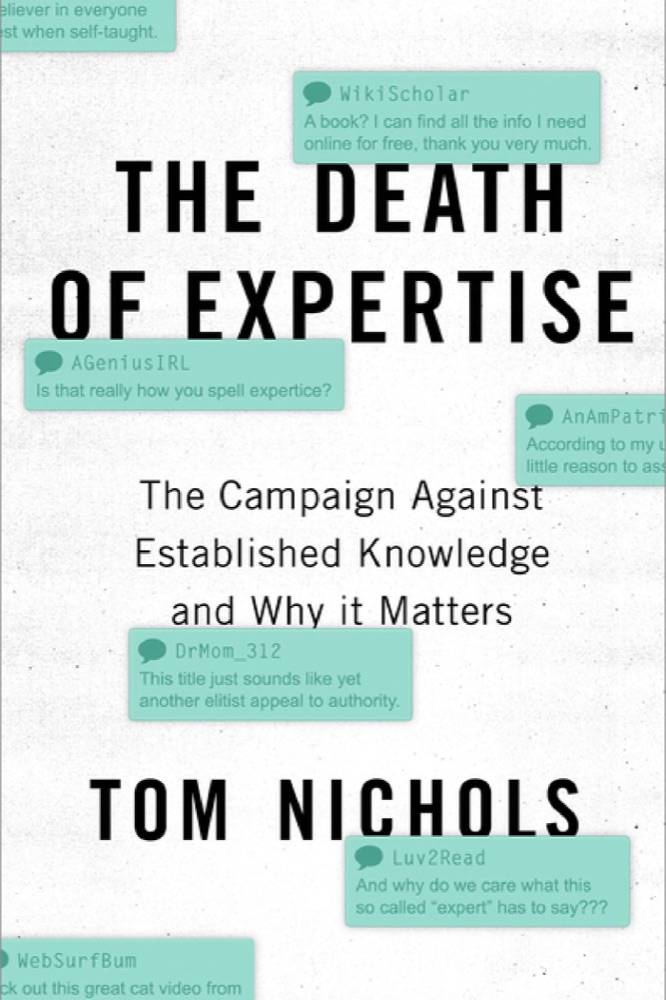 The Death of Expertise: The Campaign Against Established Knowledge and Why It Matters
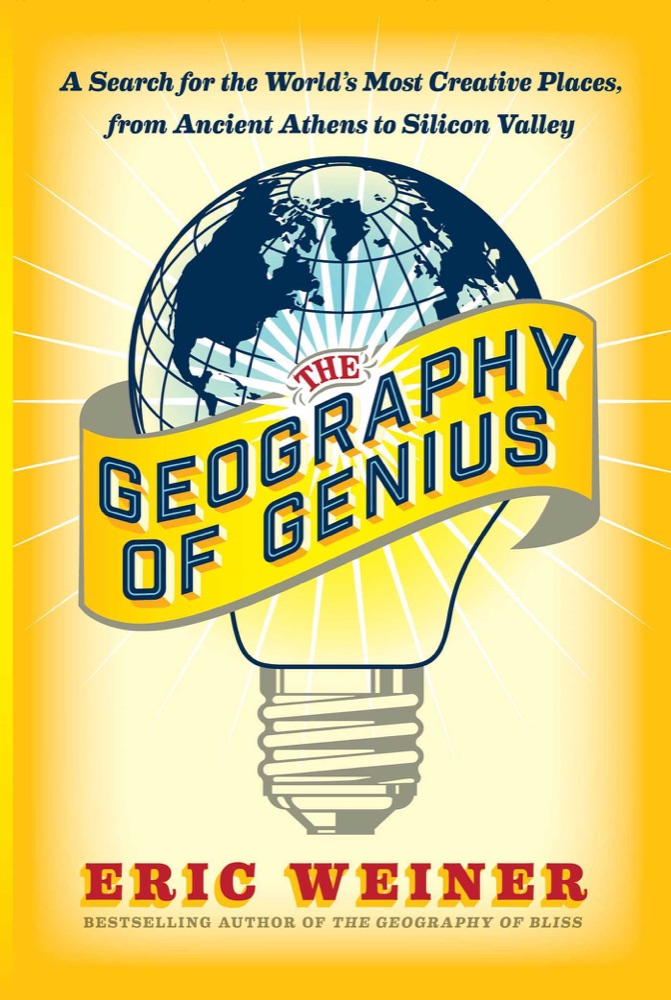 The Geography of Genius: A Search for the World's Most Creative Places from Ancient Athens to Silicon Valley
 The Geeks Shall Inherit the Earth: Popularity, Quirk Theory and Why Outsiders Thrive After High School
 The Future of the Mind: The Scientific Quest to Understand, Enhance, and Empower the Mind
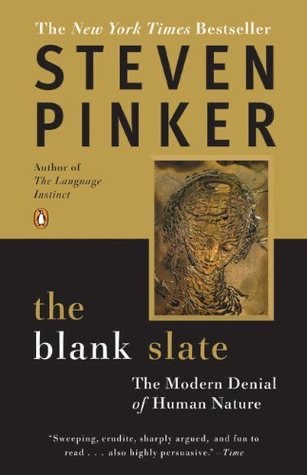 The Blank Slate: The Modern Denial of Human Nature
 Humankind: A Hopeful History
 The Social Conquest of Earth
 The Fatal Conceit: The Errors of Socialism
 You Are Now Less Dumb: How to Conquer Mob Mentality, How to Buy Happiness, and All the Other Ways to Outsmart Yourself
 An Appetite for Wonder: The Making of a Scientist
 How the Mind Works
 Lila: An Inquiry Into Morals
 Range: Why Generalists Triumph in a Specialized World
 The Signal and the Noise: Why So Many Predictions Fail—But Some Don't
 Behold a Pale Horse
 Walden Two
 Think Like a Freak
 Please Understand Me II: Temperament, Character, Intelligence
 Genome: the Autobiography of a Species in 23 Chapters
 Weapons of Math Destruction: How Big Data Increases Inequality and Threatens Democracy
 Upheaval: Turning Points for Nations in Crisis
 Letters from an Astrophysicist
 The Black Swan: The Impact of the Highly Improbable
 The Bone Labyrinth
 The Smartest Kids in the World: And How They Got That Way
 The Mismeasure of Man
 The Vanishing American Adult: Our Coming-of-Age Crisis—and How to Rebuild a Culture of Self-Reliance
 The Gene: An Intimate History
 Physics of the Future: How Science Will Shape Human Destiny and Our Daily Lives by the Year 2100