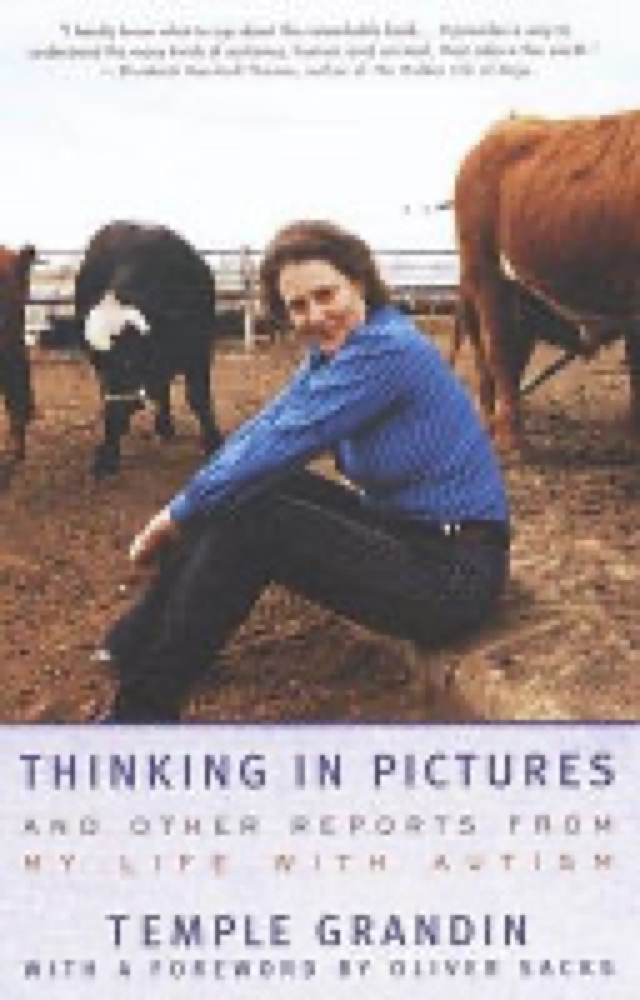

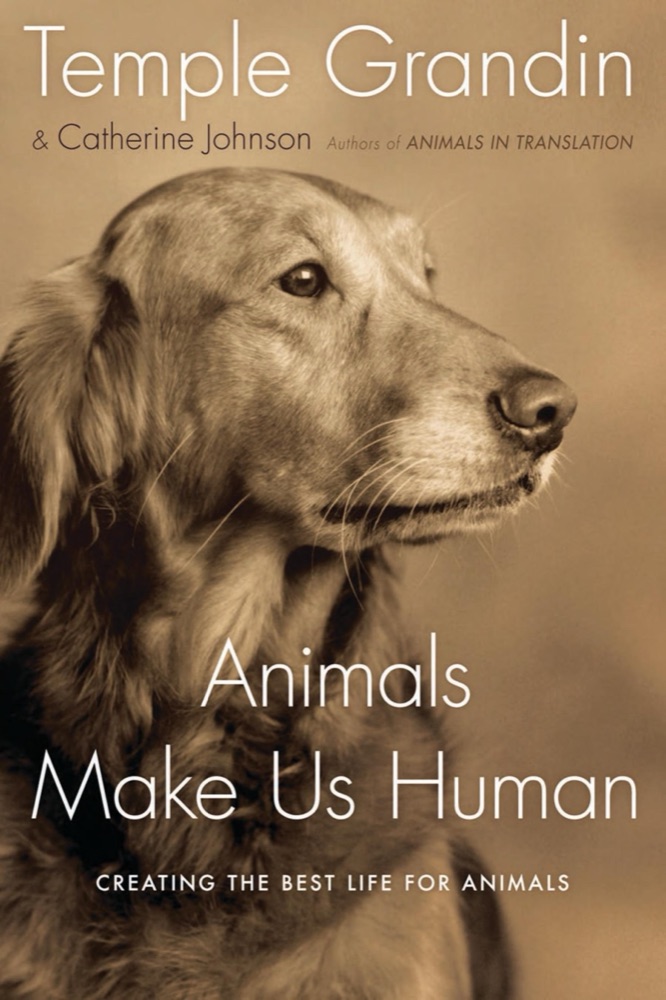
 Animals Make Us Human: Creating the Best Life for Animals
Quotes from the Book
In an ideal world the scientist should find a method to prevent the most severe forms of autism but allow the milder forms to survive. After all, the really social people did not invent the first stone spear. It was probably invented by an Aspie who chipped away at rocks while the other people socialized around the campfire. Without autism traits we might still be living in caves.
100
But my favorite of Einstein's words on religion is "Science without religion is lame. Religion without science is blind." I like this because both science and religion are needed to answer life's great questions.
90
I believe there is a reason such as autism, severe manic-depression, and schizophrenia remain in our gene pool even though there is much suffering as a result.
83
[T]he only place on earth where immortality is provided is in libraries. This is the collective memory of humanity.
55
Unfortunately, most people never observe the natural cycle of birth and death. They do not realize that for one living thing to survive, another living thing must die.
45
I believe that the place where an animal dies is a sacred one. There is a need to bring ritual into the conventional slaughter plants and use as a means to shape people's behavior. It would help prevent people from becoming numbed, callous, or cruel. The ritual could be something very simple, such as a moment of silence. In addition to developing better designs and making equipment to insure the humane treatments of all animals, that would be my contribution.
35
My mind can always separate the two. Even when I am very upset, I keep reviewing the facts over and over until I can come to a logical conclusion.
25
The word “autism” still conveys a fixed and dreadful meaning to most people—they visualize a child mute, rocking, screaming, inaccessible, cut off from human contact. And we almost always speak of autistic children, never of autistic adults, as if such children never grew up, or were somehow mysteriously spirited off the planet, out of society.
21
In a noisy place I can’t understand speech, because I cannot screen out the background noise.
20
Children who are visual thinkers will often be good at drawing, other arts, and building things with building toys such as Legos.
16
The Internet may be the best thing yet for improving an autistic person’s social life.
11
I replaced emotional complexity with visual and intellectual complexity. I questioned everything and looked to logic, science, and intellect for answers.
11
My thinking pattern always starts with specifics and works toward generalization in an associational and nonsequential way.
10
I get great satisfaction out of doing clever things with my mind, but I don’t know what it is like to feel rapturous joy.
10
Teachers who work with autistic children need to understand associative thought patterns.
9
To destroy other people's culture is to rob them of immortality.
6
The easiest words for an autistic child to learn are nouns, because they directly relate to pictures. Highly verbal autistic children like I was can sometimes learn how to read with phonics. Written words were too abstract for me to remember, but I could laboriously remember the approximately fifty phonetic sounds and a few rules.
6
Many autistic children like to smell things, and smell may provide more reliable information about their surroundings than either vision or hearing.
6
I was also struck, when we walked together, by her seeming inability to feel some of the simplest emotions. “The mountains are pretty,” she said, “but they don’t give me a special feeling, the feeling you seem to enjoy … You look at the brook, the flowers, I see what great pleasure you get out of it. I’m denied that.
5
One of the most profound mysteries of autism has been the remarkable ability of most autistic people to excel at visual spatial skills while performing so poorly at verbal skills.
2
The Mind of a Mnemonist
1
Since brains on the autistic spectrum are specialized
There was no single breakthrough. It was a series of incremental improvements.
Sacks O 1994 Edgar A. Poe: a psychopathic study. Sacks O. 1995 Prodigies. The New Yorker, pp. 44–65. January 9,
Texas., Future Horizons U. Frith 1989 A Thorn in My Pocket. Arlington, Texas., Future Horizons
Musk told Vance, “I think there are probably too many smart people pursuing internet stuff, finance, and law. That is part of the reason why we haven’t seen as much innovation.” I totally agree with this.
I went online recently and looked at Common Core arithmetic problems for elementary school. The procedure that replaced borrowing in subtraction was so complicated I would have been lost. Common Core promoted no arithmetic that I could use in the real world.
Rules of Living” from Roy Rogers,
Watch on YouTube
About Temple Grandin
We have collected 46 quotes from 2 books by Temple Grandin on BookQuoters.
More about the author →More by Temple Grandin
Animals Make Us Human: Creating the Best Life for Animals
About the book
Temple Grandin, Ph.D., is a gifted animal scientist who has designed one third of all the livestock-handling facilities in the United States. She also lectures widely on autism because she is autistic, a woman who thinks, feels, and experiences the world in ways that are incomprehensible to the rest of us. In this unprecedented book, Grandin writes from the dual perspectives of a scientist and an autistic person. She tells us how she managed to breach the boundaries of autism to function in the outside world. What emerges is the document of an extraordinary human being, one who gracefully bridges the gulf between her condition and our own while shedding light on our common identity.
Book details
- First published
- 1995
- Author
- Temple Grandin
- Genre
- Nonfiction
- Goodreads rating
- 4.10 (17k ratings)
Keep reading
 NeuroTribes: The Legacy of Autism and the Future of Neurodiversity
 Fall Down 7 Times Get Up 8: A Young Man's Voice from the Silence of Autism
 Ten Things Every Child with Autism Wishes You Knew
 An Anthropologist on Mars
 The Social Animal: The Hidden Sources of Love, Character, and Achievement
 The Reason I Jump: The Inner Voice of a Thirteen-Year-Old Boy with Autism
 Dragons of Eden: Speculations on the Evolution of Human Intelligence
 The Future of the Mind: The Scientific Quest to Understand, Enhance, and Empower the Mind
 A Language Older Than Words
 Psych: The Story of the Human Mind
 Why Can't I Just Enjoy Things?: A Comedian's Guide to Autism
 Stories of Your Life and Others
 Drive Your Plow Over the Bones of the Dead
 Living with a Wild God: A Nonbeliever's Search for the Truth about Everything
 What I Mean When I Say I'm Autistic: Unpuzzling a Life on the Autism Spectrum
 Echopraxia
 A Kind of Spark
 How the Mind Works
 Blindsight
 How We Decide
 My Inventions
 Letters from an Astrophysicist
 A Devil's Chaplain: Reflections on Hope, Lies, Science, and Love
 My Stroke of Insight: A Brain Scientist's Personal Journey
 The Master and His Emissary: The Divided Brain and the Making of the Western World
 The Tell-Tale Brain: A Neuroscientist's Quest for What Makes Us Human
 The Lost World
 A Hunter-Gatherer's Guide to the 21st Century: Evolution and the Challenges of Modern Life
 Why Fish Don’t Exist: A Story of Loss, Love, and the Hidden Order of Life
 Flowers for Algernon
 Genesis
 The Brain That Changes Itself: Stories of Personal Triumph from the Frontiers of Brain Science
 No Self, No Problem: How Neuropsychology Is Catching Up to Buddhism
 Genome
 From Bacteria to Bach and Back: The Evolution of Minds
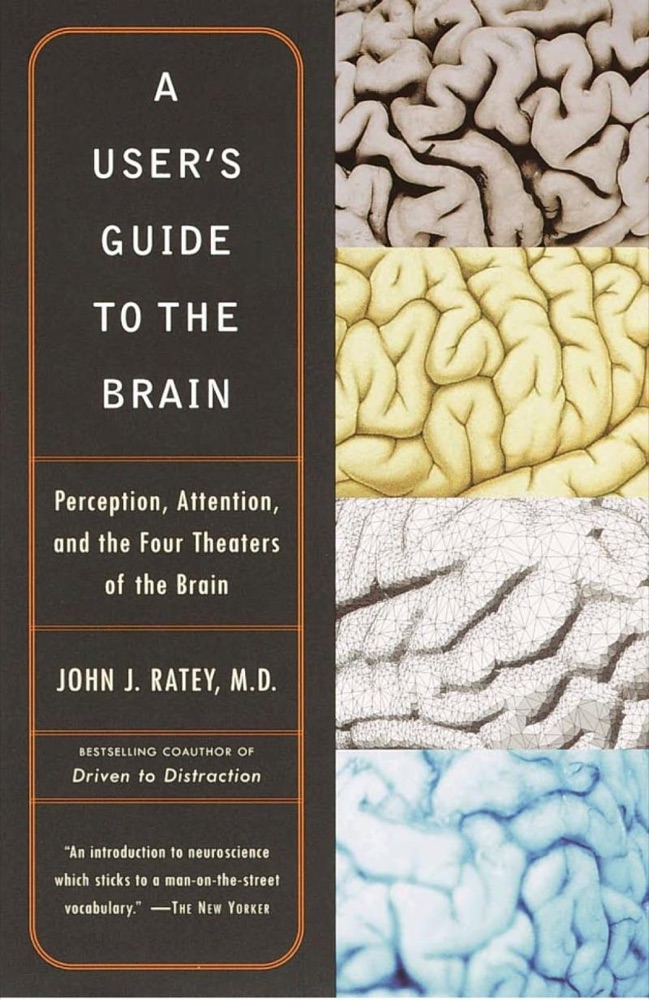 A User's Guide to the Brain: Perception, Attention, and the Four Theaters of the Brain
 The Stone Gods
 Antifragile: Things That Gain from Disorder
 The Mountain in the Sea
 The Fifth Science
 Wired
Wired
 Bewilderment
 The Salmon of Doubt
 The Most Human Human: What Talking with Computers Teaches Us About What It Means to Be Alive
 Starry Messenger: Cosmic Perspectives on Civilization
 The New Drawing on the Right Side of the Brain
 The Universe Versus Alex Woods
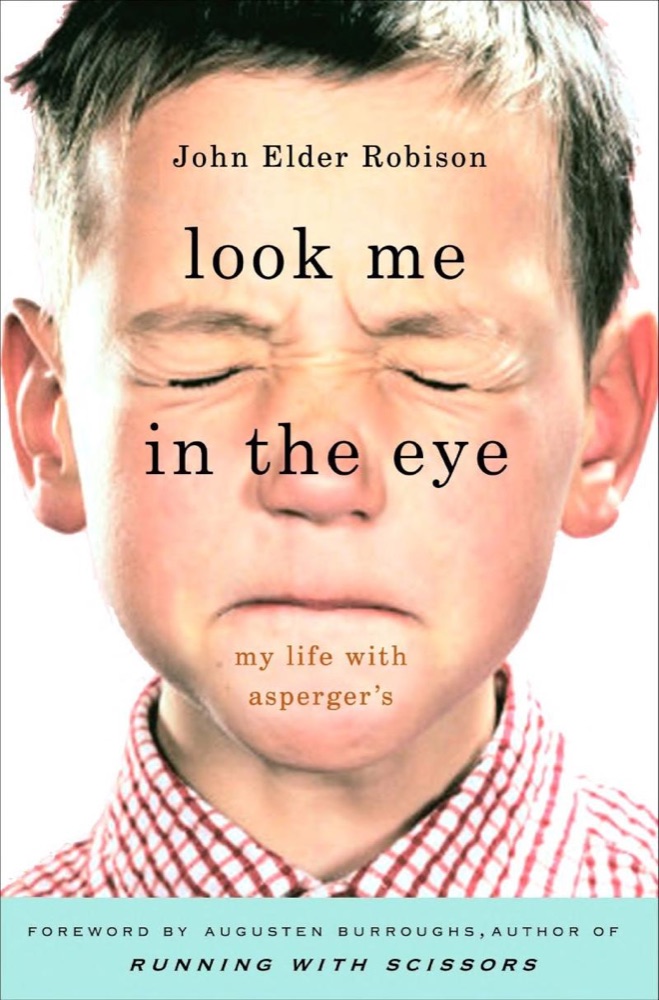 Look Me in the Eye
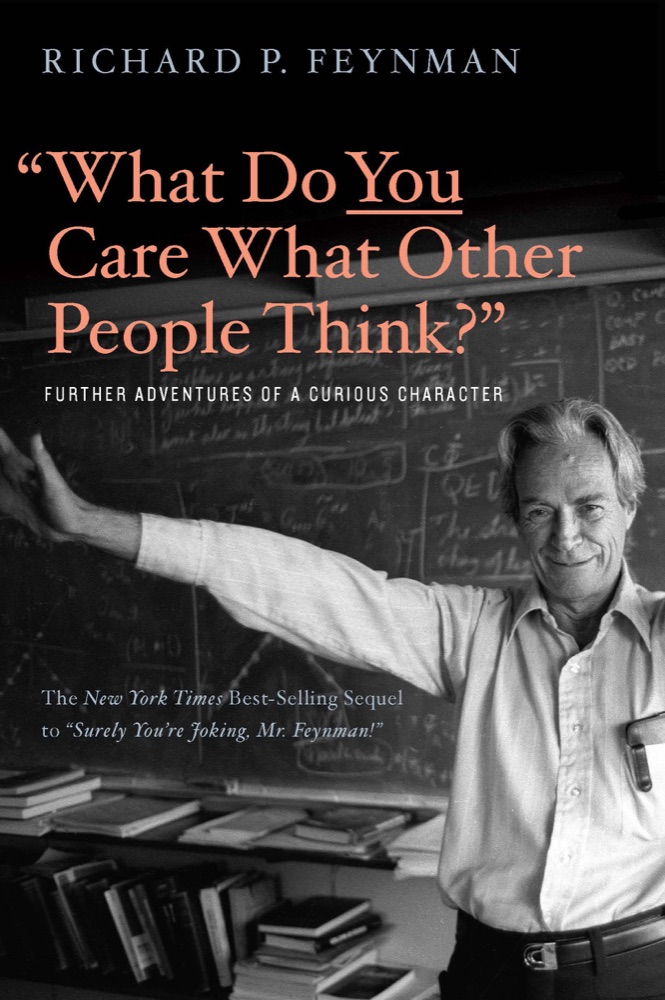 What Do You Care What Other People Think?
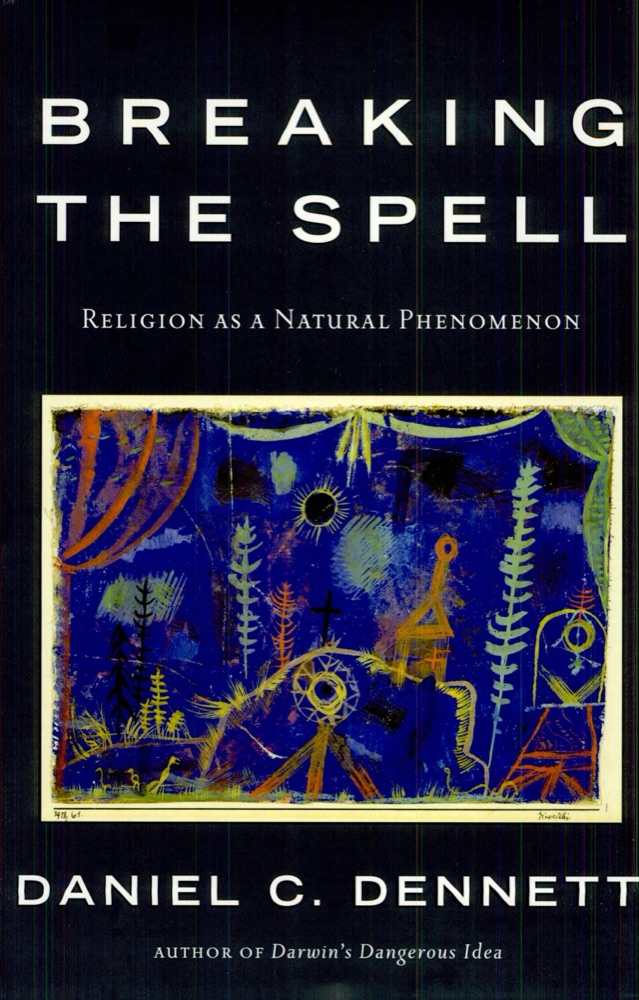 Breaking the Spell: Religion as a Natural Phenomenon
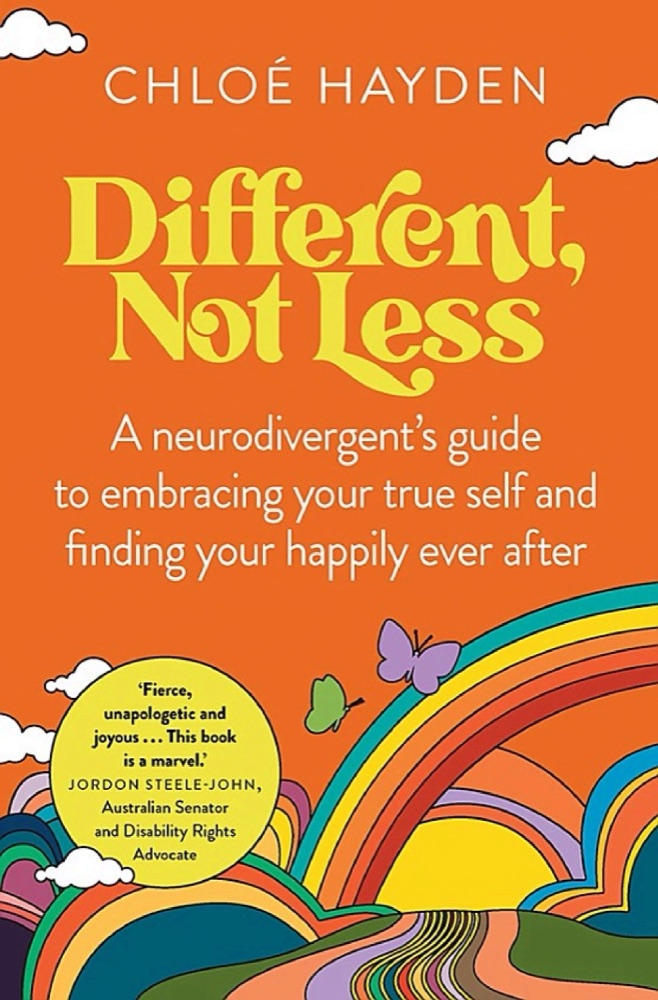 Different, Not Less: A Neurodivergent's Guide to Embracing Your True Self and Finding Your Happily Ever After
 Beautyland
 Just Like Someone Without Mental Illness Only More So
 An Appetite for Wonder: The Making of a Scientist
 You Are Now Less Dumb: How to Conquer Mob Mentality, How to Buy Happiness, and All the Other Ways to Outsmart Yourself
 Understanding Media: The Extensions of Man
 Sphere
 The Bassoon King: My Life in Art, Faith, and Idiocy
 No Time To Spare: Thinking About What Matters
 The Braindead Megaphone